How difficult is the Makalu Base Camp Trek
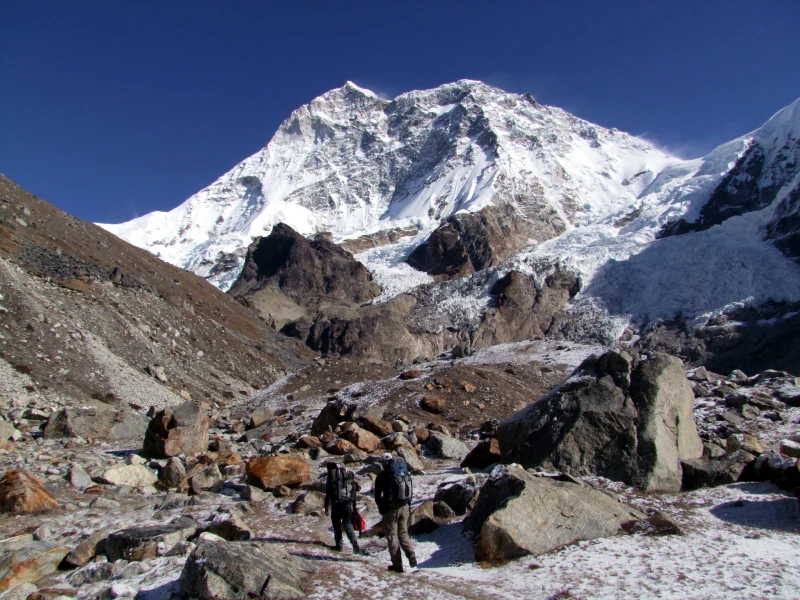
For a trek that is physically demanding, the Makalu Base Camp Trek requires a certain level of physical fitness and ability to keep up with the daily distances to be walked (5–7) hours depending on which portion of the path you take. Although no climbing skills are required, the Makalu Base Camp Trek demands endurance because each day the trekker will cover steep, rocky, and narrow trails.
The remote location of the Makalu Base Camp Trek is also a challenge as there are many fewer tea houses along the path than the busier treks within Nepal. Thus, the accommodations will be quite basic, and the food will be simple, and a majority of the accommodation while on the trek will be very simple.
Altitude adds more challenge to this trek as the most challenging section occurs at 1500 m above sea level. Since there isn’t as much oxygen available at this altitude then your ability to acclimatize is essential if you want to avoid suffering from altitude sickness. An itinerary that encourages you to gradually adjust to the altitude at Makalu Base Camp is very effective at reducing your chances of developing altitude sickness while visiting the mountain.
Weather is another factor as it can change almost immediately with little or no warning. Therefore, cold temperatures and high winds plus occasional snow create an atmosphere that will challenge you from the day you arrive to when you leave. Anyone looking for an adrenaline-pumping adventure will find that the Makalu Base Camp View Trek is a challenging feat for individuals that enjoy an outdoor adventure and do not shy away from hard work!
Preparation for Makalu Base Camp View Trek
The trick of making the Makalu Base Camp Trek successfully is getting your preparations done correctly. Make sure that you have started training no less than 3 or 4 weeks prior to your departure date. Your goal here is to increase your endurance by such exercises as hiking, running, cycling, or working out on the treadmill at the gym. Strong leg muscles are a must for successful trekking.
Another thing you need to do is to get accustomed to moving about with a backpack because it will prepare your body for the actual situation. Don’t neglect the psychological part of the preparation either. Because of the remoteness and primitive facilities of the region, it is essential to make the necessary psychological adjustments.
Packaging equipment is also essential. You will require good quality footwear, warm clothes, a good sleeping bag, and a small first aid kit. Weather conditions cannot be guaranteed since they may either be sunny or freezing cold. As long as you stick to a good Makalu Base Camp trekking itinerary while incorporating sufficient rest periods, there’s nothing you can go wrong with.
Language and Communication on the Makalu Base Camp Trek
Trekking in the Makalu Base Camp Region of Nepal is a little more complex than trekking in other, more touristy areas of Nepal. The Makalu Base Camp Trek is located far out in eastern Nepal and passes through many villages that mostly speak Nepali and several dialects of Sherpa, Rai, and Bhotia. In lower villages like Num and Seduwa you will usually find someone who speaks a little English (especially at the teahouses, ie. the owners). But, as you go farther into the Makalu-Barun National Park, it will be much more difficult to find English speakers.
The best advice when trekking the Makalu Base Camp Region is to hire a good guide. Not only will your guide help you navigate the area, but they will also be your translator in the remote villages. Learning just a couple of words in Nepali, such as “Sanchai hunuhunchha?” (How are you?) and “Mitho chha” (It’s delicious), will go a long way towards establishing connections with local people. Since local residents in the Makalu Base Camp trek receive far fewer trekkers than in the Everest region, they really appreciate it when you try to communicate with nothing more than a few words of Nepali.
Cultural festival on the Makalu Base Camp Trek
This trail for trekking through Makalu Base Camp includes several authentic villages whose local communities perform these amazing cultural festivals. The majority of people in this region are representatives of ethnic groups such as Rai and Sherpa, who are known for their great culture and traditions that have been preserved for ages.
It may be possible to attend festivals like Sakela at Rai villages on this trip as well. This festival honors nature and the harvest through performing numerous traditional dances and songs. Sakela is typically organized during spring and autumn months.
And then there are the Sherpa communities with their Buddhist celebrations like the Lhosar festival, marking the New Year in Tibet. Such events are not to be missed because the monasteries are decorated to celebrate these festivals. There are chanting prayers and feasts organized at the monastery. Seriously, experiencing any cultural event gives your journey a whole different dimension altogether because it allows you to truly experience the culture and relate to the locals. The Makalu Base Camp trek is about seeing the magnificent Himalayas, but it is also about connecting with the locals. Adding such cultural events to your itinerary will make your trek more meaningful.
Mobile network, internet & charging facilities
If you are hoping to remain in touch 24 hours a day across the Makalu region, it may come as a surprise that this will be impossible to do. Mobile reception is reasonably good within Tumlingtar and Khandbari but when you leave these two towns and start travelling higher than Num, the network signal becomes unreliable. The best network provider to go with in this area is Nepal Telecom (NTC), as they have better network signal at the edge of the earth than Ncell. By the time you reach base camp or cross the Shipton La, do not expect your phone to do anything other than take pictures.
The internet is another story. There may be some Wi-Fi offered for a small cost in some of the teahouses in the lower villages, but due to the poor speed of the internet and unpredictable weather conditions, you may find it to be useless. The further up you go, the less internet connectivity you will have.
With regard to charging, the majority of tea houses have solar-powered chargers on the Makalu Base Camp view trek. It will not cost you much money (a few hundred rupees) to charge your devices, but be aware that depending on how cloudy the weather was that day, you may run into issues with the amount of energy that is available. What I would recommend doing is packing a large power bank as well as a small solar charger for your backpack.
Trip Extension
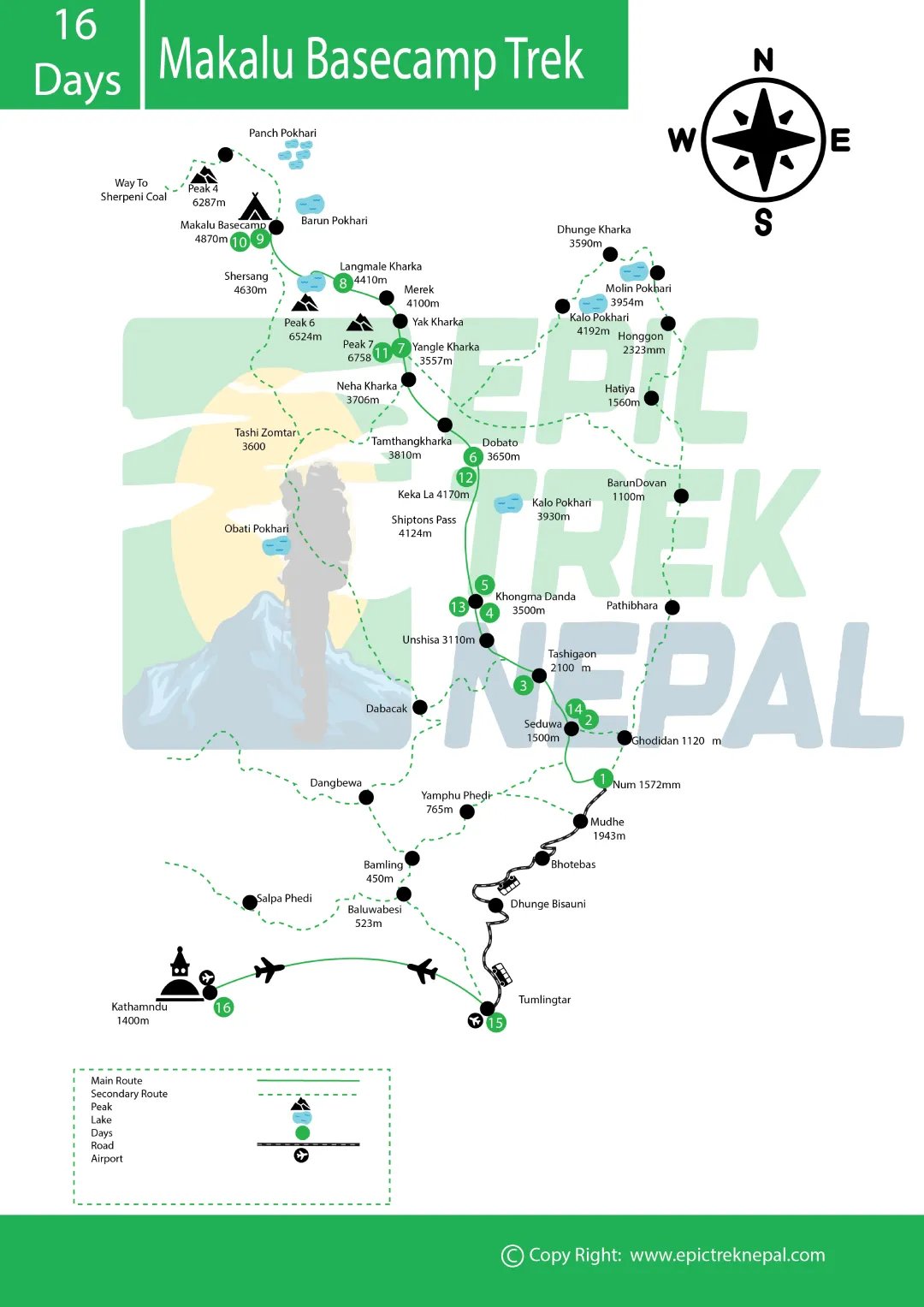
The Makalu Base Camp Trek has quite a few exciting extension opportunities and side treks if you are the kind of traveler who enjoys looking for new things beyond the map. For instance, you could continue on into the Upper Barun Valley. This is a good choice, considering it lies within the boundaries of the Makalu-Barun National Park, which means that you will be treated to an incredible diversity of plants and animals, ranging from glaciers and secret waterfalls to rarely seen wildlife species.
Another good idea would be to extend your stay at the base camp of Mount Makalu itself. Since the region is so vast, there are plenty of breathtaking viewpoints where you can take great photographs or even go on shorter hiking trips.
A few of the trekkers have even attempted linking up with some of the remote valleys that lie in close proximity provided they have the time and the required permissions. Such treks are not often followed by many people and can offer an experience of the true wilderness. But, you would need to be highly fit and plan their itinerary carefully for the same. You could also choose to combine such treks with visits to some of the cultural zones located around in the eastern regions of Nepal. Such treks offer both elements of nature as well as culture together.
Health and Safety on Makalu Base Camp Trek
Always remember that health and safety need to come first while you are Makalu Base Camp Trek. Since there is a risk of altitude sickness when trekking to more than 5,000 meters, walking slowly, drinking plenty of water, and following the acclimatization program will make it easy for you to minimize your risks.
Remember that you need to listen to what your body is telling you 24 hours per day. The instant you notice symptoms such as headaches, dizziness, and nausea, you should inform your guide.
Hygiene is another aspect you should not neglect either. Always make sure you wash your hands as much as possible and drink only clean water. It is recommended that you have at least basic medication such as cold, fever, or upset stomach drugs.
As the climate may quickly change in the Himalayan region, it will be important that you always have your rain gear and warm clothing on hand in your day pack. Having a professional guide when trekking will add even more security, particularly in very remote parts of the destination area.
Visa and Permits
When preparing for the Makalu Base Camp trek, there is one thing that you will definitely require, a Nepal visa. Most tourists simply acquire the required visas immediately upon their arrival at the airport of Kathmandu or the land borders. However, if you wish to save some time when processing, you could arrange the visa prior to arrival online.
Another crucial thing you should prepare in advance is the relevant trekking permits.
Required for All Trekkers:
- Makalu-Barun National Park Entry Permit:
It is the National Park Entry Permit issued by Nepal Tourism Board (NTB). You have to register and verify this permit at Num/Seduwa.Cost: NPR. 3,000 per person
- Makalu Rural Municipality Permit:
It is the formal conservation area permit provided by local authority. This can be obtained at Kathmandu or at check points along the trail. Cost: NPR 2,000 per person
- TIMS Card (Trekkers’ Information Management System):
This Card stores the data of trekkers and generally required for most trekkers in Nepal. Some agency state TIMS has been replaced by the Rural Municipality permit, but many continue to require and issue it. We recommend obtaining both to avoid complications. Cost: NPR 2,000
- Restricted Area Permit:
If your Makalu Base Camp Trekking Itinerary takes you through the Kanchenjunga Base Camp route and enters restricted villages like Chepuwa, Hatiya, Kimathangka, and Pawakhola. You require a special permit for Restricted Area. Cost: $20 per person per week for the first 4 weeks. Then USD 25 for a week per person for additional weeks.
- Guide Requirement:
For certain areas, you must hire at least one authorized person from the local trekking agency in Nepal, either a professional guide or a licensed porter, particularly for restricted areas.
If you book your trek with Epic Trek Nepal, then we will handle your paperwork and permits just provide us:
- Copy of your passport
- Passport size photo.
Important: Ensure all permits are obtained before starting your trek to avoid delays or complications at checkpoints.
Don’t do on the Makalu Base Camp Trek
When trekking through Makalu Base Camp, here are a few mistakes you should avoid in order to have a safer experience. For starters, whatever you do, refrain from rushing your pace. Although you may want to move faster, doing so will only ensure that you fall victim to exhaustion or even altitude sickness. All you have to do is to pace yourself and pay attention to your own body.
You should never skip any acclimatization days on your Makalu Base Camp Trekking Itinerary. Even though it will appear to be timesaving, skipping acclimatization will almost certainly result in experiencing serious altitude complications. Last but not least, try to avoid solo trekking at all costs. When trekking through more remote areas, having someone to accompany you, such as a guide or at least a small group, can be very important.
It is important that you avoid overloading yourself too. The weight of your backpack will definitely take its toll on you during your hiking day. Nevertheless, remember to pack all the necessities like clothing, shoes, and your medical kit.
Do not consume untreated water, or consume any kind of alcohol excessively, particularly at higher altitudes. Both of them have the ability to affect your hydration negatively. The last thing I want to stress about is the importance of respecting nature and the people around you, particularly in the context of this Makalu Base Camp view trek.
Travel Insurance
The Makalu Base Camp trek requires you to have your travel insurance sorted before you head out to the most remote places on the planet are at high altitudes. If there is ever an emergency, getting you out may only be achievable via helicopter and if you do not have suitable travel insurance then the cost will be very high and you will be responsible to pay it.
When travelling to the Makalu Base Camp trek, your travel insurance must include coverage for altitude trekking (up to a minimum of 5,500 metres ), medical evacuation, treatment, cancellation of the trip, and for loss of personal items. Before paying for your insurance, you should always read through the whole policy to ensure you understand all terms and conditions.
Make sure to carry copies of your insurance with you. In addition, you should provide your guide and trekking agency all the information necessary to allow for them to access the information quickly if it is ever needed. Although trekking to Makalu Base Camp is a very beautiful and rewarding experience, it is still a very uncertain environment. As such, having travel insurance provides you with peace of mind and financial peace.





 Share
Share