




How to Train for Everest Base Camp Trek
27 February 2026
By admin
First of all, before knowing how to train for Everest Base Camp Trek, let’s get one thing straight, you don’t have to be a professional trekker or mountaineer with a closet full of ice axes to get to Everest Base Camp. It’s not a technical climb, at least not in the classical sense. However, it is an incredibly physical experience. In about two weeks, you will be covering about 130 kilometers through the Khumbu Valley, eventually rising to an altitude of 5,364 meter. The real catch is not just the distance. It’s the stone stair, the lack of oxygen in your lungs, and the fact that you have to do it all over again the next without much rest.
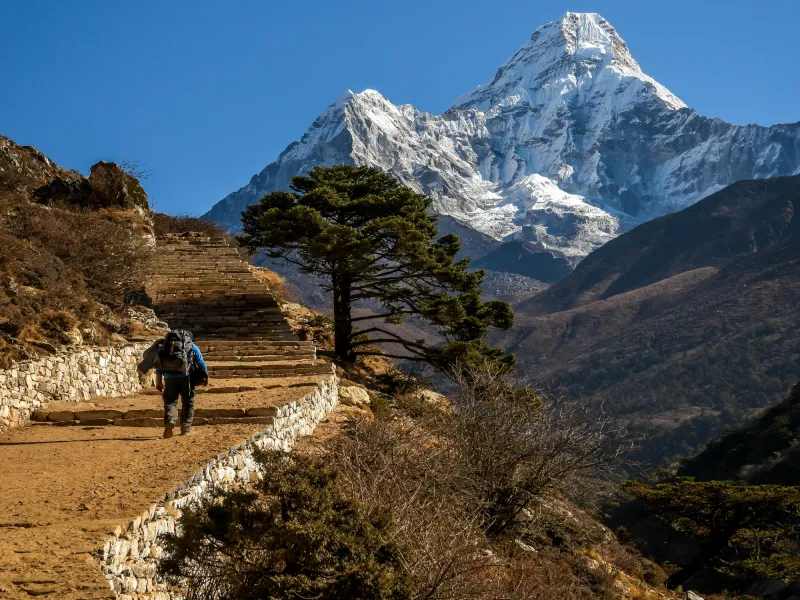
A lot of people just underestimate this trek off because it doesn’t require ropes or climbing skills, but the truth is, altitude changes the whole game. After you cross that 4,000 meter, a slight hill can make you doubt yourself. That’s why training is very important for this trek. It will decide your trekking outcome, if you are going to enjoy the trek or just staring at your boot, gasping for air.
The good news is that you can totally do this. If you have a good plan in place that includes cardio work, some leg work, and the right attitude, then you’re going to be just fine. The secret isn’t some sort of extreme training program, it’s about starting early. You need to train smart, not hard.
Understanding the Real Demands of Everest Base Camp Trek
Before we dive into the gym stuff, we have to talk about what you are actually getting yourself into.
The Everest Base Camp Trek goes to an altitude of 5,364 meters. That is really high and for most of us, this will be the highest we have ever been in our entire lives. When you are just trying to get some sleep Gorakshep (5,154 m), you are actually higher than most peaks in Europe or America. At this height, the air is very thin. You will move slower, breathe harder just to tie your boots, and get tired quicker than you think. And that’s completely normal.
It takes about 12 to 14 days for the whole trek to be over, and during that time you will walk around 120 to 130 km by the time you get back to Lukla. You will be hiking between 5 to 8 hours a day. Some days feels easier, some feels very difficult, like the day to get to Base Camp or the early morning hike to get to the top of Kala Patthar, which are absolute lung buster.
I want to make this clear, you don’t need to be a climber. There are no ropes, no ice axes, and no hanging from the mountain. The real challenge is the walking everyday, getting higher and higher and realizing that your body doesn’t recover the same way at 4,000 meter as it does in your home.
So, no, it is not an extreme climb, but it is no walk in the park either. It is a challenge that requires a little respect, a little preparation, and a lot of patience.
How Fit Do You Need to Be?
You don’t have to be some elite mountain climber or professional athlete to make it to Base Camp. Your are not training for Olympic, you are not expected to be carrying 60 pounds on up vertical cliffs. The average person, as long as they are in good average health, totally has the ability to do this trek.
The main that you need is cardio endurance. You heart and lungs are going to be working overtime, so they better be ready for the long and slow hours of physical activity. You are going to be at high altitude, so every time you breathe, it feels like you are getting half of what you really need. So, having good stamina makes the trip so much easier and more enjoyable.

You are also gonna need some serious strong legs. Think about it, walking uphill and downhill on nothing but uneven rocks and those stone steps. Your thighs, calves and especially knees will be working overtime every single day. One more thing to keep in mind, the hike back down can be even harder on you joints than hike up. Having strong legs is pretty much your guarantee against total exhaustion and sore knees.
Another good measure of whether or not you’re ready is if you can easily get through a 10-15 kilometer walk without feeling like a zombie the next morning. If you can handle a long Sunday hike, some light jogging, or even just the stair-master at the gym, then you’re already on the right track.
But don’t forget the mental side of things. It’s not just physical; it’s also about mental. There are going to be days where you are cold, you are tired, and the bed at the tea house feels like a piece of plywood. There are going to be days where you are just a little sluggish or from the altitude. Being able to keep your head up, keep yourself positive, and just keep moving forward at your own pace. That is huge thing.
Basically, as long as you are moderately in shape and you are consistent with your training, you are going to be just fine. It is way more about showing up for your workouts than it is about being naturally “ripped” or athletic.
Cardio Training Plan
Cardio is honestly the important aspect of your prep. I mean, you’re going to be on your feet for hours every single day in thin air, so your heart and lungs literally need to become a well-oiled machine. You don’t want to be huffing and puffing five minutes into the trail, right
Walking & Hiking
You want to get out there and start walking or hiking 3 or 4 times a week. You don’t have to go crazy right off the bat, just try to get a good 4 or 5 kilometers in and then gradually increase your distance as you start feeling more confident. Eventually, you want to be able to get in that 10 to 15km a day. It’s not about winning a marathon; it’s just about getting that “all-day” endurance.

If possible, try to find some hills. Walking on road is fine, but it’s just not the same as climbing through the Himalayas. And this is a big one: try to wear a small backpack with 4 to 7kg in it. It’s a little weird at first, but your body needs to get used to the weight of your water, snacks, etc before you’re actually on the trek.
Stair Climbing
Stair climbing is very useful since trekking trails in Nepal have many stone steps. I think stair climbing is the best way to specifically train for this climb. Look for a place with stairs, a tall building with stairs, or even just a stair master at the gym for 20 to 40 minutes, one or two times a week.
Just try to keep a constant and rhythmic pace. Don’t run up the stairs like a lunatic; just walk. If you are having trouble breathing, just slow down, but don’t stop completely.
Running, Cycling, or Swimming
These are good for simply improving your lung capacity in general. Just choose something you actually enjoy doing so you’ll be motivated to do it.
- Running: This is great for stamina, but don’t overexert yourself or hurt your knees.
- Cycling: This is much easier on your joints and is great for improving leg endurance.
- Swimming: This is great for your whole body, including learning how to control your breathing, which is very important at high altitudes.
Try to do this maybe 2 or 3 times a week if you can manage it.
I think the most important thing to remember when doing cardio is to simply be consistent. To be honest, doing something moderate regularly is far more important than doing something extreme once every two weeks and then sitting around the rest of the time. Slow and steady really does win the race here, as this is the safest way to get your body ready for the big event.
Strength Training for Trekking

Strength training is like your secret weapon. While cardio gets you from point A to point B, strength training is what prevents your knees from screaming and your muscles from collapsing on you halfway through the day. It’s like wearing armor for your joints, especially on those long downhill stretches where everyone begins feeling that “Trekker’s Knee” or leg fatigue.
Since your legs do about 95% of the work, that’s where your focus needs to be.
The Lower Body Essentials
The truth is, you really need to stick with the basics here. So, we’re talking about squats, lunges, step-ups, and possibly Romanian deadlifts. Squats are just great for overall power. And lunges are just a lifesaver for balance, because let’s face it, the trails in Nepal are not exactly flat.
Step-ups are probably the most real-world exercise you can do, and they perfectly replicate the endless stone stairs you’ll find in the Khumbu. And the deadlifts, those are great for your hamstrings and knees, which is just huge because, your knees are going to feel like jelly on the way down.
Don’t Forget the Core
It’s not about having a six-pack, but being able to maintain a plank position, side plank, or dead bugs is actually necessary. Having a strong core will help you balance on rocky trails. In addition, it will make it a lot easier to carry your backpack because your entire body will be stable and not wobbly from four hours of hiking.
Upper Body
You don’t have to be a bodybuilder, but you can’t just forget about your upper body. You will be carrying your daypack with 5 to 7 kg of water and snacks every single day. Having some light exercises for your shoulders and back will help you maintain good posture and prevent you from getting that annoying pain between your shoulder blades by lunchtime.
The Strategy
Try to fit in some strength training maybe twice a week. Honestly, you don’t need to be lifting huge weights. Just concentrate on your form and make sure you’re moving slowly and steadily. Even bodyweight exercises are good if you do them regularly. The idea isn’t to get you all bulky and huge; it’s just to get you “hiking tough” so it doesn’t feel like a problem on your body.
Downhill Training
It is very easy to get so caught up in training for the uphill climb that you forget all about the return trip. But the reality is that downhill training is just as important as other training. During the trek most trekking injuries are not sustained on the way up the mountain but on the way down, when your muscles and knees are literally taking a pounding with every step you take.
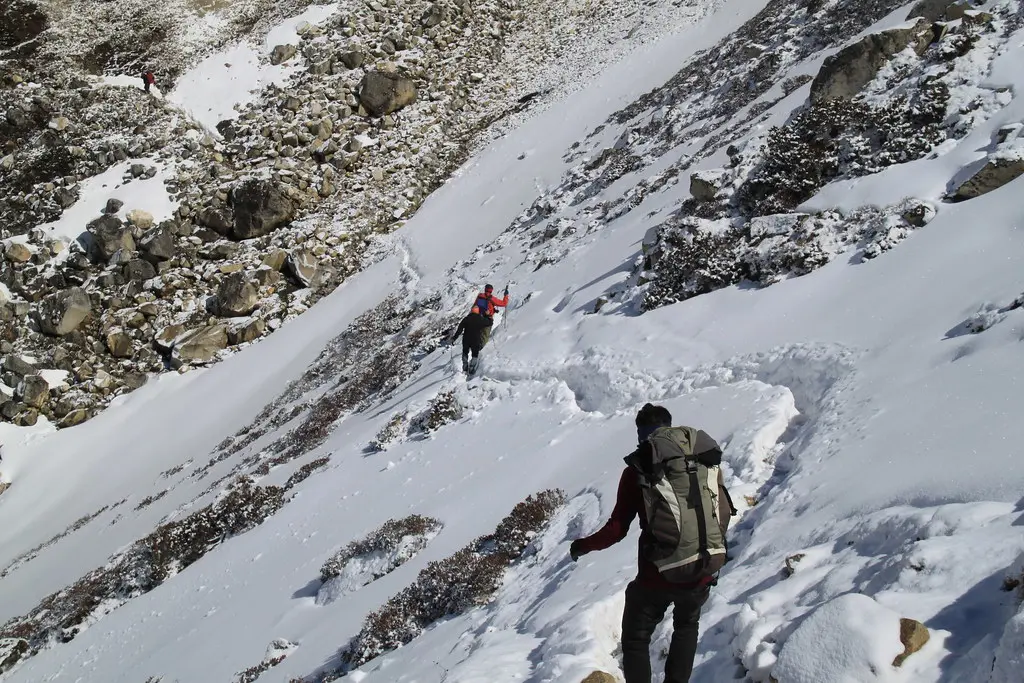
You simply have to incorporate downhill training into your training routine. Find yourself a natural slope or simply head to a staircase and practice walking down slowly. Take your time! The idea behind this exercise is to condition your legs and knees to get used to the pounding of your body weight as you walk down the mountain. It’s also a good idea to include some quad exercises. This is just a big word that means targeting those front thigh muscles. This is a simple exercise that involves doing squats or lunges in a slow and controlled manner.
Another excellent tip is to practice controlled step-down exercises. This is excellent for balance and will actually help take a lot of stress out of your knees and ankles in the long run. A lot of trekkers are actually shocked by just how much more difficult the long descent from places such as Tengboche and back down to Namche than compared to the ascent upwards. Going downhill for long hours can make your legs feel heavy and tired because your muscles are braking with every step. So, preparing for downhill walking is very important if you want to have a smoother and safer trekking experience.
Mental Preparation
We hear a lot about legs and lungs, but your brain needs just as much work as your hamstrings. For a lot of people, the mental training of their first Himalayan trek can actually feel like it’s a heck of a lot harder than the actual physical work.
Keep Your Expectations Real
You have to be realistic about what life is like on the trail. You’re not staying in five-star hotels; you’re staying in teahouses. They’re basic with thin walls, plywood rooms, and a good chance you’ll be sharing a bathroom down the hall. Heating is usually just a stove in the common dining area, so yeah, it gets cold.
Embrace the Cold and Early Starts
Be prepared for some cold mornings ahead. It doesn’t matter how lovely the weather is during the day, the minute the sun goes behind a mountain, the temperature drops like a stone. Waking up at 6 AM when it is freezing outside is not exactly the most appealing idea of a holiday, but this is how it is at such high altitudes.
Go with the Flow (Seriously)
Things don’t always go according to plan in Nepal. Flights to Lukla are famous for being delayed or canceled due to bad weather. It’s just a part of adventure. Be flexible with your plans, don’t get too annoyed if they change around a bit, and you’ll have a great time.
Forget Your Normal Pace
This is a big one: you’re going to be slow. Like, really slow. As you get higher in elevation, your body literally cannot move as fast due to a lack of oxygen. Don’t get frustrated with this! It’s not like you’re a snail or anything, it’s just science. In fact, walking slowly, slowly is actually the smartest thing you can do to avoid altitude sickness.
If you can manage to be patient, have a good sense of humor when things get a little uncomfortable, and avoid comparing your pace to the person next to you, you’re going to have an incredible trip. So just relax and enjoy the view.
Nutrition and Hydration Before the Trek
Eating the right foods and drinking a lot of water actually plays a huge role in preparing that body of yours for those long days of trekking. It’s not just about how much you run on that treadmill. It’s also about what you put inside that body of yours before you head out on that adventure.

A balanced meal with a lot of carbohydrates, proteins, and fats is a necessity. The carbohydrates in the meal will serve as the fuel for those long walks, the proteins will serve as the repairmen for those muscles of yours that get torn apart during a long and grueling workout session, and the fats will serve as the boosters for that body of yours that will be needed during those long walks. Just eat the right foods: rice, bread, a lot of vegetables, eggs, chicken, lentils, nuts, fruits. There’s no way you can go wrong with that.
If you want a little more science in that protein of yours, you could try aiming for about 1.2 to 1.6 grams of protein per kilogram of body weight. That means if you weigh about 60 kilograms, then you should aim for about 70 to 90 grams of protein daily.
And don’t forget the water. Now is the best time to increase your water intake even while in your training phases. Don’t wait until you are already in Nepal to increase your water intake. It is very easy to get dehydrated while simply doing your regular daily activities. However, it is very important that you increase your intake of water because dehydration really drains your energy. You have to make drinking water a habit that does not even require you to think about it anymore.
It is also important that you decrease your intake of alcoholic drinks a few weeks before your trip. This is important because your hydration level, sleep patterns, and recovery capabilities must be in top condition for Everest Base Camp Trek.
One more thing to remember is that you should not go on a diet that would require you to lose a whole bunch of weight before your trek. It is best that you simply eat healthy while in your training phases. It is best that you reach the trail strong and full of energy, not tired and worn out before you even start your trek.
How long Should You Train?
That is an important question: just how long should you train? Well, honestly, it just depends on where you’re starting from and just how active you are in your everyday life.
For most people, you’re talking about a minimum of about 6 to 8 weeks. This is usually sufficient if you’re already a person who walks a lot or goes to the gym a couple of times a week. This gives you a couple of months where you can really focus on building up that stamina, making those legs a bit stronger, and just generally working on that “breathing endurance” for those hills.

But if you want my honest opinion. The best amount of preparation is actually 10 to 12 weeks. This is usually the best for most trekkers out there. This just gives you that much more time for your body to get used to those long walks, those walks uphill, and those other exercises. Preparing this much just ensures that you won’t have those injuries or complete exhaustion when you’re actually on the trails.
But if you’re a complete newbie or maybe you haven’t exactly worked up a sweat in a while, it’s probably a good idea to begin at least 3 months before your flight out. This way, you’ll have many days to work up your walking distance and get some muscle built up without totally flooding your system too quickly.
Common Training Mistake
I mean, we all make mistakes in the process of preparing for the big trek, but making a few small mistakes in the process of preparing for the trek makes the actual trek much more challenging than it should be. Therefore, it is recommended that one should try to avoid making small mistakes in the process of preparing for the trek so that the body can handle the challenge better during the actual trek.
The biggest mistake that one makes in the process of preparing for the trek is that one starts very late. It is clear that some individuals prepare for the trek in the last two or three weeks before the actual trek. I think that this is not enough time for the heart and lungs to develop the necessary stamina. Therefore, it is recommended that one should start at least 2 or 3 months before the actual trek so that the body can get used to the walk.
Another classic error is that you will spend all of your precious time in the gym, but you will never walk on real trails. Again, don’t get me wrong, the gym work is fantastic for muscle development, but trekking is more about hiking on uneven trails. If you don’t get out of that nice, smooth, and flat treadmill, you will find that your ankles and stabilizers will be injured easily when you start hiking on rocks and uneven trails in the Khumbu.
Another thing that many trekkers seem to completely overlook is downhill training. This is actually a big deal. Walking down those steep slopes actually puts a lot more stress on your knees and thighs than walking up the mountain. If you do some controlled downhill walking or step down exercises in the gym, you will save yourself a lot of knee pain.
And one more thing, whatever you do, don’t wait until the first day of the trek to wear those shiny new boots of yours. That’s a big one. New boots can literally be blister makers if they haven’t been broken in. You really should wear those boots during your training walks so that your feet get accustomed to them and the material can soften up a little bit.
And lastly, don’t fall for the trap of overtraining and end up injured before the actual trek. Going beast mode every single day without any rest days is just asking to get injured. Your body actually needs those rest days to get stronger, you know. Train hard, but don’t be afraid to take a rest when you need it. Slow and steady usually gets way better results than going full throttle until you get hurt. It’s all about balancing your training.
Final Section: Is This Trek Achievable?
The answer is a Yes. For most normal people who actually put in the effort and train the right way, this entire process is 100% doable. You don’t have to be some sort of athlete or experienced trekker to complete this trek. But let me tell you, it is a world of difference when you’re ready. Your body just is so much better equipped to handle those long days, those ridiculously steep climbs, and that thin mountain air.
So, in simple terms, it’s more about your prep work and your consistency than it is about some sort of raw strength. So if you’re starting your prep work early, you’re following a good fitness routine, you’re drinking your water, you’re keeping a positive attitude and you’re going to give yourself a chance to complete this trek comfortably.
Every year, there are a bunch of people who make it to the top with “average” levels of fitness. So, as long as you have the right mindset and you do your homework, it is definitely doable. You got this!
