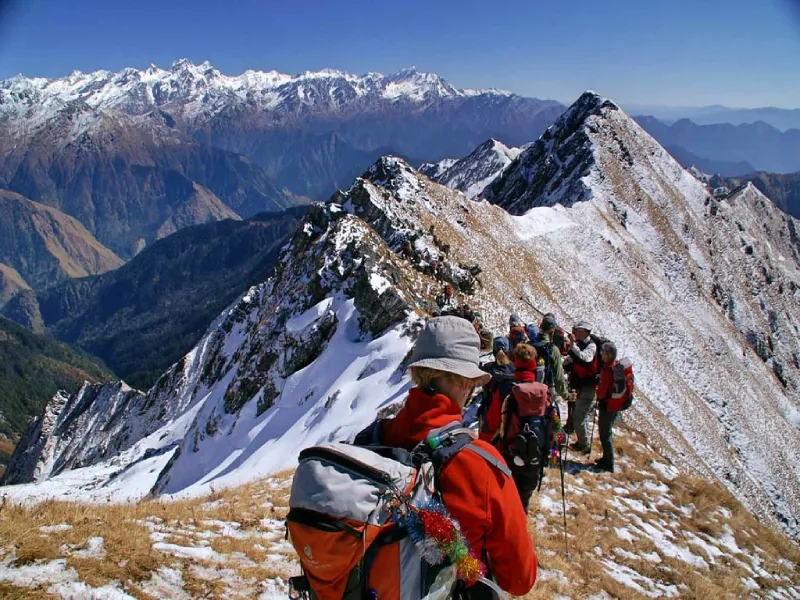
What Can You Expect on the Api Base Camp Trek?
On the Api Base Camp Trek, you can expect a journey far away from the modern cities of Nepal. The landscapes are raw and untouched with dense forests, rushing rivers and towering snow peaks that feels almost unreal if this is your first time trekking. Along the way, you will pass through small and quiet villages, far away from bustling cities where life is simple as the time itself is moving slowly.
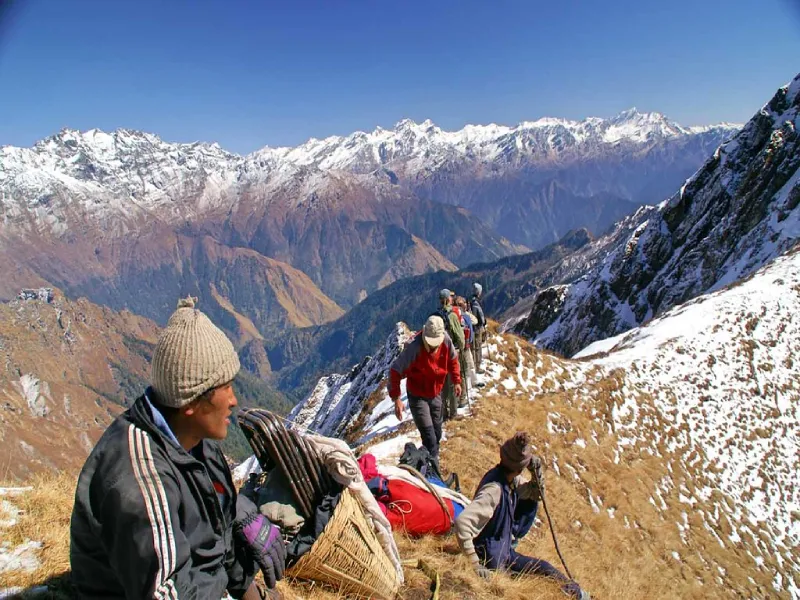
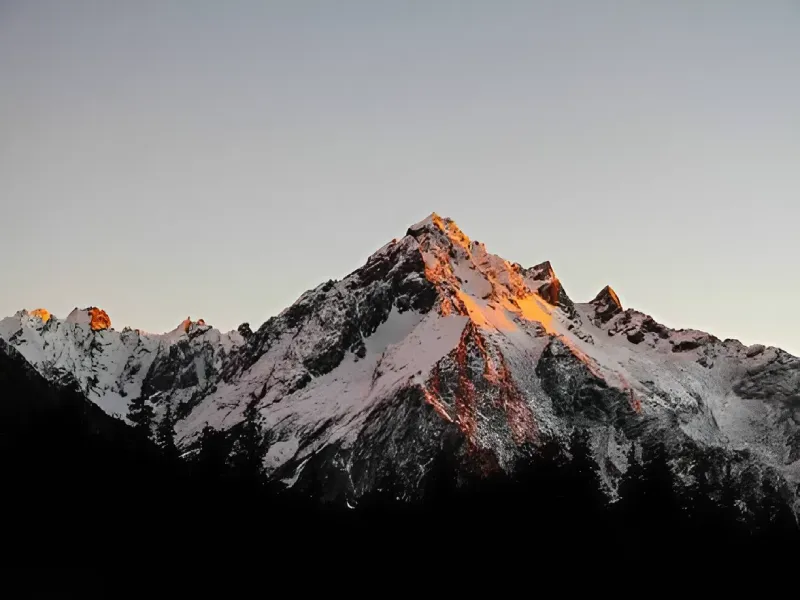
During the trek you can expect a challenging trekking route with steep path, long walking days and limited facilities, but in exchange you will get a real sense of adventure, solitude, and connection with nature. Expect stunning views of Mount Api, Saipal and other surrounding peaks with peaceful nights under the stars and a chance to experience authentic local culture and traditional Nepalese food in local Tea house.
Difficulty Level of Api Base Camp Trek
The Api Base Camp Trek is generally considered a moderate to challenging trek because it is located in the most remote parts of Nepal. The trails are long and sometimes steep, with days when you walk for 6 to 8 hours or even more if the route is difficult. The altitude is not very high compared to Everest Base Camp, but some parts still reach over 4,000 meters, so trekkers may feel a sign of altitude sickness because of thin air.
The highest point you would reach during this trek is Api Base Camp, which is located at an altitude of 4,200 meter and getting altitude sickness is quite common at such altitudes. If anything goes wrong, the remoteness of area also makes it difficult for any rescue or medical assistance.
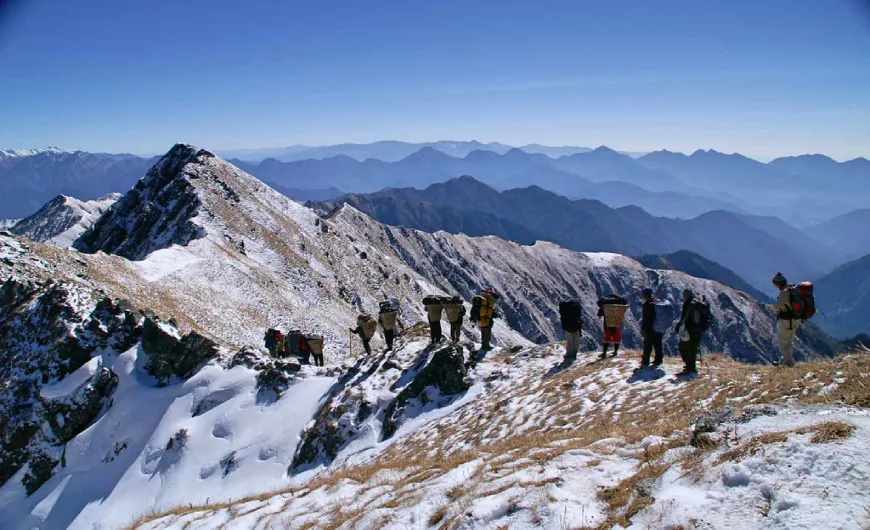
The trail itself is very difficult and sometimes even unmarked. While some parts traverse through dense forest and slippery terrain, there are other parts which are very exposed with significant elevation gain. The journey from Siti to Daulo Odar and finally to Api Base Camp is especially challenging.
But it is because of such difficulties that makes the trek worthwhile as well. This enables them to have experiences which would be unattainable for the easier trails. There is no fun, when you get what you want without any effort.
Cultural Experience
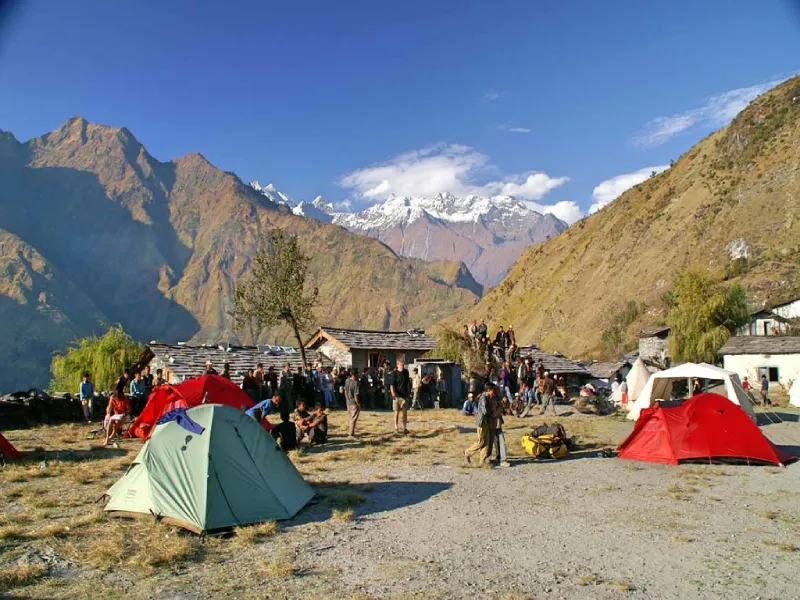
The most special thing about Api Base Camp Trek is that it offers great insight into the local culture. The villages in this area are very small and basic built with stones. Here, life moves at its own pace which seem slower than usual, and the people are very kind and welcoming, always ready to greet trekkers with warm smiles, making you a part of this village. The teahouses and the lodges you find along the Api Base Camp Trek are also very basic but they give you an authentic and real feeling that is unforgettable even after you finish the trek.
During the Api Base Camp trek, you can see children waving, elders watching curiously and locals doing their work. The life of the locals is very connected to nature. Most people farm their land, depend on the animals, and cook simple food from what the land provides.
In some local festivals like Dashain and Tihar, you can see locals wearing traditional clothing, cooking meals over firewood, dancing and celebrating with their families. Because the Api Base Camp is located in remote region, these festivals are celebrated in a very traditional way, different from modern cities, giving trekkers a glimpse into true Nepalese culture.
Language and Communication
The official language of Nepal is Nepali and through the country, Nepali is spoken widely. English will also be understood and spoken in the major cities and in tourist areas where hotel, guide and other tour operator work.
But on the Api Base Camp Trek, you trek through some of the remotest area of Nepal, where some people don’t even know basic English. On your way to Api Base Camp, you will encounter communities speaking language other than English. They mainly speak Shauka and Bhotiya language along with Nepali language.
And this is why getting a local guide is highly recommended during the Api Base Camp Trek Itinerary. The guide will help you get through any linguistic barriers and provide you with deeper interaction opportunities within local communities. Underestimating the importance of local communication would be a mistake.
If you want to communicate with local without any guide carry a basic phrasebook in Nepali language or downloading a translation app in Nepali language which can be really useful on this trek. Even learning some basic words in Nepali like saying “Namaste” as a greeting and “Dhanyabad” as thank you can make quite an impact on the locals.
Local Tea Houses and Foods
The accommodation along the Api Base Camp Trek is very simple and basic but comfortable enough to rest for the night. Most of the tea houses are run by local families providing a cozy and comfortable room for the trekkers.
They provide basic rooms, simple beds, shared bathroom and a stove for warmth. Without the modern comforts, it gives trekkers a true village feeling, allowing trekkers to connect with local life of the remote Himalayan region.
Meals at this place are also basic and limited but they enough to fulfill and restore energy for the next day’s journey. Most tea houses serve Nepalese food like dal bhat, noodles, eggs and local vegetables, giving you a taste of authentic mountain food. These simple yet real experiences make the journey unforgettable.
Preparation for Api Base Camp Trek
Preparation is everything that sets apart an unforgettable experience from an awful trek. It is located in one of the remoted part and restricted area of Nepal, so preparation before the Api Base Camp Trek requires more effort in advance.
Training should begin two to three months before the actual trekking. Cardio activities such as running, hiking, stair climbing and bicycling need to be done to build stamina and strength, particularly for legs, because it is going to be a tough trekking with a heavy load on leg for hours.
Do yourself a favor by packing only essential thing and keeping weight light as possible. Pack warm sleeping bag, stable stick, waterproof boots, layered clothes, raincoat and a headlight. Do not compromise with quality in the purchase of this equipment for such a challenging trip.
Good health is also equally important. You should see your doctor before leaving to learn about avoiding altitude sickness. Pack a first aid kit that contain medication for things like blisters, gastrointestinal problems, and headaches. You can also consider taking diamox for adjusting to high altitudes.
It is very important that you study the Api Base Camp Trek Itinerary before heading out on your adventure. This way you will have an idea what you are expecting every day.
Mobile Network, Wifi and Charging facilities
The network on the Api Base Camp Trek route have very limited and inconsistency connectivity. You will have access to all type of mobile connection, internet connectivity and power charging in Kathamandu and Dhangadi without any problems, but after entering the remote area, don’t expect it to be same as before.
There are mainly two companies for mobile network: NCELL and NTC. Both works better in lower altitude, but in higher altitude NTC is slightly better than Ncell. Slightly better doesn’t mean it will provide reliable network. Better if you don’t depend on in at higher altitudes.
There are no traces of Internet connectivity on the trail. The few teahouses located in the bigger stopover villages might provide internet services with some fee, but you can expect that to be both unreliable and slow.
During the trek, it is possible to find charging points in some of the teahouses on the trail, but they cannot be expected everywhere. Instead carrying a power bank is more reliable which can charge your device 2 to 3 times
Require Permits for Api Base Camp Trek
Travelling to Nepal is very easy for all tourist from around the world. You just need a Nepal Tourist Visa which you can obtain after landing in Tribhuvan Internation Airport or apply for the visa online through the official website of Nepal Immigration Department.
Trekking to Api Base Camp is very different from ordinary trekking trails. You will require some important permits and proper preparation before starting this Api Base Camp Trek as it is located in one of the most remote regions.
The trek take place in Api Nampa Conservation, so you must have Api Nampa Conservation Area Permit which helps for conserving environment and support local community.
A TIMS card, which stands for Trekkers Information Management System, is also necessary for almost all trekking paths in Nepal. It is mandatory for tracking trekkers in remote areas since they usually operate in restricted regions in Nepal. As it leads to restricted areas that are near Tibet and India, Restricted Area Permit is also require for the Api Base Camp View Trek.
It is also highly recommended to go with an experienced guide. The trekking trails of the Api Base Camp Trek are often not well marked, villages are at a far distance, and local knowledge is crucial for both navigation and safety. Having an experienced guide makes the trek more knowledgeable and smoother and ensures safety.
Travel Insurance
Travel insurance is not an option thing when you go on Api Base Camp View Trek. This trek takes you through one of the remotest parts of Nepal, and there are no proper emergency medical services available. In case any accident occurred, the only option would be helicopter evacuation which is very expensive without any insurance support.
While purchasing insurance, make sure it covers trekking at high altitude above 5000 meters because many standard plans doesn’t cover this. In addition, your policy must cover other things like trip cancellation, lost luggage, and hospital expenses.
Make sure that you purchase your travel insurance while still in your home country. To purchase travel insurance there are some reputable you can purchase through and they are World Nomads, SafetyWing, and Allianz, these are just a few examples of international travel insurance that suits high-altitude treks.
Health and Safety on Api Base Camp Trek
Health and safety must be your topmost priorities while on this trek. Due to the remoteness of the trek, any help in an emergency will only reach after a lot of time. It is always better for you to make sure that your body is healthy throughout the entire trekking process.
Altitude sickness is one of the biggest dangers of this trek. Its symptoms are nausea, dizziness, headache, and exhaustion. If any of these occurs tell your guide about it or descent immediately. When you have symptoms of altitude sickness never ascend.
Keep yourself hydrated while trekking. Make sure to drink at least three to four liters of water daily and avoid consuming alcohol, particularly in the beginning days of the trek when body is adjusting to high altitude.
Another crucial thing to maintain is food hygiene. What you eat during the trek determine your health condition throughout the trek. Always eat fresh and hot food and avoid eating raw vegetable and unpeeled fruits. This could affect the entire journey negatively if one is not careful about the food intake.
Don’t forget about using sunscreens at high elevations. UV rays are extremely strong above 3,000 meters, which means it is necessary to use sunscreens that have high SPF.







 Share
Share