Langtang Valley Trek
75 reviews in Tripadvisor
Trip Duration
11 DaysDestination
NepalMax. Altitude
4,947 m.Trip Difficulty
EasyGroup Size
1-15Transportation
Tourist VehicleAccommodation
Hotel/TeahouseActivity
TrekkingMeals
All InclusiveStart / End
KathmanduRegion
LangtangBest Season
Spring, AutumnUS$ 650
Need Help? Talk to Expert
+977 9764792172Trip Overview
Langtang, a trekking destination to the valley surrounded by snow-capped peaks and glaciers. Easily accessible, and is located just north from Kathmandu. Perfect for both experienced and beginner trekkers, Langtang Valley Trek offers a beautiful mix of dramatic mountain scenery, traditional Tamang culture, and rich biodiversity.
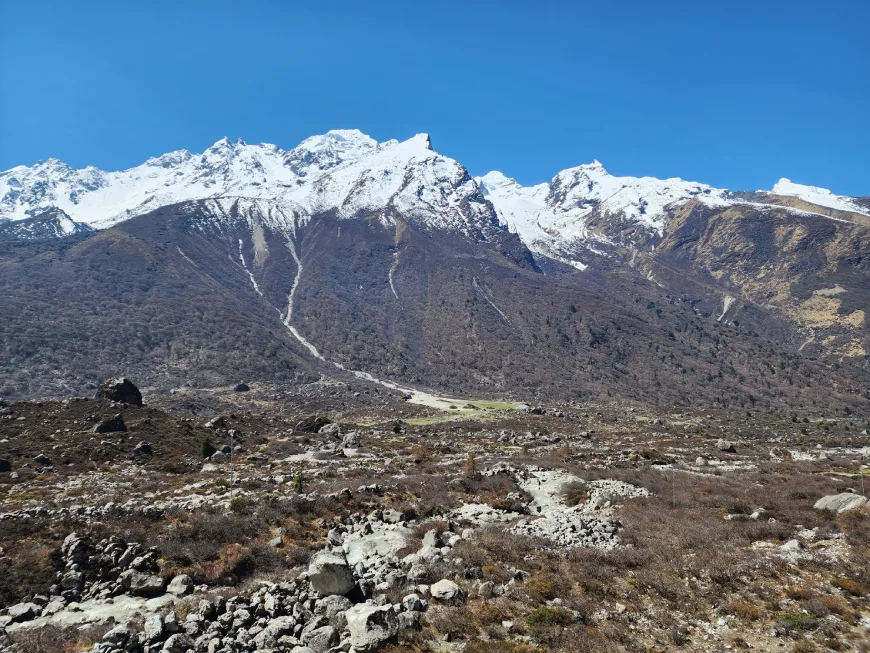
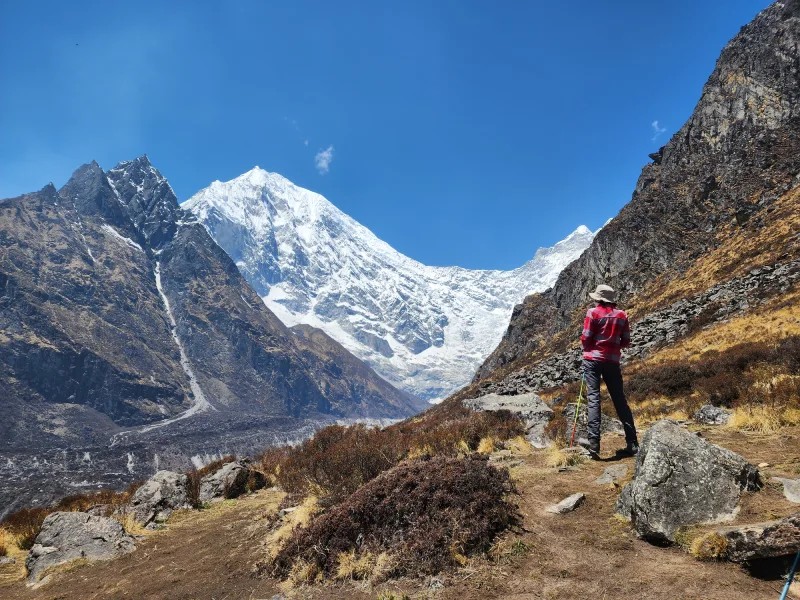
The route leads through the heart of Langtang National Park, following flowing streams and rivers through dense oak and pine forests filled with rhododendrons. Situated in Rasuwa District of Nepal the total Area of the park is 1,710 sq km. It feels remote with its rocky cliffs and challenging terrain, which in return reward trekkers with spectacular sunrise views and panoramic close-ups of a giant peaks including Langtang Lirung (7,227m), Dorje Lakpa, and Gangchempo.
Between the range of Ganesh Himal and Jugal Himal, this trek is relatively short starting from Syabrubesi, which is about 122 km from Kathmandu and takes 6-7 hours in jeep. And after the night in Syabrubesi, next morning be prepare to head towards Lama Hotel through dense oak, rhododendron & bamboo forest following the Langtang Khola, which is about 11 km in distance and could take 6-7 hours to reach Lama Hotel. Another day you will reach Langtang Village, passing the charming villages like Ghora Tabela – witness the first glimpse of mountain (Langtang Lirung) on the way.
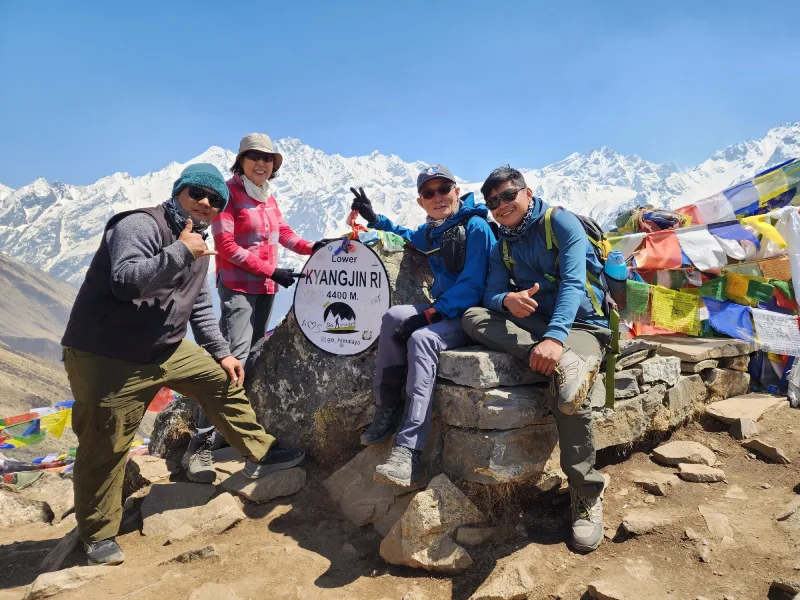
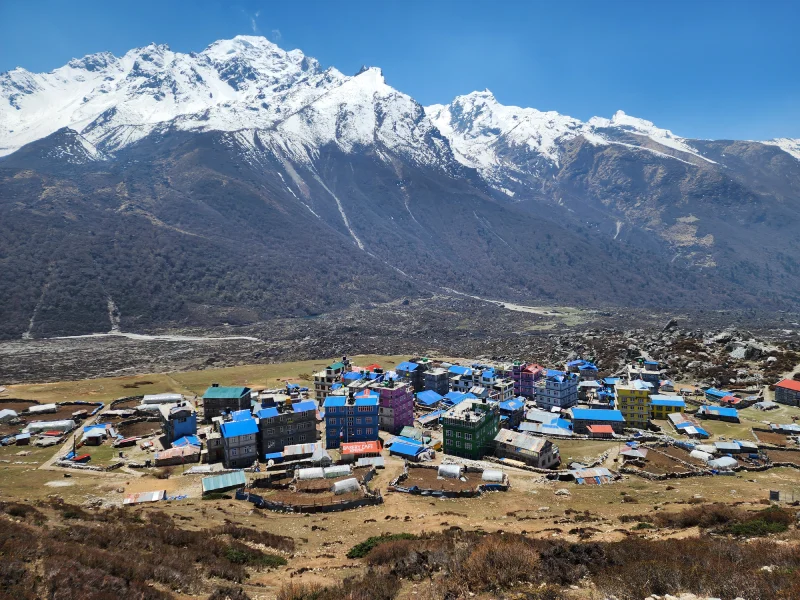
This is the rebuilt village after the 2015 earthquake. After the night at Langtang village with traditional Tamang hospitality, go toward Kyanjin Gompa. It is a 4-5 hour trek with mesmerizing views of Kyanjin Ri, Langtang Lirung Glacier, Tserko Ri and many more. You can also visit the sacred Kyanjin Monastery and explore the cheese factory there. The next day, reach Tserko Ri for mesmerizing views Langtang Himalayas. If possible view the sunrise over Langtang Lirung, Yala Peak, Dorje Lakpa and Gangchempo. Push yourself a little more and hike to Langshisha Kharka for breathtaking 360° panoramic view. After reaching there, return via the same route through Langtang to Lama Hotel then Syabrubesi and drive back to Kathmandu.
It feels cleansing inside you while trekking in this trail, a quiet and meaningful travel. Langtang is a living story, according to local stories there was a lama who used to take his yaks to the fields for grazing and one day as usual he took his yaks to the fields and one of his yaks got lost. While he was searching his lost yak, he reached a valley suitable for farming and growing crops and then he settled there with his family and belongings. From one family to another, the community grew along with the infrastructure.
Who can join the Langtang Valley Trek
The Langtang Valley Trek is suitable for many types of trekkers, regardless of whether they are new to trekking or seasoned hikers. For those who have decent fitness levels and like hiking for up to 5–7 hours daily, this trek will be quite easy to undertake. There are no conditions regarding previous trekking experience needed for the Langtang Valley Trek, so it is a good option for a beginner trekker to start with.
Langtang Valley Trek itinerary fits any type of traveler: solo trekkers, couples, families, and even small groups. This trekking route is popular among the ones trying trekking for the first time, due to its perfect balance between being challenging enough and convenient to do. The way is well marked, with tea houses all around that offer food and accommodation. Elder trekkers can easily enjoy this trip provided they maintain their physical fitness level.
Langtang Valley Trek is popular among photographers, nature enthusiasts, and people seeking culture and heritage. As you travel through traditional village settlements, you will get to meet the locals in person, giving your journey an important dimension. People who love trekking through less congested routes find that this area provides just that.
Anyone who is fit enough and prepares properly is capable of enjoying the trek in the Langtang Valley. With the right frame of mind and appropriate acclimatization, any healthy individual can participate in the trek.
Highlights of Langtang Valley Trek
- Panoramic vistas of Langtang Lirung (7,234m), Ganesh Himal, and Himalayan peaks over 6,000m
- 360-degree mountain panoramas from the trek’s highest viewpoint
- Authentic Buddhist monasteries, traditional villages, and local customs
- Famous yak cheese factory at Kyanjin Gompa
- Red pandas, Himalayan black bears, snow leopards, and 373 bird species
- Rare relaxing hot water springs along the trail
- Reach 5,000m without crossing dangerous high passes
Photo Gallery & Video Gallery
Langtang Valley Trek - Distance, Duration, and Altitude
| Trekking Route | Distance (Kilometers) | Duration (Hours) | Altitude (Meters) |
|---|---|---|---|
| Syabrubesi to Lama Hotel | 11 KM | 6 to 7 hours | 2470 m. |
| Lama Hotel to Langtang Village | 14 KM | 5 to 6 hours | 3430 m. |
| Langtang Village to Kyanjin Gompa | 6.8 KM | 3 to 4 hours | 3870 m. |
| Tserko Ri hike (from Kyanjin Gompa) | 8 KM | 5 to 6 hours | 4984 m. |
| Kyanjin Gompa to Lama Hotel | 21 KM | 6 to 7 hours | 3870 m. |
| Lama Hotel to Syabrubesi | 11 KM | 7 hours | 2470 m. |
Itinerary of Langtang Valley Trek
Day 01: Arrival in Kathmandu (1,324m
Upon arrival at the Kathmandu airport, you’ll be greeted by one of our representatives and transferred to your hotel. During this short road journey, you’ll have a first impression of this exciting city through its busy and colorful streets. It is just a complete overload for all senses! Once you’ve checked into your hotel, you can take some rest or even go out and explore the vibrant area of Thamel that has many tourist-related stores, restaurants, and coffee shops. On this first day, you only need to recover from your travel, relax and prepare yourself. You could visit some places in the vicinity, savor local delicacies or rest in your hotel room. In the evening, you could receive a brief presentation regarding your Langtang Valley Trek itinerary.
Activity: 35 min drive
Max. Altitude: 1324m./4,344ft. (Kathmandu)
Accommodation: 3 Star hotel
Day 02: Sightseeing and Trek Preparation in Kathmandu (1324m)
On today’s tour, you visit several UNESCO World Heritage sites in Kathmandu, including Kathmandu Durbar Square, Pashupatinath Temple, Swayambhunath and Boudha stupa. These attractions will give you a good insight into the cultural history and heritage of Nepal. Don’t miss the opportunity to see the famous monkey temple, which offers a spectacular view of the entire valley.
The afternoon session will be spent getting ready for the trek. Today is mostly a “business” day in which you will go through your gear and meet your guide and other people from your trip. You will also arrange any necessary permits. This day will help you acclimatize to the local surroundings.
Max. Altitude: 1324m./4,344ft. (Kathmandu)
Meal: Breakfast
Accommodation: 3 star hotel
Day 03: Drive from Kathmandu to Syabrubesi (1946m)
This day starts off with an early drive to Syabrubesi from Kathmandu. The road is picturesque, and it takes around 7-8 hours to reach the destination. Along the way, there is an abundance of hills, rivers, and terraced lands. Traditional settlements can be seen on the route with stunning mountain ranges on the horizon. It takes you about 7–8 hours to get there through a pleasant trip, and then you finally arrive in Syabrubesi, a cool little village located at the entrance of the Langtang Valley Trek. This is a place where you spend your first night preparing yourself for the trek.
Activity: 7-8 hour drive
Max. Altitude: 1946m./6,385ft. (Syabrubesi)
Meal: Breakfast, Lunch, Dinner
Accommodation: Standard Teahouse
Day 04: Trek from Syabrubesi to Lama Hotel (2470m)
Today, your Langtang Valley trek officially starts. Well, now is the time to put your boots to good use. There will be a bridge crossing and then an exciting walk along the banks of the Langtang river. You might also encounter some animals like monkeys and birds on the way.
There will be some climbs involved in the journey and maybe some slopes too. But there is no need to worry because you have plenty of forest and water around you. It might get sweaty sometimes, but you will have a nice and serene walk overall. After about 5–6 hours of walk, you will reach your destination point called Lama Hotel.
Activity: 5 to 6 hours
Max. Altitude: 2470m./8,104ft. (Lama Hotel)
Meal: Breakfast, Lunch, Dinner
Accommodation: Teahouse
Day 05: Trek from Lama Hotel to Langtang Village (3430m)
This day, you will walk further deep inside the valley of Langtang. This journey begins with walking through the dense forest, then it opens up into the valleys. The temperature starts becoming slightly cooler. As you walk by the river, you pass through Ghoda Tabela and take your lunch break here.
By the afternoon, you reach Langtang Village. It has a strong influence of Tibetan culture. It is a peaceful place here. There are various houses that you can visit and meet the locals. Here, the Langtang Valley View Trek becomes beautiful to witness.
Activity: 5-6 hours
Max. Altitude: 3430m./11,253ft. (Langtang Vilage)
Meal: Breakfast, Lunch, Dinner
Accommodation: Teahouse
Day 06: Trek from Langtang Village to Kyanjin Gompa (3870m)
A slightly shorter but beautiful day awaits us ahead. As the altitude is rather high already, we move more carefully. There will be many yak pastures, stream crossings, and some nice views as the route ascends to Kyanjin Gompa, a tranquil village in the mountains. The main feature of today’s trek is the majestic Langtang Lirung, the mountain that stands right above the valley we are hiking in. Wow! It is huge! Visit the monastery and even the cheese factory in the vicinity. Believe me, try some cheese – it is delicious. We spend one more day on the Langtang Valley Trek itinerary.
Activity: 3-4 hours
Max. Altitude: 3870m./12,697ft. (Kyanjin Gompa)
Meal: Breakfast, Lunch, Dinner
Accommodation: Teahouse
Day 07: Explore Kyanjin Gompa and climb Tserko Ri (optional)
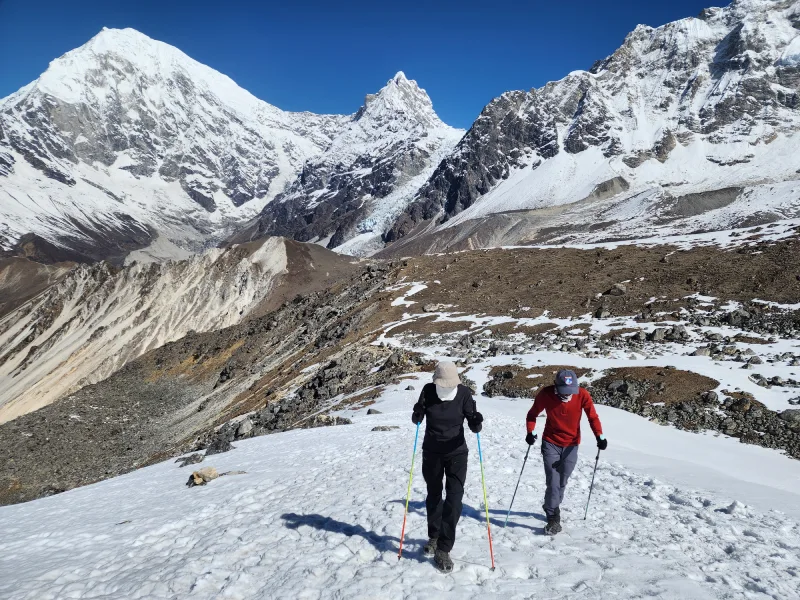
This day is acclimatization day, where you will stay at Kyanjin Gompa for your body to adjust to low oxygen level. During this stay you can explore Kyanjin Gompa and go for an optional hike to Tserko Ri for an incredible sunrise view and even wider mountain panoramas.
Activity: Kyanjin Ri- 3 hours, Tserko Ri: 8 hours
Max. Altitude: 4984m./16,352ft. (Kyanjin Gompa)
Meal: Breakfast, Lunch, Dinner
Accommodation: Teahouse
Day 08: Trek from Kyanjin Gompa to Lama Hotel (2470m)
Begin your return journey and descend to Lama Hotel following the same trail. You will pass through the same landscape but from a different perspective which gives the feeling of nostalgia. The trail passes through the Langtang river, passing through yak pastures, and small tea houses. Along the way spot some wildilife and we will stop for lunch at the same place, Ghoda Tabela. In the evening you will reach Lama Hotel for an overnight stay.
Activity: 6 to 7 hours
Max. Altitude: 2470m./8,104ft. (Lama Hotel)
Meal: Breakfast, Lunch, Dinner
Accommodation: Teahouse
Day 09: Trek from Lama Hotel to Syabrubesi (1946m)
Continue your descending to journey from Lama Hotel to Syabrubesi following the same route. The route feel much more easier with every steps, the air becomes warmer and you can see the forest getting denser. In the evening, you will reach Syabrubesi and you can enjoy meal and relax in a comfortable teahouse.
Activity: 4 to 5 hours
Max. Altitude: 1946m./6,385ft. (Syabrubesi)
Meal: Breakfast, Lunch, Dinner
Accommodation: Teahouse
Day 10: Drive back to Kathmandu (1334m)
This is your last day. You will begin the day with a breakfast in Syabrubesi, then drive back to Kathmandu, enjoying one final look at the beautiful hills, landscape and rural village of Langtang region. After reaching Kathmandu, spend the day relaxing, celebrating your successful trek, or exploring the city’s markets for souvenirs. In the evening, enjoy a complimentary local dinner hosted by our company to celebrate your successful completion of Langtang Valley Trek.
Activity: Approx. 7 hours
Max. Altitude: 1324m./4,344ft. (Kathmandu)
Meal: Breakfast, Lunch, Dinner
Accommodation: 3 Star Hotel
Day 11: Departure
You will be transferred to the airport for your departure, marking the end of your memorable Langtang Valley Trek.
Activity: 35 min drive
Meal: Breakfast
Includes/Excludes
What is included?
- Permits and Fees: All necessary permits for the Langtang Valley Trek, including the Langtang National Park entry permit and the TIMS (Trekkers’ Information Management System) card.
- Accommodation: Accommodation throughout the trek, typically in teahouses or lodges. This generally includes accommodation in Kathmandu before and after the trek in 3 star hotel on BB plan. (twin sharing basis)
- Meals: Most packages will include three meals a day (breakfast, lunch, and dinner) during the trek.also includes two times hot beverage (in breakfast and lunch) and seasonal fruits after dinner.
- Transportation: Ground transportation from Kathmandu to Syabru Besi (or a similar starting point) and back.
- Guide and Porters: Services of an experienced English-speaking trekking guide and porters to carry luggage. This includes their salary, insurance, equipment, food, and accommodation.
- First Aid Kit: A basic first aid kit.
- Trekking Map: A map of the trekking route.
- Equipment: Duffle Bag, Sleeping Bag (if necessary)
- pick up drop up: airport pick up and drop up by private vehicle.
What is not included?
- International Flights: International airfare to and from Nepal is not included.
- Travel Insurance: Travel insurance that covers emergency rescue and evacuation is not included, and you’ll be expected to have your own.
- Personal Expenses: Expenses for extra meals, drinks, snacks, charging devices, hot showers, Wi-Fi, and other personal costs are not included.
- Nepal Visa Fees: Entry visa fees for Nepal.
- Additional Accommodation and Meals: If you choose to extend your stay in Nepal, the cost of additional accommodation and meals will not be included.
- Rescue and Evacuation: Any costs related to emergency evacuation or rescues are not covered.
- Trekking Gear: Personal trekking equipment, such as hiking boots, down jackets, trekking poles, and other gear are not included.
- Tips: Tips for guides and porters are not included and are left to your discretion.
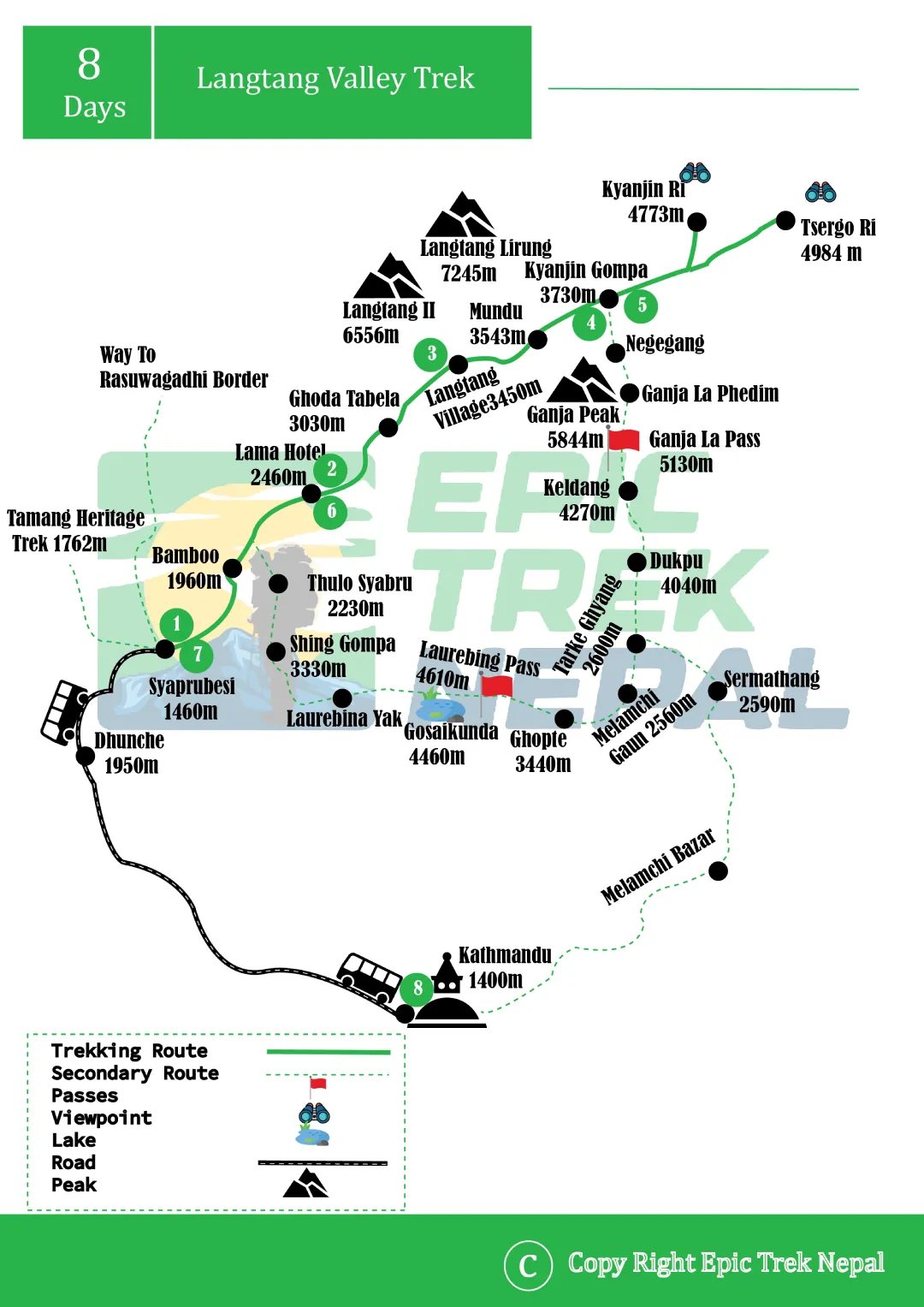
Trip Map of Langtang Valley Trek
Trip Information
Difficulty Level of Langtang Valley Trek
Langtang Valley Trek is classified as a moderate trek, so it is perfect for almost everyone. No worries, you do not have to be a long-distance runner, you just have to be prepared for 5-7 hours of walking every day on marked routes that steadily rise in elevation. This route will take you to the maximum height of your campsite at Kyanjin Gompa (3,870 meters), and if you decide to go for optional hikes such as Tserko Ri, then you will go past 4,900 meters. You can breathe easily now since you know the height of your destination.
There is no technical climbing involved in the trek. There are only rocky terrain, forest, and even some steep slopes, but nothing more than that. The trekking in the Langtang Valley View Trek might be challenging during the side hikes because of the thin atmosphere and the increased height. Besides, weather conditions can also add to the difficulty levels of the hike, particularly in winter, when snow falls along the route.
In reality, most hikers who undertake the Langtang Valley Trek have no difficulties at all as long as they maintain a positive attitude and walk slowly and steadily.
Preparation for the Langtang Valley Trek
Proper planning ensures that your Langtang Valley Trek adventure becomes an effortless one. It will pay off in the long run to begin with light exercise sessions a few weeks before your journey. No need to engage in intense workouts, simply concentrate on cardiovascular exercises that will make your legs strong and give you the required endurance for trekking.
In terms of equipment, you have to be well prepared for different climates. As you know, anything is possible up in the mountains, so make sure to pack layers, appropriate footwear, and some basic equipment such as a backpack, water bottle, and medical supplies. Remember that the Langtang Valley Trek Itinerary involves different heights, and it can get rather cold during nighttime regardless of the season.
Mental preparation is equally important. You will be going out in nature, so remain flexible and open to basic facilities offered by the tea houses. Please bear in mind that there will be instances where there may not be access to internet and power or at times, you may need to pay extra for the use of facilities such as internet and power and hot shower. Well, you have a lot of scenic beauty to look forward to on the Langtang Valley View Trek.
Going prepared with the help of an agency or guide will make things even more convenient for you. It removes any tension associated with being on the trails.
Language and Communication
There will be no language barrier while on the Langtang Valley Trek. During your stay in Kathmandu, the main language that is spoken by almost everyone is English in hotels, restaurants, and even trekking agents. It’s really very easy to communicate around here. On moving further up into the Langtang valley, you will find that people use Nepali and Tamang language, but almost all tea house managers and guides know a little bit of English.
Hiring a guide does not only help you reach your destination, but guides help you understand the culture of the area, make sense of traditions, and help you communicate. While following the Langtang Valley Trek Itinerary, you will be passing through many villages. In these villages, a few gestures and polite behavior will take you far.
Also, the Langtang Valley View Trek provides you with opportunities to explore the monasteries and interact with people. Believe me, knowing some Nepalese words such as “Namaste” will help you connect better. The beauty is that all it takes is a smile and a greeting.
Don’t on the trip
During the Langtang Valley Trek, some guidelines should be kept in mind so that you can respect the culture of the area as well as remain safe. Firstly, do not rush in your trekking, as it is dangerous when you ascend rapidly due to a greater chance of altitude sickness. There is no competition here!
Do not throw away garbage on the way. This one is quite important since you should always dispose of your waste properly and use bins wherever possible. The area you will travel in lies within Langtang National Park, and therefore, it is necessary to protect the environment from any damage.
Moreover, do not disrespect cultural traditions. If you visit a monastery, dress properly and ask for permission before taking pictures. During the Langtang Valley View Trek, you will pass many villages which are full of traditions, and hence, it is crucial to show respect and become a good guest of the community.
Additionally, do not totally depend on modern conveniences since there are no many opportunities for using them during your trekking journey. Just follow these pieces of advice, and you will have the best experience ever.
There will be charging points available at most hotels, but you might have to pay a little amount for it, probably a few dollars. Given that electricity supply is sometimes unreliable, you should consider bringing your own battery or a solar charger. Electricity is scarce in some places, particularly in the high villages. Being prepared always helps.
Trip extension and side trails
There are some side trips and extensions available on the Langtang Valley Trek which can help you extend your trekking trip or just make your adventure more interesting. In case you have enough time, you might want to add an excursion to Gosaikunda Lake – a beautiful lake at high altitude which is famous because of its religious importance. It’s quite a challenge, but I promise you that you will be able to get the most wonderful view of the landscape during this trip.
Another interesting thing that you can do in the Langtang Valley View Trek is climbing either of the viewpoints named Tserko Ri and Kyanjin Ri. You’ll see great views of the peaks and glaciers around while climbing. Though it may sound hard, especially when you get exhausted by walking, Tserko Ri deserves to be seen from above.
As far as extensions go, it is possible to include Helambu into your itinerary, as it is a place full of tranquility. Your itinerary for the Langtang Valley Trek can be arranged according to your preferences and time availability.
Mobile network, internet & charging facilities
The mobile network works in most sections of the Langtang Valley Trek, but it gets weak with increasing altitude. Network providers like NTC and Ncell function fine in the lower elevations like Syabrubesi, but when you reach areas like Kyanjin Gompa, the signal can get pretty weak, forcing you to roam around the tea house balconies to capture one bar of signal. Langtang Valley Trek Itinerary goes through some of those remote regions.
Many tea houses provide Wi-Fi internet, although at a cost. Just a little warning from me, the internet speed is very slow, yet adequate enough for communicating with friends and relatives by texting or taking pictures of your journey to send back to them. For the Langtang Valley View Trek, expect limited access to technology and embrace the lack of it.
There will be charging points available at most hotels, but you might have to pay a little amount for it, probably a few dollars. Given that electricity supply is sometimes unreliable, you should consider bringing your own battery or a solar charger. Electricity is limited in some places, particularly in the high villages.
Visa and Permits Required for Langtang Valley Trek
Travelers participating in the Langtang Valley Trek should have a valid tourist visa for Nepal and the necessary trekking permits. Worry not as obtaining a visa can be easily achieved upon arrival at Tribhuvan International Airport. Getting a visa doesn’t take long, and its costs will vary depending on the period of your visit, although you will just need some US dollars and passport photos ready.
There are two primary permits for the Langtang Valley Trek. First is the entrance permit for Langtang National Park, without which no one will be allowed to enter the national park. Next comes the TIMS (Trekkers’ Information Management System) card.
Langtang National Park Permit:
It is the official permit issued for trekking inside the premises of Langtang National Park, which stretches all the way through the trekking path from Syabrubesi to Kyanjin Gompa and beyond. Langtang National Park has been made keeping in mind to conserve the unique flora and fauna along with endangered species like the red panda and the Himalayan black bear.
Cost: NPR 3,000 per person
TIMS Card (Trekkers’ Information Management System):
It is used as an emergency rescue card for trekkers. There are various types of TIMS card depending on the area of trekking. One has to carry only the Green TIMS Card while trekking in the Langtang Valley as it is not the restricted area.
Cost: NPR 2,000 per person
If you’re trekking with a registered agency like ours “Epic Trek Nepal“, you have no need to worry, Just provide us:
- Copy of your passport
- Passport size photo.
Our team will arrange all the permits as part of the service package, making the process hassle-free for travelers who prefer to trek with Epic Trek Nepal.
Health and Safety
Health and safety are critical in making sure that you finish the Langtang Valley trek with success. Altitude is the major problem here since everyone suffers from it no matter how physically fit you are. The most important thing to remember while trekking is to walk slowly, hydrate often, and refrain from consuming alcohol. Save your celebration for later when you have descended from the mountains.
You should always pay attention to how your body feels. Whenever you notice symptoms such as headache, nausea, or dizziness, you should let your guide know straight away. Do not try to prove anything because it is always better to stop and take some rest. On the Langtang Valley View Trek, there are many opportunities to climb even further, but only if you feel healthy and well-adapted.
You just need to remember that basic medical assistance can be found in lower altitudes, while it is scarce in higher ones. It will never hurt to have your own emergency kit ready for any case. Moreover, it would help a lot to hire an experienced guide, since they can act faster in emergency situations.
Travel Insurance
It is crucial to have travel insurance while on the Langtang Valley Trek. It cannot be emphasized enough that this is an absolute must. The trek includes sections where the elevation is quite high. In such a scenario, anything unpredictable may arise at any point in time. The travel insurance plan must include coverage for high-altitude trekking, medical emergencies, and evacuation by helicopter. The latter is highly crucial since there are chances that in case you develop altitude sickness or even sprain your ankle, the only possible way to evacuate would be via helicopter.
Ensure that you get insurance with coverage of at least 5,000 meters because many side hikes in Langtang Valley View Trek exceed this altitude. Many standard insurance policies cover up to only 3,000 meters, and therefore, they will be useless in the case of the Langtang trek. Ensure that your policy covers for delays, lost luggage and trip cancellations, among other issues, in case things take a bad turn.
It is advisable to have both physical and online copies of your insurance in the case of a Langtang Valley Trek Itinerary. This will be important for your guide/agency before you commence your journey, so that they have an easy time identifying your emergency contact person. Having such reliable insurance gives you confidence and allows you to concentrate fully on your adventure.
Frequently Asked Questions
YES – The Langtang Valley Trek is considered one of the best beginner treks in Nepal. It’s a short and easy trek suitable for people of any age, requiring no technical climbing skills. The trek involves 5-7 hours of walking daily on well-marked trails with gradual altitude gain.
Why it’s beginner-friendly:
- Moderate difficulty level
- Good teahouse infrastructure
- Shorter duration (5-8 days)
- Lower maximum altitude (3,900m at Kyanjin Gompa)
- Close to Kathmandu (only 7-8 hours drive)
IMPORTANT UPDATE: In February 2025, Langtang National Park officials sent a letter to trekking agencies requesting that all trekkers use guides. While not yet legally mandatory, it’s strongly recommended and may become required soon.
Benefits of hiring a guide:
- Enhanced safety and navigation
- Cultural insights and language help
- Support during emergencies
- Compliance with park recommendations
Cost: Local guides typically charge $25-35 USD per day.
Two permits required:
- Langtang National Park Permit: NPR 3,000 (~$22 USD)
- TIMS Card: NPR 2,000 (~$15 USD)
Where to get them:
- Nepal Tourism Board office in Kathmandu
- Entry checkpoint at Dhunche/Syabrubesi
- Through your trekking agency
Required documents: Passport and 2 passport-sized photos
Epic Trek Nepal pricing:
- Solo Trekker: $698 per person
- 2-3 person: $650 per person
- 4-6 person: $600 per person
- Group over 7: $580 per person
Includes all permits, accommodation, meals, guide, porter, and ground transportation (no flights required).
Major cost components:
- Transportation to/from Syabrubesi: $40-80 USD
- Guide: $25-35 USD per day
- Porter: $20-25 USD per day
- Food & accommodation: $25-40 USD per day
- Permits: $37 USD
Standard duration: 7-8 days is most popular
Itinerary options:
- Quick trek: 5-6 days (basic valley only)
- Standard: 7-8 days (includes Kyanjin Gompa exploration)
- Extended: 10-12 days (adds side trips like Tserko Ri)
The trek can range from 5 days to 20 days depending on your chosen package and itinerary.
Optimal seasons:
- Spring (March-May): Clear views, rhododendron blooms, moderate temperatures
- Autumn (September-November): Best visibility, stable weather, comfortable hiking
Avoid:
- Monsoon (June-August): Heavy rain, leeches, landslide risk
- Winter (December-February): Very cold, snow at higher elevations, some teahouses closed
Difficulty: Moderate – suitable for beginners with basic fitness
Physical requirements:
- Ability to walk 5-7 hours daily
- Climb uphill for extended periods
- Carry a daypack (8-12 kg)
Training recommendation: Start preparing 4-6 weeks before with regular hiking, cardio, and leg strengthening exercises.
Age range: Suitable for ages 12-70 with good health
Maximum altitude: 3,900m (Kyanjin Gompa) – moderate altitude risk
Prevention tips:
- Ascend gradually (don’t rush to high altitude)
- Drink 3-4 liters of water daily
- Take a rest day at Kyanjin Gompa
- Avoid alcohol and sleeping pills
- Descend immediately if symptoms worsen
Symptoms to watch: Headache, nausea, dizziness, fatigue
Essential gear:
- Clothing: Layering system (base, insulating, shell layers)
- Footwear: Sturdy trekking boots, warm socks
- Sleeping: Sleeping bag rated to -10°C
- Protection: Sun hat, sunglasses, sunscreen, rain gear
- Safety: First aid kit, headlamp, water purification
Weight limit: If using a porter, maximum 15-20 kg total
Accommodation: Teahouses (basic mountain lodges) with twin beds and shared bathrooms. Blankets provided but bring your own sleeping bag.
Food options:
- Dal Bhat (rice, lentils, vegetables) – most nutritious
- International dishes (pasta, pizza, pancakes)
- Hot drinks and snacks
Meal costs: $3-8 USD per meal (prices increase with altitude)
Water: Bottled water available or use purification tablets
Trip Reviews
US$ 650
Need Help? Talk to Expert
+977 9764792172