Everest Three Pass Trek
75 reviews in Tripadvisor
Trip Duration
20 DaysDestination
NepalMax. Altitude
5,550 m.Trip Difficulty
ChallengingGroup Size
1-12Transportation
Tourist VehicleAccommodation
Hotel/TeahouseActivity
Trekking/HikingMeals
All inclusiveStart / End
KathmanduRegion
EverestBest Season
Spring, AutumnUS$ 1750
Need Help? Talk to Expert
+977 9764792172Trip Overview
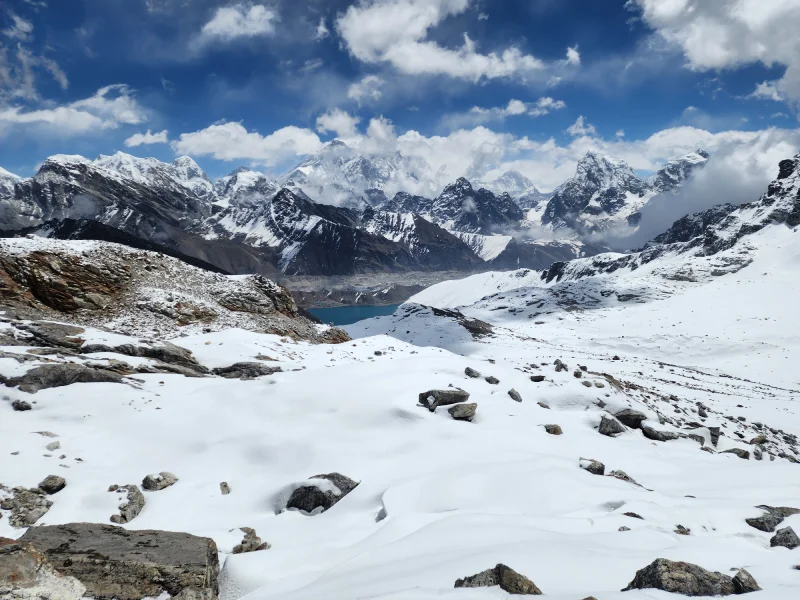
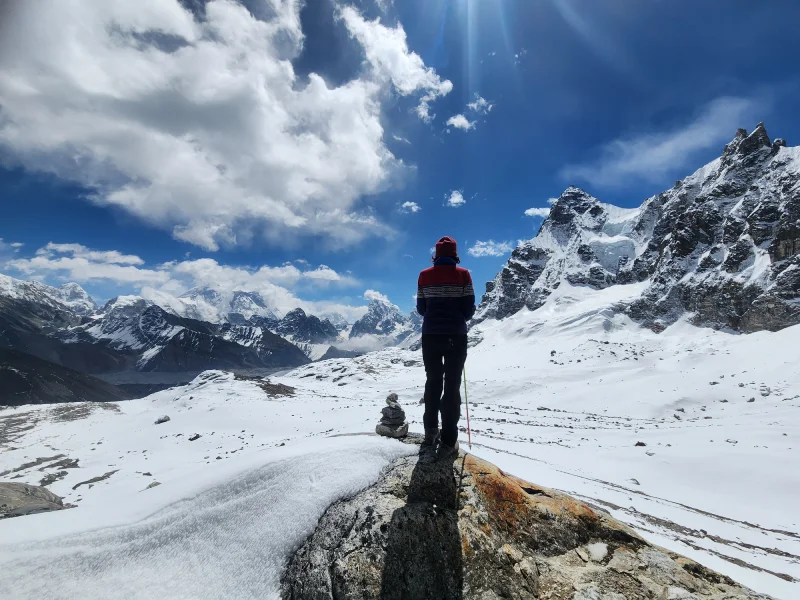
Everest Three Pass Trek is considered to be one of the most impressive high altitude treks worldwide. It provides an opportunity for travelers to immerse in the true nature of the Khumbu region with a number of mountain passes to pass across, such as Khongma La (5,535 m), Cho La (5,420 m) and Renjo La (5,338 m).
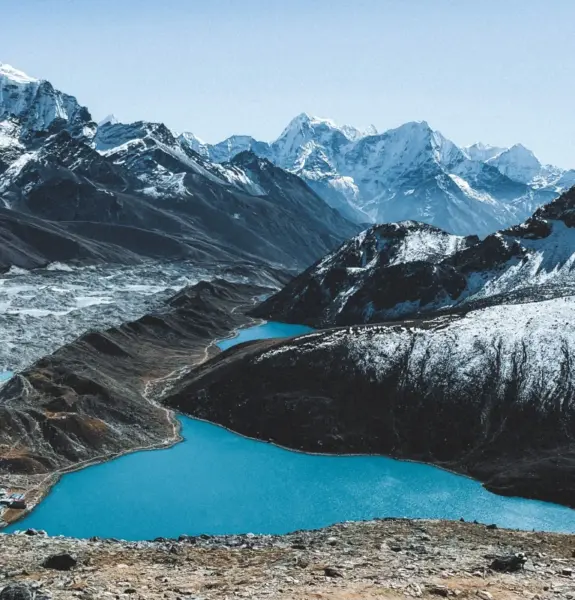
Apart from the spectacular mountain passes, you will also come across some of the most scenic locations along the way, including Everest Base Camp, an ascent of Kala Patthar to witness a breathtaking sunrise view of Mount Everest, and the amazing Gokyo Lakes. You will pass through many old and well-preserved Sherpa villages, Buddhist monasteries, and forest trails of rhododendrons and pine trees.
It covers a distance of 160 – 170 km in around 20 days. This trek is not linear like other Everest treks but loops around the whole of the Khumbu valley, providing a much more varied and spectacular itinerary.
The unique experience of this trek is the combination of both famous landmarks and lesser-known spots. You will be standing at the base camp of Mount Everest. You will walk over snow-covered passes and sit by beautiful alpine lakes. In summary, everything you need from a trekking experience is available in the Everest Three Pass View Trek.
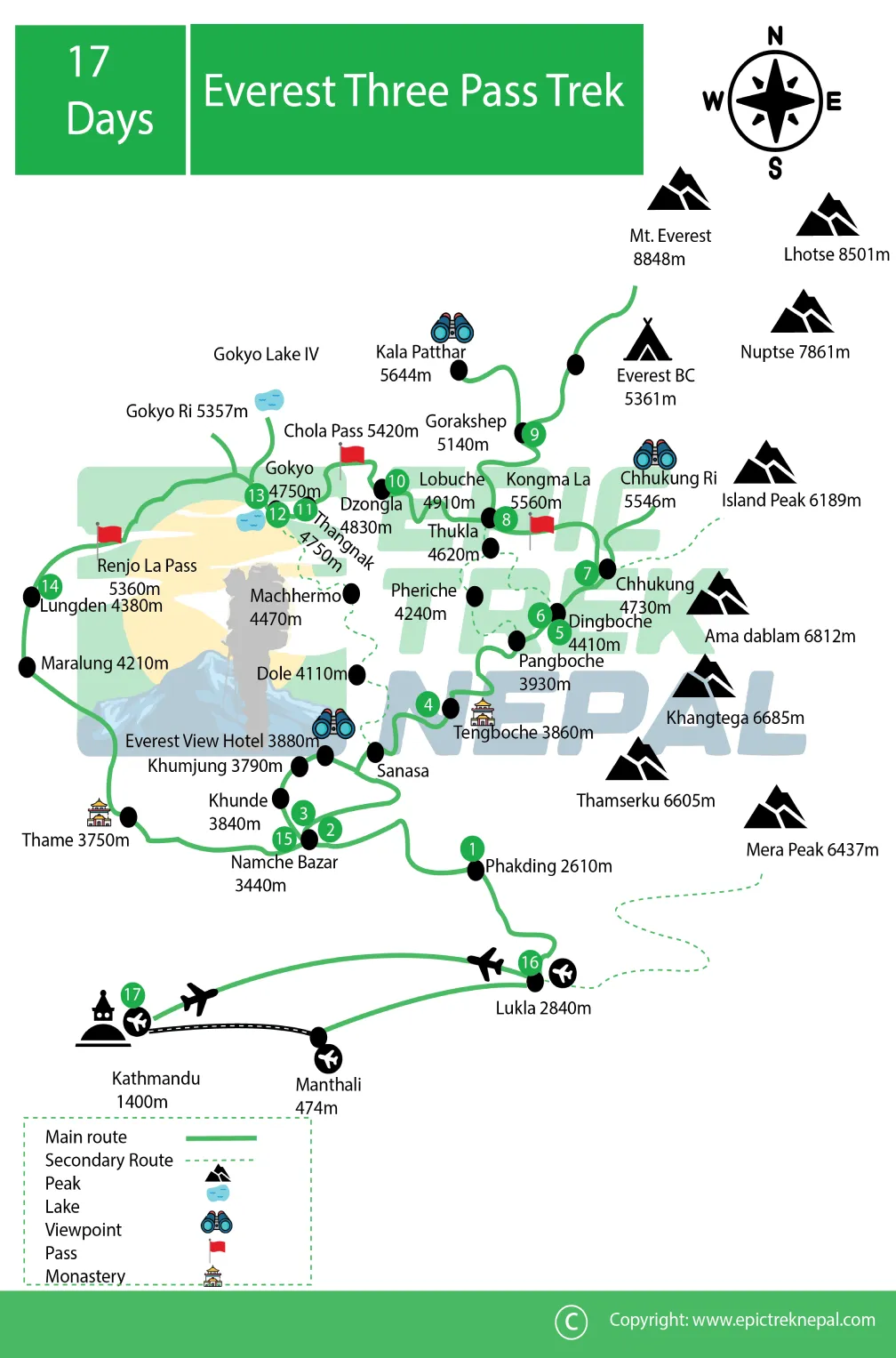
Everest Three Pass Trek Route
This route is a total round-trip around the Khumbu region. In contrast to the conventional EBC trekking route, it does not feature repetitive trails along the way. Thus, it is far more rewarding as compared to other hiking routes in the Himalayas.
First of all, the route goes across some of the most spectacular lands on Earth. You can traverse glaciated high passes, hike next to the moraines left by glaciers, and walk across less frequented valleys of the Khumbu region. Moreover, one can enjoy a wide range of landscapes ranging from dense rhododendron forests in lowlands to snowfields at the height of passes.
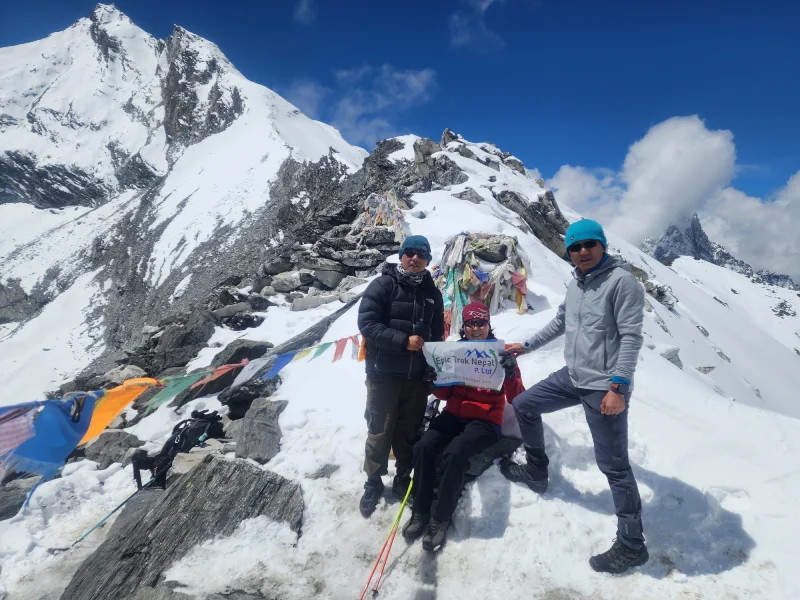
As for the difficulty level, the Everest Three Pass View Trek certainly earns its place among the tough itineraries in the Nepalese Himalayas. The three passes – Khongma La, Cho La, and Renjo La which are all higher than 5,400 meters. Each crossing requires excellent physical fitness, proper acclimatization, and great mental fortitude.
It also tests your mental endurance. Crossing passes is a time-consuming activity. You will feel cold and exhausted during such days. You must push yourself to overcome your limits on those days.
Having said that, the path is well-marked and accompanied by guides. There are tea houses along the entire path that provide shelter for you at night. It offers adequate rest days in its itinerary that makes altitude management easy on the Everest Three Pass Trek.
In conclusion, the path is good for people who have an appreciation for it. Each climb ends with stunning views, and each pass crossing introduces you to a whole new world of scenery.
Who Can Join the Everest Three Pass Trek?
The Everest Three Passes trek is certainly an adventurous journey, but truth be told, it is accessible by almost everyone who has the right mental preparation and prepares himself accordingly.
Trekkers does not require any history of mountaineering skills and expertise to join this adventure. But trekkers needs to be physically fit and prepared to walk miles and miles each day on rough terrains. The normal walking time will range from five to eight hours each day. But remember that there may be days when you have to walk for 8-10 hours continuously while crossing passes in the Everest Three Pass Trek.
It is highly recommended that one has some high altitude expedition experience prior to joining this trek. If one has walked to Annapurna base camp or even EBC, it would be better.
In terms of age, people range from 18 to 60 years old, but I have come across older hikers who are extremely fit and kill the trek. It’s more about how strong your cardiovascular fitness is and being mentally tough to endure the Everest Three Pass View Trek journey. You must be fine with sleeping well above 5,000m and walking on treks every day. Believe me, training in the gym or going for trail runs months before can make all the difference.
If you stick to the acclimatization route of the Everest Three Pass View Trek, take proper equipment, and maintain a positive attitude, then this adventure is for you.
Highlights of Everest Three Pass Trek
- Crossing three major high-altitude passes: Renjo La (5,435m), Cho La (5,420m), and Kongma La (5,535m).
- Witness Mt. Everest (8,848.86m), Mt. Lhotse (8,516m), and Mt. Cho Oyu (8,188m) – three of the world’s highest mountains.
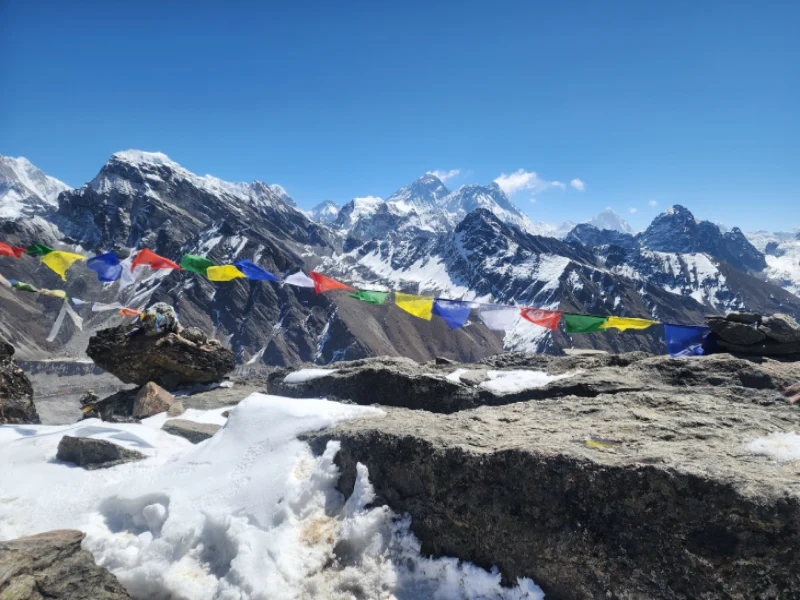
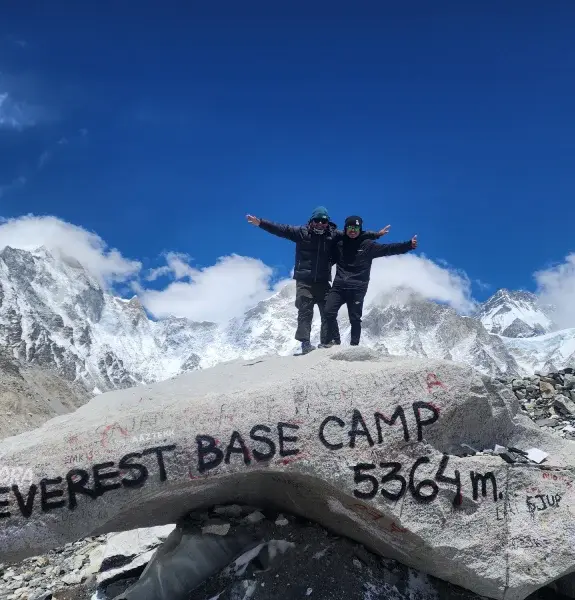
- Visit legendary Everest Base Camp (5364m) and climb Kala Patthar (5,555m) for breathtaking sunrise views of Everest.
- 360° views of Everest, Cho Oyu, Makalu, and Lhotse from Gokyo Ri viewpoint.
- Explore authentic Sherpa villages and ancient monasteries preserving centuries-old traditions.
Photo Gallery & Video Gallery
Everest Three Pass Trek - Distance, Duration, and Altitude
| Trekking Route | Distance (Kilometers) | Duration (Hours) | Altitude (Meters) |
|---|---|---|---|
| Lukla to Phakding | 8 KM | 3 to 4 hours | 2860 m. |
| Phakding to Namche | 11 KM | 5 to 6 hours | 3440 m. |
| Namche to Khumjung (day hike) | 6 KM | 4 to 5 hours | 3790 m. |
| Namche to Tengboche | 10 KM | 5 to 6 hours | 3867 m. |
| Tengboche to Dingboche | 11 KM | 5 to 6 hours | 4410 m. |
| Dingboche to Chhukung | 5 KM | 3 to 4 hours | 4728 m. |
| Chhukung to Lobuche via Kongma La Pass | 14 KM | 7 to 8 hours | 5535 m. |
| Lobuche to EBC then Gorak Shep | 15 KM | 8 to 9 hours | 5364 m. |
| Gorak Shep to Kala Patthar then Dzongla | 12 KM | 6 to 7 hours | 5545 m. |
| Dzongla to Dragnak via Cho La Pass | 10 KM | 6 to 7 hours | 5420 m. |
| Dragnak to Gokyo | 6 KM | 3 to 4 hours | 4790 m. |
| Gokyo to Lungde via Renjo La Pass | 15 KM | 8 to 9 hours | 5388 m. |
| Lungde to Namche | 15 KM | 6 to 7 hours | 3440 m. |
| Namche to Lukla | 19 KM | 7 to 8 hours | 2840 m. |
Itinerary of Everest Three Pass Trek
Day 1: Arrival in Kathmandu
Welcome to the vibrant capital of Nepal, Kathmandu. Upon your arrival, our friendly representative will greet you and transport you to your hotel. Take this time to refresh and relax.
Activity: 45-min drive
Max. Altitude: 1324m./4,344ft. (Kathmandu)
Accommodation: 3-Star Hotel
Day 2: Explore Kathmandu and Trek Preparation
Today after breakfast, we’ll visit some of the most renowned UNESCO heritage sites of Kathmandu. Some of them are: Swayambhunath (Monkey Temple), Durbar Square, Boudhanath Stupa, and Pashupatinath Temple. In the afternoon, explore the bustling heart of Kathmandu’s tourist hub and make final preparations for your upcoming trek.
Max. Altitude: 1324m./4,344ft. (Kathmandu)
Meal: Breakfast
Accommodation: 3-star Hotel
Day 3: Fly from Kathmandu (1400m) to Lukla (2840m) - Phakding
Early morning, take a scenic 45-minute flight to Lukla. Upon arrival, have a cup of tea in Lukla, and begin your trek. During the trek you will travel alongside the Dudh Koshi River valley, following a well-marked trail to the picturesque village of Phakding. After reaching Pakhding, you will stay there for a warm meal and to rest.
Activity: 35-min fly, 4 hours trek
Max. Altitude: 2840m./9,318ft. (Lukla)
Meal: Breakfast, Lunch, Dinner
Accommodation: Teahouse
Day 4: Trek from Phakding to Namche
Today, your journey takes you northward as you continue along the Dudh Koshi river and enter the Sagarmatha (Everest) National Park at Jorsale. Cross the lmja Drangpa (Imja Khola) and the Nangpo Tsangpo (Bhote Kosi) rivers on suspension bridges. A steep ascent of approximately 2 hours brings you to Namche Bazaar, the thriving hub of the Khumbu region, nestled amidst towering peaks.
Activity: 6 hours
Max. Altitude: 3440m./11,286ft. (Namche Bazaar)
Meal: Breakfast, Lunch, Dinner
Accommodation: Teahouse
Day 5: Rest day (Hike to Khumjung village)
Use today as a well-deserved rest day to acclimatize to the new altitude of 3440m. Explore Namche Bazaar, which is also known as the “Trekkers Mecca of Nepal.” Options for acclimatization walks include visits to Khunde Hospital and the Everest View Hotel, where you can enjoy in breathtaking views of Ama Dablam, Nuptse, Lhotse, and Everest.
Max. Altitude: 3790m./12,434ft. (Khumjung Valley)
Meal: Breakfast, Lunch, Dinner
Accommodation: Teahouse
Day 6: Trek from Namche to Tengboche
The trail from Namche traverses the valley’s side, providing stunning views of Everest, Lhotse, Nuptse, and Ama Dablam. After a steep descent to the Phunki Tenga river and lunch, continue with a scenic forested climb to Tengboche. Here, you’ll find the renowned Tengboche Monastery, the largest in the Khumbu, and enjoy the backdrop of Everest, Lhotse, and Ama Dablam.
Activity: 6-7 hours
Max. Altitude: 3860m./12,664ft. (Tengboche)
Meal: Breakfast, Lunch, Dinner
Accommodation: Teahouse
Day 7: Trek from Tengboche to Dingboche
Today’s journey leads you to Dingboche. The journey becomes more majestic with Ama Dablam dominating the scenery. You’ll pass through the charming Sherpa village of Pangboche on your way to Dingboche. Upon reaching Dingboche, you will be surrounded with beautiful scenery perfect for resting.
Activity: 5-6 hours
Max. Altitude: 4330m./14,206ft. (Dingboche)
Meal: Breakfast, Lunch, Dinner
Accommodation: Teahouse
Day 8: Rest Day at Dingboche
Today is dedicated to rest and acclimatization. You can take an acclimatization walk to Nagarjun Hill, which offers stunning views of Makalu, Ama Dablam, Lhotse and other peak, perfect for photo opportunities of the Khumbu region. The climb is very rewarding and in the afternoon you can go for a short walk in the village and return for a warm meal and to rest.
Max. Altitude: 5100m./16,732ft. (Nagarjuna Hill)
Meal: Breakfast, Lunch, Dinner
Accommodation: Teahouse
Day 9: Dingboche to Chhukung
A pleasant and short hike leads you to Chhukung today. The closer you get the more the dramatic the landscape become. You can choose to explore Island Peak Base Camp or ascend to Chhukung Ri for even more remarkable mountain views. The area is quite and peaceful, perfect for relaxing and some photography.
Activity: 5.5 hours
Max. Altitude: 5550m./18,209ft. (Chhukung Ri)
Meal: Breakfast, Lunch, Dinner
Accommodation: Teahouse
Day 10: Chhukung (4730m) - Khongma La Pass (5535m) - Lobuche
Today is a challenging and long day as you make an early start. You’ll ascend steeply to reach the Kongma La Pass, boasting sensational views. From the top, you can see mountain stretch endlessly which is one of the most rewarding and unforgettable view of the entire trek. Descend to the Khumbu Glacier and navigate carefully across it before reaching Lobuche.
Activity: 5 hours
Max. Altitude: 5535m./18,159ft. (Khongma La Pass)
Meal: Breakfast, Lunch, Dinner
Accommodation: Teahouse
Day 11: Lobuche (4930m) - Gorak Shep (5170m) trek to EBC (5,364m) and return to Gorak Shep
Today’s trek helps your body acclimatize further as you follow the Khumbu Glacier to Gorak Shep. From there, you’ll hike to Everest Base Camp (5,364m), enjoying close-up views of the Khumbu Icefall. After spending some time at EBC, you’ll return to Gorak Shep to rest and prepare for tomorrow’s adventure to Kala Patthar.
Activity: 7-8 hours
Max. Altitude: 5364m./17,598ft. (Gorakshep)
Meal: Breakfast, Lunch, Dinner
Accommodation: Teahouse
Day 12: Gorek Shep (5170m) - Kala Patthar (5550m) – Dzongla(4,830m)
Start the day with an early morning ascent to Kala Patthar (5,664m) for breathtaking sunrise views of Mount Everest and the surrounding peaks. After enjoying the panorama, descend to Gorak Shep, then continue the trek to Dzongla (4,830m), a quite and beautiful village where you will stay overnight.
Activity: 8 hours
Max. Altitude: 5664m./18,583ft. (Kala Patthar)
Meal: Breakfast, Lunch, Dinner
Accommodation: Teahouse
Day 13: Dzongla (4830m) - Cho La Pass (5420m) - Dragnak (4700m)
Today’s trail takes you to the high reaches of the Cho La Pass at 5420m. The ascent to the pass takes approximately 3 hours and rewards you with sensational panoramic views. Descend steeply for about 1.5 hours before the terrain gradually levels out, leading you to the welcoming haven of Dragnak.
Activity: 7 hours
Max. Altitude: 5420m./17,782ft. (Chola Pass)
Meal: Breakfast, Lunch, Dinner
Accommodation: Teahouse
Day 14: Dragnak (4700m) - Gokyo (4790m)
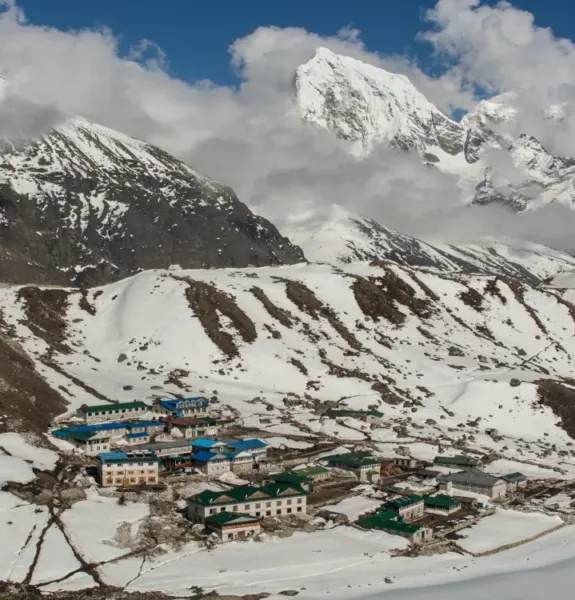
Continue on your journey from Dragnak. Your trail leads through the vast Ngozumpa Glacier. As you continue, you’ll reach the stunning destination of Gokyo, known for its captivating glacial lakes and your first glimpse of Cho Oyu (8201m). If you have the energy, Try 3-4 hour round trip to the fifth lake after lunch, it offers the alternative perspective of Everest.
Activity: 6.5 hours
Max. Altitude: 4790m./15,715ft. (Gokyo)
Meal: Breakfast, Lunch, Dinner
Accommodation: Teahouse
Day 15: Rest Day at Gokyo
Today give your body a rest. If you feel energetic and want some optional adventure, ascent to Gokyo Ri (5400m) for further exploration. It offers the breathtaking views of the four highest mountains: Everest, Lhotse, Makalu, and Cho Oyu. You can spend the rest of the day relaxing beside the turquoise Gokyo Lake.
Max. Altitude: 5400m./17,717ft. (Gokyo Ri)
Meal: Breakfast, Lunch, Dinner
Accommodation: Teahouse
Day 16: Trek from Gokyo (4790m) to Lungde (4,380m) over the Renjo La Pass (5338m)
Prepare for another stunning but long day, begin early to maximize your experience. The trail starts around the side of a lake, takes you to a stream before a steep ascent to the Renjo La Pass. Take a break for a picnic lunch while absorbing the incredible views of Everest, Lhotse, Makalu, and more. Descend carefully until you reach the lake. And after your final steep descent to Lungde, a newly opened valley for trekkers, promising exciting exploration for the next day.
Activity: 7-8 hours
Max. Altitude: 5338m./17,513ft. (Renjo La Pass)
Meal: Breakfast, Lunch, Dinner
Accommodation: Teahouse
Day 17: Trek from Lungde (4,380m) to Namche (3,440m)
Today the route is mostly downhill trek to Namche Bazaar, passing through small Sherpa villages and an ancient route, where you’ll get a chance to see the Tibetan traders on the way, if timing is right! In the evening you will arrive at vibrant Namche Bazaar, where you will stay for a warm meal and a night to spend.
Activity: 7-8 hours
Max. Altitude: 3440m./11,286ft. (Namche Bazaar)
Meal: Breakfast, Lunch, Dinner
Accommodation: Teahouse
Day 18: Namche (3440m) to Lukla (2,860m)
Today marks your final descent in the Khumbu region, as you descend to Lukla, along the riverside of Dudh-Koshi river. Create your final memory by celebrating in Everest region. Your overnight stay at Lukla.
Activity: 5-6 hours
Max. Altitude: 2860m./9,383ft. (Lukla)
Meal: Breakfast, Lunch, Dinner
Accommodation: Teahouse
Day 19: Lukla (2,860m) to Kathmandu (1,400m)
Catch early morning flight from Lukla back to Kathmandu. At your arrival, you will be transferred to your designated hotel. Rest of the day is take a rest or explore the city. In the evening, the company will host a farewell dinner to celebrate the successful completion of your Everest Three-Pass Trek.
Activity: 45-min
Max. Altitude: 1324m./4,344ft. (Kathmandu)
Meal: Breakfast
Accommodation: 3-star Hotel
Day 20: Departure
As your incredible journey comes to an end, our representative will drop you to the airport and bid farewell to Nepal until next time…
Activity: 45-min
Meal: Breakfast
Includes/Excludes
What is included?
- Permits and Fees: All necessary permits for the Everest Three passes Trek, such as the Sagarmatha National Park Permit and the TIMS (Trekkers’ Information Management System) card.
- Accommodation: Accommodation during the trek, typically in teahouses or lodges. This usually includes accommodation in Kathmandu before and after the trek in 3 star hotel on BB plan. (twin sharing basis)
- Meals: Most packages will include three meals a day (breakfast, lunch, and dinner) during the trek.also includes two times hot beverage (in breakfast and lunch) and seasonal fruits after dinner.
- Domestic Flights: Round trip flights between Kathmandu and Lukla, the starting and ending point of the trek, are usually included.
- Guide and Porter: Services of an experienced English-speaking trekking guide and porter to carry luggage. This includes their salary, insurance, equipment, transportation, food, and accommodation.
- First Aid Kit: A basic first aid kit is typically provided.
- Equipment: Duffle Bag, Sleeping Bag (if necessary).
- pick up drop up: airport pick up and drop up by private vehicle.
What is not included?
- International Flights: International airfare to and from Nepal is not included.
- Travel Insurance: Travel insurance that covers emergency rescue, evacuation, and medical treatment is not included, and you’ll be expected to have your own.
- Personal Expenses: Expenses for extra meals, drinks, snacks, charging devices, hot showers, Wi-Fi, laundry, and other personal costs are not included.
- Nepal Visa Fees: Entry visa fees for Nepal are not included.
- Additional Accommodation and Meals: If you choose to extend your stay in Nepal, or if you return from the trek earlier than scheduled, the cost of additional accommodation and meals will not be included.
- Rescue and Evacuation: Any costs related to emergency evacuation or rescues are not covered.
- Trekking Gear: Personal trekking equipment, such as hiking boots, down jackets, trekking poles, and other gear are not included.
- Tips: Tips for guides and porters are not included and are left to your discretion.
- Meal: meal is not included at kathmandu
Trip Map of Everest Three Pass Trek
Trip Information
How Difficult is Everest Three Pass Trek?
The Everest Three Pass View Trek is definitely one of the hardest treks in the Himalayan region of Nepal. For sure it is not a walk in the park and anyone who has undertaken this trek can tell you that for sure. The combination of high altitude, many days on the trails and having to cross over three significant passes at altitudes of over 5,400m is a real test.
However, the main obstacle to conquering this trail is altitude. You will be spending several nights camping at elevations greater than 4,500 meters, and during pass crossing days, you will be climbing much higher, past the 5,500-meter mark. Thus, altitude sickness becomes an inevitable hazard. This is why the acclimatization days provided during the Everest Three Passe Trek Itinerary are crucial.
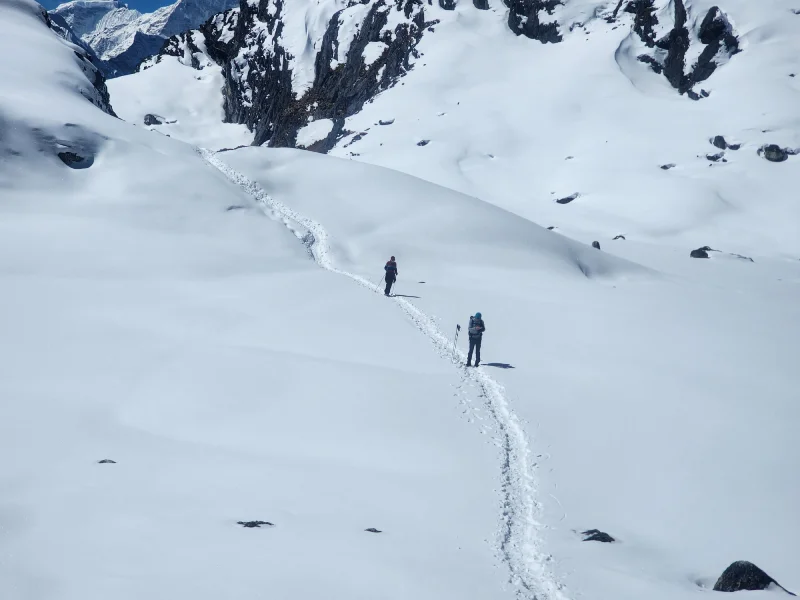
Although the trek is referred to as technically being non-technical, which means you won’t have to use ropes or an ice ax, you shouldn’t underestimate how difficult it may be. After all, the passes include steep ascents, slippery scree, and snow or even ice depending on the season. The most important thing for successfully passing the passes will be firm footing and maintaining a consistent pace throughout the ascent.
Regardless of how difficult the journey may seem at times, thousands of people complete this trek every year. If you’re in shape and properly prepared, the Everest Three Pass Trek should not pose a major problem.
Preparation for the Everest Three Pass Trek
If you wish to have a successful trip and not a miserable experience, then preparation is the key. You cannot go there without being prepared and expect to survive. Begin preparing yourself three or four months before your flight out.
Cardiovascular exercises must form an essential part of your preparation process. Be it jogging, cycling, or using a stair climber, you need to develop your stamina. Four or five times per week should be sufficient. As you draw near to the date of departure, you must engage in hikes while carrying a load.
It is equally vital that you get your leg muscles in order. Lunges, squats, and step-ups are recommended. Stronger leg muscles help you tremendously on those tough hiking days through the passes during the Everest Three Pass Trek journey.
Make sure you have packed appropriate clothing as well. Spend some money buying quality thermal wear, down jacket, and a sleeping bag. But most importantly, get yourself a pair of trekking boots, and be sure to wear them at least six months before you hit the path.
Finally, don’t neglect your mental preparation. Remember that this is going to be long, cold, and exhausting trip, and be mentally prepared. Always keep in mind that one step is just another step, and never give up when you feel like stopping.
Cultural Festival on the Trail
Joining in the Everest Three Pass trek when there is a festival taking place in Khumbu is totally another experience altogether. There is more to see and do apart from viewing the towering peaks and enjoying the views of the mountain range. The Sherpa culture is very rich, and if you schedule your tour of the Everest Three Pass Trek during the right period, then there is every chance that you will witness one of the biggest festivals in Khumbu.
The Mani Rimdu festival is the most famous festival in Khumbu. This event takes place in Tengboche Monastery which is part of the trail for the trek. It is a three-day Buddhist festival featuring mask dances and ritual performances by the monks. This event takes place either in October or November, which is also the best time for trekking.
There is also Losar, a Sherpa and Tibetan New Year celebrated in February or March. It is marked by celebrations, rituals, music, and lots of food. When trekking during the festival, expect to be offered homemade snacks or butter tea by the teahouse owners. There is also the Dumje festival in the summer dedicated to gaining good health and wealth in the coming year.
Even when there is no big celebration going on, you can expect the culture to be present around you. There will be monks chanting in the monastery, prayer wheels being spun, and juniper incense burning. All you need to do is approach everything with a little curiosity and respect, and the cultural aspect of your Everest Three Pass Trek will remain memorable for years to come.
Visa and Permit Requirements for Everest Three Pass View Trek
You cannot begin the trek without obtaining the required visa for Nepal. For most travelers, this involves obtaining a Tourist Visa upon arrival at Kathmandu Airport, although online applications are possible too. One will have to pay $30 for a 15-day visa, $50 for a 30-day visa, and $125 for a 90-day visa.
In addition to obtaining a Nepal visa, trekkers need to requires two permits for the Everest Three Pass Trek. First comes the Sagarmatha National Park Entry Permit for which one needs to pay NPR 3,000 ($23). With this permit, visitors gain entry into the protected areas covered by the Sagarmatha National Park.
Second comes the Khumbu Pasang Lhamu Rural Municipality Entry Permit, whose fee stands at NPR 2,000 ($15).
And if you’re entering through Lukla, the TIMS card is no longer needed for the Everest region. We will (Epic Trek Nepal) will sort out all of the permit issues on your behalf before you reach Nepal. But remember to carry hard copies of all documents in your backpack because there are several checkpoint stops on the Everest Three Passes Trekking route where you’ll be asked to present them.
Language & Communication
Nepali is the official language, yet you will not face any serious problem speaking English while trekking the Everest Three Pass Trek. English is spoken almost everywhere in the touristic locations in Kathmandu, and the majority of teahouse owners, lodge managers, and guides encountered on the path know enough English to engage in a decent conversation.
When it comes to the Khumbu region, people usually speak Sherpa there. If you try to learn a few words in Nepali or Sherpa, it will pay off big time. You should start with a warm “Namaste” (meaning Hello), it will create wonders, and a “Dhanyabad” (Thank you) can melt hearts.
The guide becomes your lifeline in terms of communicating in the remote areas. All the negotiations regarding payment and arrangements with tea house owners and porters will be handled by your guide, making logistics less complicated for you.
Your personal guide on the Everest Three Pass Trek would be your primary means of communication in the areas where there would be fewer chances of finding other travelers or people. The guides would do all the talking with regards to communicating with owners of tea houses and porters, this means that your logistics part of the trip would be taken care of.
Secondly, although you should not expect any kind of connectivity while in the Himalayan wilderness, there would still be mobile phones and internet available at some of the bigger places in the Everest Three Pass trek. But keep in mind that the connectivity will be completely lost in the wilderness in between the passes.
Mobile Network, Internet & Charging Facilities on the Everest Three Pass Trek
The mobile network connection on the Everest Three Pass Trek is surprisingly good considering that you are in the heart of the Himalayan region. There are mainly two mobile companies, which are Nepal Telecom and Ncell. Normally, it is advisable to use Nepal Telecom when at high elevations, and therefore, you should consider purchasing one of their SIM cards in Kathmandu before the trek starts. Their SIMs are very affordable and offer some reasonable data.
You will receive great connections in areas such as Namche Bazaar, Dingboche, and Gokyo, but once you proceed to higher elevations, your signal will be gone. It would be wise not to depend on your mobile for directions.
WiFi is fairly common now in most teahouses, but don’t expect lightning-fast speeds, and in poor weather conditions, it can be unreliable. There is a charge for it in most teahouses, about 200-500 NPR, and it works well enough for sending basic WhatsApp messages or emails.
Charging is also possible, but you should expect that electrical outlets become very rare the further you climb toward Everest Three Pass Trek. Usually, teahouses will charge you for charging one device for a couple of dollars. I suggest taking a high-capacity power bank with you so you do not have to look for any electrical outlets everywhere. If you expect sunny days on your journey, take a solar charger.
Don’ts on This Everest Three Pass Trek
Respecting the mountains and culture is just as important as training physically for the Everest Three Pass Trek which makes everything more enjoyable.
Do not not littering. Khumbu already has issues with pollution, and therefore, we need to make sure that what goes in with us, comes back with us. Use the provided bins in the villages, and do not under any circumstances dump garbage on the trail or near water sources.
Please do not overlook acclimatization days. It is easy to want to continue going forward because you feel good, but altitude sickness could catch up to you suddenly. The rest days are essential in the Everest Three Pass Trek schedule, so make sure to use them.
Be careful of the religious items as well. Stay away from the mani stones and pray flags. One very important thing here, make sure you are passing the stupas and mani walls from the left-hand side. It is the sign of respect for the Buddhism. Moreover, try not to make loud noise and show your reverence around the monasteries.
First of all, don’t drink unfiltered water. Drink only boiled or filtered or purified water. Otherwise, getting a stomach disease will ruin your whole journey. And one more thing, never forget about the cold in Tibet. It comes fast even on sunny days after sunset.
Travel Insurance
Travel insurance is mandatory while going on an Everest Three Pass Trek and cannot be ignored. The trek takes place in areas above the height of 5,500m where any medical emergency requires one to be evacuated via helicopter. Without travel insurance, a simple rescue flight might amount to a minimum of $3,000 to $10,000 or even more. It is important to have insurance.
Check whether your insurance plan covers the cost of trekking at heights above 5,000m and also evacuation via helicopters. Many travel insurance plans do not include coverage for activities like these. Hence, it becomes crucial to verify the conditions. Search for adventure travel insurance policies by reputed travel insurance companies.
Other things that should be covered under travel insurance include trip cancellation due to unforeseen circumstances, treatment of medical emergencies, theft and loss of personal belongings, and delays in flights due to unfavorable weather conditions. Weather conditions during treks in the mountains are always uncertain, resulting in canceled flights, especially those for Lukla.
Ensure you buy your insurance prior to leaving your home country and have access to both electronic and hard copies of the policy documents as well as the emergency contact number for your insurer. Pass this information to your guide as well as one other person at home.
Health and Safety on Everest Three Pass Trek
The key to remaining safe during the Everest Three Pass Trek is all about respecting the altitude. AMS is the most common problem faced by people trekking in the area, and it does not discriminate based on fitness levels. The moment that you begin to experience a headache, nausea, or feel dizzy and exhausted, do not hesitate to notify your guide and avoid going further upwards.
The important rule in mountainous regions is always to climb high but sleep low. This has been kept in mind when designing the Everest Three Pass Trek itinerary. There will be two important resting days at Namche and Dingboche. No matter how healthy you might feel, these days cannot be skipped since your body undergoes some internal changes to adapt to the environment.
A personal first aid kit should also be considered wise. You can pack some Diamox for high altitude, painkillers, lots of blister pads, rehydration pills, and antiseptic creams. The professional guide will already have the necessary equipment, but it does not hurt to carry a few things in your backpack as well.
Hypothermia is another danger you need to be aware of. It may occur due to the extreme weather conditions when passing through the peaks early in the morning. Layers of clothing work great for that purpose. In case your clothes become wet either because of perspiration or snow, the situation can quickly turn fatal at these elevations. Finally, pay attention to your diet. Eat only hot food and drink only boiled water served at tea houses along the trail.
Trek Extension
Even though the Everest Three Passes Trek is an adventure in itself, if you have more time and energy in your body, there are some awesome excursions that you can include in your itinerary to take the experience further.
One such trip is summiting Island Peak (Imja Tse). This is one of the most accessible trekking peaks in Nepal, rising to a height of 6,189m. You can plan for this peak after reaching Chhukung, when you are just before attempting Khongma La pass. Just a little mountaineering expertise is required along with an extra three to four days.
One other peak that I would highly recommend climbing as part of this adventure is the Lobuche East Peak (6,119m). It sits right beside Everest Three Pass Trek and will offer you an incredible time as it allows you to get close to one of the best viewings of Everest, Lhotse, and Makalu peaks you have ever seen. In case you prefer trekking over climbing, there is no way you can leave the place without making sure you go for the Gokyo Ri hike when resting at Gokyo. The viewpoint sits at 5,357 meters, and from here, you can get the best panorama even compared to Kala Patthar.
On top of everything else, it will be fun to visit the Ngozumpa Glacier since this is the largest glacier in the whole of Himalayas. After completing the Everest Three Pass View trek, the majority of travelers choose to travel to either Chitwan National Park for safari activities or Pokhara just to spend a few days at the lake.
Frequently Asked Questions
The Three Pass Trek is the ultimate Everest region adventure, combining three spectacular high-altitude passes in one epic journey: Kongma La (18,209 ft / 5,550 m), Cho La (17,782 ft / 5,420 m), and Renjo La (17,560 ft / 5,360 m). This trek includes everything the Everest region offers – Everest Base Camp, Kala Patthar, Gokyo Lakes, and unparalleled mountain views – making it the most comprehensive Himalayan experience available.
The Three Pass Trek is considered extremely challenging and is one of the most challenging and spectacular treks in the entire Khumbu region. This trek requires:
- Excellent physical fitness and prior high-altitude trekking experience
- At least 6 to 7 hours daily on up-and-down steep trails
- Mental preparation for demanding conditions
- Experience with technical terrain and glacier crossings
This trek is recommended only for fit and experienced trekkers.
The standard Three Pass Trek takes 18-21 days, including:
- 2 days for flights (Kathmandu-Lukla-Kathmandu)
- 16-19 days of actual trekking
- Multiple acclimatization days built into the itinerary
- Buffer days for weather delays
The extended duration allows for proper acclimatization and includes visits to both Everest Base Camp and Gokyo Lakes.
Everest Three Passes Trek passes through Kongma La, Cho La, and Renjo La with a success rate of nearly 95% each month and over 95% in the Spring and Autumn seasons. Success depends on:
- Proper acclimatization schedule
- Weather conditions
- Physical fitness level
- Experienced guide support
Optimal seasons are:
- Spring (March-May): Stable weather, clear views, warmer temperatures
- Autumn (September-November): Crystal clear skies, excellent visibility, dry conditions
Avoid monsoon season (June-August) due to poor visibility and dangerous pass conditions. Winter trekking is extremely challenging and not recommended for most trekkers.
You need two main permits:
- Sagarmatha National Park Entry Permit: NPR 3,000 per person
- Khumbu Pasang Lhamu Rural Municipality Entrance Permit: NPR 2,000 per person
Both of these fees and permits can be purchased on the track, the local fee in Lukla, and the National Park Fee in Monjo. We handle all permit arrangements for our clients.
Trek costs vary significantly based on services:
- Budget independent trekking: $25-40 per day
- Standard guided trek: USD 1785 per person for 16 days package
- Premium guided trek: $2,500-4,000+ depending on inclusions
Costs include permits, accommodation, meals, guide/porter services, and domestic flights. Contact us for personalized pricing based on your group size and preferred service level.
While trekking independently is possible, hiring an experienced guide is highly recommended due to:
- Complex route navigation across three technical passes
- Safety considerations on glacier crossings and high-altitude terrain
- Emergency response capabilities
- Weather condition assessment for safe pass crossings
- Cultural insights and local knowledge
The hikers of Three Passes are strongly recommended to hire a trekking guide who can guide them the way.
The Three Pass Trek is the most comprehensive Everest experience, offering:
- Everything EBC Trek offers PLUS Gokyo Lakes and three high passes
- Less crowded than the standard EBC route on certain sections
- More challenging than EBC or Gokyo Lakes treks individually
- Longer duration (18-21 days vs 12-14 days)
- Higher cost but maximum value for serious trekkers
You’ll stay in traditional teahouses throughout the trek, offering:
- Basic twin-sharing rooms (some with attached bathrooms at higher altitudes)
- Daily food costs between $8 to $23 per day depending on location
- Traditional Dal Bhat, international dishes, and local specialties
- Common dining areas with heating (where available)
- Spectacular mountain views from most locations
Yes, comprehensive travel insurance is absolutely essential and must cover:
- High-altitude trekking up to 6,000+ meters
- Helicopter rescue from remote locations
- Medical evacuation and emergency treatment
- Trip cancellation and gear coverage
Given the technical nature and remote locations of the three passes, proper insurance is non-negotiable.
Absolutely! We offer various customization options:
- Different route directions (clockwise vs. counterclockwise)
- Extended itineraries with additional peaks or valleys
- Luxury lodge options where available
- Photography-focused itineraries with optimal timing
- Combination with other treks or climbing expeditions
Trip Reviews
US$ 1750
Need Help? Talk to Expert
+977 9764792172