Difficulty level
The Tilman Pass Trek undoubtedly belongs to the tough to extremely tough difficulty. First of all, there is not a trek a beginners can do, it requires some trekking experience, excellent health condition, and certain psychological qualities.
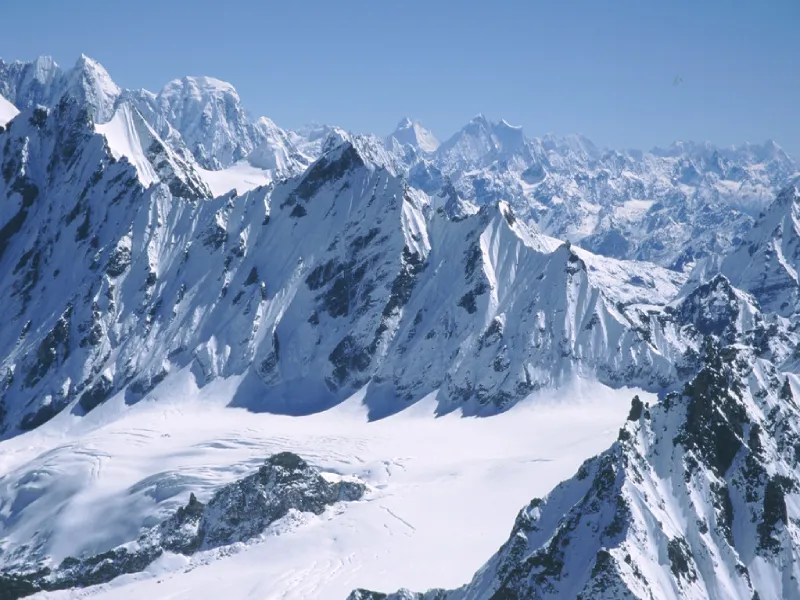
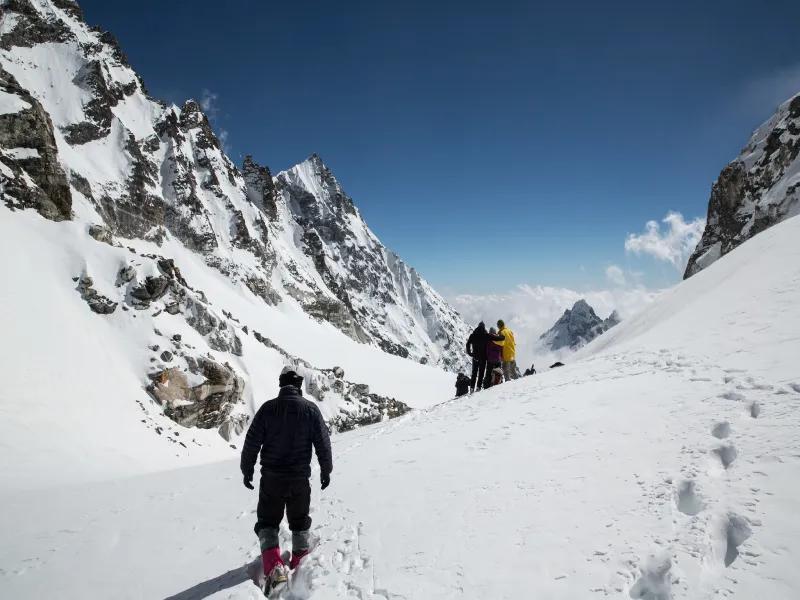
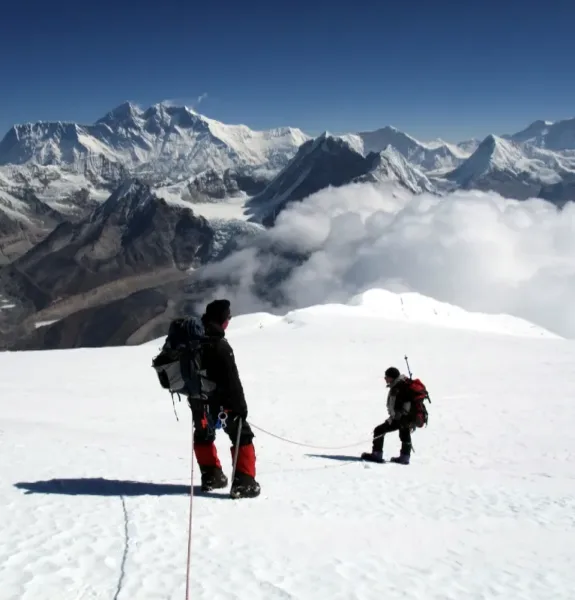
The most difficult stage is undoubtedly passing through the Tilman Pass, which stands at 5,318 meters above sea level. The route itself is not for the faint-hearted as you will need to travel through glaciers, climb steep snow-covered slopes, and pass through a few chaotic sections of rocky paths. You will either need crampons and ice axes training for this part or find yourself a knowledgeable guide who can take care of you along the way.
The average trekking duration is estimated at between five to eight hours each day and sometimes there are days when it takes longer than that. There is a considerable increase in altitude, and once you start moving beyond the region of Kyanjin Gompa, you will be traveling an area that lacks any rescue facility for any emergencies that might arise.
Even when descending to the Panchpokhari side, it will not be easy as well. There are several ridges that have high differences in altitude that would challenge the endurance levels. Once you pass the valleys below, the terrain becomes less strenuous in terms of altitude difference, but you must have enough energy to make it to the end.
In general, the experience is similar to that of the Three Passes Trek or the Manaslu Circuit.
Preparation for the Tilman Pass Trek
Proper preparations are mandatory before taking on the challenge of the Tilman Pass Trek. There’s no way you can arrive unprepared and hope for a smooth trek along a glacial terrain at high altitudes. It simply isn’t going to happen.
I would recommend that you start preparing yourself physically no less than three months before your departure. Cardio exercises, such as running, cycling, stair-climbing, as well as hiking with weights will be the most important workout that you cannot miss. Work on gradually building up your endurance, raising the number of miles and altitude climbed per week.
Apart from being physically fit, you should also have some technical skills. The route includes glacier passage, therefore the knowledge of using an ice axe and crampons becomes mandatory. If you do not know about them, make sure to practice it before flying out.
Gear will be equally essential in helping you succeed. Buy high-quality layers, excellent waterproof boots, and a quality sleeping bag that can withstand cold temperatures. Please remember to try all of these things in action during smaller hikes first which will help during the actual Tilman Pass Trek!
In addition, prepare yourself mentally, as mental preparation will prove to be just as important as physical fitness. Prepare for the long days, have faith on the guide’s experience, and be prepared for any weather changes.
Cultural Festival on the Trail
Tilman Pass View Trek during the festival season completely changes the vibe of the trek. The culture of Tamang, Sherpa and Hyolmo people is very rich and vibrant. You not only get to experience the natural beauty but also feel the local’s passion and emotion towards their culture and traditions.
Lhosar festival is what everyone waits excitingly. It’s the New Year of the Tamang and Sherpa community celebrate in February. All people gather to celebrate with vibrant colors of clothes which represent their culture, music, dances and delicious foods. If you manage to witness the Lhosar festiva, this might be your lucky trek.
Mani Rumdis another festival that is important in Tibetan Buddhism. The festival involves performing sacred masked dances by monks which represent good winning over evil.
Buddha Jayanti, celebrated by people that marks the day of birth, enlightenment and death of Gautama Buddha. It is celebrated during the full moon month of April or May in Buddhist Monasteries with special prayer and butter lamps offering.
Language & Communication
The official language of Nepal is Nepal, which is widely used in most part of the country. But throughout the trekking area that passes during the Tilman Pass Trek, you will mostly meet Tamang and Sherpa community. They are most likely to speak their own language and dialects.
In the lower part like Syabrubesi, many people even locals speak basic English, mainly in those in the tourism industry. The tea house and hotel owners, together with trekking guides are good with English communication and you will have no problem understanding them.
But in the higher altitude areas, particularly once you exit Kyanjin Gompa, it becomes difficult to speak English with local people. Without a Nepali-English speaking guide, you will face great challenge. So, having a local licensed guide for Tilman pass trek is the first thing you should consider.
In addition, it would also be wise to learn some Nepali phrases if you are taking this journey. Words like “Namaste” (hello), “Dhanyabad” (thank you), or “Kati ho?” (how much?) also helps build connection with locals.
Permits and Document
You will need several permits for your Tilman pass trek and it will be easy if you handle these before setting off on your journey.
To start, you will require a Nepal Tourist Visa, which you can easily obtain at the airport upon arrival in Kathmandu. The costs vary depending on how long you intend to stay. You will pay around $30 for 15 days, $50 for 30 days, and $125 for 90 days.
Before you can actually get on the trail, you have to deal with couple of paperwork. For this Tilman Pass Trek, you will need some permit and the main permit that you will need is the Langtang National Park Permit. Since you are going through a protected area, the government wants to take a cut so they can continue their conservation efforts. It will cost about $23 per person.
Then there’s the TIMS Card (that’s Trekkers’ Information Management System). It’s essentially a system for the government to keep track of where you are in case things don’t go as planned. Now, there’s always a little give-and-take about the regulations regarding this, but as of 2026, you basically have to be with a licensed guide to get one. It’s around NPR 2,000 for solo trekkers, but if you are going with a registered trekking agency like Epic Trek Nepal, they will just take care of all this for you.
One thing to remember is that since this is a route that connects the Langtang side with the Panch Pokhari side, you may occasionally be charged local municipality costs. These are not necessarily fixed and may vary from time to time depending on which local government is active that year, but they are usually just a few hundred rupees. Seriously, just make sure you have a bunch of passport photos and some copies of your passport in your backpack. It makes things a heck of a lot easier at the random checkpoints you will encounter along the way.
Trek Extention and Side Trails
The Tilman Pass Trek Itinerary is located in such area that is full of opportunities that you can extend to enjoy further other treks. If are still in good physical condition and want to grab these opportunities, there are some treks that make your trekking journey in Himalayas even more worth it.
Frist, Tserko Ri is the most popular side trek at 4,984 meters and right above there lies Kyangin Gompa which provide the best view on the entire Tilman Pass View Trek. But if you want something less intense but as beautiful as Tserko Ri, Kyanjin Gompa is another one. It stands at 4,773 meter which provide the panoramic view of Langtang Lirung and the glaciers.
Ganesh Himal Base Camp is another on that you can add on your Tilman Pass Trek itinerary. This trek gives you entirely different experience of the remote part of the Himalayas. This area is not visited by many people, allowing you to view that incredible scene without worrying about the crowds.
The next adventure that you can add is the Gosaikunda Lake Trek. This one is special as you will see one of the sacred lake of Nepal with just couple of extra days before going your home. This beautiful lake is located at 4,380 meters and have their own spiritual significance, preserved by Hindus and Buddhists of Nepal.
Lastly, you can also go for Helambu Valley Trek which starts from the lower part of the Tilman Pass Trek Itinerary. You can experience some of the traditional Hyolmo Sherpa Culture, Traditions and visit century old monastery.
Health and Safety on Tilman Pass Trek
It is crucial to be careful about your safety all the way through the Tilman Pass Trek. The combination of high altitude, challenging terrain, and unpredictable weather brings a lot of hazards and you need be aware of these thing.
Acute Mountain Sickness is surely among the primary dangers you might face on this trail. With elevation being above 5,000 m, you cannot take any risk. Pay close attention to possible symptoms, like headaches, nausea, and dizziness, and make sure not to continue the trek if they become severe. My advice would be to pack Diamox, drink plenty of water (up to 3–4 liters per day), and, especially, avoid rushing during acclimatization days on the Tilman Pass Trek Itinerary.
Another thing that should not be overlooked is the risk of hypothermia when traveling near the pass or at the higher altitudes. In addition, it would be wise to carry several moisture-wicking base layers together with a waterproof shell. A sleeping bag rated for at least -15 degrees Celsius will be required, and shivers or mild confusion cannot be ignored.
Last but not least, make sure you have packed all the necessary items, including blisters, dehydration salts, and medication for digestive troubles. On the Tilman Pass View Trek, the sun is extremely powerful, so sunscreen and glasses are needed to prevent snow blindness. Always remember to drink only treated water and eat only fresh-cooked food to stay healthy and free from bugs you might pick from untreated water!
Travel Insurance
Travel Insurance is compulsory for the Tilman Pass Trek. You will be traveling through some of the most extreme, high altitude glacial terrain, which can only be evacuated by helicopter if something goes wrong, and the cost of doing so is extremely expensive, ranging somewhere between $3,000 and $8,000.
Be sure to select an insurance package that specifically includes coverage for high-altitude trekking above 5,000 meters. A majority of insurance plans do not cover this at all, so you will need to ensure that this is included within your travel insurance plan. This should also cover emergency helicopter evacuation, any required medical expenses, as well as cancellations and lost equipment.
Having both forms of insurance, including their copies, on-hand is quite useful, but what is important is providing your policy number and contact details in case of emergencies to your guide beforehand.
A piece of advice is to obtain insurance before traveling to Nepal since purchasing insurance once in Nepal may result in cancelation of emergency provisions in the insurance. And registering the itinerary of Tilman Pass Trek in the embassy in Kathmandu would not harm either.





 Share
Share