TALK TO AN EXPERT+977-9764792172
Bhanubhakta Nachhiring
Ama Dablam Base Camp Trek

Ama Dablam Base Camp Trek

77 reviews in Tripadvisor

duration-icon

Trip Duration

9 Days
destination

Destination

Nepal
max-alt-icon

Max. Altitude

4,600 m.
difficulty-icon

Trip Difficulty

Moderate
group-size

Group Size

1-12
transportation

Transportation

Flight
accommodation

Accommodation

Hotel/Lodge
activity-icon

Activity

Trekking
meals

Meals

All Inclusive
start_end

Start / End

Kathmandu
region

Region

Everest
best-season

Best Season

Spring & Autumn
Price starts

US$ 1250

We offer group discounts

  • 1 - person
    US$ 1290
  • 2 - 3 person
    US$ 1250
  • 4 - 6 person
    US$ 1220
  • 7 over 9999
    US$ 1180

Total Cost:

US$ 1290

Trip Overview

There are some mountains that deserve to be noted. Ama Dablam is among them.

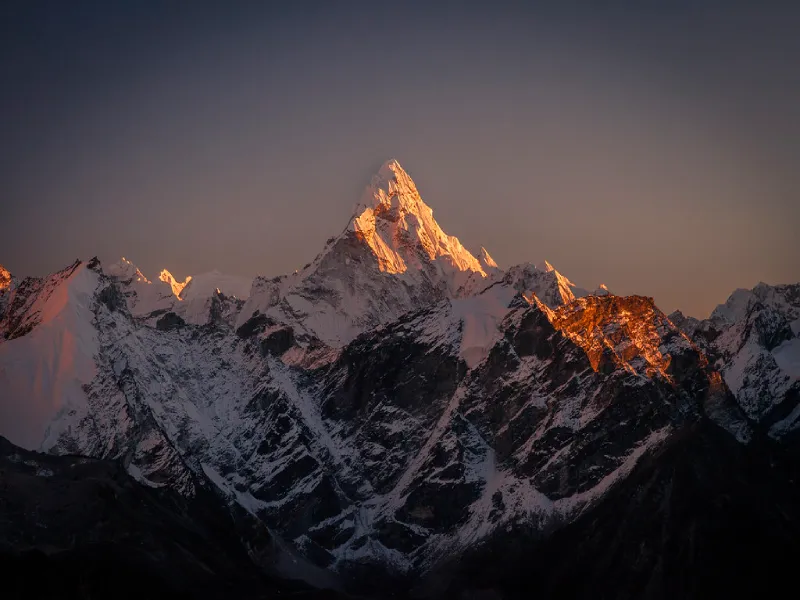
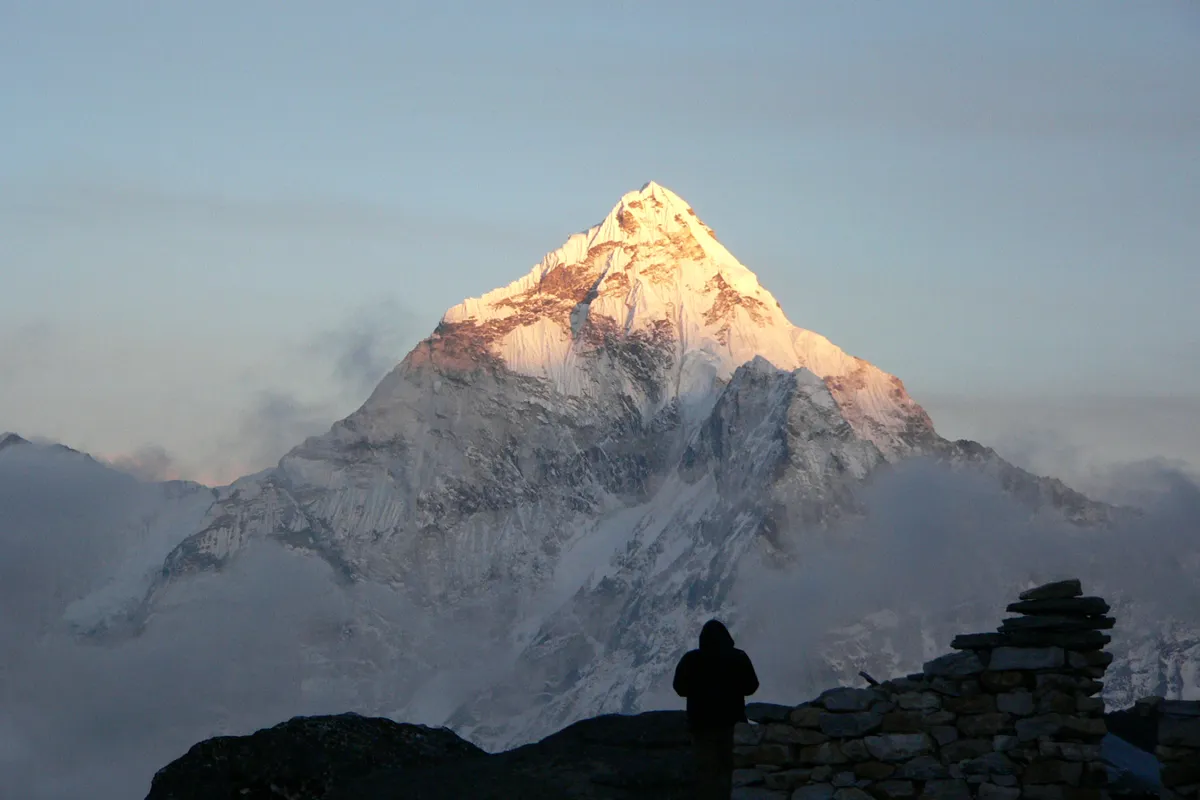
Ama Dablam Base Camp Trek is widely regarded as the most beautiful mountain in the world and is the second highest in the Khumbu region at a height of 6812m. Its unique shape has made it one of the most recognizable mountains of the Himalayas. It is an incredibly striking mountain. The Ama Dablam Base Camp Trek provides experiences for trekkers looking for something more than just a hike through the hills. This trek takes you to the heart of the Sherpa culture in the Everest region.

You will travel through ancient monasteries, vibrant rhododendron forests and through high altitude Sherpa villages that very few people get to experience up close. Every twist and turn of the trail reveals new, unique views of the mountain and reasons to continue.

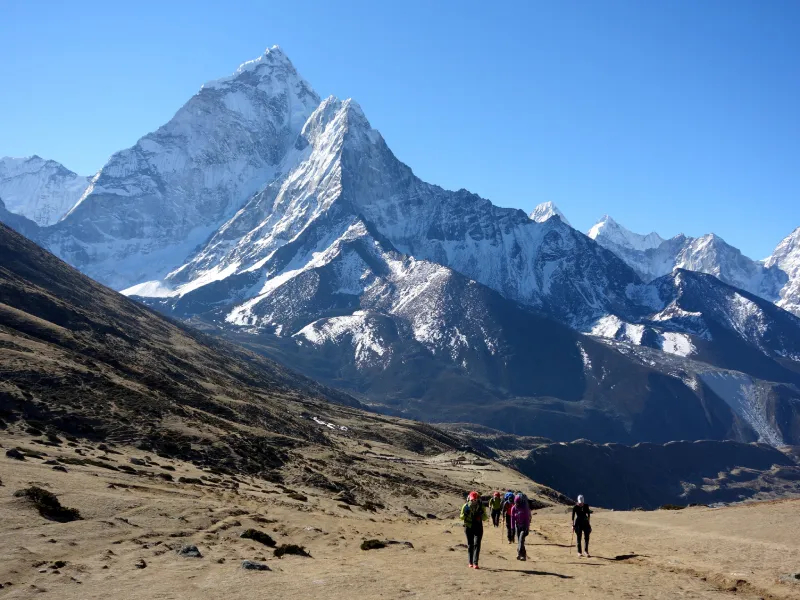
Unlike the highly crowded paths in the traditional EBC trekking trail, this trek feels more intimate. You get to experience the path with other mountaineers who prepare themselves for climbing peaks, yaks who graze along the path, and other trekkers who came here in search of the extraordinary.

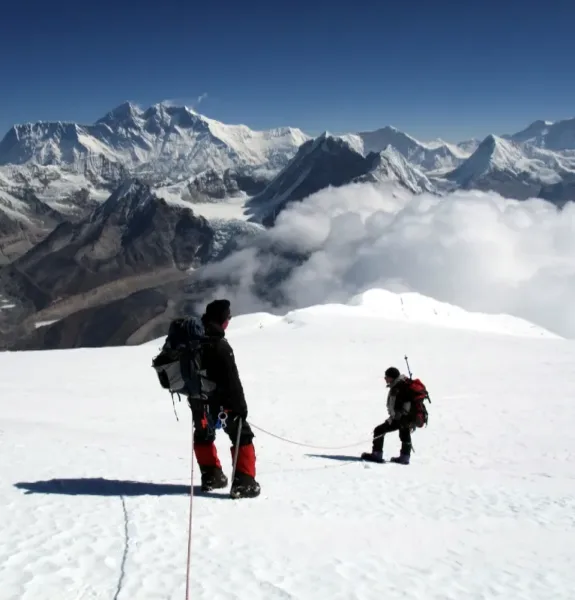
As you approach the base camp, it’s as if Ama Dablam Base Camp Trek itself fills the horizon, changing its majestic form with every twist in the trail. The peaks are so defined that it appears as if they were chiseled by an artist’s hand. Being at Ama Dablam Base Camp gives a sense of place that’s hard to find when you catch a glimpse of the peaks from a distance. Instead, you are surrounded by giants such as Lhotse, Everest, and Nuptse, giving a sense that you are a part of it rather than a passerby.

Trekking through the Ama Dablam Base Camp View Trek provides you with a great opportunity to see one of the most picture-perfect peaks in the world. Being up close and personal with the peak will remain a memorable experience throughout your lifetime.

No matter if you are a seasoned trekkers or you are about to undertake your first serious trekking adventure in the Himalayas, this trek will surely be something beyond the ordinary.

Why Choose Ama Dablam Base Camp View Trek?

If you’re searching for a trek that’s a little off the beaten path but still offers that stunning mountain scenery, the Ama Dablam Base Camp trek is, honestly, tough to beat. Most trekkers end up in the Khumbu with their minds on Everest, but this trek feels different. You’re not in a line of trekkers, you actually get to have the room to walk wherever you want and just be in the mountains for a little while, instead of feeling like just another face in the crowd.

The main highlight of this Ama Dablam Bases Camp View trek, of course, is Ama Dablam itself. It’s famous for that crazy, almost beautiful shape like a skyscraper rising up out of the valley floor. The closer you get, the crazier the detail is, with all those ridges and glaciers just hanging there. And let me tell you, being down in base camp and looking up at it. That’s a moment that will stick with you.

It’s the little things along the way that really make the trip worthwhile. There’s this authentic Sherpa village life that just feels so real. Like in Pangboche, for example, this place just has this really peaceful feeling, and there are prayer flags flapping in the wind and monks just going about their day. There are yak caravans and these classic stone houses, and just little glimpses of local life that you might completely miss if you were to hike one of the more commercial routes.

At the end of the day, this is not really a trek for people who are in a hurry. It’s really just those quiet days, and the slow pace of things, and really being able to connect with the environment in your own way. If you really want the big views and the authentic culture without all the crowds, this is really the one to choose. There’s just something really special about being in a place that feels so wild and so beautiful.

Ama Dablam Base Camp Trek Route

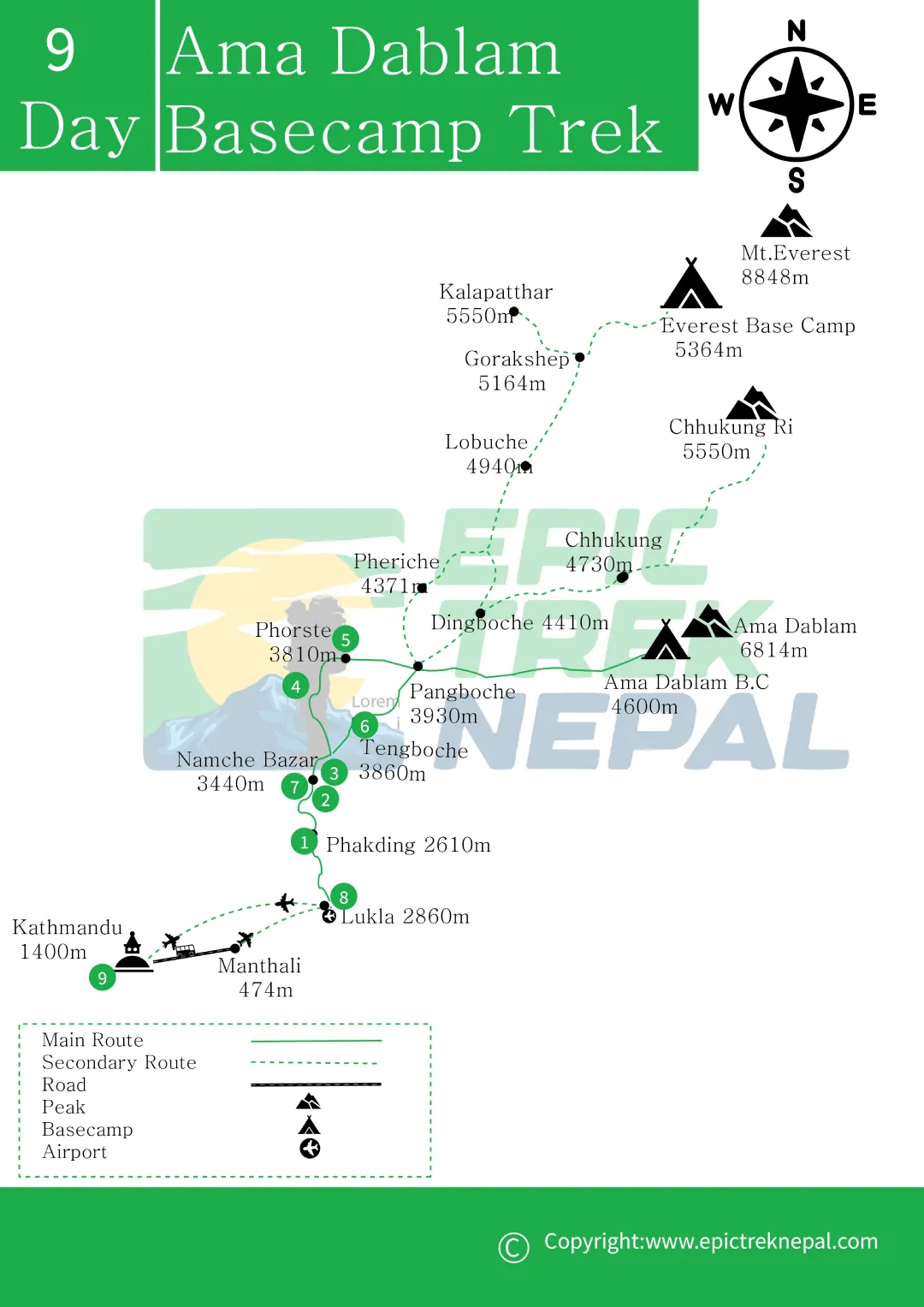
The trekking route to the base camp of Ama Dablam is quite clear as the route passes through the heart of the Khumbu. The whole journey starts with a short and exhilarating flight from Kathmandu to Lukla, which is officially considered the entry gate to the entire area.

Further from Lukla, the trail leads down to the village of Phakding, and then it is time for the gradual ascension to the world-known Namche Bazaar. This place is located on an altitude of 3,440 meters above sea level and serves as the main point for the Khumbu area. Here the traveler spends a day simply acclimating to the altitude and getting ready for the trek, but I believe it is totally worthwhile.

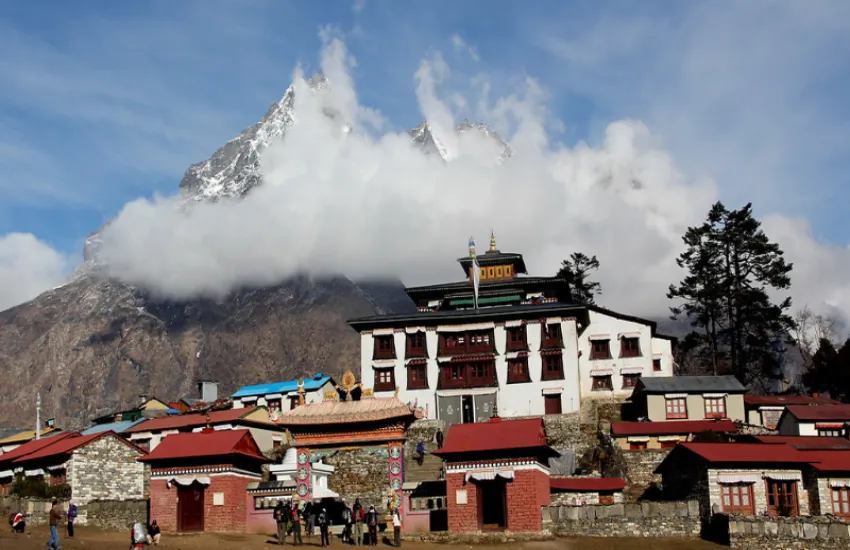
Then, further along the route from Namche, the trail takes another turn as it gets away from the overcrowded route to Mount Everest. Instead, the traveler heads towards the Phortse Village – a traditional Sherpa settlement which offers absolutely breath-taking mountain views. And from there, the route goes even further to Pangboche, the one of the oldest settlements in this area.

But by far the best part of it all happens on Day 6 when you make your way up to Ama Dablam Base Camp located 4,600 meters above sea level, and literally right under the pyramid-like peak itself. The views from here are simply mind-blowing. After enjoying them for some time, it is time to get back to Tengboche Monastery, where you will stay overnight.

From here you follow the same path back to Namche and Lukla and take the flight back to Kathmandu. The complete itinerary for the Ama Dablam Base Camp Trek lasts nine days only.

Highlights of Ama Dablam Base Camp Trek

  • Close-up with Ama Dablam: Stand at the very top of Nepal’s most iconic and beautiful mountain.
  • Ancient Spirituality: Explore historic monasteries and hike on trails filled with colorful prayer flags.
  • Authentic Sherpa Life: Hike through traditional, old-fashioned Sherpa villages like Phortse and Pangboche.
  • Escape the Crowds: Hike on a far more private trail than the crowded Everest trail.
  • Built-in Safety: Acclimatization stops ensure the high altitude is no problem at all for trekkers.
  • Cozy Tea Houses: Hike to friendly, family-run tea houses.
  • The Ultimate Viewpoint: Enjoy the breathtaking views of the glaciers from the Ama Dablam Base Camp.

Ama Dablam Base Camp Trek - Distance, Duration, and Altitude

Trekking Route Distance (Kilometers) Duration (Hours) Altitude (Meters)
Flight to Lukla and trek to Phakding (2,610m) 8 KM Flight to Lukla and 4 hours Trek to Phakding 2610 m.
Trek to Namche Bazaar (3,440m) 10 KM 5 to 6 hours Trek 3440 m.
Trek to Phortse Village (3,810m) 11 KM 5 to 6 hours Trek 3810 m.
Trek to Pangboche (3,930m) 8 KM 4 to 5 hours hike 3930 m.
Trek to Ama Dablam Base Camp (4,600m) and back to Tengboche Monastery (3,867m) 12 KM 6 to 7 hours Trek 4600 m.
Trek back to Namche Bazaar (3,440m) 10 KM 5 to 6 hours Trek 3400 m.
Trek back to Lukla (2,840m) 13 KM 5 to 6 hours Trek 2840 m.

Itinerary of Ama Dablam Base Camp Trek

The journey begins with the flight from Kathmandu to Lukla. It may be a short flight, but the mountain scenery visible from the plane window is essentially your welcome to Nepal. After  landing, your trek officially begins. The route follows along the Dudh Koshi River, passing through pine forests and villages until reaching a lodge in Phakding for the night.

activity-small

Activity: Flight to Lukla and 4 hours Trek to Phakding

max-alt-small

Max. Altitude: 2610m./8,563ft.

meals-small

Meal: Breakfast, Lunch, Dinner

accommodation-small

Accommodation: Tea house

Includes/Excludes

What is included?

  • Permits and Fees: All necessary permits for the Ama Dablam Base Camp Trek, such as the Sagarmatha National Park Permit and the Khumbu Pasang Lhamu Rural Municipality Areas are included.
  • Accommodation: Accommodation during the trek, typically in teahouses or lodges. This usually includes accommodation in Kathmandu before and after the trek in 3 star hotel on BB plan. (twin sharing basis)
  • Meals: Most packages will include three meals a day (breakfast, lunch, and dinner) during the trek. also includes  two times hot beverage (in breakfast and lunch) and seasonal fruits after dinner.
  • Domestic Flights: This include a domestic flight from Kathmandu and Lukla at the beginning and end of the trek.
  • Guide and Porters: Services of an experienced English-speaking trekking guide and porters to carry luggage (one porter for two trekkers). This includes their salary, insurance, equipment, transportation, food, and accommodation.
  • First Aid Kit: A basic first aid kit is typically provided.
  • Trekking Map: A detailed map of the trekking route is usually included.
  • Equipment: Duffle Bag, Sleeping Bag (if necessary)
  • Pick up drop-off: Airport pick up and drop-off by private vehicle.

What is not included?

  • International Flights: International airfare to and from Nepal is not included.
  • Travel Insurance: Travel insurance that covers emergency rescue, evacuation, and medical treatment is not included, and you’ll be expected to have your own.
  • Personal Expenses: Expenses for extra meals, drinks, snacks, charging devices, hot showers, Wi-Fi, laundry, and other personal costs are not included.
  • Nepal Visa Fees: Entry visa fees for Nepal are not included.
  • Additional Accommodation and Meals: If you choose to extend your stay in Nepal, or if you return from the trek earlier than scheduled, the cost of additional accommodation and meals will not be included.
  • Rescue and Evacuation: Any costs related to emergency evacuation or rescues are not covered.
  • Trekking Gear: Personal trekking equipment, such as hiking boots, down jackets, trekking poles, and other gear are not included.
  • Tips: Tips for guides and porters are not included and are left to your discretion.

Trip Map of Ama Dablam Base Camp Trek

Trip Information

Difficulty Level

In terms of difficulty, the Ama Dablam Base Camp trek can be considered a moderate trek for all those who are excited about Ama Dablam Base Camp View Trek. This moderate level of classification is based on the fact that no technical skill or climbing/mountain climbing experience is required.

Most individuals who have a good level of physical fitness will find it easy to accomplish this trek, but it is more than just an easy stroll in a park. Trekkers will find themselves on their feet for multiple hours each day and will have to cross multiple different types of terrain including steep climbs and harder, rougher rock during their Ama Dablam Base Camp Trek Itinerary. The positive side is that there is never any pressure to be in a hurry.

When you think about Ama Dablam Base Camp Trek, remember that it’s not just a distance you cover, you’re also trying to reach an elevation higher than 4500 meters above sea level. Once you start trekking up towards this elevation, you will need to spend several days to help your body adapt to the decreased air pressure. Therefore, the acclimatization days have been integrated into the itinerary, allowing trekkers to take their time, stay hydrated, and make it to the base of Ama Dablam without any problems.

In addition to completing your Ama Dablam Base Camp Trek Itinerary, you will receive a great sense of pride and accomplishment from conquering such a difficult challenge.

Preparation for the Ama Dablam Base Camp Trek Itinerary

The difference between someone who just survives and a trekker who can succeed depend in good preparations. You should begin your physical exercises two to three months before you are scheduled to go trekking. Focus on cardiovascular workouts such as running, walking, cycling, and stair-climbing. Strengthening your leg muscles is critical since it enables you to sustain the long days of trekking ahead of you.

Preparation of your mind is equally essential. You must know for certain that there are going to be some tough days during the trek, and thus mentally prepare yourself for those days.

As for your gear, make sure you only pack essential items. Pack light since all that you require would just be basic necessities such as clothing to keep you warm, a decent sleeping bag, trekking poles, and solid footwear. But more importantly, make sure that you have worn them out beforehand! Getting painful blisters from brand new shoes has been found to be the most common problem faced by trekkers on the way to Ama Dablam Base Camp.

Lastly, it is important that you check with your doctor before joining on this trip. Bring along medicine for acclimatization sickness such as Diamox. It is essential to understand that all high-altitude treks necessitate insurance for emergencies and evacuation purposes, otherwise, it becomes obligatory.

Cultural Experience and Local Life

The Ama Dablam Base Camp Trek goes right into the heart of one of the most culturally rich places within the Himalayas. These are not simply stopovers that offer a place to sleep overnight. These are vibrant cultures, with deep roots and spirituality.

The culture here is defined by the Sherpa population in this region. Their hospitality, endurance and devoutness make everything around seem alive, from the mani stones placed along the route to the light emitting from the traditional Buddhist monasteries. Among them is Pangboche Monastery, which is actually the oldest in the entire Khumbu region. It really is a magnificent experience inside.

Many of the tea houses along the trekking route are actually homes of the families who reside there. Dining with a Sherpa family on one big plate of dal bhat, having a chat over a cup of butter tea, and observing the activities of those around us can be among the most memorable experiences we have while doing Ama Dablam Base Camp Trek.

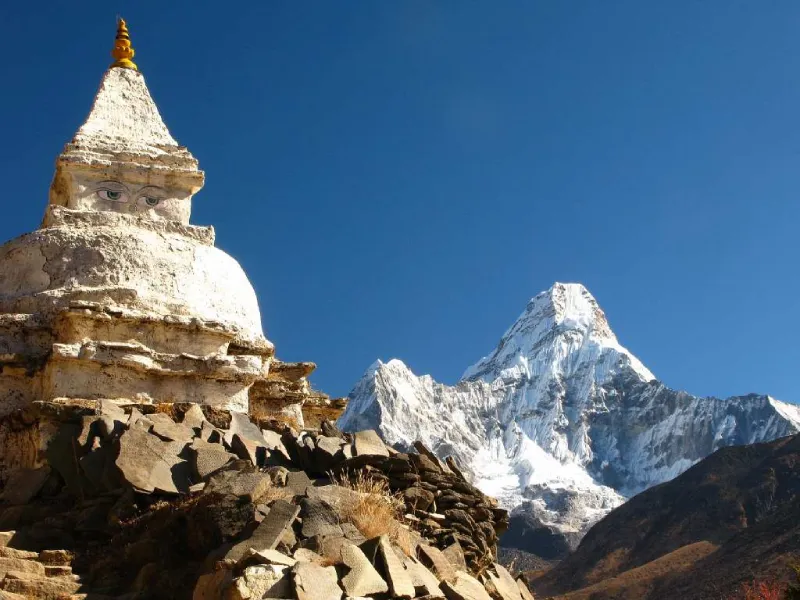
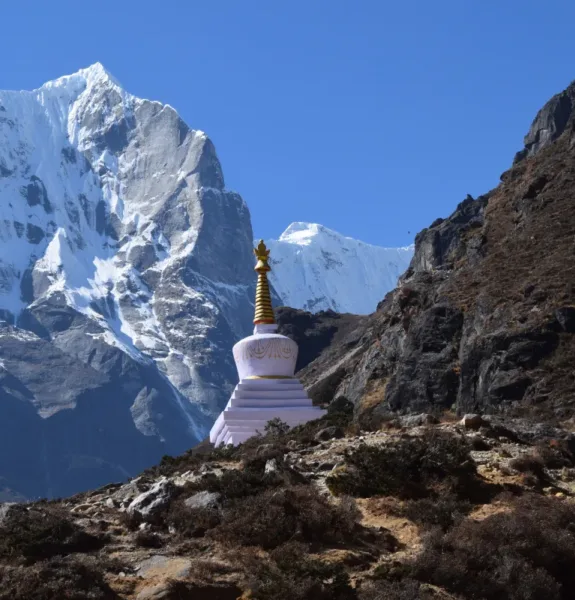
During the trek, you will find yaks, prayer flags, and chortens made of stones almost everywhere. This always serves as a reminder that you are trekking not only through beautiful places but also through sacred places. If you do things with a bit of curiosity and humility, you will learn many things other than the beauty of the Himalayas.

Accommodation and Meals on the Ama Dablam Base Camp Trek

Most evenings during the Ama Dablam Base Camp Trek, you will be staying at tea houses, which are traditional mountain lodges providing a place to rest after a long day of walking. The rooms are clean and comfortable, but shared bathroom facilities are common and necessary. This is not a luxurious experience, but it offers what you need: a comfortable bed, a roof over your head, and a chance to rest before starting the next day’s trek.

The food along this route is simple, hearty, and designed to keep people moving. The staple of any Himalayan trek is obviously Dal Bhat (lentil soup and rice), which is really the ultimate energy booster. Besides this teahouse also offers access to noodles, soups, momos, and even pancakes or eggs for breakfast. It’s certainly no luxury cuisine, but it is incredibly comforting and satisfying after five or six hours of walking on the Ama Dablam Base Camp Trek.

Language & Communication

While the language is Nepali, the people who live here speak mainly Sherpa at home. Luckily, English is understood everywhere on the route. Teahouses in Namche Bazaar and Tengboche are quite fluent in English, and so are local people.

But it’s always good to know a couple of phrases. Saying “Namaste” when meeting a Sherpa person, or “Dhanyabad” when thanking them, will win you a friendly smile and show your appreciation towards the culture.

A guide helps in closing all sorts of communication gaps when taking an Ama Dablam Base Camp Trek. An experienced Sherpa guide is not only familiar with the trails but also knows how to translate conversations and introduce clients to local culture. Hence, trekking becomes much more than moving from one teahouse to another.

The Sherpa guides have a lot of historical knowledge of the region which makes your trek extremely rich in terms of the information that they share with their clients. These guides can make you become part of a conversation with the village elder and a monk at a monastery.

In spite of all language barriers, communication on the trail is natural and automatic. A gesture such as a smile, a nod, and butter tea drinking are enough to break the language barrier between strangers.

Visa and Permit Required for Ama Dablam Base Camp Trek

Nepal is quite a hospitable country, and, for the majority of trekkers, obtaining visas will not be complicated. You may simply buy a tourist visa upon their arrival to the Kathmandu Airport, and the cost depends on the period of stay – 15, 30, or 90 days. Tip: take some passport photos and US dollars in cash, since this helps tremendously simplify the process.

Before setting your step on Ama Dabam Base Camp Trek, there are couple of permits that you will need to require.

  1. Sagarmatha National Park Permit (SNP): Since the trekking trail passes through Sagarmatha National Park, a UNESCO World Heritage Site, the SNP permit is needed. The Sagarmatha National Park Permit costs USD 30 for each person.
  2. Khumbu Pasang Lhamu Rural Municipality Permit (KPL): This permit is required to trek through the rural municipality areas, which include the Sherpa villages on the route. The Khumbu Pasang Lhamu Rural Municipality Permit will cost you USD 20 for each person.

The best part is that most trekking agencies, including ours Epic Trek Nepal, can handle all the permit arrangements for you, so you don’t need to worry about the paperwork and can focus on enjoying your trek.

Experienced Guide and Porter

One of the most wonderful aspects of Ama Dablam Base Camp Trek Itinerary is how local guides accompany the treks throughout the trek. These guides have lived their entire lives in these mountains and have walked these exact paths more times than they can remember. These guides are much more than navigators, they help trekkers develop a culture-based connection to the area that otherwise would not be possible.

Another aspect of Ama Dablam Base Camp Trek is the porters, whose help significantly enhances the enjoyment of the trek experience. Porters are responsible for carrying all of the participants’ gear, allowing the trek participants to enjoy their scenery by lifting their heads and looking around, rather than looking down at their feet and carrying a very heavy backpack. Porters also serve as part of the “trek family” and always lend support when needed.

A guide and porter team who are helpful to all trekkers relies on reliable service. They will relieve tourists of any anxiety that might come along with their travels so the site is able to concentrate on its actual purpose: The mountains, the culture and the wonder of being in the country of Nepal!

Mobile Network, Internet & Charging Facilities

The Ama Dablam Base Camp Trek will have mobile coverage for some distance, but I am afraid that after some height it is going to become slow and unpredictable. The leading providers in the region are NCell and Nepal Telecom. So my recommendation would be to buy a SIM card at arrival in Kathmandu as it is much cheaper, much easier!

There should be WiFi available in teahouses, but it is likely going to be charged, around 200-500 Rupees per hour, which is not that much anyway. However, you shouldn’t expect to stream something like Netflix, it is better to use it for messaging on WhatsApp and uploading images to social media.

As for powering up your electronics, you can power them up at teahouses, but they will charge you a fee for that. In this case, it would be better if you brought a power bank which has a large battery capacity. This is a important thing for higher altitudes, where sometimes electricity is veru unstable. The last thing you would want is to get out of power while taking photographs.

Solar chargers are quite common in areas where there is no access to electricity. Make sure that you plan your recharge moments during rest stops to not be left without power when you need it the most.

Don’ts on This Ama Dablam Base Camp View Trek

First, remember never to remove any prayer flags, mani stones, and other religious objects, they are considered sacred by the Sherpa people. Secondly, it is very important to pass clockwise around the stupa and the mani wall. This is respectful according to the Buddhist tradition.

Do not litter! The area of Khumbu has been striving to protect its beauty for decades. Bring along a portable bottle and purifying tablets, which means that you will not buy plastic water bottles throughout your trip.

Do not overlook altitude sickness. This is no joke. Never attempt to “power through” if you feel extremely ill. If you have an incredibly painful headache, feel disoriented, or dizzy, descend immediately. Your safety should be prioritized throughout the Ama Dablam Base Camp View Trek.

Try not to dress provocatively around the villages and temples. Dress modestly and remove your shoes while entering religious shrines. Such minor cultural considerations can make a huge difference indeed.

Travel Insurance

Travel insurance is not a option but a mandatory item for this Ama Dablam Base Camp Trek Itinerary. You will reach altitudes exceeding 4,500 meters, and due to altitude sickness and unforeseen climatic conditions, it can quickly become an issue. Travel insurance will allow you to feel safe.

Make sure that the coverage includes high-altitude hiking trips up to 5,000 meters. Most travel insurance policies have limitations concerning high-altitude hikes, and you will need to find a good travel insurance plan that provides adequate coverage for your activities.

Helicopter evacuation is also critical in the event of an accident. Depending on your destination, a helicopter evacuation might range from $3,000 to $6,000. It might be challenging for you to meet these costs without adequate travel insurance.

Trip cancellation, baggage loss, medical expenses, and hospital stays are some of the other essential factors. Save copies of these documents on your phone and carry a hard copy in your backpack. Additionally, you should provide your guide with your emergency contacts.

Trip Extension and Side Trails

One of the best parts about the Ama Dablam Base Camp Trek is that it is easy to combine with other trekking routes in the region. If you have some additional time available, I recommend you do so, it is an excellent idea.

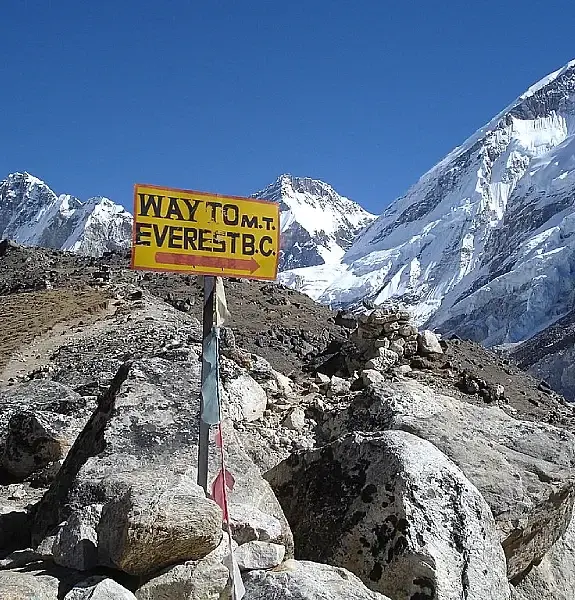
Firstly, the Everest Base Camp Trek could be added to your itinerary very easily and would only require an addition of several days to your schedule. Walking next to one of the highest mountains of the planet after visiting Ama Dablam will be truly memorable experience.

Another trekking route to be considered would be the Gokyo Lakes Trek. The blue-colored lakes are situated at an altitude of approximately 4,700 meters and offer breathtaking views of the reflection of another Himalayan giant – Cho Oyu.

You can even consider hiking up Kala Patthar which offers some of the most beautiful views in all of Nepal, standing at 5,545 meters high. The view of Everest when watching the sunrise from Kala Patthar, especially while breathing in the crisp mountain air. This is the type of experience that you will be recounting forever.

Frequently Asked Questions

Ama Dablam is a moderate trek which trekkers don’t require any technical skills or mountaineering skills. The trails are not difficult, but the difficult is breathing the thin air. As long as you are in descent condition, you will be fine, just don’t skip those acclimatization days.
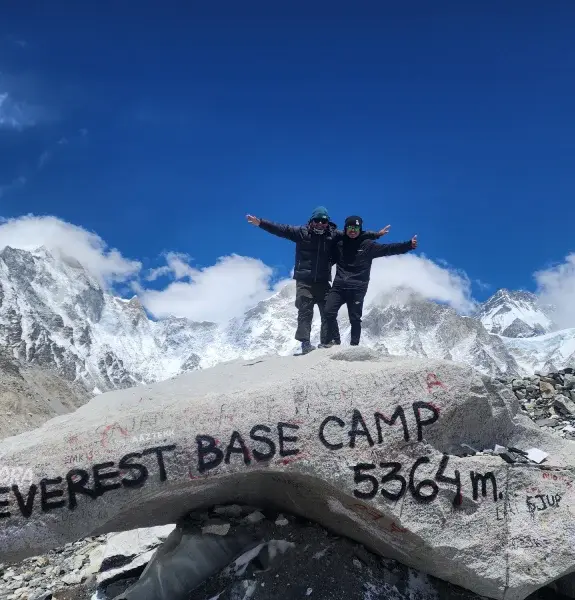
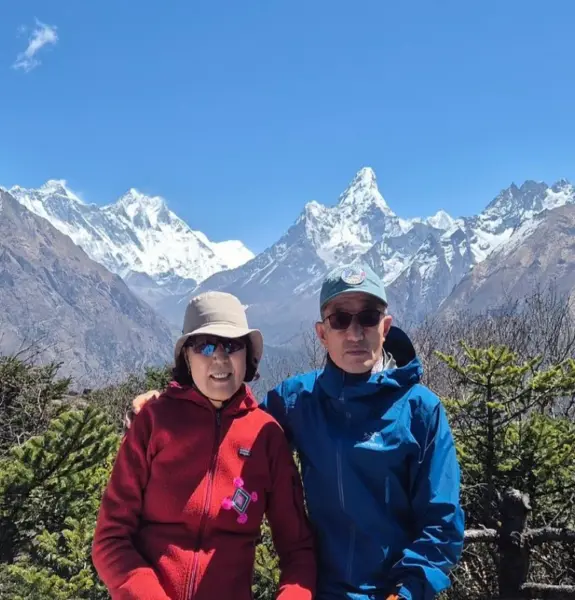
The best time for this Ama Dablam Trek are Spring (March to May) and Autumn (September to November). Spring is really nice because the rhododendron is in bloom, and the weather is getting nice, whereas Autumn is nice because of those beautiful, crystal-clear views of the mountains. Monsoon season is a mess, and winter is just plain nasty because of the cold.

Not particularly. While it is nice to have spent a little time on trails before, it is not a problem. The most important thing is to make sure you’re comfortable walking for 5 or 6 hours a day on hilly terrain that may be rocky.

You will need 2 permits:

  1. Sagarmatha National Park Permit
  2. Khumbu Pasang Lhamu Rural Municipality Permit

While some people attempt to go it alone, having a local guide and porter can be a total game-changer. Guides aren’t just for giving directions – they can also help with safety, altitude sickness, and giving you a glimpse into local culture that can’t be found in a book. And having a porter carry your gear means that you can enjoy the walk, rather than suffering through with a 15kg pack.

Our standard trip is 9 days, and this will include everything from flying into Lukla to getting back to Kathmandu. Most days will involve between 3 and 7 hours of walking, depending on how steep it is and how our group is feeling with the altitude.

Yes and no. It’s something we take seriously, but it shouldn’t be a worry for you. There are specific days allocated for your body to acclimatize, and our guides are trained to spot the signs of AMS (Altitude Mountain Sickness) early on. As long as you drink plenty and take your time, you’ll be fine.

The base camp is around 4,600 meters (about 15,090 ft) or so. The thing is, we don’t really stay at the base camp. Instead, we trek up to the base camp, hang out for a bit, and then trek down to a place where we will be sleeping. The thing is, the air is pretty thin at that elevation, and the only way to really succeed is to trek up at a snail’s pace.

While the Ama Dablam will be the main feature of our trekking adventure, we will still be able to catch a glimpse of the majestic Everest from the Namche Bazaar and Tengboche areas. However, the Ama Dablam will still be the star of the show, especially since it is so much closer.

  • Epic Trek Nepal pricing:

    • Solo Trekker: $1,290 per person
    • 2-3 person: $1,250 per person
    • 4-6 person: $1,220 per person
    • Group over 7: $1,180 per person

    Includes all permits, accommodation, meals, guide, porter, and ground transportation (no flights required).

Trip Reviews

Price starts

US$ 1250

We offer group discounts

  • 1 - person
    US$ 1290
  • 2 - 3 person
    US$ 1250
  • 4 - 6 person
    US$ 1220
  • 7 over 9999
    US$ 1180

Total Cost:

US$ 1290

Similar Packages

Everest Base Camp Trek
5.0

Everest Base Camp Trek

  • Duration: 14 Days
  • |
  • Grade: Moderate
Price from

US$ 1350

US$ 1475
Everest View Trek
5.0

Everest View Trek

  • Duration: 7 Days
  • |
  • Grade: Easy
Price from

US$ 930

US$ 1050
Everest Base Camp
5.0

Jiri to Everest Base Camp Trek

  • Duration: 20 Days
  • |
  • Grade: Moderate
Price from

US$ 1600

US$ 1800
  • Price starts

    US$ 1600