Island Peak Climb with EBC – Epic 18 Days Himalayan Adventure
80 reviews in Tripadvisor
Trip Duration
18 DaysDestination
NepalMax. Altitude
6,189 m.Trip Difficulty
ChallengingGroup Size
2-16 paxTransportation
Tourist Bus & Flight Lukla - KathmanduAccommodation
Hotel/TeahouseActivity
Trekking/HikingMeals
All IncusiveStart / End
KathmanduRegion
EverestBest Season
Spring, AutumnUS$ 1800
Confirm your trip with a secure 10% down payment
Need Help? Talk to Expert
+977 9764792172Trip Overview
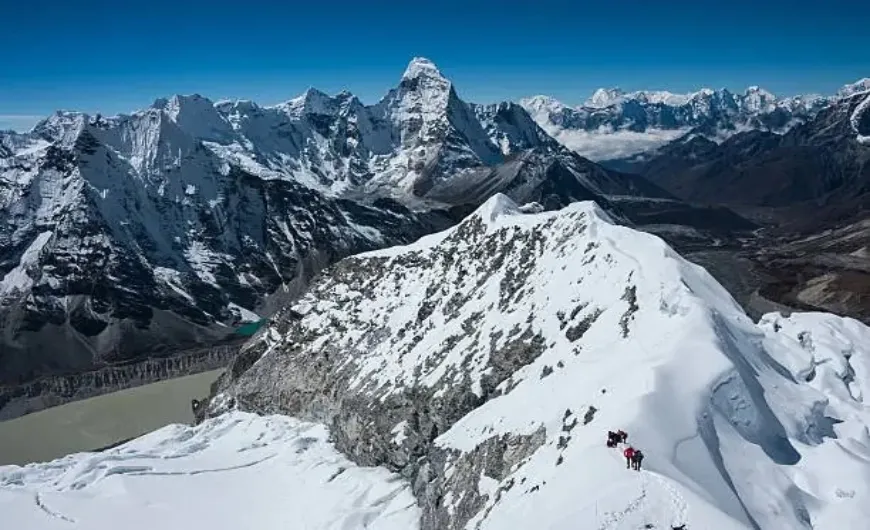
Island Peak, which appears exactly like an Island when viewed from Dingboche, stands at 6,189m and is one of the most popular trekking peaks in Nepal. This challenging, Island Peak climb is designed for beginner rather than an expert. Also known by Imja Tse. It is located in Sagarmatha National Park where climbers can enjoy breathtaking 360° views of Lhotse (8,516m), Makalu (8,481m), Ama Dablam (6,812m), and even catch a glimpse of Mt. Everest (8,848.86m). Island Peak sits close to Mount Everest and is actually an extension of Lhotse, the world’s fourth highest mountain.
To make this Island Peak climb journey more exciting and memorable, we have combined the Everest Base Camp Trekking with it. It gives you an opportunity to experience two of the bucket list dreams at once. Not only you will stand at the base of the highest peak of the world but will challenge yourself further by climbing a Himalayan Peak.
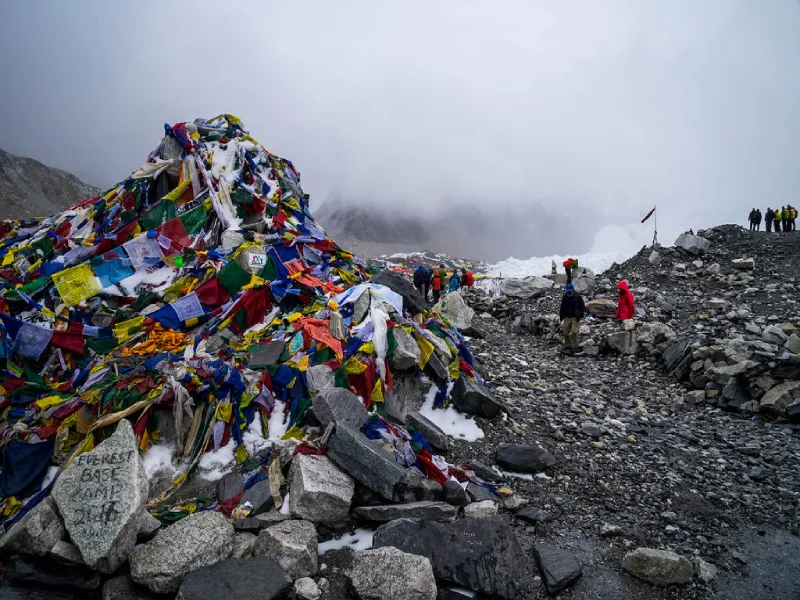
Everest Base Camp lies at an altitude of 5,364 meter which is located beneath the Khumbu Icefall with Nuptse and Lhotse begin on both side of the mountain range. Getting to the base camp alone is great achievement, but the story doesn’t end here. After you complete the Everest Base Camp trek, you will move on to Island Peak 6,189 m high peak.
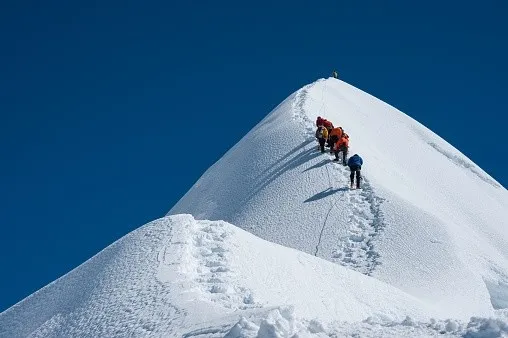
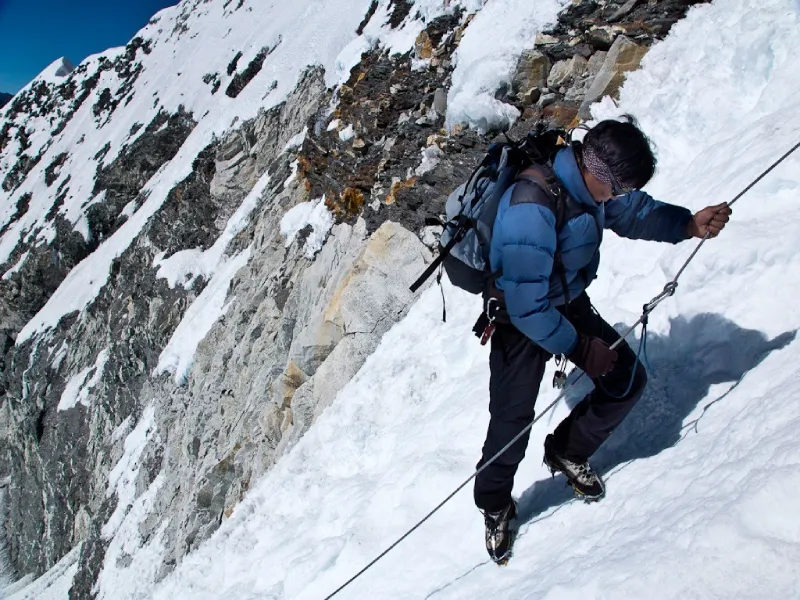
Climbing Island peak is different than reaching the Everest Base Camp. Island peak climb requires knowledge and skill of glacier travel and rope work, using crampons and brutal push to the top. This climb is technically quite challenging, but as long as there are good guides and enough time to adapt to the climate, this expedition is completely doable.
In fact, most of the climbers have spent months training before going to Nepal. However, I guarantee you that it is well worth it when you will be at the peak of the Island Peak surrounded by the mountains of Everest and Lhotse.
Therefore, if you are either an experienced hiker or an inexperienced, this adventure has something for everybody.
Island Peak Climbing Route
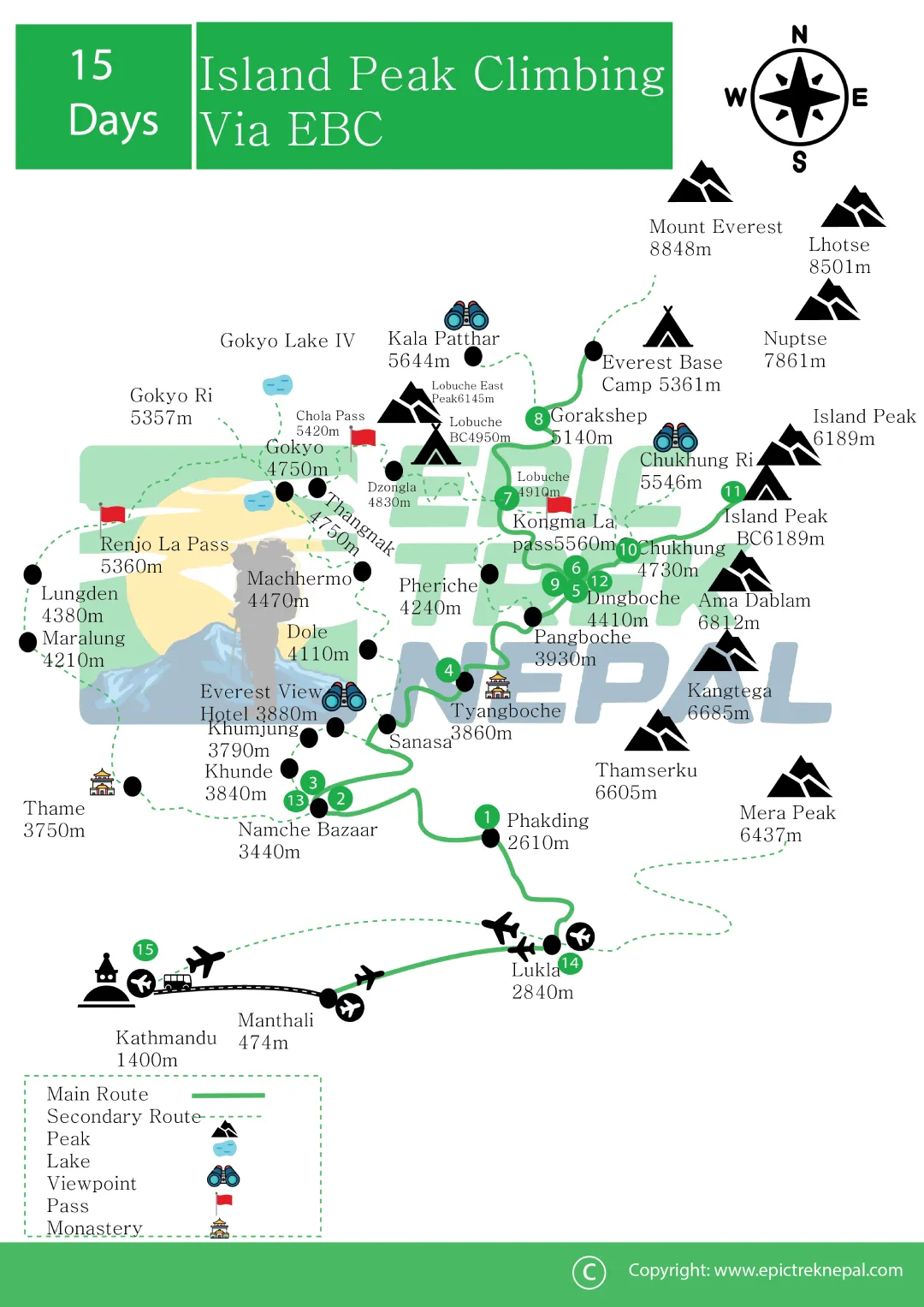
The Island Peak Climb Itinerary is an 18-day route around Khumbu area, we have created this route for that excellent combination of trekking, acclimatization and climbing.
It all starts with your arrival to Kathmandu where all the paperwork will be sorted and equipment prepared before catching a thrilling flight to Lukla. The path then descends gently through Phakding along the Dudh Koshi river flowing next to you.
The further way is gradually rising through Namche Bazaar, Tengboche and Dingboche, during which you will pass by old monasteries and open majestic Himalayan valley. There will two acclimatization day included in this Island Peak Climb Itinerary and ignoring that is not on the option.
After Dinboche, you will keep walking until you reach the destination of Lobuche and Gorakshep, which serves as your last destination for that summit toward Everest Base Camp and Kala Patthar. These two stops is the emotional highlight of the entire trek since here you will get a chance to have a close look of the world highest mountain that not many people get to see.
From Gorakshep, the next step is the following the route toward Chhukung, transiting the spirit of the entire trek from trekking to climbing. Your first stop here is the base camp of Island Peak which prepares you mentally for what is coming next.
The summit day is definitely the most important part of your entire trek when you start climbing Island Peak and make the final push at 6,189 meters.
After the summit is conquered, the trail goes back down via Namche and Lukla until you finally get ready to fly back to Kathmandu.
Highlights of Island Peak Climb with EBC – Epic 18 Days Himalayan Adventure
- Summit Success at 6,189m – Epic views of Everest and surrounding peaks
- Technical Climbing Experience – Real mountaineering with ropes, ice, and glaciers
- EBC Trek Integration – Two legendary adventures in one trip
- Sherpa Culture – Authentic mountain culture and hospitality
- Spectacular Scenery – Insane Himalayan landscapes throughout
Photo Gallery & Video Gallery
Island Peak Climb with EBC – Epic 18 Days Himalayan Adventure - Distance, Duration, and Altitude
| Trekking Route | Distance (Kilometers) | Duration (Hours) | Altitude (Meters) |
|---|---|---|---|
| Lukla → Phakding | 6.2 KM | 3 to 4 hours | 2610 m. |
| Phakding → Namche Bazaar | 7.4 KM | 5 to 6 hour | 3440 m. |
| Namche → Tengboche | 9.2 KM | 5 to 6 hours | 3810 m. |
| Tengboche → Dingboche | 9.1 KM | 5 to 6 hours | 4410 m. |
| Dingboche → Lobuche | 7.9 KM | 4 to 5 hours | 4910 m. |
| Lobuche → Gorakshep → Everest Base Camp → Gorakshep | 7.6 KM | 6 to 7 hours | 5364 m. |
| Gorakshep → Kala Patthar → Dingboche | 15 KM | 7 to 8 hours | 5550 m. |
| Dingboche → Chhukung | 5 KM | 2 to 3 hours | 4730 m. |
| Chhukung → Island Peak Base Camp | 4 KM | 3 to 4 hours | 5200 m. |
| Base Camp → Island Peak Summit (6,189 m) → Dingboche | 14 KM | 10 to 12 hours | 6189 m. |
| Dingboche → Namche Bazaar | 14.5 KM | 6 to 7 hours | 3440 m. |
| Namche to Lukla | 13.5 KM | 6 to 7 hours | 2860 m. |
Itinerary of Island Peak Climb with EBC – Epic 18 Days Himalayan Adventure
Day 01: Arrival in Kathmandu
Your Island Peak Climbing with Ebc adventure begins right from the time you step on Nepal. One of our representatives will greet you and escort you to your hotel.
After reaching your hotel, get some rest or go for visit around Thamel area where you can find may stores for trekking gear and cafes to try out local cuisine.
Activity: 35-min drive
Max. Altitude: 1400m./4,593ft. (Kathmandu )
Accommodation: 3 Star Hotel
Day 02: Kathmandu Sightseeing and Preparation
Today you wil spend the day preparing for the trek and exploring the city’s UNESCO World Heritage Sites like Pashupatinath, Boudhanath or Swyambhunath, which will provide you an insight into the spiritual culture of Nepal.
In the evening, you will need to sort out all necessary permit, pack your equipment,gear and your guide will give you a brief session about the trek itinerary, its route, and thing that you will encounter on the trek.
Activity: Sightseeing
Max. Altitude: 1400m./4,593ft. (Kathmandu )
Meal: Breakfast
Accommodation: 3 Star Hotel
Day 03: Flight to Lukla (2840m), Trek to Phakding (2610m)
After a scenic flight to Lukla, you will find yourself in Lukla, gateway for the most beautiful destination on earth.
You will be introduced to your team and begin the trek to Phakding. The trek should take about 3-4 hours following Dudh Koshi River, through pine forests and trails lined with prayer flags.
Today’s trek is just introduction of the trek and nothing too serious.
Activity: Scenic fligh and Easy Trek
Max. Altitude: 2610m./8,563ft. (Phakding )
Meal: Breakfast, Lunch, Dinner
Accommodation: Standard Teahouse
Day 04: Trek to Namche Bazaar
Today’s route will lead you into Sagarmatha National Park, where you have to register your permits.
You will encounter several suspension bridges and Hillary Bridge with Thamserku rising in the background all the way until reaching Namche. It is a tough day, you gain a lot of elevation, but it will be worth it.
Activity: Trek (5 to 6 hours)
Max. Altitude: 3440m./11,286ft. (Namche Bazaar)
Meal: Breakfast, Lunch, Dinner
Accommodation: Standard Teahouse
Day 05: Acclimatization Day in Namche Bazaar
This is an acclimatization day to adjust to the high altitude. As Namche is the largest settlement of Sherpa community and trading hub. You can spend the day exploring the village and its local museum.
Activity: Rest day
Max. Altitude: 3440m./11,286ft. (Namche Bazaar)
Meal: Breakfast, Lunch, Dinner
Accommodation: Standard Teahouse
Day 06: Trek to Tengboche
After leaving Namche, the trail opens up more offering stunning views of the majestic mountain of Everest, Lhotse and Ama Dablam.
After some descend through rhododendron forest, crossing rivers and some steep climb, you will reach Tengboche.
This village is home to the largest monastery of the region. Go for evening prayer ceremony and experience the mythical atmosphere created by chanting monks.
Activity: Trek (5 to 6 hours)
Max. Altitude: 3870m./12,697ft. (Tengboche)
Meal: Breakfast, Lunch, Dinner
Accommodation: Standard Teahouse
Day 07: Trek to Dingboche
Our trek continues towards Dingboche and Pangboche, where we will see trees starts to disappear and be replaced by harsh and rough landscapes.
The trail descends and passes through lush forests, and the village of Pangboche before reaching Dingboche.
Activity: Trek (5 to 6 hours)
Max. Altitude: 4360m./14,304ft. (Dingboche)
Meal: Breakfast, Lunch, Dinner
Accommodation: Standard Teahouse
Day 08: Acclimatization Day in Dingboche
This is another acclimatization day to help us gain more altitude. During the day, you will go for a hike towards Nangkartshang Peak for that view of Mount Makalu, Mount Lhotse and the Imja Valley.
This walk will not only help with your acclimatization process but also prepare you for Everest Base Camp and Summit Island Peak.
Activity: Acclimatization + Short hikes
Max. Altitude: 4360m./14,304ft. (Dingboche)
Meal: Breakfast, Lunch, Dinner
Accommodation: Standard Teahouse
Day 09: Trek to Lobuche
This section of trail takes you up to Thukla, with memorials dedicated to those who have died during climbing attempts on Mount Everest Base Camp.
From Thukla, the trails go all the way to Lobuche, following the Khumbu Glacier. This place is a little town ideal for your tomorrow hike toward the Everest Base Camp.
Activity: Trek (4 to 5 hours)
Max. Altitude: 4940m./16,207ft. (Lobuche)
Meal: Breakfast, Lunch, Dinner
Accommodation: Standard Teahouse
Day 10: Trek to Gorakshep(5140m), Everest Base Camp (5400), and Back
This is one of the difficult parts of your trek. You will begin your trek in the early morning through Gorakshep and then you will move on towards Base Camp of Mount Everest.
It will be an emotional achievement for everyone, standing right in front of the world’s highest mountain. After having your moment, taking photos, and while still feeling the sense of accomplishment, you will return to Gorakshep.
Activity: Trek (7 to 8 hours)
Max. Altitude: 5140m./16,864ft. (Gorakshep)
Meal: Breakfast, Lunch, Dinner
Accommodation: Standard Teahouse
Day 11: Trek to Kala Patthar (5550m), then to Dingboche (4360m)
Before sunrise, you will start you climb toward Kala Patthar which is known for its best sunrise viewpoint of Everest. The climb is not long but very challenging and the reward is equally satisfying offering golden morning light hitting Everest, Nuptse and Lhotse all together.
Back at Gorakshep, you will have breakfast and then start descending back to Dingboche, following almost the same way as the day before. Thicker atmosphere and warmer temperatures will welcome you down, after several previous days, this is really pleasant.
Activity: Sunrise hike (7 to 8 hours)
Max. Altitude: 4360m./14,304ft. (Dingboche)
Meal: Breakfast, Lunch, Dinner
Accommodation: Standard Teahouse
Day 12: Trek to Chhukung
Your trek is going to change today as you will turn onto the other side of the valley towards Chhukung instead of turning around and returning to Namche Bazar.
The route passes through the Imja Valley offering closer views of Island Peak, Lhotse, and Ama Dablam. Chhukung is a peaceful village located in the midst of Island Peak’s slopes.
Activity: Trek (3 to 4 hours)
Max. Altitude: 4730m./15,518ft. (Chhukung)
Meal: Breakfast, Lunch, Dinner
Accommodation: Camping
Day 13: Chhukung Base Camp
Today is all about getting ready for the summit climb. A short hike will take you to Island Peak Base camp and you will set up your camp right beneath the mountain.
Your guide will conduct a comprehensive training session about crampons, ice axe, and harness so that everything will feels familiar to your when climbing the summit.
In the afternoon, you will prepare all the equipment and prepare for the summit. Rest early because the next day is going to be a long one.
Activity: Trek (2 to 3 hours)
Max. Altitude: 5200m./17,060ft. (Chhukung Base Camp)
Meal: Breakfast, Lunch, Dinner
Accommodation: Camping
Day 14: Island Peak Summit (6189), Back to Dingboche(4,410)
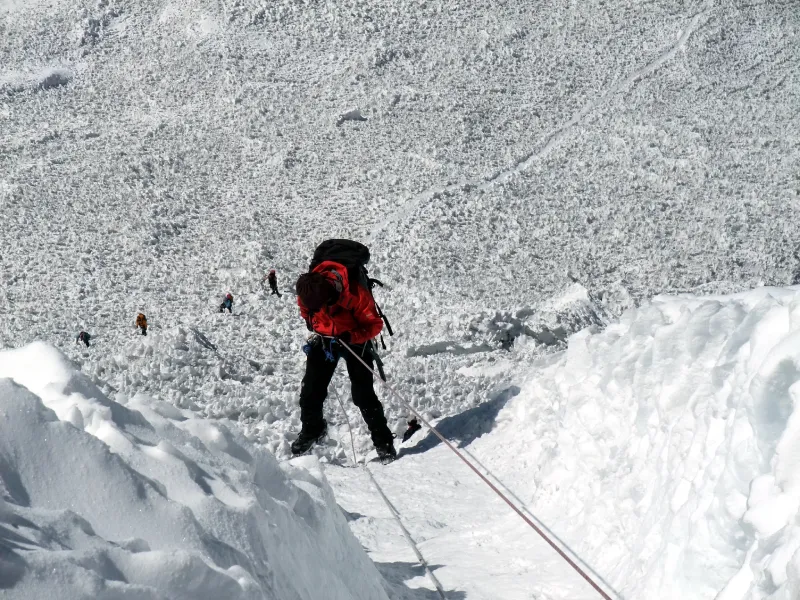
This is the day all of your work leading up to now has prepared you for. Your summit will begin around midnight when you cross a glacier using crampons and reach the steep headwall using fixed rope at sunrise.
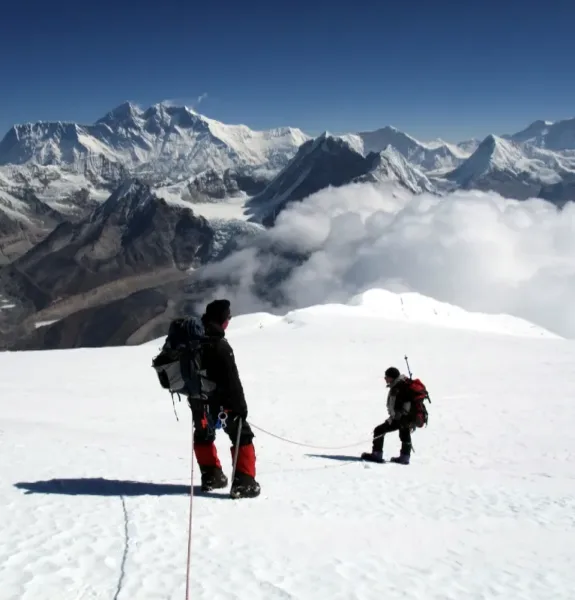
When reaching there, you will be rewarded by incredible views of Everest, Lhotse, and Makalu from the summit, really making it all worthwhile. Then celebrate at the summit and descend to your base camp, and even further to Dingboche.
Activity: Summit Climb (14 to 16 hours)
Max. Altitude: 6189m./20,305ft. (Island Peak)
Meal: Breakfast, Lunch, Dinner
Accommodation: Camping
Day 15: Trek to Namche Bazaar
Now that the Everest Base Camp and Island Peak Summit are conquered, the rest of the trek will be much lighter physically and mentally.
You will head back to Namche Bazaar, where you will have delicious meals, hot shower and more comfortable environment.
Activity: Trek (6 to 7 hours)
Max. Altitude: 3440m./11,286ft. (Namche Bazaar)
Meal: Breakfast, Lunch, Dinner
Accommodation: Standard Teahouse
Day 16: Trek to Lukla
Your final trekking day repeats the steps of day three, going over those same old bridges and through Phakding, although it may seem different somehow.
After arriving in Lukla, your Island Peak Climbing Itinerary finally completes. Don’t forget to expression your gratitude to your guides and porter as they are the reason you successfully completed your trek.
Activity: Trek (6 to 7 hours)
Max. Altitude: 2840m./9,318ft. (Lukla)
Meal: Breakfast, Lunch, Dinner
Accommodation: Standard Teahouse
Day 17: Fly Back to Kathmandu
After a quick breakfast, you will take a scenic flight back to Kathmandu where you started your adventure.
The rest of the day is dedicated to relaxing or last-minute shopping n Thamel. In the evening, we “Epic Trek Nepal” will arrange a farewell dinner to celebrate the end of your Island Peak Climbing with Ebc adventure.
Activity: Flight Back and Farewell dinner
Max. Altitude: 1400m./4,593ft. (Kathmandu )
Meal: Breakfast
Accommodation: 3 Star Hotel
Day 18: Departure
You’ll be transferred to the airport by our representative for your departure, marking the end of your adventure in Nepal.
Meal: Breakfast
If you are traveling in a private group, we can arrange a fully customized trip based on your preferences, group size, and travel dates, available any day you choose.
Includes/Excludes
What is included?
- Airport Transfers: Pick-up and drop-off services from Kathmandu’s Tribhuvan International Airport.
- Accommodation: Hotels in Kathmandu before and after the trek, lodges (teahouses) during the trek, and tents for the Island Peak climb.
- Meals: All meals during the trek and climb, and breakfast in Kathmandu. Also includes two times hot beverage (in breakfast and lunch) and seasonal fruits after dinner.
- Trekking and Climbing Permits: Includes Sagarmatha National Park Permit, Island Peak Climbing Permit, and TIMS (Trekkers’ Information Management System) card.
- Guide: You are provided with a guide who speaks English and is experienced in trekking. This includes their salary, insurance, equipment, food, and accommodation.
- Climbing Equipment: Group climbing equipment, such as ropes, ice screws, snow bars, etc.
- First Aid Kit: A well-stocked first aid kit for minor injuries or illnesses.
- Transportation: Domestic flights to and from Lukla, as well as any ground transportation needed.
- Equipment: Duffle Bag, Sleeping Bag (if necessary)
What is not included?
- International Airfare: Flights to and from Nepal are usually not included.
- Nepal Visa Fee: You’ll need to secure and pay for your Nepal visa yourself.
- Travel Insurance: It’s essential to have comprehensive travel insurance that covers high altitude trekking and climbing, including emergency evacuation.
- Personal Climbing Gear: You’ll likely need to bring or rent your own personal climbing gear, such as boots, harness, helmet, ice axe, crampons, etc.
- Personal Expenses: Expenses like drinks, snacks, charging electronics, Wi-Fi, showers during the trek, and other personal expenses are usually not included.
- Tips: Tips for guides, porters, and climbing Sherpas are not included in the package price.
- Meals in Kathmandu: Apart from breakfast, meals in Kathmandu are generally not included.
- Porter service: Porter is not available in package, but it can be arranged on request at an extra cost, where one porter carries up to 25 kg (shared between two trekkers) to reduce your load and make the trek more comfortable.
Add-ons and Option
Make your trekking adventure more exciting by adding some extra flavors with the help of Epic Trek Nepal. Our guides have designed some exceptional add-ons to make your journey more interesting. Every trekker has his or her own ideas and aspirations and we want you to have fun your way.
Per Porter ($280)
With our reliable team and strong porters, you can hike without worry, carrying only a lightweight daypack instead of heavy backpacks. We provide a capable porter who can carry up to 25 kg each, which can be shared between two trekkers.
Kathmandu to Lukla Helicopter flight Per Person ($250)
Trekkers don’t have to wait for long at the airport and start your journey by enjoying a thrilling helicopter ride from Kathmandu to Lukla. This option offers the best view of the Himalayas with easy and smooth transfer.
Lukla to Kathmandu Helicopter Flight Per Person ($300)
Finish your trek in style with an easy helicopter flight from Lukla to Kathmandu. Save yourself from the stress of domestic flights and enjoy the last look at the beautiful scenery around Mount Everest.
Extra Accommodation at Kathmandu Per Night ($40)
Epic Trek Nepal include complimentary accommodation in Kathmandu for the first and last two days of your arrival and the end of the trek. If you wish to stay more, you need to pay USD 40 per night. The accommodation is in a 3 Star hotel with twin sharing beds and breakfast included.
How to Add-on to your Trek
Step 1: Choose your preferred trekking departure dates.
Step 2: Select the number of travelers
Step 3: Click on “Book Now” or “Reserve Your Trip”
Step 4: Add your preferred optional upgrades and services
Step 5: Complete your booking and payment process
At Epic Trek Nepal, we don’t just provide Himalayan treks, we ensure you experience comfort and that their holidays are tailored to their preferences, interests, and travel style.
Fixed Departure Dates
Departure
24 Jul 2026Duration
18 DaysAvailability
AvailablePrice
US$ 1880Departure
25 Jul 2026Duration
18 DaysAvailability
AvailablePrice
US$ 1880Departure
26 Jul 2026Duration
18 DaysAvailability
AvailablePrice
US$ 1880Departure
27 Jul 2026Duration
18 DaysAvailability
AvailablePrice
US$ 1880Departure
28 Jul 2026Duration
18 DaysAvailability
AvailablePrice
US$ 1880Departure
29 Jul 2026Duration
18 DaysAvailability
AvailablePrice
US$ 1880Departure
30 Jul 2026Duration
18 DaysAvailability
AvailablePrice
US$ 1880Departure
31 Jul 2026Duration
18 DaysAvailability
AvailablePrice
US$ 1880Departure
01 Aug 2026Duration
18 DaysAvailability
AvailablePrice
US$ 1880Departure
02 Aug 2026Duration
18 DaysAvailability
AvailablePrice
US$ 1880Departure
03 Aug 2026Duration
18 DaysAvailability
AvailablePrice
US$ 1880Departure
04 Aug 2026Duration
18 DaysAvailability
AvailablePrice
US$ 1880Departure
05 Aug 2026Duration
18 DaysAvailability
AvailablePrice
US$ 1880Departure
06 Aug 2026Duration
18 DaysAvailability
AvailablePrice
US$ 1880Departure
07 Aug 2026Duration
18 DaysAvailability
AvailablePrice
US$ 1880Departure
08 Aug 2026Duration
18 DaysAvailability
AvailablePrice
US$ 1880Departure
09 Aug 2026Duration
18 DaysAvailability
AvailablePrice
US$ 1880Departure
10 Aug 2026Duration
18 DaysAvailability
AvailablePrice
US$ 1880Departure
11 Aug 2026Duration
18 DaysAvailability
AvailablePrice
US$ 1880Departure
12 Aug 2026Duration
18 DaysAvailability
AvailablePrice
US$ 1880Departure
13 Aug 2026Duration
18 DaysAvailability
AvailablePrice
US$ 1880Departure
14 Aug 2026Duration
18 DaysAvailability
AvailablePrice
US$ 1880Departure
15 Aug 2026Duration
18 DaysAvailability
AvailablePrice
US$ 1880Departure
16 Aug 2026Duration
18 DaysAvailability
AvailablePrice
US$ 1880Departure
17 Aug 2026Duration
18 DaysAvailability
AvailablePrice
US$ 1880Departure
18 Aug 2026Duration
18 DaysAvailability
AvailablePrice
US$ 1880Departure
19 Aug 2026Duration
18 DaysAvailability
AvailablePrice
US$ 1880Departure
20 Aug 2026Duration
18 DaysAvailability
AvailablePrice
US$ 1880Departure
21 Aug 2026Duration
18 DaysAvailability
AvailablePrice
US$ 1880Departure
22 Aug 2026Duration
18 DaysAvailability
AvailablePrice
US$ 1880Departure
23 Aug 2026Duration
18 DaysAvailability
AvailablePrice
US$ 1880Departure
24 Aug 2026Duration
18 DaysAvailability
AvailablePrice
US$ 1880Departure
25 Aug 2026Duration
18 DaysAvailability
AvailablePrice
US$ 1880Departure
26 Aug 2026Duration
18 DaysAvailability
AvailablePrice
US$ 1880Departure
27 Aug 2026Duration
18 DaysAvailability
AvailablePrice
US$ 1880Departure
28 Aug 2026Duration
18 DaysAvailability
AvailablePrice
US$ 1880Departure
29 Aug 2026Duration
18 DaysAvailability
AvailablePrice
US$ 1880Departure
30 Aug 2026Duration
18 DaysAvailability
AvailablePrice
US$ 1880Departure
31 Aug 2026Duration
18 DaysAvailability
AvailablePrice
US$ 1880Departure
01 Sep 2026Duration
18 DaysAvailability
AvailablePrice
US$ 1880Departure
02 Sep 2026Duration
18 DaysAvailability
AvailablePrice
US$ 1880Departure
03 Sep 2026Duration
18 DaysAvailability
AvailablePrice
US$ 1880Departure
04 Sep 2026Duration
18 DaysAvailability
AvailablePrice
US$ 1880Departure
05 Sep 2026Duration
18 DaysAvailability
AvailablePrice
US$ 1880Departure
06 Sep 2026Duration
18 DaysAvailability
AvailablePrice
US$ 1880Departure
07 Sep 2026Duration
18 DaysAvailability
AvailablePrice
US$ 1880Departure
08 Sep 2026Duration
18 DaysAvailability
AvailablePrice
US$ 1880Departure
09 Sep 2026Duration
18 DaysAvailability
AvailablePrice
US$ 1880Departure
10 Sep 2026Duration
18 DaysAvailability
AvailablePrice
US$ 1880Departure
11 Sep 2026Duration
18 DaysAvailability
AvailablePrice
US$ 1880Departure
12 Sep 2026Duration
18 DaysAvailability
AvailablePrice
US$ 1880Departure
13 Sep 2026Duration
18 DaysAvailability
AvailablePrice
US$ 1880Departure
14 Sep 2026Duration
18 DaysAvailability
AvailablePrice
US$ 1880Departure
15 Sep 2026Duration
18 DaysAvailability
AvailablePrice
US$ 1880Departure
16 Sep 2026Duration
18 DaysAvailability
AvailablePrice
US$ 1880Departure
17 Sep 2026Duration
18 DaysAvailability
AvailablePrice
US$ 1880Departure
18 Sep 2026Duration
18 DaysAvailability
AvailablePrice
US$ 1880Departure
19 Sep 2026Duration
18 DaysAvailability
AvailablePrice
US$ 1880Departure
20 Sep 2026Duration
18 DaysAvailability
AvailablePrice
US$ 1880Departure
21 Sep 2026Duration
18 DaysAvailability
AvailablePrice
US$ 1880Departure
22 Sep 2026Duration
18 DaysAvailability
AvailablePrice
US$ 1880Departure
23 Sep 2026Duration
18 DaysAvailability
AvailablePrice
US$ 1880Departure
24 Sep 2026Duration
18 DaysAvailability
AvailablePrice
US$ 1880Departure
25 Sep 2026Duration
18 DaysAvailability
AvailablePrice
US$ 1880Departure
26 Sep 2026Duration
18 DaysAvailability
AvailablePrice
US$ 1880Departure
27 Sep 2026Duration
18 DaysAvailability
AvailablePrice
US$ 1880Departure
28 Sep 2026Duration
18 DaysAvailability
AvailablePrice
US$ 1880Departure
29 Sep 2026Duration
18 DaysAvailability
AvailablePrice
US$ 1880Departure
30 Sep 2026Duration
18 DaysAvailability
AvailablePrice
US$ 1880Departure
01 Oct 2026Duration
18 DaysAvailability
AvailablePrice
US$ 1880Departure
02 Oct 2026Duration
18 DaysAvailability
AvailablePrice
US$ 1880Departure
03 Oct 2026Duration
18 DaysAvailability
AvailablePrice
US$ 1880Departure
04 Oct 2026Duration
18 DaysAvailability
AvailablePrice
US$ 1880Departure
05 Oct 2026Duration
18 DaysAvailability
AvailablePrice
US$ 1880Departure
06 Oct 2026Duration
18 DaysAvailability
AvailablePrice
US$ 1880Departure
07 Oct 2026Duration
18 DaysAvailability
AvailablePrice
US$ 1880Departure
08 Oct 2026Duration
18 DaysAvailability
AvailablePrice
US$ 1880Departure
09 Oct 2026Duration
18 DaysAvailability
AvailablePrice
US$ 1880Departure
10 Oct 2026Duration
18 DaysAvailability
AvailablePrice
US$ 1880Departure
11 Oct 2026Duration
18 DaysAvailability
AvailablePrice
US$ 1880Departure
12 Oct 2026Duration
18 DaysAvailability
AvailablePrice
US$ 1880Departure
13 Oct 2026Duration
18 DaysAvailability
AvailablePrice
US$ 1880Departure
14 Oct 2026Duration
18 DaysAvailability
AvailablePrice
US$ 1880Departure
15 Oct 2026Duration
18 DaysAvailability
AvailablePrice
US$ 1880Departure
16 Oct 2026Duration
18 DaysAvailability
AvailablePrice
US$ 1880Departure
17 Oct 2026Duration
18 DaysAvailability
AvailablePrice
US$ 1880Departure
18 Oct 2026Duration
18 DaysAvailability
AvailablePrice
US$ 1880Departure
19 Oct 2026Duration
18 DaysAvailability
AvailablePrice
US$ 1880Departure
20 Oct 2026Duration
18 DaysAvailability
AvailablePrice
US$ 1880Departure
21 Oct 2026Duration
18 DaysAvailability
AvailablePrice
US$ 1880Departure
22 Oct 2026Duration
18 DaysAvailability
AvailablePrice
US$ 1880Departure
23 Oct 2026Duration
18 DaysAvailability
AvailablePrice
US$ 1880Departure
24 Oct 2026Duration
18 DaysAvailability
AvailablePrice
US$ 1880Departure
25 Oct 2026Duration
18 DaysAvailability
AvailablePrice
US$ 1880Departure
26 Oct 2026Duration
18 DaysAvailability
AvailablePrice
US$ 1880Departure
27 Oct 2026Duration
18 DaysAvailability
AvailablePrice
US$ 1880Departure
28 Oct 2026Duration
18 DaysAvailability
AvailablePrice
US$ 1880Departure
29 Oct 2026Duration
18 DaysAvailability
AvailablePrice
US$ 1880Departure
30 Oct 2026Duration
18 DaysAvailability
AvailablePrice
US$ 1880Departure
31 Oct 2026Duration
18 DaysAvailability
AvailablePrice
US$ 1880Departure
01 Nov 2026Duration
18 DaysAvailability
AvailablePrice
US$ 1880Departure
02 Nov 2026Duration
18 DaysAvailability
AvailablePrice
US$ 1880Departure
03 Nov 2026Duration
18 DaysAvailability
AvailablePrice
US$ 1880Departure
04 Nov 2026Duration
18 DaysAvailability
AvailablePrice
US$ 1880Departure
05 Nov 2026Duration
18 DaysAvailability
AvailablePrice
US$ 1880Departure
06 Nov 2026Duration
18 DaysAvailability
AvailablePrice
US$ 1880Departure
07 Nov 2026Duration
18 DaysAvailability
AvailablePrice
US$ 1880Departure
08 Nov 2026Duration
18 DaysAvailability
AvailablePrice
US$ 1880Departure
09 Nov 2026Duration
18 DaysAvailability
AvailablePrice
US$ 1880Departure
10 Nov 2026Duration
18 DaysAvailability
AvailablePrice
US$ 1880Departure
11 Nov 2026Duration
18 DaysAvailability
AvailablePrice
US$ 1880Departure
12 Nov 2026Duration
18 DaysAvailability
AvailablePrice
US$ 1880Departure
13 Nov 2026Duration
18 DaysAvailability
AvailablePrice
US$ 1880Departure
14 Nov 2026Duration
18 DaysAvailability
AvailablePrice
US$ 1880Departure
15 Nov 2026Duration
18 DaysAvailability
AvailablePrice
US$ 1880Departure
16 Nov 2026Duration
18 DaysAvailability
AvailablePrice
US$ 1880Departure
17 Nov 2026Duration
18 DaysAvailability
AvailablePrice
US$ 1880Departure
18 Nov 2026Duration
18 DaysAvailability
AvailablePrice
US$ 1880Departure
19 Nov 2026Duration
18 DaysAvailability
AvailablePrice
US$ 1880Departure
20 Nov 2026Duration
18 DaysAvailability
AvailablePrice
US$ 1880Departure
21 Nov 2026Duration
18 DaysAvailability
AvailablePrice
US$ 1880Departure
22 Nov 2026Duration
18 DaysAvailability
AvailablePrice
US$ 1880Departure
23 Nov 2026Duration
18 DaysAvailability
AvailablePrice
US$ 1880Departure
24 Nov 2026Duration
18 DaysAvailability
AvailablePrice
US$ 1880Departure
25 Nov 2026Duration
18 DaysAvailability
AvailablePrice
US$ 1880Departure
26 Nov 2026Duration
18 DaysAvailability
AvailablePrice
US$ 1880Departure
27 Nov 2026Duration
18 DaysAvailability
AvailablePrice
US$ 1880Departure
28 Nov 2026Duration
18 DaysAvailability
AvailablePrice
US$ 1880Departure
29 Nov 2026Duration
18 DaysAvailability
AvailablePrice
US$ 1880Departure
30 Nov 2026Duration
18 DaysAvailability
AvailablePrice
US$ 1880Departure
01 Dec 2026Duration
18 DaysAvailability
AvailablePrice
US$ 1880Departure
02 Dec 2026Duration
18 DaysAvailability
AvailablePrice
US$ 1880Departure
03 Dec 2026Duration
18 DaysAvailability
AvailablePrice
US$ 1880Departure
04 Dec 2026Duration
18 DaysAvailability
AvailablePrice
US$ 1880Departure
05 Dec 2026Duration
18 DaysAvailability
AvailablePrice
US$ 1880Departure
06 Dec 2026Duration
18 DaysAvailability
AvailablePrice
US$ 1880Departure
07 Dec 2026Duration
18 DaysAvailability
AvailablePrice
US$ 1880Departure
08 Dec 2026Duration
18 DaysAvailability
AvailablePrice
US$ 1880Departure
09 Dec 2026Duration
18 DaysAvailability
AvailablePrice
US$ 1880Departure
10 Dec 2026Duration
18 DaysAvailability
AvailablePrice
US$ 1880Departure
11 Dec 2026Duration
18 DaysAvailability
AvailablePrice
US$ 1880Departure
12 Dec 2026Duration
18 DaysAvailability
AvailablePrice
US$ 1880Departure
13 Dec 2026Duration
18 DaysAvailability
AvailablePrice
US$ 1880Departure
14 Dec 2026Duration
18 DaysAvailability
AvailablePrice
US$ 1880Departure
15 Dec 2026Duration
18 DaysAvailability
AvailablePrice
US$ 1880Departure
16 Dec 2026Duration
18 DaysAvailability
AvailablePrice
US$ 1880Departure
17 Dec 2026Duration
18 DaysAvailability
AvailablePrice
US$ 1880Departure
18 Dec 2026Duration
18 DaysAvailability
AvailablePrice
US$ 1880Departure
19 Dec 2026Duration
18 DaysAvailability
AvailablePrice
US$ 1880Departure
20 Dec 2026Duration
18 DaysAvailability
AvailablePrice
US$ 1880Departure
21 Dec 2026Duration
18 DaysAvailability
AvailablePrice
US$ 1880Departure
22 Dec 2026Duration
18 DaysAvailability
AvailablePrice
US$ 1880Departure
23 Dec 2026Duration
18 DaysAvailability
AvailablePrice
US$ 1880Departure
24 Dec 2026Duration
18 DaysAvailability
AvailablePrice
US$ 1880Departure
25 Dec 2026Duration
18 DaysAvailability
AvailablePrice
US$ 1880Departure
26 Dec 2026Duration
18 DaysAvailability
AvailablePrice
US$ 1880Departure
27 Dec 2026Duration
18 DaysAvailability
AvailablePrice
US$ 1880Departure
28 Dec 2026Duration
18 DaysAvailability
AvailablePrice
US$ 1880Departure
29 Dec 2026Duration
18 DaysAvailability
AvailablePrice
US$ 1880Departure
30 Dec 2026Duration
18 DaysAvailability
AvailablePrice
US$ 1880Departure
31 Dec 2026Duration
18 DaysAvailability
AvailablePrice
US$ 1880Trip Map of Island Peak Climb with EBC – Epic 18 Days Himalayan Adventure
Trip Information
Island Peak Climb with Ebc: How difficult Is It?
Island Peak Climb with Ebc is one of the challenging treks available in Nepal. It’s not just trekking to the base of highest mountain in the world but also climbing one of the highest peaks of Nepal.
First, the trekking part is difficult enough to exhaust someone because of rugged terrain and long walking days. The altitude adds even more challenging for the most part of the trek as you will be trekking above 4,000 m.
Second, when it some to ascent, you will have to know how to use crampons, ice axe and fixed ropes which is relatively simple to learn but to put that on action for long hours is very challenging.
As for summit day, that is another exhausting day, possibly one of the longest days that will ever have. You usually start around midnight and won’t even be back in your base camp until late in the afternoon. Due to the cold weather and the altitude, every little thing will seem much more difficult than it seems.
Despite that, thousands of trekkers who have never had experience in mountaineering managed to do this every year. A good guide, proper pace, and realistic training help in achieving success.
If you are physically and mentally prepared to take up this challenge, you can definitely do this climb. It is challenging, of course, but certainly achievable.
Best Time to Summit Island Peak
Island Peak Itinerary can be attempted in two main climbing seasons:
Spring (March to May)
This is the ideal season for Island Peak climb as the weather is stable with clear skies and low winds. The climate is mostly dry, and temperature at the summit ranges from (-5°C to -15°C). The trails are filled with rhododendron blooms and other climbers, making the best season for photography. The optimal summit window is considered to be from late April to mid-May, which is ideal for first-time climbers as the success rate is high.
Autumn (Mid-September to November)
The cool, dry, and stable weather with crystal-clear skies makes this the chosen season for Island Peak climbing. Summit temperatures range from (-8°C to -18°C), with crisp and dry weather conditions where nights are colder than in spring. During this time, there is minimal risk of rain/clouds, which provides great visibility of the mountains.
Winter (December to February)
The extremely cold season is not favorable for most climbers, as temperatures range from (-18°C to -30°C), causing the summit success rate to drop. The trails are covered with ice, most of the tea houses are closed, and only a few hardcore climbers attempt the climb during this period.
Monsoon (June to Mid-September)
This is the season to avoid for Island Peak climb, especially if you are beginner as the risk of avalanche is significantly higher in high areas. Temperature of this season are unpredictable due to frequent weather changes and heavy precipitation. Flights to Lukla are commonly delayed or even cancelled during this period. We recommend choosing other trails that are better suited for the rainy season.
Climb in spring or autumn for the best experience. Spring offers better warmth and flowering landscapes, while autumn brings the sharpest views of snow-covered giants.
This Island Peak climb is suitable for any individual with strong determination to reach the summit. It is moderate, challenging as well rewarding. You need technical climbing skills to reach the peak so, it may feel difficult, but with experts’ guidance – it is achievable. Island Peak has a PD or 2B rating, which refers to the difficulty level of the climb based on international mountaineering grading system. PD (Peu Difficile) means a little difficult and requires some technical skills, like:
- Use of ropes
- Basic ice axe and crampon techniques
- Crossing glaciers and crevasses
The 2B Rating from Nepal Mountaineering Association generally matches the technical level of PD and indicate route may be longer at altitude, with snow and ice slopes up to 45 degrees. If you are a mountain enthusiast, Island Peak Itinerary will satisfy your climbing ambitions.
Island Peak Climbing Preparation
When preparing for Island Peak Climb with EBC, it is not just about gathering all the necessary gear and getting ready to head for trek. You should first prioritize physical fitness that should begin at least two to three months before your trek date.
Start with cardio exercise above all else. Running, hiking, cycling, stair climbing all of that will prepare you and give you the endurance you need n those long treks ahead. Add some leg, core and shoulder strengthening in there also. Practice hiking with a heavy backpack on your back. It’s pretty close to how trekking is going to be in reality.
If you manage to do so, you should try getting some mountaineering training too. The use of crampons, ice axe, and harness require some preparation, otherwise, your experience at the top will be very frustrating.
Besides, you should prepare mentally. The long days, the extremely cold night temperature and the high altitude will test you in a way that you might not expect. Of course, you cannot forget about altitude preparation as well. It is essential to know what the symptoms of altitude sickness are.
Finally, pack only the necessary equipment and items that you need. Bring high-quality equipment after testing them and strong boots (used one) before leaving. This will prevent many unpleasant surprises during the trek.
Language and Communication
While Nepali is the official language of Nepal, English works just fine during the whole Island Peak Climb with EBC trek. Guide, lodge owner, shop keepers and even local speak English quite well.
In the lower village, local uses mix of Nepali with Sherpa language. The people here encounter foreign trekkers on a daily basis, so it will not be a problem communicating with them.
If you still have any problem with the communication, your guide is there to provide translation service during the trek and in remote areas where English is less common.
Communication changes after you leave Chhukung and moves into base camp. Since fewer people live at this altitude, most of the time, you interaction will be through your guide and Sherpa team.
All the signs, menu items and permit checkpoints will be English which helps in navigating in early stages even without your guide, but as you move forward you will require a guide for completion of the trek successfully rather than for translation.
Mobile Networks, Internet and Charging Facilities
It is easy to stay connected on the Island Peak Climb with Ebc, but the power of the networks slowly disappears as you ascend in elevation above the Khumbu region.
The Nepali Sim card such as Ncell and NTC works perfect till Namche Bazaar, after that the connection strength goes down but still works in some villages.
For Wi-Fi, almost all teahouses provide with some fees that rises with the increasing altitudes, so you have to pay more for the internet as you move up. But do not expect a fast speed on every part of this trail. You can make calls and send pictures but not the vides as they will probably take more time or will fail.
After departing from Dingboche to Chhukung and Base Camp the connectivity drops sharply whether its cellular network or Wi-Fi. The mobile signal gets completely unreliable and Wi-Fi is rarely available at there.
Due to no connection for contacting, your guide will carry a satellites phone which is used for contacting nearby guides only in emergencies cases. It will be the main channel of communication during the final ascent to the summit.
In case you need charging, it will be possible everywhere past Lukla, except the costs will be higher since solar energy and other generators provide electricity to the teahouses. But there won’t be any charging devices at the base camp. In order to charge you devices while climbing the mountain, you will need to have a charged power bank.
You won’t be able to post anything about your expedition during the summit. It is better to concentrate on your phone battery and use it only for taking pictures and emergencies.
Permits Required for Island Peak Climb:
For the Island Peak Climbing adventure, you need to acquire these essentials permits:
1. Sagarmatha National Park Permit:
Island Peak falls within the boundaries of the Sagarmatha National Park, a UNESCO World Heritage Site. These permits are obtainable from the Nepal Tourism Board in Kathmandu or directly at the park entrance in Monjo.
Cost: NPR 3000 per person
2. Khumbu Pasang Lhamu Rural Municipality Entry Permit
This permit is a local regulation enforced in Lukla, the starting point for many treks and climbs in the Everest region.
- This is the replacement for TIMS Card in the Everest region.
- It costs NPR. 3,000 per person.
3. Island Peak Climbing Permit:
This is the essential permit for the expedition. To obtain this permit, you’ll need to submit the required documentation, pay the designated fee, and adhere to the guidelines set by the Nepal Mountaineering Association (NMA).
Cost: USD 250 per person in spring and USD 125 in autumn
Required Gear/ Equipment List
Proper gear is essential for a safe and successful Island Peak climb. In those mountain regions, layering system works perfectly. And ensure you are comfortable with your gears. Here’s what you’ll need:
Clothing & Layering System
Upper Body:
- Base Layers: Moisture-wicking and quick-drying shirts and thermal tops.
- Insulation Layers: Fleece or down jackets to provide warmth.
- Waterproof Shell Jacket: A durable and breathable jacket to protect against wind and rain.
- Softshell Jacket: A lightweight and water-resistant jacket for added protection.
- Climbing Harness: A comfortable harness to secure yourself to the rope.
- Helmet: A strong and well-fitting helmet to protect your head from falling objects.
- Gloves: A combination of lightweight liner gloves and insulated gloves or mittens for warmth and dexterity.
- Buff or Neck Gaiter: To protect your neck and face from cold and wind.
- Sunglasses: Polarized and UV-protected sunglasses to shield your eyes from the sun and snow glare.
- Goggles: Ski or mountaineering goggles for added eye protection in extreme weather conditions.
Lower Body:
- Base Layers: Moisture-wicking and quick-drying thermal bottoms.
- Insulation Layers: Fleece or insulated pants for added warmth.
- Waterproof Shell Pants: Durable and breathable pants to protect against wind, rain, and snow.
- Softshell Pants: Lightweight and water-resistant pants for added protection.
- Mountaineering Boots: Sturdy and insulated boots designed for snow and ice.
- Crampons: Attachable spikes that provide traction on icy terrain.
- Gaiters: Waterproof and breathable gaiters to keep snow out of your boots.
- Socks: A combination of moisture-wicking liner socks and thick, warm mountaineering socks.
Climbing Equipment
- 12-point crampons (compatible with your boots)
- Ice axe (appropriate length)
- Climbing harness
- Helmet
- Carabiners (2-3 locking)
- Prusik cord for glacier travel
Other Essential Items:
- Backpack: A spacious and sturdy backpack to carry your climbing gear and personal belongings.
- Sleeping Bag: A warm and lightweight sleeping bag that can withstand sub-zero temperatures.
- Trekking Poles: Adjustable trekking poles for added stability and support.
- Headlamp: Essential for climbing in low-light or dark conditions.
- Water Bottles: Insulated water bottles to keep your water from freezing.
- Sunscreen: High SPF sunscreen to protect your skin from the strong sun at high altitudes.
- First Aid Kit: A comprehensive first aid kit with essential medications and supplies.
- Climbing Snacks: Energy bars, nuts, and other lightweight snacks for quick fuel during the climb.
It is important to invest in high-quality gear and ensure that everything fits properly and is in good condition. Additionally, consult with experienced climbers or a professional guide to ensure you have all the necessary gear and receive proper training on how to use it effectively and safely.
Rental Tip: You can rent technical climbing gear from Kathmandu or Chhukung.
Don’t do on this trek
Don’t avoid acclimatization day. Skipping acclimatization rest at Namche or Dingboche is a huge mistake which results in altitude sickness later in the trek.
Walking fast on high altitude trekking days isn’t a wise decision. It is much more important to maintain a steady pace than walking fast.
Always walk clockwise direction around stupas and prayer wheel and ask for permission before taking pictures of such monasteries.
Avoid overloading your duffel bags as well. Overloaded bags only increase your load and quickly exhaust you during trekking days.
Do not miss the practice sessions at the base camp. Your guide will provide you with crampons and rope technique lessons there and avoiding it will increase your risk on summit day.
Do not rush your climb uphill. Take your time, clip yourself to those fixed ropes and listen to your body.
Travel Insurance
Travel Insurance is an absolute necessity when Climbing Island Peak with EBC. It is not just a document, it your life saver when you face serious problem.
In your travel insurance, it must cover trekking more than 6,000 meters because Island Peak summit is way higher than the average altitude that might not be covered by regular insurance plan. It is also important that your insurance have mountaineering or climbing not only trekking. Island Peak Climbing is considered technical climbing, and this requires its own separate insurance from the trekking one.
For your travel insurance, helicopter evacuation is very crucial. In serious cases of any medical condition, or an accident, the only option would be helicopter rescues due to lack of medical services in the remote areas which might cost you a lot of money without insurance covering you.
Medical coverage should include hospital treatment in Kathmandu, just in case you need care after coming down from the mountain.
Health and Safety
Health and Safety is first and foremost on the Island Peak Climb and you should not compromise it for anything. Acclimatization plays a crucial role for your better health and safety by preventing altitude sickness. You need to take it slow and give your body enough time to get used to the new altitude.
Proper hydration is another important factor. Drink plenty of water throughout the trek, aiming for at least three liters daily. Dehydration can easily become major problem after you reach the high-altitude areas.
Make sure you pack proper clothes and equipment since the weather on Island Peak can suddenly change. Layering should be your top priority here since it allows you to adapt depending on the changing temperature.
Know your limitations and really listen to what your body is telling you. If something doesn’t feel right, tired, sick or anything else that is causing discomfort for you get some rest or descend back. It is nothing to be ashamed about, many accomplished climbers have done that.
Bring your emergency contact information with you, tell your friends and family what your plans are before you start this journey. Always be prepared for anything to happen, even if you are surrounded by some of the most beautiful scenery in the world.
Frequently Asked Questions
Island Peak, also called Imja Tse (6,189 m), is in the Everest region of Nepal, near the Imja Valley.
Our Island Peak Climbing with Everest Base Camp itinerary is 18 days, including ample acclimatization time and a scenic approach through Namche, Tengboche, Dingboche, Lobuche, Gorakshep, and Everest Base Camp before the summit attempt.
The required permit such as Nepal Mountaineering Association (NMA) climbing permit, plus Sagarmatha National Park Entry Permit and Khumbu Pasang Lhamu Rural Municipality Permit will be arranged by Epic Trek Nepal for you.
This Peak is moderately technical to climb which involves glacier travel, rope work, and use of climbing gear. Previous high-altitude trekking or mountaineering experience will be beneficial.
Spring (April–May) and Autumn (October–November) offer the most stable weather, best summit chances, and clearest views.
Licensed climbing guide, porters, permits, technical climbing gear, meals, accommodation, domestic flights (Kathmandu–Lukla–Kathmandu), and all necessary logistics are included in Epic Trek Nepal’s Island Peak Climbing Package.
We combine Everest Base Camp + Island Peak in one seamless itinerary, ensure you get proper acclimatization, experienced guides with prioritizing safety, and a rewarding adventure of your lifetime with panoramic Himalayan views.
Trip Reviews
US$ 1800
Confirm your trip with a secure 10% down payment
Need Help? Talk to Expert
+977 9764792172