Difficulty and Fitness Level
Yala Peak Climbing is considered a moderate to challenging adventure but definitely doable for someone with good fitness and a strong mentality. You do not have to be a professional climber or athlete. As long as you are comfortable hiking for 5 to 7 hours on a relatively tough trail with a small backpack, you are good to go. Most of the days are uphill hikes and the difficulty comes from higher altitude rather than technical climbing.
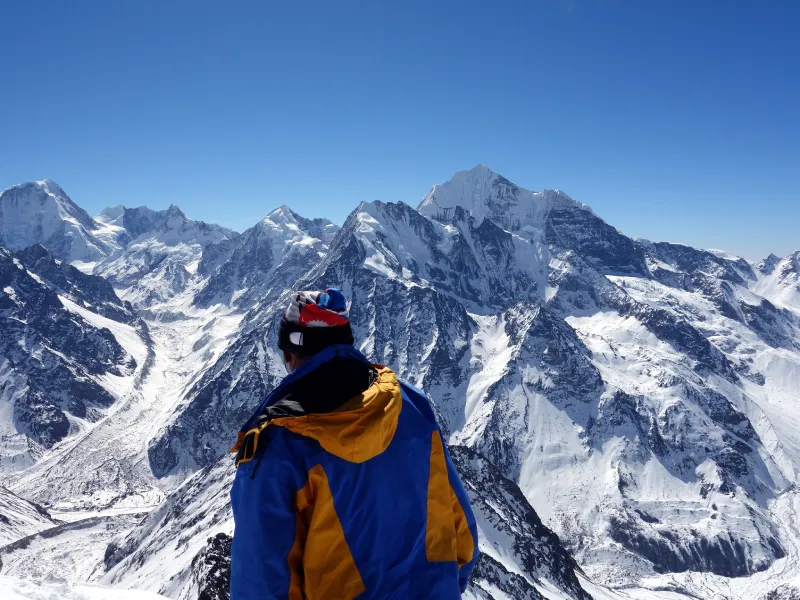
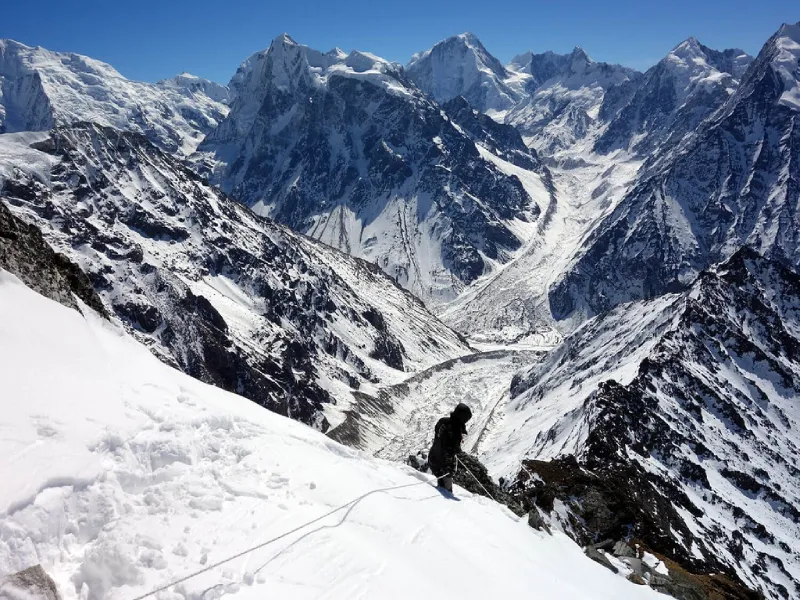
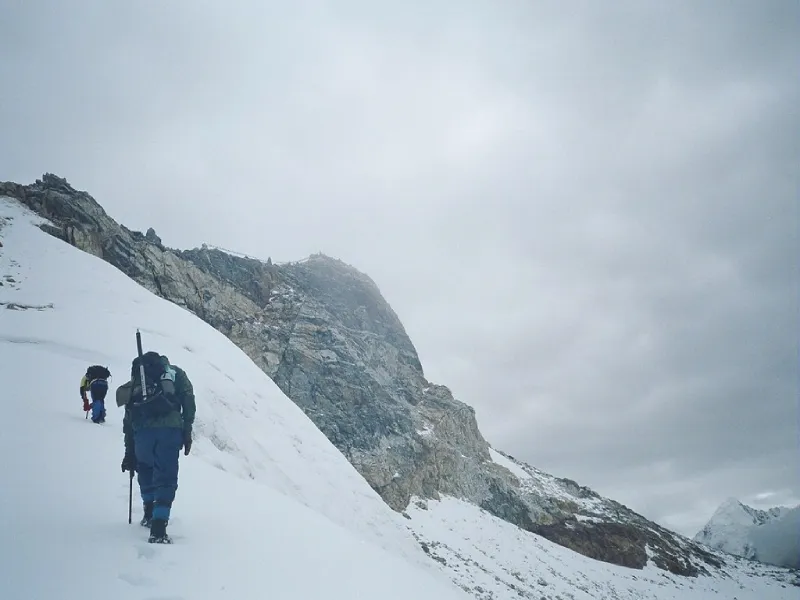
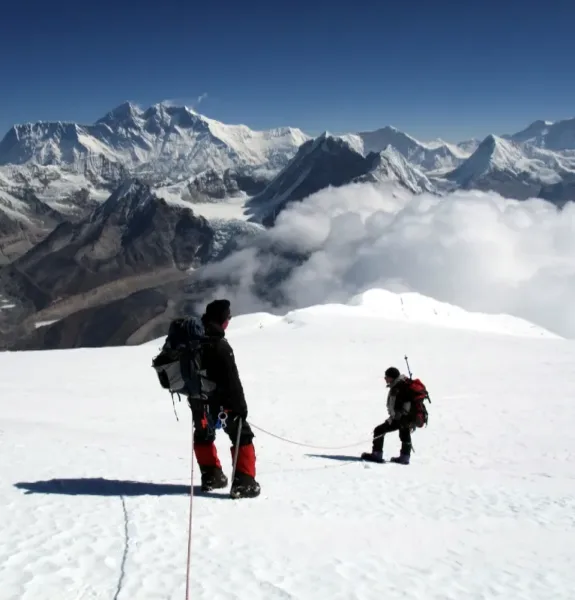
The biggest problem of Yala Peak is not climbing but the higher altitude. The more you climb, the thinner the air gets, and even a simple walk becomes difficult. That’s where acclimatization is helpful. It helps your body to acclimate to high altitude. The climb to the summit begins early morning which includes snow walking and gentle slopes. Yala Peak is not a technically difficult climb but is very cold, windy and very high. For the Yala Peak Climb being patient is more important than being strong.
When it comes to physical fitness, keeping things simple is the best policy. A few weeks of hiking or stair climbing or even just walking is helpful. A little cardio work like jogging or cycling is best for building endurance. When the climbing begins, it is done step by step, there is no need to rush. Developing mental strength is also as important as physical strength, since it is cold outside and there is lack of oxygen. With patience and proper guidance, it is possible to complete Yala Peak Climbing without technical climbing history.
Preparation for the Yala Peak Climbing
Proper preparation for Yala Peak Climbing is crucial not only from the point of view of ensuring maximum safety but also so that you could genuinely enjoy the climb and not suffer through it. In this regard, you should consider preparing for your trip in advance, at least two or three months before your flight. This will ensure that your body is adequately prepared for the physical load.
When it comes to training, you should include some cardiovascular exercises, like running, cycling, swimming, or walking uphill. It is recommended to try to train four to five times a week, slowly increasing the load as the time for departure approaches.
Strength training should also not be ignored, as it can positively impact your performance during Yala Peak Climbing. In this case, pay attention to the muscles of the legs, as well as the core muscles, which will be actively engaged during ascent and descent. One of the best recommendations for aspiring climbers is to walk uphill with a backpack containing some weight.
If you can manage, take one or two practice treks at a high altitude before starting off for your trekking adventure. It will not only give your body an idea of what awaits but also the chance to see if your boots will provide blisters!
As far as gear is concerned, you need to buy yourself good quality hiking boots, layer clothing, and a warm sleeping bag that would help you withstand the extremely low temperature of less than -10°C. The Yala Peak Climbing Itinerary will involve quite cold evenings at base camp which calls for investing in proper gear instead of compromising on budget issues.
Last but not the least, you must visit your doctor before your departure. Not only will he ensure your fitness for the journey ahead but will also recommend you the right medications for altitude sickness such as Diamox.
Cultural Festivals on the Trail
The culture in the Langtang area is very fun, mostly due to its Tamang and Tibetan Buddhist influences. You should definitely schedule the trek to coincide with one of these colorful celebrations.
First, Lhosar is the celebration of the New Year among Tamangs and Sherpas, and it will blow your mind! Traditional dances and music performances can be seen everywhere in Langtang. The celebration takes place somewhere in January-February.
Secondly, Buddha Jayanti marks the birth of Buddha. This holiday gives a very spiritual touch to the monasteries you will pass during your trek. Kyanjin Gompa holds some special prayer services and burns butter lamps during this time, usually in May.
Another major festival comes in late September with Indra Jatra. While most of the fun takes place in Kathmandu, the festive mood certainly touches the mountaineers too.
In autumn, you can join the Yala Peak Climbing and enjoy it along with the local harvest festivals. You may accidentally come across some ritualistic activity or be invited by locals to eat some of their food in a tea house. Surprisingly, these unplanned experiences sometimes turn out to be the most unforgettable experiences of your entire tour!
Climbing Permits and Required Documents
Getting everything sorted out regarding the necessary documents for Yala Peak Climbing Itinerary beforehand is always good. This will save you a lot of headaches after arriving in Kathmandu when all you want is to start getting things done.
Firstly, foreigners coming to Nepal are required to have their tourist visa arranged. You may acquire it as soon as you arrive at the airport in Kathmandu, but those who plan ahead can do this even before leaving your home country. Just know that the cost will depend upon the number of days you are planning to stay, usually 15, 30, or 90 days.
The specific permission for climbing should be issued by the Nepal Mountaineering Association (NMA). However, you will see that the cost of this permit will vary according to the season, spring and autumn seasons are somewhat expensive compared to winter and summer. Your trekking agency will take care of this tedious work.
Before beginning your adventure on Yala Peak Climbing, there are some permits that you will have to arrange. First, the permit for Yala Peak is a must. This permit will be given by the Nepal Mountaineering Association. With this permit, you can climb the Yala Peak.
Second, as Langtang National Park is situated inside Langtang National Park, you need to get the permit for Langtang National Park. This will aid the conservation efforts of the region.
Third, in case you are going to trek alone, then you may require buying a TIMS card. This card ensures safety during the entire trekking process.
Cost of Each Permit:
- Yala Peak Climbing Permit: It will approximately cost 350 USD per person for solo climbers.
- Langtang National Park Permit: It costs around 30 USD a person.
- TIMS card: It costs around 20 USD per person.
All these permits are quite easy to organize if you are going with a trusted and reliable trekking agency like Epic Trek Nepal.
Professional Guide and Porter Support
Climbing Yala Peak with a professional team becomes much more simple and easier. The guide who will accompany you is most likely experienced in mountaineering and very familiar with the Langtang area. They will help guide you during your climbing, ensure your safety, assist in the route and ensure all are well acclimated. Many guides have already climbed Yala Peak before several times, so trekkers don’t need to worry because they know what to do when faced with any problems at higher altitudes.
Trekker porters are also an important feature of trekking. They will help you carry items like camping gear and cooking utensils, ensuring you are able to walk comfortably without any burden. These porters are well experienced in trekking through difficult routes over snowy areas while carrying heavy loads.
Mobile Network, Internet & Charging Facilities
Staying connected during Yala Peak Climbing is quite possible down in the valley sections, but please don’t expect fast internet like in urban areas.
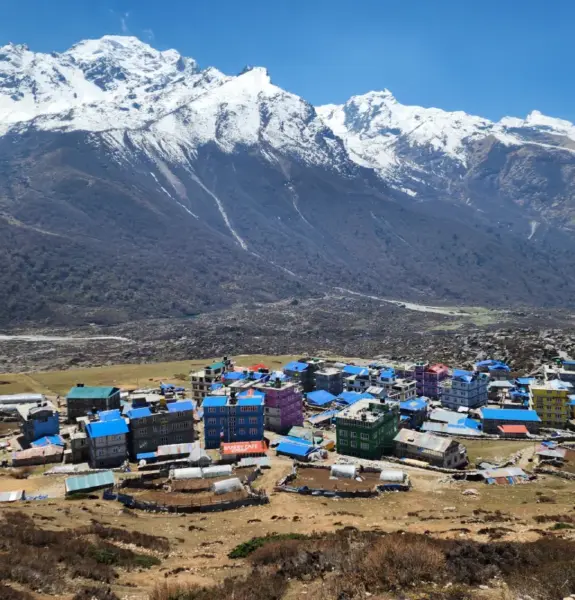
In Syabrubesi and at lower elevation points, both NTC and Ncell have reliable mobile connections. Making calls and using basic data packages is perfectly fine down here. However, once you climb up to Langtang village and Kyanjin Gompa, signals tend to become really slow.
WiFi is available in most teahouses in Syabrubesi, Lama Hotel, Langtang village, and Kyanjin Gompa. It’s relatively slow but sufficient for WhatsApp communication or sending emails. A minimal charge per hour usually applies when using WiFi in a teahouse.
With regard to charging, it must be noted that most tea houses along the route of Yala Peak Climbing Itinerary provide such facilities but with some small fee. I would strongly advise taking a portable power bank.
Lastly, remember to bring all your chargers, adapters, and extra batteries when traveling from Kathmandu. You will not find these items after leaving Kathmandu.
Travel insurance
Travel insurance is not something optional when it comes to Yala Peak Climbing as it is absolutely necessary. The peak does not care what your plans are, and getting stuck in an emergency situation without any financial backing will turn things from bad to worse.
When looking for insurance, be aware that some plans cover only hiking and trekking activities below 5,520 meters. Most travel insurance policies actually exclude altitudes above 4,000 meters, meaning you have to read the terms and conditions thoroughly before purchasing anything.
Helicopter evacuation services are crucial since a single rescue operation can easily exceed several thousand dollars. In case you suffer from altitude sickness, get injured, or face unfavorable weather conditions that prevent your team from descending on their own, you will incur huge expenses.
It’s also important that you consider insurance coverage for trip cancellations, medical expenses, loss or damage of equipment, and repatriation. These may be significantly different from one company to another, and comparing some is not going to hurt.
Tip: Get your insurance done before leaving from home. In almost all cases, trying to get this done once you’re already at Nepal will only give rise to an excruciating experience during claims. Once done, pass on the details of your policy to your adventure provider, and to your emergency contacts at home as well.
Trip Extension and Side Trails
One of the best features of the Yala Peak Climbing Itinerary is the ease with which it connects to various other beautiful attractions in Langtang region.
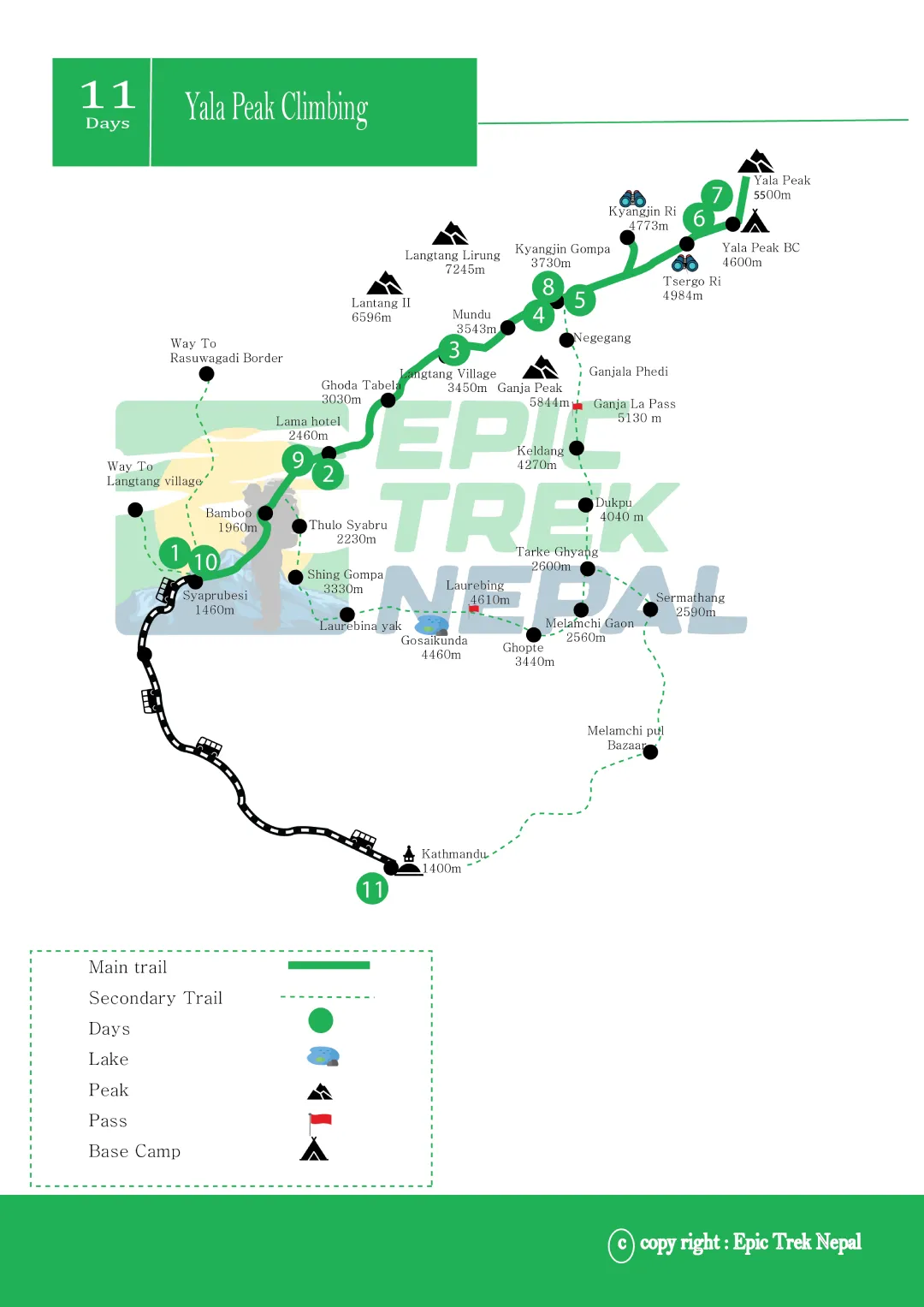
Perhaps the most popular side attraction from Kyanjin Gompa would be climbing the summit of Tsergo Ri (4,984 m), which takes a whole day of walking to reach but gives some amazing views of Langtang Lirung mountain and glaciers. Climbing this peak has even been chosen as a trial exercise by most of the climbers who then proceed to Base Camp of Yala Peak.
Another excellent side peak to climb is Kyanjin Ri at an altitude of 4,773 m. This peak is a little less challenging but offers amazing views of the entire valley around it. Watching the sunrise from its summit is an unforgettable experience.
The trekking trail from Kyanjin Gompa also leads on to another famous tourist destination, Gosaikunda Lake (4,380 m), an important pilgrimage place for both Buddhists and Hindus.
It takes about three to five additional days to include Gosaikunda Lake into your Yala Peak Climbing itinerary. Just discuss your plan with your travel agency beforehand.
Health and Safety on Yala Peak Climbing
Being safe during the adventure of climbing Yala Peak requires only preparation, vigilance, and most importantly, listening to your body’s needs.
First and foremost, the problem that concerns everyone is AMS. The initial signs may be either a headache or nausea, dizziness and fatigue should also not be ignored. In any case, one should stop climbing, because descending as low as 300–500 meters helps alleviate the problem significantly.
Besides, remember to stay hydrated. Losing moisture at high altitudes occurs much quicker than you would think, which increases the symptoms of AMS. Therefore, you have to drink from three to four liters of water per day and alcohol consumption should be avoided strictly.
You should bring along a personal first aid kit containing remedies for blisters, pain relief medication, hydration salts, and some Diamox to deal with high altitudes. Your guide will also be equipped with some emergency kits, but bringing your own set just makes sense.
Frostbite and hypothermia will start to become serious concerns as you near the peak. Make sure you wear layers, cover your hands and feet, and don’t “tough it out” in dangerously cold conditions without proper gear.
But most importantly, always make yourself heard when you experience symptoms of feeling unwell. On Yala Peak Climbing adventure, speaking up about your condition at an early stage could quite literally mean the difference between life and death.





 Share
Share