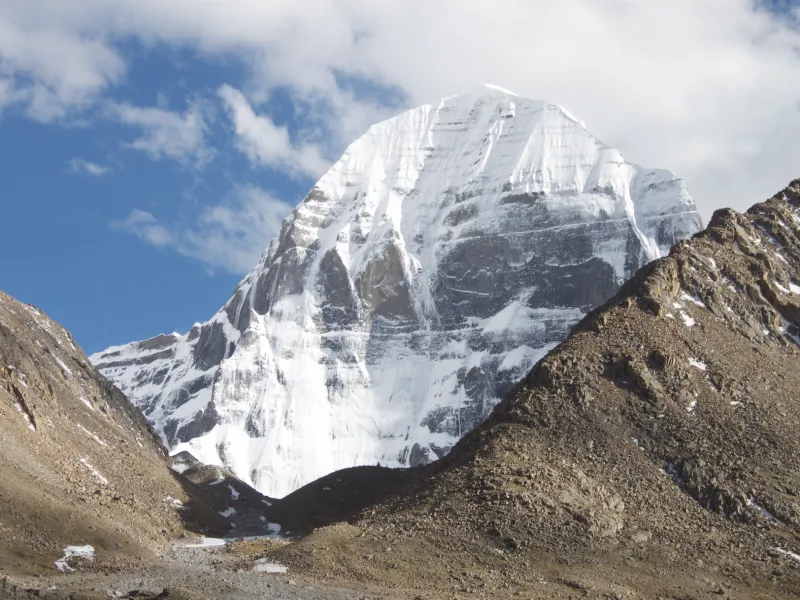
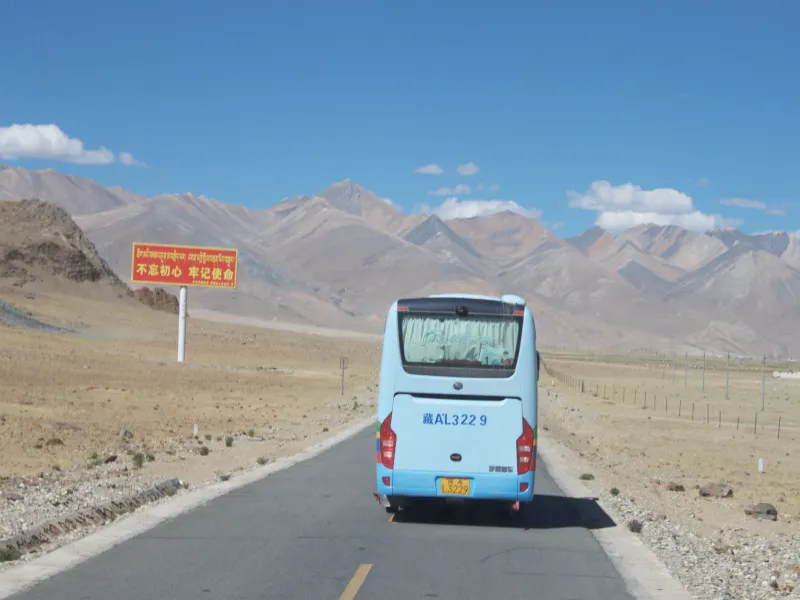
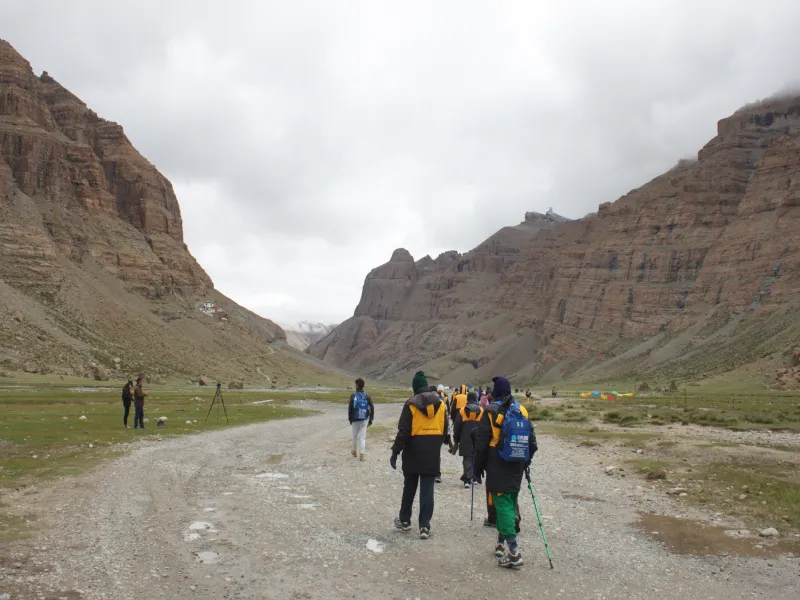
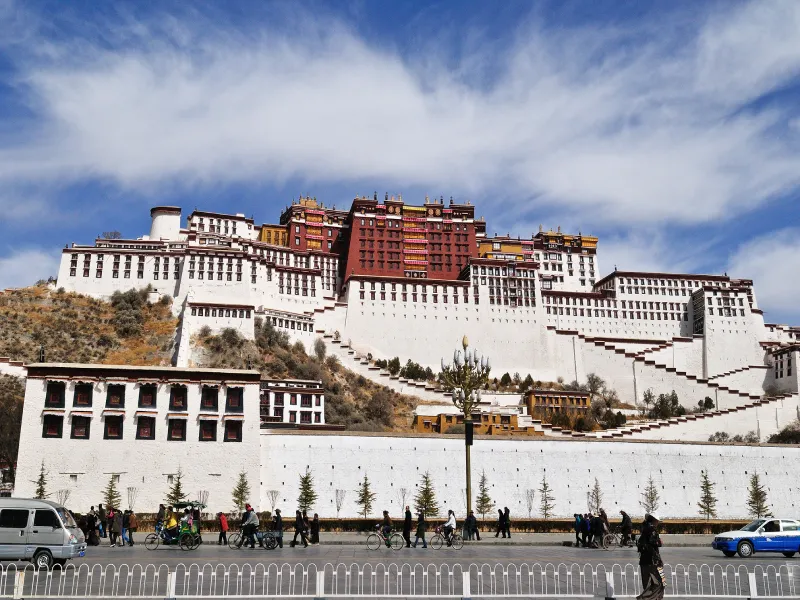
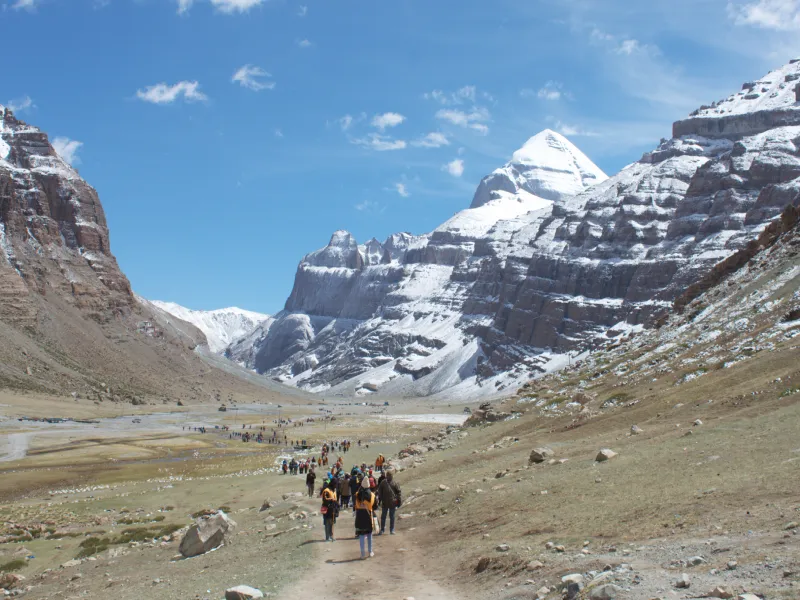
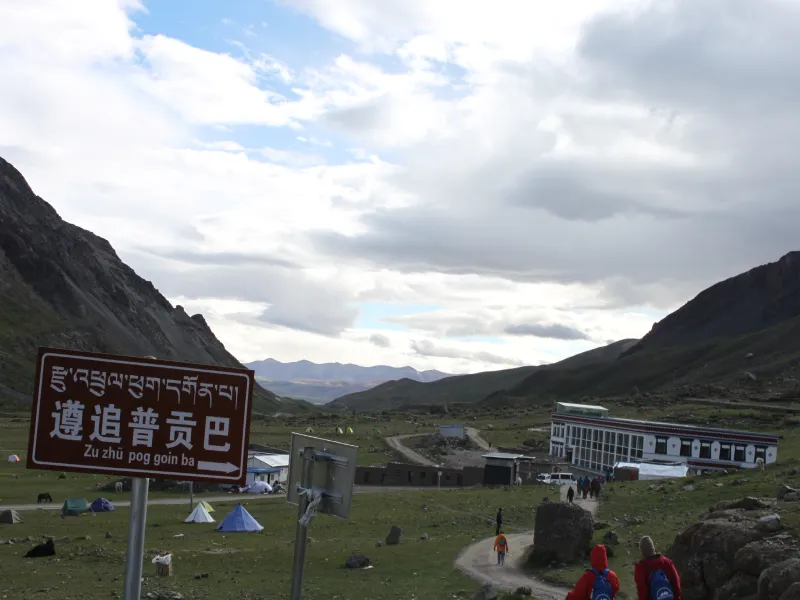
The eight-day journey introduces you to many interesting locations found on the Tibetan Plateau. Our first stop takes us to Lhasa, the spiritual and cultural center of Tibet, where the old monasteries, numerous prayer flags and traditional winding streets offer you a great insight into the life of Tibetans. When you see Potola Palace and Jokhang Temple, it feels like you are living in another time, many guests have said that until you are there, you can never fully understand the atmosphere created by all these places.
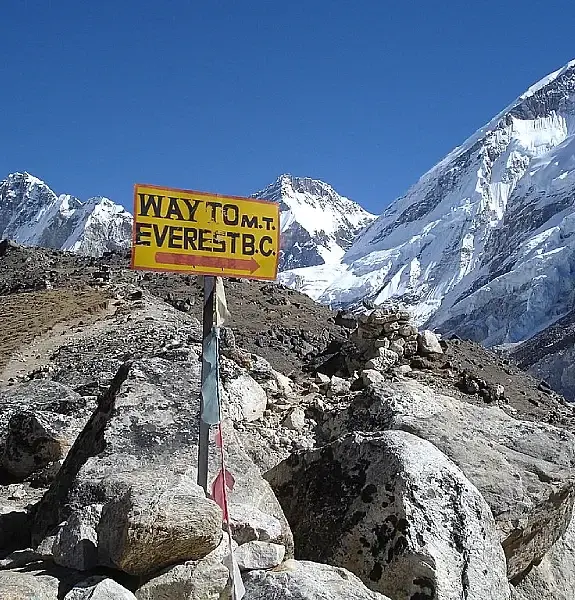
From Lhasa, we slowly begin our journey moving west on the vast plateau. Your journey will consist of a drive through wide open spaces with high mountain ranges, turquiose lakes and many small communities made up of Tibetan people. Finally, the journey takes you to Everest Base Camp on the Tibet side. Being face-to-face with the tallest mountain in the world is an experience you will not forget any time soon. You will also have an amazing view of the north face of the mountain that will remain in your memory for a long time to come.
After spending some time around Everest, we continue our jour ney towards Kerung, which is a very quiet little town on the border between Nepal and Tibet, surrounded by some very dramatic Himalayan scenery. The road actually goes down from this high, dry plateau into some very green valleys before we cross the Nepal-Tibet border. It’s a very beautiful way of finishing the trip. By the time you are back in Nepal, you will have a feeling that you have crossed another world in just over a week.
Why This Trip is Special
What really separates this trip from your average Tibet tour is that the experience is larger than simply visiting the top attractions in Lhasa. I can not say enough about how amazing Lhasa is and how much history is represented in its many locations and how spiritually charged places such as Potala and Jokhang Temples.
This tour will truly allow you to experience far more of the Tibetan plateau than just visiting Lhasa. Rather than spending most of your time in Lhasa and being confined to its boundaries, you will be travelling through high mountain ranges, crossing huge valleys and traversing vast open spaces to reach Everest Base Camp. This will be a true land excursion adventure.
Another aspect I enjoy about this journey is witnessing how the locals live, including seeing the residents of Lhasa and the surrounding villages spinning their prayer wheels as they walk around the temples, as well as gathering at the local markets. The way of life among the local population is very traditional and steeply influenced by Buddhist beliefs, this way of life is beautiful to see. When moving out onto the plateau, you may come across nomadic families with their yaks grazing in wide-open spaces, experiencing a way of living that they have experienced for generations without much change.
And the moment when you finally arrive at Everest Base Camp from Tibet, there’s nothing like it! The north face of the tallest mountain in the world towers directly in front of you. The culture of Lhasa, the kindness of local people, and the amazing high plateau scenery are all combined with the sight of Everest, which makes this an incredible experience that is much more than an ordinary tour, it is truly an adventure through life in the heart of Tibet!
Best Time to Do This Tour
If you’re looking to determine the ideal time for this trip, your opportunity will most likely occur between April – October. Conditions across Tibet are considerably more consistent with increased access to roadways during this period. Additionally, the skies are normally clearer during this time, providing you access to those amazing mountain views along the way, especially once you arrive at Everest Base Camp. The weather is a lot more comfortable than it is during the dead of winter, though don’t get me wrong; it does get pretty cold in the mornings and at night.
Spring (April to May) are very nice months to be in this area as the weather becomes increasingly warm. After months of being frozen all across the landscape it begins to feel like it’s finally coming to life again. The air is generally nice and cool, which makes for great photography of mountain scenery due to excellent visibility. Summer (June to August) are also very popular months to tour here, although there is always a possibility of rain during this time. The valleys will look much more green than other times of the year, due to summer rains and warm temperatures.
Many people say that Autumn, which is September and October, is actually the best time for this tour in particular, as you get really clear air, which gives you those ten out of ten views of the Himalayas and Everest. Once October finishes, winter starts to begin, and you can still go, but it gets really cold, especially when you are near Everest Base Camp. Because of that most people prefer going in the spring, summer, or early autumn for that reason alone.
Itinerary of 8 Day Lhasa and Everest Base Camp Adventure via Kerung
Day 1:
Kathmandu to Lhasa
Your adventure will begin with your flight or train journey from Kathmandu to Lhasa. Once you arrive, your Tibetan tour guide will meet you at the airport and help you get settled into your hotel. To help your body adjust to the high altitude of Lhasa’s elevation of 3,600 meters above sea level, it’s best to spend the rest of the day relaxing. If you would like to do something active, go for a short walk to enjoy the fresh air of Lhasa and see the city wake up. Most travelers opt for a quiet night at the hotel so they can get enough rest to begin their visit to Lhasa fully recharged.
Activity: 1.5 hr flight and Acclimatization
Max. Altitude:
3650m./11,975ft.
Meal: Breakfast
Accommodation: Hotel/Teahouse
Day 2:
Lhasa Sightseeing
After breakfast, we will leave the hotel and explore Lhasa proper. Our first stop will be the magnificent Potala Palace which is enormous. The golden halls of the Palace exhibit centuries of history in the form of illuminated murals from long ago. Then we will visit Barkhor Bazaar, a great way to watch the people pass by, including the pilgrims turning prayer wheels and vendors selling all kinds of local handicrafts. In the afternoon, we will visit Jokhang Temple, one of the most important religious sites in all of Tibet. The spiritual energy is amazing and watching the pilgrims perform their rituals is a great experience. The remainder of the evening is your time to explore the city or try street foods.
Activity: Visit Potala Palace (2 hrs), Jokhang Temple & Barkhor Bazaar (2 hrs), free afternoon for exploration or rest.
Max. Altitude:
3650m./11,975ft.
Meal: Breakfast
Accommodation: Hotel/Teahouse
Day 3:
Lhasa to Drepung and Sera Monastery
Today it’s all about discovering the monastic community. Our visits will include Drepung Monastery, the biggest in the world, and then on to Sera Monastery, which is renowned for its debating monks in the courtyard. It’s a really energetic space and you shouldn’t miss seeing this when visiting Lhasa. You’ll certainly feel as if you have witnessed some of the same types of activity from many years ago. The afternoon is meant to be an easy one, so either continue your exploration or return to your hotel for a short rest before dinner.
Activity: Visit Drepung Monastery (1.5 hrs) and Sera Monastery (2 hrs). Evening free for city walk or rest.
Max. Altitude:
3650m./11,975ft.
Meal: Breakfast
Accommodation: Hotel/Teahouse
Day 4:
Lhasa to Gyantse
After breakfast we will drive to Gyantse via Yamdrok Lake, an amazing turquoise lake surrounded by snow-capped peaks so have your cameras out. We will also cross over the Kora La (5,010 meter) and Kamba La (4,794 meter) passes giving us stunning panoramic views of the plateau. We anticipate arriving in Gyantse around mid afternoon where you may explore the old market and observe the local culture and lifestyle.
Activity: Drive via Yamdrok Lake, Kora La (5,010m) & Kamba La (4,794m) passes. Explore Gyantse old market (1 hr).
Max. Altitude:
4000m./13,123ft.
Meal: Breakfast
Accommodation: Hotel/Teahouse
Day 5:
Gyantse to Shigatse
In the morning we will visit Kumbum Stupa (the famous stupa with approximately 100 chapels and beautiful murals) and Phalkhor Monastery. After touring these two sites, we will travel a short distance to Shigatse. Shigatse is the second-largest city in Tibet, and the scenery along the way will contain a lot of yaks eating and small villages. Tonight is a free night in Shigatse to either rest at your hotel or explore Shigatse.
Today we will starts with a visit to the Tashilhunpo Monastery, which is the home of the Panchen Lama and is well known for having enormous golden statues. Next, we will be doing a long drive to get to Rongbuk, including crossing from the Gyatchula Pass at approximately 5,200m! We’ll be driving all day, but the scenery is primarily open with several sites of nomadic living.
Upon arrival in Rongbuk, we will visit the Rongbuk Monastery and take a short trek to reach Everest Base Camp (from the Tibet side). Seeing the North Face of Mount Everest, particularly if the sun is setting, is an experience you will never forget. We will spend the night in a tea house near the Everest Base Camp.
Activity: Morning visit Tashilhunpo Monastery (1.5 hrs). Drive via Gyatchula Pass (5,200m). Visit Rongbuk Monastery (30 min) & short hike to EBC (2 hrs). .
Max. Altitude:
4980m./16,339ft.
Meal: Breakfast
Accommodation: Hotel/Teahouse
Day 7:
Rongbok to Kerung
Following breakfast, we will begin our journey down off of the high plateau and make our way towards Kerung. If we have clear weather, we will be rewarded with spectacular views of Mt. Cho Oyu and Mt. Xishapangma.
We will also visit Pikucho Lake, this is yet another one of those peaceful, turquoise-colored lakes that are wonderful places to give our legs a break as well as take a few photos. We will be traveling through small villages and highland landscapes until we arrive at Kerung, a small town located at the border crossing with some wonderful views of the Himalayas.
Activity: Descend across high plateau. Stop at Pikucho Lake (30 min). Enjoy views of Mt. Cho Oyu & Mt. Xishapangma.
Max. Altitude:
3000m./9,843ft.
Meal: Breakfast
Accommodation: Hotel/Teahouse
Day 8:
Kerung to Kathmandu
It’s the last day! The day will start with border formalities at Kerung following breakfast, we will take a jeep to enter Nepal. On the journey, you can see the change of landscape from the dry, high plateau into the green, lush valleys. We will arrive in Kathmandu in the late afternoon which will mark the end of this amazing trek through Lhasa, Everest and the Plateau.
Activity: Border formalities at Kerung. Drive back to Kathmandu by jeep. Trip ends in Kathmandu by late afternoon.
Max. Altitude:
1300m./4,265ft.
Meal: Breakfast
Accommodation: Hotel/Teahouse
If you are traveling in a private group, we can arrange a fully customized trip based on your preferences, group size, and travel dates, available any day you choose.
Okay, look, it’s not exactly a hardcore trekking experience, so don’t worry about it, you don’t exactly have to be a fitness to have a good time. Most of the travel will be by car or bus, and our sightseeing in Lhasa and other cities will be fairly relaxed. But, keep in mind, that we are goingtobeatvery high altitudes. Lhasa is near3,600 meters and the Everest Base Camp willbe over 5,200 meters. Because of thealtitude, youmayfeellikeyou‘rerunningoutofbreath, youmay have a slight headache, or youmay just feel kindof tired comparedtohowyoumightnormallyfeel.
The long on this plateau for long time could be exhausting for a lot of people, especially on those days when we’re driving a few hundred kilometers. The road is in fairly good condition, and quite frankly, the views are so beautiful that most of the time you’re too busy looking out the window to worry about how long it’s taking us to get there.
On the whole, if you’re in decent health, you’re going to have a blast with this tour just fine. You just need to take things slow, drink a ton more water than you think, you’re going to need, and just let your body get used to things at its own pace. It’s really more about being patient with yourself than anything else. Many people have found that any challenges they face are all well worth the view you get as a result.
Tibetan Culture and Monasteries
One of the coolest aspects of this whole trip is getting to experience the Tibetan culture. You’ll notice those colorful prayer flags flying in the wind, carrying prayers and wishes across the mountains. Walking through Lhasa or some of the other smaller towns in Tibet, you can’t help but run into these pilgrims who are spinning their prayer wheels and softly chanting their mantras as they make their way around the temples. It gives off an unbelievably calm feeling, almost like a spiritual feeling, unlike anything else.
Visiting monasteries is an experience like few others from the gigantic and well-known Potala Palace in Lhasa to many smaller and local monasteries located throughout the plateau. They will leave you in awe by the beauty of the buildings and the stunning artwork on the walls. You will see how monks live day-to-day at each of these sites. Many are over 100 years old and are still active centers for education, meditation, and daily life in the community.
In summary, Tibetan culture has been heavily influenced by religious customs. A trip like this offers an insider’s view of the local way of life through interacting with residents, participating in a traditional ceremony, and touring monasteries. This is more than just a sightseeing trip, you will have an opportunity to explore a thriving society that survives in one of the most difficult, isolated areas of the world.
Altitude and Acclimatization
Tibet is essentially a high-altitude country, so you really gotta be mindful of how your body is adjusting with it. And remember that the city of Lhasa is itself above 3,600 meters. That can be a little concerning for people on the first day. And as we continue our journey to Everest Base Camp, we’re essentially going to reach places that are above 5,200 meters. The air is thinner up there, and the body just needs a little more time to adjust.
The itinerary we have put together for you will help you get used to the altitude of where we are going by taking it slow, resting frequently during the first few long drives and staying flexible on your sightseeing days at all the important places.
The most important thing to remember is to walk at a pace slower than normal, drink lots of water, avoid too much physical activity for several days to allow time for your body to become accustom to the high elevations before starting to hike long distances and do other activities. Doing this will greatly increase the success of your body adjusting to the new altitude.
Because some travelers may experience a mild headache, slight shortness of breath, or just general fatigue, these types of effects to various degrees could be considered common at high altitudes. In order for you to feel the most comfortable, you should simply pay attention to your body and get sufficient rest as well as ease up on those days where you are at a higher altitude. By following these guidelines, you will be able to enjoy your trip and have the opportunity to experience all of the sights and activities without feeling tired out.
Accommodation and Food
For the tour, you’ll be staying in a combination of nice hotels and traditional tea houses on a twin-share room basis. In Lhasa, you’ll stay in modern hotels with most of the city facilities and comforts you are used to enjoying when travelling. As you travel to destination towns such as Shigatse, the hotels will become simpler.
Nevertheless, they will provide you with a single, clean place to sleep. Upon arrival at Mount Everest Base Camp itself, you will stay in basic tea house that aren’t luxurious but will be warm, secure, and offer an incredible opportunity to be near the mountains, therefore allowing you to create lasting memories.
For the meal only breakfasts will be provided at your hotel or guesthouse every day, to help you get going each day. You’ll have many opportunities to try Tibetan food such as momos which are excellent dumplings and thukpa, as well as Chinese or simple western meals in some of the larger towns.
Vegetarians will not have any problems finding vegetarian food because it is usually very easy to find. You do not have to eat meat, so you can take the opportunity to explore the area and visit local restaurants for lunch and dinner or stop and get some Tibetan snacks during your travels. This is also a good option to help you stay energized when you are on long drives across the plateau.
Permits and Travel Documents
Travel to Tibet is different from many other places, there are rules that apply specifically to Tibet and visitors to Tibet need specific types of permits. The most common permit is the Tibet Travel Permit (TTP) – this permit needs to be obtained by all entering Tibet. In addition, as you plan to leave Lhasa, you will also need an Alien Travel Permit, and, in order to visit Everest Base Camp (on the Tibetan side) you will need to obtain an Everest area permit before actually visiting Everest Base Camp (on the Tibetan side).
In addition to the necessary permits, you will also require a valid passport (check that it has at least six months of validity remaining) and a valid Chinese Tourist Visa before entering the country. The common tourist visa fee is usually $125 USD, however, if you live in the U.S., Canada, Argentina, or Romania, you will be charged an additional $115 USD to obtain the visa.
What we’ll need from you to get things moving:
A scan of your passport = This has to be with us at least 25 days before the trip starts, so don’t forget!
Your original passport = This has to be with us at least 3 official working days before the trip starts.
A passport-sized photo = This just has to be one with a white background, taken in the last 6 months or so.
Note: Any figures discussed are NET per person. Flight and visa fees are not part of the package and are extra; you will need to consider these separately when budgeting for your trip.
But honestly, don’t worry about trying to sort out all of that on your own. We Epic Trek Nepal takes care of all of the paperwork for you. Once you’ve signed up for your trek, we’ll take care of the details so that you won’t have to worry about the hassle of government offices and paperwork. It’s just so much more relaxed and stress-free, which is just the way you want to be before tackling the mountains. We’ve done it many times before, so we know the routine well.
Essential Trekking Items List
Thermal wear: Top and Bottom
Down Jacket: Waterproof and Windproof
Waterproof and Windproof Pants
Quick-Dry T-Shirts
Trekking Pants
Head Cap
Gloves
Trekking boots
Amp Shoes or Sandals
Warm Socks
Day Pack: 30-40 liters with Rain Cover
Adjustable Trekking Sticks
Biodegradable Soap
Toothbrush and Toothpaste
Hand Sanitizer
Toilet Paper
Your Personal Medications
High Altitude Medications: As prescribed by Your Doctor
Sunglasses with U-V Protection
Sunscreen: SPF-50
Lip Balm with Sunscreen
Head Lamp with Batteries
Charging: Portable Charger
International Adapter
Travel Insurance
Sufficient Cash in Small Denominations
High-Energy Snacks
Camera with Memory Cards
Cancellation Policy for This Tour:
At Epic Trek Nepal, we understand the changes in plan unexpectedly. That is why we designed it to be fair and clear.
Cancellation Notice:
If you decide to cancel your tour for any reason, please make sure to inform us at least 7 days before your scheduled tour start date.
Administrative Fee:
When a cancellation is made, 25% fee will be reduced from the total cost of tour as administrative fee. This fee covers the planning, preparation and booking cost we’ve already done for your tour.
Non-Refundable Period:
For any cancellation made within less than 4 days before the tour start date, no refund will be provided but by looking at the situation, if we feel the reason for cancellation is valid, then the amount will be refunded after deducting 70% of the total tour amount, as we have already submitted the cost and reserved the spots for you.
Documentation Support:
We know insurance claim can be important. In case if you cancel, we would provide the necessary document such as receipts to help with your insurance process.
Unused Accommodation:
Please note that we cannot offer refunds for unused accommodation or services if your tour is canceled due to personal reasons, illness or bad weather.
You can contact us with any questions or to discuss your situation, and we would be happy to assist you. Thank you for your understanding during this time and we hope to help you through your Kerung and Lhasa Tour safely.
Frequently Asked Questions
Yes! Although it is certainly more of a road trip style of experience than a traditional trekking trip, you will be travelling on a vehicle across the plateau. When you get out of the vehicle for sightseeing/activities, they should all be fairly easy walks or shorter hikes.
Yes, you will need to obtain a special permit (Tibet Travel Permit) to travel there. In addition to the Tibet Travel Permit, you must also obtain separate permits, like Alien Travel Permit, Everest Area Permit, to visit the city and surrounding areas, particularly if you’re planning on heading to the Everest Base Camp, but no need to worry, as our company Epic Trek Nepal will take care of all of this for you as part of the service to make it easy.
The best time to be in the region is April to October. You can see clear skies during Spring and Fall with temperatures suitable for sightseeing. Summer will give you lots of green vegetation but expect a chance of rain.
Many people experience minor sickness when they visit due to the low levels of oxygen, such as migraines, lightheadedness, and extreme fatigue. Lhasa is at approximately 3,650 meters in elevation while the Everest Base Camp is at approximately 5,200 meters in elevation. You may experience a substantial difference in oxygen supply from one location to the other. Our itinerary has been arranged to allow your body to acclimatize at a controlled rate. As long as you are patient and going with the flow based on what your body tells you to do, you should have no problems acclimatizing as you climb back to EBC!
You’ll have modern and comfortable hotels in Lhasa. In places like Shigatse and Gyantse you have very basic but clean, cozy, more local-style hotels. When you get to Everest Base Camp, you’ll be back to basic accommodations with basic teahouse.
Expect a fair amount of driving each day! For example, the drive from Lhasa to Gyantse is approximately 4 hours, and the drive from Shigatse to Rongbuk is a long one, approximately 10 hours, since we’re crossing some high mountain passes.
Absolutely! You will be able to communicate in English at all times with our professional local Tibetan English-speaking guide who will accompany you the entire time. Your guide will be extremely knowledgeable about Tibetan history and culture and will be available to assist you with any questions or unexpected occurrences you may have while travelling.
Perfect KTM day tour
I had a wonderful experience with Epic trek for my Kathmandu day tour, and our group was genuinely satisfied with the entire service from beginning to end. Everything was very well organized, and the communication before and during the tour was clear and professional. Our guide was friendly, knowledgeable, and very attentive, and he explained the history, culture, and significance of each place in a way that made the experience much more interesting and enjoyable. The itinerary was also well planned, so we were able to visit the main attractions without feeling rushed, while still having enough time to explore and take photos. I especially appreciated how flexible and accommodating the team was whenever we had questions or needed a little extra time at a certain location. The transportation was comfortable, the schedule was managed efficiently, and overall the whole day felt smooth and stress-free. It was a great way to experience Kathmandu in a short amount of time, and I felt that the service was well worth the price. I would definitely recommend this tour company to anyone visiting Kathmandu, especially if you want a reliable, comfortable, and enjoyable day tour with a friendly and professional team. I would be very happy to use their service again in the future!
Posted on Tripadvisor
Sora
Verified
Once in a life time experience in Annapurna Circuit trek
I had an amazing experience on the Annapurna Circuit Trek. Epic Trek gave me such a memorable adventure from start to finish. I especially want to thank the Bhanubhakta, who accompanied me throughout the entire trek. He was incredibly helpful, kind, and always made sure everyone was safe and comfortable. I truly appreciate his support and highly recommend Epic Trek to anyone planning a trekking adventure in Nepal!
Posted on Tripadvisor
Quoc Huy N
Verified
Everest base camp trek in good hands
Awesome experience. They were very knowledgeable people about the paths, the altitude adaptation and the best pace to keep. They were always nice and accommodating to my needs. It's been one of the best experiences in my life. I fully recommend it.
Posted on Tripadvisor
Andrés S
Verified
The joy of walking on two feet, the scenery is dumb!
A visit to the Himalayas in early May at 4 Willmal was one of the long-awaited bucket lists. He took steps hoping that both health and luck could walk along. Although it rained frequently in early May due to the unpleasant weather, the cluster that could be seen throughout the walk was a great consolation for the tired footsteps of the dandelions. More than 10 meters tall are called the national trees of Nepal. For the first time in the Himalayas, the large and colourful flower feathers of the Himalayas seem to emerge in a dream. Trekking here seems to be more difficult as you become aware of your destination. With a sense of putting everything down, I had to step one step and move forward. Like the careless jacks here. Finally arrived at the Base Camp Lodge and fell asleep in the expectation of tomorrow's Everest panorama. At 3 o'clock in the morning, we left for approximately two hours to reach the view peak. The sunrise expected was difficult to see in a dark shade, but the magnificent and breathtaking Mount Everest mountain ranges showed a wind-like look. After completing the base camp trip with a cut 'Chalkock' photographed on the background, we travelled through Shambeshi, the area of Solunabou, and visited the nearby Tibetan Buddhist temple 'Keten Kuling' to see the sherpa people and the village that lived as a group around it. The purity and integrity of these mountainous people may come from a life of conformity to nature and religion. He helped us complete this journey safely. Mr. Thank you very much to Bhanu and Porter. Next I think to visit another course. Recommended!!
Posted on Tripadvisor
HEE W
Verified
Nepal Himalaya and Langtan Valley Tracking Course
The 17 days of Himalayan tracking were completed as planned with the help of a competent guide and Porter. Nankang Valley tracking can be done with the same guide for eight days. It was good. Next year Annapurna Circuit Tracking with a guide Looking forward to a good time.
Posted on Tripadvisor
Voyager27056886234
Verified
In any situation, you are a superb guide and representative.
From March 31 to April 28, I visited Bangfujimalaja with my husband. Thank you very much to Mr. Banuza and Mr. Porter who have been together for a long time. I was a little embarrassed by the agency's representative being guided directly, but the young 28-year-old representative saw how he dealt with the show passionately and calmly. I was able to finish Langtang Belly safely thanks to you and Porter. In particular, he has lived in Korea for six years and is well-known in Korean and has a very good understanding of Korean culture and Korean orientation. Thank you for always caring and caring about our elderly couple. If you go back to Nepal, you will be with Mr. Banu. I hope the air season flourishes every day. Thank you. Thank you.
Posted on Tripadvisor
차 준
Verified
The Epic Track that made the best time of life
I visited Langtan Trail through Epic Trek travel agency. Thank you very much to the president of Epic Trek Travel and Bk for creating the best time of my life. Especially thanks to Bk we were able to visit safely and pleasantly! I felt good from start to finish and was able to trekk happily
Posted on Tripadvisor
동민짱
Verified
Excellent experience
Our itinerary was action packed involving a combination of business and pleasure. Epic did an amazing job on dealing with the complexities of our itinerary. Really friendly, helpful, flexible and customer focused. I highly recommend Epic
Posted on Tripadvisor
Peter G
Verified
Pleasant and friendly Manua trip to Nepal
Thanks to the kind and warm lady, I was able to make unforgettable memories. There are many Korean-speaking guides in Nepal, but few can trust them. I recommend Mom's epik trek to those who want to spend valuable time without regrets!
Posted on Tripadvisor
Grace
Verified by Trustindex
Trustindex verified badge is the Universal Symbol of Trust. Only the greatest companies can get the verified badge who has a review score above 4.5, based on customer reviews over the past 12 months. Read more





 Share
Share