




What is Base Camp Trekking in Nepal
19 September 2025
By admin
If you are a traveler and love mountains, then you have probably thought of base camp trekking in Nepal. What actually is base camp trekking? Let’s shed some light on it!
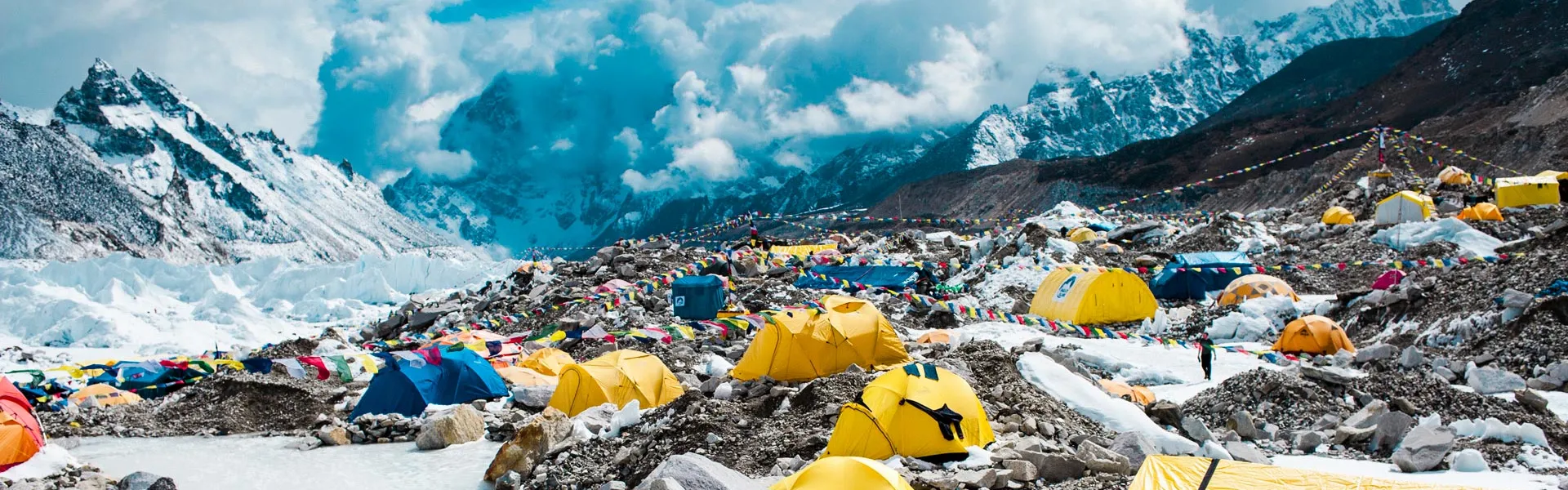
Basically, base camps serve as the base of operations for mountaineering expeditions. While climbing to the peak, there are several steps, and the primary staging area is the base camp. While setting it as the base camp, there are things to be considered such as:
- Positioned high enough to acclimatize to thin air and
- Low enough where the human body can still function reasonably well
- Close enough to the mountain to minimize approach time
- Relatively flat, stable ground for setting up camps
- Far enough from hazards to serve as a safe retreat point
Usually base camp altitude ranges from 4,100-5,400m, which is considered the sweet spot for acclimatization, where humans can still function effectively for an extended period while beginning the altitude adaptation. Generally, above 4,000m, oxygen levels are reduced enough to trigger the acclimatization responses. Also, it is the last point where porters/pack animals can carry the required supplements and is accessible in case of rescue operations and medical evacuations.
Reaching base camp is an achievement in itself. Even though it is at the foot of the mountain, it equally provides an authentic Himalayan experience to those seeking it. The panoramic wide views of mountain peaks are incredibly visible from here. When you reach there, you are almost surrounded by the giant peaks.
In the world, there are 14 highest peaks, and among them, 8 are in Nepal. So, many visitors consider that visiting Nepal means getting the Himalayan experience. The base camps of mountains located here in Nepal are:
- Everest (8,848.86 m)
- Kanchenjunga (8,586 m)
- Lhotse (8,516 m)
- Makalu (8,485 m)
- Cho Oyu (8,188 m)
- Dhaulagiri (8,167 m)
- Manaslu (8,163 m)
- Annapurna I (8,091 m)
Rather than mountain climbing, there is a journey to base camp, which is called base camp trekking. This includes walking from the starting point to base camp and returning. Mostly these treks are operated by trek agencies, providing the necessary requirements such as: Guides, Porters, Accommodation, Meals and Transportation. As the trek depends upon the destination, everything should be properly organized and pre-planned because when going above the altitude of 4,000m, there has to be access to essential things. Every one of these treks requires permits, and some of them require guides mandatorily for safety reasons.
When to Go for Base Camp Trekking in Nepal
The best time for base camp trekking is during pre-monsoon (March-May) and post-monsoon (September-November) seasons. During these times, weather is stable and mountain views are crystal clear. Spring gives you blooming rhododendrons, while autumn offers the clearest mountain visibility.
Trek Duration and Difficulty
Each trek has different nature, difficulty levels and time requirements:
- Everest Base Camp: 12-16 days, challenging level (requires good fitness)
- Annapurna Base Camp: 10-14 days, moderate level (suitable for beginners with basic fitness)
- Manaslu Base Camp: 14-18 days, challenging level
- Other base camps: 15-25 days depending on the mountain
You should start basic physical training at least 2-3 months before your trek. Light stretching, jogging, and cardio exercises will help you prepare better and get the best experience on the trek.
What Our Trek Package Includes
Our trek package typically includes:
- Required Permits
- Professional local Guides and porters
- All Meals
- Accommodation, sleeping bags (if needed)
- Transportation
- Basic first aid kits and route map
You need to bring personal trekking gear like good boots, warm clothes and basic medications. Once you book your trek with us, we will provide you with a detailed packing list for your trek.
Trekking is the most must-do activity once in your lifetime. You will witness the beauty of nature, engage in culture and learn to see things in different ways. Check out our famous Everest and Annapurna Base Camp Treks and without a second thought choose one that you prefer (Everest is challenging and Annapurna is full of nature). We also organize others as well, but these are for those who have already hiked up to EBC and ABC.
Remember, only about 300 trekkers can reach Everest Base Camp daily during peak season, and spots fill up quickly! Look at the itinerary carefully, manage the days for your trek, start doing basic exercise, and if you need to ask anything then you can freely ask us.
Hurry up! Contact us today with your preferences and we’ll help you choose the perfect trek and start planning your once-in-a-lifetime journey. We would be happy to assist you with your requirements and give you the best possible experience of the beauty of Base Camp Treks in Nepal upon your arrival.
