




Badimalika Trek
73 reviews in Tripadvisor

Trip Duration
15 Days
Destination
Nepal
Max. Altitude
4,200 m.
Trip Difficulty
Moderate
Group Size
1-12
Transportation
Private Vehicle
Accommodation
Hotel/Teahouse
Activity
Trekking
Meals
All Inclusive
Start / End
Kathmandu
Region
Far-Western
Best Season
Spring & AutumnUS$ 2350

Need Help? Talk to Expert
+977 9764792172Trip Overview
Deep in the wild hills of western Nepal, far away from popular trekking routes and typical tourist trail, there exists a place called Badimalika. It is a place that most Nepalis are familiar with through tales of devotion and faith, but very few foreigners have ever visited. It lies hidden in the Bajura district, nestled quietly at an altitude of 4,200 meters, surrounded by these massive green meadows and ridgelines that look as if they have been untouched for years.
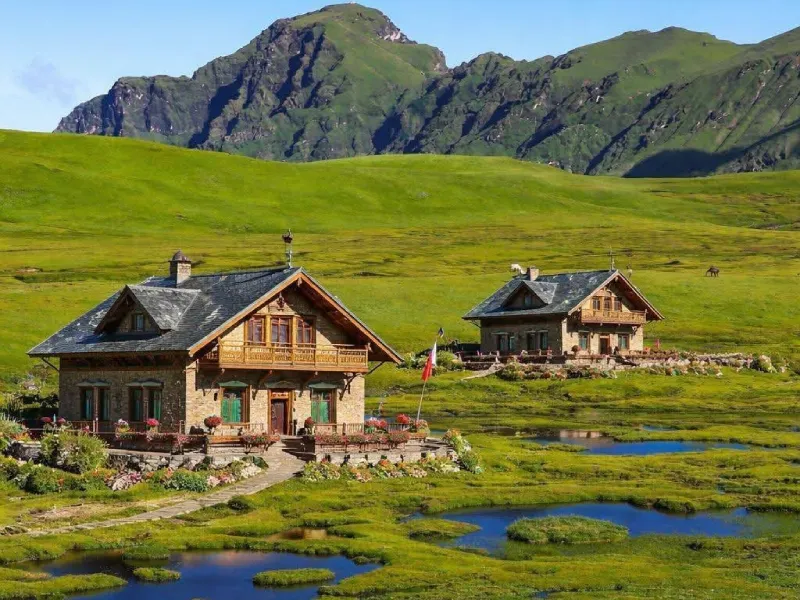
Badimalika is not exactly the kind of trekking destination where you have line of teahouses every few miles. It’s as remote as it gets. The kind of place where roads become tracks, your phone signal just gives up and the mountains feel very raw and real. You will be trekking through villages where life still moves at its own pace, and people look at you with actual curiosity, not because they are used to seeing trekkers, but because they don’t get to see many. The culture is just so deeply embedded there. Especially around the Badimalika Temple which is a massive spiritual center for Hindi devotees who trek for days just to pray on Janai Purnima.
What really makes this trek so different from the more famous ones, such as Everest or Annapurna, isn’t so much the scenery, it’s the atmosphere. There isn’t a crowd to fight to get through. No hurry. Just these endless meadows of alpine flowers that seem to just go on forever, horses grazing in the distance, and vistas that just don’t end. Sometimes, the only thing you can hear is the wind. Hiking out there is less about crossing something off the bucket list and more like discovering a secret part of the world that nobody knows about.
Badimalika doesn’t actually care about impressing you with anything fancy or luxury. It’s something far better than that – something authentic. The Far West has its own beat, its own tales, and its own way of doing things. And when you’re out there in the trails, you can’t help but slowdown yourself. It’s not exactly a trek for everyone. But if you are someone who are looking for something that’s untouched, a little spiritual, and maybe a little bit wild, Badimalika is one of those places that just stays with you long after you have gone back home.
Why Choose Badimalika Trek?
- Truly remote and less crowded: If you are tired of the crowds and lines at the popular spots, then Badimalika is where you can actually take a breath. Seriously, some days you won’t even see a single person the entire time you are trekking.
- Deep Hindi pilgrimage connection: It’s not all about the mountains and the meadows, of course. Badimalika a sacred place. During Janai Purnima, you can see devotees trekking for days just to get to the temple, and you can feel the sense of devotion in the air. Even if you’re not religious yourself, being up there at 4,200m, you will definitely feel something.
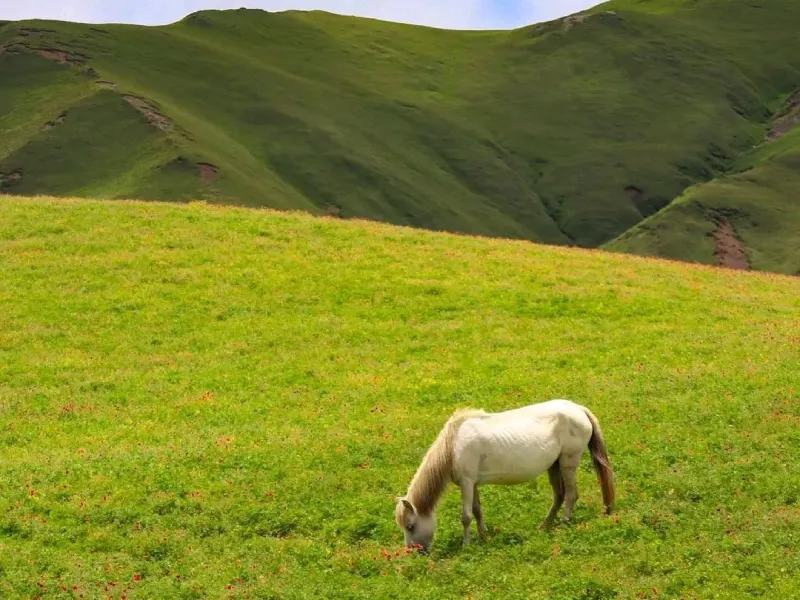
- Endless green meadows: The hills here are almost as if they are not even real. You have these massive, endless plains of grass that go all the way to the horizon, horses just grazing wherever they like, and clouds sitting low on the hills. Some people like to compare Badimalika to Switzerland, but honestly it feels much more wild.
- Breathtaking Himalayan Scenery: Then there are the days when the massive mountains come into view, well beyond the hills like Api, Saipal, and other giants in the west, just standing there silently in the distance. The views aren’t dramatic, with sharp peaks like you find in other parts of the world, they’re just beautiful and endless. It’s a scale that makes you feel small, but in a good way.
- Authentic Far-West Culture: This is still a part of the country that moves to its own beat. The villages are very simple, the culture is still very much alive, and the people are just warm. It doesn’t feel like a tourist destination at all. It feels real, and sometimes that’s exactly what will make a trip unforgettable.
Best Time to Go for Badimalika Trek
Spring (March to May)
Spring is the best season to go out for Badimalika Trek. The hills begin to turn this amazing, bright green color, and wildflowers and rhododendrons start sprouting all over the places. The meadows around the Badimalika look very beautiful with soft grass, grazing horses, and clear blue skies. The weather is also perfect for a hike, not too hot, not too cold.
Autumn (September to November)
Autumn is another best season for this trek. After the monsoon rains have cleared away the dust, the mountain scenery looks very sharp. The sky turns deep dark blue with clear views that you can see for miles. The trails are less muddy, making the trekking much easier. Overall, the weather is very well balanced, sunny day, cool afternoon. There is a reason why most trekkers choose this time.
Winter (December to February)
Winter is a tough season. It make trekking very difficult, especially when you are higher up. There’s usually snow on the meadows and in the temple, and it looks absolutely magical, but it’s definitely not easy. The nights are bitterly cold, so you need to have the right equipment if you are camping out. Very few people come trekking during this season, so you’ll have the whole place to yourself. It’s beautiful, for sure but you have to be ready for it.
Monsoon (June to August)
As for Monsoon, it’s a bit of a risk. The trails will be muddy and slippery, and, yeah, you can expect to encounter some leeches in the lower parts. Clouds will be low, so you might not get the best views of the mountain. BUT! This is also when the massive Badimalika Festival takes place during Janai Purnima (in August). Thousands of devotees will trek for days to finally reach the temple, and the atmosphere is just amazing. Singing, deep passion, and ceremonies taking place all the way up at 4,200 meters. If you want the authentic experience, it’s worth the trouble, just don’t expect to have dry boots.
Highlights of Badimalika Trek
- Less crowded trekking trail in Far-West Nepal
- Visit the holy Badimalika Temple (approx. 4,200m), a major pilgrimage point
- Pass through serene alpine meadows and natural mountain surroundings
- Experience the real culture and way of life in the villages of Far-West Nepal
- Breathtaking views of western Himalayan ranges and expansive valley
- Camping-style trekking with star-filled night skies in the remote wilderness
- Chance to experience the festival atmosphere of Janai Purnima if trekking during festival time
Badimalika Trek - Distance, Duration, and Altitude
| Trekking Route | Distance (Kilometers) | Duration (Hours) | Altitude (Meters) |
|---|---|---|---|
| Trek to Budha Krodh | 12 KM | 5 to 6 hours Trek | 2400 m. |
| Trek to Bhito | 14 KM | 5 to 6 hours Trek | 2800 m. |
| Trek to Triveni | 11 KM | 5 to 6 hours Trek | 3200 m. |
| Trek to Badimalika Temple Area | 13 KM | 6 to 7 hours Trek | 4200 m. |
| Trek to Dhawalpur Lake | 10 KM | 5 to 6 hours Trek | 3600 m. |
| Trek to Lamagadh | 15 KM | 5 to 6 hours Trek | 2800 m. |
| Trek to Silgadhi | 14 KM | 5 to 7 hours Trek | 1800 m. |
Itinerary of Badimalika Trek
Day 1: Arrival in Kathmandu
You’ll arrive in Kathmandu, and we’ll take care of getting you to your hotel. The first day is all about relaxing from your flight, meeting up with the crew you’ll be trekking with, and getting that Kathmandu feel. If you’re feeling refreshed, you can check out the local tourist spots, grab any last-minute gear, or just find a good spot to grab a coffee and get ready for the adventure that’s to come.

Activity: Hotel check in + Rest

Max. Altitude: 1400m./4,593ft.

Meal: Dinner

Accommodation: 3 Star Hotel
Day 2: Kathmandu Sighseeing and Trek Prep
This is a pretty laid-back day of sightseeing and making sure everything is squared away. We’ll check out some of the famous heritage spots around the valley, but we’ll also use this time to make sure your permits are ready and your packing list is on point. It’s a good chance to get your head in the game, both physically and mentally before we head out into the wilderness.
Activity: 4 to 5 hours Sightseeing and Trek preparation
Max. Altitude: 1400m./4,593ft.
Meal: Breakfast, Dinner
Accommodation: 3 Star Hotel
Day 3: Fly to Dhangadhi and Drive to Dadeldhura
Today we’ll take an early flight to Dhangadhi, which is located in the Terai region of Far-West Nepal. This is a very flat region, and you’ll get a sense of just how flat as we make our way to Dadeldhura by private vehicle. The drive will take a while, but it’s actually quite scenic, and you’ll get your first glimpse of what it’s like in the “Far-West.”
Activity: 1 hr flight + 5 to 6 hours Drive
Max. Altitude: 1500m./4,921ft.
Meal: Breakfast, Lunch, Dinner
Accommodation: Tea house
Day 4: Drive to Jadanga
Today we’ll continue driving, making our way even deeper into the hills from Dadeldhura to Jadanga. Just a note: the roads can get pretty bumpy and dusty at times. You’ll get to see some of the small villages and farms along the way until we reach the point where we actually begin trekking.
Activity: 6 to 7 hours Drive
Max. Altitude: 2000m./6,562ft.
Meal: Breakfast, Lunch, Dinner
Accommodation: Camp
Day 5: Trek to Budha Krodh
The trekking begins at last! The route from Jadanga to Budha Krodh involves some cool forest trails and hillside trekking. We will be taking the same route as the villagers, so you can expect to see a lot of grazing areas and peaceful villages along the way. This trek should take us around 5 or 6 hours, depending on how we feel.
Activity: 5 to 6 hours Trek
Max. Altitude: 2400m./7,874ft.
Meal: Breakfast, Lunch, Dinner
Accommodation: Camp
Day 6: Trek to Bhito
Leaving Budha Krodh, we begin a more consistent climb into the mountains. We will cross some small streams and move through some forests to reach the ridges, where the scenery really begins to reveal itself. It’s not a difficult climb, but you will certainly feel the effects of the uphill sections and the thin air as we gain altitude.
Activity: 5 to 6 hours Trek
Max. Altitude: 2800m./9,186ft.
Meal: Breakfast, Lunch, Dinner
Accommodation: Camp
Day 7: Trek to Triveni
Today we reach Triveni, which is a huge religious point and a breathtaking spot in nature. The views open up a lot and get much more “alpine” here. You’ll see fewer houses as we enter the high zone. The trekking is steady, and the atmosphere… well, it’s just so clean up there.
Activity: 5 to 6 hours Trek
Max. Altitude: 3200m./10,499ft.
Meal: Breakfast, Lunch, Dinner
Accommodation: Camp
Day 8: Acclimatization at Triveni
This is a very crucial rest day, where your body needs to get adjust to the high altitude. We’re not just going to hang around, though. You can go for some short treks in the region, explore the surrounding hills, or simply hang out in camp. Just remember to drink lots of water and take it easy, as you’re preparing for the big hike the next day.
Activity: Acclimatization + Short hikes
Max. Altitude: 3200m./10,499ft.
Meal: Breakfast, Lunch, Dinner
Accommodation: Camp
Day 9: Trek to Badimalika Temple Area
This is the day we have all been waiting for. We will be trekking up to the Badimalika Temple, which sits proudly at an altitude of just about 4,200 meters. The trek leads us into these amazing grasslands with vistas that just do not end. And if it happens to be festival time, you will find devotees all around you, which gives this amazing spiritual vibe to the entire experience. It is definitely a treat to be at this place.
Activity: 6 to 7 hours Trek
Max. Altitude: 4200m./13,780ft.
Meal: Breakfast, Lunch, Dinner
Accommodation: Camp
Day 10: Trek to Dhawalpur Lake
Today we move on to the Dhawalpur Lake. It is this really serene and peaceful high-altitude lake that is hidden away among the hills. The trekking trail is mostly a combination of downhill and level surfaces, which should give your legs a welcome relief after the past few days of trekking. It is a great place to just sit back and enjoy the quiet.
Activity: 5 to 6 hours Trek
Max. Altitude: 3600m./11,811ft.
Meal: Breakfast, Lunch, Dinner
Accommodation: Camp
Day 11: Trek to Lamagadh
It’s time to start trekking back down towards the lower hill towns. Not surprisingly, you’ll start to notice the difference in the landscape as we trek through the forests and back into the farming regions. It’s a little strange to see the signs of “civilization” once again after being at such high elevations, but it’s good to see a change of scenery.
Activity: 5 to 6 hours Trek
Max. Altitude: 2800m./9,186ft.
Meal: Breakfast, Lunch, Dinner
Accommodation: Camp
Day 12: Trek to Silgadhi
The trek will continue down into the more populated regions. You’ll certainly feel like you’re back in the towns as we trek through the regions that were so remote and wild just a short time ago. The day will still be a little long in terms of distance, but the elevation will be much easier than the high altitude sections we hiked through earlier.
Activity: 5 to 7 hours Trek
Max. Altitude: 1800m./5,906ft.
Meal: Breakfast, Lunch, Dinner
Accommodation: Tea House
Day 13: Drive to Dhangadhi
We’ll get back in the car and head back down to Dhangadhi. This road is twisty, and it’s a bit of a shock to get back into the “real world” after being in the wilderness for so long. But once we get to the hotel, you can finally take a real shower and just relax from the trek.
Activity: 6 to 7 hours Drive
Max. Altitude: 700m./2,297ft.
Meal: Breakfast, Lunch, Dinner
Accommodation: Standard Hotel
Day 14: Fly to Kathmandu
We fly back to the city today. It’s a super chill travel day, great for some last-minute shopping, resting, or just exploring a bit more of Kathmandu if you’re still feeling up to it. In the evening, enjoy a complimentary local dinner hosted by our company to celebrate your successful completion of Badimalika Trek !
Activity: 1 hour flight
Max. Altitude: 1400m./4,593ft.
Meal: Breakfast, Dinner
Accommodation: 3 Star Hotel
Day 15: Departure
And that’s it. We’ll get you to the airport for your flight home. You’ll be leaving Nepal with some amazing memories of the Far-West, the pilgrimage routes, and that peaceful mountain vibe that stays with you. Safe travels!
Includes/Excludes
What is included?
- Permits and Fees: All necessary permits for the Badimalika Trek, such as the TIMS (Trekkers’ Information Management System) card.
- Accommodation: While you are in Kathmandu before and after the trek, you will stay in a standard tourist hotel (Bed and Breakfast) on a twin-sharing basis. But once we are on the trek, it’s all about camping. We will bring the tents, mattresses, and basic sleeping arrangements.
- Meals: You will get three full meals a day (breakfast, lunch, and dinner) while we are trekking. We also include a hot drink with your breakfast and lunch. And if we can lay our hands on some seasonal fruits, we will serve that up after dinner as well.
- Domestic Flights: The return flights from Kathmandu to Dhangadhi are included in the cost. For the transport from Dhangadhi to the trekking trailhead, we will use jeeps or local transport, depending on the condition of the roads.
- Guide and Porters: Services of an experienced English-speaking trekking guide and porters to carry luggage(one porter for two trekkers). This includes their salary, insurance, equipment, transportation, food, and accommodation.
- First Aid Kit: A basic first aid kit is typically provided.
- Trekking Map: A detailed map of the trekking route is usually included.
- Equipment: Duffle Bag, Sleeping Bag (if necessary)
What is not included?
- International Flights: International airfare to and from Nepal is not included.
- Travel Insurance: Travel insurance that covers emergency rescue, evacuation, and medical treatment is not included, and you’ll be expected to have your own.
- Personal Expenses: Expenses for extra meals, drinks, snacks, charging devices, hot showers, Wi-Fi, laundry, and other personal costs are not included.
- Nepal Visa Fees: Entry visa fees for Nepal are not included.
- Additional Accommodation and Meals: If you choose to extend your stay in Nepal, or if you return from the trek earlier than scheduled, the cost of additional accommodation and meals will not be included.
- Rescue and Evacuation: Any costs related to emergency evacuation or rescues are not covered.
- Trekking Gear: Personal trekking equipment, such as hiking boots, down jackets, trekking poles, and other gear are not included.
- Tips: Tips for guides and porters are not included and are left to your discretion.
Trip Information
Trek Difficulty
In terms of difficulty, the Badimalika Trek is considered moderately difficulty but it is definitely not a comfort trek by any means. If you are a beginner with a decent level of fitness and a positive attitude, you can definitely handle Badimalika. There’s nothing particularly technical or hazardous about the trek itself. It’s just that since it’s so remote and you’re camping for the most part, it does require a little more from you in the way of mental toughness.
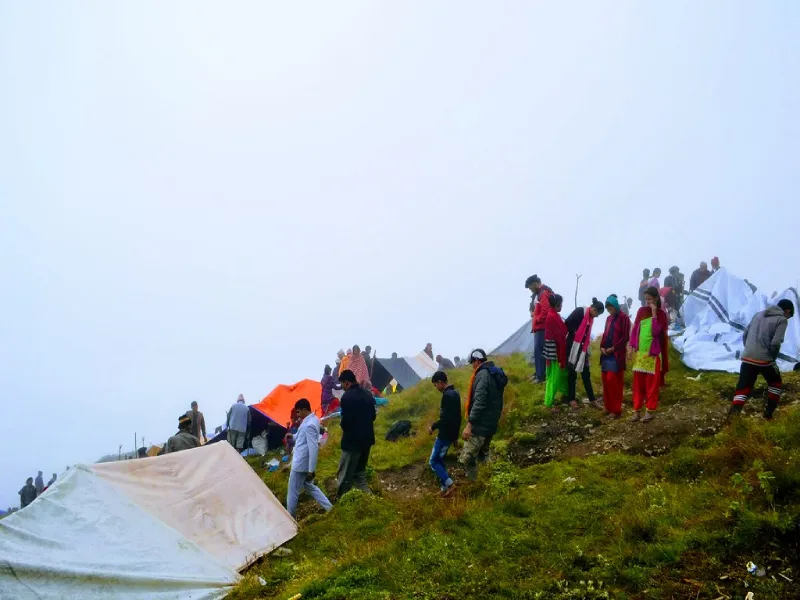
For physical activity, you will be walking for about 5 to 7 hours a day, sometimes on long uphill trails and ridges. The highest point reaches about 4,200 meters, so you will definitely feel the altitude, especially in the temple region. It is not as bad as when you have to cross mountain passes, but it is not a walk through the village either. A little bit of preparation, such as some cardio and light hiking before the trip will help you for Badimalika trek. If you are relatively active, your body will not have any problems.
What makes this Badimalika trek so unique is its level of remoteness. As soon as you get past the road, you are in true Far West Nepal. Camping is necessary for the most part, and this means that tents, porters, and logistics will be required. This Badimalike trek is for those who are looking for something that is unspoiled and are not put off by rough roads and quiet nights. It is not the easiest trek in Nepal, but it is not intended to be. It is real, and that is the point.
Cultural and Spiritual Importance
Badimalika is more than just another trekking spot. It’s a sacred site that means everything to thousands of people living in western Nepal. At the very peak of those enormous alpine meadows stands the Badimalika Temple which honors Goddess Bhagwati (Malike). Don’t expect to see some sort of grand stone or huge complex structure. It’s very simple, open and completely immersed in nature. And I think that simplicity is what make the place so powerful. Being there, at 4,200 m, with the wind drifting across the grass and the mountains rising up in the distance, it just feels very special.
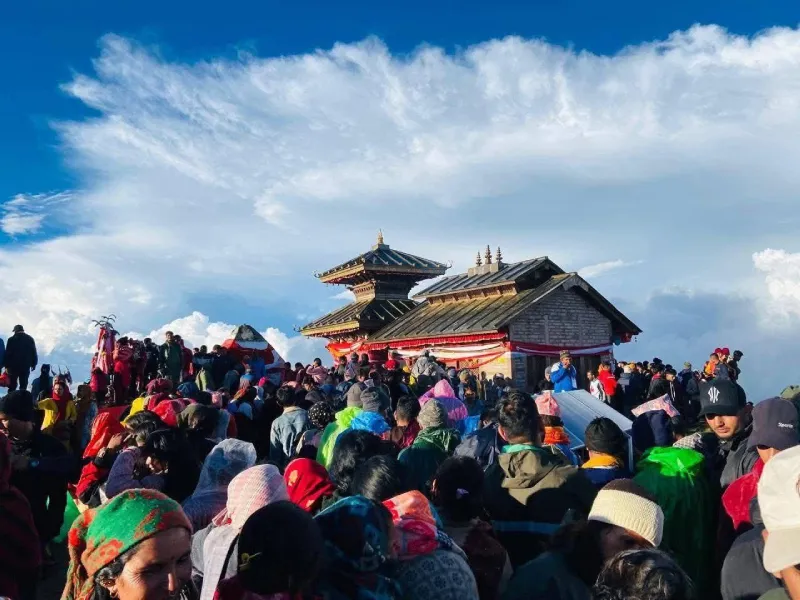
For the people living in Bajura, Achham, and the surrounding districts, Badimalika is literally a part of their lives. They hear about the goddess from the time they are born, about her protection, blessings, and simple blind faith. The Badimalike temple is not just “visited”; it is treated with deep respect and devotion. Even today, you can see devotees trekking for days, sometimes even barefoot, with their offerings. For them, this is not tourism. It is blind devotion. To witness such faith firsthand… it’s a humbling experience.
The best part for us is in Janai Purnima, which usually happens in August. This is when the Badimalika Festival happens. Thousands of devotees come to the temple for the special rituals and worship, and the whole trail just comes alive. You have chanting, traditional music, colors all around, and just so much emotion. Yes, it gets pretty crowded during the festival, but it is also pretty important. It’s not just about going to a festival, it’s about actually feeling the spiritual essence of the Far West. That’s what makes this trek so much more than just mountains and hiking. It just ends up being something so much deeper.
Accommodation and Food on Badimalika Trek
Accommodation on the Badimalika Trek is largely camping, and I think it’s only right that we’re upfront about that. We use proper trekking tents, with two people in each tent, and foam mattresses or sleeping mats inside. They’re not luxurious, no question, but they’re more than cozy after a long day on your feet. You won’t go there expecting some sort of luxurious experience, but you don’t have to worry about that either, it’s not like rough survival style. We set up a huge dining tent where everyone hangs out to eat, and the honest truth is that that tent becomes the hub of the camp every night.

The food during the Badimalika Trek is handled by the camping kitchen staff. They are the essential part of our team and handle everything from setting up the kitchen tent to preparing new meals every day. The food is simple but very hearty with lots of rice, lentils, vegetables, pasta, noodles, and eggs. You might even get pancakes or porridge for breakfast if you’re lucky. Of course, it’s not a five-star restaurant menu, but after trekking for hours even a simple hot meal will taste like the best thing you ever had. We also make sure to keep everything very clean, as when you’re out in the middle of nowhere, that’s a big deal.
As for drinking water, we just fetch it from the natural sources along the Badimalika trail and then boil or purify it before serving. It is always a good idea to carry your own water bottle and purification tablets as a precautionary measure. There is no bottled mineral water available up there, so we make sure to keep things eco-friendly. Camping at Badimalika is easy, yeah but to sit under that vast open sky with a warm plate of food in your hands and complete silence all around, it is pretty special.
Required Permits
For the Badimalika Trek, you will require some permits and the truth is that it is pretty easy to acquire the permit compared to what you may experience in the more famous areas of Nepal. But it is still something that you want to make sure you get right before you head out.
First, let’s discuss the TIMS (Trekkers’ Information Management System) card. As of today, the regulations and policies concerning TIMS have been a bit of a mixed bag. While some regions are moving away from the TIMS card, in a place like Badimalika, it is normally mandatory and will cost you $20 per person. Since you will be trekking in the Bajura district, which is sometimes considered to be “restricted” or “semi-restricted” depending on where you are trekking to, it is just suitable to have the card. In the far-western regions of Nepal, sometimes information can be a bit difficult to come by, and you wouldn’t want to be turned back at a local checkpoint for not having the proper documentation.
You may also be charged an entry fee for a Local Municipality or Rural Area. This is more or less a small local permit that has become quite common in Nepal in recent times. This will barely cost you a few dollars around USD 5 to 10, and the amount goes directly to funding the development of the region. The Far-West region certainly doesn’t get as much tourist revenue as Everest, so it’s a great way to reward the locals for keeping the trails open.
When you trek with us at Epic Trek Nepal, we take care of all the permit formalities, both the TIMS cards and the local permits before you even start trekking. This means that you won’t have to spend any of your precious time waiting in some random, crowded office or trying to figure out some local regulations after what is already a pretty long day of travel.
We take care of all the paperwork in the background, so you don’t have to worry about a thing. This means that you can finally focus on what you’re there for: the trail, the views, and the experience.
What to Pack for the Badimalika Trek
Backpack
- A sturdy backpack with adjustable straps and good support
- Duffle bag for additional gear
- Rain cover for bag
Clothing
- Breathable short and long sleeve shirts
- Warm mid layer such as fleece jacket or down jacket for evening
- lightweight windbreaker
- Waterproof and windproof jacket
- Comfortable hiking shoes
- Warm socks
- Thermal inner wear and socks for high altitude
- Durable trekking pants
Footwear
- Strong trekking boots for rocky and uneven route
- Extra shoes for evening at lodges
Accessories
- Trekking poles for stability
- Layered gloves
- UV protection sunglasses
- Headlight or Flashlight
- Neck gaiter
- Hat
Sun Protection
- High SPF sunscreen
- Lip balm with SPF
Documents and Money
- Passport and ID copies
- Permits
- Travel insurance papers
- Local currency
Emergency Items
- First aid kit
- Water purification tablets or filter
- Duct tape for quick gear repair
- Plastic bag to organize gear and carry waste
Cancellation Policy for Badimalika Trek
At Epic Trek Nepal, we understand that plans can change unexpectedly. That’s why we designed out cancellation policy to be fair and clear.
Cancellation Notice
If for any reason you need to cancel your trek, please let us know at least 15 days in advance of your scheduled trek start date.
Administrative Fee
25% of the total amount will be deducted as an administration fee when canceling the trek. This also includes the planning and organizational work that has already been done for your trip.
Non-Refundable Period
In case of cancellation less than 7 days before the departure date of the trek, no refund will be given normally. However, in case of a valid reason for cancellation, we might refund you the remaining amount after deducting 70% of the trek cost provided, since by that time we would have already done the payments and blocked your slots.
Documentation Support
We appreciate that for some, insurance claims are important. If you cancel, we will happily provide receipts and necessary documents to facilitate your insurance process.
Unused Accommodation
Refunds for unused accommodation are not available in case your trek is canceled due to personal reasons, illness, or bad weather.
Frequently Asked Questions
Badimalika Trek is considered a moderate Trek. You don’t have to be some expert mountain climber or anything, but you do have to be in decent shape.
It is usually around anywhere from 12 to 16 days.
Yes, it is very much suitable and doable for beginners if they are in decent shape and can walk for long hours.
Yes. The Badimalika trek is extremely remote, and the logistics, such as camping and finding water can be quite challenging. It is always best to hire a licensed guide and a reputable agency for safer and reliable trek.
Yes. There are no teahouses on this trek, as there are in the Annapurna region. So, camping is the only option available to you. It’s all part of the adventure!
The best time to do the Badimalika Trek is during Spring (March to May) and Autumn (September to November), when the weather is clear and stable.
The temple is located at an altitude of 4,200 meters. You will surely feel the effects of high altitude when you reach there.
Well, anytime you go above 4,000 meters, it’s always a concern. But we take it nice and slow, and we make sure to include acclimatization days. If you listen to your body, you’ll be just fine.
Trip Reviews
US$ 2350
Need Help? Talk to Expert
+977 9764792172