




Island Peak Climb with EBC – Epic 18 Days Himalayan Adventure
73 reviews in Tripadvisor

Trip Duration
18 Days
Destination
Nepal
Max. Altitude
6,189 m.
Trip Difficulty
Challenging
Group Size
2-16 pax
Transportation
Tourist Bus & Flight Lukla - Kathmandu
Accommodation
Hotel/Teahouse
Activity
Trekking/Hiking
Meals
All Incusive
Start / End
Kathmandu
Region
Everest
Best Season
Spring, AutumnUS$ 2200

Need Help? Talk to Expert
+977 9764792172Trip Overview
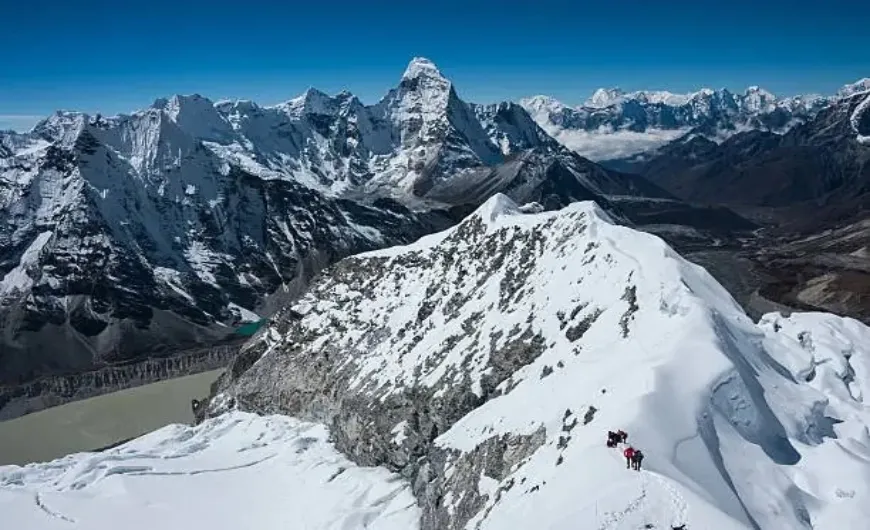
Island Peak, which appears exactly like an Island when viewed from Dingboche, stands at 6,189m and is one of the most popular trekking peaks in Nepal. This challenging, Island Peak climb is designed for beginner rather than an experts. Also known by Imja Tse. It is located in Sagarmatha National Park where climbers can enjoy breathtaking 360° views of Lhotse (8,516m), Makalu (8,481m), Ama Dablam (6,812m), and even catch a glimpse of Mt. Everest (8,848.86m). Island Peak sits close to Mount Everest and is actually an extension of Lhotse, the world’s fourth highest mountain.
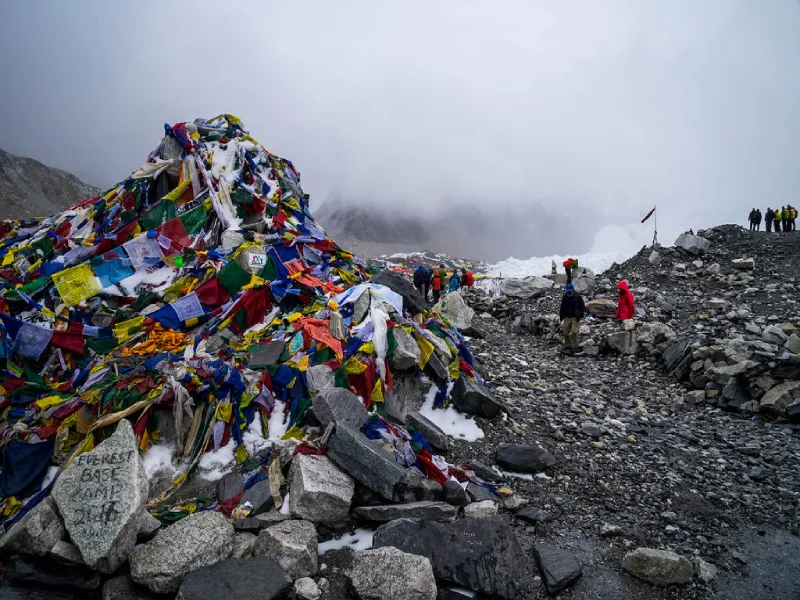
To make this Island Peak climb journey more exciting and memorable, we have combined the Everest Base Camp Trekking with it. Starting with a scenic flight from Kathmandu to Lukla, you’ll begin the Island Peak trek from Phakding. Walking along the riverside of Dudh Koshi, you will ascend to Namche Bazaar through Himalayan pine forests. After acclimatization in Namche, you’ll trek to Tengboche and then continue to Dingboche. After acclimatizing in Dingboche you will proceed to Lobuche, and the next day Everest Base Camp trek via Gorakshep.
After spending a night at Gorakshep, you’ll hike up to Kala-Patthar to witness the sunrise views of Mount Everest, then descend to Dingboche. Next day you head to Chhukung and then prepare at Chhukung Base Camp for tomorrow’s summit attempt. The day finally arrives to summit Island Peak – take your time to savor this incredible accomplishment and enjoy the breathtaking views and stunning scenes of the mountains that Island Peak offers. Afterward, you’ll return to Dingboche. You’ll continue your trek to Namche Bazaar and conclude the adventure at Lukla.
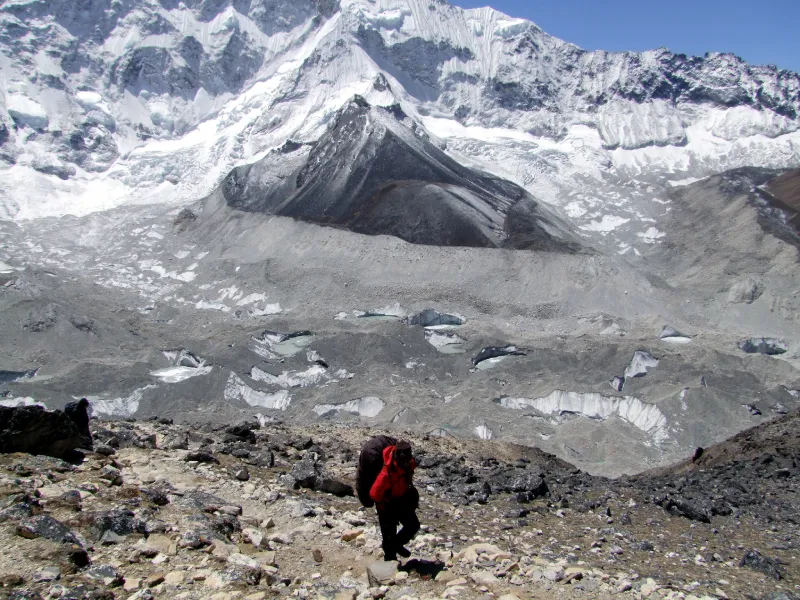
ELEGIBILITY TO ISLAND PEAK CLIMB
The only condition is your physical fitness which matters the most. In addition to that, it is best if you have previous experience of basic winter climbs which helps you with basic technical knowledge for attempting the final summit. Even you are lacking confidence in climbing, there are experienced climbing guides who will assist you all the way to the summit.
Best Time to Summit Island Peak
Island Peak can be attempted in two main climbing seasons:
Spring (March to May)
This is the ideal season for Island Peak climbing as the weather is stable with clear skies and low winds. The climate is mostly dry, and temperature at the summit ranges from (-5°C to -15°C). The trails are filled with rhododendron blooms and other climbers, making the best season for photography. The optimal summit window is considered to be from late April to mid-May, which is ideal for first-time climbers as the success rate is high.
Autumn (Mid-September to November)
The cool, dry, and stable weather with crystal-clear skies makes this the chosen season for Island Peak climbing. Summit temperatures range from (-8°C to -18°C), with crisp and dry weather conditions where nights are colder than in spring. During this time, there is minimal risk of rain/clouds, which provides great visibility of the mountains.
Winter (December to February)
The extremely cold season is not favorable for most climbers, as temperatures range from (-18°C to -30°C), causing the summit success rate to drop. The trails are covered with ice, most of the tea houses are closed, and only a few hardcore climbers attempt the climb during this period.
Monsoon (June to Mid-September)
This is the season to avoid for Island Peak climbing, especially if you are beginner as the risk of avalanche is significantly higher in high areas. Temperature of this season are unpredictable due to frequent weather changes and heavy precipitation. Flights to Lukla are commonly delayed or even cancelled during this period. We recommend choosing other trails that are better suited for the rainy season.
Climb in spring or autumn for the best experience. Spring offers better warmth and flowering landscapes, while autumn brings the sharpest views of snow-covered giants.
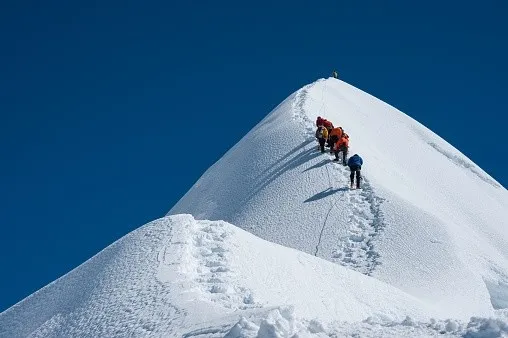
This Island Peak climb is suitable for any individual with strong determination to reach the summit. It is moderate, challenging as well rewarding. You need technical climbing skills to reach the peak so, it may feel difficult, but with experts guidance – it is achievable. Island Peak has a PD or 2B rating, which refers to the difficulty level of the climb based on international mountaineering grading system. PD (Peu Difficile) means a little difficult and requires some technical skills, like:
- Use of ropes
- Basic ice axe and crampon techniques
- Crossing glaciers and crevasses
The 2B Rating from Nepal Mountaineering Association generally matches the technical level of PD and indicate route may be longer at altitude, with snow and ice slopes up to 45 degrees. If you are a mountain enthusiast, Island Peak will satisfy your climbing ambitions.
Highlights of Island Peak Climb with EBC – Epic 18 Days Himalayan Adventure
- Summit Success at 6,189m – Epic views of Everest and surrounding peaks
- Technical Climbing Experience – Real mountaineering with ropes, ice, and glaciers
- EBC Trek Integration – Two legendary adventures in one trip
- Sherpa Culture – Authentic mountain culture and hospitality
- Spectacular Scenery – Insane Himalayan landscapes throughout
Photo Gallery & Video Gallery
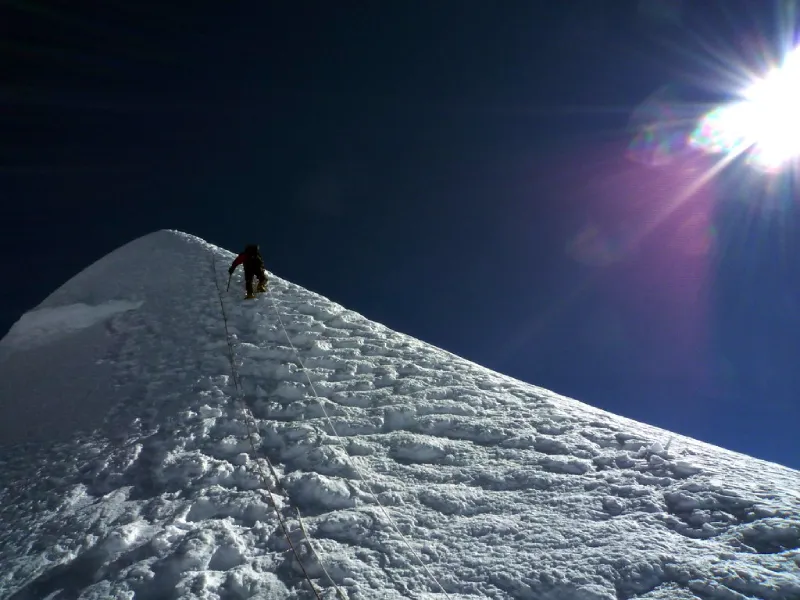
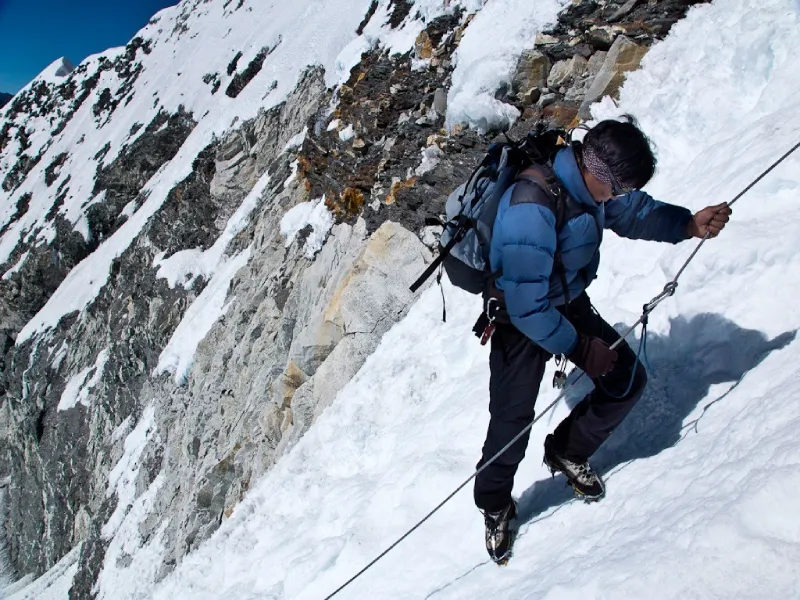
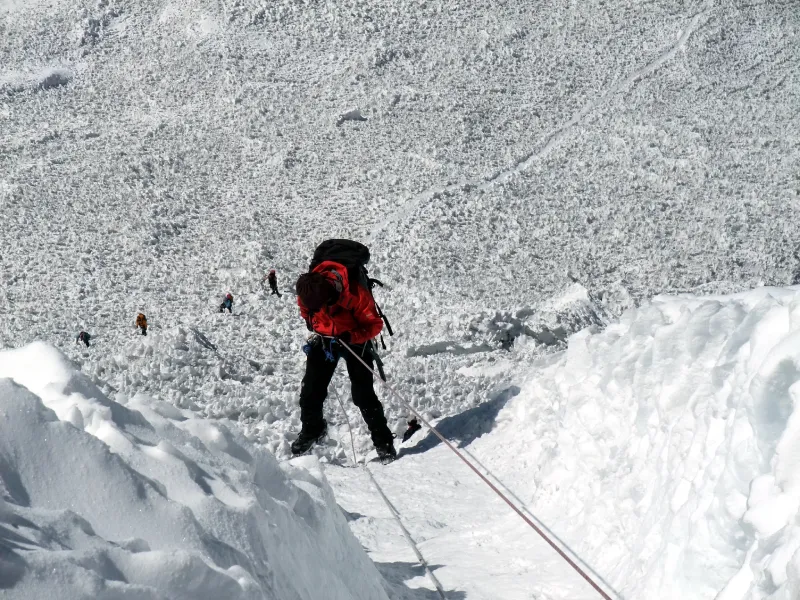
Island Peak Climb with EBC – Epic 18 Days Himalayan Adventure - Distance, Duration, and Altitude
| Trekking Route | Distance (Kilometers) | Duration (Hours) | Altitude (Meters) |
|---|---|---|---|
| Lukla → Phakding | 6.2 KM | 3 to 4 hours | 2610 m. |
| Phakding → Namche Bazaar | 7.4 KM | 5 to 6 hour | 3440 m. |
| Namche → Tengboche | 9.2 KM | 5 to 6 hours | 3810 m. |
| Tengboche → Dingboche | 9.1 KM | 5 to 6 hours | 4410 m. |
| Dingboche → Lobuche | 7.9 KM | 4 to 5 hours | 4910 m. |
| Lobuche → Gorakshep → Everest Base Camp → Gorakshep | 7.6 KM | 6 to 7 hours | 5364 m. |
| Gorakshep → Kala Patthar → Dingboche | 15 KM | 7 to 8 hours | 5550 m. |
| Dingboche → Chhukung | 5 KM | 2 to 3 hours | 4730 m. |
| Chhukung → Island Peak Base Camp | 4 KM | 3 to 4 hours | 5200 m. |
| Base Camp → Island Peak Summit (6,189 m) → Dingboche | 14 KM | 10 to 12 hours | 6189 m. |
| Dingboche → Namche Bazaar | 14.5 KM | 6 to 7 hours | 3440 m. |
| Namche to Lukla | 13.5 KM | 6 to 7 hours | 2860 m. |
Itinerary of Island Peak Climb with EBC – Epic 18 Days Himalayan Adventure
Day 01: Arrival in Kathmandu
After arriving in Kathmandu, you’ll be transferred to your hotel. You can spend the rest of the day at leisure, acclimatizing and exploring the local area.

Activity: 35-min drive

Max. Altitude: 1400m./4,593ft. (Kathmandu )

Accommodation: 3 Star Hotel
Day 02: Kathmandu Sightseeing and Preparation
You’ll spend the day preparing for the trek and exploring the city’s UNESCO World Heritage Sites.
Activity: Sightseeing
Max. Altitude: 1400m./4,593ft. (Kathmandu )

Meal: Breakfast
Accommodation: 3 Star Hotel
Day 03: Flight to Lukla (2840m), Trek to Phakding (2610m)
After a scenic flight to Lukla, you’ll begin the trek to Phakding. The trek should take about 3-4 hours.
Max. Altitude: 2610m./8,563ft. (Phakding )
Meal: Breakfast, Lunch, Dinner
Accommodation: Standard Teahouse
Day 04: Trek to Namche Bazaar
The trail continues along the banks of the Dudh Kosi, ascending through Himalayan pine and cedar forests to the celebrated village of Namche Bazaar.
Max. Altitude: 3440m./11,286ft. (Namche Bazaar)
Meal: Breakfast, Lunch, Dinner
Accommodation: Standard Teahouse
Day 05: Acclimatization Day in Namche Bazaar
This is an acclimatization day to adjust to the high altitude. As Namche is the largest settlement of Sherpa community and trading hub. You can spend the day exploring the village and its local museum.
Max. Altitude: 3440m./11,286ft. (Namche Bazaar)
Meal: Breakfast, Lunch, Dinner
Accommodation: Standard Teahouse
Day 06: Trek to Tengboche
You’ll trek towards Tengboche, home to the largest monastery in the Everest region.
Max. Altitude: 3870m./12,697ft. (Tengboche)
Meal: Breakfast, Lunch, Dinner
Accommodation: Standard Teahouse
Day 07: Trek to Dingboche
The trail descends and passes through lush forests, and the village of Pangboche before reaching Dingboche.
Max. Altitude: 4360m./14,304ft. (Dingboche)
Meal: Breakfast, Lunch, Dinner
Accommodation: Standard Teahouse
Day 08: Acclimatization Day in Dingboche
You will spend another day acclimatizing to the high altitude, which helps prevent altitude sickness.
Max. Altitude: 4360m./14,304ft. (Dingboche)
Meal: Breakfast, Lunch, Dinner
Accommodation: Standard Teahouse
Day 09: Trek to Lobuche
Today, you’ll trek to Lobuche, passing through a wide pass and stone memorials to climbers who have perished on nearby summits.
Max. Altitude: 4940m./16,207ft. (Lobuche)
Meal: Breakfast, Lunch, Dinner
Accommodation: Standard Teahouse
Day 10: Trek to Gorakshep(5140m), Everest Base Camp (5400), and Back
You’ll trek to Gorakshep and then to Everest Base Camp. You’ll spend some time at base camp and then return to Gorakshep for the night.
Max. Altitude: 5140m./16,864ft. (Gorakshep)
Meal: Breakfast, Lunch, Dinner
Accommodation: Standard Teahouse
Day 11: Trek to Kala Patthar (5550m), then to Dingboche (4360m)
You’ll start early to hike up to Kala Patthar for sunrise views of Everest, then descend to Dingboche.
Max. Altitude: 4360m./14,304ft. (Dingboche)
Meal: Breakfast, Lunch, Dinner
Accommodation: Standard Teahouse
Day 12: Trek to Chhukung
You’ll trek to Chhukung and then to prepare for base camp after.
Max. Altitude: 4730m./15,518ft. (Chhukung)
Meal: Breakfast, Lunch, Dinner
Accommodation: Camping
Day 13: Chhukung Base Camp
This day at Base Camp and prepare yourself for Summit tomorrow.
Max. Altitude: 5200m./17,060ft. (Chhukung Base Camp)
Meal: Breakfast, Lunch, Dinner
Accommodation: Camping
Day 14: Island Peak Summit (6189), Back to Dingboche(4,410)
You’ll start your climb early in the morning. It takes around 10-12 hours to reach the summit and return to back to Dingboche.
Max. Altitude: 6189m./20,305ft. (Island Peak)
Meal: Breakfast, Lunch, Dinner
Accommodation: Camping
Day 15: Trek to Namche Bazaar
You’ll continue your descent to Namche Bazaar, where you can relax and celebrate your successful climb.
Max. Altitude: 3440m./11,286ft. (Namche Bazaar)
Meal: Breakfast, Lunch, Dinner
Accommodation: Standard Teahouse
Day 16: Trek to Lukla
On the final day of your trek, you’ll descend from Namche Bazaar to Lukla, where you’ll rest before your flight back to Kathmandu.
Max. Altitude: 2840m./9,318ft. (Lukla)
Meal: Breakfast, Lunch, Dinner
Accommodation: Standard Teahouse
Day 17: Fly Back to Kathmandu
You’ll take a morning flight back to Kathmandu.
Max. Altitude: 1400m./4,593ft. (Kathmandu )
Meal: Breakfast
Accommodation: 3 Star Hotel
Day 18: Departure
You’ll be transferred to the airport by our representative for your departure, marking the end of your adventure in Nepal.
Meal: Breakfast
Includes/Excludes
What is included?
- Airport Transfers: Pick-up and drop-off services from Kathmandu’s Tribhuvan International Airport.
- Accommodation: Hotels in Kathmandu before and after the trek, lodges (teahouses) during the trek, and tents for the Island Peak climb.
- Meals: All meals during the trek and climb, and breakfast in Kathmandu.also includes two times hot beverage (in breakfast and lunch) and seasonal fruits after dinner.
- Trekking and Climbing Permits: Includes Sagarmatha National Park Permit, Island Peak Climbing Permit, and TIMS (Trekkers’ Information Management System) card.
- Guide and Porters: A professional climbing and trekking guide, porters, and a climbing Sherpa for the Island Peak portion. Their food, accommodation, salary, insurance, equipment, and other expenses should be covered.
- Climbing Equipment: Group climbing equipment, such as ropes, ice screws, snow bars, etc.
- First Aid Kit: A well-stocked first aid kit for minor injuries or illnesses.
- Transportation: Domestic flights to and from Lukla, as well as any ground transportation needed.
- Equipment: Duffle Bag, Sleeping Bag (if necessary)
What is not included?
- International Airfare: Flights to and from Nepal are usually not included.
- Nepal Visa Fee: You’ll need to secure and pay for your Nepal visa yourself.
- Travel Insurance: It’s essential to have comprehensive travel insurance that covers high altitude trekking and climbing, including emergency evacuation.
- Personal Climbing Gear: You’ll likely need to bring or rent your own personal climbing gear, such as boots, harness, helmet, ice axe, crampons, etc.
- Personal Expenses: Expenses like drinks, snacks, charging electronics, Wi-Fi, showers during the trek, and other personal expenses are usually not included.
- Tips: Tips for guides, porters, and climbing Sherpas are not included in the package price.
- Meals in Kathmandu: Apart from breakfast, meals in Kathmandu are generally not included.
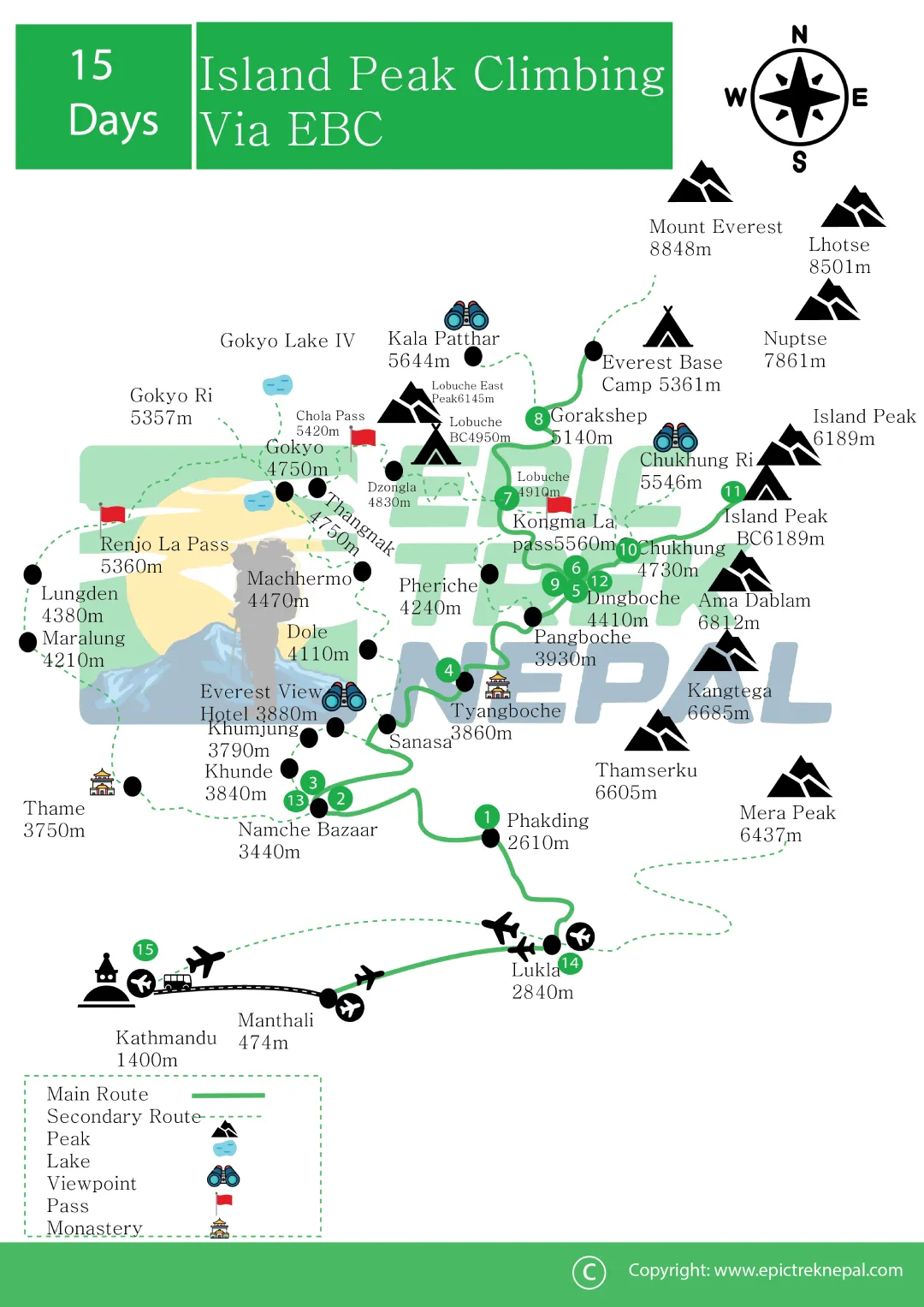
Trip Map of Island Peak Climb with EBC – Epic 18 Days Himalayan Adventure
Trip Information
Permits Required for Island Peak Climbing:
For the Island Peak Climbing adventure, you need to acquire these essentials permits:
1. Sagarmatha National Park Permit:
Island Peak falls within the boundaries of the Sagarmatha National Park, a UNESCO World Heritage Site. These permits are obtainable from the Nepal Tourism Board in Kathmandu or directly at the park entrance in Monjo.
Cost: NPR 3000 per person
2. Khumbu Pasang Lhamu Rural Municipality Entry Permit
This permit is a local regulation enforced in Lukla, the starting point for many treks and climbs in the Everest region.
- This is the replacement for TIMS Card in the Everest region.
- It costs NPR. 3,000 per person.
3. Island Peak Climbing Permit:
This is the essential permit for the expedition. To obtain this permit, you’ll need to submit the required documentation, pay the designated fee, and adhere to the guidelines set by the Nepal Mountaineering Association (NMA).
Cost: USD 250 per person in spring and USD 125 in autumn
Cancellation Policy for Island Peak Climbing:
At Epic Trek Nepal, we understand the changes in plan unexpectedly. That is why we designed it to be fair and clear.
Cancellation Notice:
By any reason, if you need to cancel tour trek then please inform us at least 15 days before your scheduled Trek start date.
Administrative Fee:
When you cancel the trek, 25% fee will be reduced from the total cost of trek as administrative charge. This fee covers the planning and organizational cost we’ve already done for your trip.
Non-Refundable Period:
If the cancellation happen less than 7 days before the trek start date, no refund will be provided but by looking at the situation and if we feel the reason of cancelation is valid then the amount will be refunded after deducting 70% of total trek amount. In such time we have already submitted the cost and reserved the spots for you.
Documentation Support:
We know insurance claim can be important. in-case if you cancel, we would gladly provide the necessary document such as receipts to help with your insurance process.
Unused Accommodation:
Please note that if your trek is cancel due to personal reasons, illness or bad weather, refunds for unused accommodation are not available.
If you have questions or want to discuss your situation, our team is here to help. We appreciate your understanding and look forward to guiding you safely on your Island Peak Climbing.
Required Gears for Island Peak Climb:
Island Peak Climb (6,189m) is combination of trekking and technical mountaineering. From glacier walks to fixed rope sections, you’ll need both stamina and specialized gear.
- Make sure the porters are also climbing with you. They are different than guides, they helps to carry your gear (usually up to 15 kg), but may not climb to the summit unless arranged. Ensure they are properly equipped if joining the summit push.
- Pack light but smart ! airport usually allow (10kg of duffel + 5kg hand carry). So, choose your gear wisely and avoid overpacking.
Essential Gear Checklist for Island Peak Climb
- Backpack (35–45L for summit push)
- Duffle bag (~80L) for porters/yaks
- Sleeping bag (rated to -20°C)
- Trekking poles
- Water bottles (2x 1L) or hydration bladder
- High SPF sunscreen & lip balm
- Quick-dry towel
- Personal toiletries
- Basic first aid kit (blister pads, Diamox, ibuprofen)
- Wet wipes & hand sanitizer
- Power bank and extra camera batteries
- Lightweight towel
- Passport, permits, insurance copy (laminated if possible)
1. Clothing Layers (Trekking to Summit)
Base Layers:
- Moisture-wicking thermal tops and bottoms (2 sets)
- Synthetic or merino wool underwear
Mid Layers
- Fleece jacket or pullover
- Softshell trekking pants
- Light down or synthetic insulated jacket
Outer Layers:
- Waterproof & windproof GORE-TEX jacket and pants
- Expedition-weight down jacket (summit day use)
- Insulated summit pants (optional but recommended)
Trekking Clothes:
- Breathable T-shirts (2–3)
- Lightweight trekking pants (2 pairs)
- Warm trekking sweater or hoodie
2. Head, Hand, and Feet Protection
Headwear:
- Wool Hat or cap
- Glacier glasses with UV protection
- Headlamp with extra batteries
Hands:
- Lightweight inner gloves (liner)
- Warm insulated gloves (summit)
- Waterproof overmitts (optional)
Footwear:
- Trekking boots
- Mountaineering boots (B2 or B3 grade, insulated)
- Camp shoes/sandals
- Warm trekking socks (4–5 pairs)
- Summit day socks (extra warm)
3. Climbing Gear (Can Be Rented in Chhukung or Kathmandu)
- Climbing harness
- Crampons (fit your boots)
- Ice axe
- Helmet
- Jumar (ascender)
- Carabiners (locking – 2)
- Figure-8 or belay device
- Tape slings / safety leash
- Climbing rope (provided by guides if with agency)
- Optional but Useful Items
- Thermos (for hot drinks)
- Gaiter (for deep snow conditions)
- Altimeter watch or GPS
- Dry bags or garbage bags (keep gear dry)
Rental Tip: You can rent technical climbing gear from Kathmandu or Chhukung.
Health and Safety
Safety is first and foremost on the Island Peak Climb. Acclimatization plays a crucial role in preventing altitude sickness. Ascend slowly and allow your body to adapt.
Hydration is equally important. Drink plenty of water throughout the trek, aiming for at least three liters daily. Dehydration can sneak up on you, especially at higher altitudes.
Pack appropriate gear to protect yourself from unpredictable weather conditions. Layering works best; it allows you to adjust clothing based on temperature changes during the day.
Know your limits and listen to your body. If you’re feeling unwell or exhausted, take rest days or turn back if necessary.
Keep emergency contacts accessible and inform friends or family about your itinerary before beginning on this adventure. It is always wise to plan for unforeseen circumstances while trekking through stunning landscapes.
Preparation
- Make sure you are properly insured and take your insurance details with you, including emergency numbers. Share your insurance copy with your travel company.
- While buying a travel insurance for Nepal, you must be sure about the insurance policy that covers the mountainous regions, rescue costs and evacuation, and other activities depending on your preferences.
- Carry a whistle with you (if you get lost, it is easier to get attention with a whistle).
- Additionally, seeking guidance from local guides and understanding the risks involved are also important for a safe and enjoyable trek.
With the right mindset and expert’s guidance, the Island Peak Climb can be adventurous. Respect the mountains, walk mindfully, and enjoy every step of the journey.
Frequently Asked Questions
Island Peak, also called Imja Tse (6,189 m), is in the Everest region of Nepal, near the Imja Valley.
Our Island Peak Climbing with Everest Base Camp itinerary is 18 days, including ample acclimatization time and a scenic approach through Namche, Tengboche, Dingboche, Lobuche, Gorakshep, and Everest Base Camp before the summit attempt.
The required permit such as Nepal Mountaineering Association (NMA) climbing permit, plus Sagarmatha National Park Entry Permit and Khumbu Pasang Lhamu Rural Municipality Permit will be arranged by Epic Trek Nepal for you.
This Peak is moderately technical to climb which involves glacier travel, rope work, and use of climbing gear. Previous high-altitude trekking or mountaineering experience will be beneficial.
Spring (April–May) and Autumn (October–November) offer the most stable weather, best summit chances, and clearest views.
Licensed climbing guide, porters, permits, technical climbing gear, meals, accommodation, domestic flights (Kathmandu–Lukla–Kathmandu), and all necessary logistics are included in Epic Trek Nepal’s Island Peak Climbing Package.
We combine Everest Base Camp + Island Peak in one seamless itinerary, ensure you get proper acclimatization, experienced guides with prioritizing safety, and a rewarding adventure of your lifetime with panoramic Himalayan views.
Trip Reviews
US$ 2200
Need Help? Talk to Expert
+977 9764792172