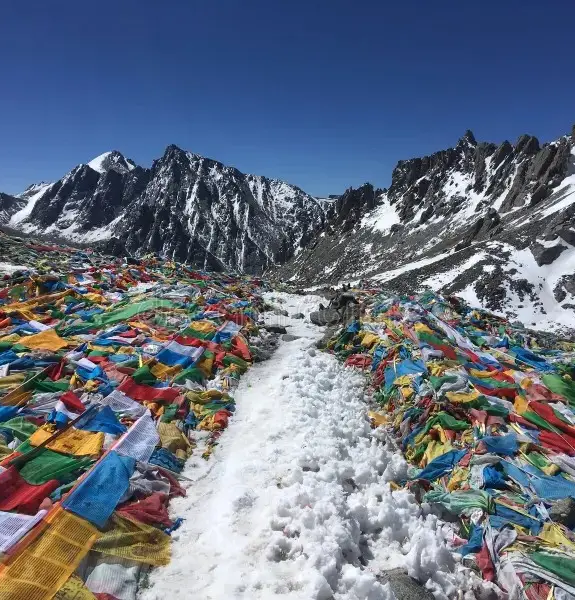

Drive In Kailash + Lhasa to Kathmandu by flight 12Night/13 Days
73 reviews in Tripadvisor

Trip Duration
13 Days
Destination
Tibet
Max. Altitude
5,634 m.
Trip Difficulty
Moderate
Group Size
1-12
Transportation
Bus , Flight
Accommodation
Hotel
Activity
Tour
Meals
Breakfast
Start / End
Kathmandu
Region
Tibet Autonomous
Best Season
Spring & Autumn
Need Help? Talk to Expert
+977 9764792172Trip Overview
The Drive-in Kailash and Lhasa tour is no ordinary tour. The route we will be taking is long, meaningful and will lead us through many of the sacred and historical locations of the Himalayas located on the big During the 12 nights and 13 days of the tour, we essentially cover the spiritual pilgrimage of Mount Kailash and the cultural vibes of Lhasa, the ancient capital. The entire journey will begin in Kathmandu and travel through remote towns, high mountain passes and peaceful monasteries, before finally flying out of the region.

For thousands of years Mount Kailash has earn respect from the world. For Hindus it is home of Lord Shiva and Goddess Parvati. To Buddhists, Mount Kailash is literally the center of the universe (referred to as Shambhala in Tibetan Buddhism) and to Jains it is where their first spiritual teacher attained enlightenment. The followers of the Bon religion also regard Mount Kailash as their holiest peak.
That’s why you will see many pilgrims from around the globe visiting the place and performing the “Kailash Kora,” which is walking around the mountain that will wash away their sins and earn them some spiritual merit. Nearby is Lake Manasarovar, one of the highest freshwater lakes in the world, which is known for its peace and serenity. Many pilgrims perform a purification ritual by taking a bath in this lake’s waters because it’s believed that the waters will purify their souls.
As well as being an interesting journey to Kailash, the history of the trail is equally fascinating. These lush trails through the Himalayas have been used as trade routes between Nepal, India and Tibet for centuries by traders and pilgrims. Long before modern roads, Himalayan traders and pilgrims travelled this plateau using caravans filled with salt, wool and grain. Although we can now do these journeys using modern vehicles, the vast countryside still feels natural and untouched, with large areas of open space, large mountains covered in snow and small Tibetan villages demonstrating how isolated this area is.
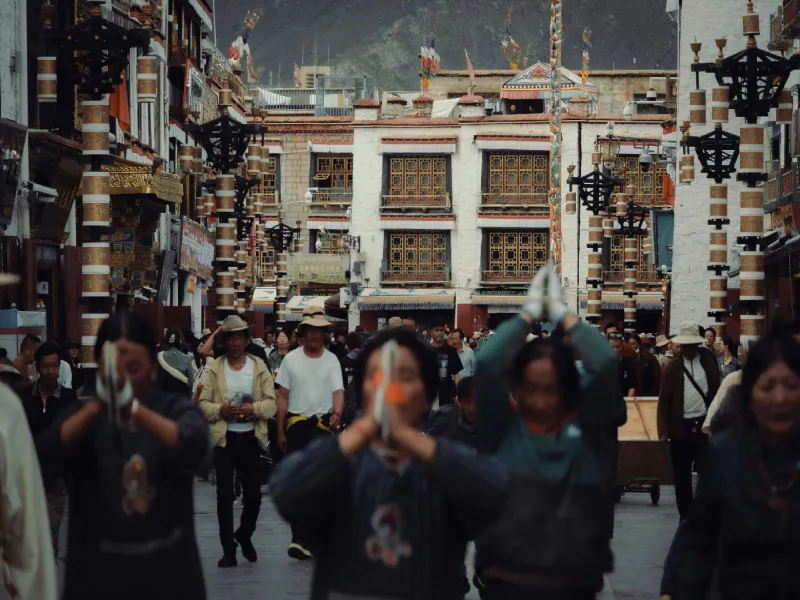
Once you leave Kailash and Manasarovar, the next leg of your journey is headed deeper inside Tibet to Lhasa, the spiritual and political center of the area for centuries. It is the home of the Potala Palace that you have seen in a photograph, built as the winter residence for the Dalai Lama in the 17th century, and is one of the most famous places in the Himalayas. Not too far from the Potala Palace is the Jokhang Temple, built in the 7th century, which is a beautiful temple surrounded by an amazing street, Barkor Street, with people on it spinning prayer wheels.
One of the things that sets this trip apart is the connection between a spiritual journey, ancient cultures and stunning scenery. You will pass through many valleys and over high passes, witness turquoise lakes and ancient monasteries built hundreds of years ago. When you’re boarding your return flight from Lhasa to Kathmandu, most people feel like they’ve been a part of something that’s a lot deeper than just a tour. It is a journey through time, belief and some of the most pristine, out of the way places on Earth.
Highlights of Drive In Kailash + Lhasa to Kathmandu by flight 12Night/13 Days
- Take a thrilling ride over the spectacular Tibetan Plateau and see some of the most incredible scenery you’ll likely ever encounter.
- Explore the revered Lake Manasarovar, a stunning and sacred body of water nestled among the breathtaking peaks of the Western Himalayas.
- Embark on a rich spiritual journey by completing the Mount Kailash Kora, a famous pilgrimage that encircles one of the most revered mountains on the planet.
- Experience crossing through the Dolma La Pass (5,200 m), the most challenging part of your journey, as well as such an important element of the entire pilgrimage.
- Explore authentic and local Tibetan culture while staying in populated towns, such as Saga, Shigatse, and Gyantse.
- Discover Tashilunbu Monastery, which has historically been the residence of the Panchen Lama for centuries in Shigatse.
Itinerary of Drive In Kailash + Lhasa to Kathmandu by flight 12Night/13 Days
Day 1: Kathmandu to Kerung, Tibet
We depart Kathmandu shortly after breakfast and head into Langtang National Park. The drive will provide a nice change from the terraced fields and pine forests of the lower elevations to the rugged, high elevations of the Himalayas. As we drive, we will stop for tea and snacks when we can see the snow-capped peaks. After reaching the Kerung border, we will get our immigration documents and head to Kerung town for our registration. Once you have completed your registration, I suggest you go for a walk around town this evening to explore the Tibetan culture, get some food from the local market, and visit with the local people.

Activity: 7 to 8 hours Drive through Langtang region to kerung town

Max. Altitude: 2700m./8,858ft.

Meal: Breakfast

Accommodation: Hotel
Day 2: Acclimatization in Kerung
The plan for today is to take it easy. This day is kept free for our much-needed acclimatization. There is no need to rush. After breakfast, explore the town at your leisure. Look at how people live here, shop in the markets, and take a few short walks. You’ll allow your body to adapt to the altitude and at the same time you’ll learn more about the culture. Return to the hotel in the afternoon to rest and enjoy a simple evening meal before either kicking back at the hotel or going for another stroll through town.
Activity: Acclimatization day and short walk
Max. Altitude: 2700m./8,858ft.
Meal: Breakfast
Accommodation: Hotel
Day 3: Kerung to Saga
Today, we will be departing from Kerung after breakfast and traveling towards Saga via the Thong La and La Lung passes. The changes in scenery and landscape are going to be incredible. One moment you will be surrounded by lush green valleys and then you will start seeing the enormous open space of the Tibetan Plateau. We will stop multiple times to take photos and allow ourselves time to stretch our legs as the views of all the horizons are enormous! We should arrive in Saga in the evening (after checking in), have some dinner and get a good night’s rest before continuing to go higher!
Activity: 5 to 6 hours Drive
Max. Altitude: 4640m./15,223ft.
Meal: Breakfast
Accommodation: Hotel
Day 4: Saga to Lake Manasarovar
It’s an early start from Saga as we travel to the sacred Lake Manasarovar. The drive will really bring home the scale of the plateau, with the Himalayas rising out of the horizon. We’ll arrive at the lake by the afternoon, giving you time to walk along the shores of the lake, relax, and enjoy the view of the mountains rising out of the crystal-clear waters. It’s a massive spiritual high for anyone who comes here. Overnight in a guesthouse right by the lake.
Activity: 6 to 7 hours Drive
Max. Altitude: 4590m./15,059ft.
Meal: Breakfast
Accommodation: Hotel
Day 5: Lake Manasarovar to Darchen
After breakfast, it’s a short drive over to Darchen, which is basically the base camp for Mt. Kailash. You will have free time in the morning to explore the village and purchase final items needed to begin your Kora. In the afternoon you should rest and prepare your gear for the trek. The guide will review the Kora route with you, give you a briefing on altitude safety, and explain how this trek is important from both a cultural and historical aspect. Don’t forget to see the sunset over Mt. Kailash! Eat dinner at the hotel and get an early night.
Activity: 2 hours Drive
Max. Altitude: 4670m./15,322ft.
Meal: Breakfast
Accommodation: Hotel
Day 6: First Day of Kailash Kora to Dirapuk and Kailash Charan Sparsh
Today is the official beginning of the Kora! Early morning departure trekking through valley and over quiet stream to Dirapuk, where we will have lots of stops to ensure that all participants are properly acclimated. Upon arriving at Dirapuk we will conduct the Kailash Charan Sparsh, the sacred act of touching the base of mount Kailash, at which time you may want to spend some time in meditation or reflection before returning to the guesthouse for dinner and rest.
Activity: 7 to 8 hours Trek
Max. Altitude: 5210m./17,093ft.
Meal: Breakfast
Accommodation: Hotel
Day 7: Second Day of Kora - Drolma La Passs to Zuthulpuk
Today is the second day and probably the hardest day to complete on the trek. After an early breakfast, we will begin the trek to Drolma La Pass (5634m). The trek to the top is steep and the altitude will make it more difficult however the views from the top will be worth every step you take! Once we cross over the Drolma La Pass, we will follow the stream down through the wonderful and peaceful Zuthulpuk valley where we will be staying at a guesthouse for the night. In the evening, we will have the opportunity to share stories with each other about the trek and how far we have come so far.
Activity: 8 to 9 hours Trek
Max. Altitude: 5634m./18,484ft.
Meal: Breakfast
Accommodation: Hotel
Day 8: Complete Kora and Return to Saga
We’ll finish up the last bit of the Kora this morning with a final walk on the sacred path. Once we’ve finished our Kora, we’ll get back in our vehicles and head to Saga. This is a long drive, so take your time to rest and let everything you’ve just experienced sink in. We’ll check into our hotel in Saga tonight for dinner. Trust me, you’ll be happy to be at a lower altitude and in a bed tonight!
Activity: 2 to 3 hours Trek and 7 to 8 hours Drive
Max. Altitude: 4640m./15,223ft.
Meal: Breakfast
Accommodation: Hotel
Day 9: Saga to Shigatse
After breakfast, we’re off to Shigatse, which is Tibet’s second-largest city. The drive will take us through some very remote plateau country, and we’ll be sure to stop for photos whenever we see some nice mountain vistas. We’ll arrive in Shigatse in the late afternoon. If you’re still up for it, take a quick wander around town or check out the market.
Activity: 7 to 8 hours Drive
Max. Altitude: 3700m./12,139ft.
Meal: Breakfast
Accommodation: Hotel
Day 10: Shigatse to Lhasa via Gyantse
After departing from Shigatse this morning for breakfast we will travel to Tashilunpu Monastery before heading out to Gyantse to see Pelkor Stupa and Kumbum Monastery, both of which are equally amazing buildings that we can explore after some visual stimulation, then we will yet continue our journey into Lhasa, where we should be arriving tonight for hotel check-in, dinner and rest as we will be extremely busy for the next 2 days.
Activity: 7 to 8 hours Drive
Max. Altitude: 3650m./11,975ft.
Meal: Breakfast
Accommodation: Hotel
Day 11: Sightseeing in Lhasa
Well, today is time to see the soul of Tibet. After breakfast, we are going to head to the Potala Palace, the old winter residence of the Dalai Lama. This palace is huge, and from there, you can see a fantastic view of Lhasa. After lunch, we are going to head to Jokhang Temple, which is as holy as you can get, and then Barkhor Street. The sight of pilgrims circumambulating with prayer wheels is something you won’t forget. We are going to head back to the hotel for dinner and rest.
Activity: Explore full day
Max. Altitude: 3650m./11,975ft.
Meal: Breakfast
Accommodation: Hotel
Day 12: Sightseeing in Lhasa
We will spend one more day in Lhasa. After breakfast we will visit the Drepung Monastery and Sera Monastery, and see monks having discussions in the outdoor areas and also be able to appreciate the tranquility of these Holy Spaces. You will have some time to walk through the shop and see the sights one last time before we meet back at our hotel for last meal and overnight stay.
Activity: Explore full day
Max. Altitude: 3650m./11,975ft.
Meal: Breakfast
Accommodation: 3650
Day 13: Lhasa to Kathmandu by Flight
We will have our final breakfast together before driving you to Gonggar Airport for your flight back to Kathmandu. If your flight leaves in the early afternoon, you will have extra time to take some last-minute pictures. The Tibet trip has been a long spiritual, cultural, and physical journey for us all. Thank you for allowing us to be part of it. We wish you a safe journey home.
Activity: 1.5 hr flight
Max. Altitude: 1400m./4,593ft.
Meal: Breakfast
Includes/Excludes
What is included?
- Accommodation in Twin sharing Room Basis.
- Bed and Breakfast
- English Speaking Tibetan Guide
- Transportation as per the Itinerary by Necessary Vehicles.
- Tibet Travels Permit
- All Entrance Fee
- All Necessary Entrance Permit
- 2 Bottle Mineral water daily During T ours .
- Emergency oxygen Cylinder in the Vehicle .
- Lhasa airport Drop or Train station Pick up and Drop
What is not included?
- Clients and Travel Insurance
- Lunch and Dinner
- Personal Expenses Such as a Drinks Tips Etc.
- Yak and Yak Man During the Kora Horse
- Flight / Train ticket is extra any sector
Trip Information
Best Time for the Trip
If you are planning a trip to drive in to Kailash and Lhasa, May to September is a great time to go. This is when the Tibetan plateau has calmed down weather-wise as much as possible, and traveling conditions are generally more favorable for visiting. Temperatures during these months are not nearly as extreme as they would be if you were traveling at either end of the year, enabling visitors to experience the beautiful, vast, and breathtaking mountain ranges from above due to the usually clear skies.
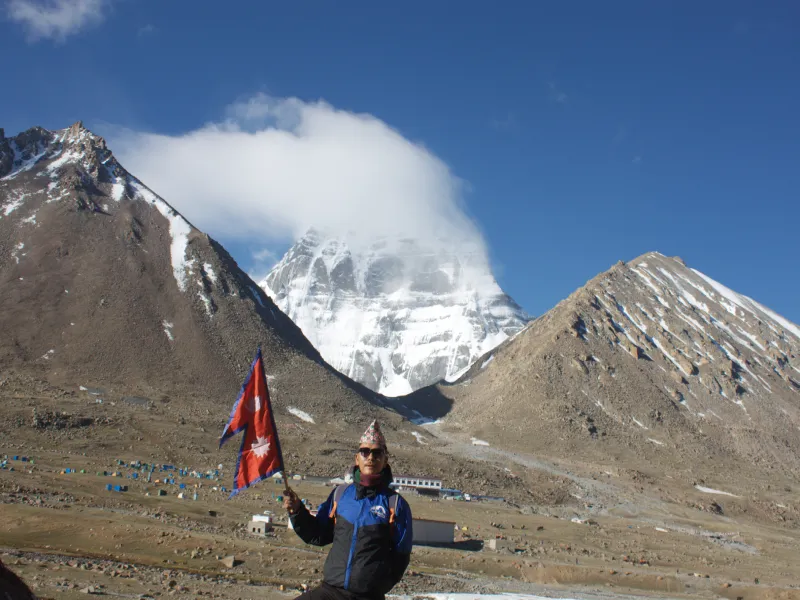
It’s also peak pilgrim season for Mount Kailash, so there are lots and lots of people out there trekking the sacred Kailash Kora. Because of that, it’s all very lively, but at the same time, it’s very spiritual, and that’s definitely a cool vibe that most travelers say is the highlight of the whole experience.
On the other side, traveling during the winter period of late October to April has significant limitations. For example, throughout most areas of Tibet, temperatures will fall far below freezing and the winds of the high plateau are truly harsh. Also be aware that there could be snow blocking mountain pass routes and road access, making long-distance travel challenging or impossible.
In many more remote areas, some guesthouses or small lodges are even closed due to the operational suspension during this time. The Kora walking route itself becomes icy and poses a risk of walking safely on the route, particularly along Dolma La Pass. Because of that, most people think it’s best to plan travel sometime from late spring until early autumn.
Difficulty Level
I would say this journey as somewhat between moderate and difficult mostly because of the high altitude and the Kailash Kora itself. The driving is actually quite pleasant because we’re going to be traveling most of the distance in the vehicle. There will be a few days where you’re just wandering around the Tibetan Plateau and visiting different towns and different lakes and monasteries and so on.
But even on the days where you’re just sitting in the car, keep in mind that you’re at a high altitude. So be prepared to possibly feel a bit more fatigued than usual or perhaps even have a bit of difficulty breathing. The most important aspect of the entire trip is really just taking it slow and giving your body the time it needs to adapt.
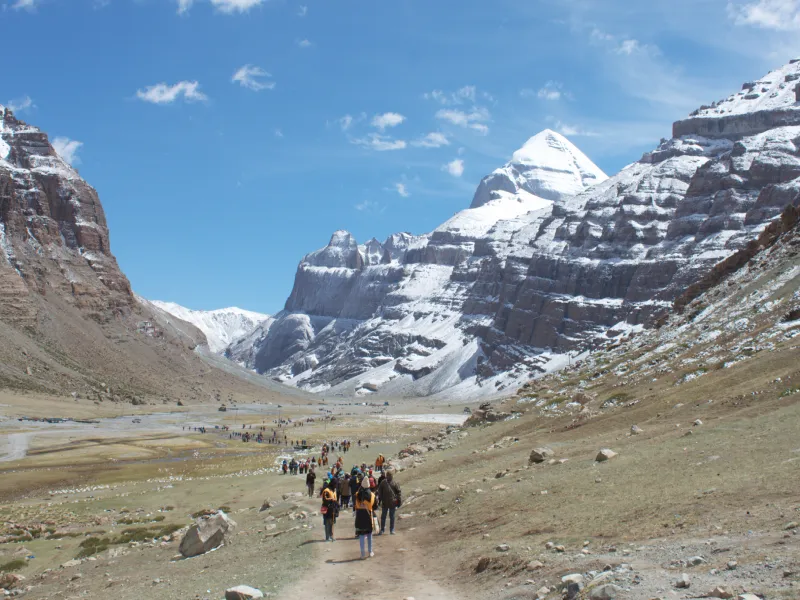
A true test of you is to do the Kailash Kora (the holy pilgrimage around the mountain). It will usually take you about 3 days and involve crossing Dolma La Pass, which is approximately 5630 meters above sea level (the highest and most difficult point on the entire route). The walk up to the pass is quite steep, and the thin air definitely makes it feel harder work than it would be if it were at sea level.
Some people find it quite a test of physical endurance, but if you look around, you’ll see that plenty of people manage it just by sheer determination and keeping going at a steady pace. If you are in reasonably good shape, do some preparation beforehand, and come with a positive attitude, you will be able to complete the Kora without any problems, even if you may feel a bit tough at the time!
Accommodation and Meals
On this journey, you will be experiencing different types of accommodation. In larger places, sch as Lhasa and Shigate, you will find comfortable hotels, which provides you with all the essentials: hot water for shower, warm comfortable rooms and the vibe of city. But, as you go to smaller towns, you will notice how much more authentic these accommodations become. The guesthouses we will use in the smaller towns will still be clean and decent, but they are more basic than those in Lhasa and Shigatse.
When you travel to Mount Kailash, you will have the option of using the simplest lodging facilities, including tea houses or lodges where food and lodging are available. It is not exactly luxurious, but I think being that close to such a sacred and remote location is definitely worth the trade-off.
The food on our tour may be basic but it definitely fills you up. The type of food you can eat will be determined by where we are, and includes Tibetan, Chinese, and in some cases, Nepali food. You must try the momos (local style dumplings), thukpa (a rich noodle soup), and there will always be plenty of fried rice or basic veg and meat meals.
Once we are well away from town, you may find your options limited but the locals will extend warm hospitality, so trying the real Tibetan tastes will make every meal something special. Pro tip: always take some extra food with you or energy bars. They will come in handy on long drive days and especially during your Kailash Kora experience.
Permits Required
Travel to Tibet is not quite like travelling anywhere else so there are very particular guidelines and regulations you have to follow when entering into and travelling within this area. To simply enter Tibet you will need a Tibet Travel Permit, which is great but since we will we travelling from Lhasa to Mount Kailash we also need an Alien Travel Permit. To add to that complexity, because Kailash is located in a sensitive location, we will also require a Military Permit for safety reasons therefore you can see that there are varying levels of official requirements for travelling to, within, and around Tibet.
In addition to the necessary permits, you will also require a valid passport (check that it has at least six months of validity remaining) and a valid Chinese Tourist Visa before entering the country. The common tourist visa fee is usually $125 USD, however, if you live in the U.S., Canada, Argentina, or Romania, you will be charged an additional $115 USD to obtain the visa.
What we’ll need from you to get things moving:
- A scan of your passport – This has to be with us at least 25 days before the trip starts, so don’t forget!
- Your original passport = This has to be with us at least 3 official working days before the trip starts.
- A passport-sized photo = This just has to be one with a white background, taken in the last 6 months or so.
Note: Any figures discussed are NET per person. Flight and visa fees are not part of the package and are extra; you will need to consider these separately when budgeting for your trip.
But honestly, don’t worry about trying to sort out all of that on your own. We Epic Trek Nepal takes care of all of the paperwork for you. Once you’ve signed up for your trek, we’ll take care of the details so that you won’t have to worry about the hassle of government offices and paperwork. It’s just so much more relaxed and stress-free, which is just the way you want to be before tackling the mountains. We’ve done it many times before, so we know the routine well.
Essential Trekking Items List For: Kailash / Lhasa
- Thermal wear: Top and Bottom
- Down Jacket: Waterproof and Windproof
- Waterproof and Windproof Pants
- Quick-Dry T-Shirts
- Trekking Pants
- Head Cap
- Gloves
- Trekking boots
- Amp Shoes or Sandals
- Warm Socks
- Day Pack: 30-40 liters with Rain Cover
- Adjustable Trekking Sticks
- Biodegradable Soap
- Toothbrush and Toothpaste
- Hand Sanitizer
- Toilet Paper
- Your Personal Medications
- High Altitude Medications: As prescribed by Your Doctor
- Sunglasses with U-V Protection
- Sunscreen: SPF-50
- Lip Balm with Sunscreen
- Head Lamp with Batteries
- Charging: Portable Charger
- International Adapter
- Travel Insurance
- Sufficient Cash in Small Denominations
- High-Energy Snacks
- Camera with Memory Cards
Cancellation Policy for This Tour:
At Epic Trek Nepal, we understand the changes in plan unexpectedly. That is why we designed it to be fair and clear.
Cancellation Notice:
If you decide to cancel your tour for any reason, please make sure to inform us at least 7 days before your scheduled tour start date.
Administrative Fee:
When a cancellation is made, 25% fee will be reduced from the total cost of tour as administrative fee. This fee covers the planning, preparation and booking cost we’ve already done for your tour.
Non-Refundable Period:
For any cancellation made within less than 4 days before the tour start date, no refund will be provided but by looking at the situation, if we feel the reason for cancellation is valid, then the amount will be refunded after deducting 70% of the total tour amount, as we have already submitted the cost and reserved the spots for you.
Documentation Support:
We know insurance claim can be important. In case if you cancel, we would provide the necessary document such as receipts to help with your insurance process.
Unused Accommodation:
Please note that we cannot offer refunds for unused accommodation or services if your tour is canceled due to personal reasons, illness or bad weather.
You can contact us with any questions or to discuss your situation, and we would be happy to assist you. Thank you for your understanding during this time and we hope to help you through your Kailash and Lhasa Tour safely.
Frequently Asked Questions
To travel inside Tibet you will need to obtain proper Travel Permits (the main one being the Tibet Travel Permit) – this allows you to enter Tibet. Additionally, to travel to the Mt. Kailash Area you will also have to acquire 2 additional Permits called “Alien Travel Permit” and “Military Deployment Permit.”
The Kora Trek is typically finished in approximately 3 days. The Kora Trek is moderately challenging due to the altitude. For first time Kora trekkers they don’t need not to be marathon runners to complete this trek, as long as they are willing to go slow and take breaks they should easily complete the Kora Trek without difficulty.
The best time to visit Mount Kailash and Lhasa would be between the months of May and September. This is when the weather is at its best, and roadblocks due to snow are unlikely. Also, this is a peak season for those on pilgrimage which means Mount Kailash and Lake Manasarovar will be most busy, filled with pilgrims.
Mount Kailash has an approximate altitude of 6,638 meter.
During your trip you can expect a variety of accommodation types. Larger cities of Lhasa and Shigatse, will give you access to hotels that provide all the usual comforts. However, the smaller towns and during the Kora trek, will have much simpler accommodations.
There is a small possibility, but due to the high altitude, you may have some mild headache symptoms and may get worn out faster than normal. You’ll have acclimatization days built into the itinerary to allow your body time to become accustomed to the altitude.
The Kailash Kora normally requires three days to complete. The first day is all about reaching Dirapuk, the second is when you will make the journey over Dolma La Pass to Zuthulpuk (the most difficult part), and the third is when you will return to Darchen, completing the Kora.
Yes, you can complete the Kailash Kora without walking or trekking at all. If you would like to have assistance with your trek, you can typically hire a porters or horse to help you out along the Kora route. Hiring some assistance is also something that many pilgrims choose to do so they can focus on the spiritual side of things instead of worrying about their legs giving out.
Trip Reviews
Need Help? Talk to Expert
+977 9764792172