
Kanchenjunga Trek
73 reviews in Tripadvisor

Trip Duration
20 Days
Destination
Nepal
Max. Altitude
5,100 m.
Trip Difficulty
Moderate
Group Size
1-12
Transportation
Tourist/ Local Vehicle
Accommodation
Hotel/Lodge
Activity
Trekking
Meals
Breakfast, Lunch, Dinner
Start / End
Kathmandu
Region
Eastern Nepal
Best Season
Spring & AutumnUS$ 1950

Need Help? Talk to Expert
+977 9764792172Trip Overview
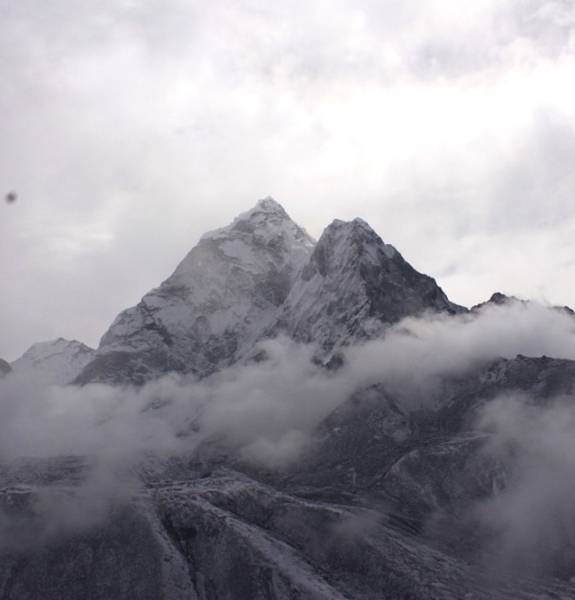
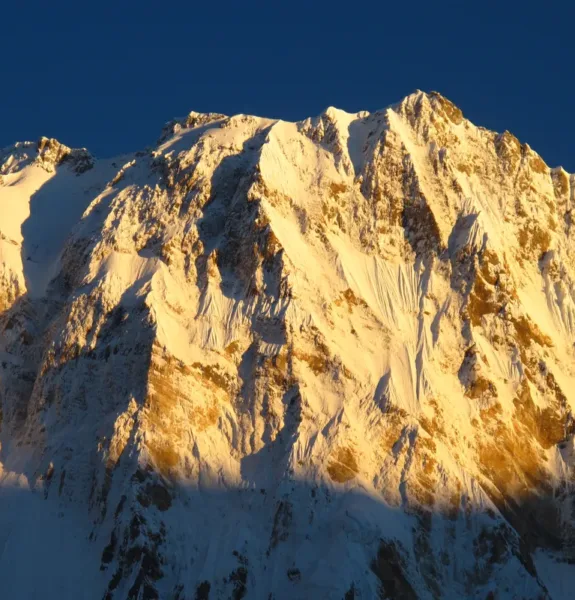
The Kanchenjunga trek is one of the most sacred and popular journey in Nepal, attracting trekkers into a place where the mountains are untouched, the valley feels like it goes on ever, and the culture has preserved its peace and simplicity. The Kanchenjunga trek lies at 8,586 m (28,170 ft) which is the third highest mountain in the world, located in Nepal. Unlike the popular treks like Everest, Annapurna or Manaslu, Kanchenjunga offers a peaceful trip that feels raw, quite and very rewarding adventure that unfolds at every turn with beautiful mountains, nature, geographies and terrains.
Why Choose Kanchenjunga Trek
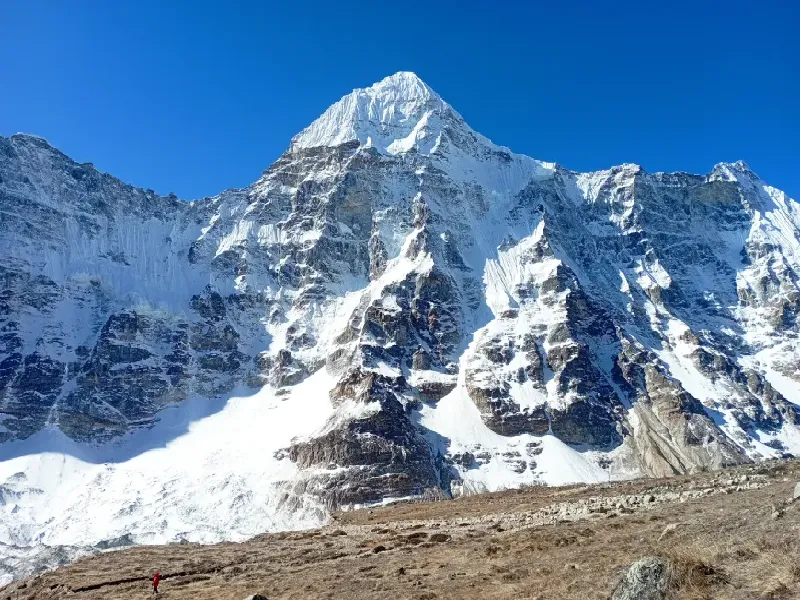
The Kanchenjunga Trek is the best option for those who want to witness an adventure that feels raw, real and peacefully distant from the crowded world. It isn’t like the popular trekking routes like Everest Base Camp or Annapurna Base Camp, busy pathways full of trekkers. Rather, it’s a hidden gem, an untouched part of the Himalayas that still holds the spirit of true exploration.
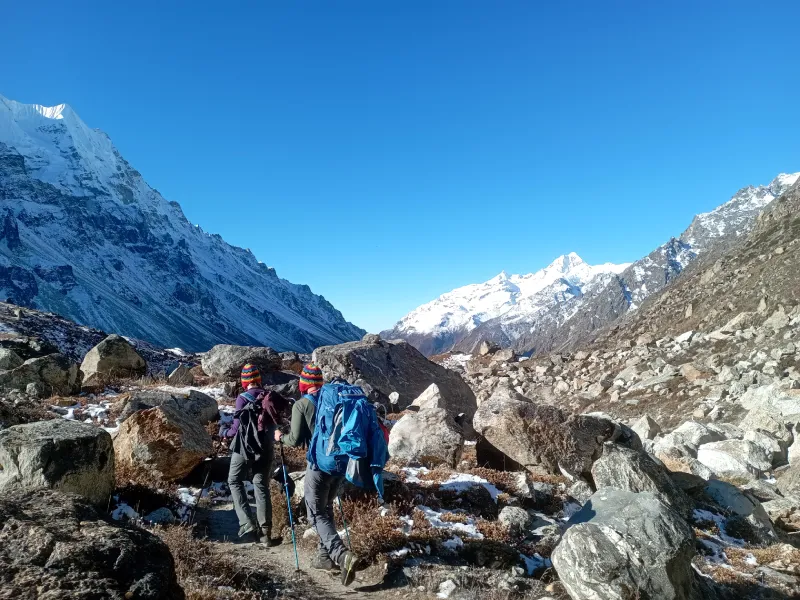
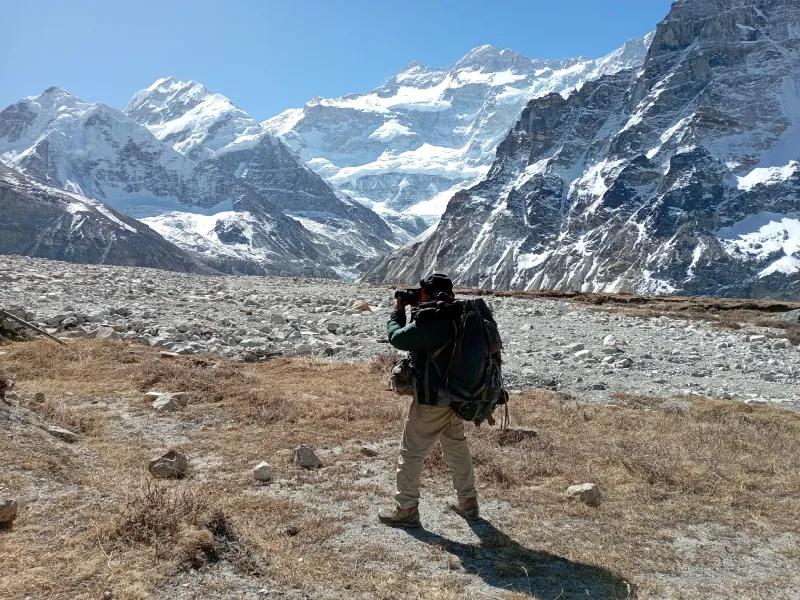
One of the main reasons why trekkers choose this Kanchenjunga trek is because of its stirring views that you can witness without the rush or huge crowds. It’s not just the scenery that makes the Kanchenjunga different from other trek, it’s the sense of peaceful discovery. It’s rare nowadays to trek for hours without encountering a large group of trekkers but Kanchenjunga still offers that solitariness and calm terrain. Travelers can enjoy the shift in landscapes, lush valleys, deep forest and waterfalls falling down from the cliffs. There is no rush or any distractions, just a genuine connection to nature.
Route Option
For this Kanchenjunga Trek, there are three options. You can choose any option based on your preferences.
Kanchenjunga North Base Camp
The trekking route to Kanchenjunga North Base Camp takes you through the heart of the Kanchenjunga Himal, offering some of the most beautiful mountains that you can ever see in eastern Nepal. This route gradually climbs through timbers, dense forest, and traditional villages of Limbu and Rai communities. The final approach to Kanchenjunga North Base Camp is more stunning, with the massive north face of Kanchenjunga Himal that feels like you can touch it. This route is for trekkers who want raw Himalayan adventure with a strong sense of isolation.
Kanchenjunga South Base Camp
The trekking route to Kanchenjunga Base Camp has a different approach than Kanchenjunga North Base Camp. It is more cultural and full of scenic contrasts. The route takes you through old villages and lush forests full of rhododendrons and gradually climbs towards alpine meadows with stunning views of Kanchenjunga South Base Camp. The main highlight of this route is the Oktang viewpoint, giving trekkers an opportunity to experience the close up look at the glaciers and ice cliffs beneath the main peak. This side of route feels more calm and peaceful, suitable for trekkers who want to enjoy nature with a cultural touch.
Full Kanchenjunga Circuit Trek
The full Kanchenjunga Circuit Trek is the combination of both the North and South Base Camp routes, offering one of the most rewarding long distance treks in Nepal. If you have enough time this Full Kanchenjunga Trek is the one you should try. This trek is both physically and mentally demanding, but the accomplishment and different mix of feelings and experiences make it one of the most rewarding and unforgettable adventures.
Best Season for Kanchenjunga Circuit Trek
Spring (March to May)
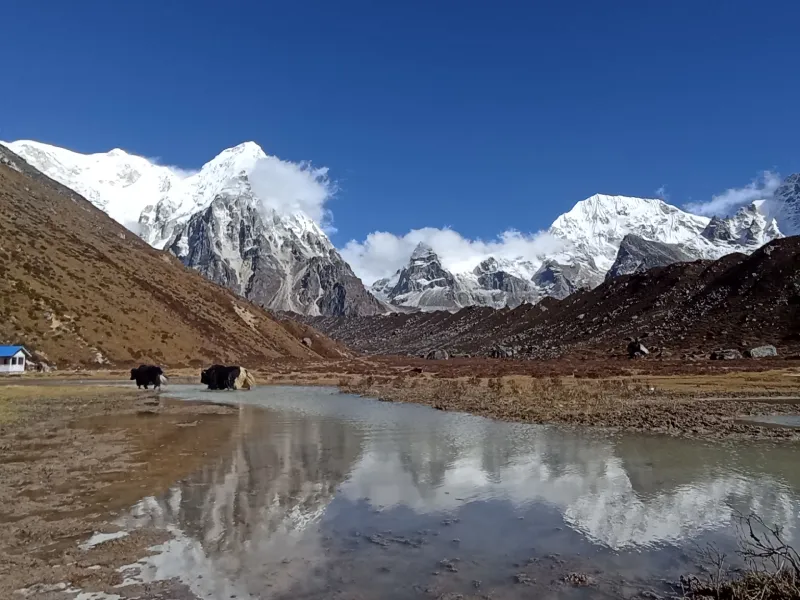
Spring is one of the best seasons to explore Kanchenjunga Himal. The trail feels more colorful and vibrant with blooming rhododendrons and a vibrant mix of flowers. The temperature become moderate, the skies clears and the days are bright, offering stunning views of the Kanchenjunga Himal.
Autumn (September to November)
Autumn is the most popular season for this trek due to its stable weather conditions and clear mountain views. This season is perfect for those who want panoramic views, perfect weather, and smooth trail conditions ideal for long walking days.
Winter (December to February)
Winter is not suitable for this trek, as it brings extreme cold to the higher areas, and snow may block the trekking route, especially near base camps. While you can walk in lower altitude, in higher altitudes, trekking can be risky due to harsh temperatures and icy paths.
Monsoon (June to August)
The monsoon season is the least recommended for this trek. Constant rain, slippery trails, leeches at lower altitude and clouds often cover the mountains, which make this season less enjoyable.
Highlights of Kanchenjunga Trek
- Explore the third highest mountains.
- Visit the North and South Base Camp of Kanchenjunga Himal.
- Discover authentic Limbu and Rai culture in traditional mountain villages.
- Peaceful, remote trail with true wilderness adventure.
- Warm hospitality, yak herders, monasteries and untouched Himalayan life.
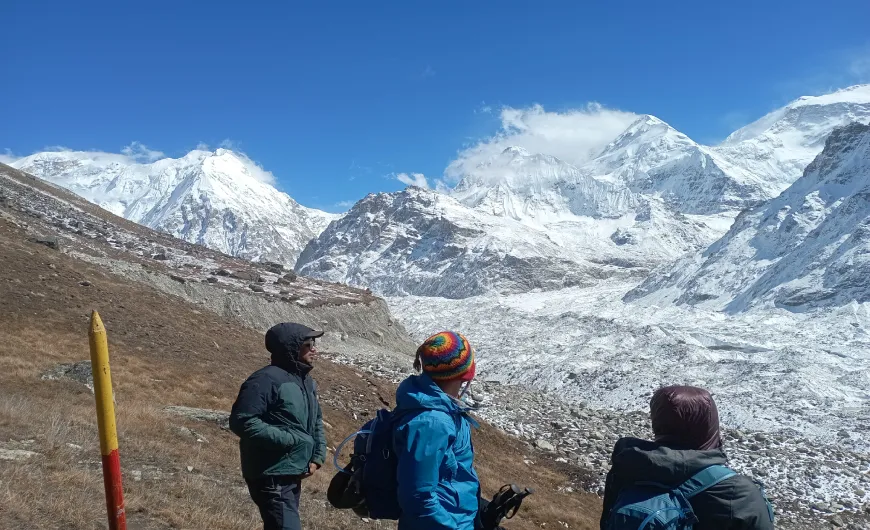
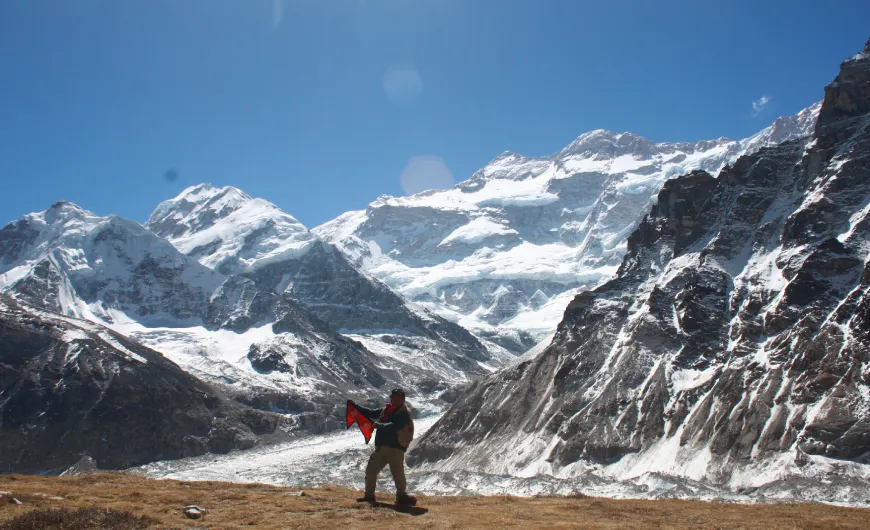
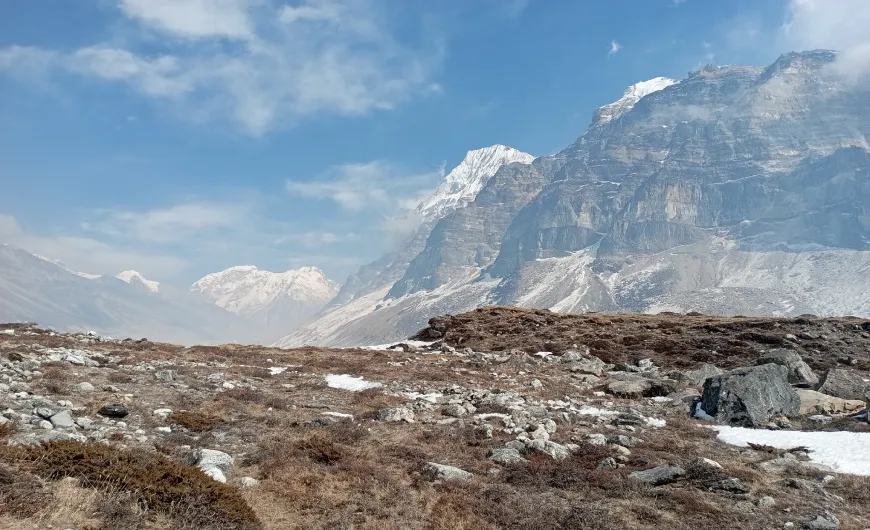
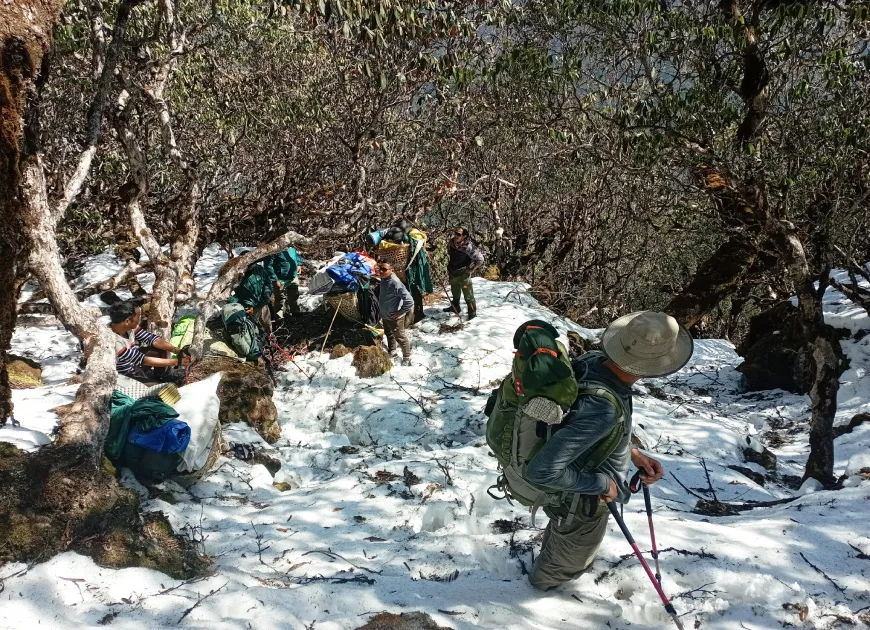
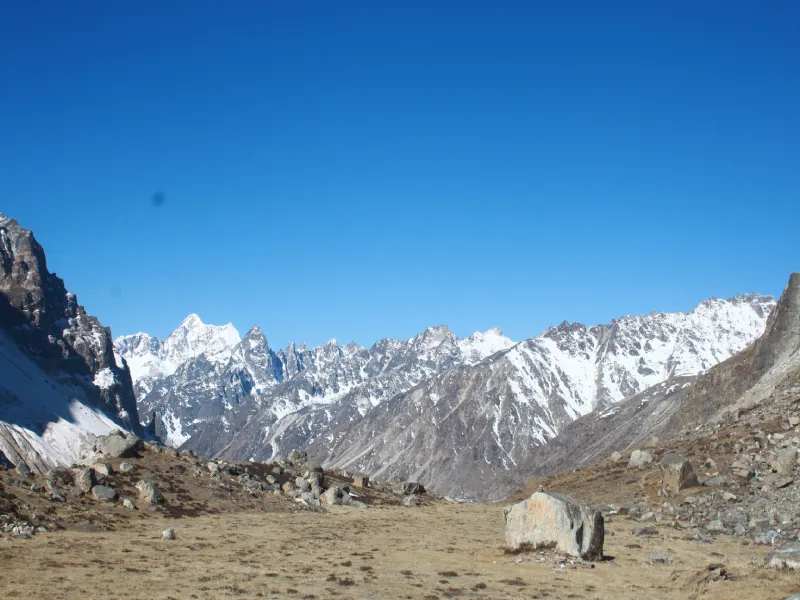
Photo Gallery & Video Gallery
Kanchenjunga Trek - Distance, Duration, and Altitude
| Trekking Route | Distance (Kilometers) | Duration (Hours) | Altitude (Meters) |
|---|---|---|---|
| Flight from Kathmandu to Bhadrapur and Drive to Taplejung | 250 KM | 4 to 5 hours | 1820 m. |
| Drive from Taplejung to Rani Pool | 45 KM | 6 to 7 hours drive | 1200 m. |
| Trek from Rani Pool to Amjilosa | 11 KM | 5 to 6 hours | 2300 m. |
| Trek from Amjilosa to Gyabla | 10 KM | 6 to 7 hours | 2730 m. |
| Trek from Gyabla to Gunsa | 11 KM | 5 to 6 hours Trek | 3595 m. |
| Trek from Gunsa to Kambachen | 11 KM | 5 to 6 hour Trek | 4051 m. |
| Trek from Kambachen to Lhonak | 9 KM | 4 to 5 hours Trek | 4780 m. |
| Exploration Day - Pangpema (Kanchenjunga North Base Camp) | 14 KM | 6 to 7 hours Trek | 5140 m. |
| Trek from Lhonak to Ghunsa | 20 KM | 6 to 7 hours Trek | 4780 m. |
| Trek from Gunsa to Selele Kharka | 9 KM | 5 to 6 hours Trek | 4200 m. |
| Cross Cherem Pass & Trek to Ramche (Oktang Viewpoint) | 11 KM | 6 to 7 hours Trek | 4750 m. |
| Trek from Ramche(Oktang) to Torangding | 12 KM | 5 to 6 hours Trek | 3000 m. |
| Trekking from Torangding to Helok | 9 KM | 4 to 5 hours Trek | 1700 m. |
| Drive from Helok to Taplejung | 55 KM | 6 to 7 hours Drive | 1820 m. |
| Taplejung to Birtamod Drive | 240 KM | 7 to 8 hours Drive | 150 m. |
| Fly from Bhadrapur to Kathmandu | 330 KM | Drive + Flight (45 min) | 1400 m. |
Itinerary of Kanchenjunga Trek
Day 1: Arrival in Kathmandu
Welcome to Kathmandu, the capital of Nepal. After you land from the plane, one of our representatives from Epic Trek Nepal will be waiting for your arrival and take you to your hotel where you can freshen up, rest and enjoy the local food while walking around the busy streets of Thamel.

Activity: 45 min Drive

Max. Altitude: 1324m./4,344ft.

Accommodation: 3 Star Hotel
Day 2: Kathmandu sightseeing
Today is the preparation day where you will pack your necessary equipment before starting your journey. You can spend your day exploring Kathmandu’s rich culture, temples, and markets.
Activity: Sightseeing
Max. Altitude: 1324m./4,344ft.
Accommodation: 3 Star Hotel
Day 3: Flight from Kathmandu to Bhadrapur and Drive to Taplejung
You will begin your journey with a domestic flight from Kathmandu to Bhadrapur. After reaching Bhadrapur, we will start out scenic drive towards Taplejung. The drive offers glimpse of eastern Nepal, full of lush valleys and rivers. In Taplejung, you will prepare your gear and discuss with your trekking team before your journey.
Activity: Flight and Drive
Max. Altitude: 1820m./5,971ft.

Meal: Breakfast, Lunch, Dinner
Accommodation: Tea house
Day 4: Drive from Taplejung to Rani Pool
In the morning, after having breakfast, you will take a drive from Taplejung to Rani Pool through the rugged mountain roads, remote villages and lush green forests. This off-road adventure gives one the sense of remoteness before the trek. After arriving Rani Pool, get your stuff ready or gearing-up in the relaxed atmosphere of the riverside. Overnight at Rani Pool.
Activity: 6 to 7 hours drive
Max. Altitude: 1200m./3,937ft.
Meal: Breakfast, Lunch, Dinner
Accommodation: Tea house
Day 5: Trek from Rani Pool to Amjilosa
Begin the trek by following a narrow, serpentine trail along the river, climb over suspension bridges, and head inside a dense forest. You walk gentley while catching the glimpses of waterfalls now and then and emerald valleys. You pass through villages that have not altered their character in years and the beautiful landscape all around makes this a soft introduction to the trek. After reaching Amjilasa you will stay there to rest for next day’s trek.
Activity: 5 to 6 hours Trek
Max. Altitude: 2300m./7,546ft.
Meal: Breakfast, Lunch, Dinner
Accommodation: Tea house
Day 6: Trek from Amjilosa to Gyabla
Today’s trail goes through the dense bamboo, rhododendron, and oak forests. As you ascend higher, the temperature starts cooling, and the alpine forest becomes more real. You can see red pandas, as well as other Himalayan wildlife and birds, though they are rarely spotted. The trail is quiet and away from crowded trekking routes. Overnight stay in Gyabla.
Activity: 5 to 6 hours Trek
Max. Altitude: 2730m./8,957ft.
Meal: Breakfast, Lunch, Dinner
Accommodation: Tea house
Day 7: Trek from Gyabla to Gunsa
Continue with easy ascents over open valleys and the Ghunsa River. This will lead you to the cultural village of Ghunsa, one of the biggest settlements in the region. Most houses have Tibetan influence, along with prayer flags and monasteries, adding a special character to the village. Ghunsa is an important acclimatization point too. You stay overnight in Ghunsa.
Activity: 5 to 6 hours Trek
Max. Altitude: 3595m./11,795ft.
Meal: Breakfast, Lunch, Dinner
Accommodation: Tea house
Day 8: Acclimatization in Ghunsa
A whole day for acclimatization is necessary for a safe ascent. You can make short hikes to nearby viewpoints or explore the monasteries and traditional homes of the villagers. Your body will be adapting to higher altitude on this day, while you are enjoying gorgeous mountain surroundings. Interaction with local people also gives insight into Himalayan mountain life. Overnight stay at Ghunsa.
Activity: 2 to 3 hour Optional hike
Max. Altitude: 3595m./11,795ft.
Meal: Breakfast, Lunch, Dinner
Accommodation: Tea house
Day 9: Trek from Gunsa to Kambachen
From Ghunsa, the trail rises gradually into a wide glacial valley. You will get more rugged, rocky terrain and stunning mountain views surround you. The snow-capped peaks of Jannu, formerly known as Kumbhakarna, dominate the skyline. The route follows the river and passes through seasonal yak pastures. Overnight stay in Kambachen.
Activity: 5 to 6 hour Trek
Max. Altitude: 4050m./13,287ft.
Meal: Breakfast, Lunch, Dinner
Accommodation: Tea house
Day 10: Trek from Kambachen to Lhonak
You will begin your trek to a high-altitude alpine valley with magnificent open perspectives. The trail gives you some of the spectacular views of Kanchenjunga, Chang Himal, and peaks surrounding it. Glaciers and moraines border the path, presenting a dramatic Himalayan backdrop. The progress is slow and steady due to altitude but the view is amazing. Overnight stay in Lhonak.
Activity: 4 to 5 hours Trek
Max. Altitude: 4780m./15,682ft.
Meal: Breakfast, Lunch, Dinner
Accommodation: Tea house
Day 11: Exploration Day - Pangpema (Kanchenjunga North Base Camp)
Today is the highlight of the trek as you ascend to Pangpema, the North Base Camp of Mount Kanchenjunga. You will trek along the huge Kanchenjunga Glacier surrounded by breathtaking close-up views of the world’s third-highest mountain. The view is raw, powerful, and deeply humbling. After spending time at base camp, return to Lhonak for a warm meal and a night to spend.
Activity: 6 to 7 hours Trek
Max. Altitude: 5140m./16,864ft.
Meal: Breakfast, Lunch, Dinner
Accommodation: Tea house
Day 12: Trek from Lhonak to Ghunsa
You will now begin your descend journey through the glacial valley to Ghunsa. The return back journey gives you new views over landscapes you passed previously. With lower altitude, breathing becomes easier and vegetation starts to show up again. Long but comfortable day of trekking. Overnight in Ghunsa.
Activity: 6 to 7 hours Trek
Max. Altitude: 4780m./15,682ft.
Meal: Breakfast, Lunch, Dinner
Accommodation: Tea house
Day 13: Trek from Gunsa to Selele Kharka
The trail now leaves the big valley and starts to climb through forests to Selele Kharka. It is quieter and less traveled compared to the early parts of the route, which adds an increasing feeling of isolation. As the altitude is gained, views open up around the ridges on either side of the valley. The overnight stay in Selele Kharka is peaceful, surrounded by alpine scenery.
Activity: 5 to 6 hours Trek
Max. Altitude: 4100m./13,451ft.
Meal: Breakfast, Lunch, Dinner
Accommodation: Tea house
Day 14: Cross Cherem Pass & Trek to Ramche (Oktang Viewpoint)
Now you will continue to descending back to Lhonak, retracing your every steps through alpine meadow and rocky paths. This return offers a second chance to see the stunning landscapes, glacier and peaks. The descent is less stressful than the ascent but you need to be careful on loose rocks.
Activity: 6 to 7 hours Trek
Max. Altitude: 4750m./15,584ft.
Meal: Breakfast, Lunch, Dinner
Accommodation: Tea house
Day 15: Trek from Ramche (Oktang) to Torangding
Continue your descending journey into more alpine vegetation towards Torangding. Due to the presence of forests, waterfalls, and villages, this part of your hike will serve as a welcome relief from your walk in the alpine region. The warm air and lower altitude make this a comfortable descent. This is your final stage of your trek in the Kanchenjunga region. After reaching Torangding, you will rest in a local Tea house.
Activity: 5 to 6 hours Trek
Max. Altitude: 3000m./9,843ft.
Meal: Breakfast, Lunch, Dinner
Accommodation: Tea house
Day 16: Trekking from Torangding to Helok
The present day’s trekking path again takes you through dense forests, farmland, and villages. The route leads to a gentle descent where you can experience life in the mountainous villages. Helok is a serene village with hills and farmland all around it. The atmosphere in this village will provide relief from the tiredness of trekking. Overnight stay in Helok.
Activity: 4 to 5 hours Trek
Max. Altitude: 1700m./5,577ft.
Meal: Breakfast, Lunch, Dinner
Accommodation: Tea house
Day 17: Drive from Helok to Taplejung
After breakfast, a scenic drive will take you from Helok to Taplejung. The drive will showcase valleys, rivers, and villages on hilltops, providing you with a final look at Eastern Nepal’s landscapes. The drive will mark an end to the trekking part of your adventure. Comforting accommodations will be provided for an overnight stay at Taplejung.
Activity: 6 to 7 hours Drive
Max. Altitude: 1820m./5,971ft.
Meal: Breakfast, Lunch, Dinner
Accommodation: Hotel
Day 18: Taplejung to Birtamod Drive
Drive overland from Taplejung, a mountainous region, to Birtamod in the plains. The route takes you through varying landscapes and climatic zones. You will travel via small towns in the countryside, over rivers, and through farmlands. After reaching Birtamod you will rest and prepare for next day’s fight to Kathmandu.
Activity: 7 to 8 hours Drive
Max. Altitude: 150m./492ft.
Meal: Breakfast, Lunch, Dinner
Accommodation: Hotel
Day 19: Fly from Bhadrapur to Kathmandu
In the early morning you will be transfered to the regional airport in Bhadrapur and a domestic flight will take you back to Kathmandu. One last look at the foothills of the Himalayas before you arrive in your hometown or country. Transfer to your hotel and relax in your hotel room. In the evening, enjoy a complimentary local dinner hosted by our company to celebrate your successful completion of Kanchenjunga Trek !
Activity: Drive + Flight (45 min)
Max. Altitude: 1400m./4,593ft.
Meal: Breakfast, Dinner
Accommodation: 3 Star Hotel
Day 20: Final Departure
Your home return day, as according your scheduled flight departure time. You will be transferred to the TIA with a lifetime memory of your journey to Kanchenjunga.
Farewell until next time !
Includes/Excludes
What is included?
- Permits and fees: All the necessary permits for the Kanchenjunga Trek, including Restricted Area Permit (RAP) and the Kanchenjunga Conservation Area Permit (KCAP) are included.
- Accommodation: Accommodation in local teahouses or lodges throughout the trek are included. This also include hotel stays in Kathmandu before and after the trek in 3 star hotel on BB plan. (twin sharing basis)
- Meals: This package includes 3 time meals – breakfast, lunch and dinner during the trek. It also include hot beverages during breakfast and lunch and seasonal fruit after dinner.
- Transportation: It include all ground and air transportation as per the itinerary, including flight or tourist vehicle between Kathmandu, Bhadrapur and Taplejung for trek.
- Guide and Porter: You will be provided with an experienced, English speaking trekking guide and a porter to carry luggage for up to 2 trekkers.
- First aid kit: A basic first aid kit for emergency support.
- Trekking map: A detailed map of Kanchenjunga trekking route.
- Equipment: A duffle bag for personal gear and sleeping bag if needed.
What is not included?
- International Flight: International Flight to and from Nepal is not included.
- Travel Insurance: Travel insurance that cover emergency rescue is not included and you will be expected to have you own.
- Personal Expenses: Expenses for extra meals, snacks, drinks, Wi-Fi, shower and other personals cost are not included.
- Nepal Visa Fees: Entry visa fee for Nepal are not included.
- Trekking Gear: Trekking equipment, such as hiking boots, trekking poles and other gear are not included.
- Tips: Tips for guide and porter are not included and left to your decision.
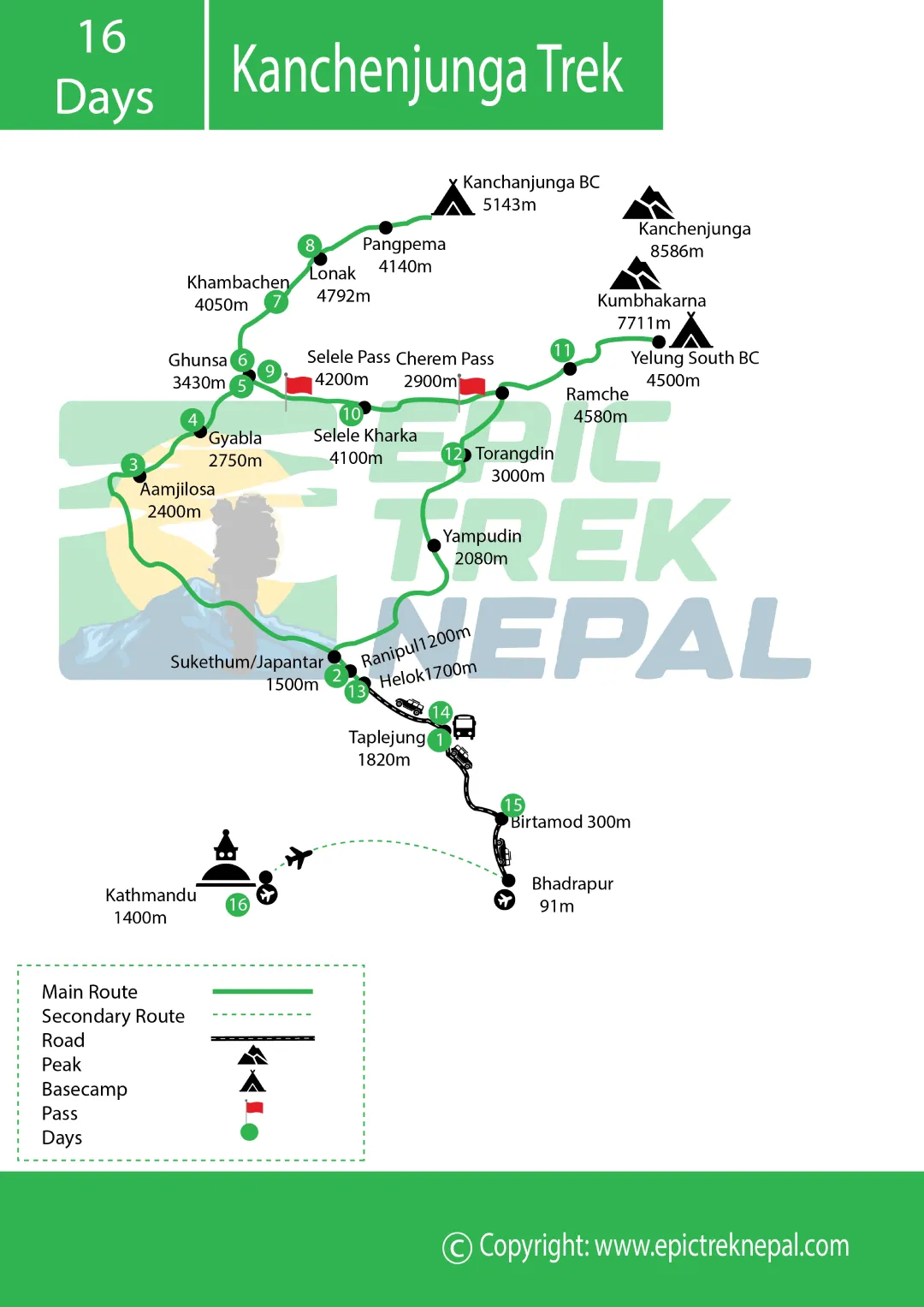
Trip Map of Kanchenjunga Trek
Trip Information
Difficulty Level for Kanchenjunga Circuit Trek
The Kanchenjunga Trek is best for trekkers who want a challenging yet rewarding journey. It offers a unique experience with remote and rugged terrain. This Kanchenjunga trek includes steep climbs, rocky paths, uphill and downhill sections and high altitude terrains. Some sections of the trail may be narrow or uneven due to the lack of development.
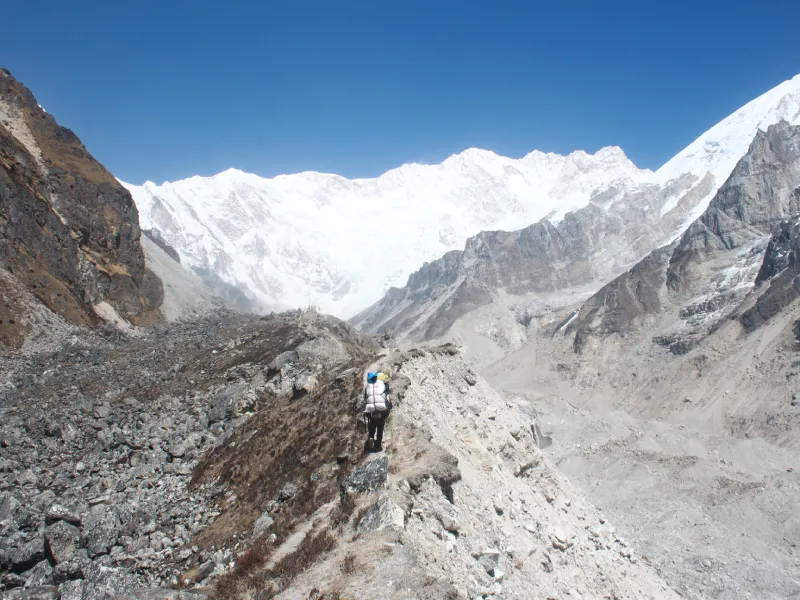
The average trekking day lasts 6 to 8 hours, which requires good physical fitness, endurance and strength. Also, you need to be mentally strong because being physically strong is’nt enough for the high altitude areas. It may not be suitable for newcomers or those looking for comfortable route. If you are an experienced trekker seeking a true Himalayan challenge with untouched nature, the Kanchenjunga trek is waiting for you.
What to Expect on the Kanchenjunga Circuit Trek
The Kanchenjunga trek is one of Nepal’s most remote and untouched trekking routes, so you can expect a journey that feels calm, peaceful and connected to nature. The walking trails are smooth and quiet and you will pass through different forests, hills and valleys where you may walk for hours without any disturbance or meeting another group. As you journey toward Kanchenjunga Himal, the scenery becomes further beautiful and the view of snow- capped mountains, long glaciers and geographies reveals the beauty of Kanchenjunga Himal.
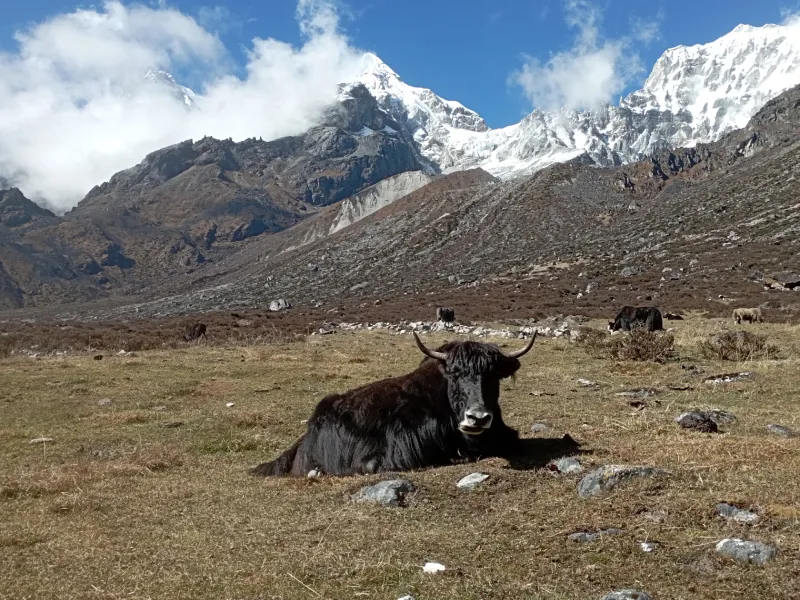
Along the way you can also witness the simple and authentic way of living life of local people. You’ll stay in local teahouses or lodges for a warm meal and a night to spend, run by local families, and witness the warm culture of Limbu and Rai communities who have lived in these mountains for centuries.
Overall, you can anticipate a wild adventure, one that blends raw Himalayan geographies with meaningful cultures.
Cultural Highlight
During the Kanchenjunga Circuit Trek, you can witness much further than just mountains. It offers glimpse into Nepal’s eastern Himalayan culture. The trail passes through vibrant timber, beautiful hills, old route and traditional villages where most people are from the Limbu and Rai communities, who have lived in these mountains for generations. Along the Kanchenjunga Trek, you can also see ancient infrastructures, traditional houses, yak herdsmen, prayer flags and various mani walls. 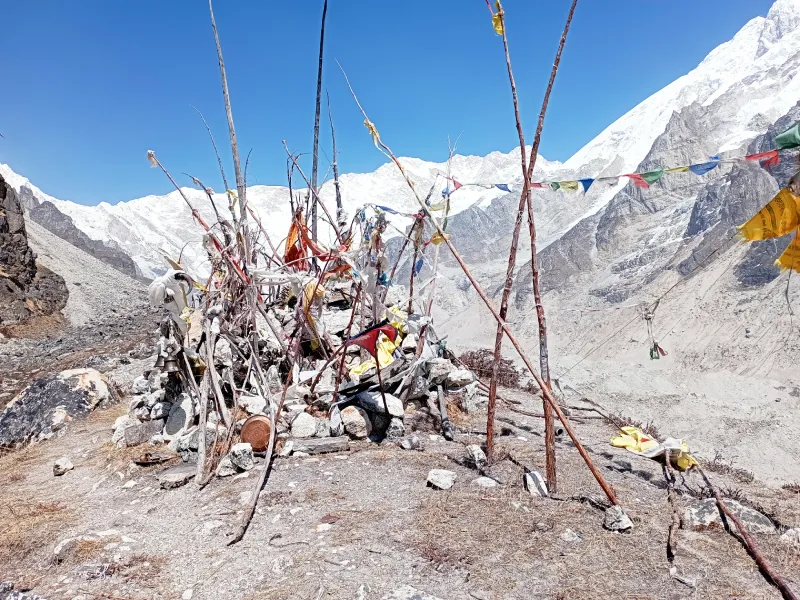
You’ll come across small shrines and monasteries, especially in Tibetan-influenced villages. These places offer a regard into spiritual practices and traditional customs.
The sense of endlessness in this area is enhanced by the frequent sight of yak herders leading their flock along the steep ridge. Trekking through Kanchenjunga Himal is much further than just seeing mountains, it’s an chance to discover and witness the unique culture of local townlets and observe how people live in these Himalayas with peace and harmony.
Accommodation and Meals
You’ll stay in local teahouses or lodges run by Limbu or Rai communities, during your Kanchenjunga Trek. These tea houses are small, cozy and comfortable, offering warm blankets, beds and bathrooms, which is enough to rest your body. Do not anticipate hot showers, but numerous lodges give warm water.
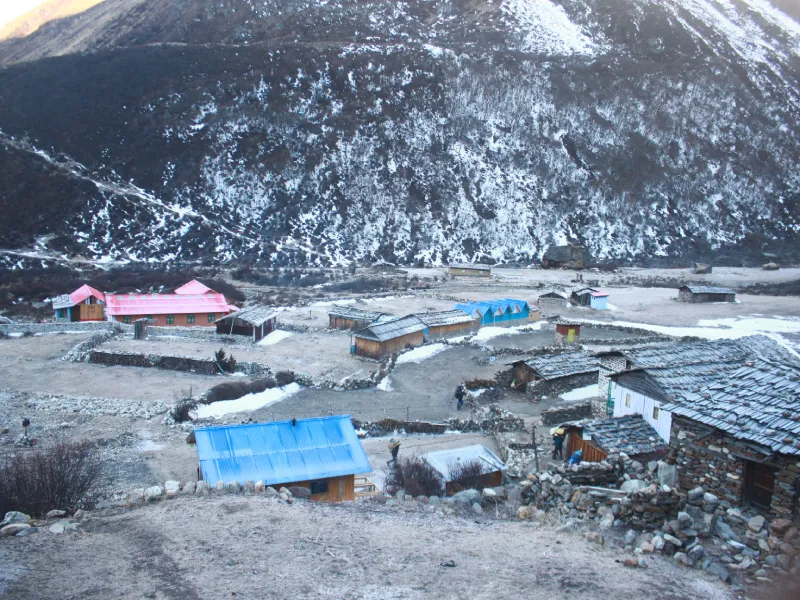
Here meals are freshly prepared and mostly local, which include like dal bhat, vegetable curries, noodles and bread. The menus comes limited at higher altitudes, but you can still eat healthy meals for your Kanchenjunga Himal journey. Many stops have energy bars, tea, coffee and drinking water, which should be boiled or purified, or you can bring a portable water filter.
The Kanchenjunga Circuit Trek is a worthwhile experience despite the modest accommodation. The main focus of this trek is to connect with the nature and culture rather than luxury.
Safety and Emergency Support
Safety and Emergency support are crucial in the Kanchenjunga Trek, as it involves high altitude trekking particularly when climbing above 4,000 or 5,000 m. Trekkers should be aware of early symptoms of altitude sickness like headache, nausea, or dizziness. If not treated in time it can be fatal.
To avoid altitude sickness you need to drink water indeed if you don’t feel like it, eat healthy foods and walk at your natural pace. For a safe journey, rest days at Ghunsa or Lhonak are crucial.
In case of any serious medical condition, helicopter evacuation can be arranged to the closest hospitals. Guides can also arrange transportation to a near health post for lower critical problems. Although there is little communication during the Kanchenjunga journey, most of the touring group communicate through radio equipment or satellite phones. In extreme cases lodges also offer phone services.
Overall, while the Kanchenjunga Trek is challenging, with proper planning, precaution, acclimatization, and an experienced guide, safety during the Kanchenjunga Trek is ensured.
Permits
Before starting the Kanchenjunga Trek, travelers must obtain a many special permits because it’s a restricted area of eastern Nepal. If you are visiting in a restricted area then you will need a permit called Restricted Area Permit (RAP), which is crucial for all trekkers. An experienced guide is needed and only a registered trekking agency can provide this permit.
Additionally, the Kanchenjunga Conservation Area Project (KCAP) entry permit is also needed. This permit supports the conservation efforts, village infrastructure and maintenance of the trail. You can get it from the Tourism Board or through your trekking agency.
Depending on the regulation of different systems, a Trekkers’ Information Management System (TIMS card) may or may not be necessary. Your trekking agency will help you in navigating these process and ensure that the right paperwork is set up.
All these permits are checked at different checkpoints and every point. When everything is planned and organized by a reliable company, the journey becomes hassle-free and simple, letting you focus on the Kanchenjunga Himal’s adventure.
Cancellation Policy for Kanchenjunga Circuit Trek
At Epic Trek Nepal, we understand and recognize that the adventure plans can change unexpectedly. For that reason, we designed a fair and balanced cancellation policy for the Kanchenjunga Trek.
Cancellation Notice
If you need to cancel trek for any reason, please notify us at least 15 days before your scheduled trek start date. This makes us easier to manage permits, logistics and preparation smoothly.
Administrative Fee
For any cancellation of the trek, a 25% fee will be reduced from the total cost of trek as an administrative charge. This fee covers the work that we’ve already done for your trip including permits, arrangements and preparation.
Non-Refundable Period
Any cancelations made within 7 days before the starting date of the trek will not be refundable. However, if there is a legitimate reason for the cancellation, then we can offer a refund after deducting 70% of the total trek amount, since we have already submitted the cost and reserved the spots for you.
Documentation Period
If you need to make an insurance claim. We would gladly provide the necessary documents to help with your insurance process.
Unused Accommodation
Please note that refunds cannot be granted for unused accommodation, meals, transportation or services, if your trek is canceled due to personal reasons, illness or bad weather.
If you have any questions or want to discuss your situation, our team is always ready to assist you. We value your trust and look forward to guiding you on breathtaking trail of the Kanchenjunga region.
What to pack for Kanchenjunga Trek
Here is the essential gear that you will need during the Kanchenjunga Trek.
Backpack
- A backpack built with supportive and adjustable straps
- Duffle bag
Clothing
- Breathable short and long sleeves
- Warm mid layer like a thick fleece or down jacket
- Lightweight windbreaker
- Waterproof and windproof jacket
- Waterproof Trousers
- Durable trekking pants
- Comfortable hiking shoes
- Thermal innerwear
- Hiking socks
- Thermal socks
Footwear
- Strong trekking boots for long and uneven trails
- Light camp shoes for evening at tea house
Accessories
- Foldable trekking poles for stability
- Layered gloves
- UV protection sunglasses
- Headlamp or flashlight with extra batteries
- Water bottles
- Neck gaiter for dust and warmth
- Hat
Sun protection
- Sunscreen
- SPF lip balm, essential for dry and windy zones
Document and Money
- Passport and ID copies
- Local currency because ATMs often do not work
Emergency Items
- First aid kit
- lightweight emergency blanket or shelter
- Duct tape for fast repair
- Plastic bag for organizing gear and carrying waste
Conclusion
The Kanchenjunga Trek is much more than just a journey into the Himalayas: it’s an immersion into one of Nepal’s most pristine, culturally diverse and beautiful regions. From long glaciers and majestic peaks to old traditional villages, every day on this trek offers unique views.
For those who wish to experience the untouched peak, a deeper connection with mountains and avoid crowds, this trek is perfect. Join Epic Trek Nepal if you want to experience one of Nepal’s unforgettable Kanchenjunga adventure.
Frequently Asked Questions
The best season for Kanchenjunga Trek are Spring (March to May) and Autumn (September to November). Spring offers colorful and vibrant rhododendrons and lush green valleys, while autumn provides stunning mountain views and clear skies.
This trek is moderate difficult, mostly suitable for experienced trekkers with good fitness. It involves long walking hours, rough terrain, and high altitude upt0 5,100 m at North Base Camp.
Yes. You will need a guide because the Kanchenjunga is a restricted area, so a licensed guide is mandatory. Porter are also recommended to carry heavy luggage, which make the trek more comfortable and enjoyable.
Yes, trekkers need the Restriced Area Permit (RAP) and Kanchenjunga Conservation Area Permit (KCAP) for your trek. A TIMS card may also be require in some area depending on the regulation.
This Kanchenjunga Trek is not suitable for beginners due to its remoteness, long walking hours and high altitude. You will require a good physicality and mentality for this trek.
The full Kanchenjunga Circuit Trek usually take around 18 to 20 days, including arrival, acclimatization, and departure. Shorter option like North or South Base Camp are also available for those with limited time.
Yes, altitude sickness can occur above 3,500 m. and Kanchenjunga highest meter is up to 5,100 m.
Epic Trek Nepal pricing:
- Solo Trekker: $2,100 per person
- 2-3 person: $1,950 per person
- 4-6 person: $1,800 per person
- Group over 7: $1,700 per person
Includes all permits, accommodation, meals, guide, porter, and ground transportation (no flights required).
Trip Reviews
US$ 1950
Need Help? Talk to Expert
+977 9764792172