
Fly in Fly out Lhasa Kailash 13 Night/14 Days Tour
73 reviews in Tripadvisor

Trip Duration
14 Days
Destination
Tibet
Max. Altitude
5,360 m.
Trip Difficulty
Moderate
Group Size
1-12
Transportation
Flight
Accommodation
Hotel/Lodge
Activity
Tour
Meals
Breakfast
Start / End
Kathmandu
Region
Tibet Autonomous
Best Season
Spring & Autumn
Need Help? Talk to Expert
+977 9764792172Trip Overview
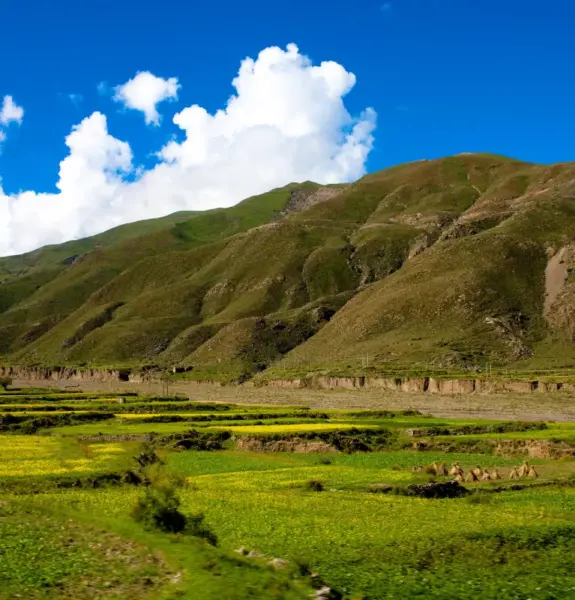
This 14 Days Lhasa and Mount Kailash tour are some of the journey that feel bigger than just travel. This is not like a standard vacation, this is one of those that stays with you even after you have left this place. You start off in the ancient city of Lhasa, from there you just keep going deeper into the Tibetan Plateau. It is fascinating how as you move into the plateau, the landscape continues to increase in size and become wider. There’s this kind of heavy, quiet silence out there that’s actually louder than any city noise I’ve ever heard.
As the day go by, you will find yourself getting closer and closer to Mount Kailash and Lake Manasarovar. These are some of the sacred places on earth that people all around the world travel to walk around these places and show their respect. There is a lot of history and faith into the land here.
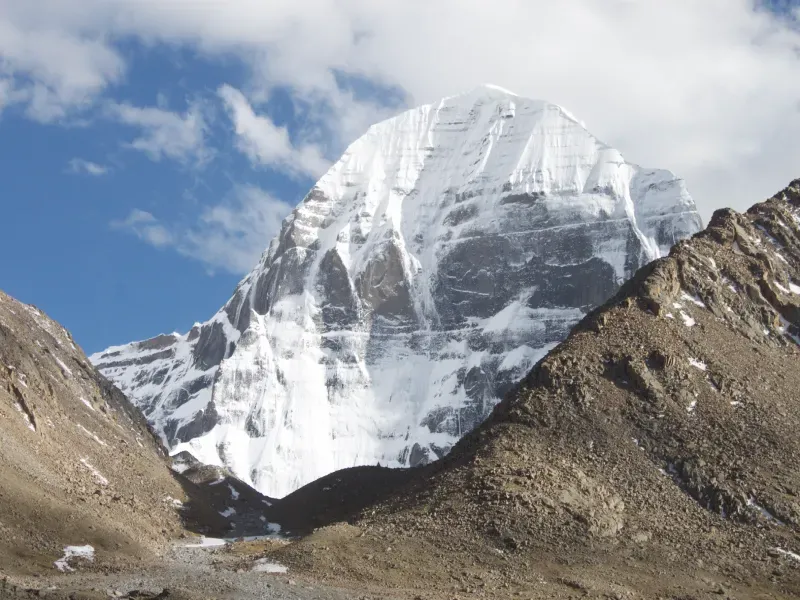
The journey itself is a bit of grind. There are long drives to get to where you’re going, staying in basic lodges along the way, and after reaching you’ll probably have altitude sickness. The Kailash Kora trek is going to be difficult, it’s not just a casual walk and that makes the view more special that you’ve earned it.
The itinerary plan is quiet simple and easy for you to enjoy the entire trip. During the trip, you will arrive in Lhasa and spend few day exploring the city and getting acclimatize to the high altitude area. And then journey begin to the west through Shigates, Sage etc, until eventually arrive at the final destination Mount Kailash and Lake Manasarovar. The Kailash Kora takes three days, and then the same route is followed back to Lhasa after the journey is completed. It looks simple, but once out there, it feels like so much more.
Highlights of Fly in Fly out Lhasa Kailash 13 Night/14 Days Tour
- Overland drive through the Tibetan plateau
- Visit the holy site of Mount Kailash and the shores of Lake Manasarovar
- Crossing mountain passes and traversing these valleys in the middle of nowhere.
- Great mix of spirituality, adventure, and culture.
Itinerary of Fly in Fly out Lhasa Kailash 13 Night/14 Days Tour
Day 1: Fly in Lhasa
Your adventure begins from your flight from Kathmandu to Lhasa. The moment you arrive, you can feel the pressure in the air. We’ll pick you up from the airport and immediately head to the hotel so you can get checked in and rest for a little while. The rest of the day is yours to do whatever you want – just walk around the place and let your body get adjust to the thin air and the atmosphere of the city. Overnight at the hotel.

Activity: Flight arrival, Hotel Transfer and Rest

Max. Altitude: 3600m./11,811ft.

Meal: Breakfast

Accommodation: Hotel
Day 2: Lhasa Sightseeing
Once we’ve had breakfast our day will be dedicated to visiting some of Lhasa’s most significant cultural sites. You will have the chance to visit the iconic Potala Palace, the Jokhang Temple and explore the Barkhor Bazaar. It’s fantastic to walk around this area and observe all of the pilgrims, monks and tourists interacting in their own unique way. After a long day of touring you will return to the hotel for a good rest.
Activity: Sightseeing
Max. Altitude: 3600m./11,811ft.
Meal: Breakfast
Accommodation: Hotel
Day 3: Again Sightseeing in Lhasa
Today, we’re going to check out a few more monasteries. We’re going to visit Sera and Drepung Monasteries, which are both massive for their spiritual significance. We might get to see the monks debating at Sera, which is actually really cool. The rest of the day is pretty relaxed, so take your time and enjoy the culture. Overnight at the hotel.
Activity: Monastery Visit
Max. Altitude: 3600m./11,811ft.
Meal: Breakfast
Accommodation: Hotel
Day 4: Lhasa to Shigatse via Gyantse
On the fourth day of our journey, we drive from Lhasa to Shigatse, stopping to visit Gyantse along the way (total distance is 365 km, the driving time about 6-7 hours). We will be able to visit the famous Kumbum Stupa and the Pelkor Monastery, as well as take a short walk around the old town of Gyantse. To be honest with you, the drive is also part of the fun as the scenery is so breathtakingly beautiful with such vast landscapes. We will then continue with the drive to Shigatse after the tour and spend the night.
Activity: 6 to 7 hours drive + sightseeing
Max. Altitude: 3650m./11,975ft.
Meal: Breakfast
Accommodation: Hotel
Day 5: Shigatse to Saga
The fifth day of our journey will be an interesting day! After breakfast at our hotel in Shigatse, we will visit Tashilhunpo Monastery, which is one of the largest monasteries in the region. We will also have an opportunity to wander around the city of Shigatse, visiting the local Tibetan market as well. After leaving Shigatse, we will travel to Saga. As we drive to Saga, we will travel through open flat-land and rivers, which give you a peaceful experience! When we arrive in Saga, we will check into our hotel and go to sleep.
Activity: Monastery Visit + 7 to 8 hours Drive
Max. Altitude: 3950m./12,959ft.
Meal: Breakfast
Accommodation: Hotel
Day 6: Saga to Lake Manasarovar
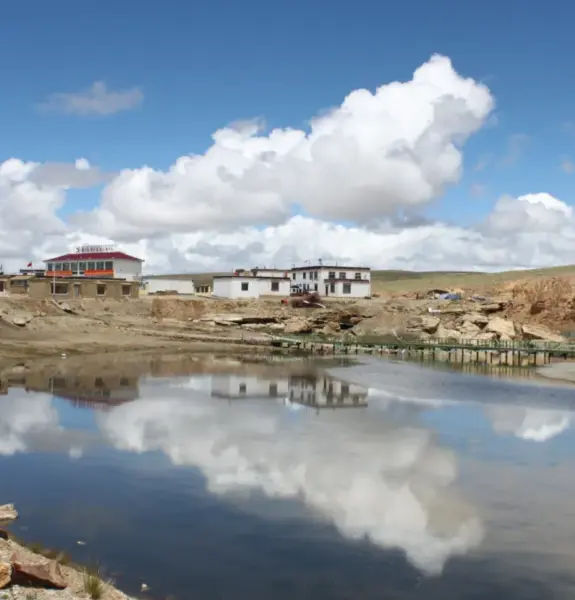
Finally, a day to get close to some of the sacred stuff. After breakfast, we travel via Paryang with a view of the Saga Valley nestled between two mountain ranges. We will cross Mayumla Pass, which tops out at 5,112m! Perhaps you will catch a glimpse of Mt. Naimonanyi in the distance. As we approach Lake Manasarovar, things become more peaceful and serene. We will be staying overnight at a guesthouse near Lake Manasarovar.
Activity: 8 to 10 hours drive
Max. Altitude: 4510m./14,797ft.
Meal: Breakfast
Accommodation: Hotel
Day 7: Manasarovar to Darhcen
You have the morning free to spend however you wish. You may want to spend time at the lake to be quiet, reflect and enjoy the view. Afterward, we’ll drive a short distance to Darchen, which is basically the base camp for Mount Kailash, and where you can prepare your gear and get your head into the trek. This is where the serious part begins, so make sure you get a good night’s sleep. Overnight in a hotel.
Activity: Lake visit + 2 to 3 hours Drive to Base
Max. Altitude: 4600m./15,092ft.
Meal: Breakfast
Accommodation: Hotel
Day 8: Darchen to Dirapuk
We will have breakfast and then a quick drive to Yamdwar, and from there, the official trek begins. The trek is through the valleys and along the streams. It’s a gradual climb, and you get some great views of the mountain. It’s about a 13 km trek, and you just need to take it easy and drink a lot of water. Don’t rush through it. We will stay at a guesthouse in Dirapuk tonight.
Activity: 6 to 7 hours Trek
Max. Altitude: 4900m./16,076ft.
Meal: Breakfast
Accommodation: Hotel
Day 9: Dirapuk to Dzulpuk
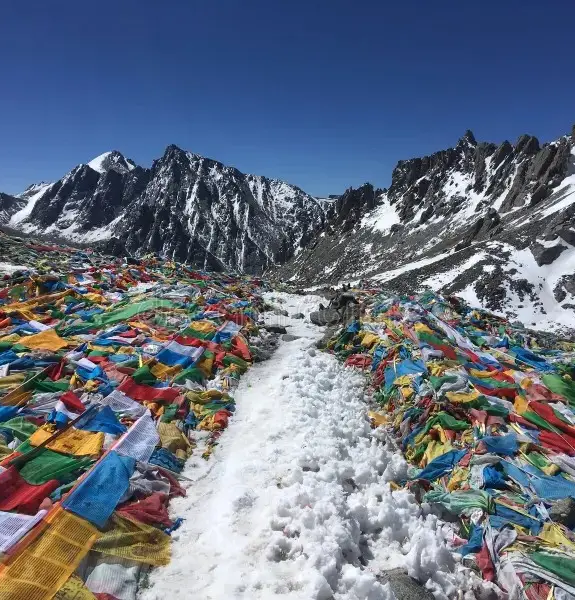
This is probably the toughest day because we need to cross the Dolma La Pass. This is the highest point of the trek, and it’s a pretty tough climb. But when you get to the top, it’s an amazing feeling. Then you start the climb down towards Dzulpuk, and it’s a bit rocky. You get to see Gauri Kund on the way too. You also get to see other pilgrims doing their prostrations, which is pretty humbling.
Activity: 8 to 9 hours Trek
Max. Altitude: 5360m./17,585ft.
Meal: Breakfast
Accommodation: Hotel
Day 10: Dzulpuk to Darchen
The Last Day of Kora is finally here! We have approximately 7 kilometers (4.3 miles) left to walk to get to Zhong, where we will see many Mani Stones (prayer stones) along the way, piled on top of each other by previous travelers (the stones are placed on top of one another as an offering to Buddha). At Zhong we will get picked up by vehicle and return to Darchen. It will feel so good to be back after finishing the trek, so we will just hang around the hotel and relax while recovering from the trek.
Activity: 4–6 hrs trek + drive
Max. Altitude: 4750m./15,584ft.
Meal: Breakfast
Accommodation: Hotel
Day 11: Darchen to Saga
We will have breakfast and then set off on the long journey back to Saga. We took the same route to come here, so it is nice to see the scenery again from a different side. We have completed the trekking part of the journey, so the long drive is a bit easier even though it is a long day driving. We will stay overnight at a hotel in Saga.
Activity: 7–8 hrs drive return
Max. Altitude: 4500m./14,764ft.
Meal: Breakfast
Accommodation: Hotel
Day 12: Saga to Shigatse
Today is our last day driving to Shigatse. On our way, we will see more high-plateau views, cross rivers again, and see some more very remote settlements. We should reach Shigatse by evening to check into hotel, and have a quiet evening after a long day.
Activity: 6 to 7 hours Drive
Max. Altitude: 3800m./12,467ft.
Meal: Breakfast
Accommodation: Hotel
Day 13: Shigatse to Lhasa
Last day of driving back to Lhasa. While it’s familiar territory, it’s still beautiful. Once we’re back in the city and checked in, you have the day to do whatever you like. Shopping, a cup of tea, relaxing after the big journey. Overnight at the hotel.
Activity: Drive back to Lhasa
Max. Altitude: 3600m./11,811ft.
Meal: Breakfast
Accommodation: Hotel
Day 14: Fly to Kathmandu
After one more breakfast, we will take you to the airport or train station for your return trip to Kathmandu and/or onward to China. The trip ends here, but the memories of the mountains, the tranquil plateau, they will live on with you.
Activity: Departure
Includes/Excludes
What is included?
- Accommodation in Twin sharing Room Basis.
- Bed and Breakfast
- English Speaking Tibetan Guide
- Transportation as per the Itinerary by Necessary Vehicles.
- Tibet Travels Permit
- All Entrance Fee
- All Necessary Entrance Permit
- 2 Bottle Mineral water daily During Tours .
- Emergency oxygen Cylinder in the Vehicle .
- Lhasa airport pickup/Drop or Train station Pick up and Drop
What is not included?
- Clients and Travel Insurance
- Lunch and Dinner
- Personal Expenses Such as a Drinks Tips Etc.
- Yak and Yak Man During the Kora
- Horse
- Flight / Train ticket is extra any sector
Trip Information
Highlight of the Trip
One of the best places to start is Lhasa. It has a great calm energy and is enriched with culture such as small streets full of local shops, lots of small stores and people praying at the different shrines daily – no need to rush anything, just walking around at your pace is a worthy experience itself.
Make sure to visit the Potala Palace and the different monasteries in the area while there. The architecture is breathtaking and full of rich history, and when you enter the buildings, you’ll feel a certain calmness, and have the opportunity to watch monks perform their prayers – it’s a very special experience, quite simple and hard to describe.
Then, finally, there’s Lake Manasarovar, which is basically just a really peaceful and pretty place. A lot of people find the place to be sacred, but even if you don’t know the history behind the place, it’s just a pretty clean and peaceful place. It’s a good place to just take a little time to enjoy the view.
The main part of the trip is the 3-day Kora of Mount Kailash. This is relatively easy walking but can be difficult because of the high altitude. Many people take their time and enjoy some beautiful scenery. Therefore, for most people performing the kora, this is not just a trek, but an extremely personal experience.
During this entire time on the trip, you’re surrounded by the really pretty landscapes of the Tibetan Plateau. It’s just a really open place, and the sky is really clear, and there’s just these long roads. Sometimes, I guess, it feels a little deserted, but in a good way, I guess. You have a lot of time to just think and enjoy the ride.
Best Time to Go
Spring (April to May)
Spring is a pretty good time to make this trip. The skies will generally be clear, so you get those great mountain views, and the weather will generally not be extreme during the day. But, the nights will still feel quite cold so you will need some proper warm clothing.
Summer (June to August)
Summer will have a slightly more comfortable temperature. But, there will sometimes be a little rain along the way, which will make the roads a little slow or rough in some places. Still many people chooses the trip, so it’s totally doable if you’re prepared for it.
Autumn (September to October)
I think autumn, which is from September to October, is probably the best season overall, if I’m being honest with you. The weather is stable, the skies are super clear, and the mountain views are absolutely the best. It’s a very balanced season, not too cold and not too risky, and I think a lot of travelers prefer this season for a reason.
Winter (November to March)
Winter, is probably the quietest season but also the toughest season. It’s really cold, especially around Mount Kailash and Lake Manasarovar. Sometimes the roads get blocked because of the snow, and sometimes it’s even impossible to do the Kailash Kora. It’s not really an ideal season for most people but if you don’t mind the extreme cold and don’t want too many facilities, it can be incredibly peaceful and empty out there.
Difficulty Level
To be honest, the journey isn’t exactly easy. It’s not like you’re climbing any mountains or anything like that, but the altitude is still a bit of a challenge. As you get closer to Mount Kailash, even walking at a regular pace can be a bit slow and tiring. You’ll be at an altitude of above 4,000 meters most of the time, and when you do the Kailash Kora, it’s even higher. So it’s essential that your body gets used to the altitude.
The journey is best suited for people who are physically fit enough to walk for a few hours a day. While you don’t have to be a super athlete or anything like that, it’s still important. And if you have any heart problems or lung problems, you need to get away from this kind of trip. While it’s a good idea to do a bit of prep work like walking around, exercising a bit, etc., before the journey begins, when you’re on the journey, the only thing you need to do is go slow.
Permit Required
Travel to Tibet is not quite like travelling anywhere else so there are very particular guidelines and regulations you have to follow when entering into and travelling within this area. To simply enter Tibet you will need a Tibet Travel Permit, which is great but since we will we travelling from Lhasa to Mount Kailash we also need an Alien Travel Permit. To add to that complexity, because Mount Kailash is located in a sensitive location, we will also require a Military Permit for safety reasons therefore you can see that there are varying levels of official requirements for travelling to, within, and around Tibet.
In addition to the necessary permits, you will also require a valid passport (check that it has at least six months of validity remaining) and a valid Chinese Tourist Visa before entering the country. The common tourist visa fee is usually $125 USD, however, if you live in the U.S., Canada, Argentina, or Romania, you will be charged an additional $115 USD to obtain the visa.
What we’ll need from you to get things moving:
- A scan of your passport = This has to be with us at least 25 days before the trip starts, so don’t forget!
- Your original passport = This has to be with us at least 3 official working days before the trip starts.
- A passport-sized photo = This just has to be one with a white background, taken in the last 6 months or so.
The good part is that you don’t have to worry too much about the paperwork part yourself. Most of the work is handled by the us Epic Trek Nepal. Usually, you just have to send over a copy of your passport or some basic information like that, and we will do the rest. However, it is always a good idea to apply well in advance because the process can take a while, so yeah, planning ahead does make the whole beginning of the journey smoother.
Essential Trekking Packing List for Kailash / Lhasa
- Thermal tops and bottoms.
- Down jacket (waterproof and windproof).
- Waterproof and windproof pants.
- Quick-dry T-shirts.
- Trekking pants.
- Head cap
- Gloves
- Trekking boots
- Comfortable camp shoes or sandals.
- Warm socks (wool or synthetic).
- 30–40-liter daypack with rain cover.
- Adjustable trekking poles.
- Biodegradable soap and shampoo.
- Toothbrush and toothpaste.
- Hand sanitizer.
- Toilet paper.
- Personal medications.
- High-altitude medication (as prescribed by your doctor).
- Sunglasses with UV protection.
- Sunscreen (SPF 50+).
- Lip balm with SPF.
- Headlamp with extra batteries.
- Charging:
- Portable charger/power bank.
- International adapter.
- Travel insurance details. ( If possible )
- Suffcient cash in small denominations.
- High-energy snacks (nuts, dried fruits, energy bars).
- Compact camera or smartphone with extra memory cards.
Cancellation Policy for This Tour:
At Epic Trek Nepal, we understand the changes in plan unexpectedly. That is why we designed it to be fair and clear.
Cancellation Notice:
If you decide to cancel your tour for any reason, please make sure to inform us at least 7 days before your scheduled tour start date.
Administrative Fee:
When a cancellation is made, 25% fee will be reduced from the total cost of tour as administrative fee. This fee covers the planning, preparation and booking cost we’ve already done for your tour.
Non-Refundable Period:
For any cancellation made within less than 4 days before the tour start date, no refund will be provided but by looking at the situation, if we feel the reason for cancellation is valid, then the amount will be refunded after deducting 70% of the total tour amount, as we have already submitted the cost and reserved the spots for you.
Documentation Support:
We know insurance claim can be important. In case if you cancel, we would provide the necessary document such as receipts to help with your insurance process.
Unused Accommodation:
Please note that we cannot offer refunds for unused accommodation or services if your tour is canceled due to personal reasons, illness or bad weather.
You can contact us with any questions or to discuss your situation, and we would be happy to assist you. Thank you for your understanding during this time and we hope to help you through your Mount Kailash and Lhasa Tour safely
Frequently Asked Questions
Yeah, you definitely do. You’ll need a Chinese Visa or Group Visa depending on the situation, as well as the Tibet Travel Permit and some other special permits like Alien travel permit and Military Permit to enter the restricted areas around the Kailash region.
This trek is actually hard, but mostly because of the altitude. It’s not like you’re rock climbing or anything like that, you’re just hiking around the mountain. But the Dolma La Pass is over 5,600 meters above sea level. Even if you’re in pretty good shape, the thin air is gonna make every step feel like a chore, you just have to walk real slow and find your rhythm.
Spring (April to May) and Autumn (September to October) are the best. The weather is much more stable then, and the sky is clear enough for you to see the mountains. You could do it in the summer, but there might be some rain. And winter… well, it’s freezing, and everything’s closed.
This entire trip will normally take 13 night 14 days. This gives you enough time to visit the sites in Lhasa, make the long drive across the plateau, and trek around the mountain for 3–4 days.
Yes, altitude sickness can be a problem. There is not a part of Tibet that is less than 3,500 metres above sea level. If going to Lhasa for example, you do need to keep this in mind. The way to avoid altitude sickness is by taking it easy for the first few days, drinking lots of water, eat healthily, and just move slowly. If you move around too quickly in Lhasa, altitude sickness can show up really quickly.
You don’t have to be a pro trekker or anything like that, but you do have to be in decent physical shape. You’re going to be hiking several hours a day at very high altitudes, so it does help if you’ve been hiking or exercising regularly prior to arrival.
What make this trip special is because of the huge natural scenery mixed with the culture. Checking out places like Lake Manasarovar or Mount Kailash is just different. Most people say when they come back from the place, they’ve had a pretty meaningful experience that they won’t forget anytime soon.
This journey combines cultural experiences, untamed wilderness and spirituality. You’ll experience Lhasa before traveling across the Tibetan Plateau to the sacred Mount Kailash area. Along the way, you’ll see ancient monasteries, stay in small villages and do what many consider to be one of the most rewarding treks in the Himalayas.
Trip Reviews
Need Help? Talk to Expert
+977 9764792172