




Mera Peak Climbing
73 reviews in Tripadvisor

Trip Duration
17 Days
Destination
Nepal
Max. Altitude
6,476 m.
Trip Difficulty
Moderate
Group Size
2-20
Transportation
Tourist Vehicles
Accommodation
Hotel/Teaouse & Tents
Activity
Peak Climbing
Meals
All Inclusive
Start / End
Kathmandu
Region
Everest
Best Season
Spring, AutumnUS$ 2200

Need Help? Talk to Expert
+977 9764792172Trip Overview
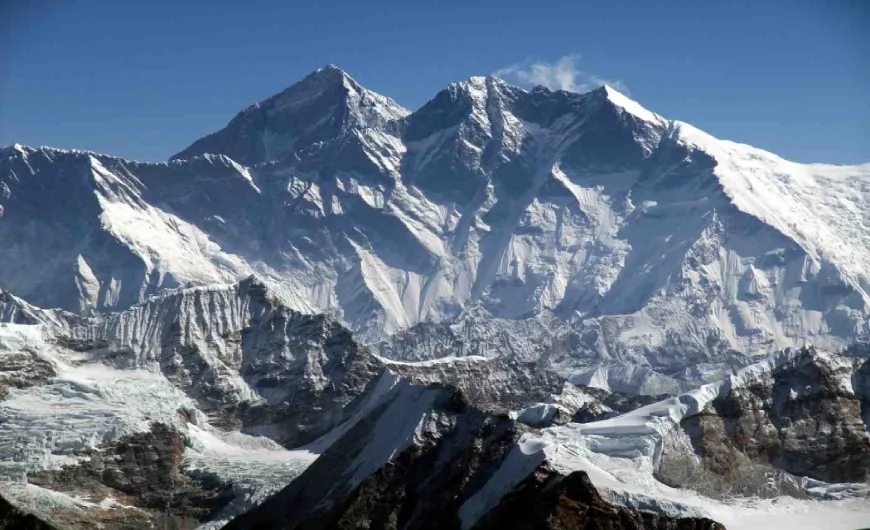
Mera Peak is located in the heart of the remote Hinku Valley of the Everest Region at an altitude of 6476m, making it not only the highest trekking peak but also one of the most rewarding in terms of mountain views. From the summit, you can see 5 of the world’s 14 highest mountains — Everest, Lhotse, Cho Oyu, Makalu, and Kangchenjunga. Mera Peak is considered the most rewarding trek that gives a true expedition vibe without requiring years of climbing experience.
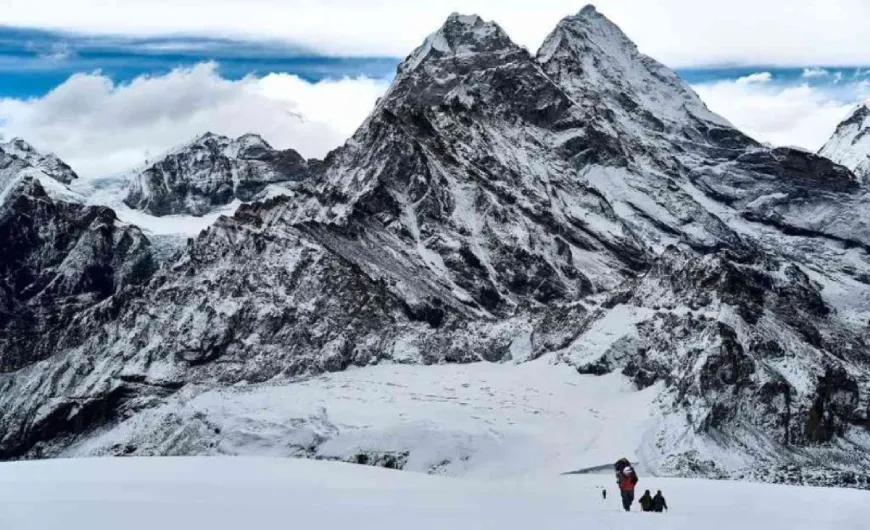
Mera Peak Trek begins with 35 minute thrilling flight to Lukla from Kathmandu and after 5 to 7 days of the trek, you will reach the last village of the trek, Khare at 5054m. After a couple of days of acclimatization over 5000m, the actual climb will start. For the Mera Peak trek you will start from Khare with a 2-3 hour walk through a rocky and steep trail that will take you to the crampon points where you need to use climbing gear. Then climb up another couple of hours on the icy path following rope lines and avoiding crevasses.
Once you reach High camp, camping crews have already set up the tents and prepare hot food for you. High camp provides excellent views of Mt. Everest, Makalu, the south face of Lhotse, Nuptse, and many other mountains.
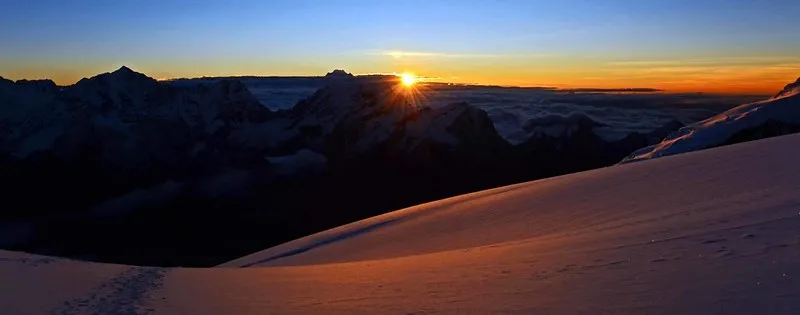
The summit push starts around 2 am in the morning. The route is still non-technical as it involves climbing on about 45-degree slopes of Mera Peak. The slope steepens for a section behind the ridge and the summit comes back into view. At the foot of the final steep summit, you need to use a fixed rope.
Finally, on top of the Mera peak 6476m, the summit provides spectacular views of the mighty Himalayas including Mt. Everest (8,848m), Cho-Oyu (8,210m), Lhotse (8,516m), Makalu (8,463m), Kangchenjunga (8,586m), Nuptse (7,855m), and others. After the summit retrace your steps back to the high camp where you will rest for a while before descending to Khare and then trek back to Lukla.
Trek Difficulty
Mera Peak is extremely tough even though it’s graded as a trekking peak. While it involves no technical mountaineering, it is definitely not an easy climb. Several factors make Mera Peak challenging:
- Lack of proper acclimatization
- Cold and dry winds
- Extremely cold weather
- Long summit day
If you have done high altitude treks before, then it’s time for you to climb Mera Peak. But make sure you acclimatize well before scaling the peak—altitude sickness can easily kick you hard.
Best Season to Go:
The best times to go on a Mera Peak adventure are in the autumn and spring.The weather is more consistent and less obstructed throughout these seasons. As a result, there are a good number of hikers and climbers on the routes.
- Spring (March to May)
This is the overall best season to go on Mera Peak as the weather is stable during this season and the skies are clear. It’s busier than other season but also the most beautiful, filled with blooming rhododendrons, lush green pine and oak forests with birds’ songs accompanying your journey along the riverside. This is the perfect time for photographers, first-time climbers, and trekkers who want good visibility and trail conditions. The Mera Peak summit temperature ranges from (-15°C to -20°C), fewer storms and minimal snow accumulation.
Note: Clear skies and strong sun can make days feel warmer, but summit pushes start early (~2–3 AM), so coldest temps are encountered then.
- Autumn Season (Mid-September to November)
The most weather-reliable season, considered best for sharp views and a classic Himalayan experience for Mera Peak trek. During this season, trekkers get the chance to indulge in the great festival of Nepal – Dashain & Tihar. This most cultural season blended with adventure makes this journey epic. The summit temperature ranges from (-18°C to -25°C), excellent for summit attempts. The crowd is high during this time but Mera Peak is quieter than other summit regions.
- Winter (Dec–Feb)
Too risky a season for Mera Peak as the summit temperature range from (-25°C to -35°C). Harsh cold, snow covered trails, and high risk of storms at high camp make it extremely challenging. Only suitable for highly experienced climbers with proper winter expedition gear.
- Monsoon (June–Mid-Sept)
An avoidable season due to slippery trails, poor views and frequent flight delays to Lukla. The temperature ranges from (-12°C to -20°C). The danger of crevasses on the glacier is high due to snow melting.
For those beginners seeking their first Himalayan summit who want to prepare for bigger climbs, Mera Peak is a perfect choice. With Epic Trek Nepal’s experienced local guides and personalized acclimatization schedules, and an outstanding safety record, we ensure your success on Mera Peak Trek. We handle all logistics – permits, documentation, camping crews, and gear rental – while our expert guides provide the knowledge and support needed to safely reach Nepal’s highest trekking peak.
Photo Gallery & Video Gallery
Mera Peak Climbing - Distance, Duration, and Altitude
| Trekking Route | Distance (Kilometers) | Duration (Hours) | Altitude (Meters) |
|---|---|---|---|
| Lukla → Paiya | 8 KM | 4 to 5 hours | 2740 m. |
| Paiya → Pangkoma | 10 KM | 5 to 6 hours | 2850 m. |
| Pangkoma → Ningsow | 9 KM | 4 to 5 hours | 2860 m. |
| Ningsow → Chhatra Khola | 10 KM | 5 to 6 hours | 3150 m. |
| Chhatra Khola → Kothe | 12 KM | 6 to 7 hours | 3600 m. |
| Kothe → Thaknak | 6 KM | 3 to 4 hours | 4350 m. |
| Thaknak → Khare | 7 KM | 3 to 4 hours | 5100 m. |
| Khare → Mera High Camp | 6 KM | 4 to 5 hours | 5780 m. |
| High Camp → Mera Peak Summit (6,461 m) → Return to Khare | 12 KM | 10-12 hours | 6461 m. |
| Khare → Kothe | 13 KM | 6 to 7 hours | 3600 m. |
| Kothe → Thuli Kharka | 12 KM | 6 to 7 hours | 4300 m. |
| Thuli Kharka → Lukla | 13 KM | 6 to 7 hours | 2860 m. |
Itinerary of Mera Peak Climbing
Day 01: Arrival in Kathmandu
Upon your arrival in vibrant city of Kathmandu. Our representative will be there for you to greet and escort you to your designated hotel. You can utilize your free time rest or by exploring the city.

Activity: 45 minute drive

Max. Altitude: 1400m./4,593ft. (Kathmandu)

Accommodation: 3 Star Hotel
Day 02: Sightseeing in Kathmandu
Explore the historical and cultural treasure of Kathmandu. Your guide will take you to visit the several UNESCO world heritage site of Kathmandu including the famous Durbar Square, the sacred Hindu temple of Pashupatinath, the iconic ‘Monkey Temple’ (Swayambhunath), and the majestic Boudhanath Stupa.
Activity: Sightseeing
Max. Altitude: 1400m./4,593ft. (Kathmandu)

Meal: Breakfast
Accommodation: 3 Star Hotel
Day 03: Fly to Lukla (2840m), Trek to Paiya (2740m)
Catch a thrilling flight to Lukla. After enjoying a cup of tea meet your porters and begin your trek. Walking through lush forests and crossing several suspension bridges you will reach to Paiya, a charming Sherpa for a overnight stay.
Activity: 4–5 hours trek
Max. Altitude: 2840m./9,318ft. (Lukla)
Meal: Breakfast, Lunch, Dinner
Accommodation: Standard Teahouse
Day 04: Trek to Pangkoma
After breakfast, following a mountain trail. Cross the Kari La Pass and the trail takes you through dense rhododendron and bamboo forest before reaching Pangkoma.
Activity: 5-6 hours trek
Max. Altitude: 2846m./9,337ft. (Pangkoma)
Meal: Breakfast, Lunch, Dinner
Accommodation: Standard Teahouse
Day 05: Trek to Ningsow
Today’s trails will you lead to through terrace fields and lush forest passing mani walls, small streams and occasional viewpoint glimpses of Mera Peak. After ascend and descend through a mix of forested and rocky trails, you will arrive at Ningsow.
Activity: 5-6 hours trek
Max. Altitude: 2850m./9,350ft. (Ningsow)
Meal: Breakfast, Lunch, Dinner
Accommodation: Standard Teahouse
Day 06: Trek to Chhatra Khola
Today with a steep ascent trek following series of ups and downs through Makalu Barun buffer zone. You’ll enter the remote and peaceful Hinku Valley. If timing is right you may encounter wild animals such as red pandas and Himalayan thars. And after navigating the forest trails you reach Chhatra Khola for overnight stay.
Activity: 6-7 hours trek
Max. Altitude: 4100m./13,451ft. (Chhatra Khola)
Meal: Breakfast, Lunch, Dinner
Accommodation: Standard Teahouse
Day 07: Trek to Kothe
After breakfast, You’ll trek through dense bamboo and rhododendron forest with occasional glimpse of snow-capped peaks to reach the small settlement of Kothe.
Activity: 6-7 hours trek
Max. Altitude: 3500m./11,483ft. ( Kothe)
Meal: Breakfast, Lunch, Dinner
Accommodation: Standard Teahouse
Day 08: Trek to Thaknak
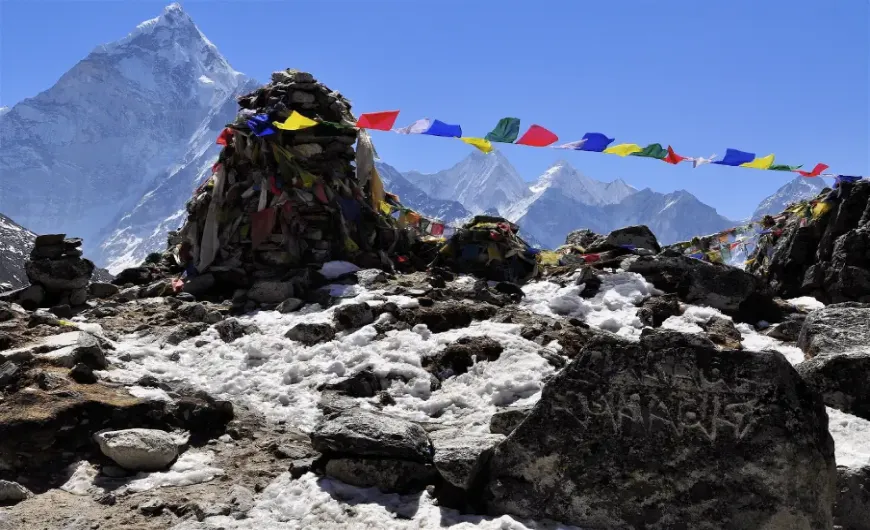
Today’s journey takes you further along the Hinku Valley. Trail gradually ascend through alpine meadows, passing summer herding ettlements and prayer tones with majestic views of Mera Peak. You’ll arrive at Thanknak, an ideal stop for acclimatization and rest.
Activity: 5-6 hours trek
Max. Altitude: 4300m./14,108ft. (Thaknak)
Meal: Breakfast, Lunch, Dinner
Accommodation: Standard Teahouse
Day 09: Acclimatization
A rest day to give your body time to adapt to the higher altitude and minimize the possibility of altitude sickness. Short walks to nearby viewpoints may be done to keep the body active and help acclimatize to the higher altitude. The day may be spent relaxing and exploring the surroundings, and taking in the peaceful atmosphere of the alpine environment.
Day 10: Trek to Khare
Continue your trek with the stunning views of Charpate Himal and Northen face of Mera Peak to approach Khare, the base camp area for Mera Peak. Khare is a small but vital hub for climbers, offering time to rest, acclimatize, and prepare for the summit push.
Activity: 4–5 hours trek
Max. Altitude: 5100m./16,732ft. (Khare)
Meal: Breakfast, Lunch, Dinner
Accommodation: Standard Teahouse
Day 11: Acclimatization and Preparation
Acclimatization and pre-climb preparation day. Spend your day by resting, hydrating, and letting your body adjust to high altitude. In the afternoon, your climbing guide will conduct a training session, teach you the techniques such as using crampons, ice axes, harness, jumar, and fixed ropes. This is a important day to ensure your safety and success on Mera Peak.
Max. Altitude: 5100m./16,732ft. (Khare)
Meal: Breakfast, Lunch, Dinner
Accommodation: Teahouse
Day 12: Trek to Mera High Camp
Begin early morning trek in a rocky terrain and glacier moraine toward Mera High Camp. Enjoy the breathtaking views of the surrounding. Conserve your energy in high altitude rest well, stay hydrated and prepare for your upcoming summit attempt.
Activity: 4-5 hours trek
Max. Altitude: 5800m./19,029ft. (Mera High Camp)
Meal: Breakfast, Lunch, Dinner
Accommodation: Camping
Day 13: Summit Mera Peak(6461m), Descend to Khare (5100)
An early start for the summit attempt of Mera Peak. After successfully reaching the summit and soaking in the views, you’ll descend back to Khare.
Activity: 5 hours to reach the summit, 4-5 hours to descend back
Max. Altitude: 6461m./21,198ft. (Mera Peak)
Meal: Breakfast, Lunch, Dinner
Accommodation: Standard Teahouse
Day 14: Trek to Kothe
Begin your trek descent through the beautiful Hinku Valley. Passing alpine meadows, Yak pastures, and dense forests make your way back to the village of Kothe.
Activity: 6-7 hours trek
Max. Altitude: 3500m./11,483ft. (Kothe)
Meal: Breakfast, Lunch, Dinner
Accommodation: Standard Teahouse
Day 5: Trek to Thuli Kharka
Today, you’ll trek through beautiful alpine landscapes, passing through lush forest and open meadows you will retrace back to Thuli Kharka. This peaceful spot is perfect for an overnight stay.
Activity: 5–6 hours trek
Max. Altitude: 4200m./13,780ft. (Thuli Kharka )
Meal: Breakfast, Lunch, Dinner
Accommodation: Standard Teahouse
Day 16: Trek to Lukla
Begin your challenging yet rewarding trek with steep ascent to cross the Zatrwa La Pass (4,600m), where you’ll be rewarded with breathtaking views of Lukla Valley, Dudh Kosi River, and distant Himalayan peaks After soaking in scenery, continue a gradual descend through forest and small settlements and eventually conclude your trek at Lukla. Enjoy your last evening in the mountains with your trekking team.
Activity: 6–7 hours trek
Max. Altitude: 2880m./9,449ft. (Lukla)
Meal: Breakfast, Lunch, Dinner
Accommodation: Standard Teahouse
Day 17: Fly Back to Kathmandu
Take a morning flight back to Kathmandu. Spend your day by rest, refresh, or explore the vibrant streets of Thamel for some last-minute shopping or cultural sightseeing.
Activity: 45 minute flight. 45 minute drive
Max. Altitude: 1400m./4,593ft. (Kathmandu )
Meal: Breakfast
Accommodation: 3 Star Hotel
Day 18: Departure
You’ll be transferred to the airport by our representative for your departure, marking the end of your adventure in Nepal.
Activity: 35-min drive
Meal: Breakfast
Includes/Excludes
What is included?
- Airport Transfers: Pick-up and drop-off at Kathmandu’s Tribhuvan International Airport.
- Accommodation: Hotels in Kathmandu before and after the trek, and lodges or teahouses during the trek. Tents are typically provided for the camping portion of the climb.
- Meals: All meals during the trek and climb, plus breakfast in Kathmandu.also includes two times hot beverage (in breakfast and lunch) and seasonal fruits after dinner.
- Trekking and Climbing Permits: Includes the local area permit and the Mera Peak climbing permit.
- Experienced Guide and Porters: A professional climbing guide and porters to carry luggage, along with their food, accommodation, salary, insurance, and equipment.
- Climbing Equipment: The provision of group climbing gear such as ropes, ice screws, and snow bars.
- First Aid Kit: Basic medical supplies for treating minor injuries or illnesses.
- Transportation: Ground and/or air transportation to and from the trek starting point (typically Lukla).
- Equipment: Duffle Bag, Sleeping Bag (if necessary).
What is not included?
- International Flights: The cost of international airfare to and from Nepal is typically not included.
- Nepal Visa Fee: The cost of the Nepalese visa is usually not covered.
- Travel Insurance: Comprehensive travel insurance, which includes emergency evacuation and high-altitude trekking coverage, is generally not included.
- Personal Climbing Gear: Climbing gear for individual use, such as boots, helmet, ice axe, crampons, and harness, is usually not included.
- Personal Expenses: Costs for personal items like drinks, snacks, Wi-Fi, charging devices, hot showers during the trek, etc., are not included.
- Tips: Tipping guides, porters, and climbing Sherpas, while customary, is not included in the package price.
- Additional Meals: Meals in Kathmandu, other than breakfast, are typically not included.
Trip Map of Mera Peak Climbing
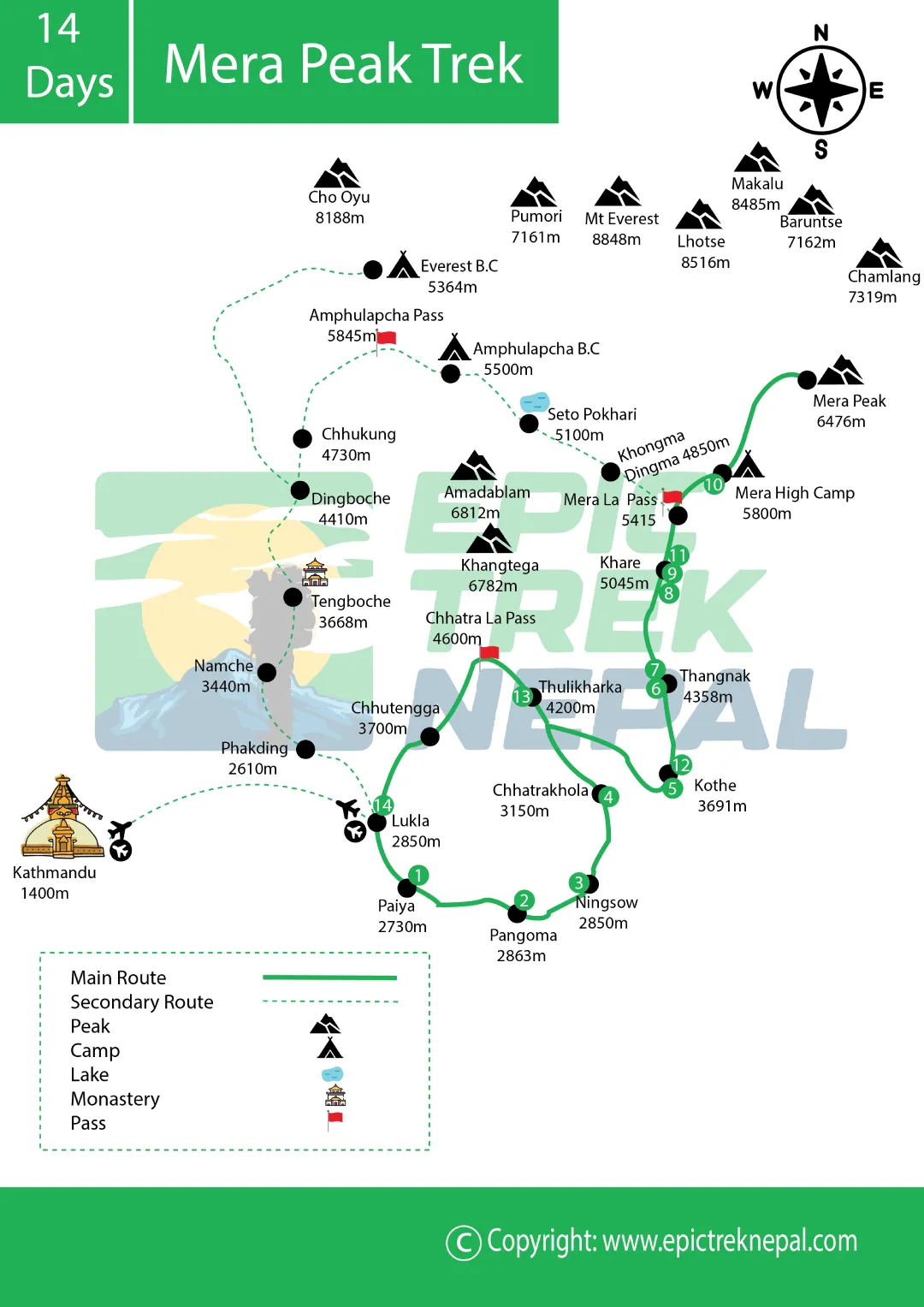
Trip Information
Required Gear/ Equipment List
Proper gear is essential for a safe and successful Mera Peak climb. In those mountain regions, layering system works perfectly. And ensure you are comfortable with your gears. Here’s what you’ll need:
Clothing & Layering System
Upper Body:
- Base Layers: Moisture-wicking and quick-drying shirts and thermal tops.
- Insulation Layers: Fleece or down jackets to provide warmth.
- Waterproof Shell Jacket: A durable and breathable jacket to protect against wind and rain.
- Softshell Jacket: A lightweight and water-resistant jacket for added protection.
- Climbing Harness: A comfortable harness to secure yourself to the rope.
- Helmet: A strong and well-fitting helmet to protect your head from falling objects.
- Gloves: A combination of lightweight liner gloves and insulated gloves or mittens for warmth and dexterity.
- Buff or Neck Gaiter: To protect your neck and face from cold and wind.
- Sunglasses: Polarized and UV-protected sunglasses to shield your eyes from the sun and snow glare.
- Goggles: Ski or mountaineering goggles for added eye protection in extreme weather conditions.
Lower Body:
- Base Layers: Moisture-wicking and quick-drying thermal bottoms.
- Insulation Layers: Fleece or insulated pants for added warmth.
- Waterproof Shell Pants: Durable and breathable pants to protect against wind, rain, and snow.
- Softshell Pants: Lightweight and water-resistant pants for added protection.
- Mountaineering Boots: Sturdy and insulated boots designed for snow and ice.
- Crampons: Attachable spikes that provide traction on icy terrain.
- Gaiters: Waterproof and breathable gaiters to keep snow out of your boots.
- Socks: A combination of moisture-wicking liner socks and thick, warm mountaineering socks.
Climbing Equipment
- 12-point crampons (compatible with your boots)
- Ice axe (appropriate length)
- Climbing harness
- Helmet
- Carabiners (2-3 locking)
- Prusik cord for glacier travel
Other Essential Items:
- Backpack: A spacious and sturdy backpack to carry your climbing gear and personal belongings.
- Sleeping Bag: A warm and lightweight sleeping bag that can withstand sub-zero temperatures.
- Trekking Poles: Adjustable trekking poles for added stability and support.
- Headlamp: Essential for climbing in low-light or dark conditions.
- Water Bottles: Insulated water bottles to keep your water from freezing.
- Sunscreen: High SPF sunscreen to protect your skin from the strong sun at high altitudes.
- First Aid Kit: A comprehensive first aid kit with essential medications and supplies.
- Climbing Snacks: Energy bars, nuts, and other lightweight snacks for quick fuel during the climb.
It is important to invest in high-quality gear and ensure that everything fits properly and is in good condition. Additionally, consult with experienced climbers or a professional guide to ensure you have all the necessary gear and receive proper training on how to use it effectively and safely.
Cancellation Policy for Mera Peak Trek:
At Epic Trek Nepal, we understand the changes in plan unexpectedly. That is why we designed it to be fair and clear.
Cancellation Notice:
By any reason, if you need to cancel tour trek then please inform us at least 15 days before your scheduled Trek start date.
Administrative Fee:
When you cancel the trek, 25% fee will be reduced from the total cost of trek as administrative charge. This fee covers the planning and organizational cost we’ve already done for your trip.
Non-Refundable Period:
If the cancellation happen less than 7 days before the trek start date, no refund will be provided but by looking at the situation and if we feel the reason of cancelation is valid then the amount will be refunded after deducting 70% of total trek amount. In such time we have already submitted the cost and reserved the spots for you.
Documentation Support:
We know insurance claim can be important. in-case if you cancel, we would gladly provide the necessary document such as receipts to help with your insurance process.
Unused Accommodation:
Please note that if your trek is cancel due to personal reasons, illness or bad weather, refunds for unused accommodation are not available.
If you have questions or want to discuss your situation, our team is here to help. We appreciate your understanding and look forward to guiding you safely on your Mera Peak Trek.
Permits & Paperwork for Mera Peak Trek
Climbing Mera Peak is an adventurous activity and need to passes through several sections so, to legally climb Mera, it requires three official permits, which must be obtain before entering the region.
- Mera Peak Climbing Permit.
This is mandatory for all climbers issued by Nepal Mountaineering Association.
The cost is varies by season, ranging from $70 to $250.
- Makalu Barun National Park Entry Permit
This permit is required to enter the Makalu Barun Conservation Area which is issued by Nepal Tourism Board.
Cost: NRs. 3000 per person.
- Khumbu Pasang Lhamu Rural Municipality permit
This local permit support rural rural development and tourism management in the Khumbu region. It is issued at Entry points like Lukla ir Kharikhola.
Cost: NPR. 2000 per person
All permits are applied for on your behalf by your trekking agency by using required document: a copy of valid passport, Nepal visa, 2-4 passport size photos and insurance details. A licensed climbing guide is mandatory for safety and compliance with NMA rules. This ensure proper route clearance, legal compliance and smoother logistics for your expedition.
Health and Safety
Safety is first and foremost on the Mera Peak Climb. Acclimatization plays a crucial role in preventing altitude sickness. Ascend slowly and allow your body to adapt.
Hydration is equally important. Drink plenty of water throughout the trek, aiming for at least three liters daily. Dehydration can sneak up on you, especially at higher altitudes.
Pack appropriate gear to protect yourself from unpredictable weather conditions. Layering works best; it allows you to adjust clothing based on temperature changes during the day.
Know your limits and listen to your body. If you’re feeling unwell or exhausted, take rest days or turn back if necessary.
Keep emergency contacts accessible and inform friends or family about your itinerary before beginning on this adventure. It is always wise to plan for unforeseen circumstances while trekking through stunning landscapes.
Preparation
- Make sure you are properly insured and take your insurance details with you, including emergency numbers. Share your insurance copy with your travel company.
- While buying a travel insurance for Nepal, you must be sure about the insurance policy that covers the mountainous regions, rescue costs and evacuation, and other activities depending on your preferences.
- Carry a whistle with you (if you get lost, it is easier to get attention with a whistle).
- Additionally, seeking guidance from local guides and understanding the risks involved are also important for a safe and enjoyable trek.
With the right mindset and expert’s guidance, the Mera Peak Climb can be adventurous. Respect the mountains, walk mindfully, and enjoy every step of the journey.
Frequently Asked Questions
Mera Peak is Nepal’s highest trekking peak at 6,476 meters (21,247 feet).
Our curated itinerary consists of 17 days, including proper acclimatization, trekking to base camp, and the summit push to complete the Mera Peak climb.
You need the Nepal Mountaineering Association (NMA) climbing permit and the Makalu Barun National Park permit. Epic Trek Nepal arranges all permits for you.
Mera Peak is a moderate technical climb involving glacier travel, fixed ropes, and basic mountaineering skills. Prior trekking experience and good fitness are essential.
The ideal climbing seasons are Spring (April–May) and Autumn (September–November) for stable weather and clear views.
Our package includes climbing guides, porters, permits, technical gear, meals, accommodation, transportation, and the Kathmandu–Lukla round-trip flight costing USD 255 per person, which is included in the price.
We fly you from Kathmandu to Lukla, the gateway to the Everest region, from where the trek begins.
Trip Reviews
US$ 2200
Need Help? Talk to Expert
+977 9764792172