
Pikey Peak to Everest Base Camp Trek
73 reviews in Tripadvisor

Trip Duration
20 Days
Destination
Nepal
Max. Altitude
5,545 m.
Trip Difficulty
Moderate
Group Size
1-12
Transportation
Bus , Flight
Accommodation
Hotel/Teahouse
Activity
Trekking
Meals
All Inclusive
Start / End
Kathmandu
Region
Everest
Best Season
Spring & AutumnUS$ 1500

Need Help? Talk to Expert
+977 9764792172Trip Overview
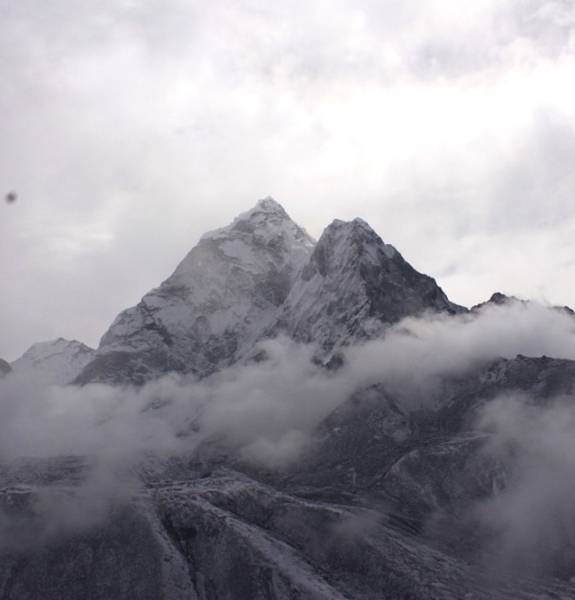
The Pikey Peak to Everest Base Camp Trek is one of those journey that gives you a completely new perspective on the Everest region, and it’s very beautiful. You begin in the incredibly peaceful hills of the Solu region rather than jumping straight into the busy main trails. Travelling from these area is a lot more peaceful, passing through authentic Sherpa Village, lush green forest, ancient monasteries, and prayer flags.
Walking along expansive ridges with extensive vistas of the mountains feels more authentic and being at a higher height adds to this sense of serenity. Before the intensity increases when one enters into higher Himalayan regions, most trekkers I know will appreciate the time spent earlier to their journey when beginning their trek at lower elevations.
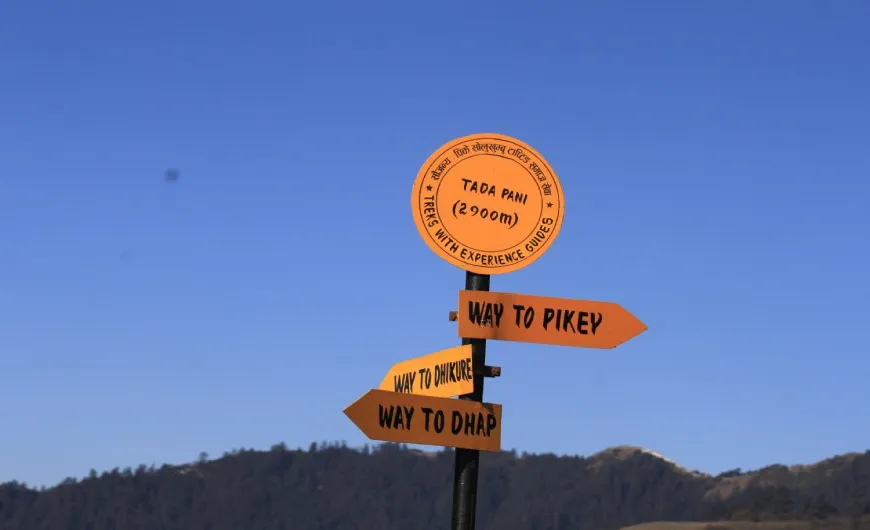
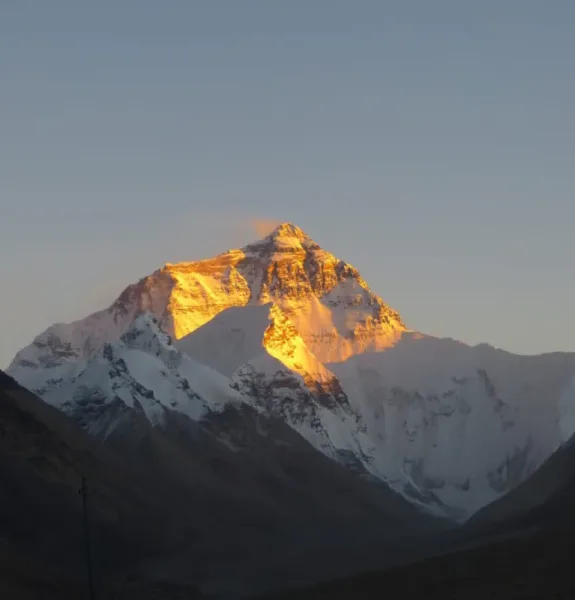
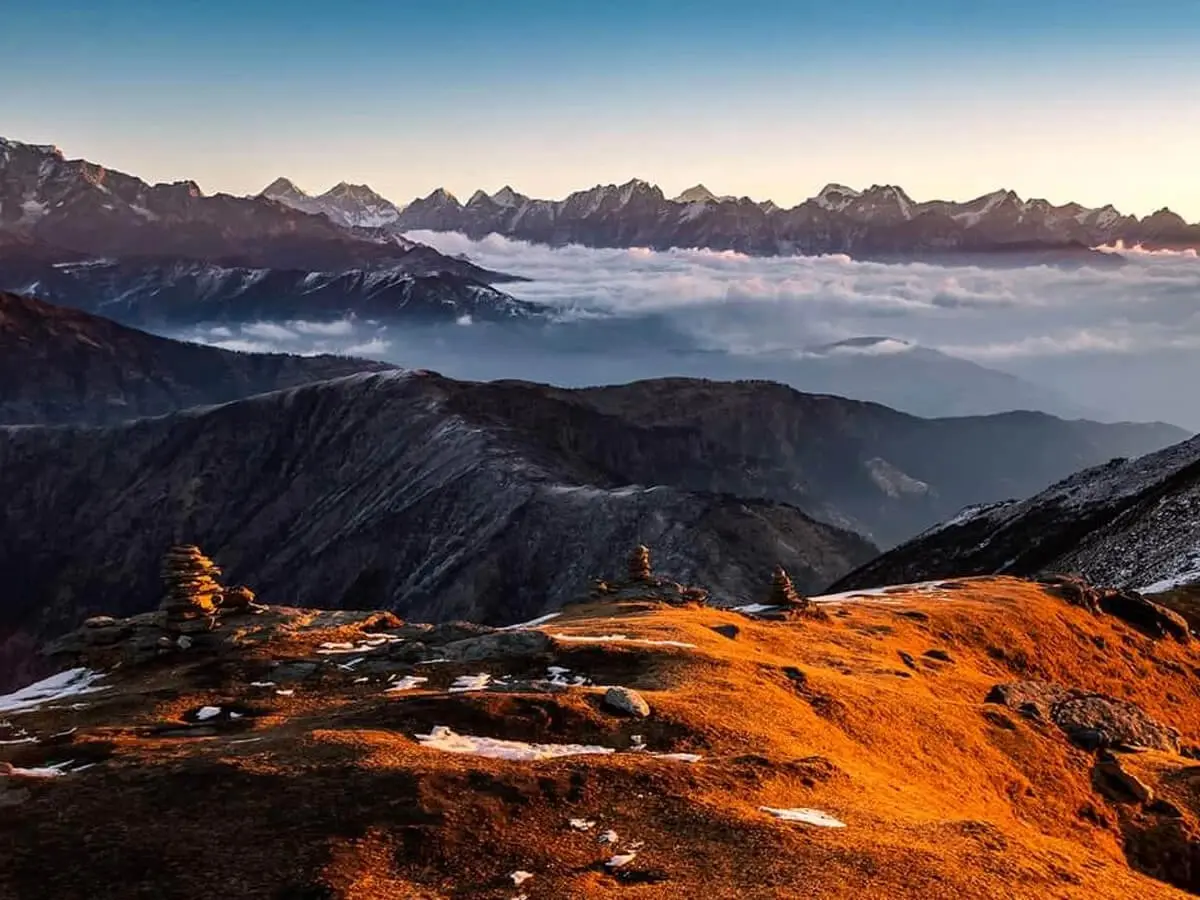
The most amazing thing about the entire trek has to be arriving at Pikey Peak. This mountain is very, very well known for its sunrises and that’s not a fluke either. If you have a nice clear morning, the horizon is completely filled with these massive mountains and some of them as far away as Mt. Everest. Watching the first rays of light hit the mountains is something you will remember forever, it is like the whole range begins to be illuminated. After you have been able to take in some of that tranquility, the trail continues north, eventually connecting with the classic route to Mt. Everest in the Khumbu region.
In general, the trek normally takes anywhere from about 18 to 20 days depending on personal pacing and the number of days you need to acclimatize (which is super important). After driving from Kathmandu down into the lower regions, you have a number of days of trekking through forests and valleys, until you reach the high altitude trekking regions. The high point of your trek will be Everest Base Camp at an altitude of 5,364 meters. However, most people also make the trek to Kala Patthar , an additional 191 meters in elevation at 5,545 meters to get the best view of Mt. Everest.
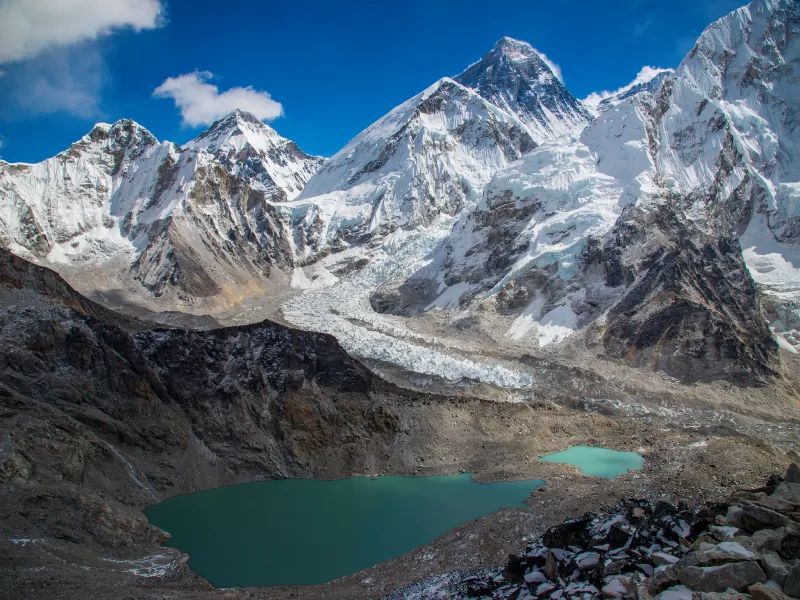
As far as the accommodation goes, you will find yourself sleeping in local guesthouses (called tea houses) that are very simple yet comfortable in Sherpa-family-run lodges. The trekking is moderately to mildly difficult due to high altitudes, with daily walking of about 5 to 7 hours. You don’t need to be an expert mountaineer or anything, but good fitness and thinking slow and steady will go far in helping you succeed. What makes this route particularly special is that you get the best of both worlds- the quieter, more remote part of the mountain and the historic path to the highest mountain in the world.
Best Time To Do Pikey Peak to Everest Base Camp Trek
Spring (March to May)
Spring is typically considered the best time to hike to the Everest Base Camp from Pikey Peak because during spring, temperatures begin to rise, and there seems to be no shortage of beautiful Himalayan views every day. The Rhododendron forests on lower elevations really thrive in this area from mid-March until late April each spring and their bright red, pink, and white blossoms saturate everything in the area with a feeling of vibrancy and renewal after the long, cold winter months.
The temperatures are generally warmer than during other times of the year, but if you are at higher elevations at night, it will definitely be cooler than normal depending on how hilly the trails you are hiking on are.
Autumn (September to November)
Autumn is usually considered the best time for people to visit the Everest region of Nepal, and that opinion is generally accurate. After the monsoon rains end and the dust gets washed away, the air is unbelievably clear and crisp and the mountain views are breathtaking.
From the summit of Pikey Peak, you will be able to see an endless panoramic view of mountains in all directions. The weather is very stable and nice as well, with mostly sunny days and cool evenings. All of this makes for perfect conditions for long trekking days and taking great photos.
Winter (December to February)
This time of year provides great opportunities for trekking but can be quite cold, especially at higher altitude. So only fewer people are on the trails, those who enjoy solitude may find winter to be an ideal time to hike. Although the views are beautiful on clear days, the presence of snow and freezing temperatures adds difficulty to hiking in the winter. Therefore, individuals planning to travel in winter must carry an adequate supply of warm clothing along with the ability to adapt to changing weather conditions.
Monsoon (June to August)
During this season, rainfall is frequent throughout Nepal in lower mountain regions as well as in lowland valleys. Due to heavy rainfall from monsoon storms, the trails become muddy and often the views are covered in dense clouds for several days, therefore, trekkers may face challenges when attempting to access their destination. But, lush greenery covers the entire landscape and there are very few people on the hiking trails. If you enjoy the peace and quiet of nature, the monsoon season may appeal to you, but you must also be prepared to wait out wet weather conditions and pack more carefully.
Highlights of Pikey Peak to Everest Base Camp Trek
- Unique Two-in-One Trek: You get to hike two different trails: one is Pikey Peak with its beautiful peace and the other is a traditional Everest base camp route.
- Less Crowded Route: The trek along Pikey Peak has far fewer trekkers than the standard Everest Base Camp Trail; as such you will enjoy a far greater level of solitude and tranquillity.
- Breathtaking Panoramas: Enjoy stunning panoramic views of Mount Everest, Makalu & Lhotse along with all the other peaks of the Sherpani Mountains during your sunrise hike at Pikey Peak.
- Real Sherpa Villages: Experience real Sherpa culture & village life in places like Junbesi, Pangboche and Namche Bazzar.
- Cultural Immersion: You will visit ancient Buddhist monasteries plus experience the local way of life by walking past mani walls, chortens and colourful prayer flags.
- Everest Base Camp Experience: You will stand at the foot of the world’s highest mountain while gazing at the magnificence of the Khumbu Glacier.
- Kala Patthar Sunrise: You will see Mount Everest, as well as its surrounding mountain peaks at 5,545 m from Kala Patthar. This is the most photographed place on the map.
Pikey Peak to Everest Base Camp Trek - Distance, Duration, and Altitude
| Trekking Route | Distance (Kilometers) | Duration (Hours) | Altitude (Meters) |
|---|---|---|---|
| Dhap to Jhapre | 12 KM | 5 to 6 hours Trek | 2742 m. |
| Jhapre to Pikey Peak Base Camp | 10 KM | 5 to 6 hours Trek | 3810 m. |
| Pikey Peak Sunrise & Junbesi | 12 KM | Pikey Peak Sunrise & Junbesi | 2712 m. |
| Junbesi to Nunthala | 11 KM | 5 to 6 hours Trek | 2850 m. |
| Trakshindu to Paiya | 12 KM | 5 to 6 hours Trek | 2780 m. |
| Paiya to Phakding | 10 KM | 4 to 5 hours Trek | 2610 m. |
| Phakding to Namche Bazaar | 10 KM | 5 to 6 hours Trek | 3440 m. |
| Namche to Tengboche | 8 KM | 5 to 6 hours Trek | 3867 m. |
| Tengboche to Dingboche | 9 KM | 5 to 6 hours Trek | 4360 m. |
| Dingboche to Lobuche | 9 KM | 5 to 6 hours Trek | 4940 m. |
| Everest Base Camp | 12 KM | 7 to 8 hours Trek | 5364 m. |
| Kala Patthar and Pangboche | 15 KM | 7 to 8 hours Trek | 5545 m. |
| Pangboche to Namche Bazaar | 12 KM | Pangboche to Namche Bazaar | 3440 m. |
| Namche to Lukla | 19 KM | 6 to 7 hours Trek | 2860 m. |
Itinerary of Pikey Peak to Everest Base Camp Trek
Day 1: Arrival in Kathmandu
When you arrive at Tribhuvan International Airport, we will transfer you to your accommodation in Kathmandu. Consider taking a little time today to get over the long plane ride and recover from jet-lag. If you feel like moving around a little, you might explore the Thamel area, it really is an amazing place to explore with many small restaurants, shops, and absorb lots of energy from the people working there. Your guide will normally meet with you today, brief you about your trip, check your equipment for correctness, and answer any other questions you might have. Essentially, today is a day for rest before beginning your adventure in Nepal!

Activity: Arrival

Max. Altitude: 1400m./4,593ft.

Meal: Dinner

Accommodation: 3 Star Hotel
Day 2: Kathmandu to Dhap
The journey from Kathmandu to Dhap takes 7 to 8 hours by car, including stops along the way. During this time, we will drive on narrow, winding mountain roads through terraced farms and several small towns by rivers. Throughout our journey, we will see how dramatically the terrain changes from the busy center of Kathmandu to the remote rural hills. We finally arrive at our destination of Dhap, a small village where our trekking adventure actually begins! While there are some bumpy sections along the way, we will enjoy beautiful views of the lush green valleys.
Activity: Drive
Max. Altitude: 2530m./8,301ft.
Meal: Breakfast, Lunch, Dinner
Accommodation: Tea house
Day 3: Dhap to Jhapre
Today we begin our trek. This section of the trek is approximate 5 to 6 hours walking through forest areas/farmland. The first part of the trek is uphill then turns into relatively flat allowing a nice rolling flat trail towards Jhapre. You will also see the local housing and terraced fields that are cultivated, listen for birds as they may also be sighted. The trail is clearly marked, but typically very quiet, thus providing a nice calming surface to walk on. The area of Jhapre is nice, with simple tea houses that serve hot food.
Activity: 5 to 6 hours Trek
Max. Altitude: 2742m./8,996ft.
Meal: Breakfast, Lunch, Dinner
Accommodation: Tea house
Day 4: Jhapre to Pikey Peak Base Camp
Today will present a larger incline, moving toward Pikey Peak Base Camp. The trekking will be through the pine and rhododendron forests, with ridges opening frequently providing early views of the major peaks. The trekking path is generally rocky but relatively easy to follow. Reaching Base Camp is rewarding and very well-timed for the sunrise the following morning. The accommodations at Base Camp are relatively simple, however the view of the valleys is spectacular!.
Activity: 5 to 6 hours Trek
Max. Altitude: 3810m./12,500ft.
Meal: Breakfast, Lunch, Dinner
Accommodation: Tea house
Day 5: Pikey Peak Sunrise & Junbesi
Today is an early start as we rise before dawn to view the rising sun on Pikey Peak. The moment that the light reaches across the Himalayas, including Everest in the distance, will be an unforgettable memory. Once we have enjoyed this moment, we make our way down the mountain towards the Sherpa village of Junbesi. This village has many traditional buildings that are adorned with colorful prayer flags and makes for a beautiful place to overnight and gives visitors a real feel for life in the mountains. The descent from Pikey to Junbesi involves walking through beautiful forests and farms.
Activity: 6 to 7 hours Trek
Max. Altitude: 2712m./8,898ft.
Meal: Breakfast, Lunch, Dinner
Accommodation: Tea house
Day 6: Acclimatization Day in Junbesi
Max. Altitude: 2712m./8,898ft.
Meal: Breakfast, Lunch, Dinner
Accommodation: Tea house
Day 7: Junbesi to Nunthala
Today, we continue our trek through the Solu region as we pass many more villages and terraces as we continue to make our way to Nunthala. As we make our way (moderately) toward Nunthala, you will see that the house architecture and even the culture change a little from when we were near Junbesi. Because this hike is relatively flat and has only a few rolling hills, it will give you time for your body to adjust to the altitude. While you are in Nunthala, you will find it to be a tiny village inhabited primarily by farmers who possess a great deal of hospitality and serve food that is simple but good.
Activity: 5 to 6 hours Trek
Max. Altitude: 2850m./9,350ft.
Meal: Breakfast, Lunch, Dinner
Accommodation: Tea house
Day 8: Trakshindu to Paiya
We will climb to Trakshindu La Pass from Trakshindu (2,730m). The view from the top is stunning as you can see miles of hills and peaks. The trail can be a bit rugged and rocky underfoot, so be careful as you are moving, but the scenery will be worth the effort. As you descend to Paiya you will pass mani walls and small streams. Paiya is a very small village and it will be a good place to spend the night before you continue onward to the busier section of the Khumbu Region.
Activity: 5 to 6 hours Trek
Max. Altitude: 2780m./9,121ft.
Meal: Breakfast, Lunch, Dinner
Accommodation: Tea house
Day 9: Paiya to Phakding
Today we will descend to meet the main Everest Trail at Phakding (2,600m) from Paiya. The trail will be through woods and along the river, the trail is generally in good condition, but if there has been rain recently it could be muddy. Phakding is a bit of a hub so the tea houses will be larger than in many of the previous places you have stayed. You will see many more trekkers and lodges as you start making your way into the Khumbu Region. The sound of the Dudh Koshi River flowing right next to the trail will be very peaceful.
Activity: 4 to 5 hours Trek
Max. Altitude: 2610m./8,563ft.
Meal: Breakfast, Lunch, Dinner
Accommodation: Tea house
Day 10: Phakding to Namche Bazaar
Prepare yourself for a long, steep scramble up to the “Sherpa Capital,” Namche Bazaar. You will be walking uphill through pine forests and across a series of those iconic suspension bridges that hang high above the rivers. Although the trek will be challenging, it will be very rewarding once you arrive in Namche. Namche is a busy little town that has numerous hotels, cafes and an exciting local market. It is an excellent place to rest and acclimatize and to see Everest up close.
Activity: 5 to 6 hours Trek
Max. Altitude: 3440m./11,286ft.
Meal: Breakfast, Lunch, Dinner
Accommodation: Tea house
Day 11: Acclimatization Day in Namche
In Namche, a rest day is very important for you to acclimatize to the elevation. While today is primarily going to be a rest day, we will take an easy acclimatization hike to the Everest View Hotel, or over to Khumjung Village. The views of Everest, Ama Dablam, and the other surrounding peaks are phenomenal! Afterward, we will return to Namche, where you will have plenty of time to relax and check out the local market.
Activity: Acclimatization and Short hike
Max. Altitude: 3440m./11,286ft.
Meal: Breakfast, Lunch, Dinner
Accommodation: Tea house
Day 12: Namche to Tengboche
Your trek today will be moderate but very scenic as you trek to the famous Tengboche Monastery. You can expect to walk through many rhododendron trees, pass through many pine trees and cross several streams before reaching your destination. The Tengboche Monastery is located on the edge of a ridge that overlooks Ama Dablam and Everest- both of which are breathtaking views. The tranquility of being at this location on the same day as the peace and serenity created by the sound of the monk’s chant and the presence of the various prayer flags will provide an enjoyable way to finish your evening at the Tengboche Monastery.
Activity: 5 to 6 hours Trek
Max. Altitude: 3867m./12,687ft.
Meal: Breakfast, Lunch, Dinner
Accommodation: Tea House
Day 13: Tengboche to Dingboche
We will leave the trees behind, as the trail continues into the high alpine region. The trail will be exposed to sunlight and as we climb in elevation, you will certainly notice the thinning of the air. We will pass by many different yak pastures as well as small villages with stone houses, on our journey to Dingboche. Dingboche is a small village, with very humble lodges. It is the perfect place to rest and prepare your body for even greater elevations. The views of Island Peak and Lhotse are downright spectacular.
Activity: 5 to 6 hours Trek
Max. Altitude: 4360m./14,304ft.
Meal: Breakfast, Lunch, Dinner
Accommodation: Tea House
Day 14: Acclimatization Day in Dingboche
One more acclimatization day is needed before continuing up higher again. Usually, an acclimatization hike will be from Dingboche up to Nangkartshang Hill (spectacular views of Makalu, Lhotse and Ama Dablam). The best and most common way to adjust to altitude is with these small hikes and to stay active. The other part of the day is spent resting in preparation for the coming thin air.
Activity: Acclimatization
Max. Altitude: 4360m./14,304ft.
Meal: Breakfast, Lunch, Dinner
Accommodation: Tea house
Day 15: Dingboche to Lobuche
Today will be a more difficult day, as we will be hiking to the foot of the Khumbu Glacier. The trail will be very rocky, so be sure to be careful where you step. You will also see many memorials to those who have died while trying to reach the summit, it is very emotional. Lobuche is a very small, remote village, with very basic accommodations for sleeping. Our main purpose for staying here is to prepare ourselves for the final part of our trip, which will be to walk to Base Camp. The mountain scenery is also very awe-inspiring.
Activity: 5 to 6 hours Trek
Max. Altitude: 4940m./16,207ft.
Meal: Breakfast, Lunch, Dinner
Accommodation: Tea House
Day 16: Everest Base Camp
Today is a huge milestone for all of us! We will be walking to Everest Base Camp today (EBC). The trail from Lobuche leads us across the rocks of the Khumbu Glacier moraine, which can be uneven and jagged and even a bit of a scramble, but the experience of standing at the base of the tallest mountain in the world is something we will never forget. After taking a bunch of pictures and enjoying the incredible views, we will make our way down to Gorakshep for bed. The lodges at Gorakshep are quite basic, but once you crawl into bed, we are sure that you will be too tired to care!
Activity: 7 to 8 hours Trek
Max. Altitude: 5364m./17,598ft.
Meal: Breakfast, Lunch, Dinner
Accommodation: Tea House
Day 17: Kala Patthar and Pangboche
Today’s adventure begins early, even before the sun comes up, when we hike up to the highest point of our trip-Kala Patthar. This will be one of the steepest, coldest, and toughest hikes, but the 360-degree views of both Everest and Lhotse at sunrise will make it worth it! We’re now going to walk back down a long series of steep declines through Dingboche to reach Pangboche. Even though we will have a ton of downhill walking, the countryside will once again be stunning as we pass through old monasteries and yak farms!
Activity: 7 to 8 hours Trek
Max. Altitude: 5545m./18,192ft.
Meal: Breakfast, Lunch, Dinner
Accommodation: Tea House
Day 18: Pangboche to Namche Bazaar
The day will consist of a long walk where we will be mostly descending back toward Namche. We will cross a number of suspension bridges and go back through the familiar forest. Getting to Namche is cool because you have one more shot at a coffee, shopping for souvenirs, and the market vibe.
Activity: 5 to 6 hours Trek
Max. Altitude: 3440m./11,286ft.
Meal: Breakfast, Lunch, Dinner
Accommodation: Tea House
Day 19: Namche to Lukla
Last day of trekking! We are back at Lukla following the Dudh Koshi river. There are a couple short climbs and a lot more easy downhill areas as we go through the last few villages. There tends to be a bit of a party after doing this trek because people who have done it and want to eat some great food and have a drink while waiting for the flight back to Kathmandu.
Activity: 6 to 7 hours Trek
Max. Altitude: 2860m./9,383ft.
Meal: Breakfast, Lunch, Dinner
Accommodation: Tea house
Day 20: Fly into Kathmandu
We will take a quick 45 min flight to get back to the airport in Kathmandu. The flight is quite the experience, the views from above of the same mountains and valleys you just walked through are truly unbelievable. Once we land, you’ll be taken back to your hotel, where you can have a hot shower, get some rest, and reflect on everything you just accomplished. In the evening, the company will host a farewell dinner to celebrate the successful completion of your Pikey Peak to Ebc Trek.
Activity: 45 min Flight
Max. Altitude: 1400m./4,593ft.
Meal: Breakfast, Lunch, Dinner
Accommodation: 3 Star Hotel
Day 21: Departure!
Depending on your flight schedule, we will take you to Tribhuvan International Airport for your journey home. Your trek officially ends here and you will go home with a backpack full of memories including sunrises over the mountains and amazing hospitality from all of the local people you met along the way!
Meal: Breakfast
Includes/Excludes
What is included?
- Permits and Fees: All necessary permits for the Pikey Peak to Everest Base Camp Trek, such as the TIMS (Trekkers’ Information Management System) card, Khumbu Pasang Lhamu Rural Municipality and Sagarmatha National Park permits.
- Accommodation: Accommodation throughout the trek, typically in teahouses or lodges. This usually includes accommodation in Kathmandu before and after the trek in 3 star hotel on BB plan. (twin sharing basis)
- Meals: Most packages will include three meals a day (breakfast, lunch, and dinner) during the trek and also includes two times hot beverage (in breakfast and lunch) and seasonal fruits after dinner.
- Transportation: Ground transportation from Kathmandu to the trailhead (usually Dhap) and back from Lukla in a Flight.
- Guide and Porters: Services of an experienced English-speaking trekking guide and porters to carry luggage.(one porter for two trekkers) This includes their salary, insurance, equipment, food, and accommodation.
- First Aid Kit: A basic first aid kit.
- Trekking Map: A map of the trekking route.
- Equipment: Duffle Bag, Sleeping Bag (if necessary)
- Pick up drop-off : airport pick up and drop-off by private vehicle.
What is not included?
- International Flights: International airfare to and from Nepal is not included.
- Travel Insurance: Travel insurance that covers emergency rescue and evacuation is not included, and you’ll be expected to have your own.
- Personal Expenses: Expenses for extra meals, drinks, snacks, charging devices, hot showers, Wi-Fi, and other personal costs are not included.
- Nepal Visa Fees: Entry visa fees for Nepal.
- Additional Accommodation and Meals: If you choose to extend your stay in Nepal, the cost of additional accommodation and at kathmandu meals will not be included.
- Rescue and Evacuation: Any costs related to emergency evacuation or rescues are not covered.
- Trekking Gear: Personal trekking equipment, such as hiking boots, down jackets, trekking poles, and other gear are not included.
- Tips: Tips for guides and porters are not included and are left to your discretion.
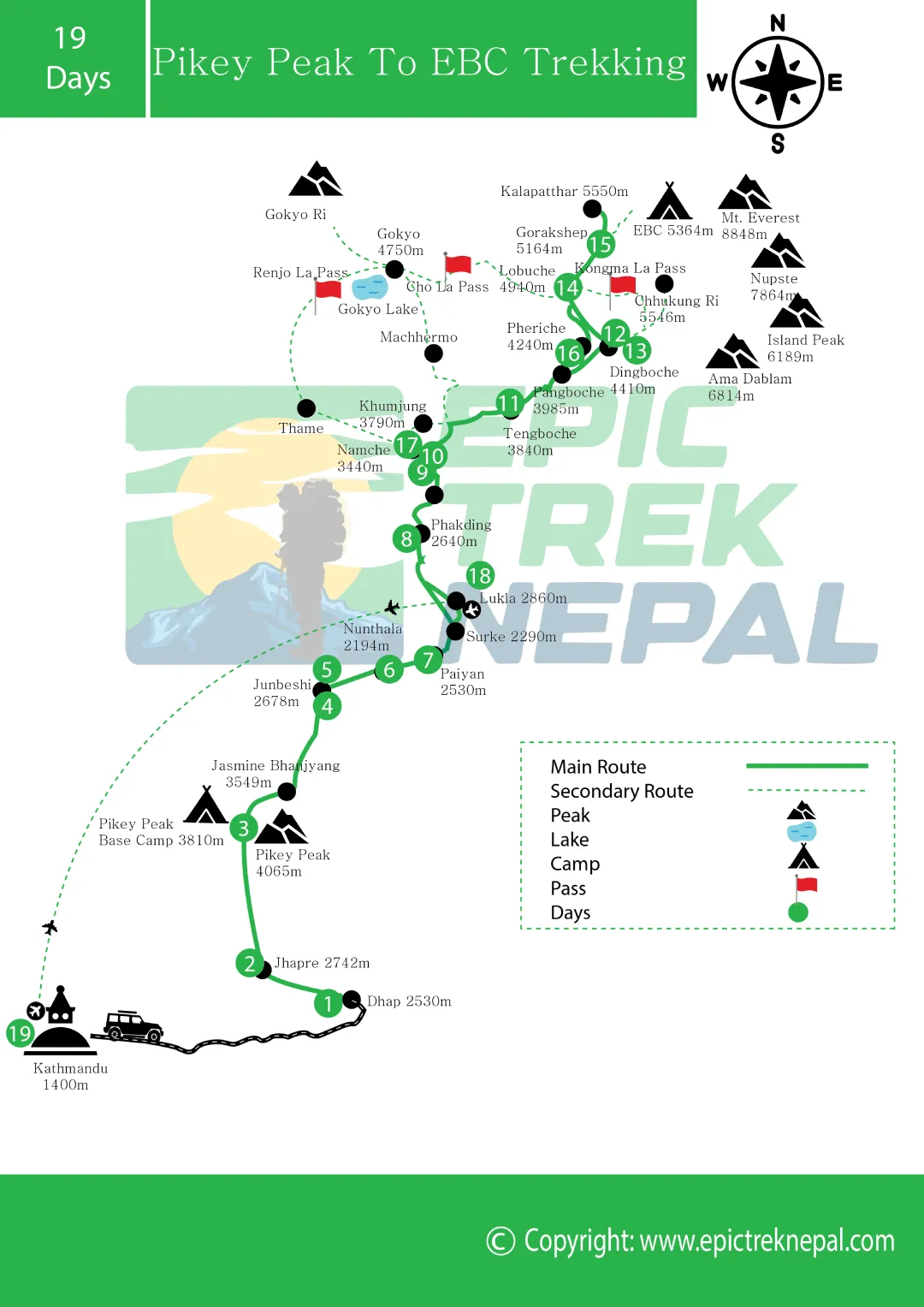
Trip Map of Pikey Peak to Everest Base Camp Trek
Trip Information
Trek Difficulty
The Pikey Peak to Everest Base Camp Trek is typically classified as a moderate to difficult trek however, it is not a technical climb. There is no rope work involved, but there will be significant demands on your endurance and mental toughness to continue walking for many consecutive days over varied terrain, such as hills, large forests, and rocky mountain trails. While some areas will provide gentle terrain, numerous long climbs will deplete your energy for many days, especially as you travel at higher elevations where the air becomes less dense.
You will typically spend between 5 and 7 hours a day walking, occasionally you may spend longer than that, but the length of each day depends on how far apart the villages are from one another. There are a lot of uphill and downhill sections of the trail, and once you reach the high altitude areas of the Everest Region, you may notice yourself moving much slower and therefore, most trekkers take breaks more frequently than they expected.
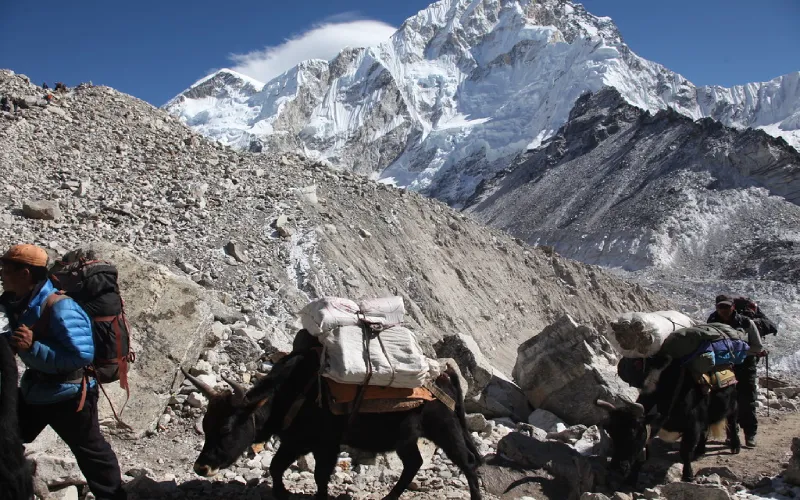
Altitude is undoubtedly the largest factor to contend with on this expedition. You will be progressively ascending from the Solu area to the Everest Base Camp (5,364m) and then continuing to hike to Kala Patthar (5,545m), which provides arguably the most spectacular view of the mountains.
At these high altitudes it is critical that your body can acclimatize itself properly. To this end, an effective itinerary that provides multiple rest days will go a long way toward assisting your body in adjusting to these remarkable elevations while minimizing your chances of suffering from altitude sickness.
Although you do not need to be an exceptional athlete, being in good physical condition will make your experience on the trek much more enjoyable. If you can comfortably walk through 2-3 hours of continuous walking on a daily basis or performed some other similar prep work – such as hiking, jogging or walking long distances. What is essential is that you take your time, stay well-hydrated and listen to your body and these small differences can have a significant impact once on location.
Cultural Experience along the way
Another aspect of the Pikey Peak to Everest Base Camp Trek is the experience of seeing the people and getting to know their cultures, ways of life, and homes. From the quietest of small towns located in the Solu area to the most densely populated areas found near Mount Everest (Khumbu), this track provides an ideal record of the Sherpa people. They are known for their strength, courage, kindness, and hospitality.
As you hike from one location to another, you will find Sherpa people working in the fields, carrying supplies up steep slopes, and greeting you with a friendly “namaste.” You will find numerous small stone and wooden homes wrapped with prayer flags that reflect how spirituality and everyday living co-exist.
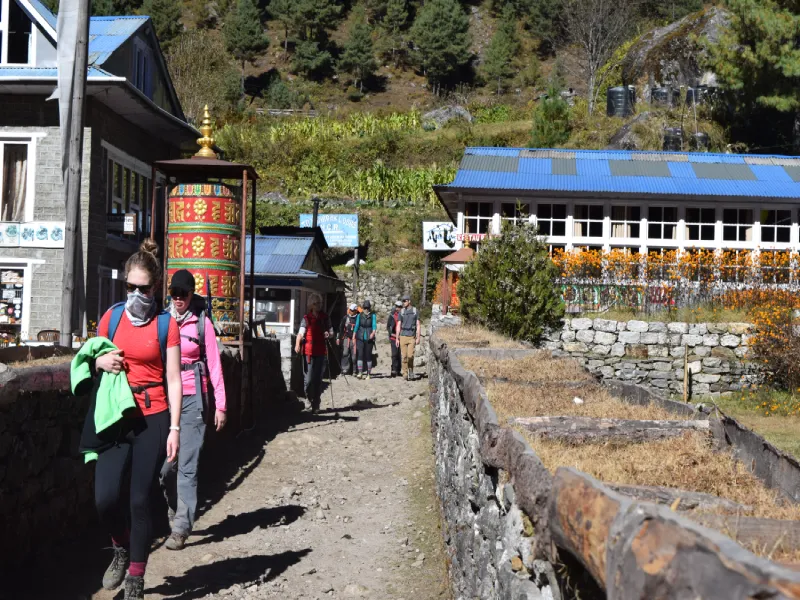
Along this trek are many Buddhist monasteries as well as numerous world-renowned Buddhist prayer sites such as Mani walls and Gompas, where we can see the spiritual aspect of the mountains. Prayer flags, which are traditionally displayed at all these locations, fly freely and are meant to carry blessings over the mountains and you may see monks sitting quietly with their scriptures or performing other religious rituals. Even small actions such walking by sacred areas or entering a monastery for a moment or two are enough to provide you with the experience of the sacred.
You can also find additional communities, such as the Tamang and the Rai people, as you go further down the trail. You may run into many children running around, being curious and playful, along the way. The elders in the community may even share their mountain life stories with you, if you stop long enough to listen. Staying at the family-run tea houses is a highlight as well because it allows you to experience their typical day-to-day activities.
Whether you are enjoying a warm meal, sharing stories with other trekkers, or warming your hands by the fire after a long day on the trail, these are the experiences that will be engraved in your memory forever. The trek not only takes you through incredible scenery but also gives you a glimpse into the ever-present culture of these people that has existed for generations.
Accommodation and Meal on the Pikey Peak to Everest Base Camp Trek
The Pikey Peak to Everest base camp trek features such a good variety of tea houses that have a true feel for living in the mountains. The tea houses around Pikey Peak are generally small and owned by local families. The rooms typically have very basic furnishings, with very few extra things such as blankets or heating options. Some of the tea houses have a shared bathroom, while at others you may need to use the outhouse. Be sure to take a travel towel with you and your own toiletries.
Even though they are basic, these tea houses are very homey in atmosphere, and the owners will go out of their way to make sure you feel comfortable. After hiking through the quiet forests all day to trek up to the base of the Everest, the most enjoyable way to experience the mountains is in a small, cozy tea house.
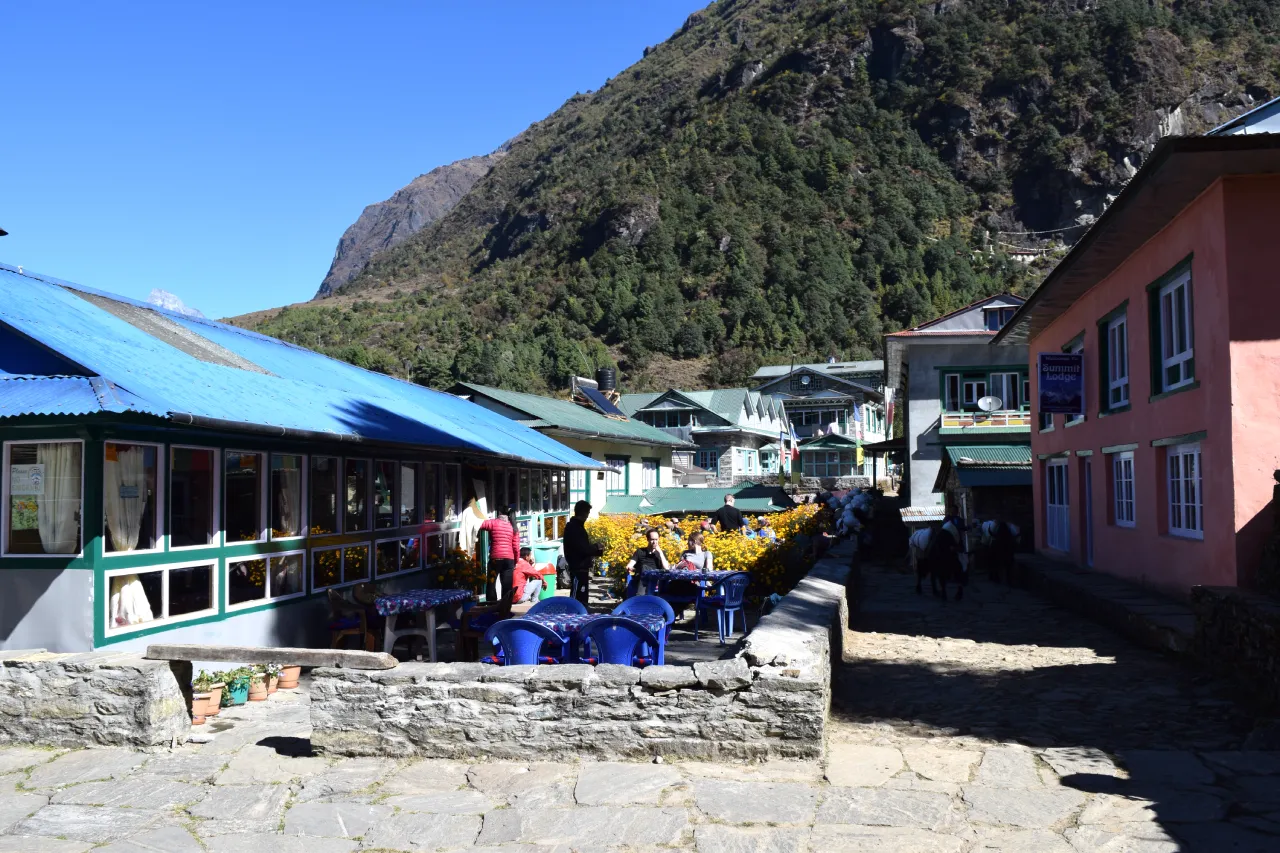
Heading north into the Khumbu region and approaching Everest Base camp, levels of development increase. In larger towns like Namche Bazaar and one of the tea houses, tea houses in general tend to have more rooms, so you might have your own, and sometimes you can even get a hot shower if you’re willing to pay for it. People tend together around the little wood stove in the dining area of the tea houses, so dining there is the best way to socialize with other trekkers.
Once you get above Dingboche/Gorak Shep, things once again become basic due to the altitude, your room may be cramped and have little or no water. You really begin to realize you are on the edge of the world there!
The food served in tea houses is hearty, home-cooked, and designed to provide you with lots of energy. You’ll find a wide variety of dishes available to you in the lower elevations near Pikey Peak, including dal bhat (rice and lentils), momos (dumplings), vegetable curry, and all types of noodles or fried rice. The breakfast options are typically porridge, egg, or pancakes with large cups of tea or coffee to drink with it.
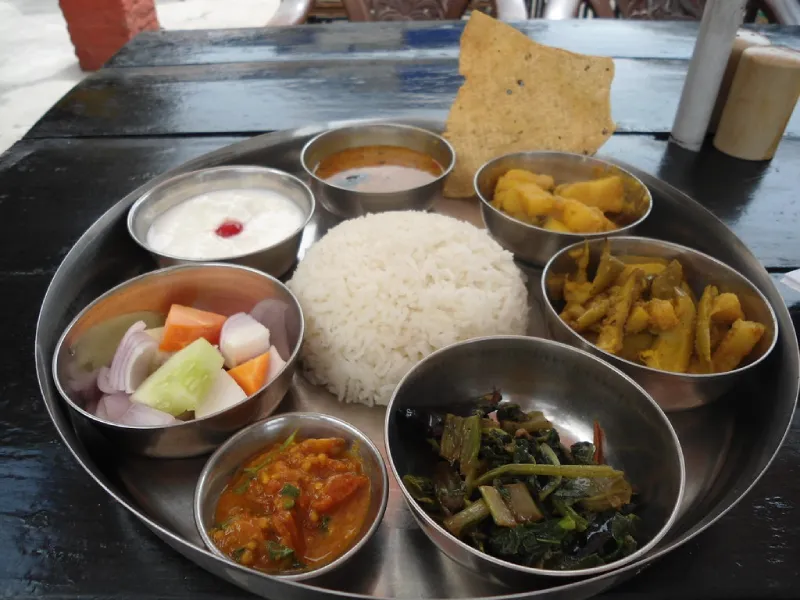
One of the things I loved most about the entire experience was communal dining. No matter how great the lodge is, you will be at the same table with other trekkers from all over the country sharing stories and sharing a hot meal together.
While the accommodations are basic, the warmth of the people plus the incredible views of the mountains right outside the window is something that is going to leave you with memories forever. Experience the thrill of an adventure and an authentic Himalayan lifestyle that only comes from staying in the valley instead of an expensive hotel in a city.
Permits and Documentation
If you are going to do the Pikey Peak to Everest Base Camp Trek, before hitting the trail you have to complete some important paperwork. The first order of business is to get your Sagarmatha National Park Permit (SNP). The SNP is required for the entire trek as it crosses through the Sagarmatha National Park, it is also home of Everest and all the other giant peaks. Again, the SNP fee goes toward the wildlife and conservation of the National Park, yay!
A Khumbu Pasang Lhamu Rural Municipality/KPLRM Permit is another important permit that you will need as you trek in the Khumbu region of Nepal, this permit helps develop the area by supporting repairs to schools and trail maintenance, etc. You can get your KPLRM permit in Kathmandu or at local offices in Lukla. You must keep your KPLRM and SNP permits accessible inside your backpack as there are many checkpoints located on the trail and officers will ask to see the permits.
If the service is provided by the Epic Trek Nepal, we will handle the paperwork and provide licensed guides for you to ensure safety and will arrange for you to receive both your SNP and KPLRM permits in advance, which makes your trip much less complicated and ensures that these documents are official. Furthermore, having your permits will help support the local communities and retain the beauty of the mountains.
Cancellation Policy for Pikey Peak to Everest Base Camp Trek
At Epic Trek Nepal, we understand the changes in plan unexpectedly. That is why we designed it to be fair and clear.
Cancellation Notice: By any reason, if you need to cancel tour trek then please inform us at least 15 days before your scheduled Trek start date.
Administrative Fee: When you cancel the trek, 25% fee will be reduced from the total cost of trek as administrative charge. This fee covers the planning and organizational cost we’ve already done for your trip.
Non-Refundable Period: If the cancellation happen less than 7 days before the trek start date, no refund will be provided but by looking at the situation and if we feel the reason of cancelation is valid then the amount will be refunded after deducting 70% of total trek amount. In such time we have already submitted the cost and reserved the spots for you.
Documentation Support: We know insurance claim can be important. In-case if you cancel, we would gladly provide the necessary document such as receipts to help with your insurance process.
Unused Accommodation: Please note that if your trek is cancel due to personal reasons, illness or bad weather, refunds for unused accommodation are not available.
If you have questions or want to discuss your situation, our team is here to help. We appreciate your understanding and look forward to guiding you safely on your Pikey Peak to Everest Base Camp Trek.
What to Pack for Pikey Peak to Everest Base Camp Trek:
Here are the essential gears Trek:
Bag pack:
- Comfortable backpack with adjustable straps (40-70 liters)
Footwear’s:
- Hiking boots with ankle support.
- Lightweight camp shoes or tennis shoes for relaxing.
Clothing:
- Moisture-wicking base layers (long-sleeve and short-sleeve).
- Insulating layers: Heavy fleece or down jacket.
- Waterproof shell with a hood.
- Lightweight windbreaker.
- Waterproof pants.
- Sturdy trekking pants (2 pairs).
- Comfortable hiking shorts.
- Moisture-wicking underwear (5 pairs).
- Long underwear (2 sets).
- Multiple pairs of moisture-wicking hiking socks (7 pairs).
- Warm thermal socks (1 pair).
Accessories:
- Trekking poles (collapsible for stability).
- Lightweight headlamp or flashlight with extra batteries.
- Durable water bottles (2 liters).
- Gloves (light inner gloves and insulated wool or down mittens/gloves).
- UV-protective sunglasses.
- Broad-brimmed hat for sun protection.
- Neck gaiter.
- Wool hat or balaclava for colder weather.
Sun Protection:
- High SPF sunscreen.
- Moisturizing lip balm with SPF.
- Towels and Toiletries
- Quick-drying travel Towel
- Basic toiletries (toothbrush, toothpaste, biodegradable soap etc.)
Documents and Money:
- Copy of passport and identification
- Sufficient local currency (ATM on the way aren’t work always)
Snacks and Hydration:
- High-energy snacks (nuts, energy bars, chocolates).
- Water purification tablets or a portable water purifier.
Navigation and Communication:
- Trekking map or guidebook.
- Mobile phone with a local SIM card and emergency contact numbers.
Emergency Item:
- Comprehensive kit including basic medications and blister treatment (Guides will carry).
- Lightweight emergency shelter or space blanket.
- Duct tape for quick gear repairs.
- Plastic bags for organizing and protecting items.
- Trash bags for carrying out waste.
Frequently Asked Questions
It’s mostly a moderate-to-difficult trek, you do not have to be super fit, but you also need to walk and shouldn’t mind gradually getting higher in altitude. This will give you some easy-going slightly inclined walking sections, but the steeper climbs around Pikey Peak, which is the lowest point on this whole trail, and then again at a higher elevation in Khumbu will make your overall trek more difficult.
The best times to do this trek are definitely during the spring (March – May) and the fall (September – November). The spring season is awesome, because the rhododendrons will be blooming and the weather will be nice and mild. The fall season offers absolutely beautiful, clear sky conditions and superb views of the mountains. Winter trekking is doable as long as you are not bothered by cold temperatures and the monsoon season can be quite challenging, as the trails will be slippery and there will be a lot of cloudy conditions due to the frequent rain.
Yes, absolutely! As long as you’re in fairly good physical shape and don’t mind walking multiple hours each day throughout the journey, you can do it!
The majority of your accommodation will be tea houses or community-run lodges along the route to your trekking destination. The accommodations themselves are very simple, but they will be great and warm!
In most tea houses you will be provided with adequate meals every day of your stay breakfast, lunch and dinner. While at a tea house, you can expect mainly dal bhat types of meals: (rice, lentils) but there will also be a few varieties of noodles, soups and momos, (steamed dumplings) and assorted types of rice dishes.
You will couple of appropriate permits (i.e. TIMS Card and Sagarmatha N.P. Permit) so you won’t have to worry about it as these permits will be checked throughout the trek separately at different checkpoints on the route.
Trip Reviews
US$ 1500
Need Help? Talk to Expert
+977 9764792172