




Tibet Lhasa Tour 4 days
73 reviews in Tripadvisor

Trip Duration
4 Days
Destination
Tibet
Max. Altitude
3,650 m.
Trip Difficulty
Moderate
Group Size
1-12
Transportation
Flight
Accommodation
Hotel
Activity
Tour
Meals
Breakfast
Start / End
Kathmandu
Region
Tibet Autonomous
Best Season
Spring & Autumn
Need Help? Talk to Expert
+977 9764792172Trip Overview
Located in Tibet Autonomous Region of China, on the northern part of the Tibet Plateau with an altitude of 3,650 meter (11,975 ft) above sea level Lhasa is considered one of the highest cities in the world and has been known as the Spiritual Heartland of Tibet. Throughout the centuries, the city has attracted many monks, pilgrims, and travelers who visit this place in search of culture, spirituality and history all at once. The unique blend of ancient monasteries, colorful prayer flags, and countless pilgrims encircling the temples creates a very heavy and peaceful feeling that would be difficult to describe fully.
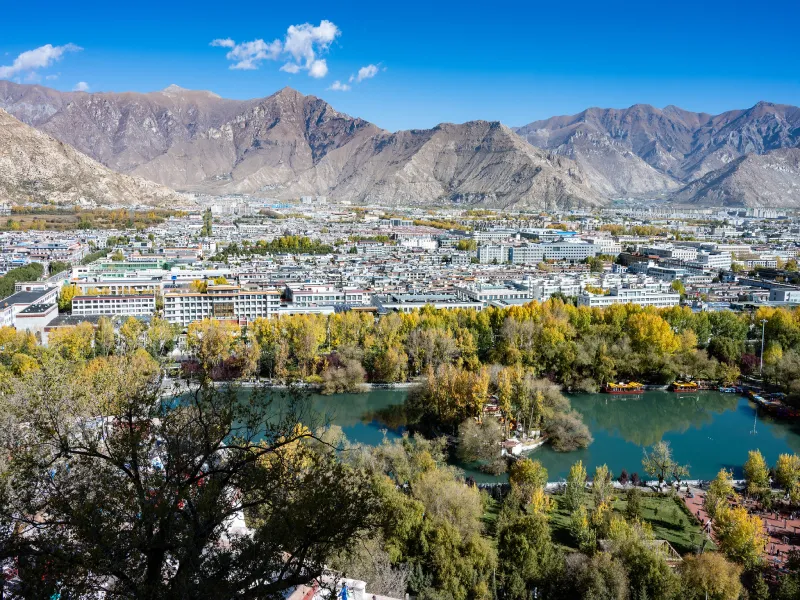
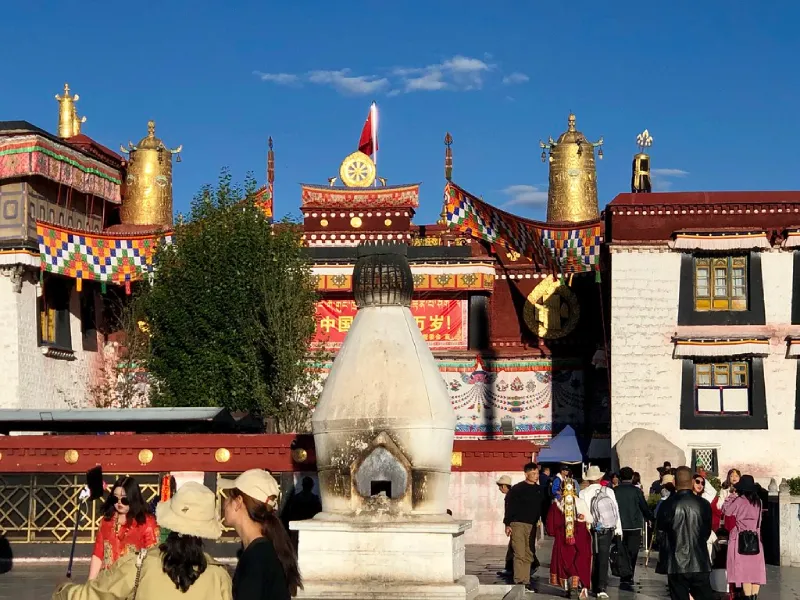
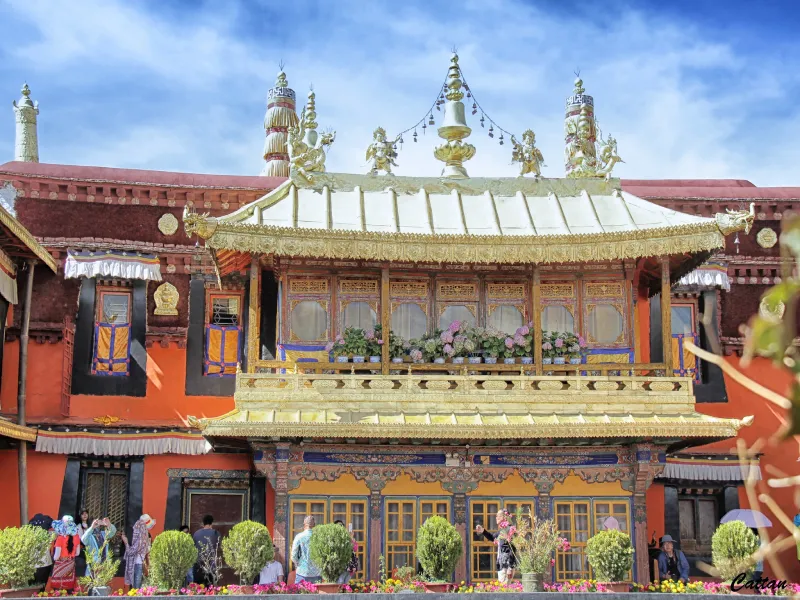
Lhasa is not just a dot on a map to many but also a place where religion and everyday life are practically indistinguishable from one another. The skyline of Lhasa is marked by the legendary Potala Palace, an enormous palace that was once the winter residence of the Dalai Lama and is now one of the most famous landmarks in Tibet. Near this palace is the sacred Jokhang Temple, which is rated as the holiest temple in Tibet. Around the temple, there is Barkhor Street, which is the bustling part of the city with prayer wheels and shops.
The 3 Night and 4 Day Lhasa Tour is a quick yet meaningful introduction to the city of Lhasa and its many cultural treasures. Most travelers arrive at the Lhasa Gonggar Airport or the Lhasa train station and are transferred to the hotel in Lhasa City on the first day of the trip. As Lhasa is located at a high altitude, the first day’s activities will be relaxed to give travelers time to acclimatize to the thinner air of Lhasa.
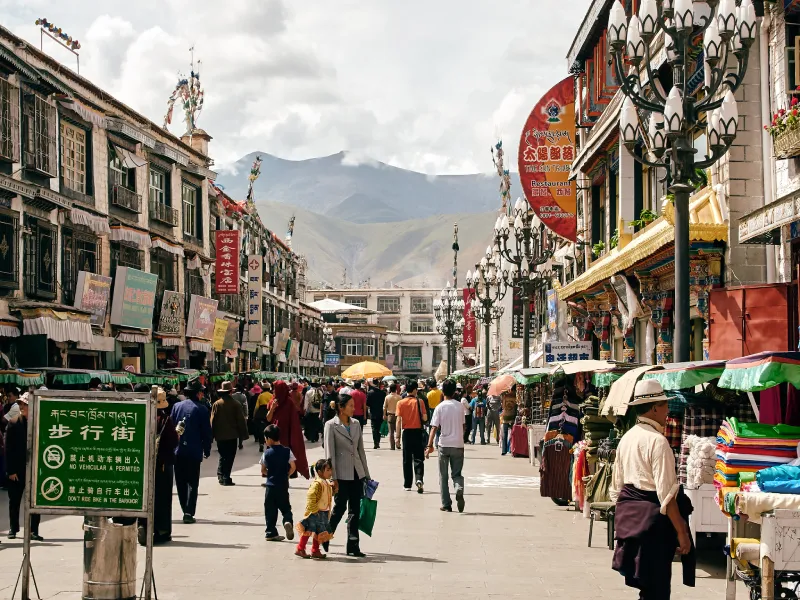
Over the course of the next few days, the trip will take you through some of the most famous monasteries, streets, and cultural landmarks in Lhasa. Although the trip is short, it still allows you to experience the spiritual atmosphere, unique architecture, and interesting cultural traditions of Tibet that will leave a longer-lasting impression than one would have thought.
Best Time to Visit Lhasa
Spring (April to May)
Touring in Lhasa during the spring months (April to May) is a delightful experience. The weather begins to warm up after winter, and you can enjoy sunny, pleasant afternoons, but morning and evenings may still be cool. Also, since spring is far from the peak tourist season, many popular tourist destinations (Potala Palace, Jokhang Temple) will be less crowded, which can be appealing for many visitors.
Summer (June to August)
Summer is the peak tourist season for Lhasa, and it is the best time to tour in Lhasa. The weather is quite pleasant, and the surroundings of the plateau seem quite green and alive. Although it might rain during your stay, it will not last for too long. It is also the best time to experience the festivals of the Tibetans, and the city is quite alive with pilgrims and tourists roaming the streets of Barkhor.
Autumn (September to November)
Another great time to visit is in autumn, from September to November. In fact, many travelers comment that this is the best time to tour in Lhasa as the weather is consistent and the skies are incredibly clear. The views of the surrounding mountains are stunning at this time of year too.
Winter (December to February)
Winter is definitely the quietest season to be in Lhasa, but honestly, it’s got this really unique charm if you don’t mind the cold. So, the temperature is definitely dropping, especially after sundown, so you’re gonna want to bring some serious layers because it’s gonna be COLD. But even though it’s cold, the days are really sunny, and the skies are just so crisp and perfect for taking pictures.
Highlights of Tibet Lhasa Tour 4 days
- Visit the stunning Potala Palace, representing Tibetan culture and history.
- Visit the spiritual Jokhang Temple, the center of Tibetan Buddhism.
- Walk down the beautiful Barkhor Street to see everyday Tibetan life and colorful markets.
- Discover and enjoy authentic Tibetan culture, food, and hospitality at Sera and Drepung Monastery, including witnessing a Traditional Monk Debate.
Itinerary of Tibet Lhasa Tour 4 days
Day 1: Kathmandu to Lhasa
You will begin your journey with a scenic flight from Tribhuvan International Airport in Kathmandu to Lhasa. It takes around 1 hr 15 min and as soon as you arrive at Lhasa you will be met and taken to your hotel by your Tibetan guide in a bus. The most important part of your day is in fact doing nothing, so take time to relax and allow your body to adjust to the high altitude of the mountains of Tibet. You will spend the night at your hotel in Lhasa.

Activity: Fly from Kathamndu to Lhasa, Meet

Max. Altitude: 3550m./11,647ft.

Meal: Breakfast

Accommodation: Hotel (Twin Sharing)
Day 2: Explore Lhasa
The entire day will involve exploring the spiritual heart of the city after breakfast. The first destination will be Potala Palace and it is actually larger than you would envision from pictures. Then, afterwards, we’ll proceed to Jokhang Temple, which, as well, is very sacred. After a busy day exploring temples, we will enjoy the bustling atmosphere of Barkhor Street while witnessing holy places around Jokhang Temple in a clockwise direction before returning to our hotel for the evening.
Activity: VIsit Potala Palace, Jokhang Temple, Barkhor Street
Max. Altitude: 3648m./11,969ft.
Meal: Breakfast
Accommodation: Hotel (Twin Sharing)
Day 3: Visiting the Monasteries
After having breakfast today you will have the opportunity to see 2 of the most popular monasteries located in Lhasa which are Sera Monastery and Drepung Monastery. You will be able to witness monks sitting down discussing various Buddhist subjects, explore the actual monastery where you will have a chance of learning more about the way of life of a Tibetan Buddhist.
Activity: Visit Sera Monastery and Drepung Monastery
Max. Altitude: 3650m./11,975ft.
Meal: Breakfast
Accommodation: Hotel (Twin Sharing)
Day 4: Lhasa to Kathmandu
After breakfast this morning you will travel to Gonggar Airport for your flight back home to Kathmandu. This concludes your journey through Lhasa. This journey has given you a chance to experience a small part of Tibetan culture, Drepung Monastery and Sera Monastery and their stunning buildings, plus the kindness and hospitality of the people.
Activity: Fly Back to Kathamandu
Max. Altitude: 1400m./4,593ft.
Meal: Breakfast
Includes/Excludes
What is included?
- Twin Sharing Accommodation as per the Itinerary on Bed and Breakfast Basis.
- English Speaking Tibetan Guide.
- Transportation as per the Itinerary by Bus and Flight.
- Monastery Entrance Fee .
- Tibet Travel Permit.
What is not included?
- Lunch and Dinner
- Insurance of Any Kind.
- Natural or Political disturbance Which Beyond our Control.
- Personal Expenses such as drinks, tips, Porter charge etc.
Trip Information
Difficulty Level
To be honest, most individuals can complete this 3 night 4 day Lhasa tour, as it falls into the easy to moderate level of difficulty. You are not going to need to be an experienced mountaineer to complete this trip and this is a huge positive. No long hikes or steep climbs are involved with this trip. Rather, it mostly consists of walking around temples, wandering along old streets and exploring the grounds of the famous Potala Palace. However, although there is not an extremely high level of physical activity during this tour, there are some considerations that you should keep in mind.
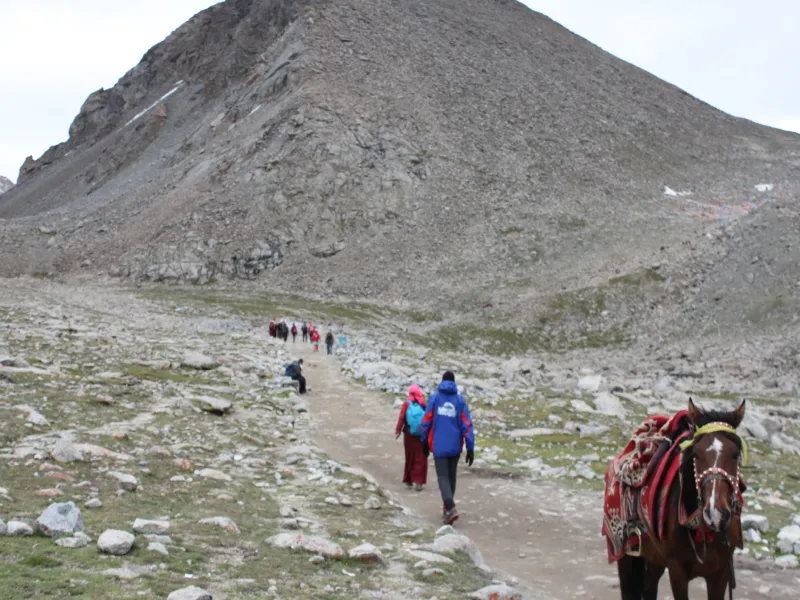
Altitude is the biggest predictor of your body’s reaction on your trek in Lhasa. At 3,650m (almost 12,000ft) above sea level, Lhasa’s altitude can be shocking compared to where you might have come from. You’re going to experience some sort of discomfort, particularly a headache, feeling out of breath quickly, or an extreme amount of fatigue. For this reason, the first day of travel is designed to be very easy for travelers, allowing them time to adjust to the thinner mountain air. It is important to stay hydrated, move slowly, and not over-exert yourself initially.
Generally speaking, you’re going to find that many historical sites that are fairly easy to get around, but I must point out that some places such as the Potala Palace are quite hard with a lot of stairs and also have areas with uneven floors. You will definitely want to bring a little stamina for those steps. There is no time limit to reach the top so take your time, if you need to stop and take a breather between every several flight of stairs.
Overall, nearly all travelers visiting for the first time will find it to be an easy trip. The altitude may be somewhat anxious when you initially arrive, but once you visit some of the monasteries and feel the calmness of the Tibetan atmosphere, it is well worth it. In fact, many visitors are amazed at how much they were able to accomplish in only a few days by simply following the suggestions of their own bodies and taking it easy.
Cultural Experience
Visiting Lhasa or other sites throughout Tibet is not just about taking pictures of beautiful palaces, it’s is much more about immersing yourself in a highly spiritual and respectful culture. One of the most important points to remember when visiting temples and monasteries is mannerism. Lower your voice, do not touch anything, and always obey instructions from monks or staff. Many small things such as removing your shoes before entering certain areas also show your respect for these sacred places.

When you visit a religious site (such as a temple or a row of prayer wheels), always walk in a clockwise direction. This will keep you from accidently upsetting someone. The Tibetan people believe that walking clockwise means you are moving with the flow of energy and are able to feel more connected to the area.
Another key piece of advice is to always ask someone before you start taking pictures, especially of monks, pilgrims and local people just living their lives. Many people will be happy to let you photograph them and may even smile at you, while others would prefer that you keep your distance. Also be sure to keep your camera out of temple halls unless there is a sign indicating it is okay to do so, as many places are strictly “no photos” as well.
Overall, the Tibetan people are very kind and welcoming towards visitors. The most important thing is that both visitors and locals show kindness towards one another in their interactions by keeping good manners as well as respecting each other’s boundaries.
Accommodation and Meals
On this three-night, four-day Lhasa trip, we have arranged for you to stay in very comfortable accommodations (on twin-share) that provide a safe place to relax after a long day exploring the city. The hotels all offer a great mix of local Tibetan character and all the modern things you would expect, including private bathrooms and heat (which will be a lifesaver) and are all located within a short distance of the major attractions, so you aren’t spending half of your day in traffic which means you’re getting to see as much as possible from day 1.
Each morning, you will be given a complimentary breakfast, so you can get the proper amount of breakfast to start your day and fuel your legs for your hiking, but lunches you will have to pay for separately. This is great because it will allow you to experience how locals eat and find great places to eat lunch out as well.
The same goes for dinner, you’re also responsible for finding somewhere to eat that will enable you to explore the areas and experience the culture at your pace. If you’re unsure of where to go, ask your guide, as they will have plenty of options for where to find the best authentic foods like momos, thukpa, or famous butter tea.
Please keep in mind that although the breakfast and accommodations are provided, you will be responsible for your own personal expenses as well as any additional meals. The goal of this arrangement is to provide you with the opportunity to create your own personal experiences while giving you a comfortable place to return to after you have visited the many areas across Tibet and enjoyed the many flavors and experiences that this beautiful region has to offer. Therefore, this trip allows you to have a good balance of guided exploration and individual exploration.
Permits and Documentation
Entering Tibet is different than the average travelling location. You must have a Tibet Travel Permit to enter or stay in Lhasa or anywhere else within the territory of Tibet. It is required for all foreign visitors to obtain before going to Tibet.
In addition to the Tibet Travel Permit, you must have a valid passport with a minimum six months remaining before its expiry date and a valid visitor’s visa to China (since Tibet is part of China) before travelling in Tibet via the Chinese Embassy. if you are applying for the visa outside of your home country, then you must pay an application fee of $125 per person, if you are applying for this visa from Argentina, Canada, Romania, or the United States, the fee will be $125 plus an additional $100 processing fee.
Having to collect the required documents may seem overwhelming. That’s why, your tour operator “Epic Trek Nepal” will be a great source of assistance. All we need is to receive from you is a copy of your passport and visa number. We will then file all required documents for you making it far easier than it appears.
Guides and Porter
It is incredible the difference a local Tibetan guide can make to your experience. They are fluent in English and know all about the local sights, temples, and those secret spots in the monasteries that you probably would miss otherwise. A local guide does more than just tell you that the Potala Palace is a palace, and the Jokhang Temple is a temple.
They give you all the history, culture, and story behind each location, making it much more interesting. They can also help you understand local customs and answer any questions you may have about anything you will experience while you’re there. It truly enhances your overall experience of the trip.
Porters are included with packages. They’re mainly for carrying the heavy stuff. Thus, if you are travelling with multiple bags or don’t want to carry them around the streets or on the temple grounds. With a porter, you will actually have a chance to concentrate on taking in all the beauty of the scenery as well as the feeling of the trip instead of worrying about your luggage or exhausting yourself while carrying things.
When everything is combined, having both guides and porters allows for an easier overall experience and a more comfortable journey. In Lhasa, you have the ability to navigate on your own, but having a local person there provides you with a true cultural experience and allows for good organization without your ever experiencing an annoying hassle or confusion.
What to Pack to 3 Night 4 Days Lhasa Tour
Here’s a basic list to pack for your tour:
- A light or down jacket – Even during the warm months, it can be quite cool in the mornings and evenings.
- A wind-resistant or waterproof jacket – Just in case the weather changes or if there is an unexpected gust of wind.
- Good walking shoes – You will do a lot of walking through temples, old streets, and palaces, so be sure they are comfortable!
- Socks (2-3 pairs) – You are going to want some warm, decent socks to walk in.
- T-shirts and long-sleeve shirts – Great for layering as required according to the sun.
- Comfortable pants – Wear something lightweight for sightseeing; it is better to wear pants when visiting temples than shorts.
- An insulated hat and a sunny hat – The sun can be a serious issue. Also, where the temperature drops you’ve got to have something warm on your head.
- A pair of sunglasses – The mountain sun is serious, check it out.
- A pair of gloves – You don’t usually need them in the summer but if you’re in there in the winter, you’ll be really happy to have brought these.
- Personal medications – Bring them incase you have a headache or are suffering from altitude sickness.
- Sunscreen – The air is really dry where you’re going to be and the sun is really strong, so protect yourself from both!
- Sanitizer and wet-wipes – Makes cleaning up really easy when you’re out experiencing the area.
- The basics – Toothbrush, toothpaste, soap and maybe a couple tissues or a roll of toilet paper in case you need them.
- Reusable water bottles – Staying hydrated is essential (your body is working as hard as it can at higher altitudes).
- Quick snacks – Anything that can provide an energy boost: energy bars, cookies, chocolate and dried fruit.
- A small day-pack – Light enough to hold your camera, water and any of your other items while out for the day.
Cancellation Policy for Renjo La Pass Tour:
At Epic Trek Nepal, we understand the changes in plan unexpectedly. That is why we designed it to be fair and clear.
Cancellation Notice:
if you decide to cancel your tour for any reason, please make sure to inform us at least 7 days before your scheduled Tour start date.
Administrative Fee:
When a cancellation is made, 25% fee will be reduced from the total cost of tour as administrative fee. This fee covers the planning, preparation and booking cost we’ve already done for your tour.
Non-Refundable Period:
For any cancellation made within less than 4 days before the tour start date, no refund will be provided but by looking at the situation, if we feel the reason for cancelation is valid, then the amount will be refunded after deducting 70% of the total tour amount, as we have already submitted the cost and reserved the spots for you.
Documentation Support:
We know insurance claim can be important. In-case if you cancel, we would provide the necessary document such as receipts to help with your insurance process.
Unused Accommodation:
Please note that we cannot offer refunds for unused accommodation or services, if your tour is cancel due to personal reasons, illness or bad weather.
If you have questions or want to discuss your situation, our team is here to help. We appreciate your understanding and look forward to guiding you safely on your Lhasa Tour.
Trip Reviews
Need Help? Talk to Expert
+977 9764792172