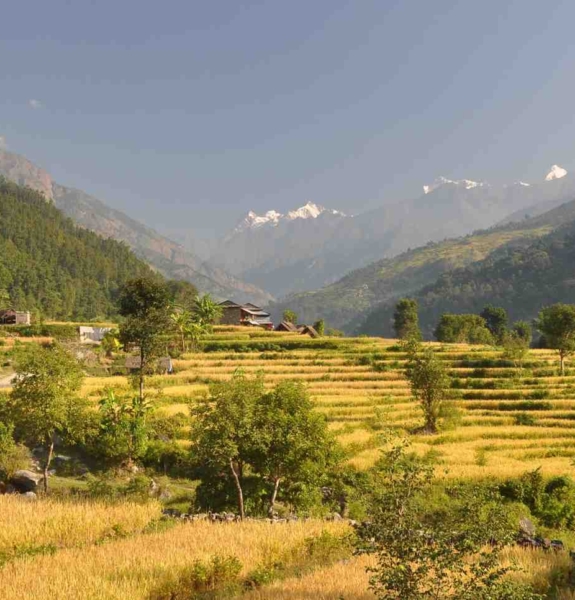

Tsum Valley Trek
73 reviews in Tripadvisor

Trip Duration
10 Days
Destination
Nepal
Max. Altitude
3,700 m.
Trip Difficulty
Moderate
Group Size
1-12
Transportation
Private Vehicle
Accommodation
Hotel/Lodge
Activity
Trekking
Meals
All Inclusive
Start / End
Kathmandu
Region
Manaslu
Best Season
Spring & AutumnUS$ 850

Need Help? Talk to Expert
+977 9764792172Trip Overview
Hidden deep within the north area of the Manaslu region, near the Tibet boundary, the Tsum Valley is one of those regions that the modern world just seems to have forgotten. Tsum Valley is located in the distant Gorkha district and remains far from popular and busy touring trails. Trekking into the Tsum Valley is nothing less than entering another world, a serene world that moves at its own natural rhythm.
The moment you begin trekking into the valley, you realize how different this place is. The prayer flags fluttering in the passes, the mani walls along the trails, and the ancient monasteries that carry long histories. This place is mostly inspired by Buddhist culture which gives you a sense of peaceful and calm atmosphere. The people then live a simple life that revolves around nature and spirituality. Yaks grazing in the fields, houses made stones, and warm smiles from the locals make this valley gentle and authentic.
This Tsum Valley journey is perfect for those kinds of people who want to see something further than just reaching the spot and checking off the places from their bucket list. This is for people who have an interest in untouched nature, cultural immersion and experiencing the untouched side of the mountains. This kind of adventure does not involve someone to be an expert, but still, the capability to walk and live the simple way of life is necessary. If you look for something peaceful, cultural and an experience that will stay with you, then the Tsum Valley Trek would definitely not disappoint you.
Why Choose the Tsum Valley Trek?
When we choose a place to travel, we prefer a different kind of Himalayan experience. The ever-popular trekking routes like Everest Base Camp and Annapurna Base Camp, provide breathtaking experiences, but they are still too crowded and highly commercialized, but the Tsum Valley is a remote and unique experience where you barely meet other trekkers for hours and are accompanied only by the sound of river, wind, nature and stunning mountain views.
Another reason why people love the Tsum Valley is its deeply rooted culture in Tibetan Buddhism. This region itself is known as a “sacred land“. You experience this as you walk through mani walls, prayer wheels, and prayer flags across a narrow track in the mountains. The culture in this region isn’t something designed for the tourist to see, but it is a way of life in itself. The people in this region still follow their old traditions which appears to be sincere to the point where they truly believe in what they are doing.
This trek also takes you to ancient monasteries such as Mu Gompa and Rachen Gompa, which have been there for many years. These monasteries are religious places where monks pray and live in peace and when you visit such places, you get this peaceful experience that seem impossible to explain.
Most importantly, the Tsum Valley Trek will provide you with a genuine village experience. You will stay at a local teahouse, eat local food and share rooms with locals who have lived a simple life for years. There won’t be any fake drama or staged way of living life. What you will witness is the real, authentic, warm and honest truth and this is exactly what makes the decision to go to Tsum Valley so special.
Tsum Valley Trek Route
The Tsum Valley trek is a really well-paced route that gently draws you into one of the remotest corners of the entire Himalayan range in Nepal. And it all begins with that long, bumpy, but scenic drive from Kathmandu over to Machha Khola. That’s where the trek officially begins.
The trek from Machha Khola is essentially following the Budhi Gandaki River and climbing steadily upwards towards Jagat. Along the way, you cross suspension bridges and hike through these narrow, rocky gorges. Once you get past the point where you go from Jagat to Lokpa, you can really start to feel the landscape changing.
The real “wow” moments for the Tsum Valley view trek really start happening right after Lokpa. The route takes you into the valley itself, past Chumling, and then the climb up to Chhokang Paro. And that’s where you really get the sense of the valley opening up and where you get to see these expansive views and where you get to see that strong Tibetan influence in everything from the homes to the prayer walls.
From there, the trail continues on its upward journey to Nile, which is basically the last settlement before the Tibetan border. The highlight of the Tsum Valley trekking route is the day trip from Nile to Mu Gompa, which is the highest and most spiritual point of the entire trek. It is so serene and peaceful at this point, and the mountain views are simply breathtaking. After enjoying the view from the top, one simply retraces his/her steps back through Chumling and Lokpa before embarking on the journey back to Kathmandu via Doban.
Best time to trek Tsum Valley
Spring (March to May)
Spring is a great time of the year to trek to Tsum Valley because the trekking trails are full of rhododendrons, wild flowers and fresh greenery. The temperature is generally stable, with the crystal clear view of the mountains most of the time. The villagers are full of activity as people get ready for cultivation, and the yaks are moved to higher landscape. Afternoon may be a bit cloudy, and some days may be hotter than anticipated, but spring is the best condition for trekking.
Autumn (September to November)
Autumn is another season that is considered best season for the Tsum Valley Trek. The climate condition is generally clear, with a sharp view of mountains. If you are lucky, you can also enjoy some festival celebrations in the village that make this trek more exciting. At night the atmosphere can be a little cold in some higher villages but it is still manageable with some warm clothes.
Winter (December to February) and Monsoon (June to August)
Both of these seasons are less popular season but it doesn’t really mean that trekking is impossible. During winter, everything in the valley is quiet and very peaceful with snow covering higher trails and the village. It can get quite cold and sometimes the snow blocks the way over some routes. During the monsoon, the landscape becomes green and fresh, but rainfall, leeches, and cloudy view make trekking a bit more difficult. These seasons can still give a raw and different time for those who don’t mind a few discomforts on the route.
Highlights of Tsum Valley Trek
- Trek through an untouched Himalayan valley, distant from popular routes.
- Explore old monasteries such as Mu Gompa Monastery and Rachen Gom.
- Live through authentic Tibetan Buddhism by experiencing the Mani walls, prayer wheels, and chortens.
- Explore quiet village made of stone.
- Experience their unique way of living life.
- Moderate trek with long hiking days but no rock climbing, suitable for beginners.
- Journey through forest, rhododendron pathways, rivers, suspension bridge and untouched nature.
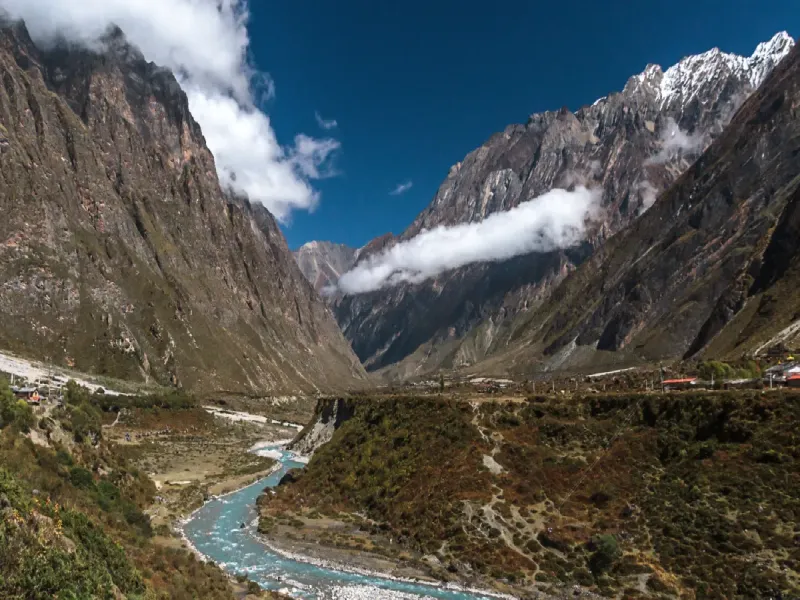
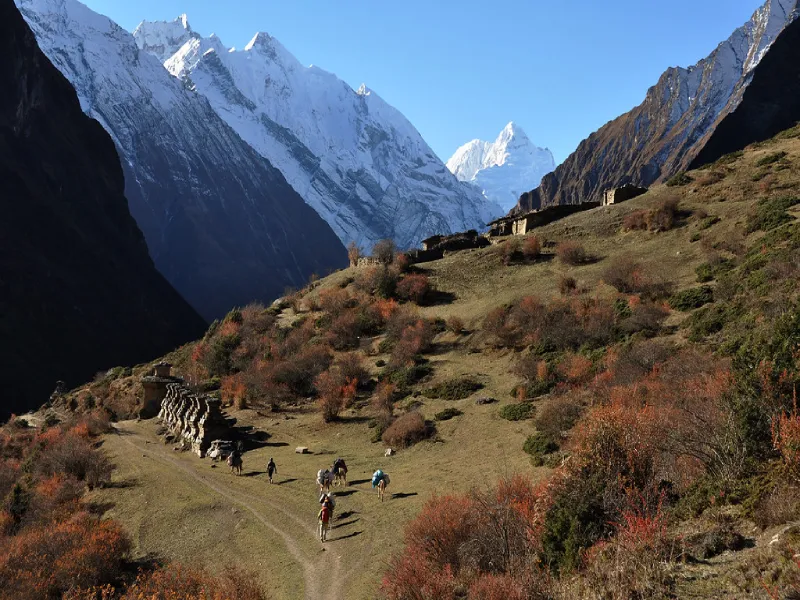
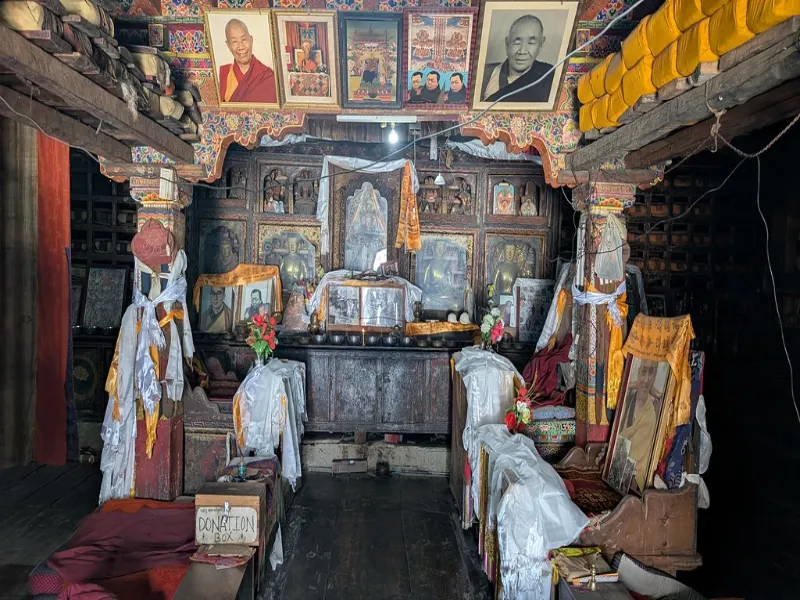
Photo Gallery & Video Gallery
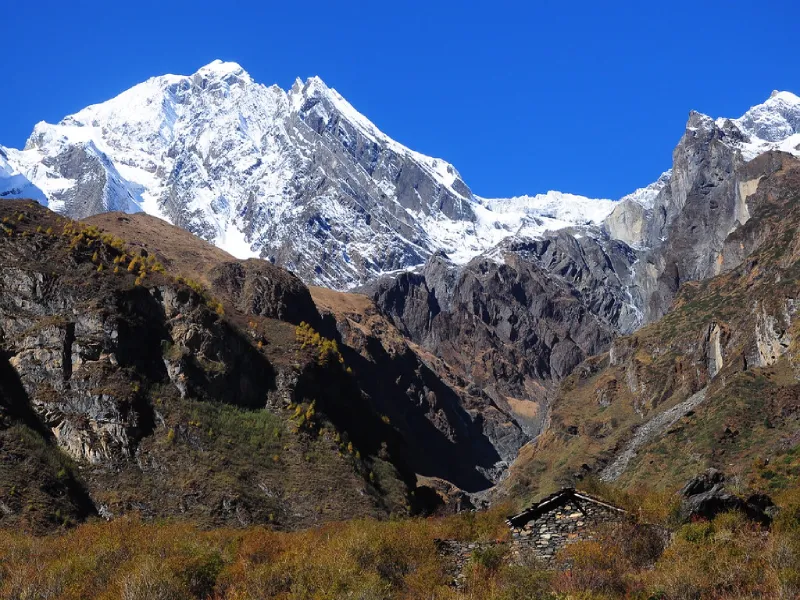
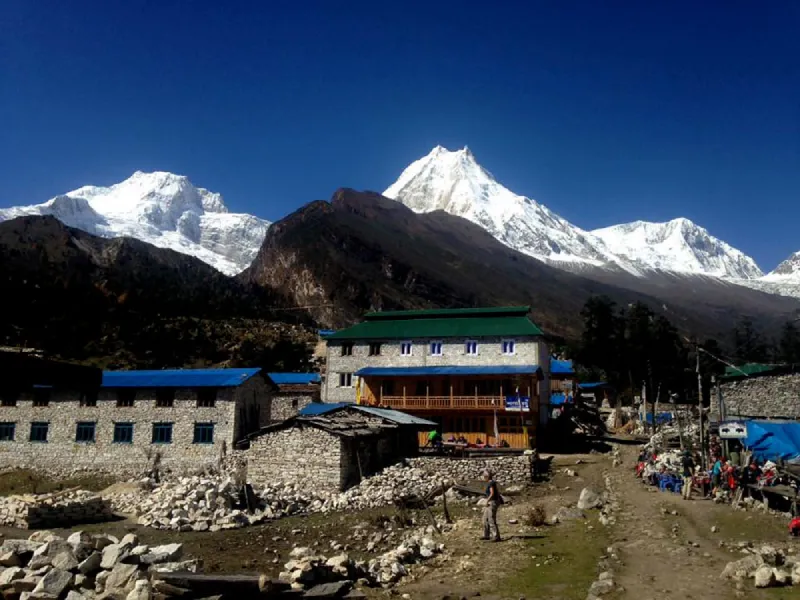
Tsum Valley Trek - Distance, Duration, and Altitude
| Trekking Route | Distance (Kilometers) | Duration (Hours) | Altitude (Meters) |
|---|---|---|---|
| Kathmandu to Machha Khola(1,400 m to 869 m) | 165 KM | 7 to 8 hours Drive | 1400 m. |
| Machha Khola to Jagat (869 m to 1,340 m) | 14 KM | 6 to 7 hours Trek | 870 m. |
| Jagat to Lokpa (1,340 m to 2,240 m) | 13 KM | 5 to 6 hours Trek | 2240 m. |
| Lokpa to Chumling (2,240 m to 2,386 m) | 7 KM | 4 to 5 hours Trek | 2386 m. |
| Chumling to Chhokang Paro (2,386 m to 3,031m) | 10 KM | 5 to 6 hours Trek | 3030 m. |
| Chhokang Paro to Nile (3,031 m to 3,361m) | 6 KM | 3 to 4 hours Trek | 3361 m. |
| Nile to Mu Gompa (3,361 m to 3,700 m) and back | 8 KM | 5 to 6 hour Trek | 3700 m. |
| Nile to Chumling (3,361 m to 2,386 m) | 15 KM | 6 to 7 hours Trek | 2386 m. |
| Chumling to Lokpa (2,386 m to 2,240 m) | 8 KM | 5 to 6 hours Trek | 2240 m. |
| Lokpa to Doban and Drive back to Kathmandu (2,240 m to 1,400 m) | 10 KM | 8 to 9 hours Trek + Drive | 1400 m. |
Itinerary of Tsum Valley Trek
Day 1: Kathmandu to Machha Khola(1,400 m to 869 m)
You will start with an early morning drive through the mountains and village which lead to Machha khola. This would take around 7 to 8 hours which will provide some of the best view of village and landscapes along the way. Machha khola is a small riverside village where you will stay before starting you actual trekking adventure. It is an organizational point for obtaining the permits and equipment check.

Activity: 7 to 8 hours Drive

Max. Altitude: 866m./2,841ft.

Accommodation: 3 Star Hotel
Day 2: Machha Khola to Jagat (869 m to 1,340 m)
The trek officially begins as we follow along the Budhi Gandaki River. You will cross some suspension bridges, rivers, villages and then move into the lower valley forest. The trekking route is mostly gently uphill helping your body adjust to walking in the higher mountains. When reaching Jagat the trekkers will register their Tsum Valley Restricted Permit and Manaslu Conversation Area Permit. After than you can visit around the village and at night rest in a local tea house for a warm meal.
Activity: 6 to 7 hours Trek
Max. Altitude: 1340m./4,396ft. (Jagat)

Meal: Breakfast, Lunch, Dinner
Accommodation: Tea house
Day 3: Jagat to Lokpa (1,340 m to 2,240 m)
Today the trail goes up gradually, moving away from the river and entering the pine and rhododendron forest. Along the trek you will pass some villages made of stone houses as well as mani walls carved with meaningful text. In the afternoon you will reach Lokpa village offering a peaceful and warm tea houses for you to rest. This place is where you will begin to notice the influence of Tibetan Buddhist culture with prayer flags fluttering in the wind.
Activity: 5 to 6 hours Trek
Max. Altitude: 2240m./7,349ft.
Meal: Breakfast, Lunch, Dinner
Accommodation: Tea house
Day 4: Lokpa to Chumling (2,240 m to 2,386 m)
The today trail will involve some ups and downs, but it is not that challenging. You will walk through green forest and open meadows. Chumling village is regarded as the first real Tsum village, with stone houses, mani walls and small monasteries. You can see some villagers doing their daily work like looking after yaks or working in the fields which give you a glimpse of local life in this valley.
Activity: 4 to 5 hours Trek
Max. Altitude: 2386m./7,828ft.
Meal: Breakfast, Lunch, Dinner
Accommodation: Tea house
Day 5: Chumling to Chhokang Paro (2,386 m to 3,031m)
The trail from Chumling to Chhokang is even more apparent as you cross into higher elevations with terraced fields and prayer fields marking the way. Along the way you will see Himalchuli and Ganesh Himal in the distance. Chhokang Paro is peaceful village with small monastery and rich culture that allow trekkers get a glimpe into spiritual heritage of Tsum Valley.
Activity: 5 to 6 hours Trek
Max. Altitude: 3031m./9,944ft.
Meal: Breakfast, Lunch, Dinner
Accommodation: Tea house
Day 6: Chhokang Paro To Nile (3,031 m to 3,361m)
This day is a shorter day, enabling us to acclimate as we ascend to the high village area of Nile which is one of the highest in the Tsum Valley. This village is known for its Tibetan style architecture, prayer wheels and welcoming locals. You can also see some of the spectacular view of the Himalayan range, which make the exploring more fun and exciting.
Activity: 3 to 4 hours Trek
Max. Altitude: 3361m./11,027ft.
Meal: Breakfast, Lunch, Dinner
Accommodation: Tea house
Day 7: Nile to Mu Gompa (3,361 m to 3,700 m) and back
There is a moderately steep side trail along the way that will take you to Mu Gompa, which is the holy monastery situated above the village of Nile. Here you can see the monks chanting and doing their daily routines, along with the spectacular view of the valleys and mountains. You can also participate in the meditation to relax your heavy body and mind from long day of walking. After some relaxation, you will head back to Nile for overnight stay.
Activity: 5 to 6 hour Trek
Max. Altitude: 3700m./12,139ft.
Meal: Breakfast, Lunch, Dinner
Accommodation: Tea house
Day 8: Nile to Chumling (3,361 m to 2,386 m)
Today, we will begin our descent journey through the valley, forest, river and fields. The return journey provides a different view of the village and area that you saw during the ascending. You might even see the view that you might have missed. After reaching Chumling, you will stay there for a warm meal and to rest for your next return back journey.
Activity: 6 to 7 hours Trek
Max. Altitude: 2386m./7,828ft.
Meal: Breakfast, Lunch, Dinner
Accommodation: Tea house
Day 9: Chumling to Lokpa (2,386 m to 2,240 m)
Today is also primarily downhill, through meadows as well as small villages. Along the downhill trail, you can see villager busy with their everyday tasks, providing an final opportunity for trekkers to experience interactions with the villagers. When you reach Lokpa, you will stay in a local teahouse which mark as your final day in Tsum Valley.
Activity: 5 to 6 hours Trek
Max. Altitude: 2240m./7,349ft.
Meal: Breakfast, Lunch, Dinner
Accommodation: Tea house
Day 10: Lokpa to Doban and Drive back to Kathmandu (2,240 m to 1,400 m)
This day concludes with a short trek to Doban and after than a scenic drive to Kathmandu. This last day is more about the moments and appreciation of the experience that you had in the trek with the view of Tsum Valley. In the evening, enjoy a complimentary local dinner hosted by our company to celebrate your successful completion of Tsum Valley trek !
Activity: 8 to 9 hours Trek + Drive
Max. Altitude: 1400m./4,593ft.
Meal: Breakfast, Lunch, Dinner
Accommodation: 3 Star Hotel
Includes/Excludes
What is included?
- Permits & Fees: The required permits for doing the Tsum Valley Trek are all included in the package. This will include the Tsum Valley Restricted Permit, the Manaslu Conservation Area Permit (MCAP), as well as the TIMS card, if required.
- Accommodation: Accommodation in local teahouses or lodges throughout the trek are included. This also include hotel stays in Kathmandu before and after the trek in 3 star hotel.
- Meals: This package includes 3 time meals – breakfast, lunch and dinner during the trek. It also include hot beverages during breakfast and lunch and seasonal fruit after dinner.
- Transportation: All necessary ground transport services according to the itinerary have been included. This entails transfer services by private or shared vehicles from Kathmandu to Machha Khola and return back.
- Guide and Porters: Services of an experienced English-speaking trekking guide and porters to carry luggage. This includes their salary, insurance, equipment, transportation, food, and accommodation.
- First Aid Kit: A basic first aid kit is typically provided.
- Trekking Map: A detailed map of the trekking route is usually included.
- Equipment: Duffle Bag, Sleeping Bag (if necessary)
What is not included?
- International Flight: International Flight to and from Nepal is not included. Travelers need to manage their own ticket.
- Travel Insurance: Travel insurance that cover emergency rescue is not included and you will be expected to have you own.
- Personal Expenses: Expenses for extra meals, snacks, drinks, Wi-Fi, shower and other personals cost are not included.
- Nepal Visa Fees: Entry visa fee for Nepal are not included.
- Trekking Gear: Trekking equipment, such as hiking boots, trekking poles and other gear are not included.
- Tips: Tips for guide and porter are not included and left to your decision.
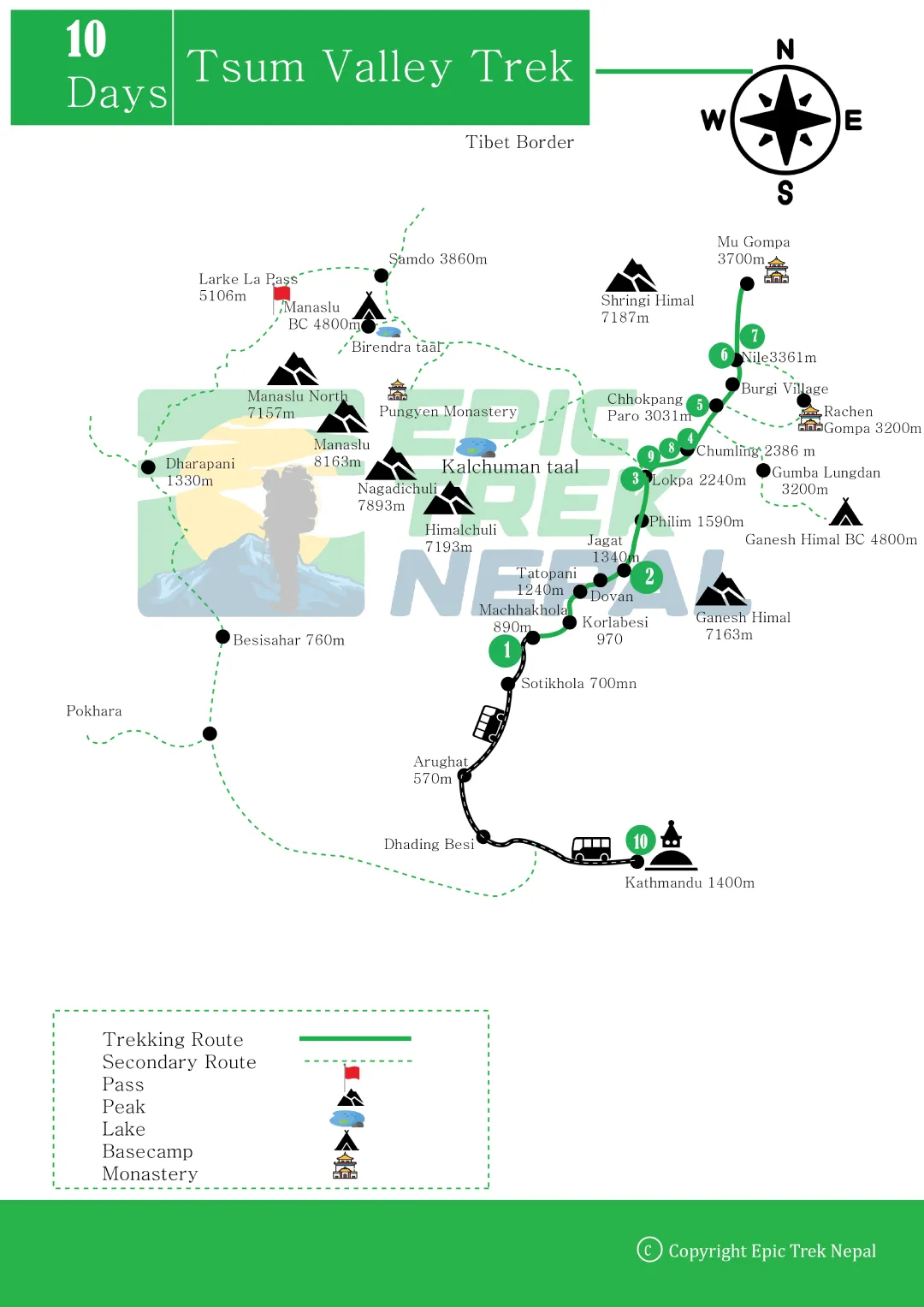
Trip Map of Tsum Valley Trek
Trip Information
Trek Difficulty and Fitness Level
The Tsum Valley is rated as a moderately difficult trek, but we need to understand that, it is not a technical trek requiring any particular skills or equipment, but as a trek, it still demands patience, walking and a certain amount of mental toughness. The trails are well marked, passing through forest, village and river valley, without any discomfort or challenges.
Most day are extensive walking hours, ranging from 6 to 7 hours, sometimes longer bases on the terrain covered and speed of movement. The trail can go up and down which can be quite tiring, especially when it is back to back, so you must be able to walk for several few hours a day while carrying a light backpack.
The trekking route does not require any technical climbing. The complexity is instead in its inaccessibility and the distance you cover daily and the increase in elevation distance. The valley is inaccessible, and as a result, things appear primitive, and that might be even tougher than one would anticipate.
For beginners, this is a trek that will work if the person has excellent fitness levels and the right attitude. If the individual is able to walk, loves trekking, and does not mind the basic lifestyle that comes along, then the individual should be able to handle this trek. The fact is, there will be times when the legs will be reluctant to move and the showers will be cold, but this is what comes with the territory when trekking in the actual mountains, and this, in some ways, is what makes the trek in Tsum Valley so meaningful.
Preparation for Tsum Valley Trek
Getting your prep just right is probably the difference between having an amazing time or just struggling through your Tsum Valley trek. And since this is a bit of a remote trek, it’s good to plan ahead a bit.
So, first off, you have to get in shape for this trek. You should be comfortable walking anywhere from 6 to 7 hours a day, which sounds like a lot, but if you start hiking, jogging, or cycling right now, you’ll be just fine. And don’t forget to throw in some stair climbing to really build those leg muscles! Being in good shape is really what lets you enjoy your Tsum Valley view trek instead of just trudging through it with your eyes fixed on your feet.
As for the packing, you should pack light but clever. You will need warm clothing, a pair of trekking shoes that have been broken in, and a backpack that doesn’t hurt your back. The weather is pretty erratic up there. It changes fast, especially as you go higher up. You should also pack a good sleeping bag and a first aid kit.
The most important thing to do is to stick to a well-paced Tsum Valley trekking itinerary. Whatever you do, do not rush the trek. Take your time so that your body can get used to the high altitude. This is the best way to avoid getting sick. The rest days may seem slow, but they make a big difference. As for the permit and guide, you will need a permit and a licensed guide. Get that done with a reliable tour agency before you go.
You should also keep your mind ready for a simple life. Honestly, it is going to be a total adventure.
Cultural Experience in Tsum Valley
Walking through the Tsum Valley View Trekis like stepping into a living Buddhist tradition, something very much in the present, not something like that stuck in the past. The living of this life is very much inspired by their tradition of Buddhism, and you don’t see this; you feel this as you visit the village. It starts each day with the gentle prayer chants, the smell of incense, and prayer flags fluttering in the wind. It is a peaceful experience that slows down you without effort.
Along the route, you will see many walls with religious text carved into them, bright stupas resting silently at the entrance of villages, and prayer wheels that locals spin as part of their regular activities. These are not placed for tourist or for taking pictures; they are an integral part of life.
The locals of the Tsum Valley make the experience more engaging. They are respectful, well mannered and very hospitable, ready to help you in any problem or if you want to understand the history of this place. They don’t have a sense of rush or pretended smiles. Here, you won’t feel like a tourist but like a guest. It is the authentic connection with people and their culture that will stay within you long after you are done trekking.
Required Permit for Tsum Valley Trek
There are some permits that need to be obtained before undertaking the Tsum Valley Trek, in order to be able to enter this special and restricted area. The authorities require these to protect this valley, its culture, and its natural resources, so these should be obtained before the actual trek.
The main permit required for this trek is the Tsum Valley Restricted Permit, which gives the person permission to access the hidden region of the Himalayas. It costs around USD 40 for the first 7 days and after that it takes USD 7 per person per day after the first week. The Manaslu Conservation Area Permit (MCAP) is also necessary for this trek, which benefits the conservation of the region in the Manaslu region.
On the other hand, if you’re planning to go on treks by yourselves or with groups, you also need TIMS cards (Trekkers’ Information Management System) which usually needs to be purchases by trekkers themselves. This helps ensure the safety of trekkers while trekking. Both these permit can be obtained through us “Epic Trek Nepal“. So, you don’t need to worry anything.
Language and Communication
Communication during the Tsum Valley trek is surprisingly quite simple once you get the hang of it. In the lower areas, you’ll hear Nepali spoken everywhere, but as you go higher into the mountains and into the villages, the Nepali dialect is heavily influenced by Tibetan culture, which is really interesting to hear as you move along this trek.
Most tea house owners speak enough basic English to communicate with tourists, so you shouldn’t have much trouble ordering food or asking for another blanket to keep warm with. And if you have a guide or porters with you during this trek, they speak English fluently enough to help out in case things become a little confusing for you.
The Tsum Valley view trek is really more about those human connections, though, and a simple gesture or smile can tell you everything you need to know, so the language barrier is really not a big problem at all.
So, in general, communication is not a big problem as long as one does not expect too much and is with a guide. In fact, it is one of the most enjoyable aspects of the trip, having a good time with a person even though you do not speak their language perfectly. It is just another one of those authentic experiences in this valley.
Mobile Network, Internet and Charging Facilities
Internet access is also a bit of a rare luxury on the Tsum Valley view trek. Some tea houses may claim to have it, but it’s either very slow or just plain unreliable, particularly if the weather is not great. So, it’s probably just best to enjoy the trek and just soak in the scenery.
Don’t expect to be scrolling through social media too much when you’re on the Tsum Valley trek, since the network is pretty limited, especially when you get higher up. You might get a little signal around the Machha Khola or Jagat villages, mainly through Nepal Telecom, but when you get up into the high valley, this signal simply vanishes. It is probably a good idea to let your loved ones know you’re going off the grid before you actually do so.
Regarding charging your devices, there are usually outlets where you can plug your devices in, although there is a small charge for it. Since a lot of the electricity comes from solar power, it does charge a bit on the slow side, particularly on a cloudy day. For your Tsum Valley view trekking itinerary, I’d highly recommend that you bring a good power bank or batteries with you. It just saves you a lot of hassle searching for a working outlet in the middle of nowhere.
Cultural Festival on the Tsum Valley Trek
The Tsum Valley trekking trail also provides a wonderful opportunity to experience unique Buddhist festivals. These festivals are based on the Tibetan calendar. Some of the festivals occur in the monasteries along the Tsum Valley trekking trail. If your Tsum Valley trekking itinerary with the dates of these festivals, you can experience some of the most vibrant and culturally rich festivals in Nepal.
Some of the major festivals of Nepal include Losar, which is also called the Tibetan New Year. During Losar, people come together in prayer, dance, and eat traditional dishes. During this period, monasteries are decorated, and people wear their best traditional outfits. This period is definitely one of the best times to experience the spiritual side of Tsum Valley view trekking. Another important festival of Nepal is Dhachyang, which includes horse racing and cultural performances based on the traditions of Nepal.
You don’t have to be part of a festival in order to experience something cultural on a daily basis through prayer rituals, chanting and visiting monasteries. Another reason the trek in Tsum Valley is more than just nature is to connect with people’s traditions and beliefs that are still alive today. They will provide you with lasting memories of your trip to Nepal.
Don’t on the Tsum Valley Trek
There are a few things that you should avoid while on the Tsum Valley Trek. This will ensure a smooth trip with the necessary safety and cultural sensibility.
Avoid visiting any monastery or private houses without permission. It is also a tradition to walk anticlockwise while passing through prayer wheels and mani walls. and the locals follows it very strictly. Thus, observing this will make your Tsum Valley view trek a smooth one.
The Tsum Valley view trek is famous for the serene environment that it provides. So, try to avoid noisy activities or anything that may disturb the serene environment while on the Tsum Valley view trek. Also, avoid taking photos of people or monks without permission. It is simply not worth the risk.
Littering on the trail should not be done. Waste disposal must be carried with oneself. Appropriate disposal bins must be used if found. Plastic use should be avoided as much as possible to maintain cleanliness in the valley.
Lastly, it is important to avoid rushing your Tsum Valley trekking itinerary. Walking too fast on a trek can result in altitude sickness. Headaches or dizziness should not be taken lightly. Listen to your body and inform your guide if something does not feel right.
Health and Safety on Tsum Valley Trek
The first thing you should consider during your Tsum Valley trek is health and safety. The trek is at a higher altitude as such, you must be alert to avoid altitude sickness.
Walk at a consistent pace and strictly follow your Tsum Valley trekking route. Take breaks along the route and don’t forget to drink enough water. Drinking water is important in preventing altitude sickness and regulating your energy.
If you notice any signs of altitude sickness such as headaches or dizziness, report to your guide immediately. Your health is important at all times. Do not take any risk with your health.
The weather in the mountains is unpredictable. As such, you must carry warm clothing and rain gear. Wearing the right clothing is important for your safety as you enjoy your Tsum Valley view trek.
Hiring a guide is important for your safety during the trek. A licensed guide is experienced in handling emergencies. With the right care and attention, the Tsum Valley trek is safe.
Trip Extension and Side Trails
The Tsum Valley offers some possible routes for extended trips to allow trekkers greater variety and to experience the area further. One of the most popular extensions is to connect with the Manaslu region of Nepal. Trekking from both areas allows for a longer trek and a more comprehensive trekking experience. This also makes it possible to see a larger variety of mountains and cultures.
While on the Tsum Valley view trek, you may also take detours on short hikes from villages such as Chhokang Paro and Nile for the chance to see viewpoints that have been hidden from many people, as well as old monasteries and peaceful corners of the valley. These visit can add considerable value to your experience and not create a challenge that is too difficult or exhausting on the trek.
Trekkers wishing for an extended trip can choose to go further into Mu Gompa or spend additional nights in the mountain villages. This allows trekkers to have greater cultural interaction and experience the trek at a more leisurely pace. Consequently, increasing your total days on the Tsum Valley Trek will provide you with more enjoyable moments within this extraordinary and often overlooked section of Nepal.
Travel Insurance
Travel insurance is a very important aspect for the Tsum Valley trekking route. The area is remote, which means you will not have access to medical facilities. Therefore, you will need insurance for any untoward incident.
If you face any problem during the trek, you may also need a helicopter for rescue. In this case, you will have to spend a lot of money if you do not have insurance. And the most important thing is to make sure that the insurance policy includes high-altitude trekking, which is above 4,000 meters.
The Tsum Valley view trekking route is a challenging route, which means you will have to face many problems during the trek. So, you will require insurance for the trek. Before starting the Tsum Valley trekking route, you will need to make sure you have the insurance policy. Always keep a copy of the insurance policy with you during the trek.
Frequently Asked Questions
Tsum Valley is located in the Manaslu region of Gorkha District in northern Nepal, near the Tibetan border.
The Tsum Valley Trek is considered to be moderately challenging but it doesn’t involve climbing but because of long walking days with several hours, which is even ideal for beginners who are in good physical shape.
The duration can range between 10 to 14 days depending on the trekking route, acclimatization day and optional hike like Mu Gompa.
Yes, an experienced guide and a strong porter is necessary for this trek because Tsum Valley is a restricted area, solo trekking is not allowed and involves long walking days.
Spring (March to May) and Autumn (September to November) are best season for clear views and stable weather condition.
No, the Tsum Valley is not as crowded as others and offers a peaceful trekking journey.
Accommodation is mostly basic tea houses and local lodges offering simple, cozy and warm rooms and shared bathroom facilities.
The food is simple and warm which include dal bhat, noodles, soups, momo with tea and coffee. The menu is limited but it is enough to give you energy throughout your journey.
The highest altitude is about 3.700 meter at Mu Gompa.
Epic Trek Nepal pricing:
- Solo Trekker: $870 per person
- 2-3 person: $850 per person
- 4-6 person: $800 per person
- Group over 7: $750 per person
Includes all permits, accommodation, meals, guide, porter, and ground transportation (no flights required).
Trip Reviews
US$ 850
Need Help? Talk to Expert
+977 9764792172