
Yala Peak Climbing
73 reviews in Tripadvisor

Trip Duration
11 Days
Destination
Nepal
Max. Altitude
5,520 m.
Trip Difficulty
Moderate
Group Size
1-12
Transportation
Private Vehicle
Accommodation
Hotel/Lodge
Activity
Trekking and Climbing
Meals
All Inclusive
Start / End
Kathmandu
Region
Langtang
Best Season
Spring & Autumn
Need Help? Talk to Expert
+977 9764792172Trip Overview
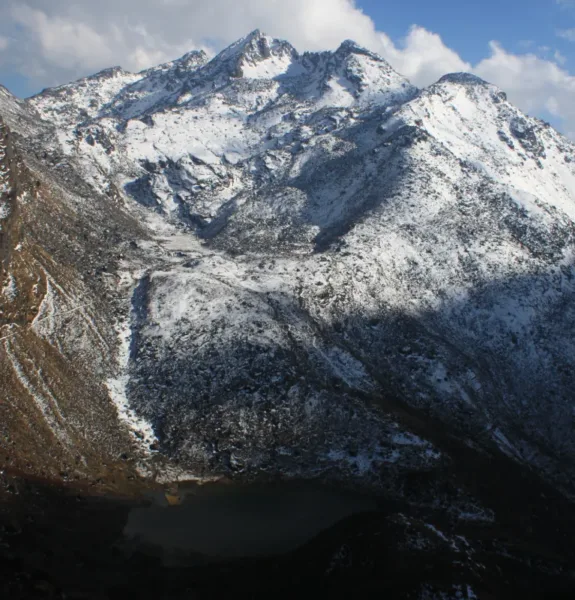
Yala Peak, a popular climbing peak located in the Langtang region of Nepal. Yala Peak Climbing is just north of the Kathmandu Valley and near the Tibetan border with an elevation of 5,520 m is considered a moderately high mountain in Nepal. However, this climb might not provide the highest views in Nepal, but it definitely provides an authentic experience of climbing in the Himalayan peaks.
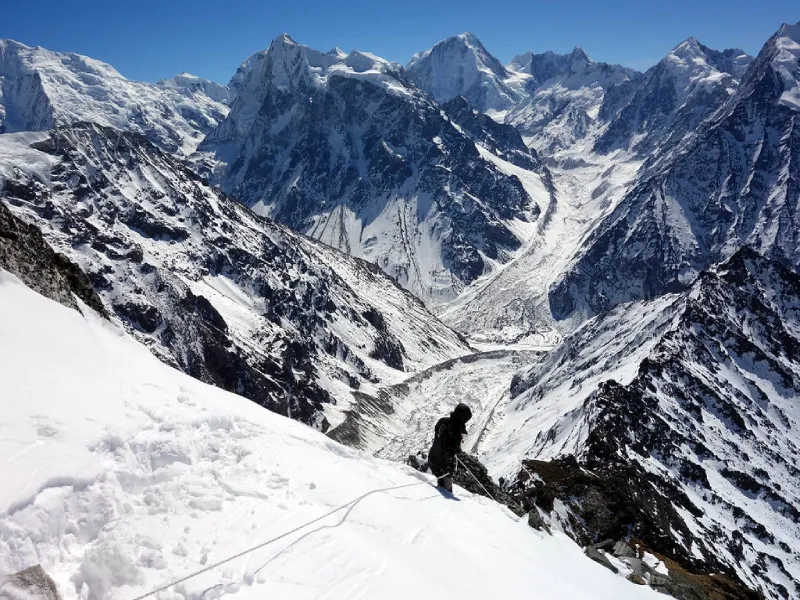
The uniqueness of Yala Peak is the fact that it is usually considered the perfect first Himalayan Peak. Climbing to the top of the peak doesn’t require extensive mountaineering or climbing skills. However, you still need to be able to climb through snow and use simple equipment for climbing, as well as experience the thrill of reaching a higher altitude. For people who are looking for more than just trekking, a little bit more adventure, and to experience the actual peak climbing, Yala Peak is a great start.
Why Choose Yala Peak for Your First Peak Climb?
Yala Peak climb stands out as a great choice for your first peak climb because they maintain a simplistic approach while still offering the essence of a mountain climb. The climb to Yala Peak is mostly non-technical, which means you don’t require advance knowledge of how to climb mountains. The entire journey involves trekking with basic snow walks to reach the summit. The crampons and ice axe are required for the climb which are basic equipment that your guide will teach you how to use which make the climbing less stressful and more enjoyable for beginners.
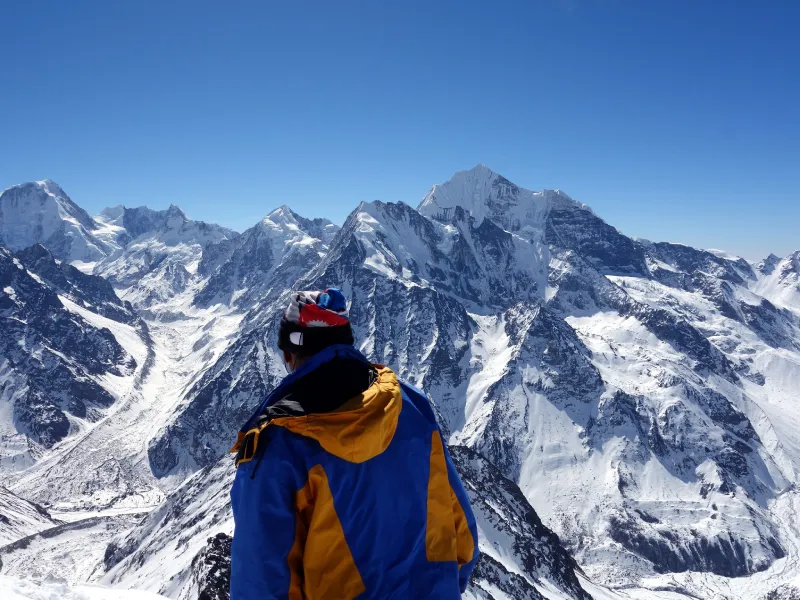
Another major attraction of Yala Peak is also its scenery that it give to trekkers. Even without having to go through so many difficulties, it still offers the best Himalayan views. From the high altitude and the summit, you can see Langtang Lirung, Dorje Lakpa, and Ganesh Himal. You will face cold winds, prayer flags, and witness an endless sight of mountains without undergoing any altitude risk or stress that are associated with technical climbing. Reaching the top of the Yala Peak is challenging enough to feel proud and exciting enough to build confident for future peak climbing.
Best Season for Yala Peak Climbing
Spring (March to May)
Spring is considered to be one of the best months to climb Yala Peak. The weather is very stable, with clear skies and the trail is full of life. The rhododendron flower are in bloom when passing through Langtang Valley. The temperature is also moderate with limited snow at the top that are suitable for beginners.
Autumn (September to November)
Autumn is also a great time and usually peak season for most people. As monsoon are over the atmosphere turns cool and clean, with crystal clear view of the mountains. The climate is perfect and most of the days are sunny while the night can be chilly. This time is ideal for trekkers who want the best visibility and views of the mountains.
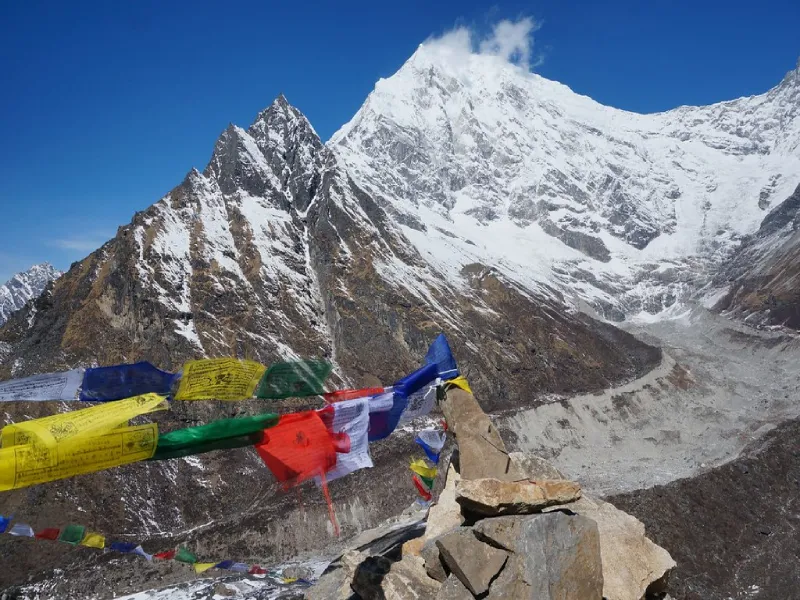
Winter (December to February)
Winter is not as popular as other season. But some climber still find it to be great time because it’s not as crowded, and the mountain have a very sharp and peaceful looks. In winter, the temperature get very cold, especially during the night and it is not recommended for climber to trek if it’s snowing heavily, as it is more challenging to climb during these times.
Monsoon (June to August)
Monsoon is also not the best season for this climb because of heavy rain, slippery trails and unclear view of the mountains which can make the experience less enjoyable. But it is still possible to climb Yala peak with good planning and preparations.
Highlights of Yala Peak Climbing
- Summit Yala Peak, at an elevation of 5,520 m above sea level, which will be an unforgettable first climb in the Himalayas.
- Spend your time trekking through the Langtang Valley, passing lush forests, yak pastures, and alpine landscapes.
- Visiting traditional Tamang villages to experience local culture and hospitality.
- Explore Kyanjin Gompa and its monastery, an important spiritual and cultural center.
- Enjoy panoramic vistas of peaks such as Langtang Lirung, Dorje Lakpa, Ganesh Himal, and the Tibetan plateau.
Yala Peak Climbing - Distance, Duration, and Altitude
| Trekking Route | Distance (Kilometers) | Duration (Hours) | Altitude (Meters) |
|---|---|---|---|
| Drive from Kathmandu to Syabrubesi | 122 KM | 7 to 8 hours Drive | 1500 m. |
| Syabrubesi to Lama Hotel | 12 KM | 6 hour Trek | 2470 m. |
| Lama Hotel to Langtang Village | 10 KM | 6 hours Trek | 3430 m. |
| Langtang Village to Kyanjin Gompa | 8 KM | 4 hours Trek | 3870 m. |
| Acclimatization day at Kyanjin Gompa | 5 KM | 3 to 4 hours hike | 3870 m. |
| Kyanjin Gompa to Yala Peak Base Camp | 8 KM | 6 hours Trek | 4800 m. |
| Yala Peak summit and Return to Kyanjin Gompa | 12 KM | 10 hours Trek | 5520 m. |
| Kyanjin Gompa to Lama Hotel | 13 KM | 7 hours Trek | 2470 m. |
| Lama Hotel to Syabrubesi | 12 KM | 6 hour Trek | 1500 m. |
| Syabrubesi to Kathmandu | 122 KM | 7 to 8 hours Drive | 1400 m. |
Itinerary of Yala Peak Climbing
Day 1: Drive from Kathmandu to Syabrubesi
Our adventure starts with a scenic drive from Kathmandu to Syabrubesi. It is a small town located on the entrance of the langtang valley. This will give you a glimpse of the Nepalese landscape as we drive through the hills, rivers, and small Nepalese villages. We will stop for tea or lunch on the route, if needed, as we enjoy the landscape of the terraced hills, valleys, and mountain streams. We will spend the rest of the morning in the small town of Syabrubesi, relaxing in the lodge, stretching our legs, and meeting our guides for our adventure.

Activity: 7 to 8 hours Drive

Max. Altitude: 1500m./4,921ft.

Meal: Breakfast, Lunch, Dinner

Accommodation: Hotel
Day 2: Syabrubesi to Lama Hotel
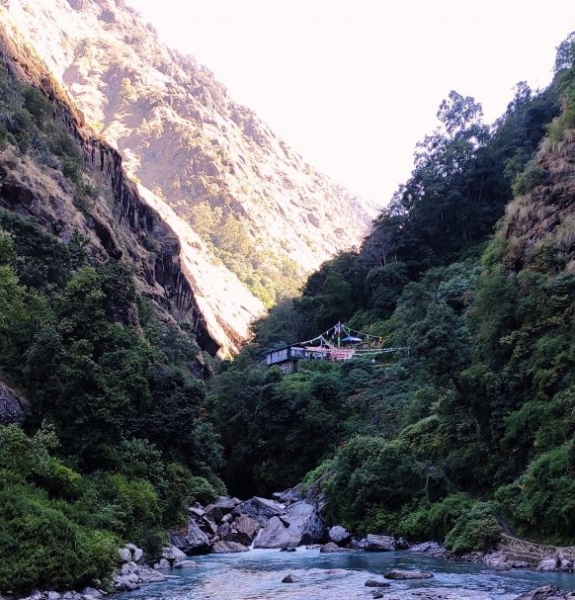
Today we begin the trekking adventure! Our first day of trekking takes us along the Langtang River. You will pass small villages and cross suspension bridges. You will also witness the traditional Tamang homes as we walk. We also have the chance to observe their normal daily lifestyles. The trekking path is gentle and easy, allowing your body to slowly adjust to increasing altitude. In the afternoon, you will reach Lama Hotel, a peaceful stop where you can rest and enjoy hot meals.
Activity: 6 hour Trek
Max. Altitude: 2470m./8,104ft.
Meal: Breakfast, Lunch, Dinner
Accommodation: Tea house
Day 3: Lama Hotel to Langtang Village
At this point, today’s trail becomes steeper as we climb into higher altitudes. The forest slowly thins out to reveal broad Alpine vistas with view of snow-capped mountains in the distance. As we trek, we see Buddhist monasteries along the trek. Langtang Village is a serene settlement that offers breathtaking views of mountains such as Langtang Lirung standing majestically tall in the backdrop. As you arrive at this point, you realize that you are breathing mountain air and that the higher altitude makes trekking a bit difficult. Tea houses here are basic and simple but comfortable enough to spend the night.
Activity: 6 hours Trek
Max. Altitude: 3430m./11,253ft.
Meal: Breakfast, Lunch, Dinner
Accommodation: Tea house
Day 4: Langtang Village to Kyanjin Gompa
Today’s trek is a shorter one, but uphill, allowing your body more to acclimatize. You will walk pass through yak pastures, glaciers and Kyanjin Gompa, a village famous for its monastery and views surrounded by tall peaks. The views from the Kyanjin Gompa are spectacular, especially of peak like Dorje Lakpa during sunset sunset. In the afternoon, you can explore the village and nearby trail, visit the monastery, or just relax at the tea house.
Activity: 4 hours Trek
Max. Altitude: 3870m./12,697ft.
Meal: Breakfast, Lunch, Dinner
Accommodation: Tea house
Day 5: Acclimatization day at Kyanjin Gompa
Today is a day for acclimatization, and it is necessary for preparing your body for attempting to reach the summit. During this day you can go for a short hike to nearby viewpoints like Tsergo Ri or explore the glacier around Kyanjin. The light exercise allows your body to adjust to higher altitude while viewing some of the stunning mountains. The rest of your time can be spent at the tea-house or with the locals to learn more about this village.
Activity: 3 to 4 hours hike
Max. Altitude: 3870m./12,697ft.
Meal: Breakfast, Lunch, Dinner
Accommodation: Tea house
Day 6: Kyanjin Gompa to Yala Peak Base Camp
Today is the most exciting day as we begin the trek to Yala Base Camp early. The trail involves crossing rocks and passes through alpine meadows. You can feel the decrease in the density of the air as we ascend. Most of the time the pace of the journey remains slow. During the walk, we can observe wildflowers, yaks feeding in the meadows, and distant glaciers. In the afternoon, you will reach a valley surrounded by mountains. It is the point where you will establish your camp in preparation for the final walk to the summit.
Activity: 6 hours Trek
Max. Altitude: 4800m./15,748ft.
Meal: Breakfast, Lunch, Dinner
Accommodation: Tea house
Day 7: Rest day at Base Camp
This is an important day that allows acclimatize to the high altitude or is a rest day before the final walk to the summit. To acclimatize your body, you can use the day to explore the camp or observe the breathtaking view of the mountains. It is a day to prepare physically and mentally for the early morning trek to the summit.
Activity: Rest day
Max. Altitude: 4800m./15,748ft.
Meal: Breakfast, Lunch, Dinner
Day 8: Yala Peak summit and Return to Kyanjin Gompa
The day starts early, around 2 to 3 am with headlight to light up the snowy path as you ascend to the summit. You will use crampons and ice axe, assisted by your guide to climb the peak. When you reach the summit peak, it offer you a glimpse of the majestic peaks of Himalayas such as Langtang Lirung, Dorje Lakpa and other peaks located in Tibet. After enjoying the sunrise view and taking photos, you will carefully descend back to Base Camp and eventually to Kyanjin Gompa to have a warm and relaxing sleep. This day is exhausting but most memorable experience of your life.
Activity: 10 hours Trek
Max. Altitude: 5520m./18,110ft.
Meal: Breakfast, Lunch, Dinner
Accommodation: Tea house
Day 9: Kyanjin Gompa to Lama Hotel
Once the excitement of the summit is over, we return by the same trail, and our route takes us through glaciers, yaks, and alpine meadows. This time, our return is relatively less stressful. When you reach Lama Hotel, you can relax, enjoy a hot shower and celebrate the completion of Yala Peak Climbing.
Activity: 7 hours Trek
Max. Altitude: 2470m./8,104ft.
Meal: Breakfast, Lunch, Dinner
Accommodation: Tea house
Day 10: Lama Hotel to Syabrubesi
Today’s hike is largely downhill. The terrain takes you through the forest and alongside the river. It will be easier to walk, and you will see changing scenery because you are getting to lower elevations. Depending on your pace, you can stop for tea either in the villages or in those teahouses. Arriving in Syabrubesi, you can rest and pack your gear and enjoy the dinner while reflecting on the journey.
Activity: 6 hour Trek
Max. Altitude: 1500m./4,921ft.
Meal: Breakfast, Lunch, Dinner
Accommodation: Hotel
Day 11: Syabrubesi to Kathmandu
Today is the final day with a scenic drive back to Kathmandu. You can enjoy the last view of the terraced field, small town and rivers. After reaching Kathmandu you may check into your hotel upon arrival in Kathmandu, rest, and in the evening, enjoy a complimentary local dinner hosted by our company to celebrate your successful completion of the Yala Peak adventure.
Activity: 7 to 8 hours Drive
Max. Altitude: 1400m./4,593ft.
Meal: Breakfast, Lunch, Dinner
Accommodation: 3 Star Hotel
Includes/Excludes
What is included?
- Permits & Fees: The required permits for doing the Yala Peak Climbing are all included in the package. This will include the Yala Peak Climbing Permit (NMA), the Langtang National Park Permit, as well as the TIMS card, if required.
- Accommodation: Accommodation in local teahouses or lodges throughout the trek are included. This also include hotel stays in Kathmandu before and after the trek in 3 star hotel.
- Meals: This package includes 3 time meals – breakfast, lunch and dinner during the trek. It also include hot beverages during breakfast and lunch and seasonal fruit after dinner.
- Transportation: All necessary ground transport services according to the itinerary have been included. This entails transfer services by private or shared vehicles from Kathmandu to Syabrubesi and return back.
- Guide and Porters: Services of an experienced English-speaking trekking guide and porters to carry luggage. This includes their salary, insurance, equipment, transportation, food, and accommodation.
- First Aid Kit: A basic first aid kit is typically provided.
- Trekking Map: A detailed map of the trekking route is usually included.
- Equipment: Duffle Bag, Sleeping Bag (if necessary)
What is not included?
- International Flight: International Flight to and from Nepal is not included. Travelers need to manage their own ticket.
- Travel Insurance: Travel insurance that cover emergency rescue is not included and you will be expected to have you own.
- Personal Expenses: Expenses for extra meals, snacks, drinks, Wi-Fi, shower and other personals cost are not included.
- Nepal Visa Fees: Entry visa fee for Nepal are not included.
- Trekking Gear: Trekking equipment, such as hiking boots, trekking poles and other gear are not included.
- Tips: Tips for guide and porter are not included and left to your decision.
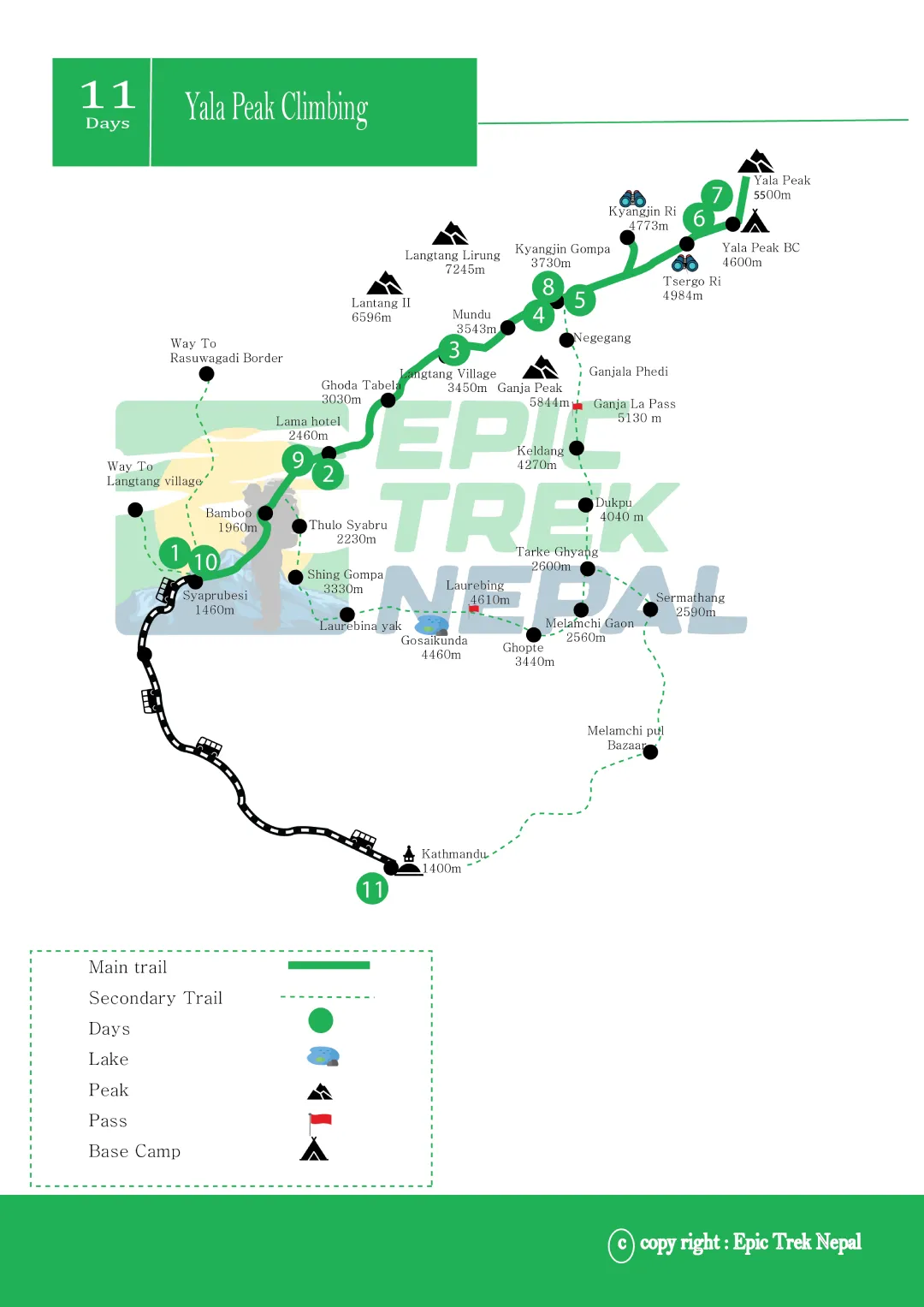
Trip Map of Yala Peak Climbing
Trip Information
Difficulty and Fitness Level
Yala Peak Climbing is considered a moderate to challenging adventure but definitely doable for someone with good fitness and a strong mentality. You do not have to be a professional climber or athlete. As long as you are comfortable hiking for 5 to 7 hours on a relatively tough trail with a small backpack, you are good to go. Most of the days are uphill hikes and the difficulty comes from higher altitude rather than technical climbing.
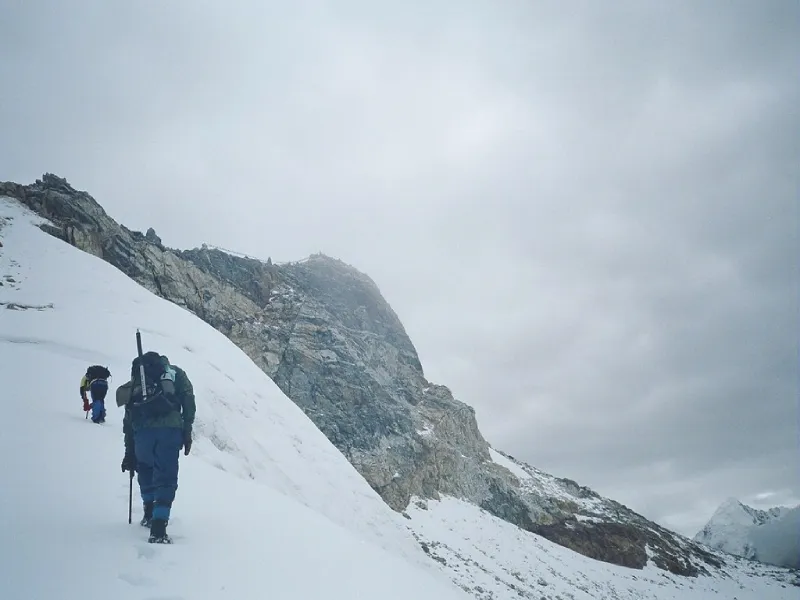
The biggest problem of Yala Peak is not climbing but the higher altitude. The more you climb, the thinner the air gets, and even a simple walk becomes difficult. That’s where acclimatization is helpful. It helps your body to acclimate to high altitude. The climb to the summit begins early morning which includes snow walking and gentle slopes. Yala Peak is not a technically difficult climb but is very cold, windy and very high. For the Yala Peak Climb being patient is more important than being strong.
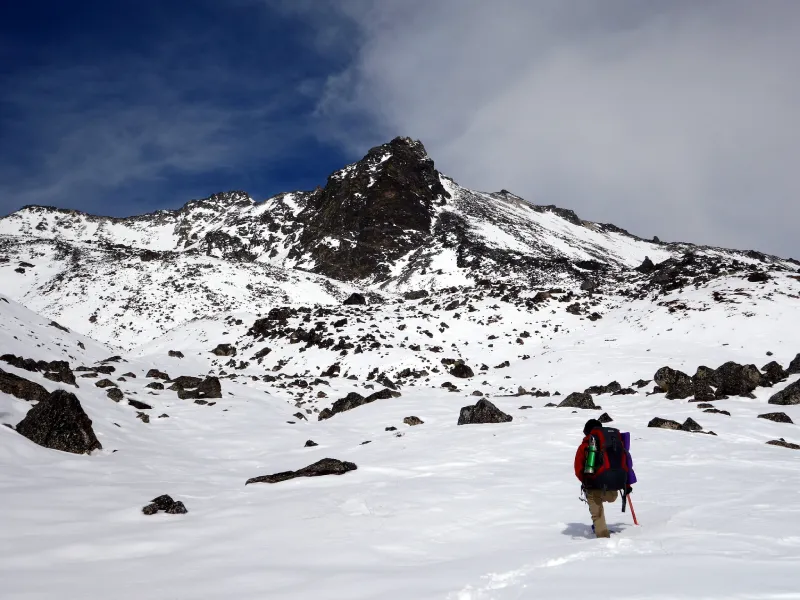
When it comes to physical fitness, keeping things simple is the best policy. A few weeks of hiking or stair climbing or even just walking is helpful. A little cardio work like jogging or cycling is best for building endurance. When the climbing begins, it is done step by step, there is no need to rush. Developing mental strength is also as important as physical strength, since it is cold outside and there is lack of oxygen. With patience and proper guidance, it is achievable to reach Yala Peak.
Cultural and Local Experience
Climbing to the top of the Yala Peak is further than just reaching the peak. It’s also passing through the culture that lives on the mountains. There are mostly Tamang community people who have lived in this area for generations, where life is still in harmony with the pace of nature without the influence or rush of the modern world. The sight include stone built houses, prayer flags fluttering in the wind, and small monasteries that represent strong belief toward Tibetan Buddhism.
The locals are also very warm and friendly, treating you like a guest rather than some random person. These local people run local teahouses or lodges, where trekkers can stay for a warm meal and to rest for their next day’s journey. The evening, sitting by the fireplace listening to the locals talk, allows trekkers to get a glimpse into the mountain life and its history, which creates an unforgettable memory.
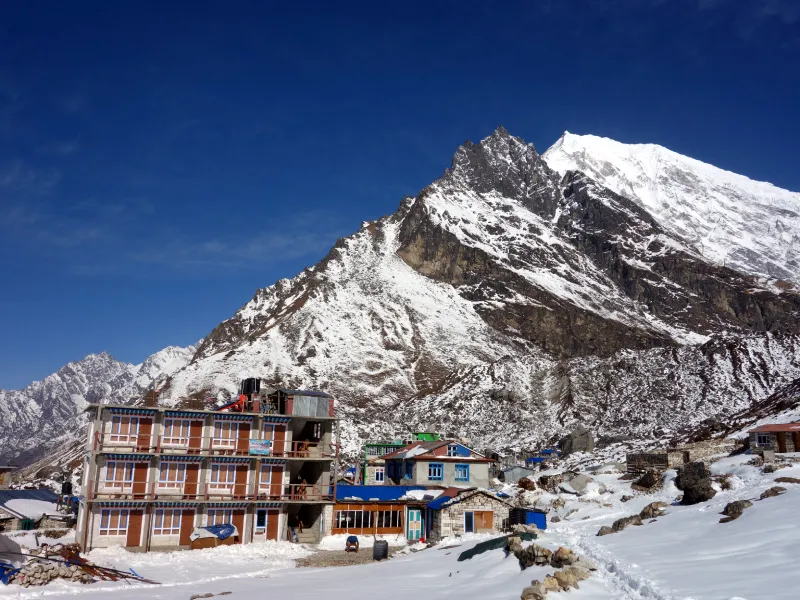
In the area around Kyanjin Gompa, you can experience even deeper culture and traditions. This monastery is one of the religious and spiritual power centers in the area, and the calm atmosphere here is one thing that most trekkers remember. Trekking in these area help you understand the close relationship between people and the mountains. This journey to Yala Peak trekking should not only be understood as mountain climbing but as a cultural experience as well.
Accommodation During the Trek
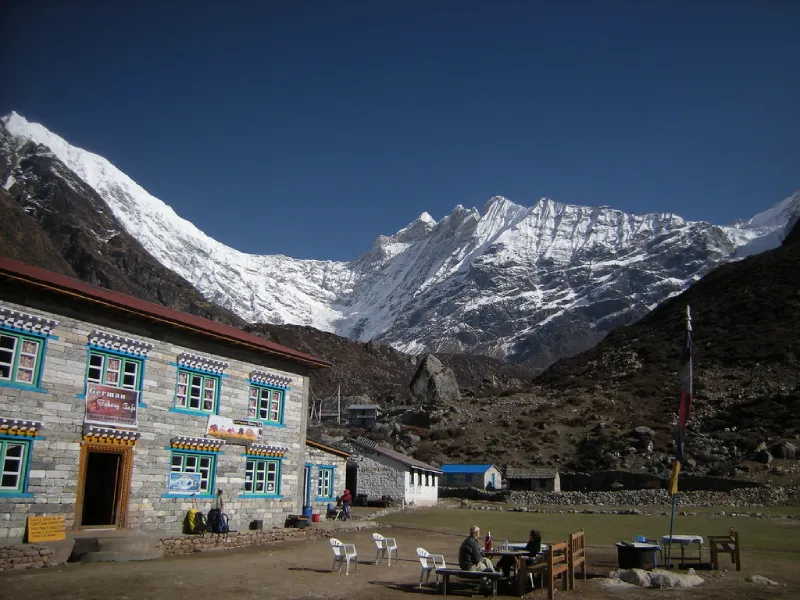
When trekking to Yala Peak, most of the night will be spent at teahousea that are mostly run by Tamang families. These tea house are basic and simple without any luxury facilities, but they are enough to keep you warm and rest comfortably.
During the summit night, you have the option to stay at a local tea house or a temporary tent at the base camp. It is totally upon the trekkers decision and facilities are simple with minimal heating, which is enough to rest comfortably before the early morning climb.
Food on the Trek
The food on the Yala Peak trek is very basic yet filling. Basic meals at the tea houses include dal bhat, meaning it comes with a plateful of rice along with a bowl of lentil soup. Tea houses also offer meals noodles, different types of soups, along with sometimes fried potatoes/omelets. Hot beverages such as tea, coffee, or hot chocolate are available at all times.
The menu will become lesser as one climbs higher. Vegetables are rare, so it will be noodles, soups, and maybe just plain congee. The food won’t be fancy, but it will be enough to sustain one when trekking and in trekking, having a hot, home-style meal with fellow trekkers is one of the great pleasures of a trip to the Himalayas.
Climbing Permits and Required Documents
Before starting this Yala Peak journey, you will need a few permits. The most important one is the Yala Peak Climbing Permit, which is issued by the Nepal Mountaineering Association. With this permit, you will have the right to climb the peak.
Another permit that you will need is the Langtang National Park Permit, since it is located within Langtang National Park. This will help support conservation effort in Langtang region.
Finally, in case you are trekking alone, you might have to purchase a TIMS card (Trekkers’ Information Management System). This helps ensure trekker safety through the journey.
Cost of Each Permit:
- Yala Peak Climbing Permit: It will approximately cost 350 USD per person for solo climbers.
- Langtang National Park Permit: It costs around 30 USD a person.
- TIMS card: It costs around 20 USD per person.
Note:
- The prices are given in USD, which may change slightly depending on the season or updates.
- For Nepali citizens, the charges are lower than for foreigners.
All these permits are quite easy to organize if you are going with a trusted and reliable trekking agency like Epic Trek Nepal.
Professional Guide and Porter Support
Climbing Yala Peak with a professional team becomes much more simple and easier. The guide who will accompany you is most likely experienced in mountaineering and very familiar with the Langtang area. They will help guide you during your climbing, ensure your safety, assist in the route and ensure all are well acclimated. Many guide have already climbed Yala Peak before several times, so trekkers don’t need to worry because they know what to do when faced with any problems at higher altitudes.
Trekker porters are also an important feature of trekking. They will help you carry items like camping gear and cooking utensils, ensuring you are able to walk comfortably without any burden. These porters are well experienced in trekking through difficult routes over snowy areas while carrying heavy loads.
What to pack for Yala Peak Climb
Backpack
- A good backpack with sturdy straps that can be adjusted
- Duffle bag for extra gear
Cloth
- Short and Long-Sleeve Breathing Shirts
- Fleece jacket/down jacket as mid layer for keeping warm in evenings
- lightweight windbreaker
- Waterproof and windproof jacket
- Hiking boots that are comfortable
- Thermal inner wear & Socks
- Trekking trousers
Footwear
- Strong trekking boots
- Additional shoes for evening wear at lodges
Accessories
- Trekking poles for stability”
- Layered gloves
- UV protection sunglasses
- Headlight or Flashlight
- Neck gaiter
- Hat
Sun Protection
- High SPF sunscreen
- Lip balm with SPF
Documents and Money
- Copies of passport and ID, permits, travel insurance documents Local currency
Emergency Items
- First Aid Kit
- Water purification tablets or filter
- Duct tapes for fast repair work on gears
- Plastic bag to manage equipment and collect trash
Cancellation Policy for Yala Peak Climbing
At Epic Trek Nepal, we understand and acknowledge the fact that things do not always go as planned and can be altered unexpectedly. Therefore, we have presented below a fair and clear cut cancellation policy with regard to your Yala Peak Climbing
Cancellation Notice
Cancellation requests before 15 days from trek start date will be accepted without any charges. Please let us know in a timely manner so that we can organize everything accordingly.
Administrative Fee
In the event of a trek being cancelled after the booking, there might be a charge of 25% on the trek cost as the administration fee, which includes our work for your trip, permits, arrangements, and preparation.
Non-Refundable Period
If any cancellation is made within 7 days before the starting date of the trek then the trek will not be refundable. But if the cancellation has a justified reason, then the refund will be initiated after subtracting 70% of the total amount of the trek since the amount has already been submitted and the places are reserved on our behalf.
Documentation Period
If you will be filing a claim with your insurance. We are pleased to provide the required documentation to assist in your insurance process.
Unused Services
Refunds cannot be given if your trek is cancelled due to any personal reason, sickness, or weather conditions for unused accommodation, food, transport, or services.
We are always available to assist you if you have any questions or concerns regarding your trek or would like to ask us about your circumstances. We appreciate your trust and hope to be able to lead you on the Yala Peak Climb.
Frequently Asked Questions
Yes, even a beginner do this climb without requiring climbing experience, but it is helpful to have trekking experience and basic physical fitness.
Yala peak has a height of 5,520 meter (18,044 ft) above sea level.
No, you don’t need climbing experience to climb Yala peak but basic snow walking and simple climbing technique will be taught by your guide during the trek.
Yala Peak Climb take minimum of 8 to 14 days depending on the walking pace and the rest you take between the days.
You will require a Yala Peak Climbing Permit, a Langtang National Park Permit and a TIMS card if required.
The best time of the year for climbing Yala Peak are Spring (March to May) and Autumn (September to November) which provide stable weather and best view of the mountains.
During the Yala Peak Climb the temperate can drop below -10 Degree Celsius at night on summit day, especially in autumn and winter.
Yes, altitude sickness is possible during the Yala Peak, but proper hydration, slow pacing and acclimatization helps to reduce the risk.
Trip Reviews
Need Help? Talk to Expert
+977 9764792172