
Annapurna Base Camp Trek
73 reviews in Tripadvisor

Trip Duration
13 Days
Destination
Nepal
Max. Altitude
4,130 m.
Trip Difficulty
Moderate
Group Size
1-12
Transportation
Tourist Bus
Accommodation
3-star Hotel & Lodges
Activity
Trekking
Meals
Breakfast, Lunch, Dinner
Start / End
Kathmandu
Region
Annapurna Conservation Area
Best Season
Spring, AutumnUS$ 800

Need Help? Talk to Expert
+977 9764792172Trip Overview
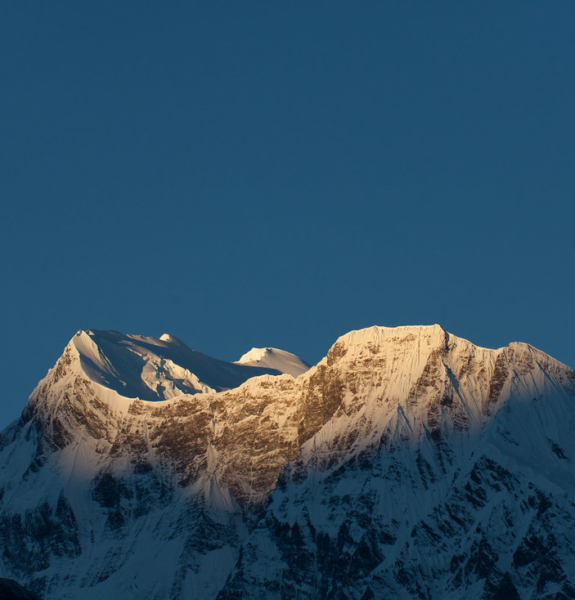
The Annapurna Base Camp trek (4,130m) which is a part of Annapurna Conservation Area (ACA) which is regarded as one of the most well-liked hiking trails in Nepal inside the protected region. The Annapurna base camp trek is the tenth highest peak in the world which covers a land size of 7629 square miles and an elevation range of 790 to 8091 meters. This conservation area is also home to endangered species of flora and fauna like red panda, snow leopard, Himalayan musk deer, Kashmir musk deer, Himalayan black bear, gray wolf, lynx, cheer pheasant, crimson horned pheasant, etc.
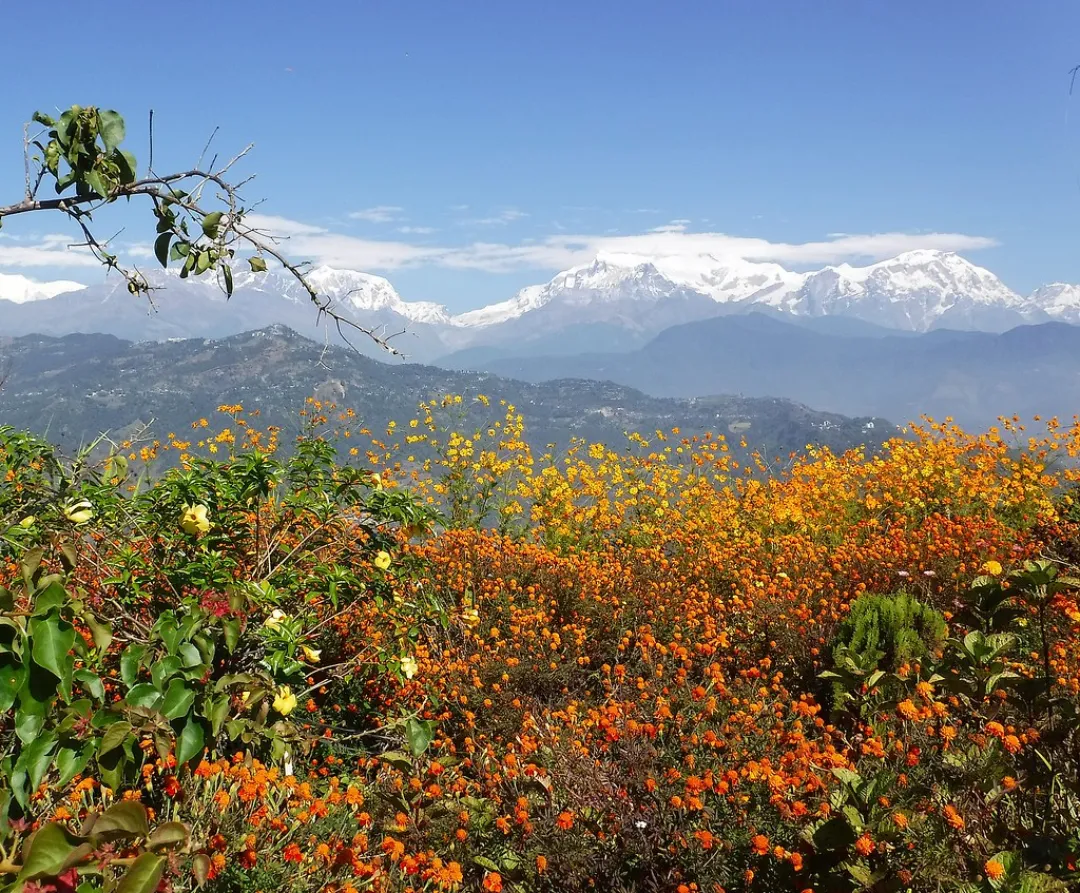
The path of the Annapurna Base Camp is highly valued since it is encircled by the four giant Himalayan Mountains: Machapuchare (6993 m), Hiunchuli (6441 m), Annapurna I (8091 m), and Annapurna South (7219 m). You will come across the lush forested trails adorned with colorful rhododendron blossoms, terraced farms and alpine meadows with incredible mountain vistas as a backdrop. During this Annapurna Base Camp trek, you will also get the opportunity to relish the unique and fascinating culture, traditions, and hospitality of the indigenous Gurung and Magar ethnic groups of the region.
Annapurna Base Camp trek route
The Annapurna base camp trek is a route that is very well planned out and pretty much offers you a bit of everything. To get to the Annapurna base camp trek, you have to fly into Nepal, and then it is either a drive or a flight over to Pokhara. Once you get to Pokhara, then you drive to Nayapul to begin the Annapurna base camp trek up to Ulleri.
Once you get to Ulleri, you climb up a lot of stair and through some very nice forests before arriving at Ghorepani. One of the absolute best views while doing the Annapurna base camp view trek is waking up super early and hiking up to Poon Hill to watch the sunrise. After this, you hike back down a bit and then over to Tadapani and then to Chhomrong, which is this amazing Gurung village.
After that, the route continues deeper into the Annapurna region. This time, the route goes through Dovan, walking through those super peaceful valleys. Of course, as you get higher up, you will notice the change in the landscape and the crispness of the air.
After Dovan, the route just continues on towards Machhapuchhre Base Camp. From there, you will arrive at Annapurna Base Camp. Honestly, this part of the route has some of the most incredible mountain scenery you will ever witness in the Himalayas.
The route back is essentially the same as the Annapurna base camp trekking route, going through Bamboo and Jhinu Danda, where you can soak in some amazing natural hot springs, which is always super welcome after walking through the mountains. Finally, the route takes you back through Nayapul and Pok hara, ending what is essentially an unforgettable adventure through the Himalayas.
Why trek to ABC in Nepal?
The trek to Annapurna Base Camp is a breathtakingly beautiful and exciting tour across the Annapurna region of Nepal. Nestled at an altitude of 4,130m, the Annapurna Base camp serves as a gateway to the towering magnificence of Mount Annapurna I, the 10th highest peak globally at 8,091m. You will be able to see Annapurna I (8091m), Annapurna II (7937m), Annapurna South (7219m), Gangapurna (7454m), Tharpu Chuli Peak (5663m), Singu Chuli Peak (6501m), and other peaks up close.
Inside the Annapurna Conservation Area, the trail cuts through narrow valleys. It’s a lovely walk through lush green forests, colorful villages, and winding rivers. The landscape, the culture, and the mountains that you will experience on this hike will be completely different from anything else that you have seen or done on any of your previous adventures. The journey to Mt. Annapurna Base Camp will exceed all expectations.
When is the best time to trek to ABC?
The best time to do Annapurna Base Camp Trek in Nepal is during the months of spring and autumn season. Spring season consists of months like March, April, and May whereas autumn season consists of months like September, October, and November.
However, during winter the temperatures range from 0 to 5 degrees during the day and negative 10-15 degrees at night. Trekking during winter can be risky due to snow-covered trails and higher risk of avalanches. But there are possibilities that we can head to base camp in winter season with full preparation and monitoring weather conditions. Consider it an adventure beyond the limit. Autumn is the harvest season, allowing travelers to meet farmers tending to their crops in the fields. In summer, the forests are green, and rhododendrons bloom, making the trail vibrant.
But the only potential downside of traveling during this season is the popularity of the trail, which tends to get crowded with fellow trekkers. However, the lively teahouses and interactions can be enjoyable for those who enjoy meeting new people.
With Epic Trek Nepal, the 13-day curated Annapurna Base Camp walking tour will be memorable for the visitors. Our experienced local guides and porters are provided for the logistics and safety. The journey starts from Kathmandu to Pokhara, and the trekking begins from Nayapul. After reaching the Mt. Annapurna Base Camp, the trek ends in Pokhara. This trek is less physically demanding than some and is ideally suited to those who wish to trek at a leisurely pace in the Himalaya Region.
Photo Gallery & Video Gallery
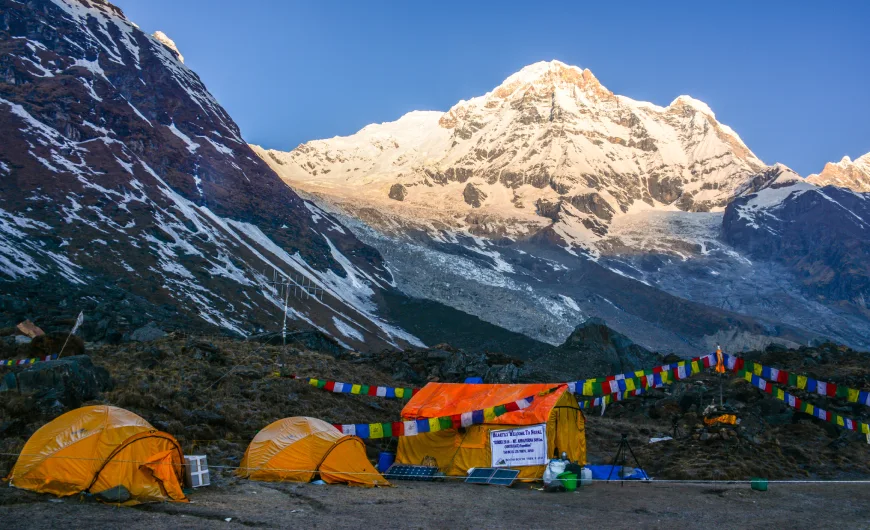
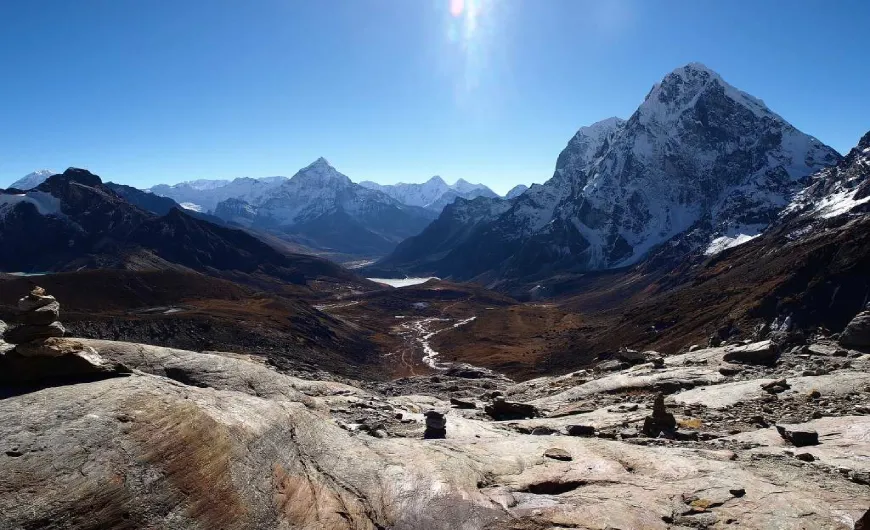
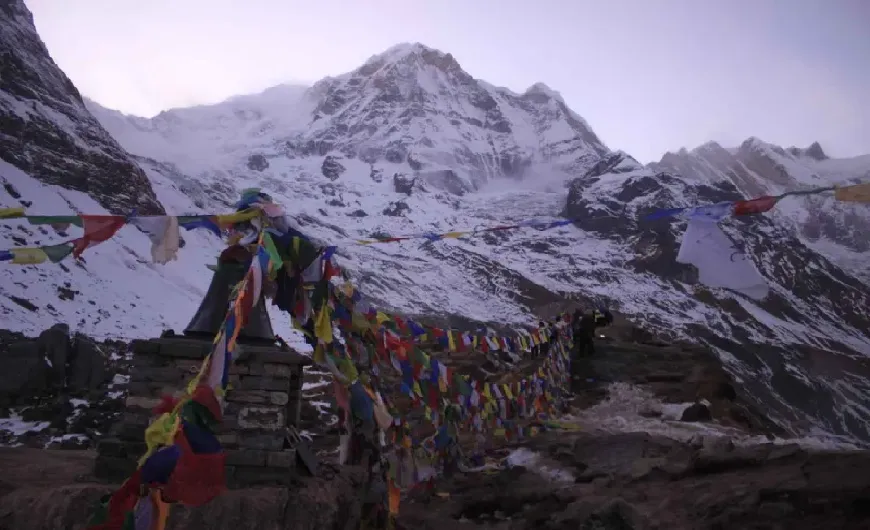
Annapurna Base Camp Trek - Distance, Duration, and Altitude
| Trekking Route | Distance (Kilometers) | Duration (Hours) | Altitude (Meters) |
|---|---|---|---|
| Nayapul → Ulleri | 12 KM | 5 to 6 hours | 2070 m. |
| Ulleri → Ghorepani | 8 KM | 4 to 5 hours | 2870 m. |
| Ghorepani → Poon Hill → Tadapani | 10 KM | 5 to 6 hours | 3210 m. |
| Tadapani → Chhomrong | 7 KM | 3 to 4 hours | 2170 m. |
| Chhomrong → Dovan | 10 KM | 4 to 5 hours | 2600 m. |
| Dovan → Annapurna Base Camp | 12 KM | 5 to 6 hours | 4130 m. |
| Annapurna Base Camp → Bamboo | 10 KM | 4 to 5 hours | 2310 m. |
| Bamboo → Jhinu Danda | 9 KM | 3 to 4 hours | 1780 m. |
| Jhinu Danda → Nayapul | 8 KM | 3 to 4 hours | 1035 m. |
Itinerary of Annapurna Base Camp Trek
Day 1: Arrival in Kathmandu
Welcome to Kathmandu, the capital of Nepal. After you land from the plane, one of our representatives from Epic Trek Nepal will be waiting for your arrival and take you to your hotel where you can freshen up, rest and enjoy the local food while walking around the busy streets of Thamel.

Activity: 45 min drive

Max. Altitude: 1324m./4,344ft. (Kathmandu)

Accommodation: 3-star Hotel
Day 2: Kathmandu to Pokhara
Your adventure will begin in Kathmandu by travelling by road in a Tourist bus toward Pokhara. Spend the evening exploring the lakeside city offering the view of the Annapurna range which is perfect for relaxing and preparing for the upcoming trek.
Activity: 6-7 hours drive
Max. Altitude: 822m./2,697ft. (Pokhara)

Meal: Breakfast
Accommodation: Standard Hotel
Day 3: Pokhara to Nayapul(1,035), Trek to Ulleri
Today is the official day to begin your trek. First, drive to Nayapul, the starting point of your trek. From Nayapul, hike to Ulleri, passing through beautiful villages and terraced fields. The trail introduces you to the way of life in Annapurna region as you move towards Ullers. Overnight stay at Ulleri.
Activity: 3 hours drive, 5 to 6 hours trek
Max. Altitude: 1960m./6,430ft. (Ulleri)
Meal: Breakfast, Lunch, Dinner
Accommodation: Teahouse
Day 4: Ulleri to Ghorepani
Trek from Ulleri to Ghorepani, going through rhododendron forests and enjoying the stunning mountain scenery on the way. Upon reaching Ghorepani, it offers stunning mountain views and cozy teahouses. Here you will stay overnight for a warm meal and to spend the night.
Activity: 4 to 5 hours trek
Max. Altitude: 2724m./8,937ft. (Ghorepani)
Meal: Breakfast, Lunch, Dinner
Accommodation: Teahouse
Day 5: Ghorepani to Poon Hill (3200m) to Tadapani
Early morning hike to Poon Hill to witness the breathtaking sunrise, offering panoramic views of the Annapurna and Dhaulagiri ranges. After enjoying the scenery, return to Ghorepani for breakfast, then continue trekking to Tadapani.
Activity: 6 hours
Max. Altitude: 2590m./8,497ft. (Tadapani)
Meal: Breakfast, Lunch, Dinner
Accommodation: Teahouse
Day 6: Tadapani to Chhomrong
Descend through rhododendron forests and small villages. After reaching Chhomrong village which is located at the base of the Annapurna region, it offers excellent views of Annapurna South and Machhapuchhre. Here you can experience the authentic Sherpa and Gurung culture and stay overnight.
Max. Altitude: 2170m./7,119ft. (Chhomrong)
Meal: Breakfast, Lunch, Dinner
Accommodation: Teahouse
Day 7: Chhomrong to Dovan
Trek from Chhomrong to Dovan, going through beautiful bamboo and rhododendron forests, and across the Chhomrong Khola (river). The terrain becomes sightly rough as you reach toward Dovan. This place is surrounded by stunning Himalayan peak where you will stay to spend the night.
Activity: 5 to 7 hour
Max. Altitude: 2505m./8,219ft. (Dovan)
Meal: Breakfast, Lunch, Dinner
Accommodation: Teahouse
Day 8: Dovan to Annapurna Base Camp
Trek through the Modi Khola Valley to Machhapuchhre Base Camp, and then continue to Annapurna Base Camp (2 hours from MBC to ABC). At 4,130m (13,500 ft), you’ll find yourself in the heart of the Himalayas, completely surrounded by snow-covered giant peaks. The views here are incredible – Annapurna I, Annapurna South, and Machhapuchhre tower above you in every direction. This natural amphitheater of mountains makes the entire trek worthwhile.
Activity: 4 to 5 hours
Max. Altitude: 4130m./13,550ft. (Annapurna Base Camp)
Meal: Breakfast, Lunch, Dinner
Accommodation: Standard Teahouse
Day 9: Annapurna Base Camp to Bamboo
From Annapurna Base Camp, descend back to Bamboo, enjoying the mountain views along the way. During this decending journey you can witness Annapurna I, Machhapuchhre, Hiunchuli and other peak. After reaching Bamboo, you will stay there for a warm meal and to rest your body for return journey.
Activity: 6 hours
Max. Altitude: 2310m./7,579ft. (Bamboo)
Meal: Breakfast, Lunch, Dinner
Accommodation: Teahouse
Day 10: Bamboo to Jhinu Danda
Trek from Bamboo to Jhinu Danda, a scenic journey through the Annapurna region. Here, you can relax in the therapeutic natural hot springs nestled along the riverbank, perfect for easing sore muscles after trekking. This day offers a perfect blend of nature, adventure, rest and natural therapy.
Activity: approx. 6 hours
Max. Altitude: 1780m./5,840ft. (Jhinu Danda)
Meal: Breakfast, Lunch, Dinner
Accommodation: Teahouse
Day 11: Jhinu Danda to Nayapul(1035), Drive to Pokhara
This is the final day of trekking, where you will trek from Jhinu Danda to Nayapul travelling through small villages, farmlands and rivers. From there you will take a scenic drive to Pokhara. After reaching Pokhara, enjoy a well-deserved rest and celebrate the completion of your Annapurna Base Camp trek.
Activity: 4-5 hours
Max. Altitude: 822m./2,697ft. (Pokhara)
Meal: Breakfast, Lunch, Dinner
Accommodation: Standard Hotel
Day 12: Pokhara to Kathmandu
Return back to Kathmandu by road or flight concluding your Annapurna Base Cam Trek. Spend your last evening shopping for souvenirs or exploring the Kathmandu city.
Activity: 6-7 hours driving
Max. Altitude: 1324m./4,344ft. (Kathmandu)
Meal: Breakfast, Lunch, Dinner
Accommodation: 3-star Hotel
Day 13: Departure
One of our representatives will take you to the airport for your flight to go back home. Have a safe journey, until next time you visit!
Activity: 45-min Drive
Meal: Breakfast
Includes/Excludes
What is included?
- Permits and Fees: All necessary permits for the Annapurna Base Camp Trek, including the Annapurna Conservation Area Permit (ACAP) and the TIMS (Trekkers’ Information Management System) card.
- Accommodation: Accommodation during the trek, usually in teahouses or lodges. This typically includes accommodations in Kathmandu and Pokhara before and after the trek in 3 star hotel on BB plan. (twin sharing basis).
- Meals: Most packages will include three meals a day (breakfast, lunch, and dinner) during the trek.also includes two times hot beverage (in breakfast and lunch) and seasonal fruits after dinner.
- Transportation: Ground transportation from Kathmandu to Pokhara and then Nayapul, After while return back to Kathmandu.
- Guide and Porters: Services of an experienced English-speaking trekking guide and porters to carry luggage(one for two trekkers). This includes their salary, insurance, equipment, food, and accommodation.
- First Aid Kit: A basic first aid kit.
- Trekking Map: A map of the trekking route.
- Equipment: Duffle Bag, Sleeping Bag (if necessary)
- Pick up drop-off: airport pick up and drop-off by private vehicle.
What is not included?
- International Flights: International airfare to and from Nepal is not included.
- Travel Insurance: Travel insurance that covers emergency rescue and evacuation is not included, and you’ll be expected to have your own.
- Personal Expenses: Expenses for extra meals, drinks, snacks, charging devices, hot showers, Wi-Fi, and other personal costs are not included.
- Nepal Visa Fees: Entry visa fees for Nepal.
- Additional Accommodation and Meals: If you choose to extend your stay in Nepal, the cost of additional accommodation and meals will not be included.
- Rescue and Evacuation: Any costs related to emergency evacuation or rescues are not covered.
- Trekking Gear: Personal trekking equipment, such as hiking boots, down jackets, trekking poles, and other gear are not included.
- Tips: Tips for guides and porters are not included and are left to your discretion.
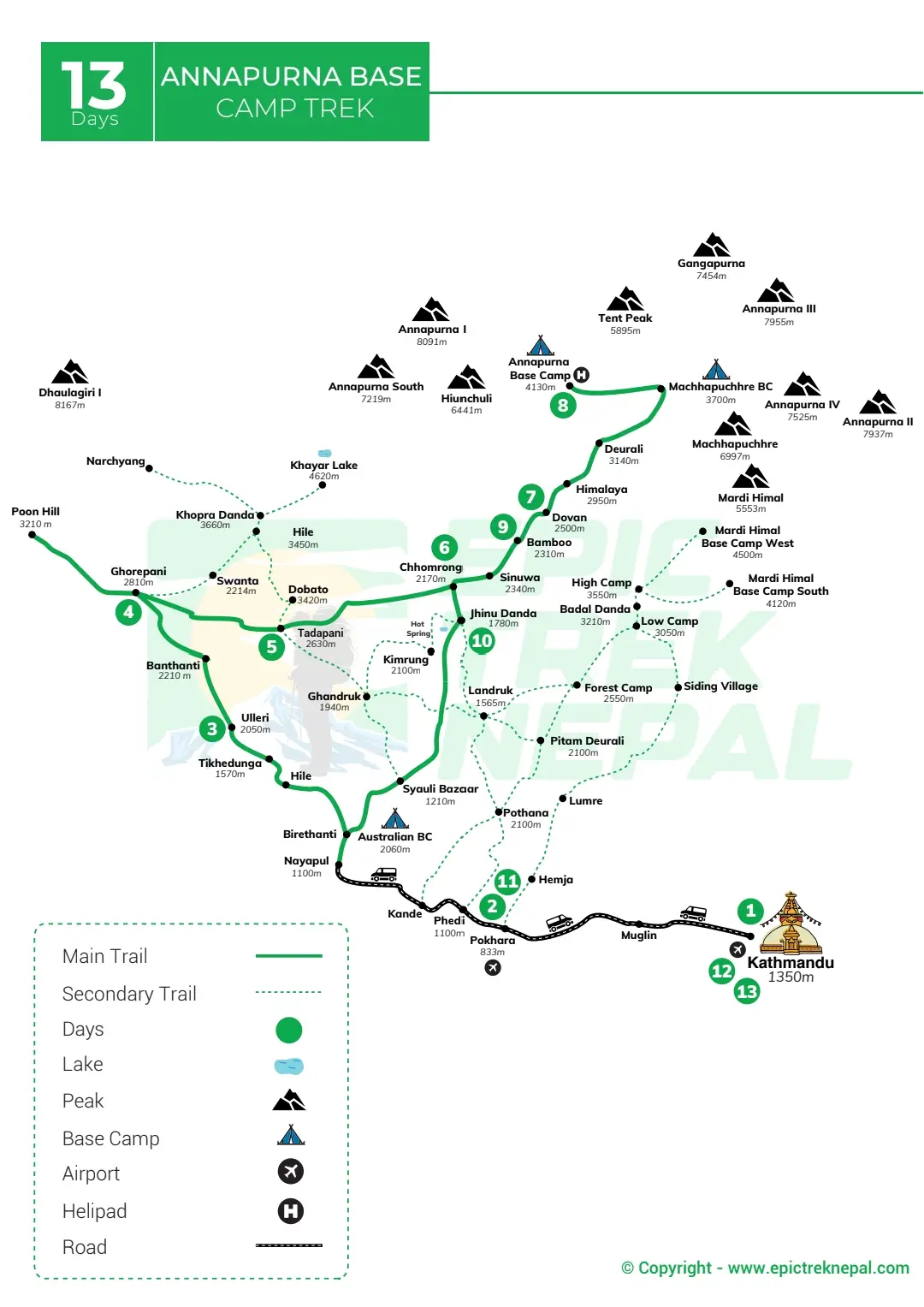
Trip Map of Annapurna Base Camp Trek
Trip Information
Time & Difficulty
The Trek to Annapurna Base Camp is one of the most rewarding yet challenging experience as it covers an approximate distance of 110km/68miles. The trek features significant challenges in terms of distance, duration, altitude, terrain, accommodation, and a few others. This distance will be covered within 11-14 days of trekking in which each trekker needs to walk about 5-7 hours each day. Also, note that the numerous stone steps along the trail add an extra level of difficulty.
While it might sound hard at first sight, with proper preparation, good physical fitness, and assistance from the best trekking agency in Nepal the cha
Preparation for the Annapurna Base Camp Trek?
Good preparation will make your Annapurna base camp trek safer and more pleasant. Although the Annapurna base camp trek route is not technically challenging, it demands good physical condition, good planning, and a positive attitude.
You should first work on building up your physical condition. You should be able to walk for 5 to 7 hours a day. You can do this by jogging, hiking, and cycling. You can add stairs to your exercise to make it more challenging before starting the Annapurna base camp trek.
You should make a good Annapurna base camp trekking schedule. You should not rush. This will allow your body to get accustomed to the Annapurna base camp trek route and allow you to enjoy the view while Annapurna base camp trekking.
Travel light but smart. Good trekkers need good boots, warm clothing, and rain gear. Weather can change quickly in the mountains. Be prepared for cold mornings and rain.
Hydrate and hike at your own pace. Although the altitude is not very high, acclimatization is important. So, hike and rest accordingly.
Get all the permits done, including the ACAP and TIMS permits. Finally, be mentally prepared. At times, the hike may be tough, but the experience and the culture make this Annapurna base camp trek an experience to cherish.
Visa and Permit
Before you actually start your Annapurna base camp trek, you’ve got to get your paperwork sorted, and this includes your visa and trekking permits. While it’s all quite simple, it’s probably better to prepare ahead of time, as you can see.
For most travelers, it’s quite simple to get your Nepal tourist visa upon your arrival at the airport or land border. Simply bring your passport, photos, and fee (which varies based on your length of stay). You can even apply for it online to save some time.
For the trekking, you will need two permits. One is the ACAP (Annapurna Conservation Area Permit). This is for the conservation of the region. Then, there is the TIMS card, which is essentially for safety purposes. This card is for the entire region, so you will need to produce both of these at different checkpoints on your Annapurna base camp trekking route.
Both these permit can be obtained through us “Epic Trek Nepal” so you don’t need to worry. Just don’t forget to carry printed copies of these in your bag! This way, you can enjoy the view on your Annapurna base camp view trek without any problems.
How long does ABC trek take?
The trek to Annapurna Base Camp starts from Kathmandu located at 1,340m and goes up to 4,130m. This trek requires 5-7 hours of walk daily from Nayapul to Annapurna Base Camp and back to Nayapul within the time period of 9 days. This is considered a challenging and most rewarding trekking in Nepal which requires good physical fitness to accomplish and in return gives the most beautiful destination as well as the mesmerizing journey along the way.
Language & communication
The honest truth is, surviving in your Annapurna base camp trekking route is much easier than you would think. When you are in places like Kathmandu and Pokhara, you will find that everyone speaks decent English. This is especially true in the hotels, shops, and trekking agencies.
As you get farther into the mountains along your Annapurna trekking route, most of the people in the tea houses and local guides will also speak English well enough for you to communicate. You will find that people are very friendly and eager to assist, even if they only speak a little bit of English. A lot of times, all you need to do is use hand gestures and smile, and you will have gotten your message across.
It’s also a great idea to learn a few words in Nepali. For example, ‘Namaste’ means ‘hello,’ and ‘Dhanyabad’ means ‘thank you.’ They will help you connect with the locals and will make the whole experience much more personalized. And, if you are travelling with a guide, they will be able to assist with all of the translation and provide you with insight into the local culture, which will relieve you of the stress imposed on travelers who do not have a guide or translator and allow you to enjoy the views on your unbelievable Annapurna base camp view trek .
Cultural Festivals Along the Trail
During the Annapurna Base Camp Trek, you will encounter some amazing villages where you can experience the local culture and traditional celebrations! Festivals bring so much vibrancy and colour to the mountain communities!
You will meet mostly Gurung people, who are famous for their generosity and welcoming spirit. In villages such as Chhomrong and Ghandruk, the Gurung have community celebrations complete with local music and dancing.
While you are on the trek, you will likely witness two of Nepal’s largest festivals, Dashain and Tihar, which will make your Annapurna Base Camp Trek itinerary feel even more alive. You will see the locals performing rituals, celebrating with family and friends, and there will be an overwhelming sense of happiness! Moving along the trail, you will encounter Buddhist Festivals that will include many, many prayer flags and many different ceremonies held at monasteries! All of these various cultural experiences will enhance you r overall experience while trekking to, and at, the Annapurna Base Camp!
What to Expect on the Trek?
Annapurna is mostly a tea house trek. As your trek starts from Nayapul, you’ll walk all day for around 7 hours through lush green forests filled with rhododendron, seasonal farming lands, waterfalls, views of majestic mountains and somewhere the stone steps to climb to add you a little difficulty. Well, with that you’ll get a chance to engage somewhere in the Himalayan regions where the different ethnic groups live in ways that are different from what you usually see.
You’ll get a chance to understand the life with simple expectation – just the basic for living and the clear guidance from nature. By reaching the destination, you’ll be amazed and thankful for keeping the belief of pushing yourself to make the decision to go on the Mount Annapurna Base Camp trek.
Some challenges you may encounter include: altitude sickness, varying terrain, unpredictable weather, and physical exertion. But with proper prior preparation and the right guidance, you can definitely reach your destination and take advantage of Annapurna Base Camp’s beauty. This is a nature and culture-friendly adventure so, plan accordingly and make sure of your safety.
Mobile network, internet & charging facilities
While a good portion of the Annapurna Base Camp hiking route does provide mobile network coverage, you should not expect it to be 100% dependable. The coverage is better along the lower parts of the hike and will likely get worse as you go higher and higher.
Before you begin your Annapurna base camp trekking route, it’s worth getting a SIM card for a network such as Ncell or Nepal Telecom in the Kathmandu or Pokhara valley. They offer cheap internet packages. While many tea houses will offer internet access via WiFi, be prepared to pay a few extra bucks for the service. Additionally, the internet will be a bit on the slow side, to say the least.
If you plan on charging your devices, most tea houses will have access to a plug, but be prepared to pay for each device, as electricity is expensive in the mountains. I would definitely recommend a power bank to avoid having to constantly search for a plug. There is a great deal of peace and natural beauty along the Annapurna Base Camp Trek, so even though you may not always have a strong mobile network signal, you should feel free to put your cell phone down occasionally.
Don’ts on the this trip
There are a few things you really should avoid to keep things safe and respectful. First, don’t rush! Walking too fast is a one-way ticket to exhaustion or altitude sickness. Just stick to a steady pace with your Annapurna base camp trekking itinerary.
Also, don’t overpack. Carrying a heavy bag makes every step feel twice as hard. Keep it light. Finally, never ignore how you’re feeling. If you feel dizzy or extremely tired, don’t be afraid to let your guide know. Your health is way more important than making it to the next stop quickly.
Also, respect the local vibes. Try not to be too loud, dress a bit modestly when you’re passing through villages, and always ask before you start snapping photos of people. Don’t make mess. Whatever you take in, make sure you bring out. Keep the trail clean, and you’ll be saving that amazing Annapurna base camp view trek for the next person. Finally, don’t rely too much on your gadgets. Sometimes the weather and the signal just don’t cooperate.
Health and safety on Annapurna Base Camp trek
Before setting out on the trail, your first consideration should always be health and safety at all times. Most of the time the trail is safe, but you should still use common sense in regard to the height you will be at, the weather conditions will be like, and generally how hard you are pushing yourself.
In general you want to proceed at a normal speed and complete your Annapurna base camp trekking itinerary without trying to hit the finish line faster than anyone else. Take lots of breaks and drink far more water than you think possible. Staying well hydrated is one of the best ways to avoid altitude sickness, and is also one of the best ways to keep your energy level up.
Look for signs of altitude sickness. Constant headaches, lightheadedness, and nausea are all signs. If you develop symptoms, stop immediately and let your guide know how you are feeling. You may need to rest or descend if you are experiencing symptoms. Do not ignore your body’s signals! Be prepared with proper clothing as mountain weather is very unpredictable. Therefore, have your warm layers and rain gear accessible whenever outside. A licensed guide can also help tremendously with safety because he/she/they (as appropriate) have experience with all aspects of reaching your destination.
Trip Extension and Side Trails
One of the really cool things about the Annapurna base camp trek is the fact that there are just so many options when it comes to extending the trip. So if you’ve got the time and the interest in seeing more of the region, you can easily add a few more days onto your main Annapurna base camp trekking adventure.
One of the best things you can do is add a few more days to your main Annapurna base camp adventure by spending more time soaking in the hot springs at Jhinu Danda. Trust me when I say your legs will be thanking you after the long days of walking. Another popular option for extending the adventure is to take a quick detour through the villages in the Pokhara region.
You can even add this adventure onto your main Annapurna base camp adventure by taking the Ghorepani or Mardi trails. These trails add even more amazing scenery and culture to the mix. These trails are a little quieter and give you a really different perspective on the region. They allow you to experience the Annapurna base camp trek from every angle.
Travel Insurance
It is essential to obtain travel insurance for your Annapurna Base Camp trek. Travel insurance provides a safety net for those “just-in-case” scenarios, including medical emergencies, trip discrepancies, and lost baggage. However, the most important aspect is ensuring that your policy has both high-altitude coverage as well as emergency helicopter evacuation coverage.
Annapurna Base Camp is located over 4000 meters in elevation. Thus, a standard travel insurance plan will not provide sufficient coverage for trekking at that elevation. Prior to purchasing the insurance plan, always verify that trekking at those altitudes is covered by your plan since the cost of emergency evacuation from Annapurna Base Camp can be extremely high if you do not have this type of insurance.
When going trekking in Annapurna Base Camp, always keep a printed hard copy of your insurance statement and all pertinent emergency contact information on you during your trek and a good idea to also give copies of these documents to your guide or travel agency (Epic Trek Nepal) so they can contact the insurance company on your behalf if you require help. Having appropriate insurance coverage will alleviate any stress you may have while trekking and enable you to enjoy the incredible views at Annapurna Base Camp.
Frequently Asked Questions
Mostly, Annapurna Base Camp Trek is suitable in Autumn and Spring season to capture it’s peak beauty. From the month of March to May and September to November, Annapurna region is favorable.
Lower risk compared to Everest region. Maximum altitude 4,130m with gradual ascent. Duration is related to body’s adjustment to altitude. Proper acclimatization built into itinerary minimizes risks.
Essential gear:
- Warm sleeping bag (0°C rating)
- Layered clothing system
- Good trekking boots
- Rain gear and warm jacket
- Trekking poles
- Personal first aid kit
Once you decide to trek with us. Epic Trek Nepal provides detailed packing lists.
Teahouse accommodation:
- Twin-sharing rooms with basic amenities
- Shared bathrooms (private available for extra cost)
- Clean, comfortable lodges throughout route
Guide recommended but not mandatory. ABC trails are well-marked, but Epic Trek Nepal guides provide:
- Cultural insights and local knowledge
- Safety support and emergency assistance
- Act as a mediator for language assistance.
Epic Trek Nepal handles all permits:
- ACAP (Annapurna Conservation Area Permit): NPR 3,000 ($25)
- TIMS Card: NPR 2,000 ($17)
Moderate difficulty – suitable for beginners with basic fitness.
Epic Trek Nepal pricing:
- Solo Trekker: $825 per person
- 2-3 person: $800 per person
- 4-6 person: $780 per person
- Group over 7: $740 per person
Includes all permits, accommodation, meals, guide, porter, and ground transportation (no flights required).
Trip Reviews
US$ 800
Need Help? Talk to Expert
+977 9764792172