How Difficult is Jomsom Muktinath Trek
The Jomsom Muktinath Trek falls into that perfect moderate category. You need neither special qualifications in climbing nor top-notch physical training to do it, but it is also unlikely that you will succeed simply by getting up off the sofa and heading out. It depends only on your constant efforts. Sometimes, you will be on your feet for 6 or even 7 hours on a terrain that may not be flat and paved, which means that a good dose of endurance would make things easier for you.
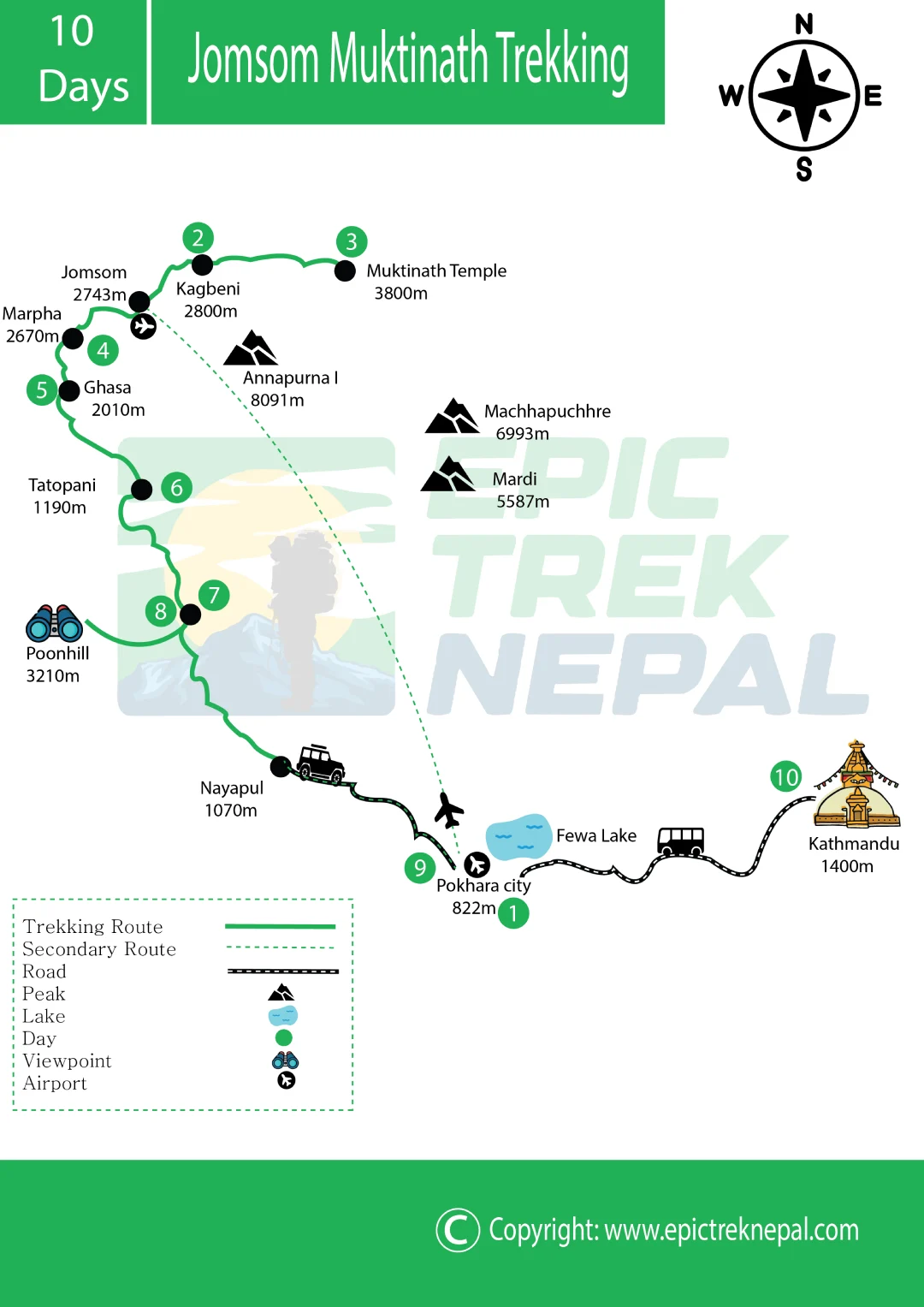
You will reach an elevation of 3,210 meters at Poon Hill and 3,710 meters at the famous Muktinath Temple. Most fit people will have no trouble with such elevations, but that doesn’t mean you should disregard the elevation levels entirely. You still have to pay attention to symptoms like a persistent headache or feeling extremely tired and act accordingly.
The Jomsom Muktinath Trek Itinerary route can be described as being quite varied. Some sections of the Kali Gandaki valley are relatively flat and easy to navigate and other parts will be a lot more challenging, including the ascent from Tatopani to Ghorepani, which is definitely going to give your legs a workout. The afternoons in Mustang can be quite windy as well, particularly during the trekking period between Jomsom and Kagbeni.
Preparation for the Jomsom Muktinath View Trek
Some effort put into preparation before your trek will pay off tremendously during the Jomsom Muktinath Trek. There is no need to spend months preparing yourself physically for this trek, just 4-6 weeks to physical fitness is always a great idea. Cardio training like hiking, jogging, stair climbing should be the main focus, since trekking is mostly walking on foot.
A few sessions of weight training will also be highly beneficial, especially considering that climbing Ghorepani requires significant endurance. One of the most useful activities is to train while carrying a fully loaded backpack. It is an entirely new experience compared to just walking without any load, and it is better to realize that at home rather than on the third day of the journey.
Speaking of equipment, bring only what you need. Good quality trekking shoes, moisture-absorbing layers and down jackets are required since you will experience cold weather at high altitudes. Waterproof outer layer, trekking poles, headlamps and a first aid kit are also necessary. Don’t forget about sunscreen, sunglasses and hats, since the Sun is quite strong at high altitude.
Stay hydrated and eat well at teahouses because the physical condition you maintain throughout the trek greatly influences the result. It won’t hurt to pack some Diamox too, as a precautionary measure (always consult with a doctor before taking any medication). By the way, it is likely that your positive mood will be your strongest asset during the Jomsom Muktinath trek.
Cultural Festivals on the Trail
Planning the timing of your Jomsom Muktinath Trek during the festivals turns the trip into an exceptionally memorable cultural experience. Festivals take place annually in the region of Mustang and in the Annapurna region as well.
Taking part in these cultural events when timing your Jomsom Muktinath Trek makes for an unforgettable trip to remember. Festivals and celebrations take place all around the Mustang district as well as in other parts of the Annapurna Circuit.
The most thrilling festival for trekkers along the Jomsom Muktinath Trek trail is the Yartung Festival which occurs in the month of August or September in both Jomsom and Muktinath. The festivity is celebrated over three days and consists of horse races, music concerts, dancing, and feastings.
The Tiji Festival occurs in Lo Manthang, Upper Mustang in May. For trekkers planning to go on with the Jomsom Muktinath Trek further than Lower Mustang, this festival will be a wonderful experience watching monks perform incredible Cham dances.
The two largest Hindu festivals of Dashain and Tihar celebrated in October and November in Nepal make the teahouses and villages colorful by the presence of flowers, lights, and decorations. The festive mood of the trek in October or November is heartening.
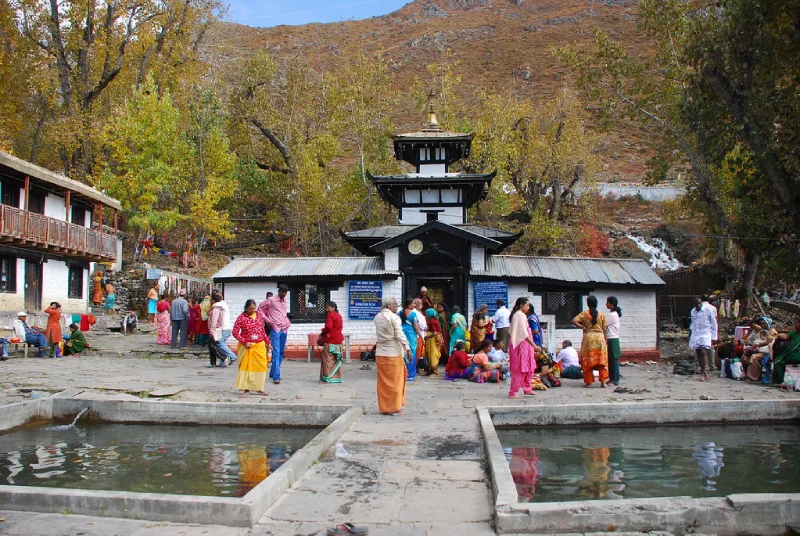
The festival of Muktinath Purnima celebrated during the full moon in the Muktinath temple attracts thousands of Hindus and Buddhists who take bath in the holy 108 waterspouts. Observing such a huge gathering of devotees makes the Jomsom Muktinath Trek unique from the rest of the treks in Nepal.
Lha Phewa festival of the Thakalis, which is celebrated to worship the local village gods in an exclusive way, helps the trekkers understand the spiritual aspect of the life of mountain people.
Visa and Permit Requirements
Nepal itself isn’t particularly difficult to get into. One could acquire their tourist visa upon arrival at the Tribhuvan International Airport in Kathmandu, or they could opt for the easier method of applying through the immigration portal online before leaving. As far as fees go, these will vary according to the length of your stay (typically 15, 30 or 90 days), and one can choose between paying in US dollars and their equivalent amount.
With regards to the Jomsom Muktinath Trek, there are two special permits that one would need: the Annapurna Conservation Area Permit (ACAP) to preserve the region, and TIMS Card, or Trekkers’ Information Management System Card, an essential permit for any trek in Nepal.
Both these permits can will be handled by us “Epic Trek Nepal”, you just need to give us some passport size photographs along with the copies of the passports should which also helps as these will expedite the entire procedure to a great extent. All you need to do is ensure that your passport is valid for at least six months after you land in Nepal.
Language and Communication
While Nepali is the official language, you will notice that English is widely spoken everywhere, from the tourist hotspots to the teahouses on the trekking trail of the Jomsom Muktinath Trek. The owners and guide will mostly know English well enough, so there won’t be any problems getting your point across.
Once you enter Mustang, you might even come across some dialects such as the local Thakali and Tibetan languages. You can always make an impression on the local population by learning a few basic Nepali words, such as Namaste (hello), Dhanyabad (thank you), and Kati parcha (how much?).
In terms of staying connected with everybody at home, you will be able to access mobile networks in almost all large settlements on the Jomsom Muktinath Trek itinerary, such as Jomsom, Kagbeni, and Muktinath. There are two major telecommunication companies – Nepal Telecom and Ncell. Between these 2 Nepal Telecom is generally considered to have a more stable network in mountain areas.
Almost all teahouses offer WiFi, although its speed may not be very fast, especially when traveling in the higher reaches of the trekking trail. Therefore, the most logical step would be to simply purchase a local SIM card while still in Kathmandu or Pokhara before setting out for your Jomsom Muktinath Trek Itinerary.
Don’t on the Jomsom Muktinath Trek
Maintaining respect for the local population and environment is a crucial component of the overall Jomsom Muktinath Trek. There are certain behaviors that should be avoided entirely if you wish to maintain cultural respect and respect for the natural environment.
For example, it would be best to refrain from touching or moving religious items, such as prayer flags or the carved mani stones found along the route. This includes walking clockwise around stupas and monasteries. Walking around them counter-clockwise is highly disrespectful in Buddhist tradition and can potentially result in negative karma.
As for the environmental rules, please do not litter. Both the Mustang region and Annapurna area are very delicate and need to be protected. It would help if you had a reusable water bottle, some purification tablets, and avoided buying water in single-use plastic bottles.
It is important to make sure you do not use any kind of disposable plastic on the tour of the Jomsom Muktinath Trek. Trekkers should also be careful not to play loud music, since nature cannot be enjoyed when there is any disturbance. Another thing one should keep in mind is never to go solo trekking to any remote location.
Lastly, ensure that you are realistic about altitude sickness, and avoid being a hero when you are suffering from a intense headache, nausea, and dizzinessa during the Jomsom Muktinath Trek journey.
Trip Extension and Side Trails
The Jomsom Muktinath Trek makes an awesome starting point for several other great trail extensions that will enhance your travel experience in the Himalayan range. In case you have some spare time, you should really try to explore one of these routes.
First of all, you can join the Upper Mustang Trek. The Upper Mustang Trek begins after crossing Kagbeni Pass and requires special permits that allow visitors to enter the restricted zone of an old kingdom. Those who wish to continue north after visiting the forbidden city of Lo Manthang will experience a fascinating journey through a surreal, barren country with red cliffs, cave monasteries, and some villages. Therefore, this tour will take another 7–10 days after you’ve completed the core route.
If you choose to continue exploring the Annapurna range, there’s another route that allows you to link up the trails. Having walked the Jomsom Muktinath route, you can follow it to the south, past Tatopani, Ghorepani, and Poon Hill, where this route meets the main Annapurna Circuit trek.
An interesting side trail in this area is that of the Dhaulagiri Base Camp. While being a part of the Marpha region, this side trail leads towards the base camp of the world’s seventh highest mountain peak. The scenic beauty seen along the way of this trek route is unmatched anywhere else.
Another interesting day side trip is the journey to the Dhumba lake from Jomsom which is situated near Jomsom and is around 2,950 meters above sea level. This trek to Dhumba is a half day one and it is possible for the participants to include it in their itinerary without disturbing any other arrangements.
If you want cultural side trip there is the Luri Gompa which can be done by the visitors visiting the Muktinath region. These centuries old cave temples are located in the cliffs of the region and are an interesting representation of the area.
Travel Insurance
Travel insurance for the Jomsom Muktinath Trek is not a choice but a requirement. Even on a moderate adventure, unexpected situations such as high altitude sickness or a sprained ankle could occur. Travel insurance is not about protecting yourself; it is simply about giving you peace of mind.
When purchasing travel insurance, the key point to look for is ensuring that your insurance covers you up to 4,000 meters of altitude. Many travel insurance plans have restrictions regarding the height they will cover you for, so it is best to read the fine print thoroughly.
The single most essential factor regarding insurance policies for this trek is to ensure that your policy includes helicopter evacuation in the event of an emergency. Otherwise, a simple extraction may prove to be extremely expensive.
Make sure to arrange insurance before you set out on your journey, and ensure that you carry copies with you in both soft and hard formats. Ensure that the person leading the expedition or organizing the event knows where to find all the necessary information in case of an emergency.
Health and Safety on Jomsom Muktinath Trek
Health and Safety always comes first while traveling on the trek like Jomsom Muktinath Trek Itinerary. You are going above 3,700 meters, altitude becomes the major concern of your health and safety during the trek. Do not be fooled into thinking AMS cares about age or physical fitness levels!
The rule of thumb is always to climb high, sleep low, and take time to acclimatize. The itinerary of the Jomsom Muktinath Trek route takes into gradual climb, but still it is important to hydrate properly, drinking at least 3-4 liters per day and limiting alcohol intake for the first couple of days.
Carry a basic medical first aid kit with essentials such as Diamox (consult with your doctor), blister plasters, antiseptic, etc. Diarrhea and other digestive problems are common on the Jomsom Muktinath Trek route, thus eating only hot food cooked right there and avoiding any salads and unwashed fruits.
A licensed guide will also ensure that the Jomsom Muktinath Trek is safe for you. They are aware of the weather conditions and know how to handle emergencies. Inform your guide about any strange feelings as soon as possible. It does not matter whether the matter is insignificant.
Also remember to apply sunscreen. You need it because the UV rays is higher above 2,500 meters. Trekking poles may protect your knees during the long descents in the Jomsom Muktinath Viw Trek.





 Share
Share