Gosaikunda Trek
75 reviews in Tripadvisor
Trip Duration
6 DaysDestination
NepalTrip Difficulty
EasyGroup Size
1-12Transportation
Private VehicleAccommodation
Hotel/TeahouseActivity
TrekkingMeals
All InclusiveStart / End
KathmanduRegion
LangtangBest Season
Spring & Autumn
Need Help? Talk to Expert
+977 9764792172Trip Overview
The Gosaikunda Trek is definitely one of the spiritually and scenically most fascinating treks in Nepal. It will lead you to the Langtang Valley, where beautiful alpine lakes surrounded by impressive mountain ranges create the perfect scenery for anyone interested in exploring this part of the world.
The Gosaikunda Lake itself has an elevation of 4,380 meters above sea level. It is considered one of the most holy places in the whole Himalayas for both Hindus and Buddhists. Many people come to visit the lake annually on their pilgrimage during the Janai Purnima festival. Following in the footsteps of the thousands of pilgrims will give you a more humane approach to the trekking itself.
What makes the Gosaikunda View Trek unique is the diversity it can offer. While in lower parts, you will be surrounded by the beautiful rhododendrons and enjoy the forest area, you will experience a harsh alpine landscape in the mid parts. At last, you will reach the sacred part with the lakes themselves.
The Gosaikunda Trek offers magnificent views of the Himalayas for the trekkers as well. The days that are clear enable one to see Langtang Lirung, Ganesh Himal and even glimpse the far-away ranges of Annapurna. The beauty of the view makes the whole effort worthwhile.
Gosaikunda Trek Route
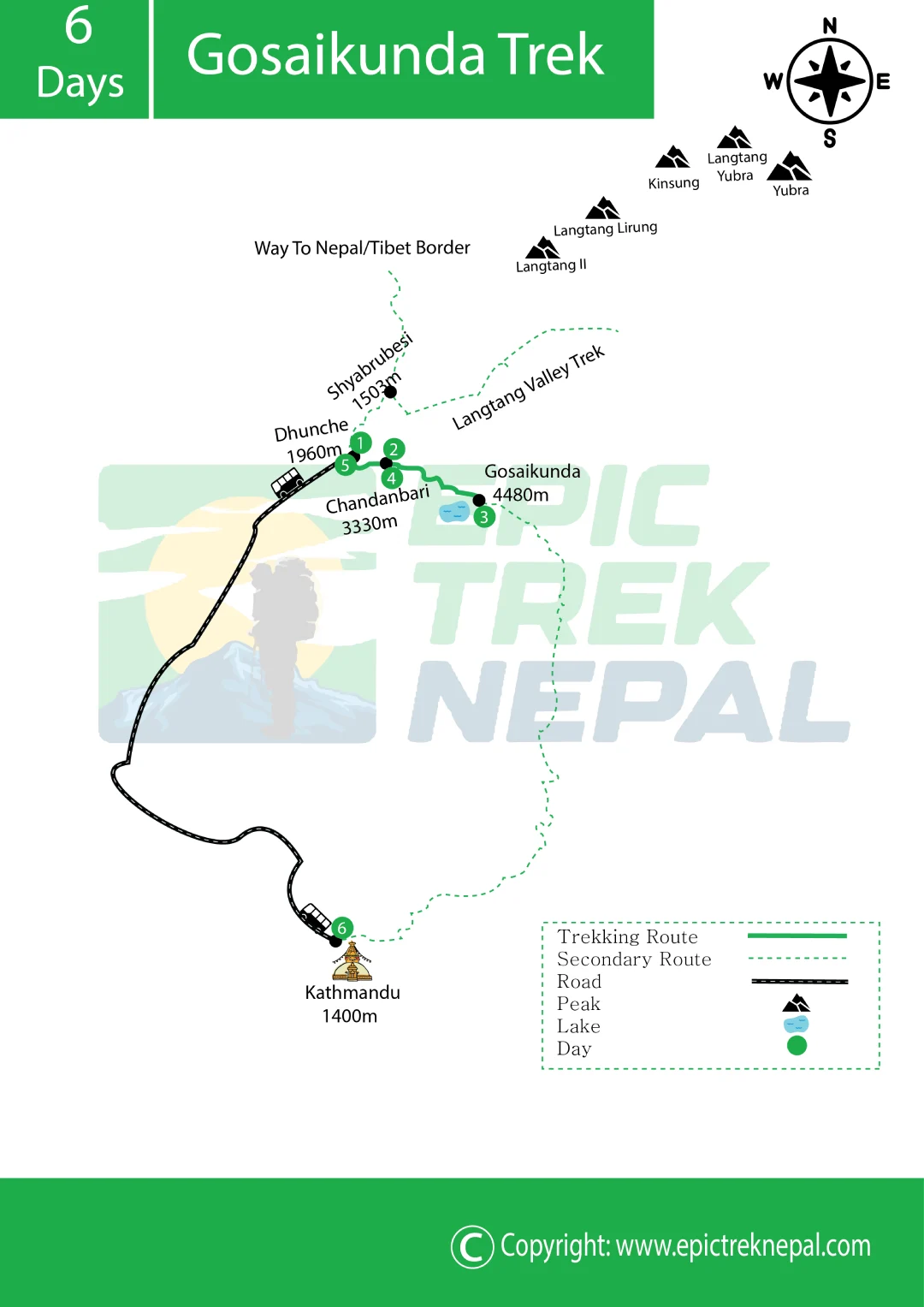
Our Gosaikunda Trek itinerary begins with a journey from Kathmandu to Dhunche, which is located at an elevation of 1,960 meters above sea level. The ride itself is rough, but once you arrive at the destination, you will immediately sense that something unique is happening here. The trekking journey continues with an ascent through the rhododendron-oak dense forest leading up to Chandanbari, commonly referred to as Sing Gompa, lying at an elevation of 3,330 meters. In this case, you have to remember that the climbing is not really difficult, which makes the trekking journey extremely enjoyable.
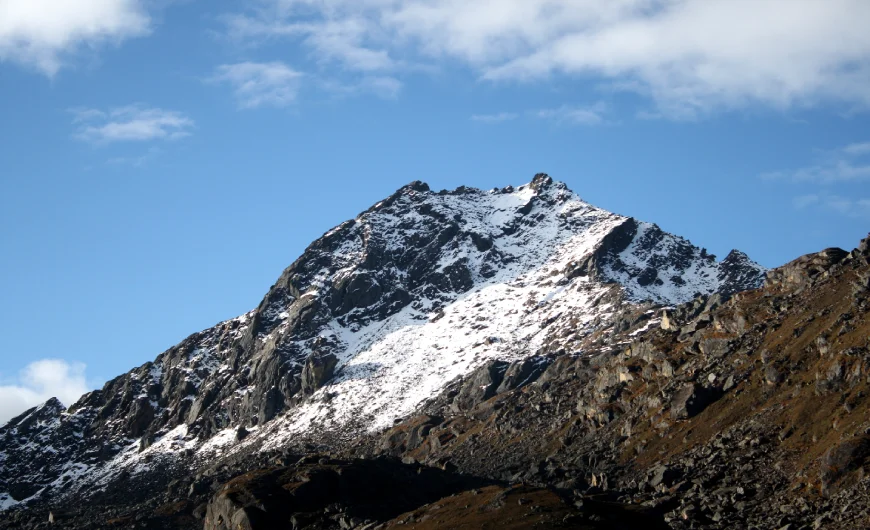
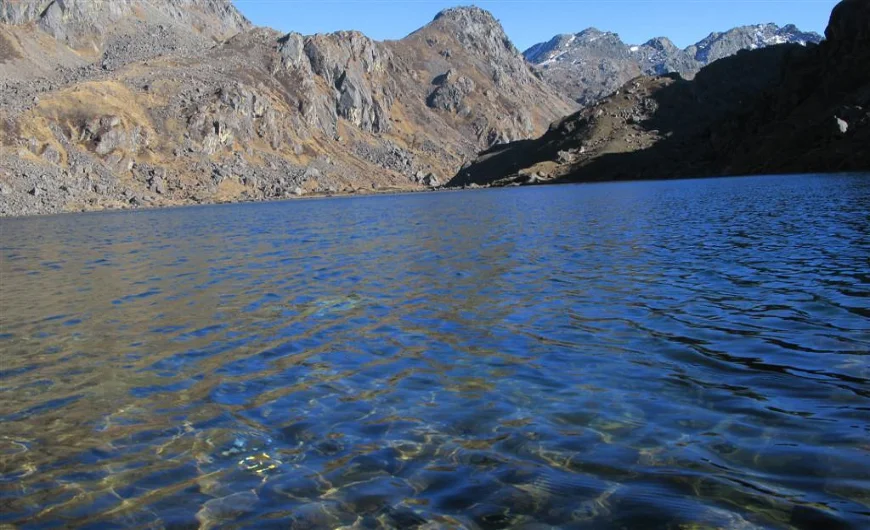
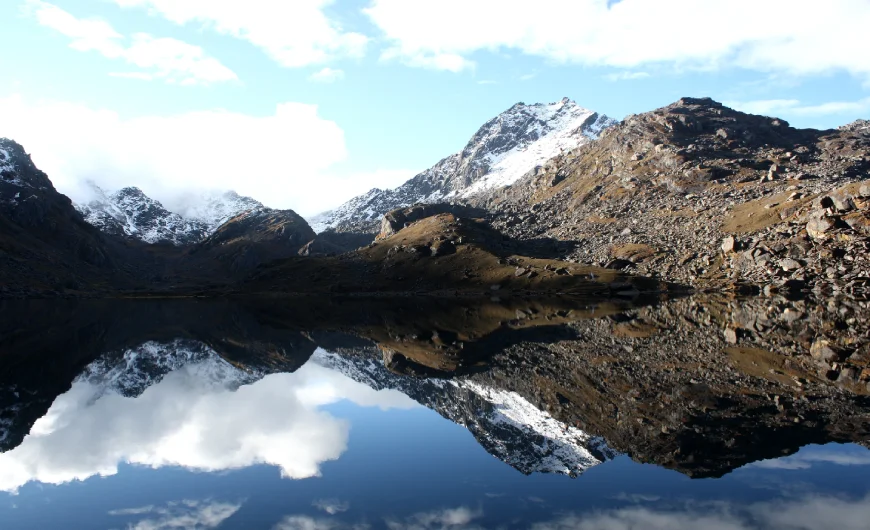
Once you have reached the altitude of 3,330 meters, the trekking journey becomes more difficult because you will have to climb even higher to reach Gosaikunda Lake located at the altitude of 4,380 meters. The place where Gosaikunda Lake lies becomes the main highlight of the entire journey. Once you finally reach the lake, you will be able to observe some spectacular scenery because of the fact that the lake is surrounded by high snow-dusted ridges under the huge sky.
After you are done with Gosaikunda, the journey goes back to the same place via Chandanbari and ends with the last drive to Kathmandu. This is the option we love. It’s straightforward and gives us the best experience with minimal complications involved. The trip is short yet fulfilling and enjoyable, allowing you to spend more time with nature than worrying about other things.
The overall trekking distance along this route is around 45 – 50 km through four days of hiking. This looks like a short distance, but you should understand that the itinerary is very rewarding. It offers you forest and meadow walks while giving you access to one of the most sacred lakes in the Himalayas.
Who Can Join the Gosaikunda Trek
It is suitable for any person who wishes to explore the natural beauty of Nepal but does require a good physical condition, meaning you must not mind trekking for around 5-7 hours daily. In case you are an experienced hiker, that would be an advantage for you.
Age is not a problem on this route as many active people over 50 and even over 60 complete this trek perfectly. In addition, given the elevation above 4,380 meters, those who suffer from heart and respiratory diseases, as well as those sensitive to heights and altitude, are advised to consult with doctors first.
Young people between the ages of 20 and 30 also do well with in this Gosaikunda View Trek and enjoy the nature of the area. Teenagers are welcome to take part in the trek together with adult companions if they like hiking. However, the Gosaikunda Trek Itinerary route, which passes next to high altitude lakes, is rather physically challenging.
If you have never hiked in the Himalayan region before, there is no reason for you to be scared because you are capable of doing it. Many tourists have started their adventure with the Gosaikunda trek and felt very proud of their achievements. All you need to do is get yourself ready physically with some cardiovascular and leg workouts before leaving home, and everything will turn out great.
Highlights of Gosaikunda Trek
- Get ready for an adventure at the edge of Gosaikunda Lake (4,380 m) – a highly spiritual alpine lake of the Himalayas
- Trek through gorgeous landscapes filled with blooming rhododendron and oak forests – especially beautiful during spring
- Feel the excitement of taking in the amazing view of the majestic Langtang Lirung and Ganesh Himal range
- Immerse yourself in the spirit of one of the holiest sites visited by Hindu and Buddhist pilgrims
Explore the fascinating Sing Gompa Cheese Factory – one of the highest running cheese factories in Nepal - Meet Tamang villagers living in the traditional Himalayan community
- Get on an excellent 6-day trek itinerary perfectly balanced between trekking and acclimatization
- Observe changes in landscapes from tropical river valleys to high-altitude alpine environment within a single trek
Photo Gallery & Video Gallery
Gosaikunda Trek - Distance, Duration, and Altitude
| Trekking Route | Distance (Kilometers) | Duration (Hours) | Altitude (Meters) |
|---|---|---|---|
| Kathmandu to Dhunche | 117 KM | 6 to 7 hours Drive | 1960 m. |
| Dhunche to Chandanbari | 13 KM | 5 to 6 hours trek | 3330 m. |
| Chandanbari to Gosaikunda Lake | 11 KM | 5 to 6 hours trek | 4380 m. |
| Gosaikunda Lake to Chandanbari | 11 KM | 4 to 5 hours trek | 4380 m. |
| Chandanbari to Dhunche | 13 KM | 4 to 5 hours trek | 3330 m. |
| Dhunche to Kathmandu | 117 KM | 6 to 7 hours drive | 1400 m. |
Itinerary of Gosaikunda Trek
Day 1: Kathmandu to Dhunche
Today marks the beginning of your Gosaikunda Trek, which involves an entire day’s drive from Kathmandu to Dhunche, a village in the Langtang Valley. The route is quite bumpy, going up and down hills and valleys of the Trishuli River valley. However, you will have a lot of time to admire the views as you pass by terraced fields, little towns along the road, and some verdant forests here and there.
On average, it takes around six to seven hours to complete the drive to Dhunche, although the duration may vary depending on the traffic and weather conditions on the road. As you move away from the urban hustle, you can expect fewer cars on the road and fresher air. Interestingly, travelers find it enjoyable to be driven for so long since the landscape continuously changes.
The village of Dhunche is located at an altitude of 1,960 m within the buffer zone of the Langtang National Park. It is a quite organized village with excellent lodging options and reasonably good food. This is the last opportunity to purchase any additional snacks, warm clothing, or any other forgotten items that you may have left behind in Kathmandu.
Spend the night at the hotel without any plans and try to catch some sleep. You need to be well-rested before starting your Gosaikunda Trek Itinerary adventure.
Activity: 6 to 7 hours Drive
Max. Altitude: 1960m./6,430ft.
Meal: Lunch, Dinner
Accommodation: Tea house
Day 2: Dhunche to Chandanbari
This day, your actual journey starts. This is where you start moving upward from the town of Dhunche, surrounded by these huge forests of rhododendrons and oaks. You will definitely have to scale some heights today, so you can really feel the difference in breathing. The forest is very silent and tranquil – in case you are fortunate to visit during spring, it literally blossoms with colorful flowers of rhododendron.
After visiting a couple of small villages on your way, you will reach the pastures above Chandanbari. Your next point on the path is Sing Gompa – this is a small Buddhist monastery surrounded by juniper trees and flags with religious slogans called prayer flags. It creates such a feeling of spirituality and harmony that you literally feel like leaving all worries behind in a totally different world.
One great thing about Sing Gompa is that there is a miniature cheese factory there. This particular cheese factory is considered to be one of the highest points in Nepal. You definitely have to try out some of the yummy cheese there – especially yak cheese. That is where the human factor comes into play.
Most likely you will get to Chandanbari around noon. It is ideal since your body would have enough time to acclimatize to the new heights. It is cooler here than in Dhunche, so you should get ready for the change in the temperature by wearing a jacket. It is always nice to rest after an exciting hike and to sleep in the warmth of the sleeping bag.
Activity: Forest trekking, cheese factory visit(5 to 6 hours trek)
Max. Altitude: 3330m./10,925ft.
Meal: Breakfast, Lunch, Dinner
Accommodation: Tea house
Day 3: Chandanbari to Gosaikunda Lake
This is the most awaited day during the entire Gosaikunda View Trek. You will have left the forest behind you, moving on to a higher altitude area where you will climb a few more peaks before the renowned lake comes into your view. Although it might be a bit steep along the way, nothing is impossible if you just keep calm and go at a steady pace.
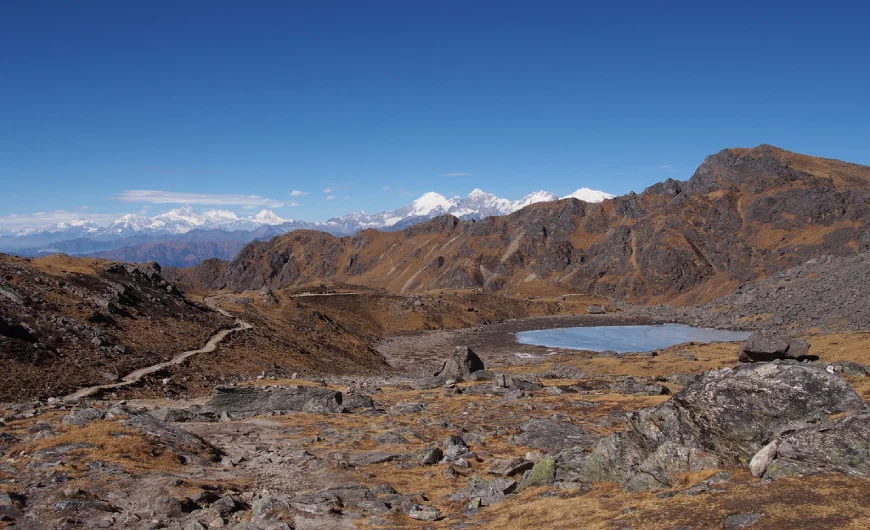
As soon as you cross the tree line, everything changes. The paths become rugged and rocky while the blue sky stretches out above you. In clear weather, you can enjoy some spectacular views of the ridges, which are dominated by Langtang Lirung and Ganesh Himal peaks.
But the very first glimpse of the Gosaikunda Lake will take your breath away. It is an amazing experience that you can’t find anywhere else. You may believe it or not, but one cannot help but feel spiritually uplifted while being in such a place. It is precisely the kind of experiences that await you on the Gosaikunda View Trek.
Spending sometime walking around and taking everything in would be good for you. There is a small shrine near the lake that is frequented by pilgrims offering prayers to their God. It is advised that you have a good night’s sleep as the elevation is at 4,380 meters and there is an early start for the next day.
Activity: High-altitude trekking, lake exploration, spiritual experience (5 to 6 hours trek)
Max. Altitude: 4380m./14,370ft.
Meal: Breakfast, Lunch, Dinner
Accommodation: Tea house
Day 4: Gosaikunda Lake to Chandanbari
As you return to the base camp after an unforgettable night by the revered lake, you start descending towards Chandanbari. This is basically what you did on your previous day’s journey; however, one must not fail to observe how everything looks different on the descent. You will realize so many things that escaped your sight during the hike up.
It is obviously much easier going downhill, but do not get carried away. Hiking downhill can be quite demanding on the knees, even after being on high ground for a few days. The trekking poles will definitely come in handy, and it is essential to rest whenever you feel the need to do so.
With your descent through the treetops, you will notice that the air is denser and hotter than ever. Breathing is much more easier now! Many hikers feel their second wind at this point, since the mountain seems to have let you off.
Chandanbari provides you with some refreshments – a steaming cup of tea, a delicious meal, and a cozy bed to rest on. Make use of the opportunity to unwind after such an accomplishment.
Activity: Descending (4 to 5 hours trek)
Max. Altitude: 4380m./14,370ft.
Meal: Breakfast, Lunch, Dinner
Accommodation: Tea house
Day 5: Chandanbari to Dhunche
The last day’s trekking leads you straight down to Dhunche through the same rhododendron and oak forest you passed through during Day 2 trekking. With everything downhill, you will have a feeling of being airborne since trekking in the beginning days was quite slow and tedious.
The forest has a completely different feeling than before since now you feel calmer, tiredness is over, and your mind is ready to absorb the sound of the bird and sunlight playing through the trees. Natural beauty of the Langtang region gets revealed on this final leg of your trekking journey in abundance.
This time around you will be considered a “regular” and will likely receive a few nods of recognition from the villagers along the way. Stopping by a village tea house for a cup of hot tea and a chat is just one way in which trekking in Nepal is made all the more worthwhile.
By early afternoon, you should reach Dhunche, allowing you enough time to enjoy an extensive shower followed by a sumptuous lunch. Toast to the end of the Gosaikunda trek and your wonderful guide with the team.
Activity: Downhill forest trekking (4 to 5 hours trek)
Max. Altitude: 3330m./10,925ft.
Meal: Breakfast, Lunch, Dinner
Accommodation: Tea house
Day 6: Dhunche to Kathmandu
This marks the end of the trekking expedition in Nepal when we will be taken to Kathmandu by bus. Following a last breakfast in Dhunche, pack all your things into the car and embark on a return to Kathmandu. This time, everything about the road is completely different since you have actually gone up there.
It is very exciting to watch those mighty mountains disappear in the distance as you proceed down to the city. By then, you will certainly feel a good level of tiredness in your muscles, and your cell phones will be loaded with lots of photos.
The journey takes about 6-7 hours and will drop you at Kathmandu towards evening time. It’s the perfect time for you to unwind, reflect on your pictures, and take stock of everything you experienced during those past six days. Going back into the hustle and bustle of Kathmandu from the peaceful lakes is definitely something different altogether.
After reaching the hotel, you can party the night away in the heart of Thamel. Or go shopping. Or have a very long and hot shower. It’s your choice. Your Gosaikunda Trek has come to a successful end.
Activity: Scenic drive back (6 to 7 hours drive)
Max. Altitude: 1400m./4,593ft.
Meal: Breakfast, Lunch
Accommodation: 3 Star hotel
Includes/Excludes
What is included?
- Two-way transport service to/from Kathmandu to Dhunche via public transport or Jeep.
- Clean and comfortable accommodation for the entire trek.
- Three meals a day (breakfast, lunch, and dinner) during the trek and also includes two times hot beverage (in breakfast and lunch) and seasonal fruits after dinner.
- Services of an experienced English-speaking trekking guide and porters to carry luggage(one porter for two trekkers). This includes their salary, insurance, equipment, transportation, food, and accommodation.
- A basic first aid kit is typically provided.
- A detailed map of the trekking route is usually included.
- Duffle Bag, Sleeping Bag (if necessary)
- Airport pick up and drop-off by private vehicle.
What is not included?
- Kathmandu Hotel – Hotels prior and after the trek in Kathmandu are excluded.
- Personal Equipment – Your personal cold weather clothing, hiking boots, and gear are on you.
- Additional Food – Any desserts and food items that are above the regular menu cost extra.
- Hot Showers & Laundry – These facilities are available in most tea houses, where payment is made directly.
- Travel Insurance – This should be arranged by yourself.
- Tips – The tips for the guide and porter are voluntary but highly appreciated.
- Additional Expenses – Costs arising out of weather difficulties, landslides, policy issues, or any other unforeseen situations are not included.
Trip Information
How difficult is Gosaikunda Trek
The Gosaikunda Trek is considered to be a moderately difficult trek. It does not need any technical climbing knowledge nor does it require any prior experience with high altitude. However, it involves physical efforts for several days.
The toughest part about trekking to Gosaikunda is the altitude level involved in reaching the lake. The lake itself has an elevation of 4,380 meters. This causes the human body to be under immense strain. Some of the symptoms that people usually experience while trekking at such an altitude include shortness of breath and tiredness.
As for the trek itself, there are some pretty strenuous sections, notably the one from Chandanbari to the lake. In case of rain or snow, the path becomes quite slippery, which is why having a pair of good trekking shoes with a sturdy sole is important. And lastly, as soon as you approach the lake, the cold weather kicks in.
At the end of the day, if you are in decent shape and have a positive attitude, you will be fine. The toughest section is certainly the Gosaikunda View Trek, which takes place around the holy lakes, but believe me, when you finally reach the top and witness the view, you’ll completely forget about tired legs.
Preparation for the Gosaikunda Trek
If you plan on enjoying the beautiful scenery and not simply focusing on the fact that you’re walking for many hours straight, it’s important to be well prepared before the start the trek in the Gosaikunda region. The ideal scenario would be if you started your training at least four-six weeks prior to flying out there. It’s important to focus on cardio, such as running or biking, and also on exercises like squats and lunges.
Regarding your belongings, there’s no point in bringing anything else except for the necessary things, since this is a long trip. In particular, it is crucial to bring layered clothes, a strong sleeping bag suitable for sub-zero temperatures, trekking poles, and a rain jacket. As for the last thing, a down jacket is a must-have near Gosaikunda Lake, when the temperature plummets once the sun sets.
Acclimatization will be key during this hike. All of the routes have a gentle ascent planned, but that does not mean that your body will take kindly to the high elevation. If you find yourself suffering at high altitude, do yourself a favor and give in to acclimatization rather than fighting against it. Sometimes, all that’s needed is to descend a few hundred feet.
Pack along a little first aid kit that contains medications such as Diamox, which helps with altitude sickness. You should also pack some purification tablets for any water sources.
Cultural Festivals on the Trail
There’s a truly amazing atmosphere surrounding the Gosaikunda trek when it coincides with Janai Purnima Festival. The trekking itself becomes wild, with thousands of people making their way to the lake to take a bath in its sacred waters and perform their prayers. Accompanying the crowds on foot is one of the most spiritual experiences you can have in the mountains.
Local Tamang communities also have their festivals. Lhosar, the New Year celebration among Tamangs, includes lively dances, music performances, and other festivities. If you visit during Lhosar, you’re sure to enjoy the festivities in the villages.
Dashain and Tihar, Nepal’s two largest national festivals, will also have an effect on your journey during October and November. You will be able to notice how all tea houses are decorated and how all people are consuming special foods. These are absolutely wonderful opportunities to get a closer insight into the core of Nepali culture, which is totally infectious.
Don’t forget to treat all local festivities with deep respect. Never start taking pictures without permission, and never join any festivals if not invited to do so. All locals are extremely hospitable, and curiosity is the key to unforgettable experiences.
Visa and Permit Requirements
The Nepal Tourist Visa must be possessed by all foreigners before joining this Gosaikunda Trek. One of the simplest methods would be getting the visa upon your arrival in Kathmandu airport and it normally takes only between 15 to 30 minutes. In case you belong to the type who plans beforehand, then you can obtain one even prior to leaving your country from the Nepalese embassy located in it.
Alongside the visa, you will have to carry two particular permits. These include the Langtang National Park Entry Permit (NPR 3,000 or USD 25) as well as the TIMS (Trekkers’ Information Management System) card (USD 15), when going alone.
These permit are arranged by us “Epic Trek Nepal“. You just enjoy the trek and do remember to carry with you plenty of passport photographs and also a couple of photocopies of your passport. You should keep all the documentation within reach as, without doubt, you will have to present them at different checkpoints on the way.
Language & Communication
The official language of Nepal is Nepali, but most of the local people who reside on the trail during the Gosaikunda Trek speak this language as their mother tongue. As the Tamang people is dominant in this area, expect to find a lot of Tamang language spoken by the residents and tea house owners in these places. It’s an amazing language to listen to due to its beautiful rhythm.
The positive thing about Gosaikunda Trek is that English is common here. Many tea house owners, guides, and porters along the trekking route will know how to speak English fluently at a basic or intermediate level. There will be no problems communicating with them in English when it comes to arranging food or the daily itinerary.
Still, knowing a few basic sentences in the language can make a huge difference. Namaste for example is a very easy word that goes a very long way in opening a conversation. Adding some ‘Dhanyabad’ (thank you), or even asking “Kati ho?” (how much?), would prove to the local that you do care about their culture and traditions, and they would really appreciate it even if your Nepali is not perfect!
Your trekking guide takes care of the rest for the most part. They act as the cultural link between you and the locals, translating complex words, sharing local etiquette, and communicating effectively with the mountain people.
Trip Extension and Side Trails
A number of trails are there if you want to extent the Gosaikunda Trek. Of course, if you have enough energy to spend in the area, the Langtang Valley Trek can be used as an extension of the main trek. You will get a chance to go much deeper into the valley and even reach its northern edges at the border with Tibet. The combination of these two treks will allow you to have a more “complete” adventure.
Alternatively, you can choose the Helambu Trek that is a wonderful supplement to the main tour. In fact, the trail goes along the territory to the south of Gosaikunda and passes through a whole series of authentic Sherpa and Tamang villages.
In case you opt for the Gosaikunda View Trek package, there is a shorter diversion trail from Laurebina Pass that allows you to have amazing panoramic views of several sacred lakes like Saraswatikunda and Bhairavkunda. The small lakes lie just beside Gosaikunda Lake and have some interesting stories behind them in Hinduism.
The next one is the Tamang Heritage Trail, which can be considered a secret trail. It runs through the lesser-known villages in lower Langtang. You get an opportunity to see the true culture of the region that many people overlook while trekking. Even adding a few days to your trek itinerary will make your adventure unforgettable.
Mobile Network, Internet & Charging Facilities
The mobile phone connectivity along the Gosaikunda Trek is inconsistent, but this can be managed. Below Dhunche and towards the bottom half of the trek, both Ncell and NTC offer good services. However, as you climbs further to reach Chandanbari and then Gosaikunda, it’s not unusual to experience problems with the signals.
At the same time, the Ncell service has slightly better coverage than NTC along the middle portion of the trekking trail. One must consider getting the Nepal Telecommunications Corporation (NTC) or Ncell SIM cards from Kathmandu before leaving for the trip. They are affordable and handy during emergencies when a signal bar shows up somewhere above.
WiFi service is available at some tea houses in Dhunche and Chandanbari, but do not expect that you will stream Netflix on it. It is quite slow and comes at the cost of some money (about 1 – 2 USD dollar). You will be able to send a quick message to confirm that you are still there, while making calls is practically impossible once you get into the thick of the hiking experience.
Power supply services are available in most of the tea houses on the route of the Gosaikunda Trek Itinerary with some fee charge. It will cost you approximately 1 – 2 USD dollar to recharge your phone. I would strongly advise you to bring a high-quality power bank since power outages tend to happen more often at a high altitude. A solar charger would also be a nice addition.
Don’ts on This Trip
A respectful attitude toward the environment and the local culture ensures a pleasant trip for the tourists. There are several activities that you need to avoid while trekking through the Gosaikunda region.
Avoid littering at any stage of your journey. The Gosaikunda Lake area is considered a place of worship, as well as a protected ecological zone. Littering within the territory of this location is extremely inappropriate. Take care to carry all your trash with you from the beginning of the tour.
Do not neglect acclimatization during your journey. Some tourists underestimate the difficulty level of the trek and start trekking intensively during the first few days of their journey. Such behavior will increase your chances of developing high-altitude sickness.
Do not touch or interfere with any religious structures such as prayer flags, mani stones, or shrines that you come across on the trekking trail. One is expected to walk clockwise around stupas or chortens. Also, it is wise to inquire permission before taking any photographs of any religious processions that may be underway.
Never drink stream water or water that you may find flowing out of taps during trekking in the region. Take your purifying pills or filter bottle without fail at all times as one cannot afford to fall ill in the area. There are chances of contracting a stomach disease if proper precautions are not taken.
Lastly, do not underestimate weather changes during your trek. It can easily turn from bright sunshine into freezing rain within minutes. As such, carry appropriate rain and cold weather gear, even if it seems bright and sunny outside.
Travel Insurance
Travel insurance on the Gosaikunda Trek is mandatory, not an option. Just think about it, this trek takes you to an elevation of 4,380 meters. In case anything happens to you there, you need to be evacuated by helicopter, which could cost you several thousand dollars. While travel insurance might seem like nice to have, it actually prevents a medical situation from turning into a financial one.
When choosing travel insurance, ensure that it covers your trek at elevations over 4,000 meters. Many people are unaware that typical travel insurance policies come with a hidden small print that excludes high altitudes. Make sure your policy covers evacuation by helicopter, medical evacuation, and trip cancellation or extended hospitalization.
As a final step, it is crucial to communicate your insurer to your guide prior to starting your journey. If anything goes wrong, your guide should be able to immediately contact the provider. This could literally save your life for the Gosaikunda View Trek.
Health and Safety on Gosaikunda Trek
The matter of your health and safety is important while on the Gosaikunda View trek. The most frequent one is the problem of Acute Mountain Sickness (AMS). It usually manifests itself through severe headache, vomiting, or complete exhaustion. In case you start experiencing such symptoms after you have reached altitudes higher than 3,000 meters, don’t pretend everything is alright; notify your guide immediately and go down.
Hydration is probably the easiest measure one can take to ensure their well-being when traveling at high altitudes. Your intake of water should not be lower than 3–4 liters per day. As tempting as a cold beer might be at the end of the day, you are better off without it, especially during the first couple of days at the top.
The sun way up there is not something to be laughed at either. No matter how cloudy it may seem, it is an extremely intense exposure. Sunscreen lotion needs to be applied, and sunglasses worn along with protection for the head from either a hat or a buff. The windburn and sunburn will start causing discomfort within minutes after reaching 3,500 meters.
Remember the trail on Gosaikunda Trek Itinerary are in remote places where the nearest hospital can be several hours or even days away. Therefore, it helps to carry a small first aid kit containing blisters plasters, painkillers, antiseptic cream, and rehydration salts.
In conclusion, the Gosaikunda Trek considered a highly valuable and relatively easy experience for the majority of tourists. All that needs to be done is following the guide’s recommendations and listening to your own body while taking into account the altitude of the location. Just make sure you are ready for your trip after leaving Kathmandu. Follow all of these recommendations, and the Gosaikunda Trek will provide you with an unforgettable mountain adventure.
Frequently Asked Questions
Gosaikunda Trekking is not an overly difficult activity. You don’t have to be some sort of professional climber or an expert in some tricky skills, although being physically fit and having some hiking experience surely will help. The most strenuous stage of your Gosaikunda tour will be the ascent from Chandanbari to the famous lake which is located at 4,380 m above the sea level. Just move cautiously and relax.
The best time to start this adventure in either spring (March–May) or autumn (September–November). In the spring, you can witness the blooming rhododendron and good visibility. Autumn season features a stable weather and crystal mountain views, which makes it another good choice for hiking.
Guides are not compulsory, but it would be advisable to have one. Indeed, at times, the trails can get somewhat tricky, particularly in case of cloudy or snowy weather. But most importantly, with an expert guide on board, everything will go much more smoothly because the guides manage everything from permits and communication to emergencies.
The majority of trekkers use public transportation between Kathmandu and Dhunche. The trip will take you 6-7 hours. The road goes through the valley of Trishuli River, and it’s really beautiful during the trip. You can rent a private vehicle as well.
Some essential items to pack are trekking boots, thermal undergarments, down jackets, rainwear, trekking poles, a headlamp, sunblock, first aid kit, water purification pills, and a sleeping bag. It is recommended to keep your load as light as possible, yet it is imperative not to miss out on packing essentials such as clothing and gear.
There are two permits required for the Gosaikunda Trek: one is the Langtang National Park Entrance Permit which costs around USD 25, and the other is the TIMS Card that costs around USD 15. These permits can be obtained from the Nepal Tourism Board in Kathmandu or even from the entrance of the park in Dhunche. Just remember to get your passport photos and passport copies ready when applying!
Absolutely! There could be an altitude sickness problem because the altitude of the Gosaikunda Lake trekking trail goes up to 4,380 meters. The best way to avoid it would be to follow the schedule of the tour, drink plenty of water, and refrain from drinking beer for the first couple of days. You could even take some Diamox with you and inform your guide if you feel unwell.
Yes, without any doubt, we witness beginners complete the trekking journey each year. All that is required from their part is some basic preparation. They need to engage in cardio exercises and leg exercises for around one month prior to their arrival. Following the guide and paying attention to the needs of their bodies will make it easy for them to enjoy the trip.
The Gosaikunda Lake has high spiritual significance to both Hindus and Buddhists. It is believed that Lord Shiva himself created the lake by striking the earth with his trident. It is fascinating to watch it during the Janai Purnima festival in August, where thousands of pilgrims undertake the climb to take a bath in the sacred water.
The temperatures can be quite variable based on altitude and time of year. It might not be terrible in the low areas like Dhunche, where nighttime temperatures can be between 5–10°C. However, around the lake area, it is completely different; nighttime temperatures regularly fall below freezing, sometimes reaching as low as -10°C. Thus, a sleeping bag of rating -15°C to -25°C is advised.
Indeed! The Gosaikunda Trek is compatible with the Langtang Valley Trek as well as the Helambu Trek. Combining all three is highly recommended if you have sufficient time for your trekking holiday.
Teahouses offer plenty of food choices, like Nepali dal bhat, pasta, noodles, fried rice, soups, pancakes, porridge, and various Indian and continental foods. Dal Bhat is the most common food you will eat throughout your stay in Nepal, and it forms the best fuel for any trekking experience!
Trip Reviews
Need Help? Talk to Expert
+977 9764792172