Manaslu Tsum Valley Trek Difficulty
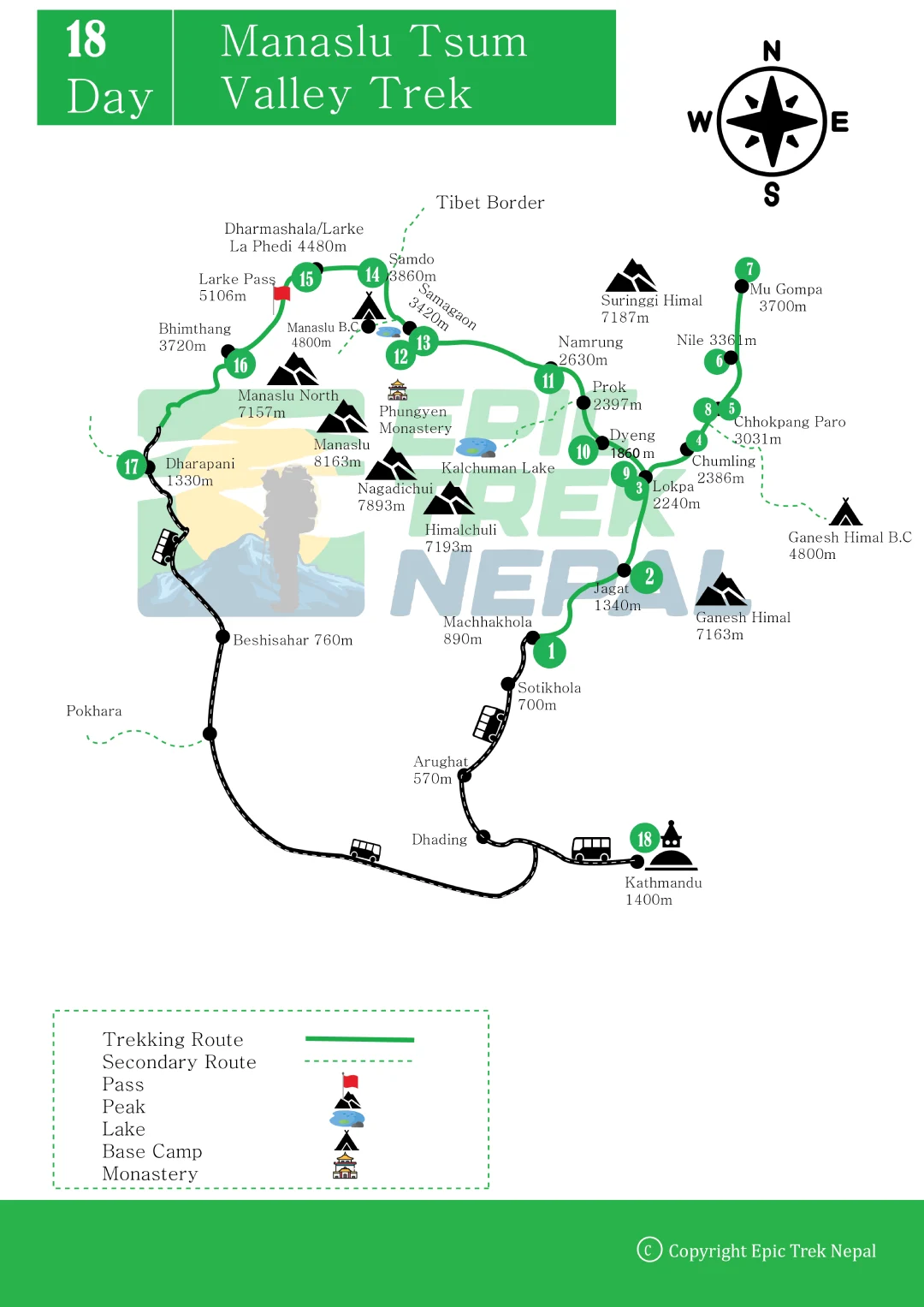
Manaslu Tsum Valley trek falls into difficulty trek. It isn’t like a regular trek, it needs both physical and mental strength. What makes this Manaslu Tsum Valley trek difficult is the number of days you have to walk and it not easy to walk every day from 6 to 9 hours. There will be several challenges along the way which involves going up, down and through steep terrain as well as narrow riverbank walks. In the day 17 you will have to cross Larkya La Pass, at an altitude of 5,106 meter, which is the hardest day in the entire trek.
Altitude is the most unpredictable factor. AMS symptoms can occur in anybody, even if you are in good physical condition. Weather conditions also depend upon the seasons. During the monsoons, the trails become slippery and there may be some leeches at lower elevations. In winter, there could be ice and snow in higher areas near the pass.
Even though with all these difficulties, there are still thousands of trekkers who take this Manaslu Tsum Valley Trek Itinerary every year.
Preparation for Manaslu Tsum Valley Trek Itinerary
If you want your trek to be successful and satisfying, then you must prepare for this trek. A good preparation determines if you will enjoy the Manaslu Tsum Valley Trek Itinerary or not.
The first thing you should prepare is your body. You should begin at least 2 to 3 months before the actual Manaslu Tsum Valley View trek. Improving your endurance by doing physical exercise like hiking, running, cycling greatly benefit during the trek. Additionally, you should focus on strengthening your leg muscle since they are the one that will carry you to the destination.
Another thing you need to consider is packing high quality equipment and gear. You need to bring good trekking boot but used one for comfort, thermal clothing, sleeping bag, trekking poles and reliable rain cover.
Preparation means not only physical and but mentally also. Trekkers need to mentally accept that Manaslu Tsum Valley Trek itinerary is a remote trekking doesn’t come with luxuries or comfort, and you have to walk for hours in harsh condition.
Lastly, see your doctor before you start the journey. Conduct a full medical examination, learn how to prevent altitude sickness and always carry a medical kit that includes Diamox.
Language and Communication
In most of the places of Nepal, you will hear Nepali language and in the lower Manaslu you will hear Nepali. In regard with the communicating, local and tea house owner usually understand English and communicate very well.
In the upper part of Manaslu, there is change in language. Villages such as Lho, Sama Gaon, and Samdo use the Nubri dialect, which is highly influenced by the Tibetan dialect. Communicating in English become difficult in this villages and even Nepali is not widely understood.
Then comes Tsum Valley, where the language changes completely. Local living in Tsum have their own language known as Tsum language with its strong Tibetan Buddhist background. Not many people speak Nepali here and English is out question.
This is where a local guide comes in handy. Your trekking guide serves as a bridge between you and the locals in the whole area of Manaslu Circuit and Tsum Valley. He will help you communication with local and understanding their culture and traditions.
Mobile Network, Internet and Charging facilities
There is mobile network during the first few days in the lower Manaslu region. You will get network signal in places like Jagat, Philim and Deng. But as you climb higher in places like Namrung, Lho and Sama Gaon, signal will completely disappear. Internet is available in some teahouses but slow and unreliable, only good enough to send simple email or text using WhatsApp.
Once you are in Tsum Valley, everything changes. The mobile network becomes non-existent for the entire time. There are no internet services available just like Manaslu region.
Charging services in low and middle Manaslu villages are powered by electricity from teahouses. In higher altitudes, solar energy takes the lead and in Tsum valley also. If you want to charge it cost around $1 to $3 per device so carry some cash.
Also carry a large power bank, with at least 20,000mAh capacity, and make sure to fully charge it before entering the Tsum Valley. A portable solar charger can be useful as an emergency backup power source.
This is your opportunity to disconnect from the rest of the world. Many trekkers who have taken this route will tell that it is the most rewarding experiences they have ever done.
Visa and Permit Requirement
Nepal requires a number of permits for the Manaslu Tsum Valley Trek, and ensuring everything before will make things much easier.
The first one you will sort out is a Nepal Tourist Visa. Visitors can obtain their visa upon arrival at Tribhuvan International Airport for about $25 to $40 for 15 or 30 days.
Beside the visa, there are three permit you will need for Manaslu Tsum Valley View Trek.
Manaslu Restricted Area Permit (RAP): It is a compulsory requirement for traveling to this area because Manaslu lies in restricted area. The rate for this permit depend on the season. $100 per person per week for October and November whereas $75 per person per week for any other month.
Manaslu Conservation Area Permit (MCAP): The cost of this permit assists in promoting conservation in the area which costs about $30 per person.
Tsum Valley Restricted Area Permit: As Tsum Valley is a different restricted area, you will have to get an additional permit especially for this region, which will cost you $40 per individual per week.
Don’t on the Trip
During the Manaslu Tsum Valley Trek Itinerary, there are certain things that every traveler must not do if you want this adventure to be enjoyable without any problem. Here are some of the common mistakes made by every other trekker that you should try avoiding.
Don’t skip acclimatization day. Rushing through without acclimatizing is among the most common mistakes made by trekkers. Your body will need some time to acclimatize itself.
Don’t drink unfiltered water. Purification tablets or a filter bottle must be used while trekking. The tap water and stream water found in the trekking route might contain harmful bacteria.
Don’t litter along the trekking route. Clean up after yourselves. Due to the remoteness of this area, pollution is particularly harmful to both the environment and the locals.
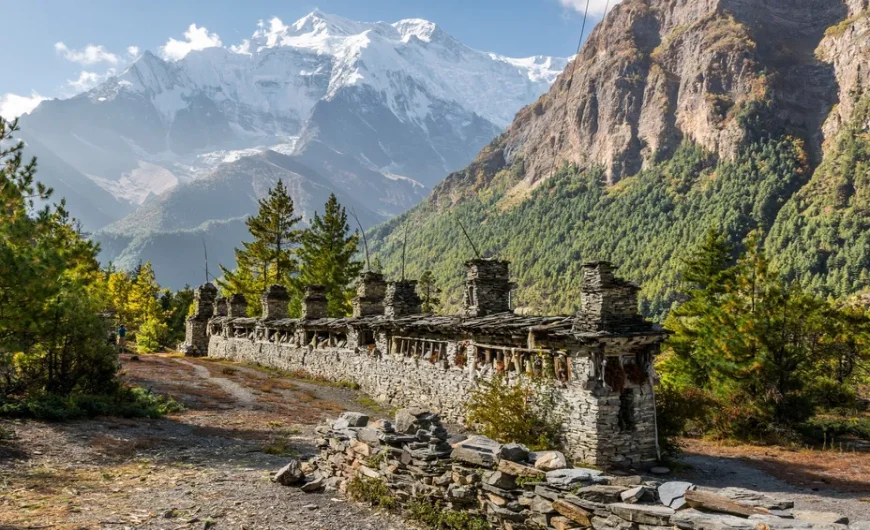
Respect the local culture. The valley of Tsum is a very spiritual valley. Always move in a clockwise direction while passing mani stones and stupas, ask for permission before taking photographs of locals or entering monasteries and wear decent clothes while visiting local villages and sacred places.
Don’t trek alone. It is important to remember that the paths are very much isolated, and having a professional guide accompanying is important for safety reasons.
Never ignore the weather conditions. The mountain weather can change anytime, and it is always best to be prepared for any weather conditions.
Travel Insurance
Travel Insurance for Manaslu Tsum Valley Trek is not an option, it’s an absolute necessary. This trek goes beyond 5,000 meter above and located in one of the restricted places in Nepal. In case anything goes wrong like health-related problem or physical injuries, the only option is helicopter evacuation. This evacuation would be very expensive around $3,000 to $10,000 without any travel insurance.
Make sure your travel insurance cover above 5,000 meters before purchasing it because most general travel insurance cover up to 4,000 meters only. And your insurance must include coverage for tip cancellation, medical bills, loss, theft of equipment and personal liability.
When starting the Manaslu Tsum Valley Trek Itinerary journey, share your insurance detail with your guide and carry copy of this in your bag. Do not assume that your travel agency will be holding on to this information, be responsible yourself.
Health and Safety on Manaslu Tsum Valley Trek
Your health is the most important gear on this Manaslu Tsum Valley trek. When you are on this trek, altitude sickness is the main problem that affect trekkers health. It doesn’t depend on the someone physical health and can affect anyone whether he has been training for months or not. Headache, nausea, and dizziness are some of its symptoms and to avoid this is to hydrate yourself time to time, take rest between the trek, descend if symptoms worsen.
Staying hydrated becomes very important during trekking at high altitudes. It is essential to drink at least 3 to 4 liters of water every day. If dehydrated, the body will suffer from altitude sickness and exhaustion quickly. Therefore, continue drinking water even if you do not feel thirsty.
It is very important to pay attention to food safety during trekking. Freshly made hot food should be eaten, while raw vegetables and fruits with skin should be avoided.
Proper foot and joint care should be done each day. Change your socks, treat to any blisters, and utilize trekking poles when going down hills to keep your knees safe.
Always do Manaslu Tsum Valley Trek with an experienced guide. An experienced guide will be able to identify early signs of altitude sickness and will know how to make an emergency evacuation. In such isolated trek, this is literally a lifesaver.




 Share
Share