




Everest Base Camp Trek by Road
78 reviews in Tripadvisor

Trip Duration
16 Days
Destination
Nepal
Max. Altitude
5,555 m.
Trip Difficulty
Moderate
Group Size
2-16 pax
Transportation
Bus , Flight
Accommodation
Hotel/Teahouse
Activity
Trekking
Meals
All Inclusive
Start / End
Kathmandu
Region
Everest
Best Season
Spring & Autumn
Need Help? Talk to Expert
+977 9764792172Trip Overview
When starting a Everest Base Camp Trek, almost all people take a flight from Kathmandu to Lukla to begin their Everest journey. But only few people chose something different, and it is far more rewarding. The Everest Base Camp Trek by road provides a unique opportunity to explore Nepal that not many people have experienced.
Instead of taking a 35 min flight, this is done entire by walking on the road from Kathmandu to Salleri to Phaplu. The advantage of this route is that it offers a new view of Nepal withs its roads that winds through the mountain, terraced hills and ancient villages. Sure, the trip takes more time and involves more effort. But I believe those people who undertake this journey rarely regret it. You will have a chance to acclimatize better, see more views and feel like a real traveler heading for Everest and the Everest base camp trek by road itinerary will probably cost you less.
This trek goes through Solu Khumbu which is considered to be the richest in culture and natural beauty areas of Nepal. You’ll get to walk through the rhododendron forests, use some suspension bridges, visit centuries-old monasteries and move up slowly to the very foot of the world’s highest peak.
When you finally reach the base camp at an elevation of 5364 m you would know for sure that you earned each and every step of it. The feeling of this experience is something you just cannot get from Lukla Flight.
Everest Base Camp Trek by Road Route
Everest Base Camp Trek by Road is a popular trekking route that involves an overland and trail journey from Kathmandu and ends with a scenic flight journey from Lukla.
Your Ebc trek by road will start with a private drive from Kathmandu to a little highland town called Thamdanda, which is situated at 2,326m altitude. You will see that this jeep trip will save you from the expensive and risky air transport service for reaching Lukla. It will bring you directly to the heart of the Solu Khumbu.
Here’s a simple breakdown of the route:
Kathmandu → Thamdanda (Jeep) → Phakding → Namche Bazaar → Tengboche → Dingboche → Lobuche → Gorak Shep → Everest Base Camp → Kala Patthar → Pheriche → Namche Bazaar → Lukla → Fly back to Kathmandu.
The first part of trails from Thamdanda to Phakding is more peaceful and uncrowded compared to the Lukla one. It’s a short and peaceful walk far from busy city life before joining the famous Ebc trail from Phakding.
From Namche Bazaar onward, the trekking takes place following the common route via Tengboche, Dingboche, and Lobuche. In order to avoid serious altitude sickness, there are two acclimatization days scheduled – one will be spent in Namche Bazaar, and another will be at Dingboche which also include a hike towards Nangkharstang hill, which is 5,083 meters high.
The highest points along the trail include Everest Base Camp that is 5,364 meters and Kala Patthar which reaches 5,555 meters. After the completion of Everest base camp trek by road, the journey brings us back to Pheriche and Namche, and then finally to Lukla to head back to Kathmandu on an airplane.
In total, it takes 16 days to complete the entire Everest Base Camp Trek by Road.
Who Can Join the Everest Base Camp Trek by Road?
The Ebc Trek by road is open to everyone who is fit and mentally prepared. You don’t have to be extreme athlete or mountain Climber. But you must be prepared to walk for several days without any doubt in you. The EBC trek by road has walking days of 6-8 hours on foot. In addition, the altitude rises above 5,000 meters, where altitude sickness can affect anyone regardless of their fitness.
This trekwill suit you if:
- You are a healthy adult aged between 18-65 years
- You keep yourself physically active through activities like jogging, biking, and working out at the gym.
- You can carry a backpack for a few hours
- You have no serious heart, lung, and respiratory disease
- You are ok with staying at teahouses
- The older trekkers above 60 years can also go for this trek as long as he prepares well.
If you are new to high-altitude treks, the Everest Base Camp Trek by Road will give you an advantage because it offers enough days of ascent that allow your body to acclimatize better than when approaching via flight to Lukla.
Highlights of Everest Base Camp Trek by Road
- Stand at Everest Base Camp (5,364m), the foot of the world’s highest mountain.
- Witness a sunrise from Kala Patthar (5,555m) that will take your breath away.
- Visit the Tengboche Monastery.
- Enjoy the sight of four 8,000m peaks: Everest, Lhotse, Makalu, and Cho Oyu.
- Walk through some of the lower Solu Khumbu region’s quiet trails.
- Take a less crowded route than the classic Lukla way.
- Immerse yourself in the Sherpa culture and ancient traditions.
- Benefit from better acclimatization starting from your first day.
Photo Gallery & Video Gallery
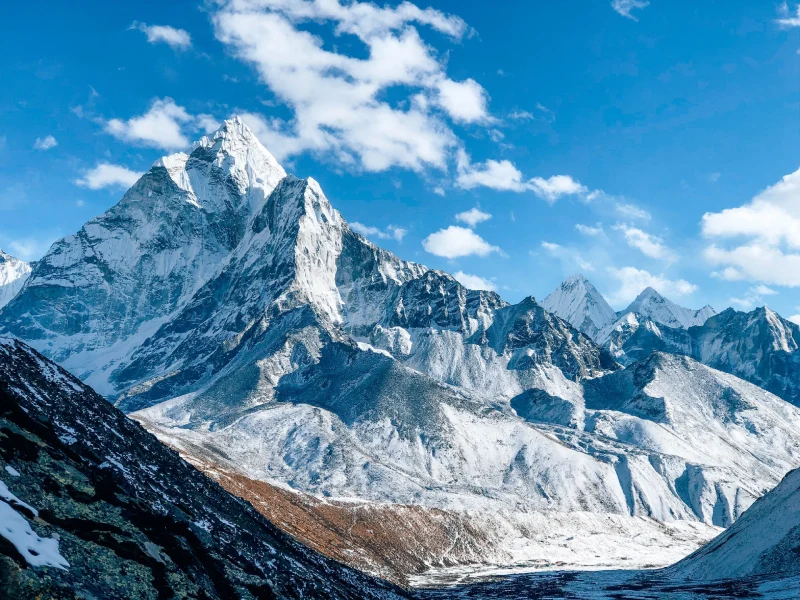
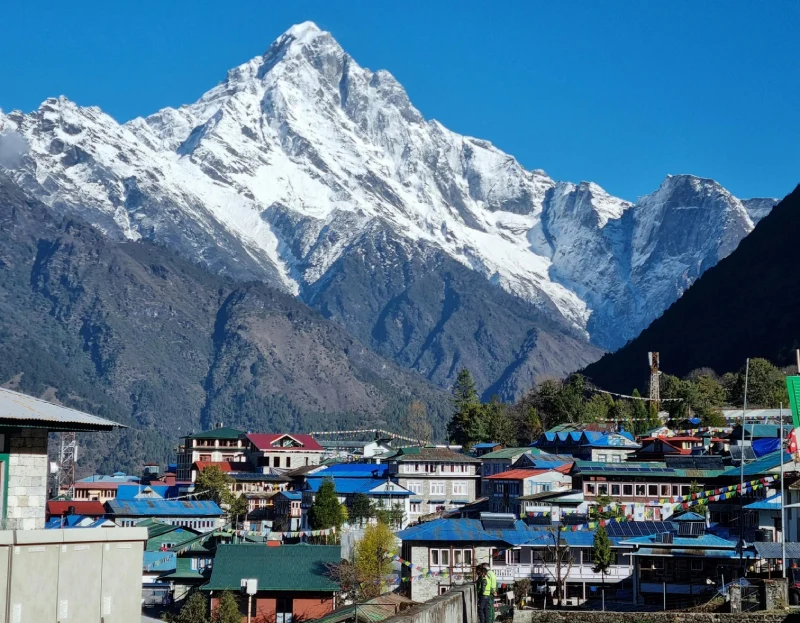
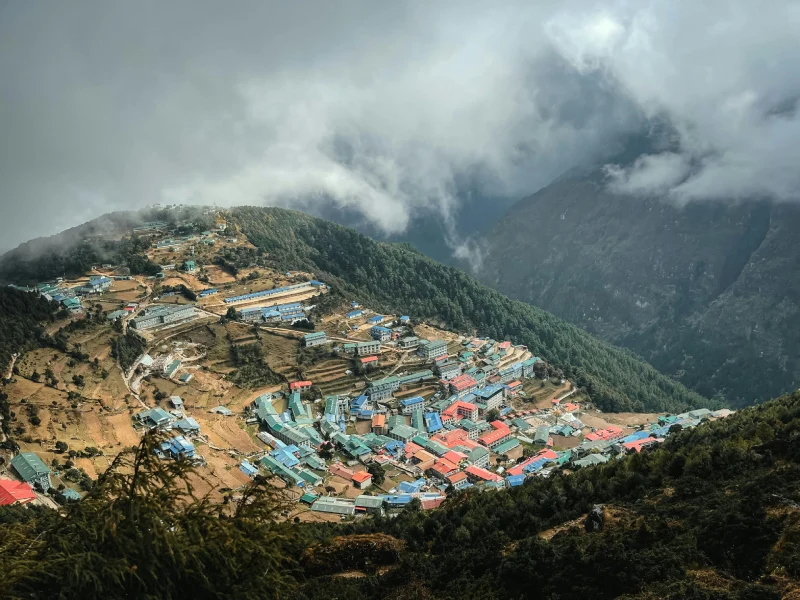
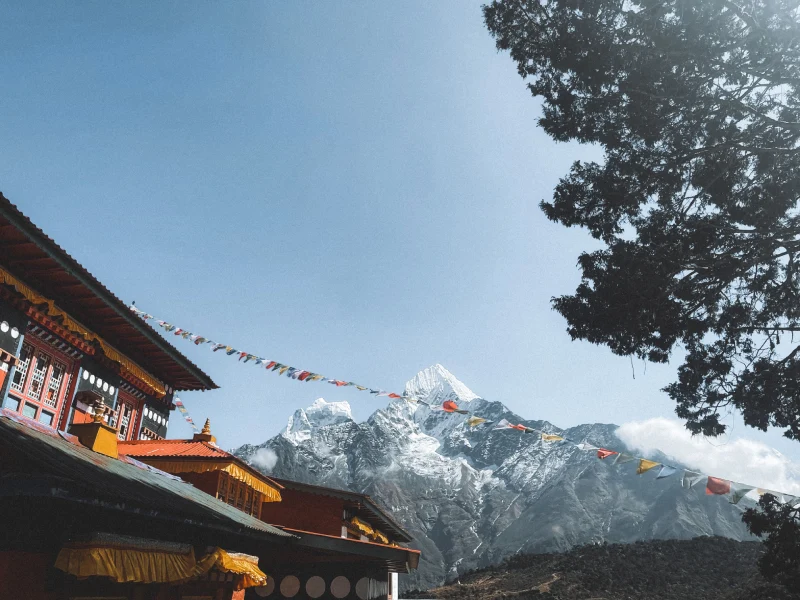
Itinerary of Everest Base Camp Trek by Road
Day 1: Arrival in Kathmandu
Welcome to Nepal! A representative from Epic Trek Nepal picks you up at Tribhuvan International Airport and takes you to your hotel in Kathmandu. The rest of the day is yours to relax and recover from that long flight.
Later, your trek guide does a full briefing on the plan—covering everything from safety rules to permits. If you arrive earlier in the day, you can hit Thamel to grab any gear you may be missing. Get ready for Everest Base Camp Trek by Road!

Activity: Flight and hotel check in

Max. Altitude: 1400m./4,593ft.

Accommodation: 3 Star Hotel
Day 2: Drive from Kathmandu to Thamdanda
The Everest Base Camp Trek by Road starts today. We left Kathmandu early this morning in a private jeep, driving through beautiful terraced farms, river valleys, and hill towns. The journey is long, and you spend a lot of time in the jeep, but the views get more amazing as the altitude rises.
We reach Thamdanda, at 2,326 meters, later in the afternoon. This small, peaceful place is where our road journey ends, only a handful of trekkers come through here. After checking into a simple local teahouse, we will relax. Our trek officially begins tomorrow.
Activity: Drive (7 to 9 hours)
Max. Altitude: 2326m./7,631ft.

Meal: Breakfast, Lunch, Dinner
Accommodation: Tea house
Day 3: Trek from Thamdanda to Phakding
On your first full day on the trail, you’ll pass through rhododendron forests and tiny Sherpa villages, crossing the Dudh Koshi River along the way. The trek’s not easy, there’s lots of up and down, with several suspension bridges to cross too.
It’s much quieter than the Lukla route, meaning fewer crowds and a more genuine experience of the Khumbu region. By the late afternoon, you will get to Phakding, where it’s wise to relax since the next day involves a tough climb to Namche Bazaar.
Activity: Trek (6 to 7 hours)
Max. Altitude: 2640m./8,661ft.
Meal: Breakfast, Lunch, Dinner
Accommodation: Tea house
Day 4: Trek from Phakding to Namche Bazaar
The EBC trek by road has a standout day that really gets you going. It begins great as you follow the Dudh Koshi River and cross the famous Hillary Suspension Bridge. You will hit Monjo, where park permits are checked.
Then comes the kicker: a tough 2 to 3-hour climb up to Namche Bazaar also known as the Gateway to the Everest. The altitude hits hard, so it’s best to stay slow and steady. But the payoff for your effort is huge once you reach Namche. This lively mountain town at 3,440m, with plenty of cozy teahouses to sleep comfortably.
Activity: Trek (5 to 6 hours)
Max. Altitude: 3440m./11,286ft.
Meal: Breakfast, Lunch, Dinner
Accommodation: Tea house
Day 5: Exploration day in Namche Bazaar
A lighter day in Namche allows your body to start getting used to the altitude, but don’t just lie around in bed all day. Your guide will lead an optional hike uphill, taking you to a great viewpoint that offers amazing views of Everest, Lhotse, and Ama Dablam, if the weather is clear.
It’s a good idea to check out the Sherpa Culture Museum. It gives your insight into the local history, mountaineering past, and Sherpa traditions. Once you’re done, there’s plenty of free time to look around in the gear shops, grab a coffee from one of the cafes, and relax at your own. The extra rest definitely makes a difference when you get to higher altitudes later on.
Activity: Exploration
Max. Altitude: 3440m./11,286ft.
Meal: Breakfast, Lunch, Dinner
Accommodation: Tea house
Day 6: Acclimatization day in Namche Bazaar
A second day in Namche is included only in the Everest Base Camp trek to help hikers recover their strength. Your body uses this time to make more red blood cells and get used to the thin air.
You can go on a gentle hike toward Khumjung village or head towards the Hotel Everest View for more stunning view. Just remember to keep it leisurely and stay hydrated. Eating well counts too. This rest is strategic because you will climb higher the following day and there’s no skipping it.
Activity: Half day hike
Max. Altitude: 3440m./11,286ft.
Meal: Breakfast, Lunch, Dinner
Accommodation: Tea house
Day 7: Trek from Namche Bazaar to Tengboche
The hike today offers some of the most stunning mountain views of the trek. For photography lover they will have amazing opportunities to snap photos. The trail dips a bit then winds up through juniper and rhododendron forests towards Tengboche.
At Tengboche, don’t miss the chance to see the huge monastery, the biggest in the Khumbu region. It stands out against jaw-dropping backdrops like Ama Dablam, Everest, and Nuptse. Try to catch the evening prayers there if you can. It’s incredibly moving and captures both the spiritual and natural beauty of the area.
Activity: Trek (5 to 6 hours)
Max. Altitude: 3860m./12,664ft.
Meal: Breakfast, Lunch, Dinner
Accommodation: Tea house
Day 8: Trek From Tengboche to Dingboche
The trail goes from Tengboche down to Pangboche, which is one of the Khumbu’s oldest villages, and then up into Dingboche’s open valley. You will notice the scenery changes a lot there. Lush trees vanish and are replaced by rocky terrain, yak pastures, and stone-walled fields.
At 4,410 meters, Dingboche marks your first day of high altitude. It gets cooler and the air’s thinner. You might not be as hungry, but try to eat for the trek ahead on the Everest Base Camp Trek by Road.
Activity: Trek (5 to 6 hours)
Max. Altitude: 4407m./14,459ft.
Meal: Breakfast, Lunch, Dinner
Accommodation: Tea house
Day 9: Acclimatization hike to Nangkharstang Hil
Today, you follow the climb-high-sleep-low principle exactly. You hike up to Nangkharstang Hill, reaching 5,083m and that’s the first time you cross the 5,000m mark and return to Dingboche at night.
The summit offers amazing views. From there, you can see Makalu, Lhotse, Island Peak, and other Khumbu peaks everywhere. The hike is pretty tough but super rewarding. Remember, keep an eye out for AMS symptoms and tell your guide right away if you feel off.
Activity: Acclimatization
Max. Altitude: 5083m./16,677ft.
Meal: Breakfast, Lunch, Dinner
Accommodation: Tea house
Day 10: Trek from Dingboche to Lobuche
The trail heads up from Dingboche through the Thukla valley, eventually hitting the Thukla Pass memorial. It consists of stone cairns and plaques for climbers who died on Everest. Super sobering and respectful.
After the pass, the route goes across rocky terrain towards Lobuche. The thin air and harsh environment really hit you here. Lobuche has a few teahouses offering basic but warm lodgings. It’s lovely to see these accommodations after such a challenging hike.
Activity: Trek (4 to 5 hours)
Max. Altitude: 4907m./16,099ft.
Meal: Breakfast, Lunch, Dinner
Accommodation: Tea house
Day 11: Trek to Everest Base Camp and Back to Gorak Shep
Today’s the big day as you will be heading towards Everest Base Camp. You start from Lobuche, pass through Gorak Shep, and cross the Khumbu Glacier moraine. It’s intense, but totally worth it once you get to Base Camp at 5,364 meters.
The camp sits on a huge rocky area filled with colorful tents during peak times. Standing there under the Khumbu Icefall with Mount Everest towering over you is just stunning. Make the most of it, snap some pics, then head back to Gorak Shep for the night.
Activity: Trek (7 to 8 hours)
Max. Altitude: 5364m./17,598ft.
Meal: Breakfast, Lunch, Dinner
Accommodation: Tea house
Day 12: Hike to Kala Patthar
It’s an early wake-up call as you head out before dawn to climb Kala Patthar in the dark. It’s cold, but the sunrise at 5,555 meters is amazing. The view of Everest, Nuptse, Lhotse, and the Khumbu region in gold light is simply spectacular.
After that breathtaking sunrise, you head back down to Gorak Shep. Following breakfast, the trek continues to Pheriche at 4,240 meters. While the descent is lengthy, the air gets thicker, making your legs feel stronger. Best of all, these toughest days of the Everest Base Camp Trek by Road are now over.
Activity: Trek (7 to 8 hours)
Max. Altitude: 5555m./18,225ft.
Meal: Breakfast, Lunch, Dinner
Accommodation: Tea house
Day 13: Trek from Periche to Namche bazaar
Today’s descent is long but super satisfying. You will see a many beautiful things as the trail goes through Tengboche and Pangboche again, heading back down to Namche Bazaar. Surprisingly, going downhill is way easier than climbing, and you will notice things from an entirely different angle this time around.
Your hunger comes back too, so savor that hearty meal in Namche tonight. Cheers to how far you’ve traveled. The thing is, many hikers get surprisingly emotional during this return journey. Passing by spots that seemed brutal on the way up can really hit you in the heart.
Activity: Trek (6 to 7 hours)
Max. Altitude: 4240m./13,911ft.
Meal: Breakfast, Lunch, Dinner
Accommodation: Tea house
Day 14: Trek from Namche Bazaar to Lukla
The final full day of hiking takes you from Namche down to Lukla. It includes a lot of downhill walking through Phakding, following the Dudh Koshi River, just like on Days 3 and 4, but in the opposite direction.
At this lower altitude, your body feels different. Energy levels are higher, breathing is easier, and spirits are uplifted. By late afternoon, you will reach Lukla, check into a teahouse, and join your guide and porter for a celebratory dinner.
Activity: Trek (6 to 7 hours)
Max. Altitude: 3440m./11,286ft.
Meal: Breakfast, Lunch, Dinner
Accommodation: Tea house
Day 15: Fly from Lukla to Kathmandu
Flights from Lukla start super early when the weather’s is clear. It will take about 30-40 minutes in the air heading back to Kathmandu, seeing amazing views of the Himalayas, the perfect way to wrap up the Everest Base Camp trek by road.
Keep in mind, these flights can get delayed because of weather issues, so it’s wise to add extra days to your travel plans if you can. As soon as you land in Kathmandu, head to your hotel, freshen up, and in the evening, enjoy a complimentary local dinner hosted by our company to celebrate your successful completion of Everest Base Camp trek by Road!.
Activity: Flight 35 min
Max. Altitude: 1400m./4,593ft.
Meal: Breakfast, Lunch, Dinner
Accommodation: 3 Star Hotel
Day 16: Departure
Your home return day, as according your scheduled flight departure time. You will be transferred to the TIA with a lifetime memory of your journey to Everest.
Meal: Breakfast
Includes/Excludes
What is included?
- Permits and Fees: All necessary entry paperwork for the trek, including the Sagarmatha National Park Permit, the Pasang Lhamu Rural Municipality Local Permit, and the TIMS (Trekkers’ Information Management System) card.
- Accommodation: Your stay during the entire trekking route, typically in teahouses or lodges. This also includes accommodation in Kathmandu before and after the trek in 3-star hotel on BB plan (twin sharing basis).
- Meals: Most packages will include three meals a day (breakfast, lunch, and dinner) during the trek. You will also get three times hot beverage daily to stay warm up high.
- Overland and Flight Transport: All ground transportation required for the route, specifically the private jeep drive from Kathmandu to the road head at Thamdanda to start the trip and flight back from Lukla to Kathmandu at the very end of your journey.
- Guide: You are provided with a guide who speaks English and is experienced in trekking. This includes their salary, insurance, equipment, food, and accommodation. For a single trekker, a guide himself will carry up to 10 kg of their weight.
- First Aid Kit: A basic first aid kit is typically provided.
- Trekking Map: A detailed map of the trekking route is usually included.
- Equipment: Duffle Bag, Sleeping Bag (if necessary)
- Pick up drop-off: Airport pick-up and drop-off by private vehicle.
What is not included?
- International Flights: International airfare to and from Nepal is not included. So, you need to arrange yourself.
- Travel Insurance: Travel insurance that covers emergency rescue, evacuation, and medical treatment is not included, and you’ll be expected to have your own.
- Personal Expenses: Expenses for extra meals, drinks, snacks, charging devices, hot showers, Wi-Fi, laundry, and other personal costs are not included.
- Nepal Visa Fees: Entry visa fees for Nepal are not included.
- Additional Accommodation and Meals: If you choose to extend your stay in Nepal, or if you return from the trek earlier than scheduled, the cost of additional accommodation and meals will not be included.
- Rescue and Evacuation: Any costs related to emergency evacuation or rescues are not covered.
- Trekking Gear: Personal trekking equipment, such as hiking boots, down jackets, trekking poles, and other gear are not included.
- Tips: Tips for guides and porters are not included and are left to your discretion.
- Porter service: Porter is not available in package, but it can be arranged on request at an extra cost, where one porter carries up to 25 kg (shared between two trekkers) to reduce your load and make the trek more comfortable.
Trip Information
Trek Difficulty
The Everest base camp trek by road is a bit difficult than a regular EBC trek. You just need to walk few extra days and it’s not that hard. It is not advance climb that require ropes, crampons or technical skills. But being physically fit is necessary.
There are three primary sources of the difficulty. First, the height of your journey, which causes cumulative fatigue over two weeks. Second, its length of 12 days, during which you will spend 6–8 hours per day walking. Finally, the rugged and sometimes even steep terrain, including rocky trails and high suspension bridges.
When you exceed 4,000 m in altitude, you might feel some effect such as headache, nausea, and shortness of breath due to altitude sickness. This is perfectly natural for all trekkers, but you should never ignore these early symptoms.
It is a bit difficult, but there is also extra acclimatization in this Everest Base Camp Trek by Road Itinerary, so your body can acclimate faster, and trek thought the whole journey comfortably and easily.
Preparation for the EBC Trek by Road
Preparation is vital before joining the EBC Trek by Road. It isn’t necessary to undergo intensive physical training, but having a strong foundation is important before doing this Ebc Trek by road.
Begin preparing eight to twelve weeks prior to the trip. The main focus should be on cardiovascular exercise that can make your body accustomed to the long walking hours, examples include hiking, stair climbing, cycling, and jogging. Ideally, do these activities three to five times per week. Hiking on weekends with a heavy backpack will also serve as good preparation.
Strengthening exercises for the legs and core are highly recommended. Squats, lunges, and step-ups are easy-to-do but very efficient leg strength exercises.
In addition, it’s important to prepare your equipment beforehand. First, you will need sturdy and already worn trekking shoes since blisters caused by uncomfortable footwear could make your Everest Base Camp trek by road a disaster. Thermal layers, down sleeping bag (rated at -10 Degree Celsius or lower), and good rain jackets are must-haves.
Also, the mental aspect should be taken into consideration. Prepare yourself for tough days, bad weather, and slow progress at altitude. Trekkers who go with realistic expectations usually have much better experience than those who go without them.
Visa And Permits
It is necessary to have the correct documents in hand prior to starting the trek to the Everest Base Camp via road. Thankfully, this process is very simple.
Nepal Tourist Visa
Almost all travelers can apply for the Nepal tourist visa on arrival in Tribhuvan International Airport in Kathmandu. You just need to have a valid passport, one passport-sized photograph, and the visa fee in cash form (USD is preferred). The 30-day visa will cost USD 50 while the 15-day visa will cost USD 30.
TIMS Card (Trekkers’ Information Management System)
All trekkers visiting Nepal must have the TIMS card. Individual trekkers must pay NPR 2000 while those trekking from a registered company will only pay NPR 1000. The TIMS card is important for monitoring trekkers’ information and their location in case anything goes wrong.
Sagarmatha National Park Permit
As you will be trekking in Sagarmatha National Park where Everest Base Camp is located, then you will need to have this permit. Each person needs to pay NPR 3000 (which is roughly equivalent to USD 25).
Pasang Lhamu Rural Municipality Permit
This permit lets you trek through the Pasang Lhamu Rural Municipality area, covering much of the upper Khumbu region and the trail to Base Camp. It will cost you NPR 2,000, about $15, per person. There are a few checkpoints along the way, so make sure to carry it with you. You’ll need to show it at these spots, so don’t leave home without it.
When booking through a registered trekking company like our “Epic Trek Nepal“, the permits are automatically arranged for you, so trekkers don’t have to worry and just enjoy the Everest Base Camp trek by Road.
Language and Communication
Nepal’s is the official language in Nepal, but you won’t struggle during the Everest Base Camp Trek by road. In the Kathmandu, most people speak English fluently and in Kumbu region, same as Kathmandu, most people speak English, especially shopkeepers, teahouse staff and lodge owner.
In lower Solu, between Thamdanda and Namche, English isn’t used as much. It can be harder to communicate with locals, that’s where hiring a guide really helps you from communicating to understand things better.
If you are travelling solo without a guide, carry a Nepali phrasebook or download a translation app before heading out from Kathmandu. While google translation can be useful for simple chats, there are some areas where internet is not available at all. So don’t depend on it completely.
Language barriers usually aren’t a big problem on this trek anyway. Everyone in the trekking community along the trail knows how to handle international visitors and will go out of their way to assist you
Mobile Network, Internet and Charging Facilities
Staying connected on the Ebc Trek by Road is possible, but don’t have high expectation. You will be going through the Himalayas, and you should set realistic expectation before heading out.
Mobile Network: There are mainly two networks provided: Nepal Telecom and Ncell. You can buy this from Kathmandu which will work in areas like Namche Bazaar, Tengboche, Dingboche and Gorak Shep too, but the signal can unpredictable.
Internet Access: Internet is available in most teahouses, but the speed is pretty slow and unreliable. It can only be use for sending text which can slow or updating someone and not fast enough for watching movies or making video calls.
To deal with this, some people bring portable WiFi devices or buy data SIM cards. These can be slightly reliable if staying connected is important for family updates or even work.
Charging facilities: As for charging your device, many offers charging facilities, but you will have to pay 1 to 3 dollars per device which also depend on how high you are. More height means more expensive on everything.
Don’t do on this trek
When you go on the Everest Base Camp trek by road, there are something that you need to keep in mind and move forward very precisely. So here are some key points that you need to consider twice:
- Don’t skip acclimatization day: If you don’t to return back mid journey, never skip the acclimatization day. Some people feel like acclimatization is like wasting time, but it is crucial to avoid altitude sickness. It allows your body to adjust to low oxygen area and help you trek better.
- Don’t litter on the trail: The Khumbu region has been facing huge garbage problem because of all the trekking throwing garbage around. So please, pack all the rubbish that you bring in a bag and toss it where it is allowed.
- Don’t touch or disturb religious monuments: Keep your hands off any religious monuments. For the sherpa community, things like Mani stones, prayer flags, stupa and monasteries are very sacred. Always walk in clockwise direction around stupas and mani walls and remember not to sit or touch anything in a disrespectful way.
- Don’t drink unfiltered water: The tap water or stream water along the trek can carry unwanted bacteria which can cause diarrhea or other problem. So always drink your purified, boiled or filtered water. Just in case bring water purification tablet.
- Don’t underestimate the weather: Mountain’s weather can switch moods in a flash, so equip yourself with rainwear, layers, and sunblock. Even if the sky is crystal clear when you start, be prepared.
Trek Extension
One of the best things about Everest Base Camp Trek by road is how it connects to other amazing spots in the Khumbu region. With some extra time, you can add extra destination to your main Ebc Trek by road.
A major choice is the route to Gokyo Lakes and Gokyo Ri. Gokyo Lakes sit at around 4,700m, offering beautiful turquoise waters. Plus, scaling Gokyo Ri, which tops out at 5,357m, gives you a bird’s-eye view of four of the world’s highest mountains: Everest, Lhotse, Makalu, and Cho Oyu. Just know it’ll take 4-5 more days.
Another great option is the Three Pass Trek. It’s a bit difficult one and only for those who want a real adventure. It will let you cross Renjo La 5,360 m), Cho La (5,420 m) and Kongma La (5,535 m). It is like a loop covering the whole Khumbu region.
The Chola Pass to Gokyo provides a shorter but super scenic return option. Rather than going back the same way, you can cross the Chola Pass and head down into the Gokyo valley. This adds 2-3 days to your trip but show you to a whole new area on the way back.
Before setting foot on different trail for extra adventure, talk to your guide or trekking agency about this option. That way, sorting out permit, lodging and other details will be easy for Everest Base Camp Trek by Road Itinerary.
Travel Insurance
Travel insurance isn’t optional on the Everest base Camp Trek by road. Every trekker must have when trekking above 5,000 meters because there is real risk involved. Medical evacuation from the Khumbu region is insanely pricey without proper coverage. Trust me, you do not want to learn that the hard way.
So, make sure your plan explicitly covers high-altitude trekking. Many standard policies actually exclude these types of adventures, so be sure to check the details. Don’t just assume you’re protected because it claims to cover “adventure sports”.
Here the list what your travel insurance needs to cover.
- Emergency helicopter evacuations, these start at $5,000–$10,000 or more
- Medical treatment and hospitalization
- Trip cancellations or cut short trips
- Lost or stolen stuff
Health and Safety
Your health is super important on the EBC trek by road. Just few things can decide whether you will successfully reach the top or get evacuated early.
The biggest issue trekkers face is Altitude Sickness, or AMS, which starts kicking after crossing 3,000 meters. Symptoms like headaches, nausea, dizziness, tiredness, and bad sleep start to appear and to prevent this, hike up slowly, stay hydrated, and don’t skip those acclimatization days. If you feel worse, descend right away, AMS can turn dangerous fast if you ignore it.
Also, staying hydrated means, you have to drink tons of water, aim for 3 to 4 liters daily. Staying hydrated stops altitude sickness and fatigue. Avoid alcohol and caffeine, especially after Namche Bazaar.
Eat only freshly cooked meals at teahouses. The famous Dal bhat: a staple Nepali dish of rice and lentils keeps you full, healthy, and safe. You even get unlimited refills! But stay away from raw veggies, unpeeled fruits, and cold stuff.
On long treks, you typically deal with blisters, sunburn, tummy troubles, and respiratory issues. So, pack a basic first aid kit with blister pads, antiseptic cream, hydration salts, meds for diarrhea, and hefty SPF sunscreen.
Follow your guide’s advice, set your own speed, and let your ego alone. The mountains will be there no matter you reach fast or slow.
Frequently Asked Questions
The Everest Base Camp Trek by road add extra 3 to 4 days compared to flight from Kathmandu to Lukla.
For the road EBC Trek, having a guide is really recommended. They help with navigation, keep things safe, and give you cultural insights, especially in the less-traveled lower Solu region. Guides make the entire trip so much richer and stress-free.
The best times for the Everest Base Camp trek by road are spring (March–May) and autumn (September–November). During these periods, the weather is pretty stable, with clear skies and amazing mountain views. You will get those perfect photos of the peaks then.
Along the way, teahouses offer basic but comfy rooms with beds and blankets. Some have attached baths while others have shared ones. It’s far from luxurious, but it’s warm and welcoming after a long day of hiking.
Altitude sickness occurs at 3,500 meter and the height you go is above 5,000 m. So, altitude sickness can occur if you don’t be careful enough and be a serious problem.
Most teahouses let you plug things in, though they will add a charge. Because of this, it’s smart to carry a high-capacity power bank as backup.
Absolutely, it’s safe for women who want to go alone. Espeically a legit guide from a trusted agency, solo females feel secure. Plus, the locals are extremely friendly and welcoming.
If you get sick and need to turn back mid-trek, your guide will help with the descent and organize an emergency evacuation if necessary. For this reason, make sure to have travel insurance that covers helicopter rescue. Safety always comes first out there.
For the Everest Base Camp Trek by Road, previous trekking experience is helpful but not required. What really matters more is having good fitness, strong mental determination, and being properly prepared. You just need the right attitude.
Trip Reviews
Need Help? Talk to Expert
+977 9764792172