Annapurna Circuit with Tilicho Lake Trek Difficulty
The Annapurna Circuit with Tilicho Lake trek falls into the moderate to difficult category. This is not a trek where one can simply take their time walking. It requires physical exertion and endurance and the understanding that altitude really does matter here. Underestimate it and the mountains themselves will soon show how difficult they are.
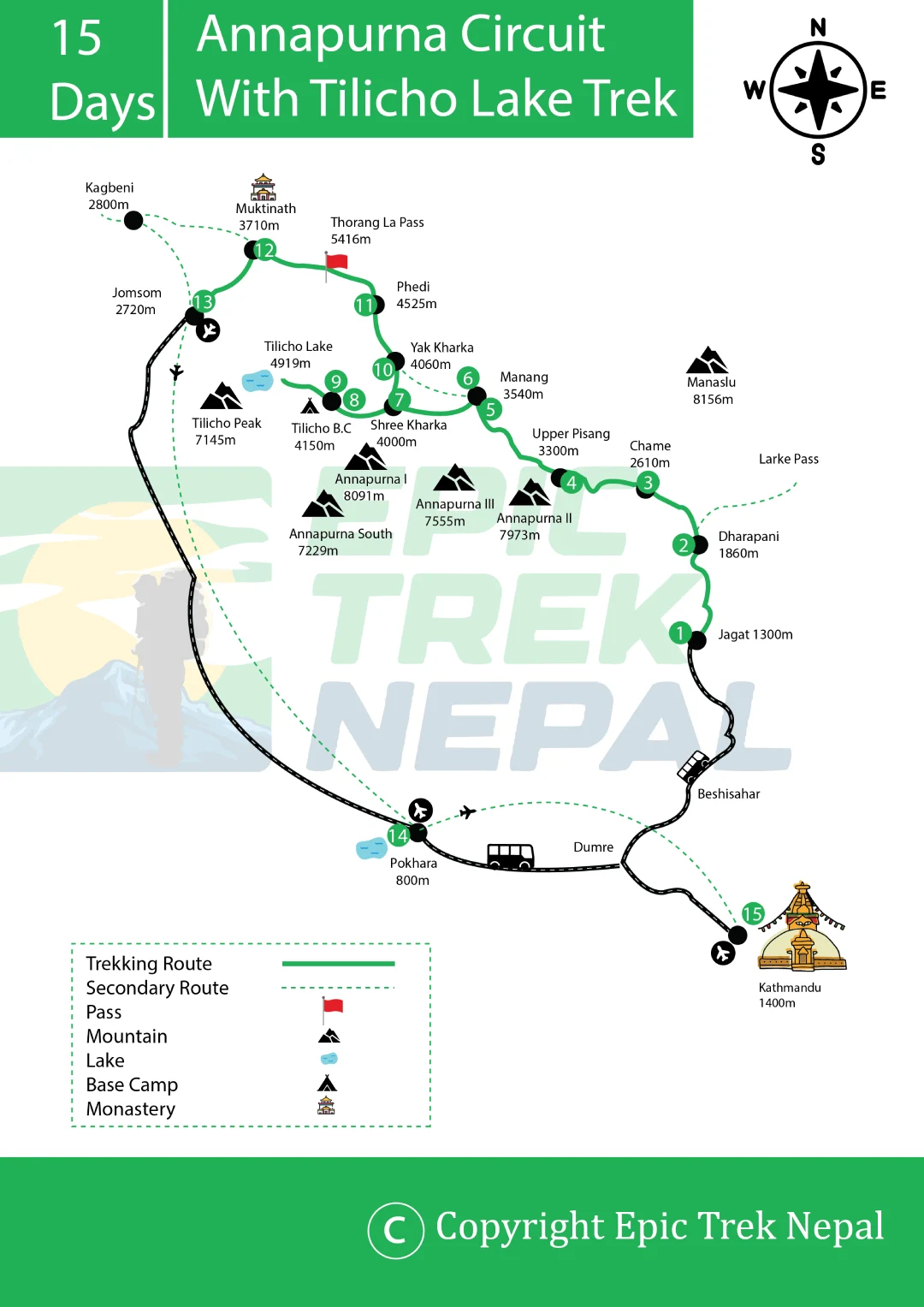
One particular point that every trekker should be take into account when planning the Annapurna Circuit with Tilicho Lake trek is the Thorong La Pass which sits at a height of 5,416 meters. Trekkers have to wake up very early, endure the chill, which is very cold, and climb for hours on end, all that while breathing in thin air. In addition, many travelers actually start feeling the effects of high-altitude sickness even before reaching the pass, getting such unpleasant sensations as headaches, fatigue, and restless sleep.
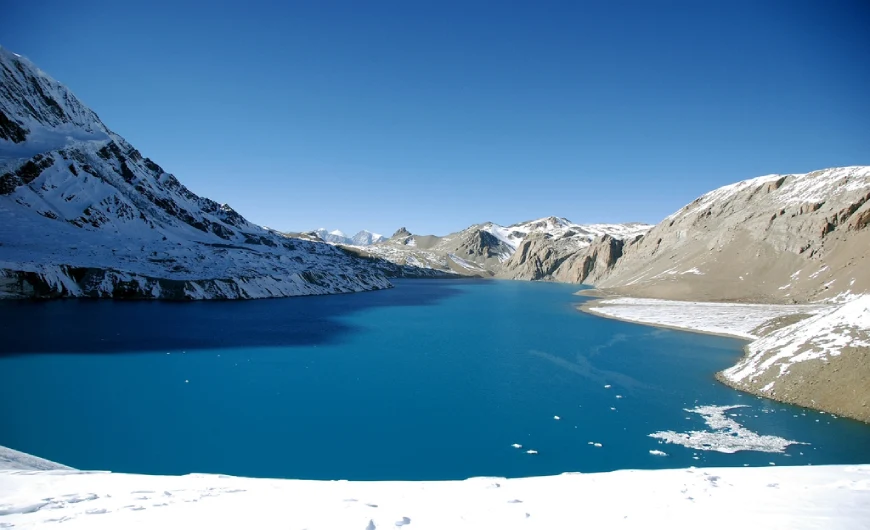
The Tilicho side of the trails add another challenge in the Annapurna Circuit with Tilicho Lake Trek. The route from Tilicho Base Camp to Tilicho lake is very steep and carries real landslide risk. You have to look out for altitude sickness as you will gain a lot of elevation in short amount of time.
You are typically covering between 5 and 8 hours of trekking per day. That sounds reasonable on the surface, but not so much after around ten days of gradually increasing efforts.
The positive part is that Annapurna Circuit with Tilicho Lake Trek doesn’t require any climbing experience whatsoever. Nothing like ropes and crampons here. Anyone who’s fit enough, follows the appropriate acclimatization plan and just simply has the willpower to go through with this will be able to make it to the end. This is what makes it important to understand how difficult it can be for proper Annapurna Circuit with Tilicho Lake Trek planning.
Preparation for the Annapurna Circuit with Tilicho Lake
Good preparation will always determine if your trek will be a rewarding experience or a hell. Those who take their time to prepare well before starting this Annapurna Circuit with Tilicho Lake Trek Itinerary will surely be rewarded with some of the best experience. Otherwise, it will just be a failure.
First, start preparing your physical body at least 2 to 3 months in advance. Doing some cardio traning like running, cycling, climbing stairs with a weighted backpack will very benefit during the actual trek. Don’t forget to train that leg and knee. The descents are going to be long and hard, and every knee joint is going to suffer greatly from them. So, add squats, lunges, weighted step-ups to your training regimen early on.
Equipment is another essential thing that most people do not take into account. A used trekking boots is very important than a brand new. Base layers, down jackets, and rain gear too. Blisters from brand-new boots and the higher altitude are very painful but easily avoided if you try them out long before you leave for the trek.
The other part of the preparation process entails a detailed review of the Annapurna Circuit with Tilicho Lake Trek Itinerary. Knowing what you are dealing with in terms of altitude gain, time needed, and type of the route helps to mentally prepare for the difficult parts of the trekking journey. Plus, knowing that you can take some extra days to rest in between makes it more bearable. Mental preparation should also include knowing that some days you are going to have a hard time, especially at high altitudes when you are cold and exhausted and wonder why you chose this.
Language and Communication for Annapurna Circuit with Tilicho Lake Trek
In Nepal, Nepali language is the official language, but you will find a unique blend of dialects in Nepal around the region of the Annapurna and Tilicho Lake. There are mainly Gurung, Manangi and TIbetan language and in each village, there’s more other language.
The good news about this area is that English is quite common in this area. Most of the tea house, hotels and local people of Manang, Pisang and Muktinath will definitely have English Speaking people.
There might still be time where you will have problem communicating with people and that’s where a guide for yourself will come in handy for the Annapurna Circuit with Tilicho Lake Trek. An experience guide will become your translator, translating every word and the meaning behind them as well. This will be crucial especially when approaching remote areas around Tilicho Lake Base Camp where there are fewer chances to find any English speakers.
With that being said, it will also be worth spending five minutes to learn some phrases in Nepali. Namaste, Dhanyabad, Ramro –hello, thank you, beautiful. Such simple words which make the locals very happy no matter how bad you say them. They will be especially grateful for your effort than the accuracy.
Mobile Network, Internet and Charging Facilities
It is possible to stay connected on the Annapurna Circuit with Tilicho Lake Trek but don’t expect it to be high speed connection because you will be disappointed immediately. There are mainly two main mobile services in Nepal: NTC and NCELL. Between these two Ncell will words well in the first part of the hiking and Ntc words well in the higher part of the trek.
If we talk about internet, Wi-Fi access is available in almost all tea houses. But it’s better not to even try to use it because most of them are really frustrating. Very slow, unreliable ad sometime not working for a whole day. Once you get past Manang, the connection will get worse and by the time you reach Tilicho Base camp or Thorong Phedi, you are basically offline.
If you want to charge your device, there are charging facilities available in most tea houses on the Annapurna Circuit with Tilicho Lake Trek with some small fee ranging between USD 1 to 3. Beyond Manang, solar power replaces electricity. Therefore, make sure you have a high-capacity battery pack that keeps your mobile, camera, and other gadgets charged in case you cannot charge them from any of the teahouses. Also, take a universal travel adaptor because there will be different sockets on different teahouses.
Don’t do on the Annapurna Circuit with Tilicho Lake Trek
There are some things that every trekker must not do because it passes through protected conserved areas, sacred religious sites and very respected communities. How you behave will not only affect your safety but also show a level of respect to those areas and communities that you come across during the Annapurna Circuit with Tilicho Lake trek. Here are some points that you should not overlook.
Don’t ignore acclimatization. This is the important day in your entire trek. If you don’t listen and ascent beyond without any acclimatization, no matter how much you prepare and train, you will surely fall back. One thing every trekker must remember is to climb high and sleep low.
Don’t disrespect religious sites. There are many religious sites during the Annapurna Circuit with Tilicho Lake trek and there lies one of the most sacred temples in Asia i.e. Muktinath. Always walk clockwise around the mani walls and stupas. Remove your shoes before going into the temples. Never take pictures without asking permission.
Don’t litter. The Annapurna region has struggled with waste pollution for decades. Bring a reusable water bottle, rely on purification tablets and filters instead of buying plastic bottles, and leave everything as clean.
Don’t underestimate the weather. You wake up early morning with clear sky and suddenly whole days turns into a storm. Yeah! that happens quite often here. No matter how the weather looked like before setting off, you should always have your rain gear and warm clothes packed.
Do not hike alone through remote areas. The route from Shree Kharka via Tilicho Base Camp to the Tilicho Lake is highly prone to landslides and the rescuing someone is very difficult. Either do this trek with a guide or make sure that there will be other trekkers with you.
Understanding the best time for Annapurna Circuit with Tilicho Lake is also a part of better planning. Traveling in wrong season put both you and the local rescue team at unnecessary risks. Plan wisely and trek responsibly, and you will be rewarded tenfold by this amazing trail.
Trip Extension and Alternative Routes
Another amazing thing about the Annapurna Circuit and Tilicho Lake Trek is how seamlessly it blends with the numerous other locations in the area. In case you find yourself having some extra time, then you should seriously consider extending your tour. Here are some extra trip that you can add:
- Pokhara Extension: After completing the Annapurna Circuit with Tiicho Lake trek, you can give yourself a few additional days in Pokhara, where you can spend them resting, paragliding over Phewa Lake, or enjoying the spectacular sunrise on the Annapurna Range while relaxing in a cozy cafe.
- Poon Hill Trek: After completing the tour and if you’ve got some strength left, one of the best routes you could go with is the Poon Hill trek, which starts in Ghorepani. This 4 to 5-day loop which works wonderfully well with the Annapurna Circuit, offering some stunning views of Dhaulagiri and Machhapuchhre at sunrise.
- Upper Mustang: The journey into the rain shadow region beyond Thorong La will make one feel as if one is traveling back into old Tibet. While an inner restricted area permit is required to access the place, exploring the walled city of Lo Manthang promises a rare adventure of a lifetime.
- Khopra Danda Ridge: It offers an unexplored adventure south of the Annapurna Range with amazing views and hardly any visitors at all.
Moreover, the best time for Annapurna Circuit Trek with Tilicho Lake Trek can help one choose the most suitable extension trek depending on the climatic conditions of the region.
Visa and Permit for Annapurna Circuit with Tilicho Lake Trek
To begin with, you must acquire the following 3 important document for the Annapurna Circuit with TIlicho Lake Trek. First, you will need a Nepal Tourist Visa to visit in Nepal and Annapurna Conservation Area Permit and Tims Card for the trek.
Nepal Visa: For most citizen, a tourist visa can be obtained upon arrival at the Tribhuvan International Airport. For 15 days it cost about USD 30 and for 30 days it cost USD 50. Travelers can also apply thorough online applicated from the immigration website of Nepal. Don’t forget to bring passport sized photo with some cash in USD because the visa counter accepts only cash payment.
ACAP: Annapurna Conservation Area Permit is mandatory for all trekker before entering Annapurna region. The cost of this permit is around USD 20 for foreigners.
Tims Card: Trekkers’ Information Management System is used to tracks trekkers during their trekking journey. It cost around USD 13 for individual trekkers and USD 10 for trekkers who go through a registered trekking company.
If you choose us “Epic Trek Nepal“, we will handle all the necessary permit that is necessary for the Annapurna Circuit with Tilicho Lake trek. You just need to carry important document and enjoy the scenery of the trek without worrying in the logistic part.
Travel Insurance for Annapurna Circuit with Tilicho Lake Trek
Purchasing a travel insurance is must when travelling through Annapurna Circuit with Tilicho lake trek. The thing is, it goes through some of the most remote and heighest part of Nepal, that is very unpredictable and if anything goes wrong, the only option for rescue is helicopter evacuation. If you don’t have travel insurance, it would be very expensive to cover that cost.
One thing you need to consider when purchasing an insurance is that it provides coverage for trekking up to 6.000-meter altitude. Some travel insurance company doesn’t provide this, and you need to look out for this.
After getting the insurance, you should share the policy document with your travel company, your guide, and any trustworthy person from home. In case of any urgent situations, your guide will be able to contact the insurance company straight away. By the way, better save an emergency number at your insurance company on your phone as you may not have access to the Internet then.
Health and Safety on Annapurna Circuit with Tilicho Lake Trek
The condition of your health and how you manage your health determine the result of your Annapurna Circuit with Tilicho lake trek. The combination of high altitude, physical stress, and being far away from any medical services forms a unique environment that should be understood and prepared for properly.
One thing that you need to be safe from is altitude sickness. It can affect anyone regardless of their physical abilities. You just need to make sure not to trigger is symptoms and if you feel its symptoms like headaches, feeling dizzy, nauseous or loss of appetite, you need to inform your guide or back down immediately or it might get even worse.
Pack some Diamox (Acetazolamide) as a preventive backup before your departure. Also, don’t forget to take care of yourself by drinking not less than 3 to 4 liters of water every single day while hiking, and avoid consuming any alcohol above 3,000 meters because it accelerates the process of dehydration.
And when it comes to drinking water, never consume untreated water directly from mountain rivers or fountains. Instead, use purification pills, reliable filters like a Sawyer one, or UV purifiers like SteriPen ones to protect yourself from bacteria. Lastly, pack a first aid kit, and be sure to have a licensed guide because a guide is not just an option but your ultimate protection.






 Share
Share