How difficult is Mardi Himal Short Trek
This 5 Days Mardi Himal Trek is not the easiest trek but then again, it’s also not a brutal one like Everest Base Camp or Annapurna Circuit. It is considered a moderate trekking, which mean every trekker with basic fitness can comfortably complete this trek. Most of the days involve 4 to 6 hours of walking, sometime even more depending on the route condition and trekkers pace.
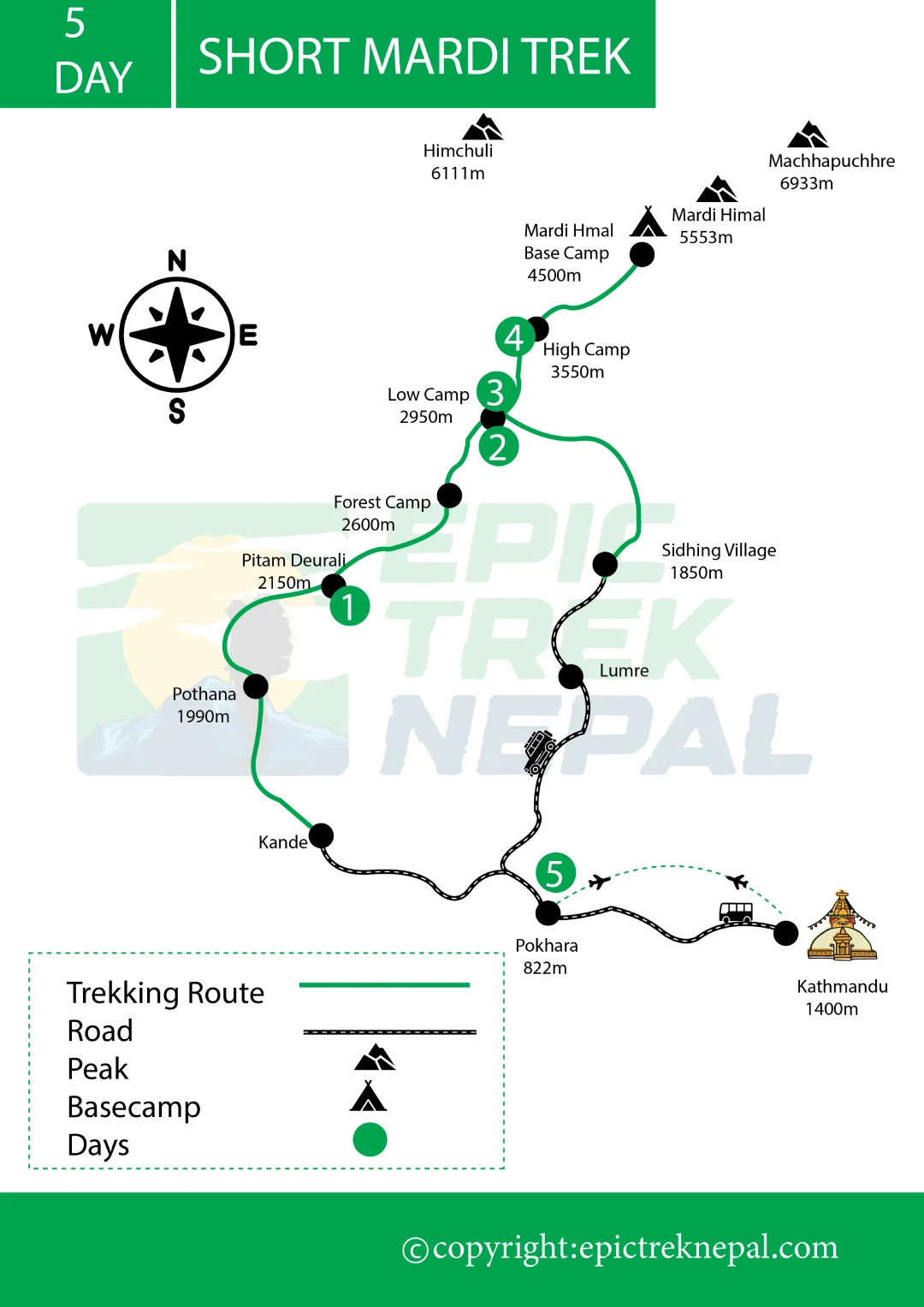
Altitude is the main problem in this case. The highest altitude on 5 Days Mardi Himal Short Trek is at 4,500 meters and therefore you can feel the air getting thinner as you climb. This can cause headache, nausea, breathing problem which are the symptoms of altitude sickness and if not treated immediately it can lead to emergency evacuation.
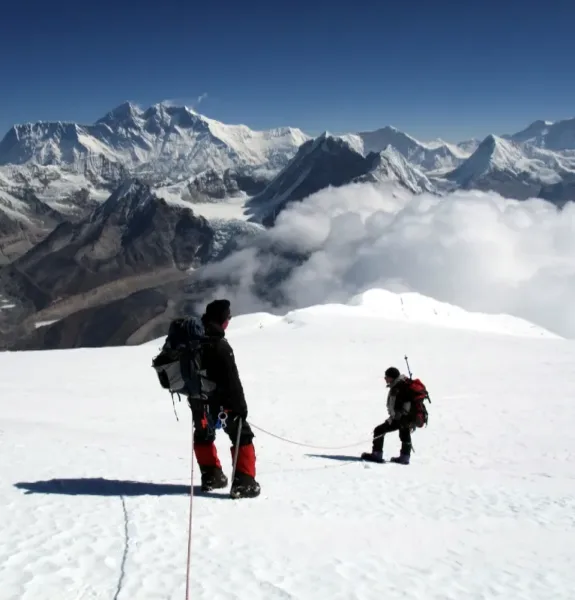
There are also some stretches where the trail narrows down to ridges that have steep falls on both sides, which might be haunting if you fear heights. However, there is no technical climb here whatsoever. Nothing like rope-climbing or crampon-climbing.
Even a single day hike experience will be enough for the trail, but even if you have none, you should be fine. Just perhaps you will have to train yourself by climbing stairs or going for long walks.
Preparation for Mardi Himal Short Trek
Preparation doesn’t have to be complicated, but it will definitely help. Start with physical preparation with some easy cardio exercise a few weeks ahead. Walking, running, climbing stairs and other exercise helps develop leg strength for long walk in rough landscapes. Training does not have to be intensive like in gym, simple enough to walk comfortably for entire trek.
Packing essential gear and equipment is important too. The layer will come in handy because the temperature changes quickly from warm days to instant cool when the sun goes down. The hiking must be in good condition, and another essential thing is having a good sleeping bag since teahouse get very cold.
Remember to bring the basics items such as headlamp, water purification tables or water filter, sun protection, sunglasses and a first aid kit. A trekking pole will be extremely helpful on the rugged terrain around the High Camp.
Mentally, be prepared for challenging uphill sections and uncomfortable night because of high altitude. This is quite normal when trekking in mountains. If you have your old trekking equipment, then bring that one instead of buying new one. Finally, purchase a good travel insurance policy that cover high altitude trekking and emergency evacuation.
Visa and Permit
Getting a visa for Nepal is not that difficult and most tourist can obtain their visa on arrival at the airport of Kathmandu, where all you have to provide are passport photo, visa fee and filled application form.
For the Mardi Himal Trek, you will need two permits. The first permit is ACAP (Annapurna Conservation Area Permit), as Mardi Hima lies within this area. The second permit is the TIMS (Trekkers’ Information Management System) card.
No need to worry about this permit, as Epic Trek Nepal will handle all the permit and logistics part. You just provide with extra passport size photo because they are needed for your permit. Before starting your trek make sure to carry your permit digitally and physically to show them at certain checkpoint along the Mardi Himal Trek Route.
Communication during the trek
It is actually easier to communicate during Mardi Himal Short trek than what people assume. The official language is Nepali of course, but English is widely understood among people along the trail, including the guides, porters, and the tea house owners that interact with the trekkers. Therefore, there are rarely any language problems along this trek.
If you choose to be guided during Mardi Himal Short trek, then the guide does most of the communicating. They translate when necessary and help with ordering food or asking directions. Menus in teahouse are also translated in English as well, so there should not be any difficulties with choosing what to order.
Even when not guided, basic English would work fine because tea houses along the route deal with many foreign trekkers. The signs on the trekking route may be confusing sometimes as they are sometimes written only in Nepali, so having a guide or at least a detailed map will come in use.
Learning some Nepali words also doesn’t affect you, as people will appreciate the effort you make in communicating with them. Phrases like “namaste” (hello), “dhanyabad” (thank you), etc. will be very useful during the journey.
To conclude, the language issue should not worry you because it is not an obstacle for trekking along this Mardi Himal Trek Route.
Mobile Network, Internet and Charging Facilities
When trekking in high altitude, there is no point in looking for fast and table network connection because that is how thing go in the mountain. In the lower villages of Kande, the mobile network works fine using local SIM card of NTC and Ncell. But as you move higher, the signal get weaker and weaker and at High Camp it doesn’t even exist.
Wi-Fi is provided in most of the tea houses on the trail. However, it comes at a price around $1 to $3 because tea houses do not provide internet service for free. Besides it is quite slow and unreliable.
Charging your electronic devices is also available in most tea houses, although as usual, it comes with a price that tends to increase as the altitude increases. Having a portable charger would be the best way to do things, as not all tea houses will always offer you charging facilities, especially during the peak seasons.
Overall, just expect little connectivity. Make sure you let your loved ones know that you might be unreachable for a few days because it’s quite enjoyable up there.
Don’ts on this trek
Here are some of the things that should be avoided when planning for Mardi Himal Short trek.
Don’t hike fast. There is no need to hike fast, it only lead to altitude sickness and therefore it would be wise to keep things calm on this journey.
Don’t ignore any signs of altitude sickness. Its symptoms include headache, nausea, dizziness etc. If any of these symptoms appear, inform your guide and listen to his instructions accordingly.
Do not pack five different outfits or extra pair of shoes, take only what you need – some layers, necessary toiletries.
Do not dump garbage along the way. This rule is very important because you have to make sure that you discard your waste in a proper manner using garbage cans as much as possible.
Do not drink water directly from the streams because it should be purified before drinking and don’t waste any food in tea houses. Supplies are very limited up there and all of them have to be carried there.
Mardi Himal Short Trek Extension
There are some options to make your Mardi Himal Short Trek experience even longer and more enjoyable via some side trips and extensions to the itinerary. If you have spare days to spend and would like to explore a bit more, then you could choose to visit Australian Camp or Poon Hill. The place is famous for its stunning view of the sunrise over the Annapurna mountain range. Of course, this will take a bit of extra time, but believe me, the view is definitely worth it!
In addition, you should try to make a combination of Mardi Himal Short Trek and some short trail in Annapurna Base Camp area, as the starting point for these two hikes is almost the same.
If you want something a little less intense, you could continue on to the Sarangkot area, which is located near Pokhara, and famous not only for its serene atmosphere but also for amazing mountain sunrises that you can see from above the lake.
Whereas when it comes to extension, it’s also worth considering adding some days in Pokhara city before or after the trek just to relax and enjoy the lakeside a bit. Your Mardi Himal Short Trek route can actually take whatever shape you want it to have.
Travel Insurance
Travel Insurance is required for Mardi Himal Short Trek, no matter how healthy and experienced trekker you think you are. In the mountains, anything can happen, weather changes rapidly, altitude sickness strikes unexpectedly and getting out of there when you’re injured can end up costing you a lot.
When purchasing travel insurance, make sure that it covers high-altitude trekking and in particular up to at least 5,000 meters because Mardi Himal Base Camp is around 4,500 meters. Some standard travel insurance plans do not cover things related to altitude by default, so make sure you have checked that.
Also, it is important to have helicopter evacuation coverage because this will be the only way to leave if anything happens at High Camp or Base Camp. Look out for insurance plans that include cancellation, lost luggage, and general medical expenses to play it safe. You may want to keep a physical copy of your plan with you during your hiking adventure, including emergency numbers, and perhaps give a copy to your tour guide as well.
It is one of those things you hope you will not need, but you will definitely be glad you got it when something unexpected happens.
Health and Safety
Your well-being and safety will rely mostly on good decision and paying attention to your body. The biggest challenge you may face during this trek will be altitude sickness due to rapid ascent at a relatively high altitude. Therefore, any symptoms such as headache, dizziness, nausea and other should not be taken lightly and reported to the guide immediately.
Hydration is very important, so make sure to drink enough water during the whole day. Alcohol consumption is not recommended while trekking since it interferes with acclimatization process. Moreover, eating healthy food is also crucial because your body need energy to climb.
The weather may change rapidly, so proper clothing is necessary as well as the rain gear. There are some narrow ridge sections along the way, so be careful as the track may become wet due to rainfall.
Having a licensed guide offers a great deal of security, as they will know how to recognize the symptoms of altitude sickness and respond accordingly. First aid training is important too, and packing a first aid kit with blister pads, painkillers, and personal medications is simply common sense.
In general, just take it easy and be conscious of your surroundings and your well-being.





 Share
Share