Amphu Lapcha Pass Trek
80 reviews in Tripadvisor
Trip Duration
17 DaysDestination
NepalMax. Altitude
5,845 m.Trip Difficulty
ChallengingGroup Size
2-16 paxTransportation
FlightAccommodation
Hotel/CampActivity
TrekkingMeals
All InclusiveStart / End
KathmanduRegion
Everest and MakaluBest Season
Spring & Autumn
Need Help? Talk to Expert
+977 9764792172Trip Overview
The Amphu Lapcha Pass Trek is one of an underrated treks that never received the attention it deserves. Season after season thousands of trekkers visit the famous Everest Base Camp trekking route, this outstanding Amphu Lapcha Pass trail gets ignored while waiting for people to discover its true beauty.
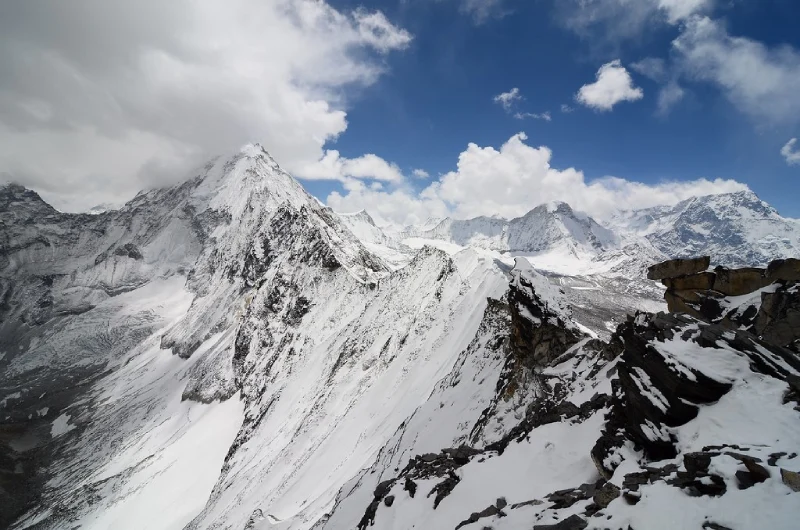
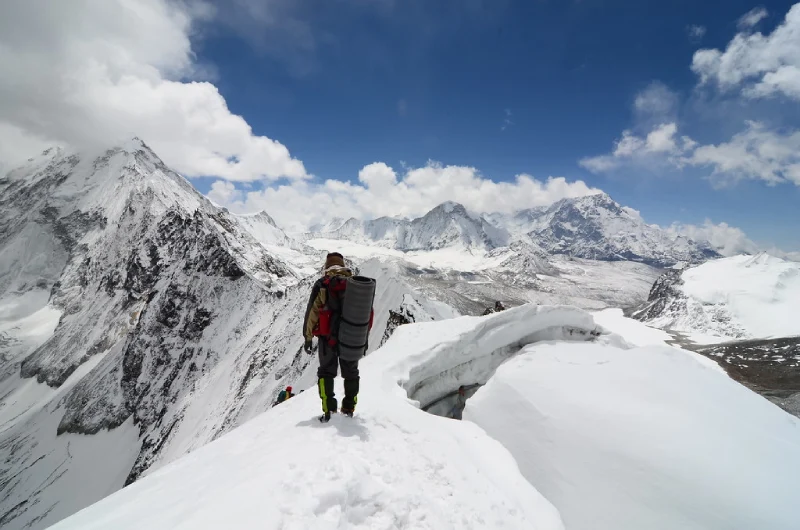
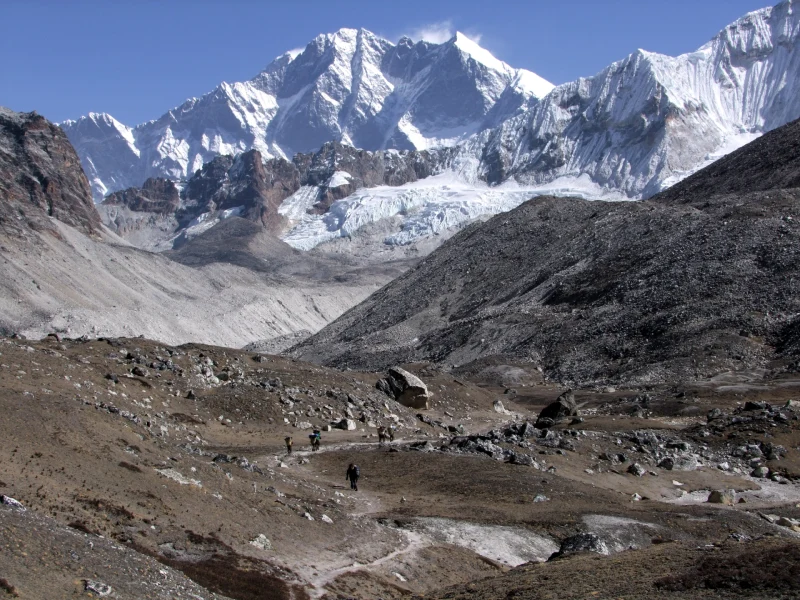
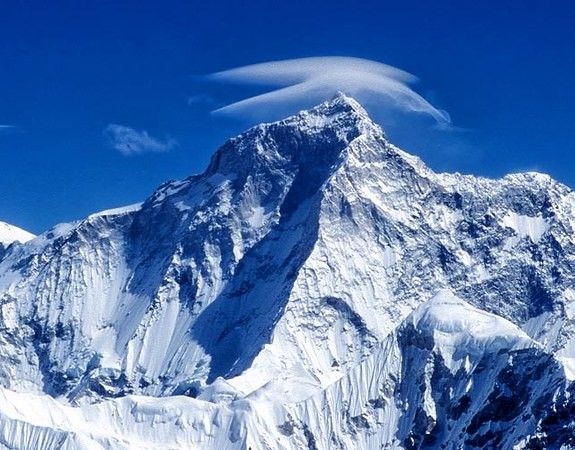
With the altitude of 5,845 meter above, the Amphu Lapcha Pass Trek offers much more than the high-altitude pass. When you stand on the pass you get view of some of the tallest mountain in the world. Everest, Lhotse, Makalu, Ama Dablam and many other mountains rise right Infront of you. The Amphu Lapcha Pass View Trek definitely deserve some recognition because not many places in the world allows you to see such a panoramic scenery with your own eyes.
The Amphu Lapcha Pass Trek leads you through the Everest region to the untouched Hongu Valley, and then to the Makalu Base Camp. Very few trekkers manage to complete this trek each year, and it speak for itself that this route is not created for everyone. The Amphu Lapcha Pass Trek is not only a challenging pass of the Himalayas but also a gateway leading to one of the most remote, breathtaking parts of the majestic mountains.
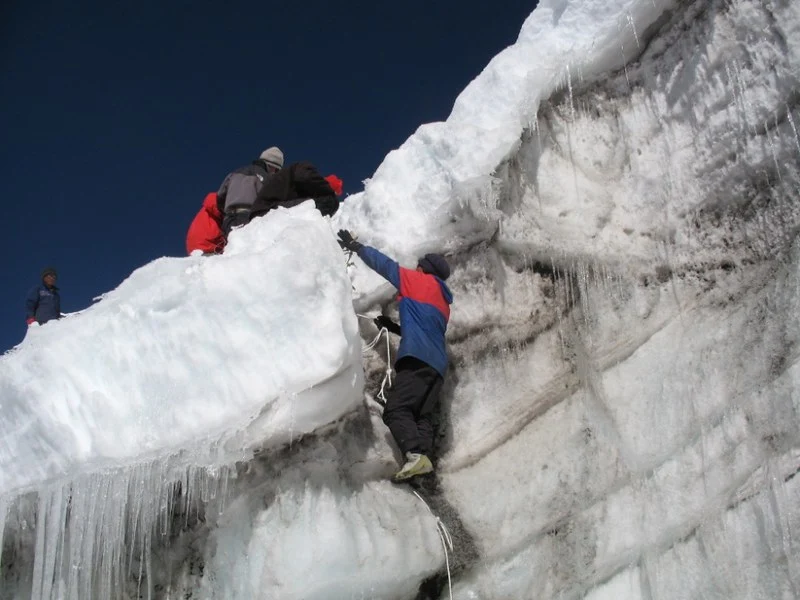
Trekking in this area requires crampons and rope crossing, preparation before going up to the mountains, so it’s technically more difficult than most of other Himalayan treks.
Apart from mountains and difficulties, the route will give you an access to Sherpa villages, centuries old monasteries, and even old trade path that existed before Nepal. Every step in this route feels like you are walking into a historical place that carries deep cultural and geographical aspect.
Amphu Lapcha Pass Trek Route
The Amphu Lapcha Pass trek takes you on absolute breathtaking journey that will leave you amazed as you make your deep into the heart of the Himalayas. The main starting point of this trek is from Lukla which you will take a flight from Kathmandu to reach.
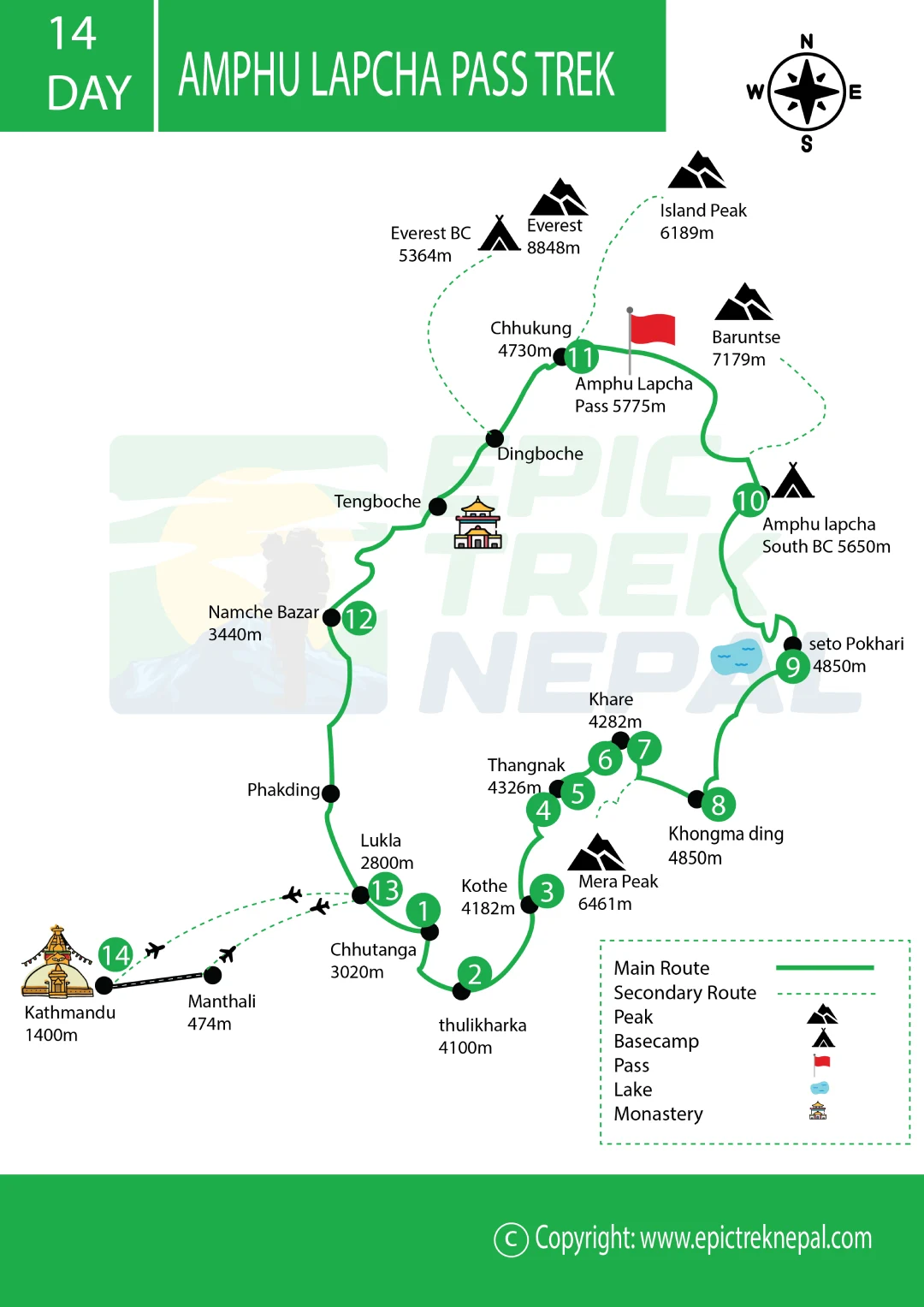
After Lukla, your journey will head to Chhutanga which is at an altitude of 3,020 meters. You will trek to Chatarla Pass at 4,689 meters and later descend to Thuli Kharka before heading to Kothey and Thangnak ending your journey at Khare which is at an altitude of 5,045 meters.
The itinerary of the Amphu Lapcha Pass Trek transitions to an expedition. You make your way to Khongme Dingma with one reserved day due to the possibility of unfavorable weather conditions in case of your attempt to cross Mera La and Amphu Lapcha passes. Then you move along Seto Pokhari at 4,850 m elevation to reach Amphu Lapcha Base Camp at 5,527 m.
Day 13 is where the best part comes – crossing Amphu Lapcha Pass at 5,775 m elevation and descending to Chhukung. The views from the top of Amphu Lapcha Pass are truly unique, as the views of Lhotse, Makalu, and Ama Dablam surround you from all sides.
From Chhukung, you join the traditional trekking path to Mt. Everest, and you go through Namche Bazaar and Lukla for the return flight to Kathmandu.
This route takes 17 days to complete, and it manages to take you through two of the most famous trekking destinations of Nepal in one trip alone.
Highlights of Amphu Lapcha Pass Trek
- Climb the legendary pass of Amphu Lapcha Pass at 5,845 meters, one of the highest and toughest passes for trekkers in Nepal
- Witness the spectacular panoramic views of Everest, Lhotse, Makalu, Ama Dablam, and Baruntse from the pass top
- Discover sacred glacial lakes of Panch Pokhari and the gorgeous Seto Pokhari on your trek
- Unite two legendary regions in one expedition: the wild Makalu Barun region and classic Everest Khumbu region
- Enjoy real mountaineering experience with the use of crampons, fixed ropes and glacier crossing
- Visit the famous Tengboche Monastery, the largest monastery in the Khumbu region
Photo Gallery & Video Gallery
Amphu Lapcha Pass Trek - Distance, Duration, and Altitude
| Trekking Route | Distance (Kilometers) | Duration (Hours) | Altitude (Meters) |
|---|---|---|---|
| Trek to Chutanga | 7 KM | Trek (3 to 4 hours) | 3020 m. |
| Trek from Chutanga to Thuli Kharka via Chhatri La Pass | 12 KM | Trek (6 to 7 hours) | 4300 m. |
| Trek from Thuli Kharka to Khote | 14 KM | Trek (5 to 6 hours) | 4182 m. |
| Trek from Khote to Thangnak | 8 KM | Trek (3 to 4 hours) | 4345 m. |
| Trek to Khare | 7 KM | Trek 3 to 4 hours | 5045 m. |
| Trek to Khongme Dingma | 11 KM | Trek (5 to 6 hours) | 4810 m. |
| Trek to Seto Pokhari | 10 KM | Trek (5 to 6 hours) | 4847 m. |
| Trek to Amphu Lapcha Base Camp | 7 KM | Trek (5 to 6 hours) | 5527 m. |
| Cross Amphu Lapcha Pass and Trek to Chhukung | 19 KM | Trek (9 to 10 hours) | 4730 m. |
| Trek to Namche Bazaar | 20 KM | Trek (7 to 8 hours) | 3440 m. |
| Trek to Lukla | 19 KM | Trek (7 to 8 hours) | 2800 m. |
Itinerary of Amphu Lapcha Pass Trek
Day 1: Arrival in Kathmandu
Kathmandu is the capital of Nepal and today you will reach here. Our representative will be there to greet you at the airport and take you to the hotel.
After reaching the hotel, you can take a rest or have a stroll in the lively neighborhood of Thamel. You can visit a gear shop to see the price of the equipment.
Activity: Arrival
Max. Altitude: 1400m./4,593ft.
Accommodation: 3 Star Hotel
Day 2: Kathmandu Sightseeing and Trek Preparation
Make the most of today because today is the last chance that you have to sort out your equipment, permits and mentally prepare yourself for the upcoming trek.
During the day, your guide will take you around Kathmandu Valley, showing your some of the famous UNESCO World Heritage Sites such as Pashupatinath Temple, Bhoothnath Stupa and Swyambhunath.
In the evening, you will have a brief talk with the guide about the trip, get the necessary documents sorted out for the trek, and pack your backpack.
Activity: Sightseeing
Max. Altitude: 1400m./4,593ft.
Meal: Breakfast, Dinner
Accommodation: 3 Star Hotel
Day 3: Flight to Lukla and Trek to Chutanga
You begin your day with a short fight from Kathmandu to Tenzing Hillary airport of Lukla, one of the most thrilling airports in the world. It takes about 45 min to reach Lukla, and after landing you start your trek right away.
Your route follows rhododendron forest and small sherpa villages until you reach Chutanga, where you can set up your first campsite
Activity: Trek (3 to 4 hours)
Max. Altitude: 3020m./9,908ft.
Meal: Breakfast, Lunch, Dinner
Accommodation: Tea house
Day 4: Trek from Chutanga to Thuli Kharka via Chhatri La Pass
This is one of the tougher early days on the entire Amphu Lapcha Pass Trek Itinerary. You will walk uphill all day to reach Chhatri La Pass summit before descending into the Hinku Valley and then finally reaching Thuli Kharka.
In some section while descending, the terrain will be very steep, so trekking poles will come handy. This day gives you an idea of what lies ahead.
Activity: Trek (6 to 7 hours)
Max. Altitude: 4300m./14,108ft.
Meal: Breakfast, Lunch, Dinner
Accommodation: Tea house
Day 5: Trek from Thuli Kharka to Khote
Today you will leave from Thuli Kharka behind and move along with Hinku river. Today’s trek will be much more straightforward than yesterday’s which make it easier for your body.
On the route you will see very few settlements and cross few streams during your trek. After some point, you will reach Khote, a checkpoint for Mera Peak. Where you will reach, you will definitely realize how far you have come from the usual Everet crowd.
Activity: Trek (5 to 6 hours)
Max. Altitude: 4182m./13,720ft.
Meal: Breakfast, Lunch, Dinner
Accommodation: Tea house
Day 6: Trek from Khote to Thangnak
After Khote, the trek will take you more deep into the Hinku Valley. The rise in altitude alters the scenery and the lush green valley turn into rocks, moraines and glaciers.
At Thangnak, located at 4,345 meters, there is a breathtaking view of the surrounding mountain which cannot be described. This place acts as an accommodation point for the Amphu Lapcha Pass Trek, so rest and eat well for your body.
Activity: Trek (3 to 4 hours)
Max. Altitude: 4345m./14,255ft.
Meal: Breakfast, Lunch, Dinner
Accommodation: Tea house
Day 7: Trek to Khare
Today’s trek is relatively short trek, but the trek involves a considerable amount of walking in uphill section. You will be trekking continuously on the lateral moraine of Khare at an elevation of 5,045 meters.
The route is quite rocky and requires you to be constantly cautious about the steps. There is increased effect of altitude on the body at this point, with most hikers experiencing headaches and shortness of breath, so make sure you take enough fluids and walk slowly.
Activity: Trek 3 to 4 hours
Max. Altitude: 5045m./16,552ft.
Meal: Breakfast, Lunch, Dinner
Accommodation: Tea house
Day 8: Acclimatization Day in Khare
Don’t ignore this acclimatization day because it is one of the most crucial days of the whole Amphu Lapcha Pass Trek. It is important your body get adjust to low oxygen for the upcoming trek.
The next step is going on a short acclimatization trek to a higher altitude and then returning to the same place to sleep, which is the Khare campsite; and the strategy of climbing high and sleeping low is proved to work.
Activity: Rest Day
Max. Altitude: 5045m./16,552ft.
Meal: Breakfast, Lunch, Dinner
Accommodation: Tea house
Day 9: Trek to Khongme Dingma
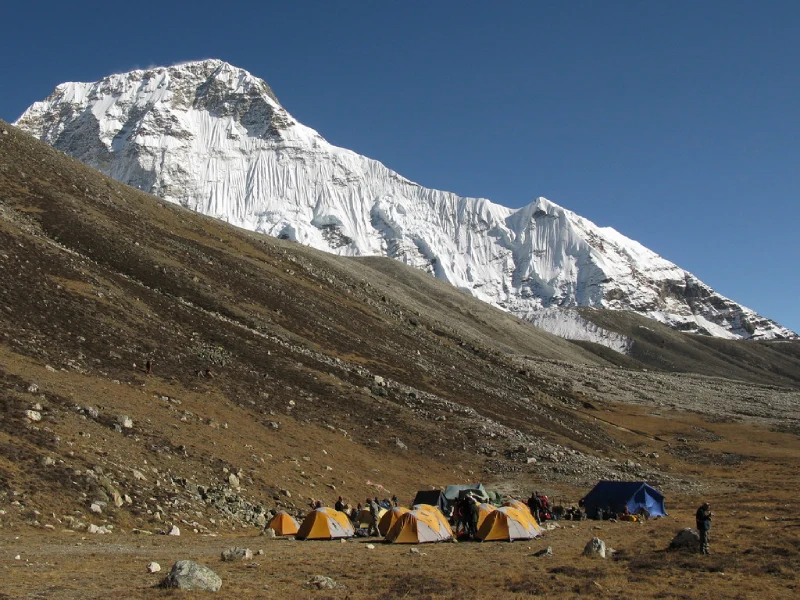
Today is the day you leave the last tea house behind and enter into the real wilderness. Khongme Dingma hike at an altiude of 4,810 meter is wild, untouched and extraordinarily beautiful that give a feel like a dream.
Today is the day you camp in tents for the first time on the Amphu Lapcha Pass Trek route – and it means that the essence of your journey has a complete change now.
Activity: Trek (5 to 6 hours)
Max. Altitude: 4810m./15,781ft.
Meal: Breakfast, Lunch, Dinner
Accommodation: Camp
Day 10: Reserve Day for Bad Weather
There a reason why we built this buffer day in the Amphu Lapcha Pass Trek Itinerary. Weather in the high altitude is very unpredictable and doing a trek to the Mera-La or the Amphu Lapcha Pass is not safe.
However, if the weather is favorable, your guide will use this day for extra acclimatization or resting in the camp. In case of bad weather, you have to wait.
Activity: Buffer day
Max. Altitude: 4810m./15,781ft.
Meal: Breakfast, Lunch, Dinner
Accommodation: Camp
Day 11: Trek to Seto Pokhari
Today, you head off to Seto Pokhari – a beautiful high-altitude lake that is located at 4,850 m in one of the remote parts of the route. The area near the Seto Pokhari Lake is very unique, where you can find frozen lakesides, huge glaciers, and practically no people at all.
You will definitely need to have a professional guide with you to navigate in such conditions, therefore, follow their advice at this stage without any doubts.
Activity: Trek (5 to 6 hours)
Max. Altitude: 4847m./15,902ft.
Meal: Breakfast, Lunch, Dinner
Accommodation: Camp
Day 12: Trek to Amphu Lapcha Base Camp
And now for the last push before the long awaited crossing. You acend slowly from Seto Pokhari toward Amphu Lapcha Base Camp at 5,527 meter in rough and glacial path. Ice cliffs, ice towers, and knife-edge ridges surround you wherever you turn.
Tonight your guide gives you a full brief regarding tomorrow’s technical part which involves rope work, crampons, movements, and emergencies. Get geared up properly, have an energy-rich meal, and try to get enough sleep as early as possible tonight. Tomorrow will be the highlight of your entire Amphu Lapcha Pass Trek.
Activity: Trek (5 to 6 hours)
Max. Altitude: 5527m./18,133ft.
Meal: Breakfast, Lunch, Dinner
Accommodation: Camp
Day 13: Cross Amphu Lapcha Pass and Trek to Chhukung
You get up in the morning when it’s still dark out, crampons on and harness on and set off for what is going to be the most exciting day of your Amphu Lapcha Pass Trek.
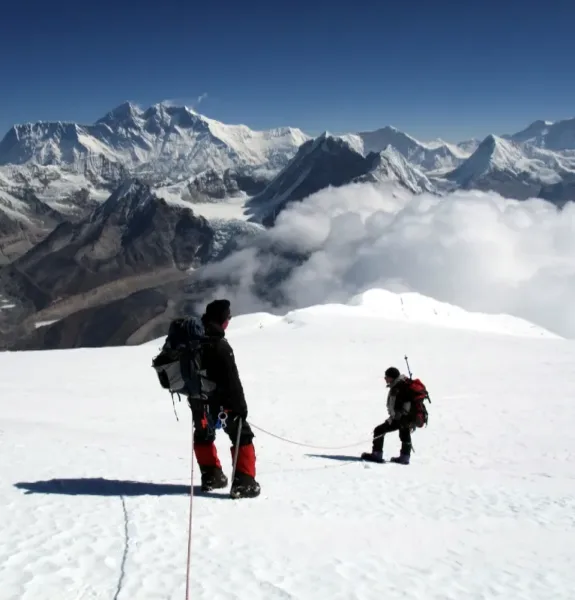
The climb up the 5,775 meter high pass includes plenty of ice-climbing and rope climbing and a lot of teamwork on each and every move. Once you reach the top, the Amphu Lapcha Pass View Trek gives you the final gift, an amazing 360 degree view of the Himalayan giants of Everest, Lhotse, Makalu and Ama Dablam all around you.
After that the descent down to Chhukung at 4,730 meters begins which is tough but truly thrilling.
Activity: Trek (9 to 10 hours)
Max. Altitude: 4730m./15,518ft.
Meal: Breakfast, Lunch, Dinner
Accommodation: Tea house
Day 14: Trek to Namche Bazaar
Starting from the Chhukung, you take the legendary trek to Everest Base Camp that leads to Namche Bazaar. this path takes you by Dingboche and Tengboche where the renowned monastery provides you with some spiritual energy.
The track is clearly marked in comparison with the remote parts of the itinerary for Amphu Lapcha Pass Trek. Namche with its altitude of 3,440 meters looks almost like a proper town. Good food, warm shower, nice sleep. All of that you definitely deserve.
Activity: Trek (7 to 8 hours)
Max. Altitude: 3440m./11,286ft.
Meal: Breakfast, Lunch, Dinner
Accommodation: Tea House
Day 15: Trek to Lukla
The last full day of the trek brings you from Namche down to Lukla along the scenic Dudh Koshi Valley. It’s going to be a long trek down with quite some descent involved, but this trail is very well managed.
There is lots of passing through small, riverside villages that seem extremely cheerful, and eventually, you make it down to Lukla. At this stage, your sense of achievement is going to be overwhelming as you have managed to complete one of the most challenging treks in the Himalayas.
Activity: Trek (7 to 8 hours)
Max. Altitude: 2800m./9,186ft.
Meal: Breakfast, Lunch, Dinner
Accommodation: Tea house
Day 16: Fly to Kathmandu
For today’s schedule, you will have an aerial view back to Kathmandu. The early flight from Lukla will depend on the weather condition and there might be delay while waking up in the morning.
The trip may go directly to Kathmandu or the Manthali Airport in Ramechhap, depending on the time of the year and air traffic volume. As the Lukla flights during high trekking seasons are directed to Ramechhap, Epic Trek Nepal will tell you about your flight route.
After you reach Kathmandu, you will have an airport transfer to your hotel, where you can take showers, get comfortable beds and good food, after spending many days in the mountains. Tonight, we will host you with complimentary dinner to celebrate your successful trip to Amphu Lapcha Pass Trek!
Activity: Fly back
Max. Altitude: 1400m./4,593ft.
Meal: Breakfast, Dinner
Accommodation: 3 Star Hotel
Day 17: Departure
Your home return day, as according to your scheduled flight departure time. You will be transferred to the TIA with a lifetime memory of your journey to Everest.
Farewell until next time !
If you are traveling in a private group, we can arrange a fully customized trip based on your preferences, group size, and travel dates, available any day you choose.
Includes/Excludes
What is included?
- Pick up drop-off: Airport pick-up and drop-off by private vehicle.
- Kathmandu Valley Sightseeing: You will visit UNESCO World Heritage Sites which includes Pashupatinath, Boudhanath or Swyambunath with a tour guide.
- Permits and Fees: All necessary permits for the Everest Base Camp Trek, such as the Sagarmatha National Park Permit, Makalu Barum National Park entrance fee, Khumbu Pasang Lhamu Rural Municipality permit and the TIMS (Trekkers’ Information Management System) card.
- Domestic Flights: Round trip flights between Kathmandu and Lukla, the starting and ending point of the trek, are usually included.
- Guide: You are provided with a guide who speaks English and is experienced in trekking. This includes their salary, insurance, equipment, food, and accommodation. For a single trekker, a guide himself will carry up to 10 kg of their weight.
- First Aid Kit: A basic first aid kit is typically provided.
- Trekking Map: A detailed map of the trekking route is usually included.
- Equipment: Duffle Bag, Sleeping Bag (if necessary).
What is not included?
- International Flights: International airfare to and from Nepal is not included.
- Travel Insurance: Travel insurance that covers emergency rescue, evacuation, and medical treatment is not included, and you will be expected to have your own.
- Personal Expenses: Expenses for extra meals, drinks, snacks, charging devices, hot showers, Wi-Fi, laundry, and other personal costs are not included.
- Entrance Fee: Fee during visit in Katmandu Valley sightseeing as well as monasteries during the trek.
- Nepal Visa Fees: Entry visa fees for Nepal are not included.
- Additional Accommodation and Meals: If you choose to extend your stay in Nepal, or if you return from the trek earlier than scheduled, the cost of additional accommodation and meals will not be included.
- Rescue and Evacuation: Any costs related to emergency evacuation or rescues are not covered.
- Trekking Gear: Personal trekking equipment, such as hiking boots, down jackets, trekking poles, and other gear are not included.
- Tips: Tips for guides and porters are not included and are left to your discretion.
- Porter service: Porter is not available in package, but it can be arranged on request at an extra cost, where one porter carries up to 25 kg (shared between two trekkers) to reduce your load and make the trek more comfortable.
Trip Information
How difficult is Amphu Lapcha Pass Trek
Amphu Lapcha Pass Trek is without a question a trek that belong to the category of technical and challenging trek. It is not a standard trekking trails, as it includes glacier walk, fixed rope section, crampons use and crossing pass at the height of 5,845 meter which is enough to give you some idea why it’s one of the challenging treks in Nepal.
From the physical perspective, you will have to be in good shape if you want to complete this trek without any regrets. You should be ready to spend long hours trekking, gain significant altitude and be prepared to face harsh weather conditions in the Hongu Valley.
As for technicality, crossing the pass requires certain mountaineering abilities. You should be able to walk comfortably on crampons, confident is using the fixed ropes and capable of performing under pressure.
Mental strength becomes equally important as physical fitness, and sometimes even more than what people think. The remoteness, the altitude and the exposure of the Amphu Lapcha pass deeply affect trekkers mind even if they have completed plenty of treks before. But for someone who is both physically and mentally strong, this trek will be easy enough to complete the Amphu Lapcha Pass View Trek and return home with countless memories.
Preparation for the Amphu Lapcha Pass Trek
This specific trek requires more preparation than other treks. This crucial factor will determine the success or failure of the entire journey. This cannot just be improvised along the way since the success of your trek entirely depend on your preparation.
First start with building your physical endurance. Start you training at least 3 to 4 months ahead of time. Focus on cardiovascular with exercise like jogging, cycling, walking and hiking with a weighted backpack for leg muscle or something that may interest you.
Preparation of gears is equally important and is something that should be taken seriously. Walking using crampons, a climbing harness, a helmet, trekking pole, high altitude sleeping gears and proper layer system for the cold weather are all necessary. Do not compromise when it comes to gear because the conditions along the Amphu Lapcha Pass Trek Itinerary are very long and gear will need to be well tested before using in the trek.
Preparing for altitude is another aspect that many people tend to overestimate. In case you haven’t climbed above 4,000 meters, it would be wise to do a warmup trek like Island Peak or Mera Peak. This will enable your body to know how it deals with the thin air and give you a head start.
Get all necessary permits, documents, take a good first aid kit along and purchase compressive travel insurance with cover for high altitude trekking and emergency helicopter evacuation. Being well prepared mean, you enjoy the Amphu Lapcha Pass View Trek adventure without facing issues that can easily be prevented.
Visa and Require Permits
There are some papers that you need to get before you start your trip to Amphu Lapcha Pass Trek. It is a very easy procedure, but not having a single document may create trouble for you at the checkpoints.
Most foreign tourist need to have a tourist visa to enter in Nepal, which can be obtained upon arrival at Tribhuvan International Airport or through Department of Immigration website.
As for the trekking, Sagarmatha National Park Entry Permit, Khumbu Pasang Lhamu Rural Municipality Permit and Makalu Barun National park permit should be obtained. Additional permit might be required as certain route passes through restricted high-altitude area which may require special area permit.
The arrangement of all these permits is easy when you are booking a trek through a licensed company such as Epic Trek Nepal. Just be prepared to provide two passport-size photos, the fee in cash, and a valid passport (at least six months).
Language and Communication
Nepal’s official language is Nepali but on the Amphu Lapcha Pass Trek route, you will mostly hear Sherpa Language than Nepali language. Luckily enough, English is commonly spoken in the treks – guides, lodge owners, staff in tea houses and some local in parts of the trail.
However, in the unknown sections of the trail, especially the Hongu Valley and the surrounding areas like Panch Pokhari, there will hardly be any person and may go without seeing any person for several days of the journey. It is because of this reason that the role of the guide becomes extremely vital in these areas.
Learning some basic Nepali word also helps create a genuine connection with the locals during your trek. Words like “Namaste” for greeting and “Dhanyabaad” for saying Thank You is enough to show a sign of respect and crease that connection which add more value to your Anphu Lapcha Pass Trek.
You will also be provided with an experience English speaking guide who will translate all words and dialects if you have any problem while communicating with the locals. He will also help navigating, decision making, teaching during the entire journey.
Mobile Network, Internet and Charging Services
Internet connectivity on the Amphu Lapcha Pass Trek route is very limited and can be highly unreliable. It is crucial that you set appropriate expectation regarding this matter as you begin your journey out of Kathmandu.
In the lower part of village like Lukla, Khote and Namche mobile network by Ncell and Ntc work just fine. Calling and basic services are functional. But as you move deeper into Hinku Valley and especially through Hongu valley part of Amphu Lapcha Pass trek itinerary, the network become very slow, unreliable and you won’t receive any signal at all.
Internet connections are available in some lower tea house, yet it is still unreliable. Do not count on getting internet speed enough for uploading photos or using video calls on the trail as it can be disappointing.
Charging services will be available in tea houses at the populated regions of the itinerary, with a small fee charged per charge. Still, bring along with you a high-quality power bank suitable for cold environments since battery power reduces considerably in such regions.
Don’t do on this Trek
Amphu Lapcha Pass trek take you into one of the sensitive and remote area. There are some actions which might harm the eco system, disrespect the culture and put yourself in danger. Here are some points to keep in mind:
Don’t litter on the trail. The trail of Hongu Valley is one of the most pristine wilderness areas in Nepal. Everything you have brought should be carried back by you. Leave nothing behind except your footprints.
Don’t neglect acclimatization day. It doesn’t matter how good shape you are in or how quicky you can walk. Altitude sickness has no connection to your physical condition. If you skip it, it is more likely to happen you.
Follow your guide instruction. When you reach the more technical part of Amphu Lapcha Pass View Trek with glacier walk and fixed rope section, your guide instruction cannot be ignored. Being careless and doing on your own can be very dangerous which can lead to serious consequences.
Don’t disrespect local custom. Remember to take off your shoes while entering monasteries, walk clockwise around stupas, ask for permission before taking pictures. The Amphu Lapcha Pass Trek Itinerary takes place in a very spiritual Sherpa area and respecting their traditions is essential.
Don’t drink unfiltered water. Even when the water looks clean, it doesn’t mean you can drink it. It might contain waterborne diseases, so always purify water before drinking.
Don’t travel without insurance. If anything goes wrong, the only option is helicopter evacuation and without insurance it is very expensive.
Health and Safety
The health and safety during the Amphu Lapcha Pass trek should not be neglect. It is an extremely remote trails with no access to medical assistance from outside and it is necessary to be aware of all the risks in advance to protect your health and safety.
The Acute Mountain Sickness will be the biggest risk that you will face on Amphu Lapcha Pass View Trek. The symptoms of AMS include headache, nausea, dizziness, and fatigue, and in case any of these symptoms appear, tell your guide, get some rest or descent immediately.
Glacier crossing and sections with fixed rope at the pass have their own risks. These include crack in rocks, falling rocks and rapid weather changes. And at the base camp hypothermia and frostbite are real danger. Make sure dress up properly and check your body condition every time you pass through a high-altitude area which following the Amphu Lapcha Pass Trek Itinerary.
It is crucial that you drink between three to four liters of water a day, eat food regularly despite having no appetite and most importantly, ensure that you always filter the water before drinking any of it. Also carry an individual medical kit containing blister treatment, rehydration tablets, pain killers, and any other medicine that you might be taking.
The success of this adventure is based on four crucial factors. The proper physical preparation before starting your trip, mental preparation to move calmly under pressure, having the appropriate technical equipment that has been checked in advance, and the experience of the guide you have hired who has deep knowledge of the trail. If you succeed in combining all three factors, the Amphu Lapcha Pass Trek itinerary will be more adventurous than challenging for you.
If you are ready to go beyond well-known routes and discover the untouched and beautiful nature of the Himalayas, the Amphu Lapcha Pass Trek must definitely be included bucket list.
Frequently Asked Questions
This is definitely one of the most difficult treks because of its technicality which involves crampons, ropes, and glacier travel with high level of techniques.
The best time for the trek is during Spring Season (March to May) and Autumn season (September to November). Both of these seasons have stable weather, better visibility and less risk of glacier. The other season such as monsoon or winter are very risky due to excessive snowfall and an avalanche hazard.
Yes, you do because this involves using crampons, road travel and glacier travel and it will be helpful if you have done this before doing this trek.
it can take around 16 to 20 days depending on the number of days you choose for acclimatization, buffer days and how trekking agency arranges variation in the route, But the typical schedule that includes sightseeing in Kathmandu takes around 17 days.
The Sagarmatha National Park Permit, Makalu Barun National Park Permit, and Khumbu Pasang Lhamu Rural Municipality Permit will be required. The permits are mandatory because the itinerary for the Amphu Lapcha Pass trek passes through the two protected areas before crossing to the Everest area.
Yes, travel insurance that covers high-altitude trekking and helicopter evacuation is mandatory.
The maximum altitude on this trek is Amphu Lapcha Pass, which stands at an altitude of 5,845 meters. This is the highest trekking pass in Nepal. Before crossing the Amphu Lapcha Pass, the route also goes through Mera La Pass, which is above 5,400 meters.
I would advise beginner not to take this trek as your first trek as it requires good physical and previous high altitude expedition experience. Beginners would better think of starting with simpler trails such as Everest Base Camp or Mera Peak climbing before moving on to the Amphu Lapcha Pass View Trek next season.
Absolutely yes! The views of the pass include Everest, Lhotse, Makalu and Ama Dablam. Along with such remote valley and such an untouched Sherpa culture it becomes one of the greatest treks of the Himalayas.
Trip Reviews
Need Help? Talk to Expert
+977 9764792172