Kyanjin Ri Trek Route Overview
Your trip begins with a road transfer from Kathmandu to Syabrubesi (1,550 m), where you follow the Trishuli River for most of the journey. From there onwards, the takes takes over as you head for Lama Hotel (2,470 m), walking through the forests of Langtang Khola and seeing the langur monkeys and the red pandas.
From Lama Hotel, you hike towards Langtang Village (3,430 m), stopping at small settlements such as Ghodatabela along the way. The route opens out into the valleys as you trek past the area affected by the landslide in 2015.
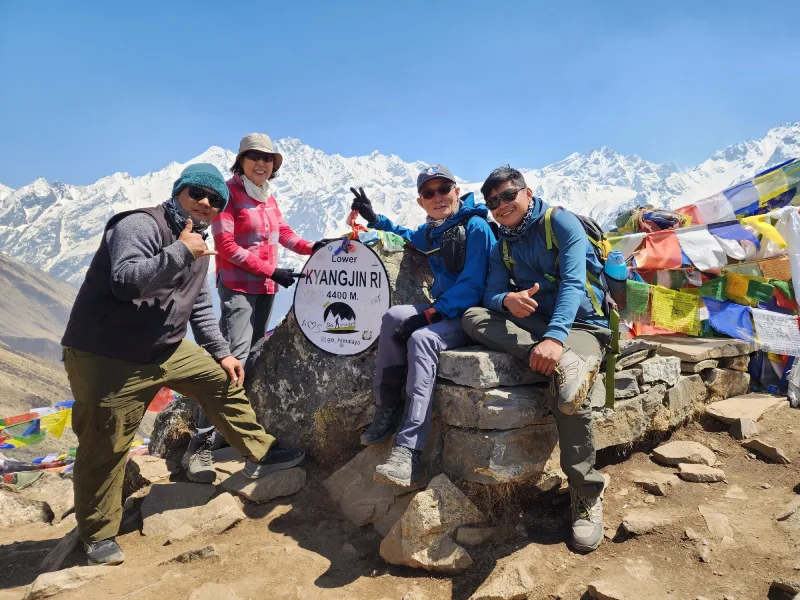
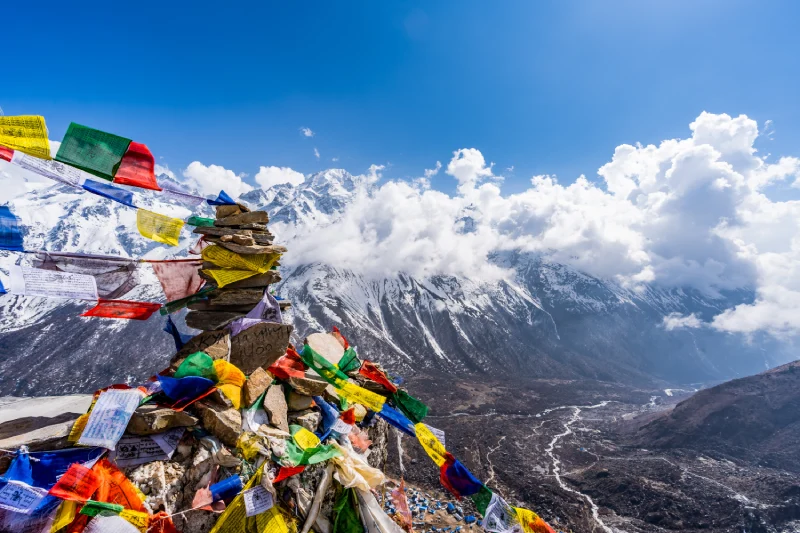
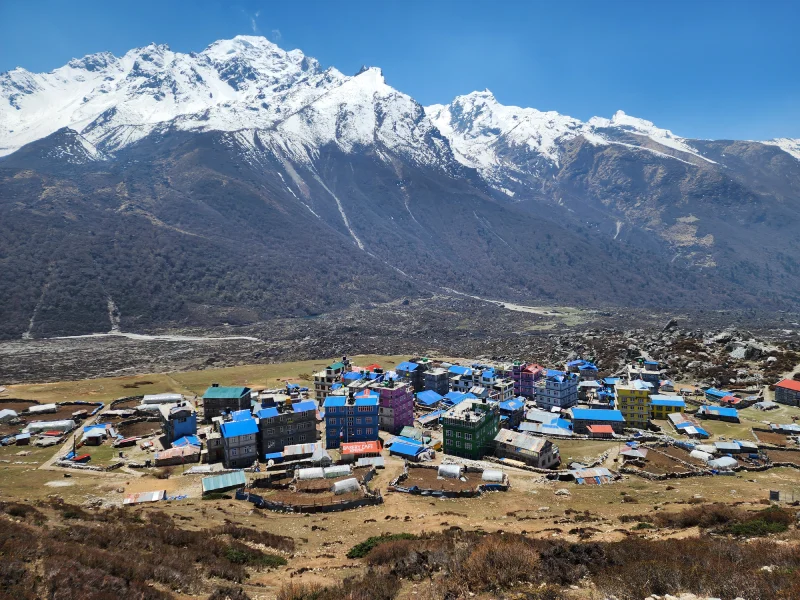
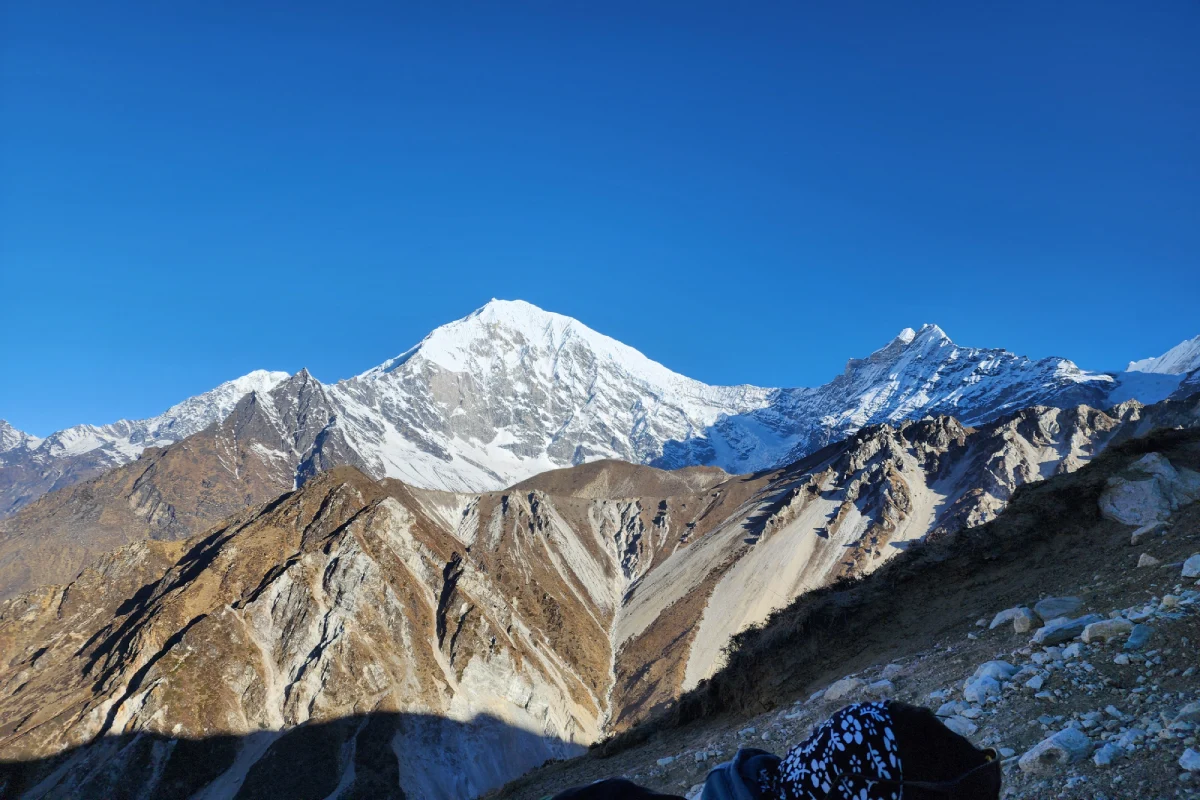
The next destination is the Kyanjin Gompa (3,870m), which is not so tough of a trek in terms of terrain as the previous sections of the trip. The Tamang village with its monastery and cheese factory is your base for the most memorable trekking day that involves climbing to Kyanjin Ri (4,773m), where the route will become steep and rocky, but offering you the chance of viewing Langtang Lirung’s glacier and the panorama of peaks such as Naya Kanga, Gangchempo and Dorje Lakpa.
The descending route after reaching the top follows the same route all the way down, first from Kyanjin Gompa to the Lama Hotel all the way down to Syabrubesi and eventually returning to Kathmandu. You will see all the same forests, villages and mani walls as you did during your ascent but this time around, feeling satisfied after climbing the highest point of your trekking adventure.
Kyanjin Ri Trek Difficult
Kyanjin Ri trek is moderately difficult, consisting of 5-6 hours of walking most days, with a couple of easy days in between around Kyanjin Gompa. The difficulty lies in the elevation gain – 1,550m to 4,773m within several days which is not an easy task.
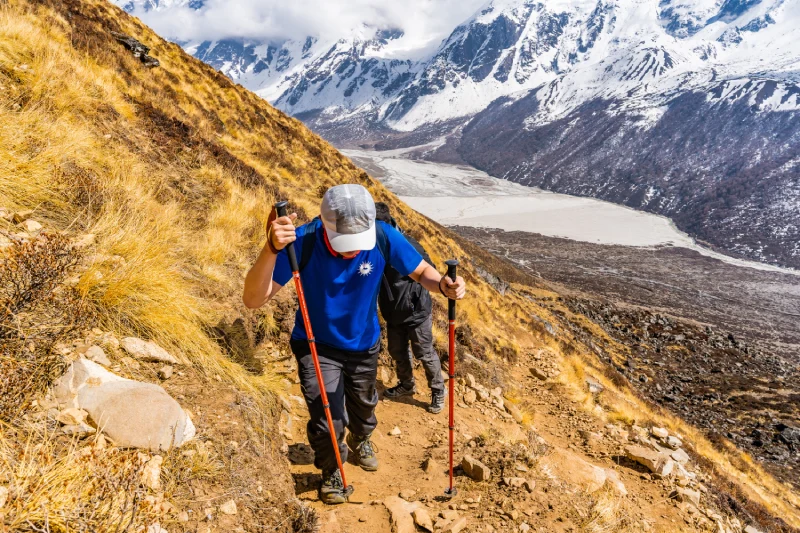
Physical effort involved constant ascending and descending depending on where you are. The climb to the summit is the most difficult part of the trekking itinerary because of its narrow path covered with small stones and large boulders leading from Kyanjin Gompa to Kyanjin Ri.
Trail conditions change with the time of the year: forest trails lower in altitude may get muddy or slippery after rains, while the path up to Kyanjin Ri may get snow or icy in winter. It doesn’t require any climbing skills.
Altitude plays the biggest role, as this trek covers a 3,000m elevation very fast. It is acclimatization and a well-planned itinerary that make the difference than physical condition in preventing altitude sickness.
In terms of preparing for this trip, regular walking, hiking, or cardio exercises prior to the trek are definitely worth it, especially for all those difficult parts and day 6 downhill trek.
Best Time for Kyanjin Ri Trek
Spring (March to May)
Spring is very popular season for Kyanjin Ri Trekking. The lower altitude parts of the trail will have blooming rhododendron forests, pleasant weather for trekking and good mountain views, especially in the mornings when there is no cloud near Kyanjin Gompa and Kyanjin Ri.
Autumn (September to November)
Autumn is usually the most promising season for mountain views. There are often sunny days without unstable weather, and the trail conditions are dry and strong. Moreover, this is the season when the most teahouse trekkers visit the trail, especially in October.
Winter (December to February)
In winter, the temperature is much lower and there is some possibility of snow in high altitudes, including near Kyanjin Gompa and near Kyanjin Ri summit. The days are usually clear and cold days, which means great views, although the climb needs to be done with extra preparation and snow or ice on the trail may make it more difficult at the last part of the trail.
Monsoon (June to August)
The monsoon season is the least favorable time for the trek. It rains often, the skies are cloudy with clouds covering the mountains that you want to see, and the low-level forests between Syabrubesi and Lama Hotel become muddy and slippery with leeches.
By far Spring and autumn seasons are the best seasons for the Kyanjin Ri Trek, while winter is for those who wants quiet paths more than comfort.
Preparation for the Kyanjin Ri Trek
Preparation for the Kyanjin Ri Trek begins with general fitness level. Start preparing yourself a month or two before starting this trek, focusing on walking, hiking or cardio session to help cope with the tough summit and descent. Fitness will allow you to get through the consecutive days of walking easily.
Equipment and gear play an equally crucial role when preparing for this trek. It is necessary to have comfortable boots, warm clothing for cool nights in teahouse, and a reliable rain jacket. The most common mistake that you need to avoid is testing your new boots only when the trek starts. You need to wear the boot week before the start of the trek which allow the boots to comfortably shape according to your feet’s as new boots can give you blisters. Trekking poles may also be useful, especially when descending on the Kyanjin Ri Trek itinerary.
Other important things to prepare before going on the Kyan Ri Trek includes your passport, passport-sized photos, valid Nepal visa, and travel insurance that provides coverage for high-altitude trekking. Epic Trek Nepal can arrange the necessary permits, such as the Langtang National Park Entry Permit and TIMS card but getting your own documents ready first makes the process easier.
Altitude preparation is not about physical training but more about mentality because the key idea here is to maintain a comfortable pace, hydrating yourself and follow your guide’s instruction. The quick elevation gain of Kyanjin Ri Trekking means that it is important to come with a proper mentality than being physically fit.
Last but not least, it is better to make arrangements in advance to handle all necessary permits, insurance, and equipment in time.
Visa And Permit Requirement
For the Kyanjin Ri Trek, trekkers need to obtain the entry visa for Nepal which can be obtained in the Tribhuvan International Airport in Kathmandu. After arriving in Nepal, there are two kinds of permits that are needed for this trail only:
Langtang National Park Entry Permit: This permit is necessary because the entire trail, including Kyanjin Gompa and Kyanjin Ri lies in the Langtang National Park. This permit must be shown at certain stages of the trek, such as near Dhunche and other places on the trek.
Tims Card (Trekkers’ Information Management System): a registration document that helps tracking the trekkers during the trek.
We Epic Trek Nepal can organize both these permits for you during your Kyanjin Ri Trek package along with a licensed guide, which means you won’t have to make separate trips to the permit office to get them done. Processing of your permits will require the original copy of your passport, photocopies of your passport and visa, and 2 passport size photographs. It’s better if you already have these things ready when you go trekking.
Accommodation, Food and Drinking Water during Kyanjin Ri Trek
The accommodation available on the Kyanjin Ri Trek is only in tea house, which are family run businesses located all the way from Syabrubesi up to Kyanjin Gompa. This teahouse provides basic twin sharing rooms with warm blankets. In lower altitude, you can find private bathrooms but in higher altitude most bathroom will be shared and not private in place like Lama Hotel and Kyanjin Gompa. There won’t be any camping on this trek because there will be a teahouse option at each stop.
The food during the entire trip is quite similar another trek. Rice and lentil soup with some vegetables and sometimes pickles form the basic food here known as “dal bhat” and are readily available with plenty of refills. In addition, there are noodles, soups and other food items in high altitude. The breakfast items will be of porridge, eggs, pancakes, and Tibetan breads. Vegetarian food is easily available through the route, but the variety will gradually decline with increasing altitude, so you will have lesser variety of menu at Kyanjin Gompa than that of the other places.
For water, you can buy the bottles from the teahouse, but the cost increases with altitude. Alternatively, you can go for water purification tablets or filters which will also be economical and environmentally friendly too.
Language and Communication
The official language of Nepal is Nepali, but you will find that the Tamang language is also used within the communities located along the Kyanjin Ri Trek because Tamangs form a very significant part of the population in the Langtang area.
When staying in teahouses along the trail, you can communicate with the people there in basic English. This can become more difficult as you go up and the village get more remote. Learning some basic Nepali language such as “namaste” (hello) and “dhanyabad” (thank you) will help you a lot along the trail.
You will be communicating with your guide, the only mode of communication for you throughout the Kyanjin Ri Trek itinerary, not only for translating, but for helping you get through checkpoints, book accommodations in teahouses, and familiarize you with the local customs as you trek through the villages. Our guide has been working in this industry for decades and if you have any problem, he will help translate any language barrier that arises with teahouse owners and porters, if they don’t speak English.
The signboards along the trekking route are usually written in both English and Nepali at all important junctions and checkpoints, but they are not necessarily found everywhere, and this is yet another reason why having an experienced guide with you is of genuine importance and not just another part of the Kyanjin Ri Trekking process. In general, communication is not an issue that concerns you as a trekker on the Kyanjin Ri Trekking trail.
Travel Insurance
Travel insurance is very important when going on Kyanjin Ri Trek. Due to high altitude which can go up to almost 4,773 m, your insurance policy must cover for high altitude trekking. Many policies do not have coverage above 3,000 to 4,000 meters, so read through the terms and conditions before buying the insurance.
You should ensure that your insurance policy also includes coverage for any emergency medical costs, trip cancellation, interruption, and emergency evacuation by helicopter. If you get into a medical emergency situation, getting yourself evacuated by helicopter can be costly if you do not have travel insurance. It is one of the safest ways of getting the trekker to lower altitude in case of emergency.
While selecting a policy, make sure that it includes climbing up to 5,000m, which leaves some safety margins regarding the height of Kyanjin Ri and allows including optional trips, such as Tserko Ri, for extended Kyanjin Ri Trek packages.
Get the insurance before starting the trip and have a printed or electronic copy along with the contact number of the insurer during the whole trek. Epic Trek Nepal can help you to choose the right policy while your travel insurance is to be arranged separately from other booking services.





 Share
Share