Arun Valley to Everest Base Camp Trek Difficulty
This Arun Valley to Everest Base Camp trek is quite difficult and tough far more compared to the traditional Everest Base Camp Trekking route. Longer itinerary on rough and remote areas with long walking hours will definitely be challenging experience than just a regular trek.
You need to be prepared to spend 5 to 7 hours per day walking, sometimes even longer on such parts of the route as Salpa Phedi to Sanam. Trekking routes can include muddy jungle trails, so endurance is very important, not the speed of trekking.
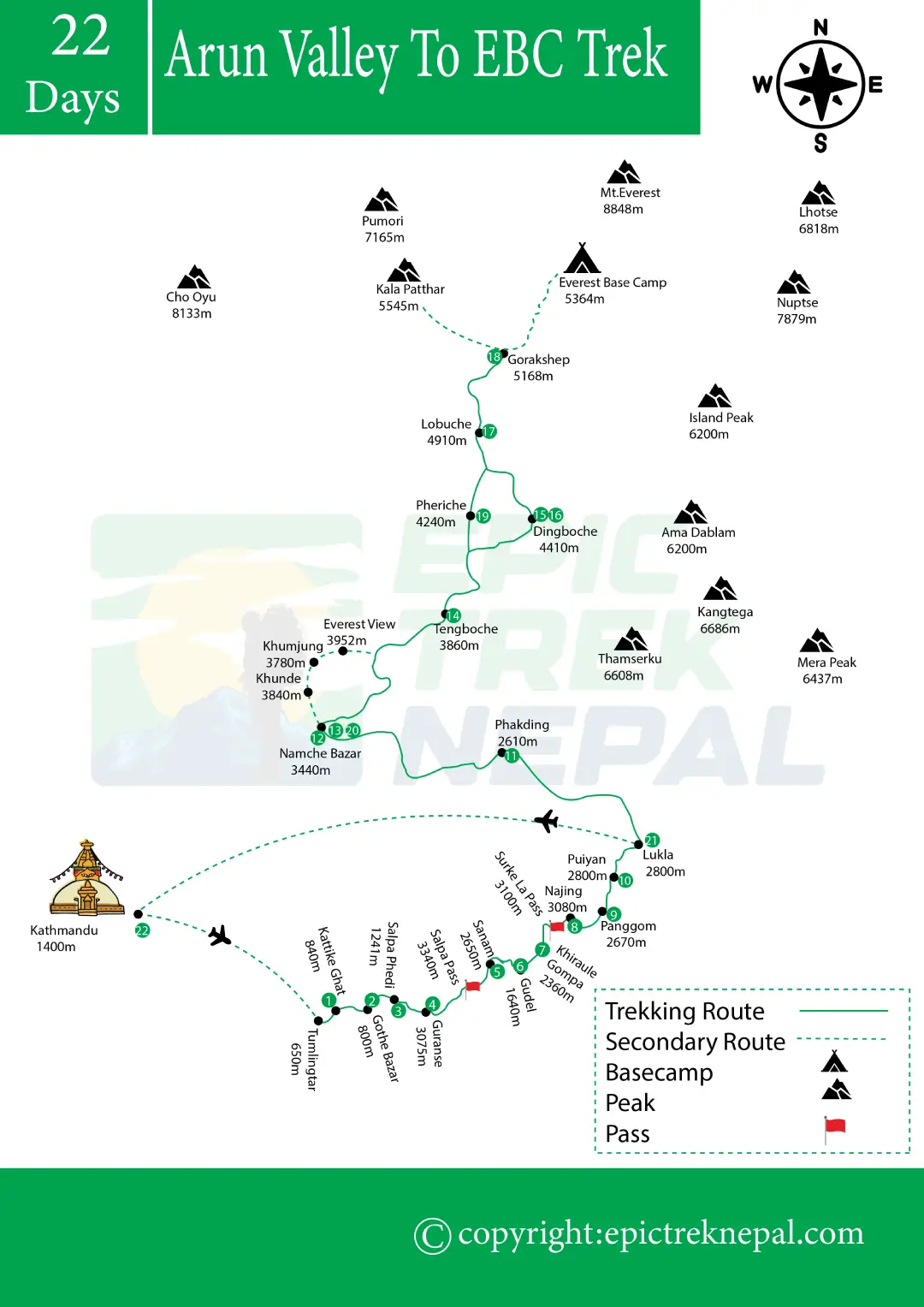
Initially, this trek requires lots of ups and downs in river valleys and forests. Crossing the passes such as Salpa Bhanjyang and Surkie pass includes long and steep climbs, after which there are long and steep descends.
Physical condition should be good in order to maintain while trekking. Cardiovascular exercise, hiking and some strength training for several months before the expedition will help a lot. There is no mountaineering skills required but good endurance is necessary.
Experience in trekking is important, although it is not necessary. Trekkers who have done a smaller trekking adventure in Nepal, such as Poon Hill or the usual EBC trekking, can undertake this Arun Valley to Everest Base Camp trek with relative ease.
The trek is suitable for physically fit trekkers who want something beyond the normal Everest trek. The trek is not suitable for first-time trekkers or those who have problems with remoteness, limited facilities, and several days away from city life.
If a person is fit and patient and also want to know about remote Nepal, then this trek will pay back all his efforts by offering an experience which he will never forget.
Best Time for Arun Valley Everest Base Camp Trek
Spring (March to May)
One of the best seasons to go trekking is spring. There will be rhododendron forests in lower valleys, moderate temperatures and clear mountain scenery when you are at higher elevation.
Autumn (September to November)
Autumn is when you get the most stable weather of all. The sky remains clear, visibility will be good during the entire time, and temperature will not affect your walking experience.
Winter (December to February)
During winter, the trail becomes less crowded, and there is good visibility around the mountains, but the problem is that the temperature will be cold, especially after Namche Bazaar. There could be some snowfall on some high passes, and you may find the teahouses not so welcoming.
Monsoon (June to August)
The monsoon is the least recommended for any trekking in Nepal. In this season, there are unpredictable rainfall, wet and slippery routes, leeches all over the forest and clouds covering the mountain views.
Permits Required
This Arun Valley Everest Base Camp Trek itinerary goes through two regions, which mean you will also need permits to travel across 2 different regions. Here are some of the permits:
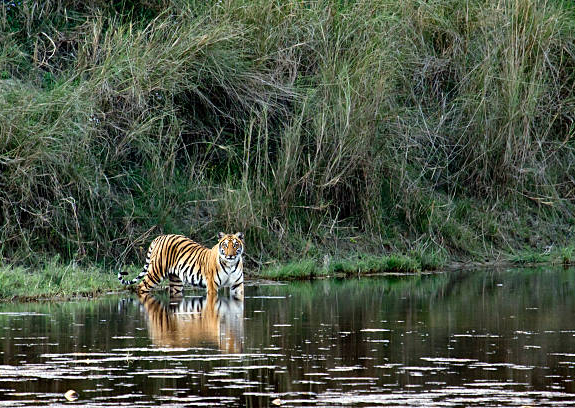
The Makalu Barun National Park Permit is required for the first part of the trek, where you trek through this national park with a variety of forest and wildlife. It is designed to conserve the natural biodiversity of this region which is considered to be one of the most biodiverse regions of Nepal.
As soon as the trail takes a turn towards the Khumbu region, you will have to obtain the Sagarmatha National Park Entry Permit that will allow you access from Jorsalle till Everest Base Camp, which includes Namche Bazaar, Tengboche, and many other places.
Khumbu Pasang Lhamu Rural Municipality Permit is another permit which has replaced the old TIMS card for this particular region. It is an updated version of the earlier TIMS card in this region and is checked at designated entry points throughout the journey, including Lukla.
Who arranges this permit
Both of these permits are arranged as part of the trekking itinerary by Epic Trek Nepal. Trekkers do not have to visit any permit issuing agency; all the documentation will be organized before the trek.
What trekkers need to provide
For processing the permits, trekkers will normally have to submit:
- A valid passport
- A couple of passport size pictures
- Passport information
Please note that the requirements for permits and fees may change, which is why it may be useful to clarify the latest rules with Epic Trek Nepal prior to the trip.
Culture and Local Villages
Other than majestic mountains and beautiful landscapes, culture is also the highlight of Arun Valley to Everest Base Camp Trek. This trek is one of the few routes in Nepal which offers such many distinct cultures within the same trek.
The lower part of the valley is mostly Rai community, which is famous for its agriculture and folk music tradition and their hospitality. Villages such as Gudel and Sanam follow to this lifestyle shaped by agriculture and cultural traditions. In the nearby areas there are Limbu community, another indigenous community with their own language and festivals.
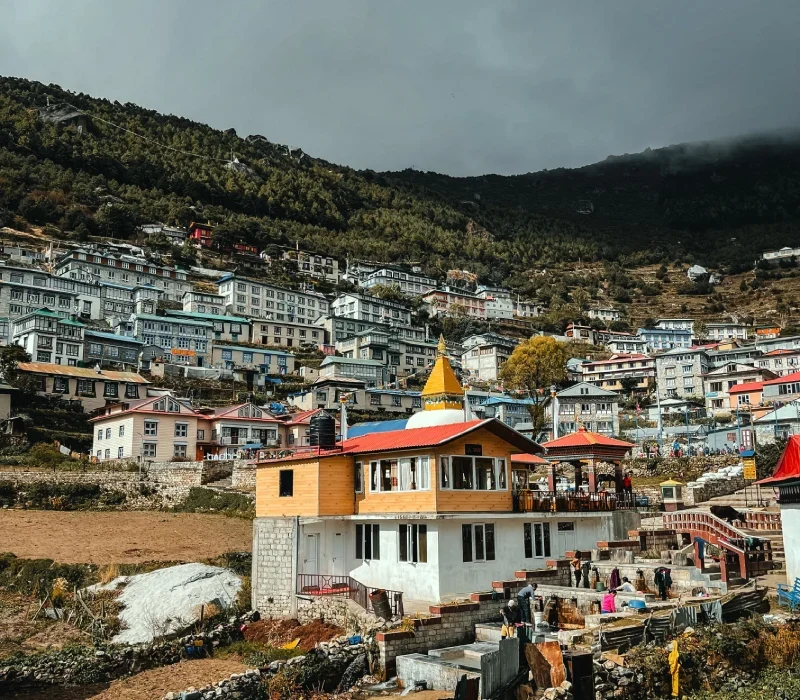
Finally, once the trail reaches the Khumbu region, Sherpa culture dominates entirely. Namche Bazaar, Tengboche and Dingboche show traditions of Sherpa culture influenced by Buddhism and mountaineering.
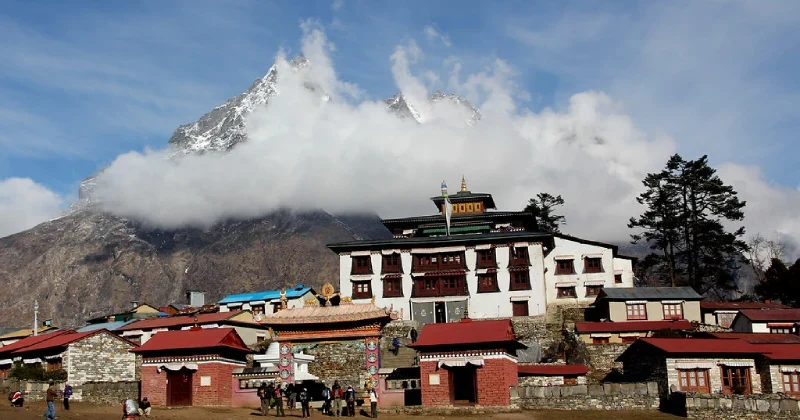
As you progress on the Arun Valley to Everest Base Camp trek, you will encounter various monasteries, the most famous being the Tengboche Monastery, where the monks conduct prayers from time to time. You can visit some small monasteries called gompas around Kiraunle village and others.
One thing that makes this route unique is the warm hospitality that you will receive throughout. The people at teahouses, porters, and locals do their best to make sure the visitors feel at home and involve them in cultural practices without being asked.
You will be able to witness a very traditional life in the mountains, as farming on terraces, yak herding, and other practices remain unaffected by tourism in other places.
Accommodation and Food on the Arun Valley to Everest Base Camp Trek
Accommodation on this trek varies greatly as you progress from the Arun Valley to the higher Khumbu region, so you should be prepared for difficult types of accommodation in different places.
In the lower valley of Arun Valley, that is, from Tumlingtar via Gudel and Sanam, you will sleep in local teahouse run by local families. It is very basic: just a bed and a blanket but offers very authentic and real mountain lifestyle experience. Bathrooms are also shared, and electricity is limited.
However, when you reach places such as Puiyan and Phakding, you can expect proper teahouses with facilities getting better as you progress to Namche Bazaar where you will have private rooms, hot showers, and Wi-Fi at a fee.
Meals will also go in the same way. In the lower valley, you can expect regular Nepalese food such as dal bhat, noodles, and vegetables cooked fresh. The portions are very big and refills of dal bhat are free.
Further up in Khumbu, the Western food becomes increasingly more abundant. More options include pizza, pasta, pancakes, and even bakery products in places such as Namche and Tengboche, although prices climb higher as well.
As for drinking water, there are bottles of water everywhere, although they become costly and contribute to the plastic waste problem higher up in the mountains. It’s better to use water purification tablets or filters, filling water from the tea houses which boil their water.
In general, food and accommodations become increasingly better the closer one gets to Namche and remain reasonably good until the end of the Everest area. The Arun valley trek requires more flexibility and respect for rural teahouse experience.
Altitude sickness and Acclimatization
Altitude sickness could be one of the serious problems when trekking towards Everest Base Camp, and this is not the exception for this trip after you reach over 3,000 meters. It is important to be familiar with symptoms and prevention techniques in order to have a pleasant trip.
The most frequent symptoms are headache, feeling nauseous, lightheadedness, and difficulty breathing. The mild symptoms can appear to everyone, but more serious symptoms shouldn’t be ignored, especially the disorientation and shortness of breath.
In order to prevent altitude sickness, it is important to move at your own pace and walk slowly. Also, it is not advisable to run from one village to another and ignore your body signals in order to match the group pace.
Fortunately, this particular Arun Valley Everest Base Camp Trek itinerary route has a big benefit in this regard. Since you will take several days to climb up to Namche from Lukla, your body gets used to the increasing altitude, while other trekkers fly in there.
In-built acclimatization days at Namche Bazaar and Dingboche helps more for your body to acclimatize before climbing further up. During these days, take the time for short hikes instead of staying inactive since exercise acclimatizes faster than doing nothing.
Another important aspect is proper hydration. Make sure you drink plenty of water daily because dehydration can trigger similar symptoms. The most important thing is not to forget the importance of gradual ascent. Don’t try to ascend too high and too quickly and remember the golden rule that is to descend few hundred meters when you feel the altitude sickness.
Travel Insurance
Travel insurance is not an option when it comes to such trek like Arun Valley to Everest Base Camp Trek which combines two different regions. It is important to read your insurance coverage details as regular travel insurance does not typically include coverage for trekking above particular altitudes. Your insurance should cover you for trekking up to 5,500 meters since Kala Patthar and Everest Base Camp are both above 5,000 meters.
Coverage for high-altitude emergency helicopter evacuation is the most important. In case of any emergencies when you are on a remote area of the Arun Valley or around Gorak Shep, helicopter evacuation will be your only hope as the cost can be very high without the support of travel insurance.
Apart from evacuation, make sure it cover hospitalization costs, both in Nepal and at your own county. You may also want to get extra coverage for trip cancellations, delayed flights due to the weather-sensitive Lukla airport and for lost luggage.





 Share
Share