Australian Camp Trek
80 reviews in Tripadvisor
Trip Duration
2 DaysDestination
NepalMax. Altitude
2,060 m.Trip Difficulty
EasyGroup Size
1-12Transportation
Private Vehicle/JeepAccommodation
Tea houseActivity
TrekkingMeals
All InclusiveStart / End
PokharaRegion
AnnapurnaBest Season
Spring & Autumn
Need Help? Talk to Expert
+977 9764792172Trip Overview
Nepal is a country that offers lots of secret trekking route, but very few of them provides you with such an easy opportunity to have such beautiful views without spending weeks in high altitude. The Australian Camp Trek is exactly the one, which sits quietly in the Annapurna region, close to the city of Pokhara.
The very name of the trek has originated thanks to the Australian trekkers who visited the place years ago and were attracted by the meadows and mountain panoramas. Somehow, the same charm still works on people all over the world.
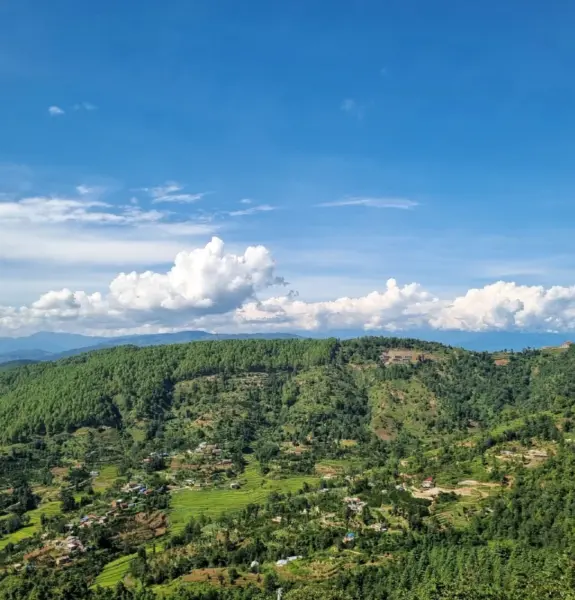
You begin your walk through small quiet villages, past the terrace’s fields and rhododendron forests. Every twist and turn in the path provide a new experience such as seeing people working on the fields or kids waving to you or cloud slowly moving across the distant peak.
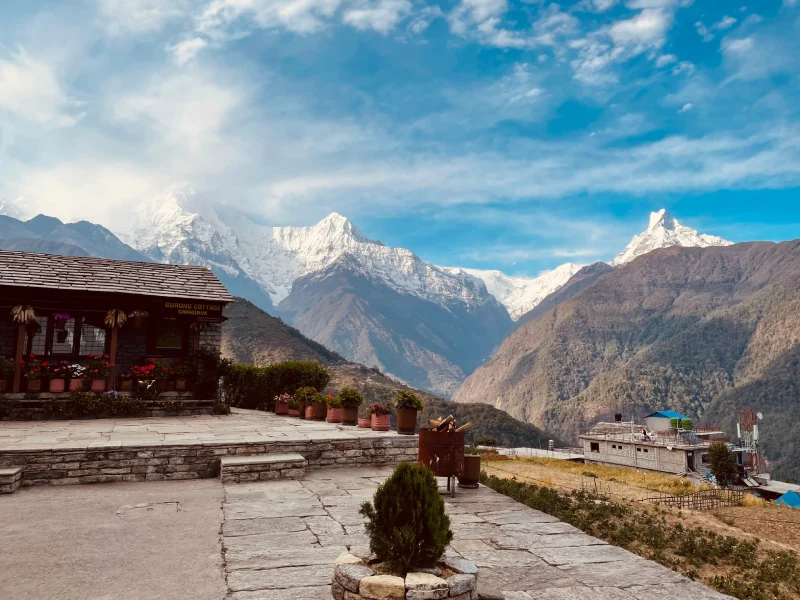
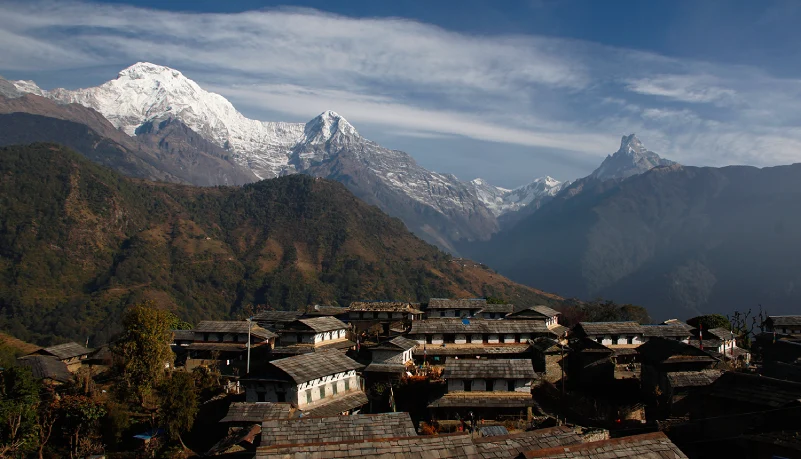
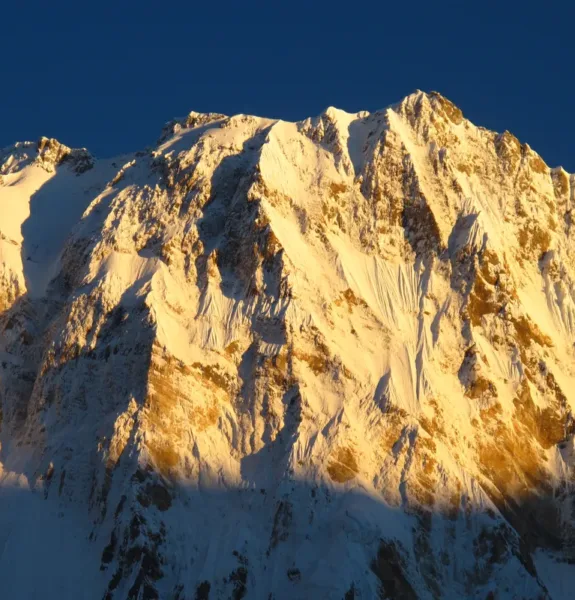
The real reward of Australian Camp Trek is at the end. The peak of Annapurna South, Hiunchiuli and Machhapuchhre in front of your eyes that seem almost unreal. You feel like the sky is just a few feet away above your head, as if it were just within your reach. And if you catch it on clear morning with sunrise; you will witness an absolutely sight of the golden mountain peak against the vast sky.
But what truly sets apart the trek is its combination. You will enjoy the beauty of the mountain, culture, as well physically challenging enough to feel like an accomplishment. The Australian Camp Trek Itinerary is perfect for family vacation, ideal for the first ever experience in trekking or a small adventure for experienced trekker.
Many tourists choose the Australian Camp 2 Days Trek simply because it fits well into the short holiday plan. The Australian Camp Trek Itinerary is ideal for those tourists who do not have too much time on hand but desire to have an authentic experience of the Himalayas
Australian Camp Trek Highlight
It is amazing how much beauty the Australian Camp Trek offers is such a short time. The following is what makes this trek unique and unforgettable.
Panoramic views of mountains
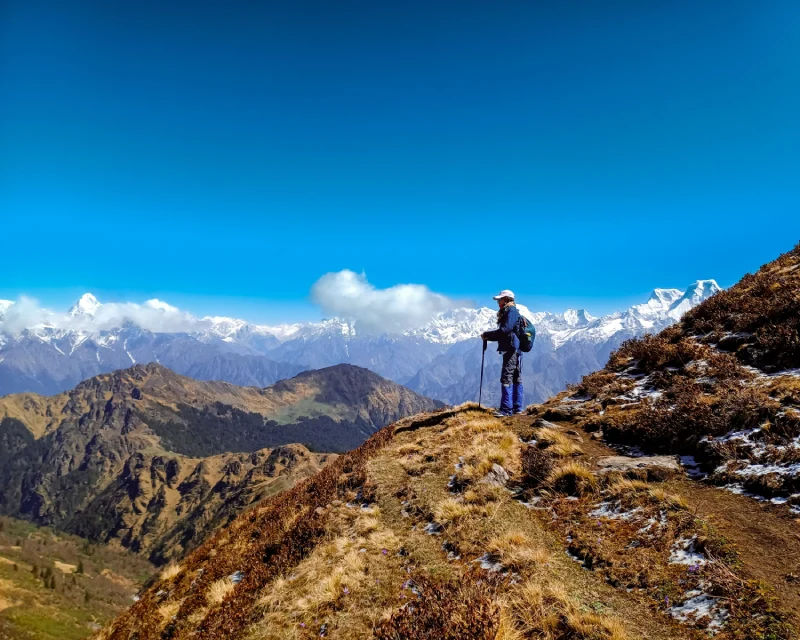
During the trek you can see several peaks from one panoramic view – Annapurna South, Machhapuchhre (Fishtail), Dhaulagiri, and Hiunchuli. Not all short treks can offer such a combination of peaks in their itinerary.
Rhododendron forests
The path itself crosses through several rhododendron forests and if you choose the right time, it will be an absolutely breathtaking view. All the paths will be decorated with pink and red blossoms.
Traditional Gurung villages
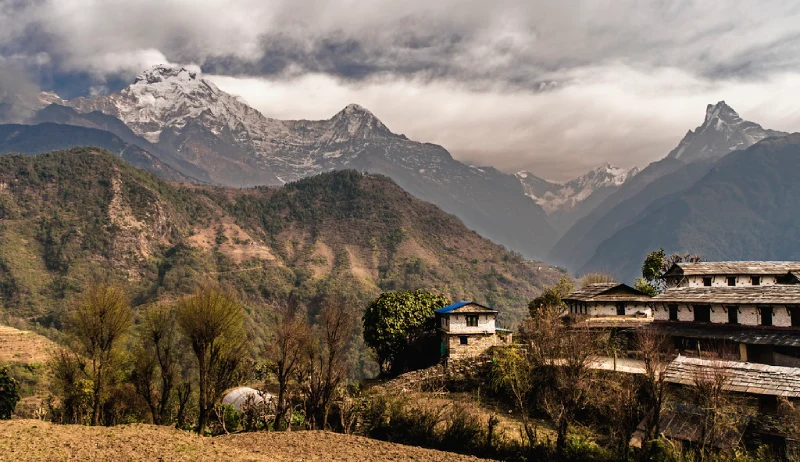
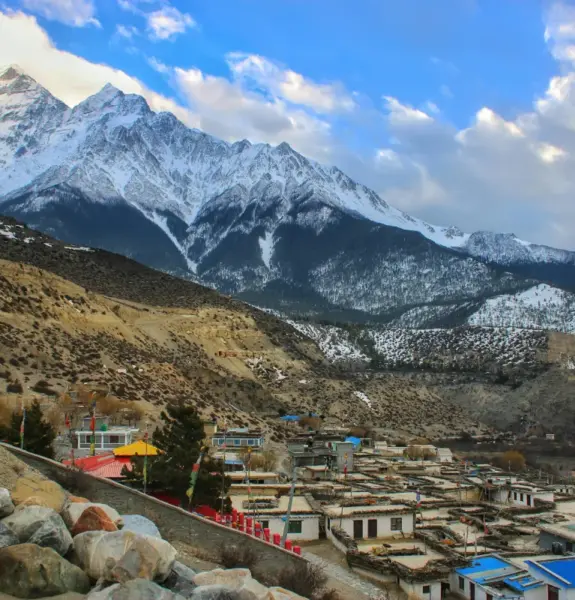
On this trail, there are some authentic Gurung villages you can see on the way. You will be able to admire stone houses and colorful prayer flags flying in the air.
Sunrise and Sunset views
The morning sunrise here are very similar to other popular sunrise viewing spots with the rising run gradually lighting up the entire mountain range one after another.
Perfect for Beginners
It is suitable for everybody, even people who have never done hiking in their lives. The slopes are gentle and walking hours per day short enough to make it doable for families and leisure travelers too.
All highlights fit easily in the Australian Camp 2 Days Trek as well, and you don’t have to sacrifice anything since you can have it all here – perfect picture of mountains or simply get away from everything.
Photo Gallery & Video Gallery
Australian Camp Trek - Distance, Duration, and Altitude
| Trekking Route | Distance (Kilometers) | Duration (Hours) | Altitude (Meters) |
|---|---|---|---|
| Drive from Pokhara to Kande and Trek to Australian Camp | 9 KM | Trek (5 to 6 hours) | 2060 m. |
| Sunrise View and Trek Down to Dhampus Phedi - Return to Pokhara | 8 KM | Trek (4 to 5 hours) | 2060 m. |
Itinerary of Australian Camp Trek
Day 1: Drive from Pokhara to Kande and Trek to Australian Camp
You start your journey quite early in the morning after breakfast at Pokhara. Your guide will pick you up in a private vehicle or local jeep for traveling to Kande, which is about one hour away through hilly road with open valley.
After reaching Kande, it will be your starting point on the walk. The first section will be a fairly steep climb. Though it is not a difficult walk, you will start to feel its impact after one hour of walking.
As you climb the trail, you come across many forests of oak and rhododendrons with some openings which give you a view of the terraced hills of the valleys down below. There are many resting areas with teahouses along the way where you can have some tea.
When you are moving further, the landscape becomes more impressive. When you arrive at Australian Camp, Annapurna South and Hiunchuli stand before your eyes, usually being partially covered with clouds in the afternoon time. You stay overnight in a teahouse and spend your time having dinner and watching the view offered by the weather conditions.
Activity: Trek (5 to 6 hours)
Max. Altitude: 2060m./6,759ft.
Meal: Breakfast, Lunch, Dinner
Accommodation: Tea house
Day 2: Sunrise View and Trek Down to Dhampus Phedi - Return to Pokhara
Today journey begins even before the sun rises. You will wake up earl 5 Am, put on your clothes and walk toward your destination. This is the main highlight of the trek when the peak of Machhapuchhre get lit with first ray of sunrise, then gradually Annapurna South, Hiunchuli and all other peaks turning into golden color. This will be very worth your time and effort you make to reach here.
After this wonderful experience, you will come back to the teahouse and have your breakfast and begin your descent journey back to Dhampus Phedi.
This is a relatively easy walk for the most part of the time with an interesting landscape of green meadows, occasional settlements and woods, which look totally different from what you saw while going up there.
Finally, you’ll be transferred to Pokhara via a vehicle, where you are expected to arrive early in the afternoon and complete your trek. This leaves you with plenty of time for your leisure.
Activity: Trek (4 to 5 hours)
Max. Altitude: 2060m./6,759ft.
Meal: Breakfast, Lunch, Dinner
Accommodation: Tea house
If you are traveling in a private group, we can arrange a fully customized trip based on your preferences, group size, and travel dates, available any day you choose.
Includes/Excludes
What is included?
- Airport Pick up and drop off
- All ground transportation from Pokhara to Kande and Dhampus Phedi to Kathmandu (Private vehicle or Jeep)
- All necessary permit (ACAP and Tims Card)
- Accommodation in comfortable twin sharing teahouses for the duration of the trek
- Three meals a day during the trek (breakfast, lunch and dinner)
- Basic first aid kit is typically provided.
- Detailed map of the trekking route is usually included.
- Equipment’s (Duffle Bag, Sleeping Bag if necessary)
- A guide who speaks English and is experienced in trekking. This includes their salary, insurance, equipment, food, and accommodation. For a single trekker, a guide himself will carry up to 10 kg of their weight.
What is not included?
- International airfares to and from Nepal a
- Travel insurance that covers emergency rescue, evacuation, and health-related issues are not included
- Extra expenses like meal, drinks, snack, recharging device, hot water showers, Wi-Fi, washing machine, laundry and other personal expenditure are not included.
- Entry visa fees to Nepal are not included.
- Extra expense of accommodation and meals will not be included in the package.
- Emergency evacuation and rescue related expenses are not included.
- Trekking gears such as hiking shoes, down jackets, trekking pole and others are not included in this package.
- Guide/Porter tips are not included and will depend on you.
- This service is not included in the package but can be arranged upon request. With the help of porter service, 25 kgs (shared by two trekkers) of luggage will be carried.
Trip Information
Route Overview
Australian Camp Trek begins with an initial journey from Pokhara to Kande, which is a tiny village located right at the foot of the trekking trail. Then the trail goes on rising from the valley and up into the hills above.
The trekking route takes you through lush forest and the majority of the journey is shaded by oak and rhododendron trees. On your way you can see small teahouses along the path, occasionally some mule trains and some terraces carved into the hillsides.
The higher up you climb, the more views of the Annapurna range you can catch. There are many local Gurung villages along the way for you to get a taste of what life is like up here.
Getting to Australian Camp seems to be something like reaching a natural viewing point. The mountain range of Annapurna South, Hiunchuli, and Machhapuchhre can be seen stretching out far on the horizon, sometimes covered in clouds of early morning that enhance the beauty of the view.
Further on, the track descends back to Dhampus Phedi, passing through the fields and small stretches of forests. The descent is not difficult for the joints due to its gradual incline, but it provides enough fresh mountain air and beautiful scenery to enjoy.
It makes a great choice for a trek to Australian Camp, because the terrain does not require any additional efforts from trekkers. All parts of this Australian Camp Itinerary include the nature, cultural values, and comfortable trekking experience in one.
Australian Camp Trek Difficulty
Australian Camp Trek classifies as one of the easiest treks that you will find in the whole Annapurna region. People who have basic fitness can easily complete this trek, even if it is their first time experience.
There is no need of intensive preparation when it comes to this trek. About two weeks of steady walking, or some jogging/cardio exercise, will help prepare the body well enough for the trip. The trail itself is quite east, and hence an average level of fitness is enough.
The distance of walking per day is relatively short. On average, you may have to walk for around 4 to 6 hours per day, with easy uphill’s and downhills. There’s nothing difficult about this trek, and hence you can take a leisurely pace throughout.
The altitude sickness won’t be an issue during this trek since the highest point in the entire trail is only 2,060 meter high. With such a low altitude, you can undertake this trek without any problem throughout the year because of no altitude sickness worries.
This trek is best suited for those who are beginners in trekking, families with kids will not have any problems in walking this distance while even old people will do this easily. This short duration and easy trail are what makes it one of the easiest treks to be undertaken close to Pokhara.
Due to its simplicity, Australian Camp 2 Days Trek attracts almost everybody right from a beginner in trekking to people with experience and want a short trek.
Best Time for Australian Camp Trek
Timing does play an important role when it comes to enjoying the Australian Camp Trek. Every season is different from each other and adds its own unique characteristic to this trail.
Sprin (March to May)
Spring is the best season of the year, where rhododendron forests are in full bloom and everything around seem very colorful with red, white and pink color which make the pathways very beautiful to walk. Also, this time has a clear sky, which means that there will be excellent mountain visibility.
Autumn (September to November)
Autumn is another excellent season. During this time all the dust and clouds are cleared by the monsoon rain, and you can enjoy crystal clear mountain views with mild temperatures for your day trek.
Winter (December to February)
The weather in winter is very cold, especially in the early morning and may have a slight touch of forest around the upper trail. But the daytime will mostly be sunny, and if you wear warmer clothes, you will be able to have great view of mountain.
Monsoon (June to August)
When it comes to monsoon, there are mostly rainy days with slippery trails. The cloud covers the view of mountains and there will be leeches in the forest area as well. This is not the best time for trekking unless you are okay with being wet.
In summary, the best times for trekking in Australian Camp 2 Days are spring and autumn because there are clear skies, safe trails, and good temperatures for this wonderful adventure.
Permit Required
There are mainly two important permits that you will need to start your Australian Camp Trek. This permit not only ensure the safety of trekkers, but this also helps maintain the trail and support local conservation.
The Annapurna Conservation Area Permit (ACAP) is your major permit. It is the main requisite for the trek, and it provides you entry to the Annapurna Conservation Area that comprises the entire trekking area.
TIMS Card (Trekkers’ Information Management System) may also be required, based on the latest requirements set by the regulations. This is basically used for tracking the movements of trekkers and ensures security on the way.
Both require your passport information along with two passport-sized photos. The process is quite fast, taking few days because Epic Trek Nepal manage everything.
Accommodation and Meals
Australian Camp Trek doesn’t mean you have sacrifice comforts like those in remote area trekking. There are some very comfortable teahouses along the trek route that make it easy for you.
Teahouse experience
All the teahouses along this route provide very basic but comfortable accommodation facilities. Most the rooms have twin bed facilities with warm blankets and shared bathroom facilities. There are also some teahouses offering more luxury comfort with private rooms having bathrooms attached to them as well as the view of the mountains through the windows.
Food facilities on the trek
The food on this trek remains quite fulfilling and hearty. The local teahouses offer traditional Nepali Dal Bhat meals along with noodles, soups, momos, and continental foods such as pancakes or porridge. Tea and coffee are always available throughout the day.
For drinking water, you can obtain from pretty much any teahouses. The prices gradually increase the higher you go. But you can bring a reusable water bottle that uses either purification tablets or filter for less expense and less plastic waste produced on the way.
In general, the accommodation and meals on the Australian Camp itinerary remain fairly comfortable and clean. This allows trekkers to feel comfortable during the trekking trip to the Australian Camp.
Mobile Network, Internet and Charging Facilities
It is easy to maintain contact during Australian Camp Trek than other high altitude and remote trekking area as the signal varies slightly from one point to another.
Mobile Network
The telecom companies operating in Nepal such as NTC and NCELL provide reasonable coverage almost throughout the entire journey. The signal is slightly weaker around the Australian Camp but it’s possible to send a message or make a brief call from most areas.
Internet
Many teahouses offer Wi-Fi access for a small fee. The speed remains relatively low and unstable, so video calling or large file downloads cannot be expected. In addition, having a SIM card with mobile data becomes more practical than using teahouse Wi-Fi.
Charging Option
There are charging ports in teahouses usually situated in the dining room or by reception. Some of the teahouses may charge extra money for each charged device depending on the altitude of location. A power bank is a good option to consider for emergencies.
Travel Insurance
While the Australian Camp Trek may be relatively short and easy compared to the many other Himalayan trek out there, travel insurance is still one item you should not leave out on your list. Accident can happen anytime without any warning and having insurance make things so much easier in terms of dealing with them.
To start with, make sure that your insurance provides coverage for trekking up to an elevation of at least 3,000 meters, as some providers actually exclude it from the list of activities covered. However, as the highest point of this particular Australian Camp Trek Itinerary only reaches an elevation of 2,060 meters, your typical trekking insurance should cover you easily enough.
Medical insurance is very important. Make sure to get a plan which covers your evacuation costs since helicopter rescue will be very costly if something happens at higher elevations in the surrounding area.
Cancellations and delays are good too since the flights to Pokhara may be delayed because of weather conditions and insurance will cover the costs associated with such delays.
Make sure to carry both a soft and paper copy of your insurance policy since guides and agencies will require it before the trekking begins.
Insurance doesn’t cost much yet helps to avoid significant expenses. This will give you peace of mind during the Australian Camp Trek.
Frequently Asked Questions
The majority of trekkers complete this trek within only two days, which makes the Australian Camp 2 Days Trek one of the shortest treks around Pokhara.
The trail remains marked, but still, having a guide can be beneficial because he will give you additional protection and information about the area.
Yes, the trek is very good for traveling with children. It involves easy walking and short walking hours, which makes it great for kids older than 8 years old.
The spring (March-May) and autumn (September-November) provide you with the clearest skies and the most comfortable temperature. This is when you get to see the mountains in all its glory.
This trek is easy to moderate in level. It does not require any technical mountaineering skills and you will only need basic fitness levels.
Yes, most tour operators allow some flexibility. You could extend your itinerary by a few days, combine it with another nearby trek, or adjust your walk distance.
No, not really because the highest altitude on this trek will be around 2,060 meters high , which is much lower than what altitude sickness normally kicks in.
Some warm layered clothes, good trekking shoes, raincoat, water bottle, and a first aid kit.
Yes, you can. However, there will be fluctuations in signal strength. Most of the teahouses have Wi-Fi connections but still buying a SIM card gives more connectivity than the teahouses’ networks.
Yes, definitely you will need it. It gives a coverage for emergency medical services and evacuation services.
Trip Reviews

Need Help? Talk to Expert
+977 9764792172