TALK TO AN EXPERT +977-9764792172
Bhanubhakta Nachhiring
divider-down
duration-icon

Trip Duration

16 Days
destination

Destination

Nepal
max-alt-icon

Max. Altitude

5,160 m.
difficulty-icon

Trip Difficulty

Easy
group-size

Group Size

1-12
transportation

Transportation

Private Vehicle
accommodation

Accommodation

Hotel/Teahouse
activity-icon

Activity

Trekking
meals

Meals

All Inclusive
start_end

Start / End

Kathmandu
region

Region

Manaslu/Annapurna
best-season

Best Season

Spring & Autumn

Trip Overview

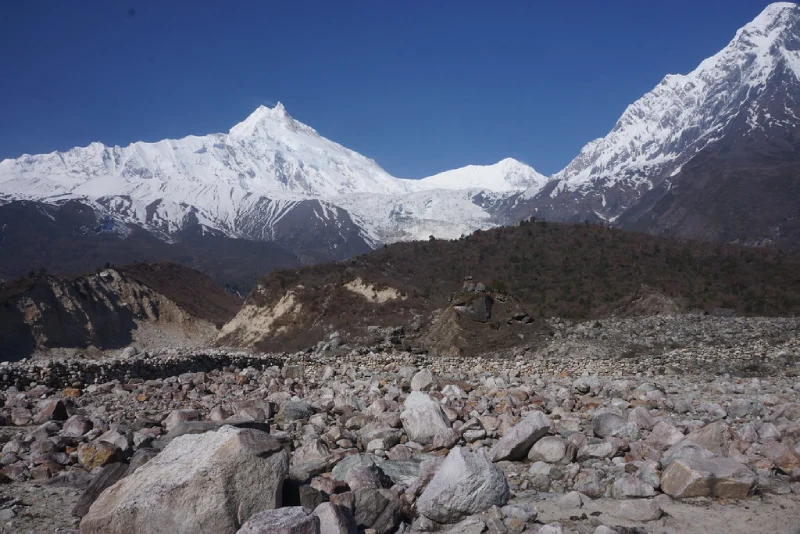
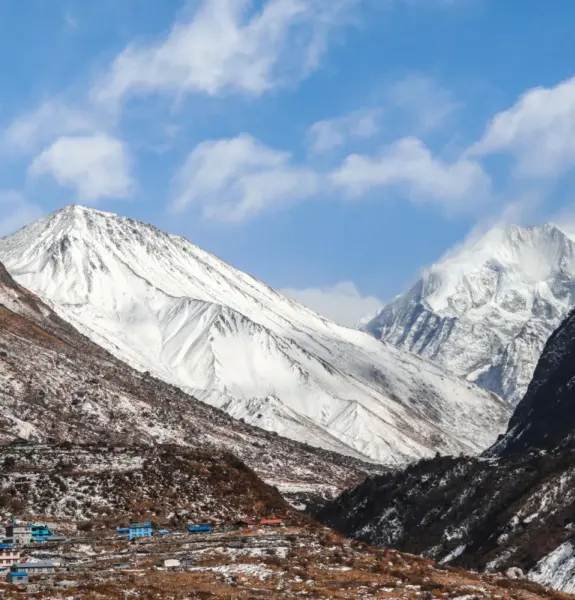
The Manaslu Base Camp Trek is an exciting adventure that takes you into one of the Nepal’s less visited Himalayan region through Budhi Gandaki River valley to reach the base of the world’s eighth highest mountain in the world. For 16 Days Manaslu Base Camp Trek Itinerary, the trail begins in the warm terraced farmland area near Seti Khola, passing through gorges and villages of Gurung and Tibetans community, to the alpine terrain of Sama Goan which leads to Manaslu Base Camp itself.

Manaslu (8,163 m) is a mountain located in the Gorkha district of central Nepal near the border of Tibet. The mountain is the name of the Manaslu Conservation Area. This area is known for its mixed cultural community including Hindus in the lower valleys and Tibetan Buddhists in the higher areas especially in Sama Gaon and Samdo. The area is not accessible by roads compared to other mountains like Everest and Annapurna.

The popularity of Manaslu Base Camp Trekking has been increasing year after year as trekkers prefer less crowded trails within the Himalayas, yet providing an opportunity for witnessing mountains closely, having access to restricted areas, and really experiencing villages during the journey.

Our team at Epic Trek Nepal developed this program in order to provide trekkers with a real pace for trekking considering the terrain and altitude conditions, with acclimatization stop at Sama Gaon before final ascent towards Larkya La. The trek is designed according to the real conditions of trekking, without being simplified for practical purposes.

Why Choose Manaslu Base Camp Trek?

Manaslu trek is usually compared to other trek like Everest Base Camp Trek and the Annapurna circuit because travelers use similar route going through valleys of the Himalayan range to get into the high mountains. However, the major difference is determined by the accessibility, crowds and infrastructure of the trails.

While the Everest Base Camp trail begins with a mountain flight from Lukla with highly developed route, teahouses, bakeries and Wi-Fi connection availability in most of the villages and the Annapurna Circuit has considerably development on the route condition.

As for the Manaslu Base Camp trek, it is a restricted zone, so the trekkers should have a special permit and go with a group with the licensed guide. This means fewer people visit this destination and there is less tourism-oriented infrastructure in local villages.

You can also enjoy your journey to an eight thousand meters high summit without having to spend money on flight tickets and landing into a mountain while witnessing transition in culture in the valley from Hindu villages at lower elevations to Tibetan Buddhist villages around Samdo occurs naturally.

Manaslu Base Camp Trekking is for those who want the experience of the grandeur of the Himalayas and want to cross the eight-thousand-meter altitude of Larkya La but do not want the crowd seen on Everest and Annapurna routes.

Highlights of Manaslu Base Camp Trek

  • Close-up shots of Mount Manaslu (8,163m), eighth highest mountain in the world
  • Crossing the Larkya La Pass at 5,160m, which is the highest altitude reached on the trekking route
  • Restricted trekking region where fewer trekkers come than Everest and Annapurna
  • Complete circuit trekking route that connects the Manaslu region with the Annapurna region near Dharapani
  • Traveling in the Budhi Gandaki river valley, crossing suspension bridges, walking on forested paths, and terraced fields
  • Accommodation in traditional teahouses/lodges throughout the trekking route
  • Accommodation in traditional teahouses/lodges throughout the trekking route

Itinerary of Manaslu Base Camp Trek

You journey starts with landing in Kathmandu, the capital city of Nepal which sits at an altitude of 1,400 m. One of our representatives from Epic Trek Nepal will transfer you to your hotel and based on when you arrive, you will have an opportunity to get acclimatized, meet your trekking team and prepare for the trek.

This would also be a great opportunity for you to check your packing list, prepare your equipment and clarify your queries regarding the following days.

activity-small

Activity: Arrival

max-alt-small

Max. Altitude: 1400m./4,593ft.

accommodation-small

Accommodation: 3 Star Hotel

If you are traveling in a private group, we can arrange a fully customized trip based on your preferences, group size, and travel dates, available any day you choose.

Includes/Excludes

What is included?

  • Airport Transfers: Pick-up and drop-off services from Tribhuvan International Airport in Kathmandu.
  • Accommodation: Accommodation in a 3-star hotel in Kathmandu on a bed and breakfast plan (BB plan) before and after the trek and accommodation in tea houses or lodges during the trek.
  • Meals: All meals during the trek as well as the breakfast in Kathmandu. Three-time hot beverage in each meal will be included.
  • Trekking Permits: All of the trekking permits that are required to complete the trek, including the Manaslu Conservation Area Permit, the Manaslu Restricted Area Permit also ACAP permit.
  • Guide: You are provided with a guide who speaks English and is experienced in trekking. This includes their salary, insurance, equipment, food, and accommodation.
  • Transportation: Ground transportation to the trek’s starting point and return.
  • First Aid Kit: Basic medical supplies for minor injuries.
  • Equipment: Duffle Bag, Sleeping Bag (if necessary)

What is not included?

  • International Airfare: The cost of international flights to and from Nepal is typically not included.
  • Nepal Visa Fee: Travelers need to handle and pay for their Nepal visa independently.
  • Travel Insurance: Comprehensive travel insurance, which covers emergencies, medical treatment, and emergency evacuation, is generally not included and is highly recommended.
  • Personal Expenses: Personal expenses like drinks, desserts, charging batteries, hot showers, extra porters, laundry, etc., are not included.
  • Tips: Tips for guides and porters are not included in the package price and are given at your discretion.
  • Meals in Kathmandu: Apart from breakfast, meals in Kathmandu are usually not included.
  • Equipment: You will need to provide your own trekking gear, such as boots, hiking clothes, sunglasses, water purifiers, etc.

Trip Information

Route Overview of Manaslu Base Camp Trek

Manaslu Base Camp Trek itinerary begins with a drive from Kathmandu to Soti Khola until you reach the Gorkha District. From there, the trek follows the Budhi Gandaki River upstream to Machha Khoa, Dobhat and Philim, with several suspension bridge and gradual gain in altitude as the valley narrows.

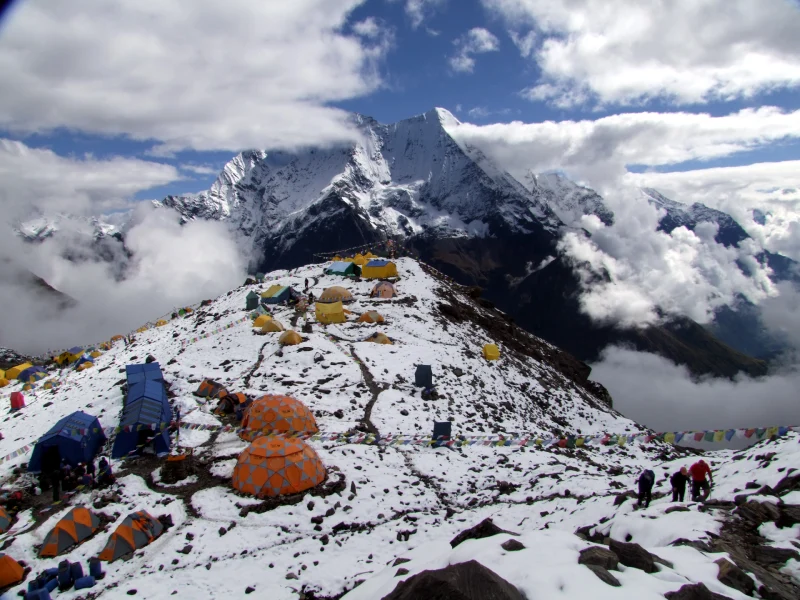
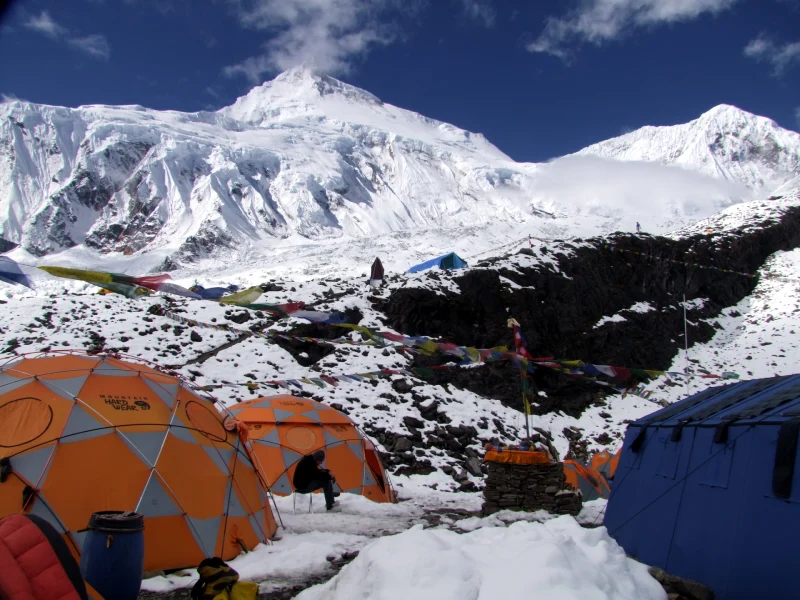
After passing Philim, trekkers head up through Deng and Namrung, with the area showing signs of a transition towards Tibetan Buddhism in the landscape and buildings. The walk from Namrung to Lho is relatively short, giving trekkers time to adapt themselves before heading to Sama Gaon, a major village and the base camp for Manaslu Trekking as well as the acclimatization spot for the visit to Manaslu Base Camp, Birendra Tal, and Pungyen Gompa.

From Sama Goan, the trail proceeds via Samdo to Larkya Phedi (Dharmasala), the last destination before reaching the highest point of the trek. Then comes the hardest single day of the entire trek, which is crossing Larkya La Pass, at an altitude of 5,160 m, after which you will descent to Bumthang on the other side of the pass.

The final stages of the trek bring you down through Gho and Dharapani villages, after which the trekkers return to main area and travel by road to Besisahar to get back to Kathmandu. The entire route lies within the Manaslu Conservation Area and later connects to the Annapurna region landscape towards the end of the trek near Dharapani. That is why this route is commonly linked to the Manaslu Circuit Trek.

Difficulty level of Manaslu Base Camp Trek

The Manaslu Base Camp Trekking is regarded as a challenging trek due to several reason, but most importantly the altitude, duration of trek and the Larkya La Pass.

For most of the days, the trek last for 5 to 7 hours, but there are also some days such as approach to Soti Khola, which can take more than 8 to 9 hours, as well as the Larkya La pass that can last more than average days hours. The trail consists of a combination of river valley treks, forest trails, and high altitude passes, and involves repeated ascents and descents without a gradual elevation gain.

The main factor to consider is the altitude. Your trip will go up from 700m of Soti Khola to more than 5,000m at the top of Larkya La, and there is even an acclimatization day at Sama Gaon before going up further to avoid any altitude issues. Altitude issues will start at the elevation of about 3,500m, so you need to take care of your pace as advised by the guide.

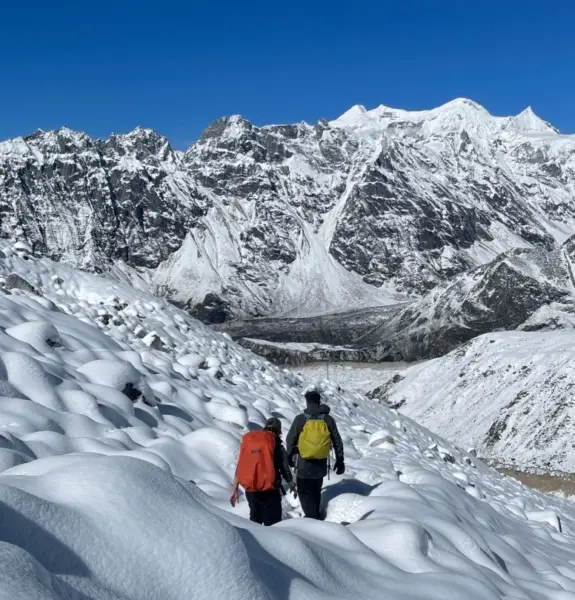
The cold weather, especially near Samdo, Dharamsala, and the pass, poses an additional challenge that you need to prepare yourself through proper clothing.

Trekking experience is not absolutely necessary, but a good level of fitness would help, because there are consecutive days of trekking with a packed backpack during the trek. For those who are already used to trekking or have been in the Himalayas before, walking during each day is not a problem, but those new to trekking should concentrate on their cardiovascular system before starting on the trip.

Best Time for Manaslu Base Camp Trek

Autumn (September to November)

Autumn is the most favorable season in the entire year. It is the time after monsoon, when the skies are usually clear for most of the day and the weather and trails are stable for comfortable walking in route like between Soti Khola and Philim. Also, the visibility of the mountain will be at its best, and this is why autumn is popular.

Spring (March to May)

Spring is another popular season for this trek which offers mild weather and rhododendron blooming in the forest routes. The views might not always be clear as there will be cloud in the afternoon, but morning are usually clear.

Winter (December to February)

Winter starts from December until February and weather during this season is very cold during the whole route and sometimes snowfall can occur at high altitudes, especially around Samdo, Dharamsala and Larkya La Pass. It is not the right season to go for trek, but if you are interested, you will require more preparation than the normal season.

Monsoon (June to August)

The Monsoon season is not recommended as there will be constant unpredictable rain leading to possible landslides on the lower altitude, forest will be full of leeches and clouds will cover the mountain scenery for most of the time which make the trek really frustrating and less enjoyable.

Because the climate in the high mountains may change suddenly no matter what the season is, you should always have some flexibility in your Manaslu Base Camp Trek itinerary and listen to the guide.

Fitness and Preparation for Manaslu Base Camp View Trek

For comfortable Manaslu Base Camp Trekking, you need to prepare yourself several months in advance. Most of the trekkers needs to start the preparation at least 8 to 12 weeks before the trek, focusing on cardio fitness, leg strength and stabilizing your feet work.

Cardio training should be the foundation of your preparation process. Exercise like walking, jogging, cycling, climbing and swimming allows you to develop the endurance necessary for 5 to 7 hours of daily walking, especially when your trek reaches more than 5,000 m in rough environment.

Legs, core and back workouts allow you to endure the steep climbs and descent and decrease stress caused by carrying bag pack over uneven surfaces. Various bodyweight workouts, squats, lunges, or stair running can help target this muscle.

Practicing hiking on the hill or uneven ground with a backpack will familiarize your body with walking style required for this trek. You can take weekend hikes before going to trek.

Endurance is more important than speed while walking for long distances. Training by walking one day after another will help get ready for every day’s impact of the itinerary.

Preparation for high altitude is difficult to simulate directly, but physical fitness, hydration, and pacing yourself in the beginning stages of the trek all contribute to this end. The acclimatization day built into the itinerary at Sama Gaon is meant to assist in this respect.

Last but not the least, trekkers need to sort out their required document and permits before the trek date. Without them, you can’t even enter inside the Manaslu Conservation Area.

Permits for Manaslu Base Camp Trek

The Manaslu Base Camp goes through the restricted zone, trekking in Manaslu require more than just one permit and trekkers are not allowed to undertake this route individual without the support of licensed guide.

Manaslu Restricted Area Permit (RAP): This is the main permit needed to enter the restricted part of the Manaslu. The permit is available in Kathmandu and must be applied by the registered trekking agencies on behalf of the trekker.

Manaslu Conservation Area Permit (MCAP): This permit is required to enter inside the Manaslu Conservation Area.

Annapurna Conservation Area Permit (ACAP): As the trek ends up at Dharapani which is part of the Annapurna Conservation Area, permit for Annapurna Conservation Area is also mandatory.

For this Manaslu Base Camp Trek, Epic Trek Nepal will take care of all the necessary permit on your behalf after booking and confirming your traveling dates and information. You just need to submit your passport information and passport-size photos for permit processing purposes before arriving in Kathmandu.

Accommodation and Meals on Manaslu Base Camp Trek

Throughout the Manaslu Base Camp View Trek, almost all the accommodation on this trek route consists of either teahouse or local guesthouse owned by local families living in various village on this route. The rooms that will be available will be shared, with only a basic bed, pillow, and blanket provided, and having a sleeping bag is recommended due to the very low temperatures in places such as Samdo and Dharamsala, where the temperature goes below freezing point.

The bathrooms provided will not be attached to the rooms but communal one and get simple with altitude. At the lower villages, there are western-style toilets and after Namrung, only squats toilets are available. Hot showers can also be had in some of the lower- and middle-part villages for a little extra money.

Meals is eaten at the teahouse where you stay. Most of the time, you will eat Dal Bhat, a meal rich in nutrients and energy which consist of rice, lentil soup and vegetable curry. It also comes with unlimited refills, so you can eat as much as you can. Other options include meals such as noodles, Tibetan bread, soup, and rice combined with curry. For breakfast, there are porridge, eggs, pancakes, and toast among other options.

There is an option of purchasing water from the teahouses on the way as well as boiled water. However, it is much beneficial to carry water purification tablets or filters as a backup since bottled water gets more costly with elevation.

Safety and Altitude sickness on Manaslu Base Camp Trek

Altitude is going to be one of the most important things to consider when planning for Manaslu Base Camp View Trek, since the trek starts from just 700 meter and ends up above 5,000 m at Larkya La Pass. Altitude sickness can affect anyone and does not depend on physical fitness which result in symptoms such as headache, nausea, dizziness and unusual fatigue.

It is crucial good to stay properly hydrated so that the body will adjust to the thinning atmosphere and it is always good to drink more water than usual, even if you do not feel thirsty.

There is also a rest day for acclimatization purposes at Sama Gaon in the trek itinerary before trekking towards Samdo and Dharamsala and then the pass.

After all this, if you get AMS symptoms and don’t improve with rest, descending to lower altitude is the only option and you should follow the guide’s advice than pushing forward. In worst case scenario, only the helicopter evacuation can save your life, which is only possible if you have purchased a high-altitude trekking travel insurance.

Travel Insurance for Manaslu Base Camp Trek

It is compulsory to get the travel insurance when preparing for high altitude trek. This trek involves crossing above 5,000 meters of height at Larkya La as well as traveling through the remote and restricted zone, which is why travel insurance is a must for Manaslu Base Camp Trek.

Coverage of high-altitude trekking is the most crucial aspect to look out for. Most travel insurance packages have a lower altitude limit than what this trek goes up to, so make sure that you insurance covers trekking up to 5,200m or more.

Emergencies can occur anytime on the trip, therefore, your plan should cover all possible expenses associated with medical treatments, including those in Kathmandu.

In addition, the insurance must provide you with coverage such as medical aid, emergency helicopter, rescue trip cancellation, delay, and stolen or lost. Sometimes weather changes and flight delays can affect your travel plans in Nepal, and insurance is valuable.

Frequently Asked Questions

Manaslu Base Camp Trek is regarded as a tough trek because of altitude gain, successive long days walking and crossing of Larkya La pass (5,160m). This is not a technical climbing but requires reasonable fitness and mindset for altitude environment.

The duration of this trek itinerary includes a total of 16 days which include two days in Kathmandu, two driving days from/to the roadhead, one acclimatization day in Sama Gaon and 12 days on trekking days.

The best time of the year to do the Manaslu Base Camp Trek is autumn (September to November) and spring (March to May). Winter will bring snow and cold weather at high altitude whereas monsoon brings rains and poor visibility.

A Manaslu Restricted Area Permit, a Manaslu Conservation Area Permit (MCAP), and an Annapurna Conservation Area Permit (ACAP) are needed for the last stage, Dharapani.

The highest point on this trek is Larkya La Pass, which stands at 5,160 meters and can be covered on the 13th day.

Yes. It is mandatory to hire a guide when trekking here as this trekking route lies in the restricted area.

Larkya La is considered to be the most challenging day during the trek as it entails an 8-9 hour walk in the mountainous area with an intense climb to the pass and further descent into Bimthang.

There are 5 to 7 hours walking per day on most of the days, but a few special days like walking/driving to Soti Khola, shorter days to Lho and Samdo, and long walk up Larkya La that takes 8 to 9 hours.

No, because it is a restricted area so trekking in this area is not possible without a licensed guide.

Mobile signals and wifi can be accessed in some villages, mostly at a cost, but it gets unreliable the higher you get up, especially after Sama Gaon.

Trip Reviews

Similar Packages

Manaslu Circuit Trek
5.0

Manaslu Circuit Trek

  • Duration: 14 Days
  • |
  • Grade: Challenging
Price from

US$ 880

US$ 1050
Manaslu Tsum Valley View Trek
5.0

Manaslu Tsum Valley Trek

  • Duration: 19 Days
  • |
  • Grade: Moderate
Price from

US$ 1350