How Difficult is Shey Phoksundo Lake Trek?
The Shey Phoksundo Lake trek is considered difficult to challenging in terms of its trekking difficulty. Although the trek is not difficult in technical terms, it needs a certain level of physical and mental endurance.
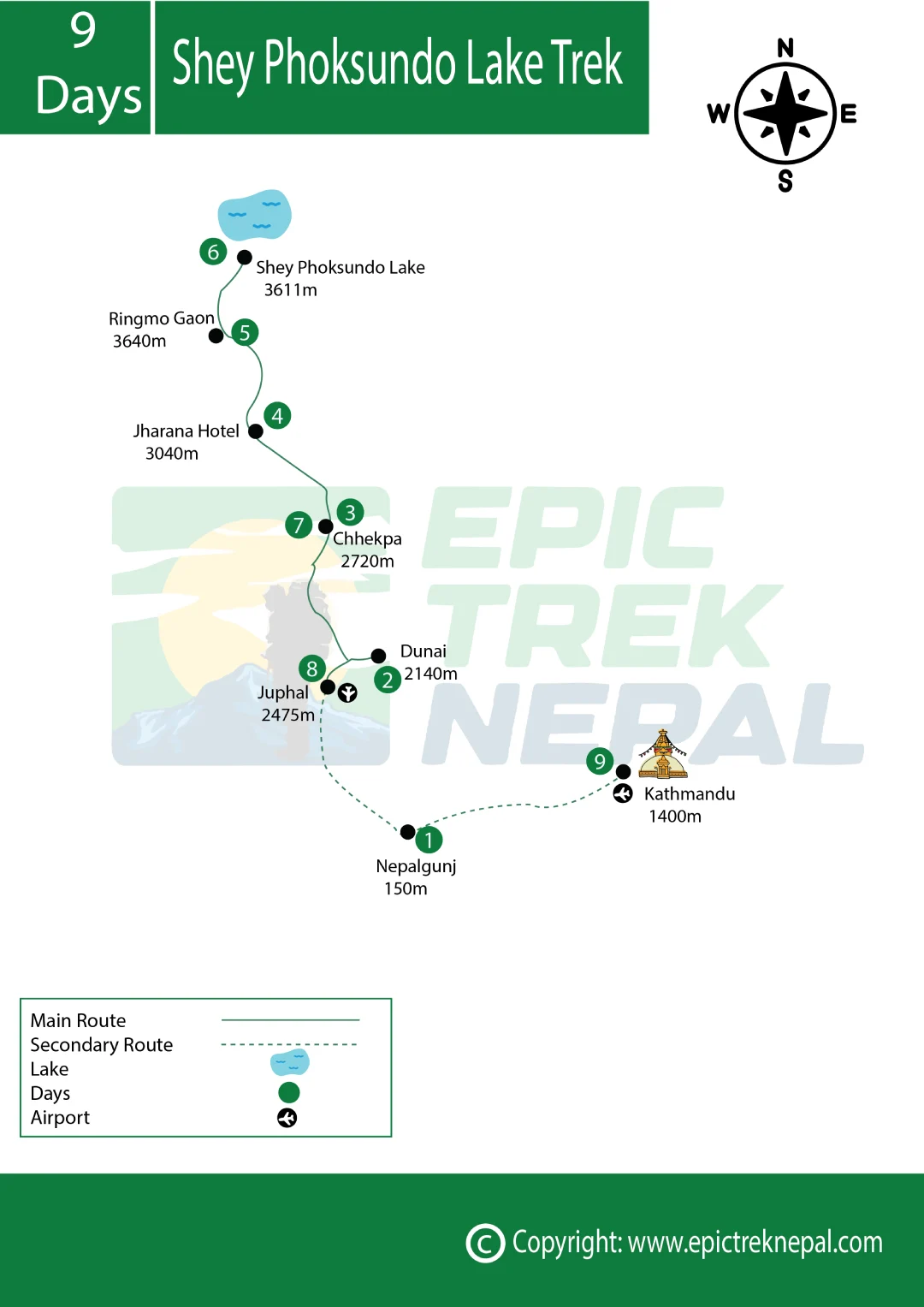
If we talk about altitude, the maximum elevation on this trek is 3,640 meters. So, there is a high risk of altitude sickness. But there is acclimatization day in between the Shey Phoksundo Lake Trek Itinerary to avoid it.
On average, trekkers have to walk for 5 to 7 hours per day while trekking on this trail. The walk includes crossing rivers, walking through narrow paths, difficult terrain and rocky paths. Even first-time trekkers have done this trek without problems, but you shouldn’t underestimate it.
All things considered, if you already have trekking experience or at least some experience in hiking hills, you will find the Shey Phoksundo Lake Trek easy enough to handle.
Preparation for the Shey Phoksundo Lake Trek
Proper preparations play a very important role while doing Shey Phoksundo Lake Trek. You must start your training at least six to eight weeks before your official trek date.
Your cardio exercise routine is key. Cardio Exercise like cycling, swimming and hiking helps to improve endurance. Exercise three times a week, for 1 hr and push yourself harder each time increasing the intensity. By weeks, you should have no problem handling 6 to 7 hours of straight walking.
Also, focus on strength training, especially legs, core and knee. Squats, lunges, steps up will help strengthen your muscle for rocky terrain. Upper body strength training is also important, as it is needed when carrying a backpack during trekking.
Make sure to prepare your gear before leaving. Bring your used trekking boots, stable trekking pole, raincoat, and layered clothes. Pack blister treatments. Make sure that you have water purification tablets.
Mental preparation is equally important. Get to know about the trail. Familiarize yourself with the Shey Phoksundo Lake Trek Itinerary. This way, you will feel prepared and confident.
Visa and Permit
Nepal warmly welcomes every people from all the countries. After entering Nepal, you will need a visa permit which can be obtained on arrival at Tribhuvan International Airport or can also be applied online before arriving.
For the Shey Phoksundo Lake trek, you will couple of special permit. Since this area belongs to the Shey Phoksundo National park, entry cannot be done without right permit.
The required permits are:
This permit will be easily issues by us Epic Trek Nepal, you just keep the copy of them physically and digitally into your smartphone as well.
Language and Communication
The official langugage of Nepal is Nepali, but on the trail of Shey Phoksundo Lake, you will find a combination of Nepali and Tibetan language. People living in Dolpo follows Tibetan culture and many of the people communicated in Tibetan as their first language.
The people here don’t use English language much. So, communication can get extremely difficult without the help of any guides along the way. This is, in fact, another very important reason for hiring local guides for trekking as they provide smooth linguistic transition among other benefits.
You might also want to try learning some Nepali and Tibetan language. Simple greeting like Namaste or Tashi Delek instantly create a connection with local people. They also appreciate your effort to speak their language, even imperfectly.
Your trekking company will provide you with an experienced guide speaking Nepali and English languages fluently. Good communication with your guide will be crucial in emergency situations, always stick close to him and ask questions whenever necessary.
Mobile Network, Internet and Charging
The chances of reliable connectivity along the way are extremely low as this is remote and isolated Dolpo. You will in remote area for most of the trekking days and mobile networks is only available at the beginning of your trek around Jhupal. After that don’t expect any reliable network.
In Nepal, there are only two mobile network providers – Ncell and NTC (Nepal Telecom). If you have to use your phone and be connected at least sometimes, use NTC sim card in your phone as this company provides better coverage than the other company.
It will be quite challenging to have an internet connection at all while trekking to the lake. Some lodges in bigger settlements (such as Ringmo), might offer WiFi access with small fees. But since the Internet is almost non-existent along the route, make sure to download all necessary offline maps and other documents prior to your departure.
Charging points are quite rare and unreliable. Although the teahouse owners usually provide charging points, often there are power cuts. Make sure to take a reliable power bank and, even better, a solar charger if you have one.
Don’t do on this Trek
Being mindful about the surroundings, environment, and culture is important on the Shey Phoksundo Lake Trek. There are a few thing that you should not do on this trek:
Don’t litter. Dolpo is an area with natural beauty and is untouched by pollution.
Take everything that you bring with your back. Don’t ever throw plastic bags, wrappers, or any other litter anywhere in the mountains.
Respect all religious places. During the trek, you will visit Bon monasteries, mani walls, and prayer flag and you must not touch such religious objects. Remember to walk in a clockwise direction around religious monument.
Do not trek alone. Dolpo is a restricted area, and it is necessary to follow certain regulations while trekking, which require hiring a guide. Trekking alone in such a remote area can be very dangerous.
Do not ignore signs of altitude sickness. Symptoms like headaches, dizziness, nausea, tiredness show your body is having difficulty coping. Do not attempt to continue in case of severe altitude sickness. Descend right away and inform your guide about what you are experiencing.
Avoid dressing revealing clothes when visiting villages. Do not flaunt yourself since the culture here is very conservative. Always cover your shoulders and knees, especially near monasteries and sacred places.
These small gestures show immense respect for the local people and will make your trekking experience that much more memorable.
Travel Insurance
Travel Insurance is not a choice but a must have thing while trekking at the Shey Phoksundo Lake View Trek. It is located in one of the remotest part of Nepal, if anything goes wrong only option is emergency evacuation by helicopter. And the cost for this evacuation is very expensive without insurance backup.
The insurance should cover high-altitude trekking up to a minimum of 4,000 meters and include helicopter rescue in case of an emergency as well as emergency medical repatriation services.
It is important to purchase the insurance before leaving your home country and to make sure that your policy includes the coverage of remote area trekking. Many travel insurance plans do not have this, so check it before purchasing.
Inform your trekking agency and guide your insurance details prior to the start of the trek.
Health and Safety on the Shey Phoksundo Lake Trek
The first thing that needs to be mentioned here is that your good health should be prioritized at all times during your journey. The high altitude, isolation, and exertion involved make it difficult for you to remain careful about your health.
Most importantly, you should consider acute mountain sickness (AMS). You need to ascend slowly, remain well hydrated, and never underestimate the signs of this condition. Most trekkers take Diamox as a preventive measure to avoid any risk.
Purified or boiled water alone should be consumed during this trekking expedition. There is a very high risk of contaminated water diseases such as giardia, and it may spoil your experience completely. Therefore, bring water purifying pills or filter bottles with you at all costs.
A personal first aid kit is also necessary. It should have blister pads, painkillers, rehydration salts, antibiotics, antidiarrheal pills, and basic medicines for treating wounds. Your guide will have his supplies as well, but it always pays off to have your own supply too.




 Share
Share