TALK TO AN EXPERT +977-9764792172
Bhanubhakta Nachhiring
divider-down

Rolwaling Tashi Lapcha Pass Trek

duration-icon

Trip Duration

13 Days
destination

Destination

Nepal
max-alt-icon

Max. Altitude

5,755 m.
difficulty-icon

Trip Difficulty

Difficult
group-size

Group Size

1-12
transportation

Transportation

Drive and Flight
accommodation

Accommodation

Hotel/Teahouse
activity-icon

Activity

Trekking
meals

Meals

All Inclusive
start_end

Start / End

Kathmandu
best-season

Best Season

Spring & Autumn

Trip Overview

The Rolwaling Tashi Lapcha Pass trek is a gateway to one of the most pristine destinations of Nepal. Located between the Rolwailing Valley and the Khumbu area, this trek remains untouched by the tourist crowds and very travelers have had a chance to explore, which make it special.

The trek lies in the northeast part of Nepal, near the border with Tibet. The Rolwaling Valley itself is an unexplored place surrounded by majestic mountains and rivers of ice as well as Sherpa village and mountain lifestyle that has remained the same through the centuries.

The challenging part of this Rolwaling Trek is in its geography. The trail goes through rocky paths and glaciers and leads up to high altitudes. There are not many teahouses along the way like in Annapurna or Everest, which require you to have a proper physical and mental toughness.

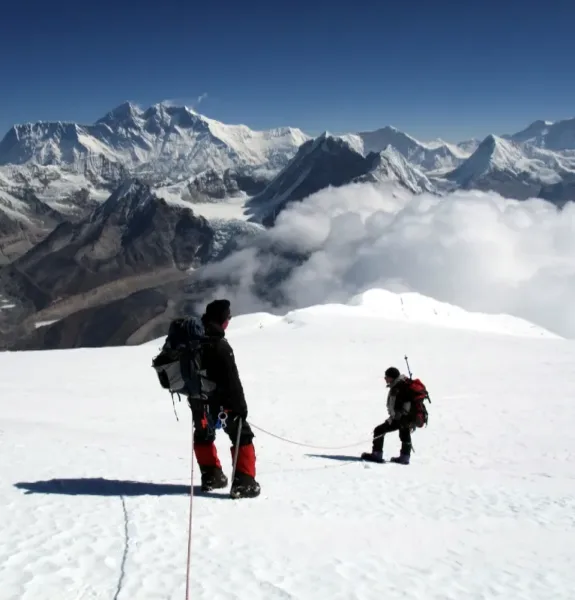
The trek highlight of the trek is undoubtedly, when you cross Tashi Lapcha Pass trek at an altitude of 5,755 meter. Crossing such a pass is not an easy task, as you need to use crampons and ropes to travel the path filled with rocks and ice. But the feeling after reaching the summit amidst all the snow-capped peaks makes everything worthwhile.

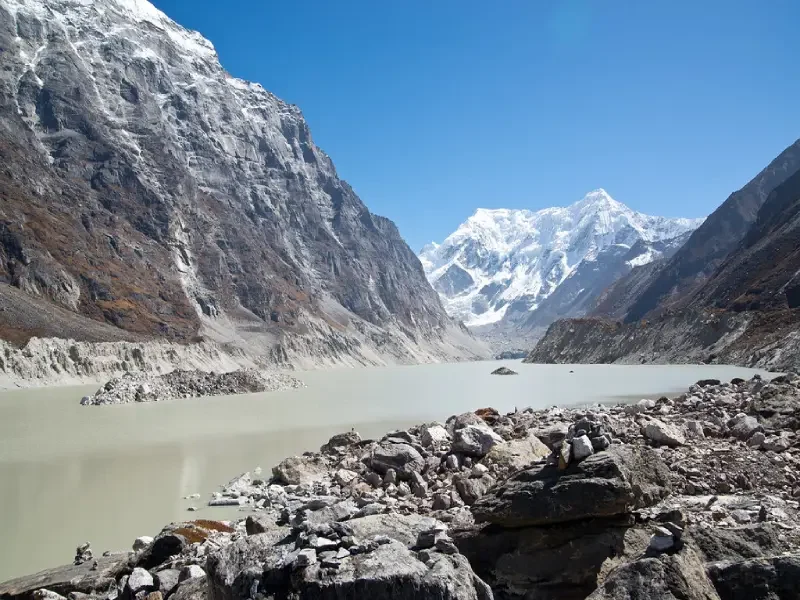
Before you get to the pass, you will pass Tsho Rolpa Lake, the biggest glacial lake in Nepal. With turquoise water and giant ice walls surrounding it, the view itself is enough to justify your trekking all the way.

After you get past the pass, the path slopes down to the Khumbu Valley near Thame Village. From here, you will be on well-known routes to Namche Bazaar and finally to Lukla airport. This connection of two remote valleys is quite rare and not many treks in Nepal offer such experience.

Why Choose the Rolwaling Tashi Lapcha Pass Trek?

The most popular destination for the trekkers in Nepal is Everest Base Camp or the Annapurna Circuit Trail. These are very beautiful trek but very crowded. For that reason, Rolwaling Tashi Lapcha Pass Trek is very ideal which offers beautiful mountains with quieter experience.

You will not find any crowded accommodations or long queues on this trek route. There might be even days without seeing any other groups of trekkers during your adventure.

It is a pure Himalayan adventure than an easy scenic trek. The routes are tough, the villages are very remote, and you will face many difficulties because of the bad weather conditions. Every single day will be both exciting and challenging.

But what makes this particular trek unique is the trekking route itself. The trek begins from the pristine Rolwaling Valley and ends in the famous Khumbu region. Very few trails connect two different region’s terrains together in one go.

Crossing the Tashi Lapcha Pass is certainly the highlight of the whole trip. There are few passes in Nepal where such skills and preparation are required.

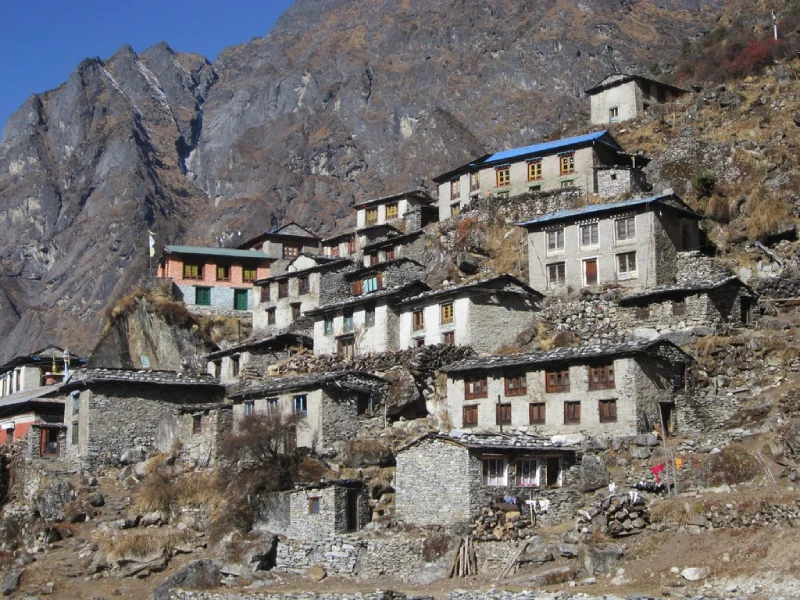
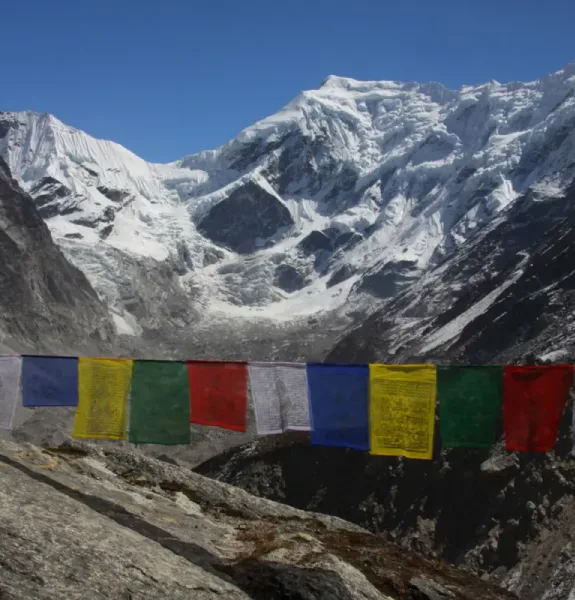
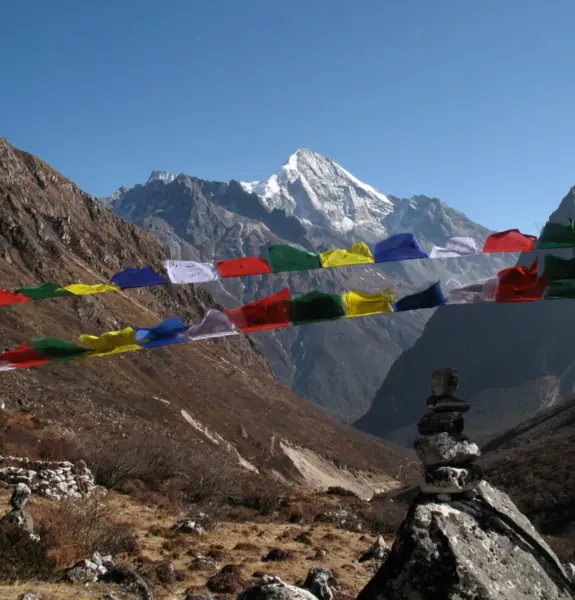
On the way, you will have the chance to visit Sherpa settlements which are influenced by their culture. The presence of prayer flags, monasteries, and traditional stone houses gives a cultural touch to this trek.

If you have already gone for a few treks in the past and are looking for something more challenging, this is definitely one.

Route Overview of Rolwaling Tashi Lapcha Pass Trek

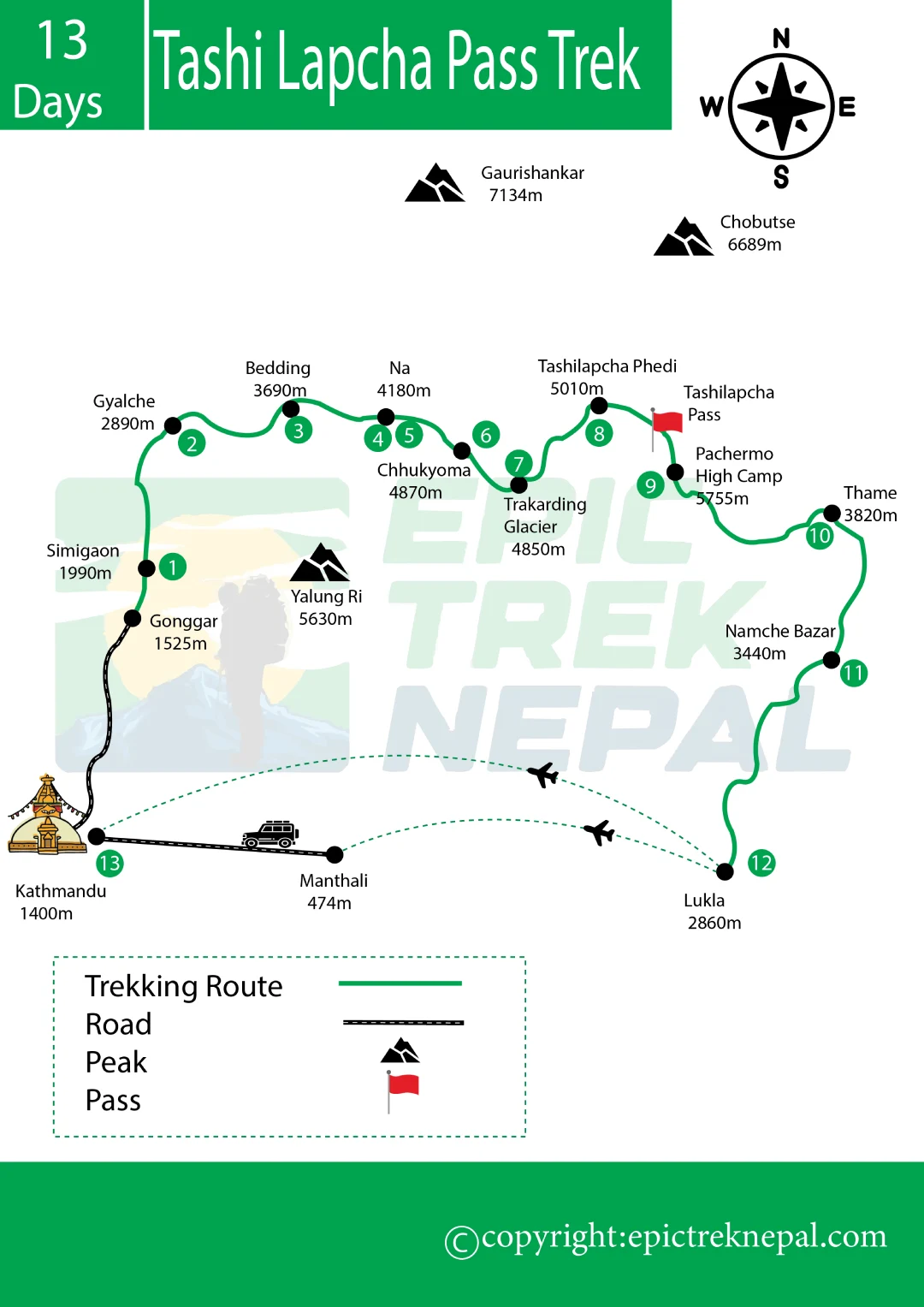
You Rolwaling Tashi Lapcha Pass Trek Itinerary starts with a air transfer to Gongar from Kathmandu which is then followed by a scenic drive to Simigaun. From there the trek starts that goes up in the Rolwaling Valley, along with Tama Koshi River.

On the way you will walk past Kyalche and Finally arrive at Beding, which is the largest village in the valley. Beding is located at reasonable altitude, giving you some insight into Sherpa highlands lifestyle until the trail becomes really difficult.

After Beding the track goes to Na village, which is your acclimatization point. It’s a very important point, because the coming days will take you much higher than 4,500 meters, and you need time to adapt for upcoming Rolwaling Tashi Lapcha Pass trek. After Na the track gets even more difficult and isolated. You’ll be walking along the Tsho Rolpa Lake, then proceed to the Chhukyima and Trakarding Glacier.

The next stop in our Tashi Lapcha Pass trek is Tashi Lapcha Phedi, which is located right below the pass itself. It is the last camp site before crossing the pass and the place where the trek becomes more technical mountaineering from just trekking.

The crossing of Tashi Lapcha Pass that is located at an altitude of 5,755 meters is the main point of the whole Tashi Lapcha Pass Trek itinerary. After passing the pass, you will descent to the Pachermo High Camp and further on to Thame which is situated in the Khumbu Region.

From Thame, the well-known Everest trekking paths take up, and you will cross Namche Bazaar before heading to Lukla where you will catch a flight to Kathmandu completing the Rolwaling Tashi Lapcha Pass Trek.

Highlights of Rolwaling Tashi Lapcha Pass Trek

  • Cross the technical Tashi Lapcha Pass, located 5,755 meters above sea level, which is considered to be one of the most difficult passes in Nepal.
  • Combination of two famous regions in one trek, that is Rolwaling and Khumbu regions.
  • Visit the remote Rolwaling Valley, away from the more frequented trekking areas of Nepal.
  • Pass by the Tsho Rolpa Lake, the largest glacial lake in Nepal.
  • Experience the genuine culture of Sherpa community in traditional villages of Beding and Na.
  • Trek on the Trakarding Glacier and high-altitude glacial environment.
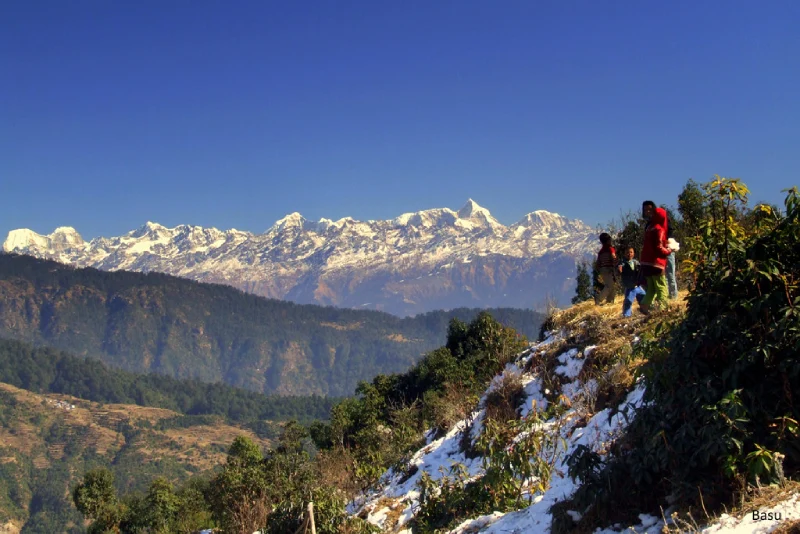
  • Massive view of Gauri Shankar and other Himalayan peaks.
  • Combine adventure trekking with actual mountaineering such as rope handling and crampons climbing.

Itinerary of Rolwaling Tashi Lapcha Pass Trek

Your Rolwaling Tashi Lapcha Pass Trek starts off with an early morning drive from Kathmandu to Gongar (also known as Chhet Chhet). It will take few hours of drive that also familiarize you with rural area of Nepal before you begin trekking.

The trekking starts after you reach Gongar, where there is a descent towards Simigaun. There will be gentle slopes in the beginning, allowing you to get ready for trekking after a long journey by car.

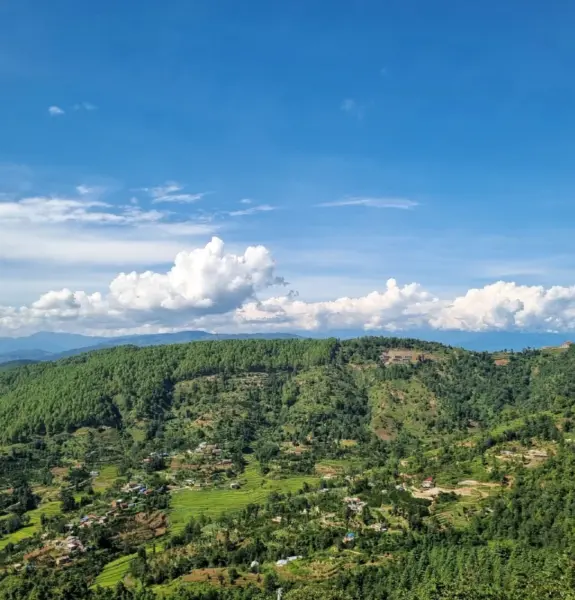
Simigaun is located in a valley surrounded by forest-covered hills. You can spend one night in a simple tea house in Simigaun before trekking in Rolwaling Valley.

activity-small

Activity: Drive and Trek (5 to 6 hours)

max-alt-small

Max. Altitude: 1990m./6,529ft.

meals-small

Meal: Breakfast, Lunch, Dinner

accommodation-small

Accommodation: Tea house

If you are traveling in a private group, we can arrange a fully customized trip based on your preferences, group size, and travel dates, available any day you choose.

Includes/Excludes

What is included?

  • Airport pick up and drop off
  • Drive from Kathmandu to Gongar and flight from Lukla to Kathmandu
  • All necessary permit which includes Gaurishankar Conservation Area Permit, Restricted Area Permit, Sagarmatha National Park Entry Permit and Khumbu Pasang Rural Area Permit.
  • Accommodation in teahouse and camping throughout the trek
  • All meals during the trek (breakfast, lunch and dinner)
  • A guide who speaks English and is experienced in trekking.
  • Technical gear for the pass crossing (fixed ropes, safety equipment for the group)
  • A basic first aid kit.
  • Duffle Bag, and Sleeping Bag (if necessary)

What is not included?

  • International airfare to and from Nepal is not included.
  • Travel insurance that covers emergency rescue and evacuation is not included, and you’ll be expected to have your own.
  • Expenses for extra meals, drinks, snacks, charging devices, hot showers, Wi-Fi, and other personal costs are not included.
  • If you choose to extend your stay in Nepal, the cost of additional accommodation and meals will not be included.
  • Personal trekking equipment, such as hiking boots, down jackets, trekking poles, and other gear are not included.
  • Tips for guides and porters are not included and are left to your discretion.
  • Porter is not available in package, but it can be arranged on request at an extra cost, where one porter carries up to 25 kg (shared between two trekkers) to reduce your load and make the trek more comfortable.

Trip Information

Trek Difficult of Rolwaling Tashi Lapcha Pass trek Itinerary

Rolwaling Tashi Lapcha Pass trek is among the most difficult trekking trail in Nepal that is considered an extremely difficult trek, which you should not ignore. You will be hiking between 6 to 8 hours almost every day. The trails will not be clearly marked all the time, and you will have to trek through rocky, moraine and uneven terrain most of the time.

Altitude is the main challenge, since most of your days will be spent above 4,500 meter and the highest of the pass will reach even more at 5,775 meter which can ruin your experience if you are not careful enough.

Crossing Tashi Lapcha Pass is the day you will reach 5,5775-meter altitude, which will be the most difficult part of this Tashi Lapcha Pass Trek. While crossing this, you need to be prepared for the steep ice, use of fixed roes and crampons. This pass is not something that can be compared with other passes in Nepal, which are usually easy to walk through.

Many of steep ascents and descents will occur during the whole Rolwaling Tashi Lapcha Pass trek, particularly before and after the pass. Your legs and knees will suffer greatly from this route. Due to this, physical fitness is compulsory and you should be able to hike for several hours carrying a daypack and having several high-altitude days one after another.

It is necessary that you have previous experience in high-altitude trekking. It is best if you have done it before at an altitude of over 5,000 meters. If you have good physical condition and experience, then this is the right trek for you.

Preparation and Training for Rolwaling Tashi Lapcha Pass Trek

There are certain things you have to prepare for before going on this trek. The physical training in advance will play an important role when you start your journey.

First focus on cardiovascular exercise to improve the endurance needed for walking at high altitudes for hours. Training in running, cycling, and swimming will do the job if done regularly (three or four times per week). Another crucial thing to work on is the practice of walking a great distance. You should learn how to walk from six to eight hours straight, not on flat roads but on uneven grounds.

Walking up the hill is one more useful training. This exercise prepares you physically for ascending during your journey. Even if there are no hills around, you may use stair climbing instead.

It is also necessary to pay attention to your strength training. The training of legs, back, and core muscles should be considered because you need them to walk a lot. Practice hiking while wearing a loaded backpack as well. Even just 8 to 10 kg while training hikes will help you get used to carrying weights across the terrain.

This trip requires a number of consecutive trekking days. Do not train once in a huge load and then rest but make a habit out of small regular exercises.

General 6–8 week plan: three workouts per week at first, including three cardio sessions and one hike. Add strength training twice a week starting from the fourth week. Combine everything during the last two weeks with loaded hikes on weekends.

Best Time for Rolwaling Tashi Lapchi Pass Trek

Autumn (September to November)

Autumn is the most popular season due to clear skies, consistent climate condition and good visibility throughout the entire pass. It is impossible to find better mountain views than those in autumn.

Spring (March to May)

Spring is also another appropriate season for the trek. At the beginning of the season, temperatures remain cool, but with time they become warmer. During this time, there is rhododendron blooming in forests in the lower valley part of the trek which make the Rolwaling Tashi Lapcha Pass trek more beautiful with mountain view in the distance.

Winter (December to February)

The winter might bring heavy snowfall in the high altitudes. It becomes extremely difficult and sometimes even hazardous to cross the Tashi Lapcha Pass during this season.

Monsoon (June to August)

Monsoon season (June to August) is also not recommended. The rains make the trails slippery, clouds often cover the views of mountains, rivers can become dangerous, and leeches appear in the forests.

Overall autumn is preferable for this trek if you want to go. Spring is another good option, but do not plan winter and monsoon unless you have some proper reasons and experience.

Required Permit for Rolwaling Tashi Lapcha Pass Trek

The trek passes through two different regions, so you have to obtain several permits before you can begin the trek.

First, you will need Gaurishankar Conservation Area permit for the Rolwaling trek. It will cover the entire stretch starting from Simigaun and going past Beding, Na, up to the pass.

As Rolwaling trek is located in a restricted zone, another permit called the Restricted Area Permit needs to be obtained. The reason behind the existence of this permit is the fact that the valley is located very near to the Tibet border.

Once you have passed through the Tashi Lapcha Pass and reached the Khumbu area, you will need to get a Sagarmatha National Park Entry Permit and Khumbu Pasang Lhamu Rural Municipality Permit, which allows you access to the places of Thame, Namche Bazaar, and the path towards Lukla.

You will also need to pay a fee to the local rural municipality, which is collected at some checkpoints on the way. The fees are different from the permits, but they are also mandatory.

Accommodation on Rolwaling Tashi Lapcha Pass Trek

Accommodation option varies widely based on location. The earlier days from Simigaun to Na village offer basic teahouse with simple rooms, usually twin share and thin mattress.

Once you move beyond Na village, there will be no accommodation. The only option is camping which the team will manage for you. You team provides you with tents and you will sleep in a proper expedition style for several nights. This will be same until you cross the pass and reach village area.

Toilets are basic, shared and outdoor during camping days. There will be very basic washing facilities beyond Na village and wet wipes with basic sponge bath than hot showers. Electricity will be available in the teahouse but not during camping day. There will be mobile signal and internet coverage in the lower villages but none near the pass and forget about connectivity after Na village.

Food and Drinking water

On Rolwaling Tashi Lapcha Pass trek, food is kept simple, hearty, and fulfilling. There will be no complicated menus, but there will be sufficient energy to carry you along through many days. For most of the time Dal Bhat remains the primary food on this route. Rice, lentil soup, and vegetables provide you with sustained energy, and it’s available in unlimited quantities in almost all hotels and campsites.

Noodle and pasta are also served several times as well, particularly instant noodle soups as that are easy to prepare and perfect for light lunch on long trekking days. Breakfast is normally made up of porridge, eggs, toast, or Tibetan bread along with tea or coffee to kick off the day.

Soups are also common for lunch and dinner too. Garlic soup is the most recommended one by many trekkers to adjust altitude. Snacks such as biscuits, chocolates, and energy bars should be carried with you because of the limited choices that will be available after the last village.

For drinking water, there is boiling water supplied during teahouses and camps. It becomes hard to find bottled water after the Na village, so you have to carry some water purification pills or water filters.

Safety and Emergency Information on Rolwaling Tashi Lapcha Pass trek

The safety aspect of this trip should not be underestimated. This path requires a good preparation, and knowing all possible threats beforehand will assist in preparing properly.

First of all, altitude sickness can become an issue. Spending several days above 4,500 meters and reaching the highest point that is 5,755 meters high, you should pay attention to any sign of sickness that might appear, such as headache, nausea, and dizziness. In case of severe symptoms, you need to descent immediately.

The weather conditions may change instantly in a matter of hours in such altitudes, especially when crossing the area of Tashi Lapcha Pass Trek. Even clear mornings can easily turn into snowy and windy conditions. The guides have experience in monitoring the weather and will alter their plans, when necessary, at times even postponing the crossing for a day.

The area is remote and harsh. Beyond Na village, there are no rescue stations, there are no roads to facilitate evacuation from this area, and no outside help is available.

Guide assistance plays a great role on this path. Our guides have experience in traversing the terrain, know altitude patterns and have sufficient training for glacier and pass parts of the Rolwaling Tashi Lapcha Pass Trek.

An emergency evacuation, when necessary, will mostly be done using a helicopter. Helicopters can access most areas along this route depending on the weather, although campsites near the pass can take some time.

This is the reason why you have to buy the right travel insurance for your trek. Your travel insurance has to cover high altitude treks to up to 6,000 meters and the emergency evacuation using a helicopter.

Frequently Asked Questions

This trek is one of the most challenging treks in Nepal. It involves long trekking days, high altitude and technical pass crossing, where you will need ropes and crampons.

Yes, you should have some experience in trekking at high altitudes, especially above 5,000 meters.

Tashi Lapcha Pass at the altitude of 5,755 meters is the highest altitude in the itinerary, which will be crossed during the ninth day of the trek.

Some basic experience of using crampons and walking along roped parts of the path would be useful. Your guide will help you, but the ability to cope with being exposed and steep slopes would be necessary.

Gaurishankar Conservation Area Permit, Restricted Area Permit of Rolwaling, and Sagarmatha National Park Entry Permit on the Khumbu side are the required permits for this trek.

You cannot trek in this restricted region without hiring an agency and a guide.

October to November and March to May are the best times for this trek, considering the stability of weather and safe condition for the crossing of the pass.

The Tashi Lapcha Pass Trek itinerary lasts 13 days in all, from beginning to end.

There are teahouses available until the Na village and again from Thame, but the central part of the trek will be camping.

The food will include dal bhat, noodles, soups, rice, and some simple breakfast foods such as porridge, eggs, and toast.

There is mobile connectivity and internet facility up to low-altitude villages but becomes non-existent after that point until Na village.

Yes, it is very important that your insurance should include high altitude treks up to at least 6,000 meters and emergency evacuation by helicopter.

Trip Reviews