Yoga Experience During the Trek
What makes this trek unique is that there is yoga at the Annapurna Base Camp Yoga Trek. The session is brief, straightforward and very easy to understand. There is no need for previous yoga experience. During the trek you will do yoga for 2 time, in the morning and in the evening.
Morning Yoga
The morning session is head before breakfast and last about half an hour. This is when your body gets ready for the daily trek.
- Warm-up stretches: It is time to loosen up your neck, shoulders, spine, and legs after sleeping in the chilly environment of the tea house.
- Breathing techniques: Slow, even breathing calms your mind in preparation for your daily walk.
- Joint mobilization exercises: The instructor will help you perform circles of your ankles, knees, and hips, since you use these joints a lot while climbing stone staircases.
- Preparing for the walk: You will stretch and warm up your muscles, and you will learn how to keep a proper posture while walking.
Evening Yoga
The evening practice starts once you reach your destination. The aim is recovery, not exercise.
- Gentle stretching: You concentrate on calves, thighs, hips, and lower back since they suffer the most from steep descents.
- Relaxation: After that, you have a few silent moments while lying down, so that your body winds down.
- Breathing exercises: Deep exhalations allow you to change from hiking mode to relaxing mode.
- Recovery: Trekkers often claim that they feel better in the morning thanks to this regime.
Yoga at High Altitude
The Annapurna Base Camp Yoga Trek itinerary is adjusted to the altitude, weather, fatigue, and personal condition each day. Yoga becomes slow and light when we walk above 3,000 meters. No difficult poses and powerful breathing exercises are practiced.
When weather is cold and wet, classes are held indoors, in the dining room and for a shorter time. If you feel fatigued or have health issues, you may reduce the class intensity or rest without it. Nobody will push you hard.
Please remember one important thing: yoga cannot protect you against high altitude sickness. Correct acclimatization, walking, hydration, and constant discussion with your guide are key. When you get sick, your guide decides to stop or descend.
That is what makes the Annapurna Base Camp Trek with Yoga unique. Yoga assists during your trek, while safe trekking takes priority at the Annapurna Yoga Trek.
Trek Difficulty and Fitness
Annapurna Base Camp Yoga Trek is a moderate level trek in the Himalayas. You don’t need any technical climbing experience to trek there, but you will need strong legs and stamina as walking is required daily. Each trek day consists of five to seven hours of trekking with tea and lunch stops.
The trail doesn’t stay flat too much. You have to ascend hundreds of stone stairs, such as the long stairs up to Ulleri, and then you descend the same number of them. Ascending from Chhomrong to Dovan and then finally reaching the base camp takes quite a lot of effort, and your knees and thighs will definitely feel that.
The altitude increases as you trek. You begin your trek at 1,000 meters in height near Nayapul and finish at 4,130 meters at base camp. After 3,000 meters of elevation, each step takes more time because the air becomes thin. Fitness helps, but it can’t save you from altitude problems.
Some trekking experience will definitely be helpful ut even if you have none, a fit person can do the trek with yoga. It is recommended to start preparing physically four-six weeks before your flight. Train walking uphills, climbing stairs and carrying a backpack on weekends.
Also, prior experience with yoga is not necessary as all postures will be adapted for beginners. However, it should be kept in mind that flexibility and conditioning for a hike are two different things. Even if one is extremely flexible but does not walk much, he/she may encounter some difficulties during the Annapurna Yoga Trek.
Best Time for Annapurna Base Camp Yoga Trek
Spring (March to May)
Spring is the most colorful season on the trail since rhododendrons bloom in the forest around Ghorepani and Tadapani, making the hills look pink and red. Trekking weather is normally good, and mountain views can be very good, especially in the early morning. Temperatures start to get warmer during spring, so early morning yoga on the sunny terrace of the teahouse is particularly pleasant.
Autumn (September to November)
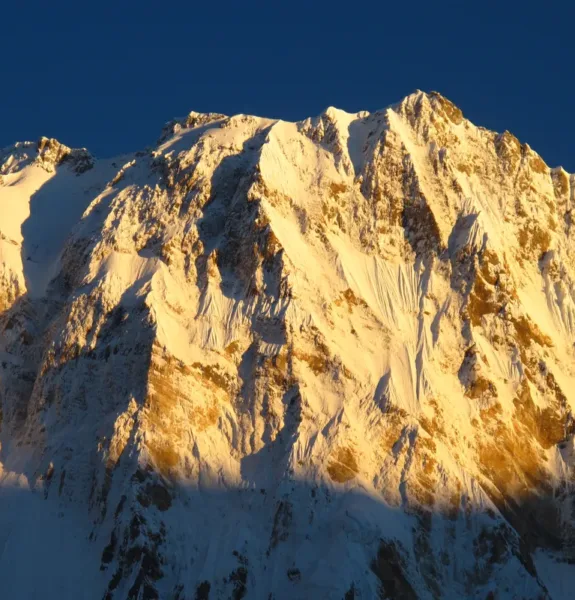
In Autumn, weather becomes stable after the end of the monsoon season. It stays quite fresh, and the views of Annapurna I and Machhapuchhre are quite clear. This is the busiest season, so plan your trek to Annapurna Base Camp Yoga earlier.
Winter (December to February)
It is cold weather especially during the night and close to the base camp. The trail around Deurali could be covered with snow and some of the teahouses at high altitudes could be closed. You need to do your yoga indoor and will require proper down jacket and sleeping bag.
There are fewer trekkers using this trail during these months. Few people like the serenity but the preparation required is more.
Monsoon (June to August)
The monsoon season involves rain and dense clouds that will conceal the mountains. The trails will be slippery due to water and leeches will come out in the lower forest area, so it is not recommended to choose this as your Annapurna Base Camp Yoga Trek.
Accommodation during the Annapurna Base Camp Yoga Trek itinerary
Your accommodation will vary greatly depending on whether you are in the cities or in the mountains. This will help you prepare properly for the Annapurna Base Camp Yoga Trek.
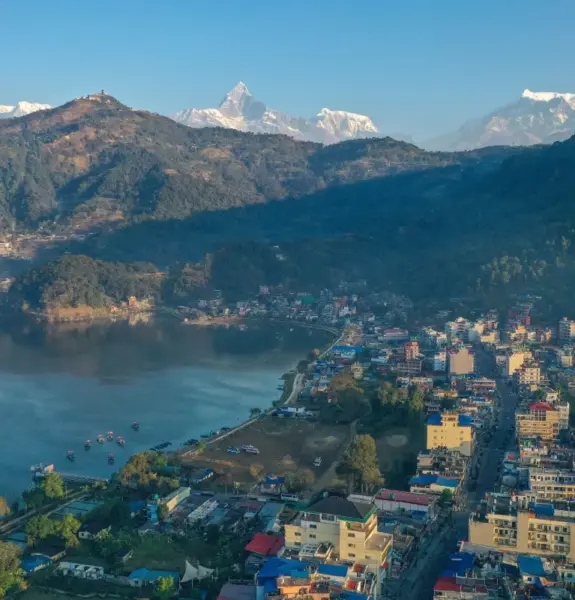
In Kathmandu and Pokhara, you will be accommodated in tourist 3-star hotels. The rooms are clean and comfortable and have private bathrooms, hot water, and Wi-Fi access. Pokhara is one of the peaceful and beautiful places which is perfect destination to relax before starting your Annapurna Base Camp Trek with Yoga.
During the Annapurna Base Camp Yoga Trek, you will be staying in teahouses and lodges. These are simple family-run businesses and not luxurious accommodations. Your rooms will be basic with a twin-sharing setup consisting of two single beds, mattress, and blankets. It would be best if you packed additional sleeping bag for additional warmth.
Bathrooms are shared in many teahouses. There may be hot showers, but you will have to pay an extra fee for that and it increase as you go up. You may also have problems with internet and electricity, so charging your cell phones and cameras may cost you extra. During this crisis, a power bank will be very useful.
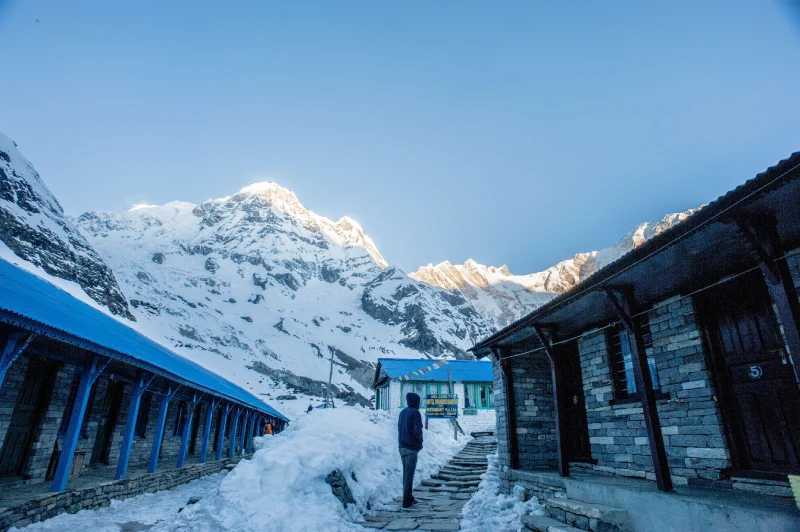
The dining room is usually the warmest room in teahouses. During the Annapurna Base Camp Trek with Yoga, this becomes our indoor yoga room when weather conditions are not so good.
Facilities become more and more basic the higher you go. Go there with low expectations and you will feel the warmth of their hospitality.
Food and Drinking Water
During the Annapurna Base Camp Yoga Trek, you will be served three meals a day and they mostly consist of food prepared by the tea house you stay in. There is a standard menu that remains consistent along the route.
The breakfast can be porridge, eggs, toast, Tibetan bread or pancakes with tea or coffee. More options are available for lunch and dinner. The dishes include noodle soup, fried rice, momos, pasta, potatoes, and vegetable curry. But Dal bhat is the first-choice meal for every trekker. This consists of a plate with rice, lentil soup, vegetable curry, and pickle and the hosts offer it free of cost. Most of the guides consume it twice a day.
Vegetarian food is easily available, and most tea house menus are mostly made up of such foods. Many trekker who undertake the Annapurna Base Camp Yoga Trek prefer vegetarian foods. In case you need lighter foods, please notify your guide, and we will assist you order them wherever it is possible
With food, you need to drink a lot of water, at least 3 liter per day. Teahouses provide bottled water, but prices increase with altitude and there is also much pollution of plastic bottles. Carry your own reusable water bottle along with water purification tablets or filters.
Visa and Permit for Annapurna Base Camp Yoga Trek
Before getting down to do the Annapurna base camp yoga trek, you need to have done some important documents which includes visa and permit. Although it is not such a complex process, it is always necessary to make preparations in advance.
It is an easy task to acquire your Nepal tourist visa since you can easily obtain it once you arrive in the airport or border. Just present your passport, photos, and fee according to the period of your stay. You may even apply online if you wish to save time.
For trekking, you will need two permits. First is the ACAP permit (Annapurna Conservation Area Permit). This one is basically for the conservation of the area. Second is the TIMS card, which is for safety purposes only. The card is for the whole area, so you will have to submit both the permits at various checkpoints in your trekking trail of Annapurna base camp.
Both the permits can be easily obtained by “Epic Trek Nepal” so you don’t have to worry about that. With that, you can take the view of Annapurna base camp trekking without any issues.
Travel Insurance
Travel insurance is a necessary document when planning a trek to Annapurna Base Camp Yoga Trek. This is because travel insurance is important in providing you with cover just in case of any problem for all the situations that might occur during the journey, such as medical issues, differences in travel plans, as well as loss of luggage. But what is most important is making sure that you buy insurance that not only has coverage for high altitudes but also for emergency helicopter evacuation.
Since Annapurna Base Camp is situated above 4000 meters, an ordinary insurance plan will definitely not cover this type of activity. You should make sure that trekking at that altitude is covered by your travel insurance before buying the policy since the cost of evacuating yourself from there may be quite expensive.
While on the treks to Annapurna Base Camp Yoga Trek itinerary, you must always carry a hard copy of your insurance document and important emergency contacts throughout the trek, which is also recommended that you should provide copies of those documents to your so that they could contact the insurance firm in case you need assistance. Having insurance would definitely make sure that you have no stress, and you could just enjoy the scenic beauty of Annapurna Base Camp.






 Share
Share