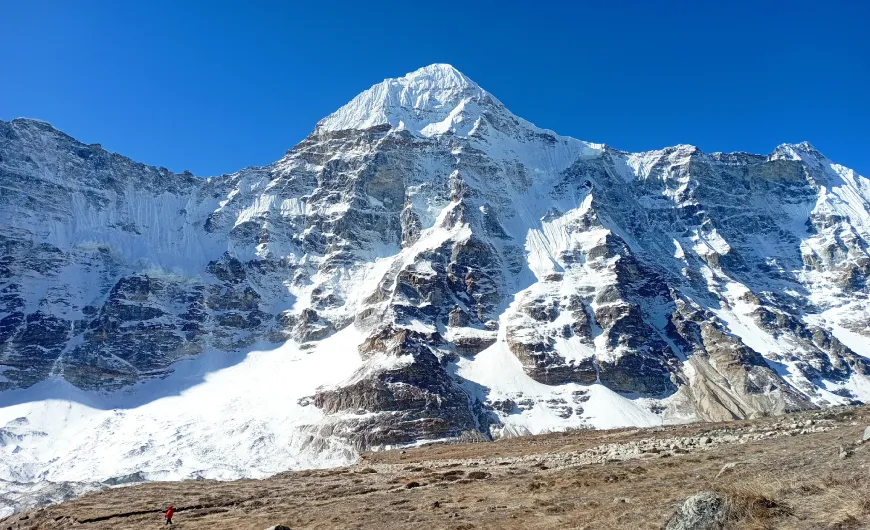
Best Time for Kanchenjunga North Base Camp Trek
The best time to take the Kanchenjunga North Base Camp Trek is during the spring season (March to May) or the autumn season (late September to November)
Spring provides warm and pleasant daytime temperatures ranging from 15 to 20-Degree Celsius, with night begin very cold in Lhonak. Most morning have clear skies but with cloudy afternoons. The sky is usually clear in the morning, but it gets cloudy by the afternoon. Pangpema may have plenty of snow in March, so, April and May are preferable.
In autumn there are the best weather conditions. Monsoons make the sky clear, and the mountains stand sharp on the background of the deep blue sky. The weather becomes dry and crisp, and the nights are cold.
It’s best to avoid the monsoon season (June to August), because of constant rainfall that can leads to landslides, leeches emerge at the foot of the forest, and clouds covering the peaks and in winter, expect lots of snow, which might block the passes and render Pangpema inaccessible.
The Kanchenjunga North Base Camp Trek Route changes each year depending on the snowfall or damage to bridges. Our guides make sure to survey the conditions before and modify the itinerary accordingly.
Difficult, Fitness and Altitude
Kanchenjunga North Base Camp Trek is a tough and demanding one. You spend five to eight hours trekking each day and hardly walk a flat path. The steep ascents, rocky ledges, and moraines will make it hard on your legs and mind.
The remoteness also presents its own challenges to trekkers in terms of distance between villages, availability of medical facilities, and cell phone connectivity. Our trek guides have all first aid kit and satellite phone as back up in case of any emergency.
Altitude is the determining factor here. You climb up from 1,650 meters at Sekathmu to 5,143 meters at Pangpema. Above 3,000 meters you need to adapt physically, which is why we schedule two acclimatization days at Ghunsa and Khambachen. We also practice the “climb high, sleep low” strategy during our rest day.
Altitude sickness can hit anyone, even experienced and physically fit trekkers. Symptoms include headache, nausea, dizziness, and insomnia. Inform your guide about if you feel anything unusual, drink enough water, and do not neglect the symptoms; you need to descent if they get worse. There is no peak view that could justify this risk.
You should start preparing two to three months prior to the trip. Your workouts should consist of cardio, leg exercises, and hikes carrying a heavy backpack. Such preparation will make your Kanchenjunga North Base Camp Trek Itinerary much more pleasurable.
Permit and Regulation
The Kanchenjunga Trek requires many different kinds of permits before the beginning of the trek. Firstly, a foreigner needs to get his/her Tourist Visa that can be acquired when reaching the Tribhuvan International Airport in Kathmandu.
For the Kanchenjunga North Base Camp Trek, trekkers would need the Restricted Area permit, as Kanchenjunga lies in the restricted area of Nepal, that is located in the east part of it. The permit is called a Restricted Area Permit (RAP) and is required for all trekking people.
The Kanchenjunga Conservation Area Project (KCAP) entry permit is also necessary. It helps to develop the conservation process, villages’ infrastructure and maintain the trail.
Guiding requirement. A licensed guide is needed throughout the entire Kanchenjunga North Base Camp Trek Itinerary. Epic Trek Nepal will ensure your guide and all permits are in place, making it easier for you to train.
Documentation required:
- Passport with minimum validity of six months
- A valid visa for Nepal
- Two passport sized photos
- Travel insurance covering high altitude evacuation of 5200 meters
This information can change based on fees and regulations. Keep your permits with you at all times as the checkpoints for the Kanchenjunga North Base Camp Trek route will need to check them.
Accommodation, Meals and Drinking Water
Accommodation on Kanchenjunga North Base Camp Trek Route consist of basic, twin share room, with wooden beds, thin mattresses and shared bathrooms. Do not expect fancy facilities in the high altitude and just accept what is available there. The walls are thin, and the nights are freezing, so make sure to take your sleeping bags at least -15-degree Celsius to keep you warm.
During peak season, it is difficult to arrange room accommodation, and above Khambachen accommodation becomes very limited. Our team provides advanced information wherever possible, and we carry tents for contingency, so that you are always guaranteed a bed.
The meals provided during the Kanchenjunga North Base Camp Trek Route are nutritious and typical local foods. The Nepali staple meal of dal bhat – rice, lentil stew, and vegetables is energy-sustaining and often comes with free servings. Noodles, soups, fried rice, eggs, pancakes, and porridge can be ordered.
Breakfast and dinner meals are provided at your lodge while lunch meals are provided along the trail. Be prepared for vegetarian meals only since meat in the high altitudes might not be fresh.
Water needs treatment each and every time. The lodges offer boiled water; however, its cost varies with elevation. A better choice would be refilling your bottle of water and purifying it with the help of tablets or filters. This will help in saving money as well as reduce plastic wastage.
Extra costs are generally not included in the package. Things such as hot shower, charging facilities for your devices, WiFi, and bottled drinks have to be paid separately, and the cost increases with elevation. Therefore, it is important to carry cash.
Extended Trail and Side Trails
One of the most underrated things about Kanchenjunga North Base Camp Trek is the connection it shares with other trekking routes in the eastern part of Nepal. There are many opportunities that you can enjoy if you have enough time and energy for them.
The Kanchenjunga Trek can be expanded to go on a side trail to Gunsa, a Tibetan village located at an elevation of 3,595 meters. This has been one of the favorites of many trekkers in Kanchenjunga Trek.
Another extended trail of the Kanchenjunga trek is to Taplejung, the home to a vibrant rhododendron forest.
Those trekkers who have time and energy can also think about extending their trekking to the Makalu Base Camp from the region of Kanchenjunga, as both these regions fall into the category of remote areas of eastern Nepal.
In case you wish to extend your trekking to any other region from the Kanchenjunga region, it is always advisable to consult us, “Epic Trek Nepal” because it need some time, permits, guide arrangement and logistic to arrange properly.
Don’t do on the Trip
There are certain things that you need to consider well before undertaking or not undertaking any activity. The following are things you should take note of while undertaking Kanchenjunga North Base Camp Trek.
Never underestimate acclimatization. It would be pointless to risk your health by trying to reach the summit early. This is even more important when it comes to altitude sickness.
Kanchenjunga region is one of the most pristine wilderness regions in Nepal. Therefore, never litter during your trekking. Always ensure that you put all your trash in a plastic bag and discard it in the dustbin.
Always respect local culture. It is important to always walk in a clockwise direction around mani walls, stupas, and prayer wheels. Always seek permission from locals before taking photos.
Avoid going solo without having a guide. The presence of a guide ensures that you not only get an insight into the trek, but your safety is also guaranteed.
Avoid drinking water that is not filtered. Although the water in mountains may be crystal clear, there may be bacteria that can cause you to fall ill. Thus, make sure that you filter or boil water before drinking it.
Pay attention to temperature changes. It does not matter what season it is in; temperatures will suddenly drop in the evening.
Travel Insurance
Getting Travel insurance is very important. The Kanchenjunga is situated in the restricted area where there is little medical facility, and in case of any trouble, the only solution will be to evacuate through helicopter; and it will be very costly without any insurance.
Ensure that your travel insurance covers your journey above 5,000 meters. Travel insurances usually do not cover high-altitude trek, so ensure that while purchasing travel insurance.
Once you get travel insurance, share the details with your guide, and always keep a copy of your travel insurance when you start Kanchenjunga North Base Camp Trek. Travel insurance is the safety net for emergency evacuation in case of any trouble and allows you to trek freely.





 Share