Bhutan Snowman Trek Difficulty
The Bhutan Snowman Trek is one of the toughest treks in the world. Here is why the trek is challenging:
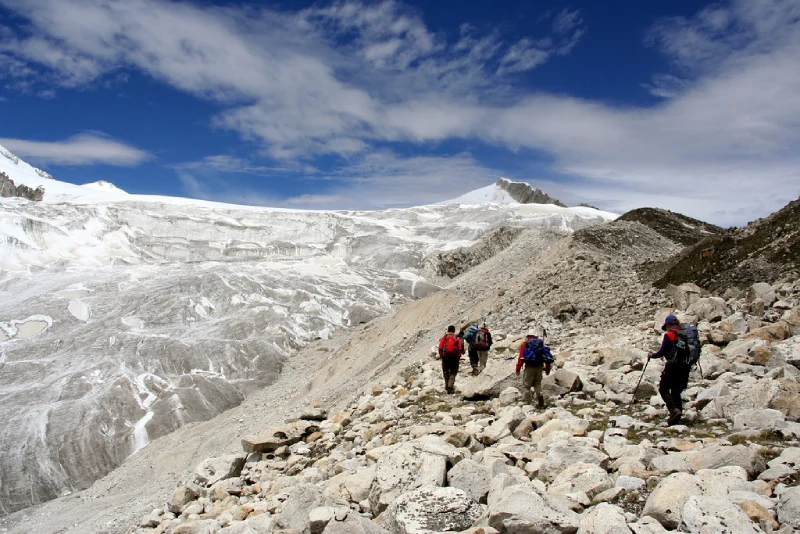
Long walking days and difficult terrain. You will walk from 6 to 9 hours each day that goes through uphill and downhill with lots of steep descents that are painful for knees and toes, especially when carrying a full backpack.
High altitudes and passes. You will spend most of the Snowman Trek in Bhutan above 4,000-meter crossing over 11 passes, with the highest altitude being 5,320 meters. The thin air and low oxygen will slow you down and make sleeping hard.
Remote environment and weather. Help is a couple of days away, the weather changes quickly, and it may start snowing unexpectedly, trapping you in camp for a day or two.
Lack of facilities and camping. Sleeping inside tents throughout the journey. No accommodations, no hot showers and no stores are available. Restrooms are primitive. The nights get extremely cold; hence it is necessary to have good quality winter sleeping bag.
Physical conditioning. Begin training four to six months in advance. Prepare yourself by walking on hills, using stairs, hiking with heavy packs on for hours, and doing cardio activities like running or cycling.
Being physically fit is not enough. Even a good runner may find it difficult on an altitude of 5,000 meters. Everyone’s reaction to altitude is different and doesn’t depend on someone physical. This is the reason why we need prior knowledge of high-altitude trekking experience. You must be aware of your body’s response to altitude beyond 4,500 meters before taking the Snowman Trek of Bhutan.
Preparation for Bhutan Snowman Trek
Planning for Bhutan Snowman Trek needs to start one month before your arrival in Paro. Prioritizing your physicality with cardiovascular exercises such as hiking, cycling, or running would help build up endurance in order to be able to hike for a few days consecutively.
Altitude is not an easy thing to get used to but being careful about it is helpful to cope up. It is really important for you to know something more about altitude sickness and its symptoms and prevention measures. If you have any previous experience in high altitude trekking then it will surely benefit him while trekking to Snowman Trek in Bhutan.
The right way to pack for a trekking experience would be very useful. Layering of clothes is essential as it can get extremely cold, depending upon whether one walks in the valley or near the passes. Essentials list includes a cold weather sleeping bag, appropriate hiking boots, and raincoat.
And do not forget about the documents either. Almost all the nationals will require both a visa and the Sustainable Development Fee, whereas the permits for trekking will be taken care of by Epic Trek Nepal. Preparing all the documents beforehand will absolutely eliminate any stressful situations.
You may want to pack a first-aid kit, sunscreen, and all necessary medication with you, as the number of health care facilities reduces when you start Snowman Trek itinerary.
It will surely not make the Bhutan Snowman Trek an easy one but will certainly be a lot of fun!
Best Time for Bhutan Snowman Trek
Spring (March to May)
In March, there is still heavy snowfall at the high passes, so most trekkers begin their adventure at the end of April. As spring is the time when days become warmer, snow melts, and there is the blooming of rhododendron on the lower trails with the clear view of Jomolhari in the morning.
Autumn (September to November)
The autumn is considered to be the best time of the year. Monsoon season clears the sky, and it allows good visibility and stability in the weather condition. It is warm during the day but slight freezing at night. The Snowman Trek itinerary trails are dry and good for hiking. Start your trip in late September or early October, because November snow may close the high passes.
Winter (December to February)
This is the time when snow blocks the high passes, and the temperature drops below zero. Due to snowfall, the passage to Lunana gets blocked. As a result, the Snowman Trek in Bhutan is not possible between December and February.
Monsoon (June to August)
It rains heavily on the trekking route after June, making paths slippery resulting in landslides blocking the lower parts of the trail. Mountains remains hidden in clouds, while leeches come out in the forest’s areas. This season is not really suitable for comfortable Snowman trek in Bhutan.
In the end, choose Autumn season for reliable weather conditions, and spring season for flowers.
Permit and Trekking Requirements
You cannot go directly to Bhutan and immediately start the Bhutan Snowman Trek individually. The whole trip is controlled by the government. We take care of most of the documentation.
Travel arrangements. Every foreigner needs to arrange a trip through an official tour company. The arrangement of your travel is taken care of by our partner in Bhutan, who is a licensed operator. There are flights to Paro by Drukair and Bhutan Airlines. They should be arranged in advance.
There are two kinds of fees: the Sustainable Development Fee which is charged daily by Bhutan and the visa fee which is charged once. At present, the rate is US$100 per person per night and will remain so till 31 August 2027. For children aged 6 to 12, the rate is halved, while those younger than 6 have no charge at all.
Visa and passport. Most travelers require a visa to Bhutan, and it must be valid for at least six months. The Snowman Trek in Bhutan traverses isolated national parks. It requires trekking permits and route permits. We obtain these before your arrival.
Guide requirements. You are not allowed to trek solo. A qualified Bhutanese guide accompanies every trekking group. Cooks, assistants, and horsemen accompany the group.
Accommodation During the Snowman Trek
Your trip is divided into two parts, which are entirely different from each other. The first part is very pleasant, but not the 24 days of trekking.
Paro, Punakha and Thimphu
Our Snowman Trek tour program consists of four nights spent in hotels: two nights in Paro at the beginning of the tour and two in Punakha and Thimphu at the end. They are government-certified, standard tourist hotels. You get a private room complete with its own attached washroom and hot showers. WiFi will be available in either the rooms or lobby areas, although speed can vary.
On the Trail
Bhutan Snowman Trek is expedition camping, not a lodge trek. There are not teahouse or guest rooms anywhere on the trail. Nothing about the Snowman Trek in Bhutan changes that.
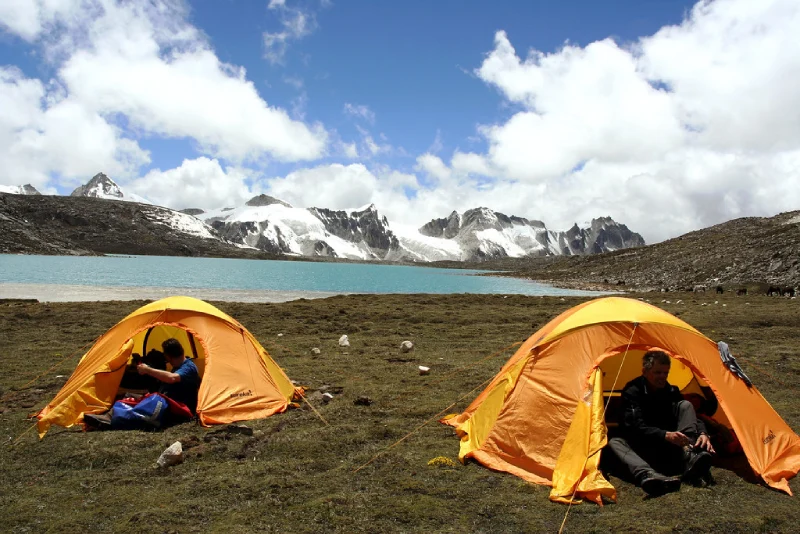
You camp in a two-man tent on a foam mattress. Take a sleeping bag rated for much colder temperatures. It freezes in the morning outside.
The staff sets up a dining tent with a table and some stools. Your cook cooks hot food in it. It also provides you with a dry spot to relax while the weather is bad.
A special tent is set up for a toilet which is basically just a pit. This toilet tent stays basic and becomes even more basic at high campsites and hot showers are unavailable on the trail. The staff will provide you with warm water for washing face and hands. Wet wipes will take care of the rest during the Bhutan Snowman Trek.
No electricity is available in the camps, and mobile signal is almost absent. Take your power banks and a solar charger with you. Place your batteries in the sleeping bag to keep them from discharging in the cold.
Food and Drinking water
Food is the important factor that will provide energy to continue during the Bhutan Snowman Trek. During the hotel stay, they will handle all the breakfast, lunch and dinner and for trekking days, our cook goes with the team and makes each and every meal for you at the campsite.
Breakfast is hot with the help of porridge, eggs, toast, or pancakes. Lunch is also hot and served to you by the team along the route. Tea time provides biscuits, while dinner consists of heavy and hearty meal.
Food consists of a mixture of Bhutanese and easy-to-cook international foods. You should expect rice, noodles, potatoes, lentils, fried vegetables, eggs, and soup. The national food of Bhutan is ema datshi, which includes chilies and cheese.
Vegetables don’t last long. Vegetables will remain fresh mostly for the first week. During the Snowman Trek in Bhutan, later food will be mainly tinned, dried or packed food. Additionally, altitude reduces your appetite. Bring some chocolate, nuts, or energy bars from home.
Never drink untreated water from streams. Team will boil water twice a day and fills your bottles. Take purification pills just to be sure. Every night, have a bottle of boiled water in your sleeping bag – it will warm your feet.
If you are vegan or allergic to something or any other requirements, inform us when you are booking. It will help us prepare the needed supplies because we will have enough time to do that in distant areas.
Trekking Guide, Staff and Support
The Bhutan Snowman Trek is so remote that your team is as important as your preparation. Assistance is far away, so experience will be crucial.
Your group is accompained by a licensed Bhutanese guide from Paro to Punakha. This is a mandatory requirement of Bhutan, and it will ensure your safety. The guide will be aware of the trails, weather condition, and locals. Additionally, our guides are trained in first aid and recognize altitude sickness symptoms.
Trekking crew and camp staff. An assistant guide, cook, and cooking assistants accompany you on the trail. Camp staff set up your tent and dining tent every afternoon. They also prepare the toilet tent and pack everything every morning.
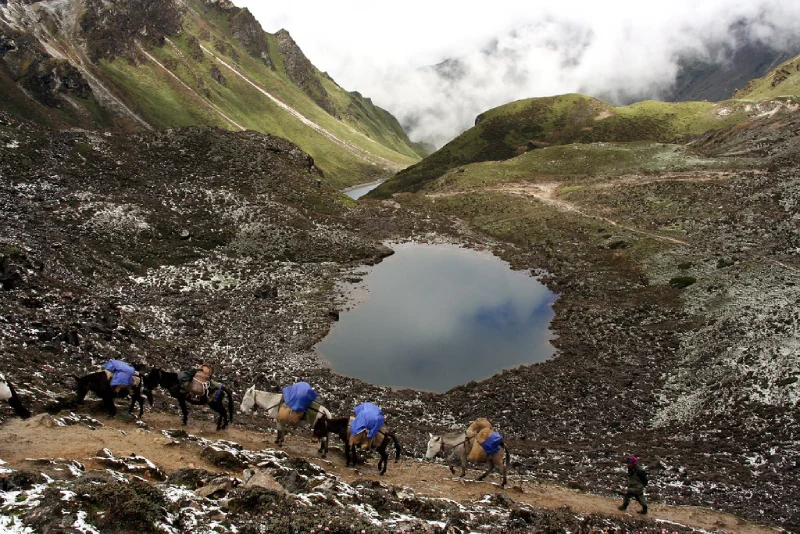
Yaks and horses transport tents, supplies, cooking equipment, and your duffel bag. The herders walk alongside them. You carry a daypack with drinking water, warm clothes and a camera. There is a weight limit for each pack.
Your guide monitors pace, physical condition and weather throughout the day. We have a first aid kit and means to send for rescue from remote camps. If any member is having difficulties, your guide will slow down the pace or descent.
Every night your guide briefs you about the following day’s travel details – distance covered, walking hours and type of terrain. We set out early in the morning to pass the passes while it’s calm. Our Snowman Trek route has extra days built in for the weather, and your guide will decide which days to utilize.
Epic Trek Nepal takes care of your trek behind the scenes.
Travel Insurance
This Bhutan Snowman Trek is not like other Bhutan sightseeing tour as it involves real trekking in remote and high-altitude areas, so travel insurance is a must before undertaking the trek.
When choosing your travel insurance policy, make sure that trekking up to 5,000 meters in altitude is included because there will be parts of the Snowman Trek itinerary that will take you beyond this point. As many usual travel policies do not cover such kinds of treks, so please check this point.
Proper emergency medical treatment and evacuation services are important too, because in case you suffer from altitude sickness or any other kind of injury, it may require immediate evacuation from high alitude and remote place.
Trip cancellation and interruption insurance will also save your money as you have invested a lot while planning your trip to Bhutan. Other than that, you should seek protection in case of lost baggage, delays in flights, and loss of personal property.
Epic Trek Nepal does not provide any kind of insurance plans, but we assist our clients find suitable insurance plan, trekking at high altitudes. Just contact us and we will handle it.




 Share
Share