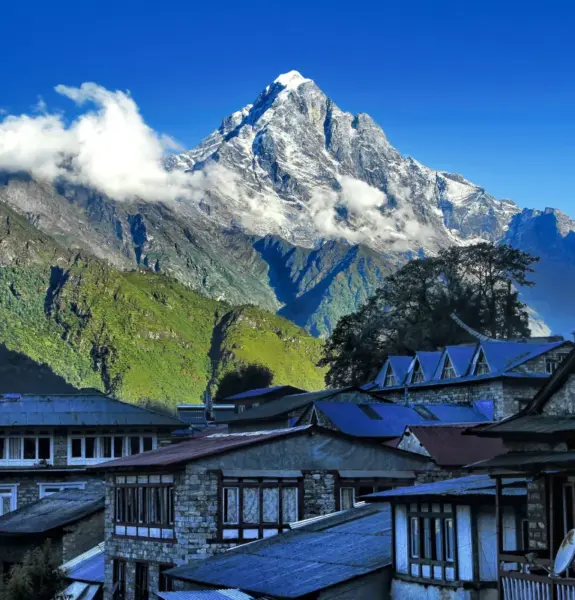
Everest Base Camp Trek Difficult
Everest Base Camp Trek with Helicopter Return is a difficult high-altitude trek which doesn’t require any techinical climbing experience, but the trek route challenges your lungs, legs and patience. It is an altitude challenge, not a distance one.
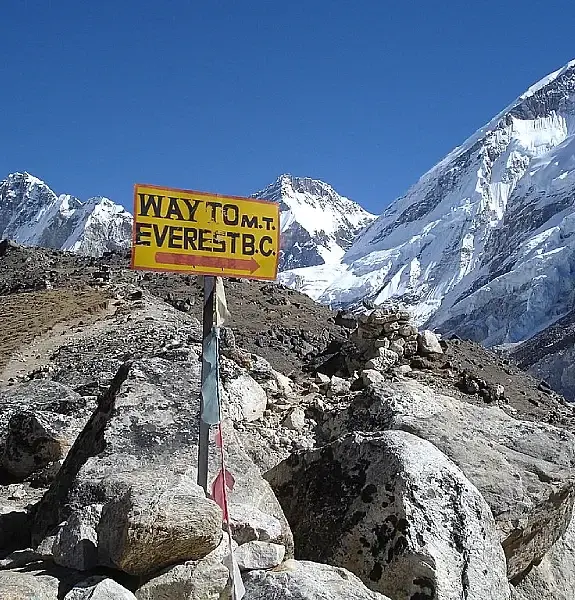
Most of the days generally involves 5 to 7 hours of trek with a light backpack and it can even extend up to 8 to 9 hours during the ascent at day 9. It involves trekking from Lobuche to Gorak Shep, on to Everest Base Camp and back to Gorak Shep.
The path doesn’t stay at same level very often. You will be going up the stony steps up to Namche, down to the river under Tengboche, and up once gain. After Dingboche, the path becomes rocky and you have to pass the loose moraine near the Khumbu Glacier.
You spend four nights above 4,000 m. The air at Gorak Shep has only 50 percent of oxygen compared to the sea level. Headache, lack of appetite, and insomnia are common among trekkers. Sometimes people suffer from altitude sickness.
This is the reason why the rest days at Namche and Dingboche are important. You go uphill and then sleep downhill which is the process of acclimatization. Avoiding these rest days increases your chances greatly. Our guides will monitor the oxygen level of your body and any symptoms daily.
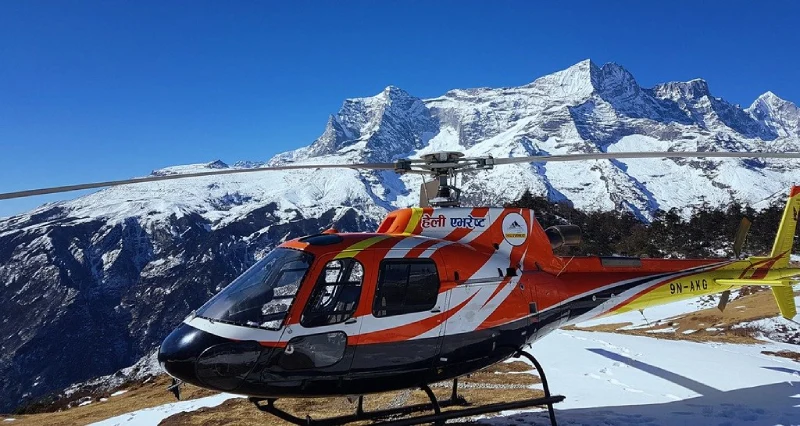
The use of the helicopter for the return journey will spare your knees during the descent. However, it doesn’t make the trek easier, so the Everest Base Camp Trek 11 Days Itinerary will still require good fitness.
Start preparing for the journey 8-12 weeks before the trip. Climb hills, go up and down the stairs and train your legs. Do this with your day pack and boots. Good preparation will make each day of the trekking more enjoyable.
Altitude and Acclimatization
The altitude will determine how much you have progressed. In the Everest Base Camp Helicopter Return Trek, you will increase your elevation quickly, so your body needs time to catch up.
The altitude really increases very fast and ss you go higher, the air pressure goes down, which means that each breath you take delivers less oxygen. Your body acclimatizes to this condition through increased breathing rate and production of red blood cells, and this will take days and no amount of fitness training can help.
That is why the Everest Base Camp Trek 11 Days with Heli Return has two acclimatization days in Namche and Dingboche. Skipping them is dangerous.
On Day 4, you will take a trek to the Everest View area from Namche, returning to spend the night at 3,440 m. On Day 7, you trek up to the ridge from Dingboche and come back down following High camp, low sleep strategy.
During the Everest Base Camp Trek 11 Days itinerary, you need to move slowly, drink three to four liters of water each day, and eat well, even when you are not hungry. Avoid these and symptoms of altitude sickness like mild altitude sickness include headaches, nausea, dizziness, loss of appetite, and insomnia will definitely catch you. Rest, hydration, and slowed pace can be solutions to mild altitude sickness.
If someone got severe altitude sickness, it requires immediate measures. You should descend immediately if you have a very bad headache not eased by medicine, disorientation, loss of balance, breathlessness while resting, or wet coughing. You should never go up if your condition is getting worse.
Your guide will organize your descent or helicopter evacuation. For that you must have travel insurance policy covering evacuation up to 6,000 meters.
Preparation for Everest Base Camp Trek 11 Days with Heli Return
Undoubtedly proper planning is the way to making an amazing travel experience. Proper planning is an essential element of having an excellent experience in Everest Base Camp Helicopter Return Trek. This is because you will face a lot of physical challenges and you have to be in good physical and mental condition before undertaking this trek in order to make sure that you leave Nepal in good condition. Doing just some basic exercise about 4-6 weeks before travel would help you greatly in this.
Apart from stretching exercise, you can concentrate on your cardio exercises like running, walking, cycling. Stair climbing would be very useful to you since the Everest Base Camp trek requires a lot of stairs climbing. Also try some hiking by carrying a backpack in order to be prepared psychologically and physically for this kind of travel.
Packaging is one more major factor. Layering is a must, and your good jacket, gloves and trekking shoes (not new ones, believe me) will help you out. The weather conditions at the Everest Base Camp area are very unpredictable, and therefore it is important to pack all the necessary things that will help you stand the coldness, windy and sunny weather. Being at the high altitude, you need to be ready to walk slowly and adapt to basic living conditions.
Best Time for Everest Base Camp Trek
Timing greatly influences your trek as much as fitness does. The Everest Base Camp Trek 11 Days with Heli Return operates all year round on the map, yet weather determines how much of it you will see and if helicopters can fly.
Spring (March to May)
Spring is the most pleasing time to do Everest Base Camp Helicopter Return Trek. Rhododendron flowers blooms in April, giving vibrant colors to the forest. The sky gets cloudy in the afternoon, hence the best time to sightsee is during the morning hours. Namche gets as warm as 10-15°C during the daytime while temperatures reach -10°C at Gorak Shep during nighttime.
Autumn (September to November)
This season is the best with clear sky and stable weather. The monsoon season has cleaned the dust off the atmosphere, making Everest, Lhotse, and Ama Dablam look clear. This season is the safest for doing the Everest Base Camp Trek with Helicopter Return. The accommodation and flights are booked fast in October, so booking should be done early.
Winter (December to February)
Winter is cold, peaceful, and stunning. Skies remain clear for that crystal clear view of mountains and surrounding, though nighttime temperature reaches to -15°C or even less around Lobuche. The path may be covered by snow, and some high-altitude teahouses shut down. Sometimes strong winds cause problems with helicopter flights, so leave some extra days in Kathmandu.
Monsoon (June to August)
In Monsoon, heavy rain and clouds obscure the views of the peaks. Trails become muddy, and leeches show up below the mountains. There is also a lot of delay or cancelation of flights from Lukla as well as helicopter return flights. We don’t recommend this period.
Our suggestion: Late March to May and late September to November are ideal for your Everest Base Camp Trek 11 Days with Helicopter Return.
Visa and Permit
First of all, the Nepal Tourism visa should be obtained to undertake the Everest Base Camp Trek with Helicopter Return adventure. Getting it is not complicated because you can simply get your visa at the entrance to Kathmandu International Airport or even obtain an online visa from your place.
Secondly, there are two kinds of permits to hike the region of Everest. First, you need to get the Sagarmatha National Park Entry Permit, which costs NPR 3000 (around $25) for foreigners, and the other permit is Khumbu Pasang Lhamu Rural Municipality Permit.
These permits must be taken during the entire Everest Base Camp Trek 11 Days itinerary because they are required for entering restricted areas. If they are not, then you would not be able to enter those places and would ruin your trip.
By booking through Epic Trek Nepal, you would not have to deal with any paperwork or guides since we take care of everything.
Safety and Emergency Support during Everest Base Camp Trek 11 Days with Heli Return
Safety always comes first in the Everest Base Camp Trek 11 Days with Heli Return. While the route is popular, the trek takes place in a remote area at high altitudes. Proper planning and clear communication always matter to prevent small issues from becoming big ones.
Altitude sickness is the major danger of this trek. Proper pace, rest days, and daily consultations with the guide help reduce it. Tell your guide if you feel uneasy. No matter what, do not try to push yourself through symptoms of altitude sickness.
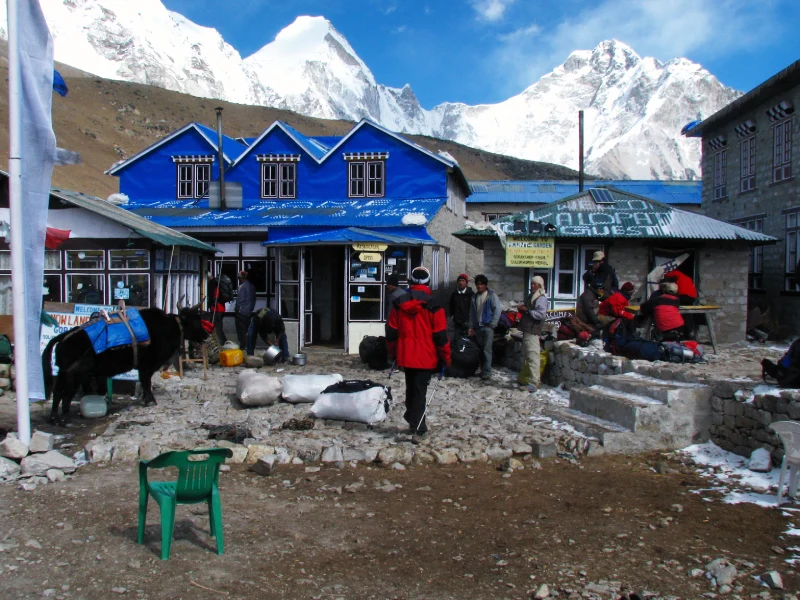
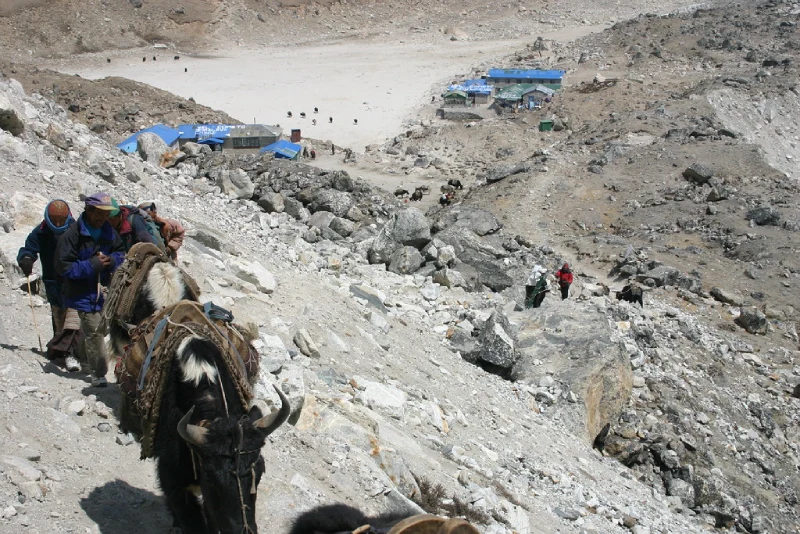
Climate changes very quickly in the mountains. Snowfall, fog, and wind may make trails impassable or flight delays. If the weather becomes dangerous, the guide will cut the day short or even stay overnight in a lodge. While trekking be aware of loose rocks, icy spots, and yaks crossing the trail. Always walk on the mountain side of the trail.
A licensed guide will lead your group each day. He sets the pace, monitors your health, and makes decisions regarding rest stops and descent. The guide’s decision regarding safety is final.
The guide always carries a satellite cell phone and communicates with our Kathmandu office. Above Dingboche the signal will be very weak. Wi-Fi is available for a fee at most lodges but may fail sometimes. Let your loved ones know about the communication blackout days.
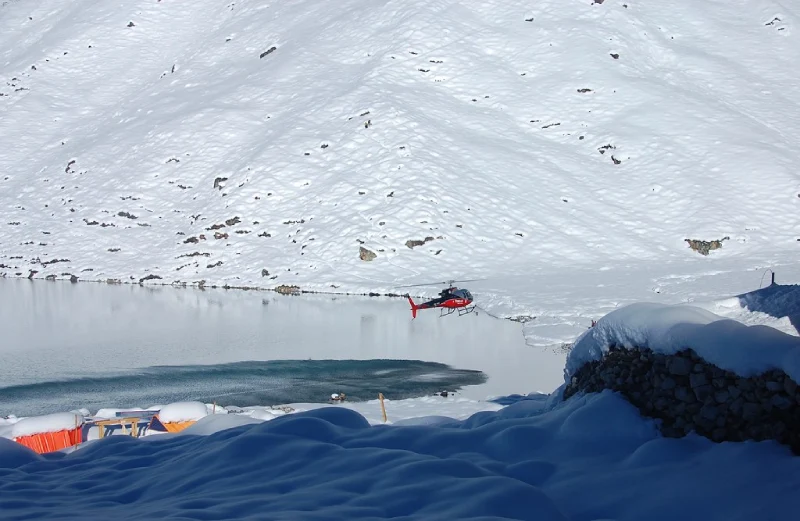
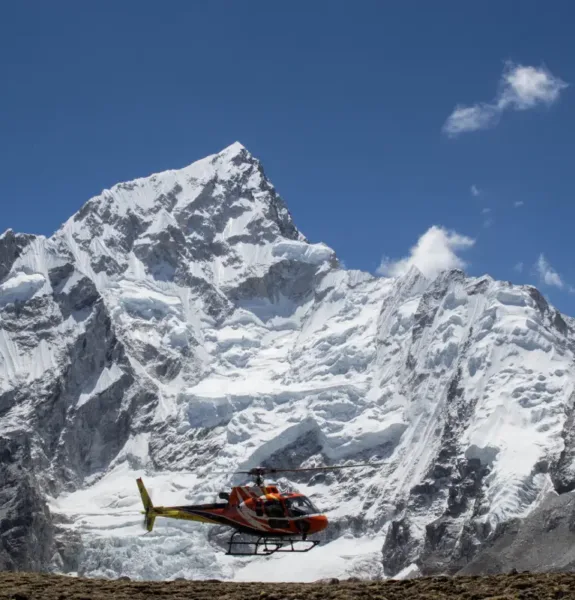
In the event of a trekker being seriously ill, the guide will arrange for descent and if necessary, helicopter evacuation. Rescue helicopters also depend upon the weather. Your Day 10 flight will be an organized one and not an emergency one.
For any Everest Base Camp Trek with Helicopter Return, insurance is mandatory. Select a plan covering trekking up to 6,000 meters and includes helicopter evacuation, health care, and delays. Take a printout and inform us with the insurance number before flying.





 Share
Share