Trek Difficulty, Duration and Altitude
The Tilicho Lake Trek is moderately challenging. You do not require any technical climbing skills, but you will require some level of physical fitness along with mental toughness because breathing becomes quite tough due to the high altitude.
It usually lasts about seven days on 11-day trek which takes 5 to 7 hours each day. On day 7, the route is the most difficult one. The total distance from Tilicho Base Camp to the lake cover 7 to 9 hours of ascending and descending in extremely steep terrain with rocks.
The path between Khangsar and Tilicho Lake requires great attention. It includes narrow trails crossing scree and rocky slopes. Sometimes landslides affect this part Tilicho Lake Trek itinerary, which is carefully assessed by your guide before going there.
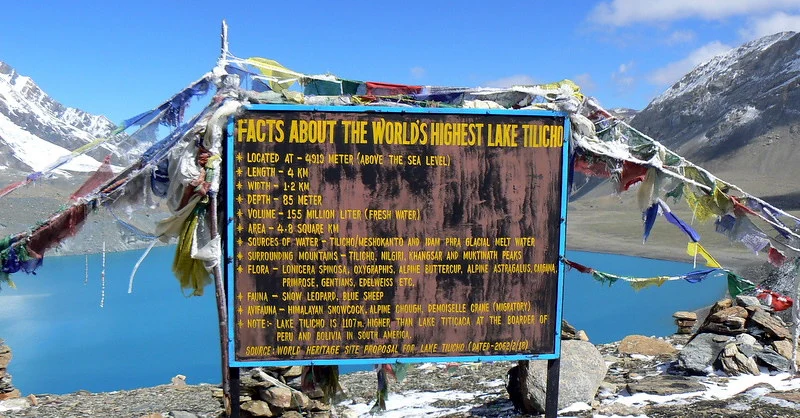
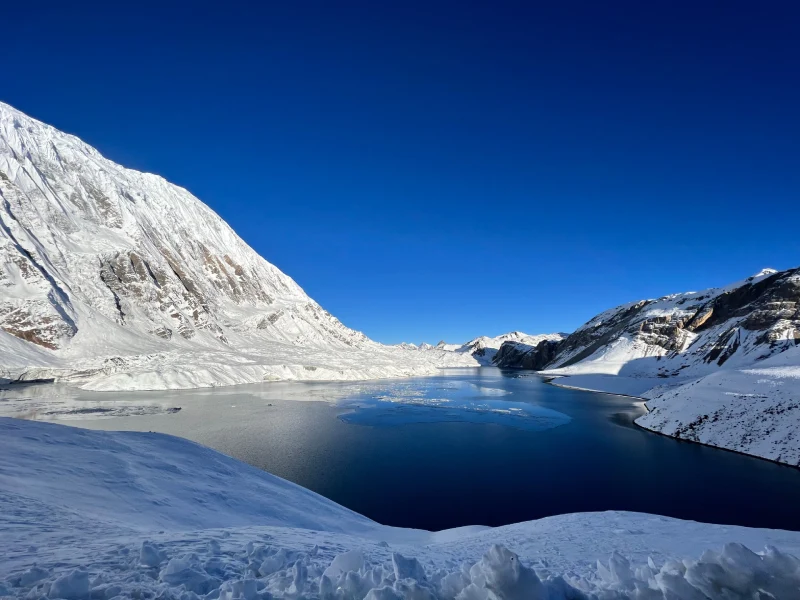
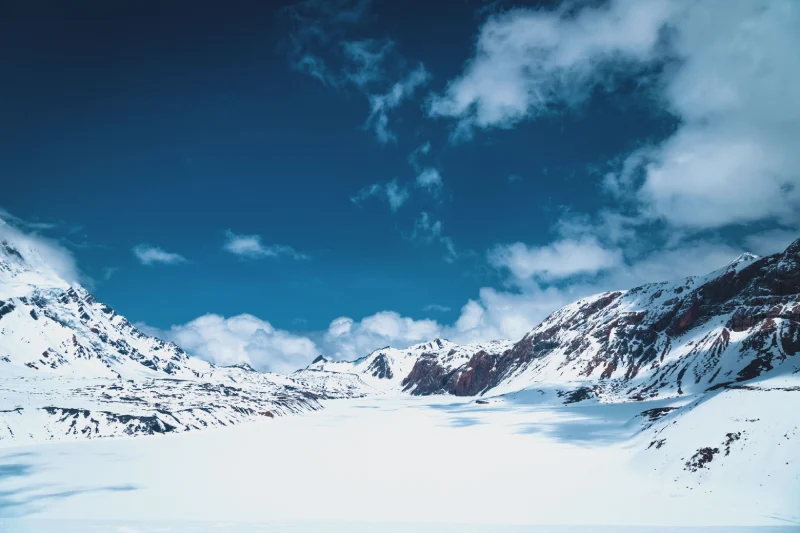
Altitude is the true test. You sleep at 3,540 m in Manang and 4,150 m at base camp and reach 4,919 m at the lake. After 3,000 meters, every person responds individually to changing altitude.
It’s why acclimatization is so important. The rest day in Manang helps your body adjust to high altitude using the rule of “climb high, sleep low“, drinking enough water and ascending slowly.
This trek is right for you if you are an experienced hiker who enjoys long treks and isn’t easily frightened by difficult terrain. Before going, you should train for a couple of months by doing cardio and hill training. In case you have any heart, lungs, or high blood pressure issues consult your doctor.
Best Time for the Tilicho Lake Trek
The best times to visit the Tilicho Lake are in Autumn (September to November) and Spring (March to May), both of which provide travelers with favorable weather conditions as well as clear views of mountains.
Autumn (September to November)
This is the most popular Tilicho Lake Trek season that comes after Monsoon rain which clean the environment and skies and therefore providing travelers with very clear view and distant peaks. The temperatures during the day in Manang region ranges between 10-and 15-degree Celsius, while at the lake they are considerably lower, below freezing in the morning and night. October provides the most stable weather but also more crowded paths. Lodges get full by that time, so it is better to book in advance.
Spring (March to May)
Spring provides a much quieter and greener trail compared to Autumn. Rhododendrons blossom in the forest below, and the weather becomes progressively warmer. Some haze may obscure the views from a distance, as well as afternoon clouds become frequent. At that time of year there can be still some snow above Khangsar.
Season to avoid
For Tilicho Lake Trek, you need to avoid Monsoon and Winter Season. Monsoons during summer will bring rain, leeches, and landslides on the lower track and Winter bring heavy snowfall and freezing cold. The lake freezes over, and the track to Khangsar becomes blocked for many days. Most of the lodges at the upper settlements close down for the season.
Preparation for the Tilicho Lake Trek
Good preparation is going to make the Tilicho Lake Trek much safer and much more enjoyable. Begin preparing yourself at least two to three months prior to your flight. You will need to prepare your body, your equipment, and your mind.
Physical preparation. To build up endurance, do some cardio three to four days a week. You could jog, run, climb stairs, walk uphill, cycle, swim, or any combination of the above. Do some leg exercises as well, since there will be plenty of steep climbs on the Tilicho Lake Trek.
Mental preparation. It can be a long day with cold nights, so you need to be extra patience. Remember that when you are suffering, retreating from a summit is the right decision, not a wrong one.
Health check-ups. Consult your doctor before going. Find out whether you need altitude medication and vaccinations. Bring a first-aid kit with blister patches, painkillers, and rehydration tablets.
Equipment. Pack in layers including a base layer, a fleece, a down jacket, and a rainproof jacket. Bring well-worn boots, trekking poles, a headlamp, sunglasses, a hat, and gloves. A sleeping bag around -10°C works well in Tilicho base camp.
Accommodation, Food and Facilities
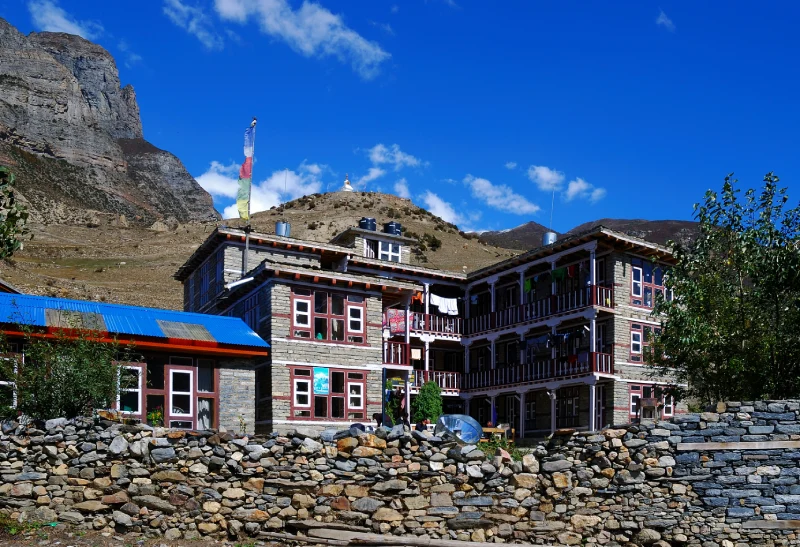
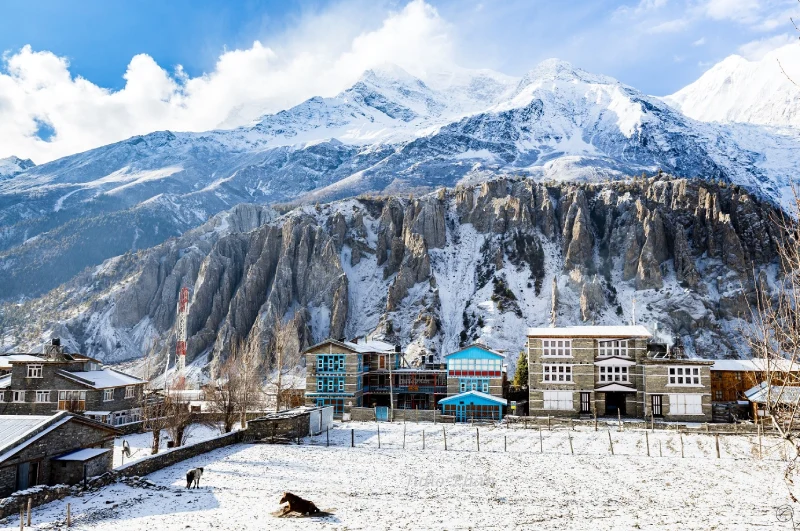
During the Tilicho Lake Trekking expedition, you will be staying in tea houses and homestays which are very cozy and welcoming. In the lowland places such as Chame, Upper Pisang, and Manang they offer comfortable facilities but as you climb farther to the top, the less facilities you will find there.
The majority of the accommodation are twin sharing with two single beds, a mattress, a pillow and a blanket. Bathroom facilities are mostly shared except for some teahouses in Chame and Manan that offer private rooms complete with bathrooms, with some additional charge. As for heating, so bring a good sleeping bag. The most basic accommodation you can find is in the base camp area. Be prepared for that day.
Charging and Wi-Fi. Phone and camera charging is available at most lodges but requires few bucks per device. Having a power bank is quite handy. WiFi is available at Chame and Manang but will cost more money and is quite slow. Mobile network connectivity is also weak after Khangsar.
The food is mainly dal bhat, which you can always have more of. The menus include noodles, fried rice, momos, pasta, pancakes, eggs, soups, among others. The villages of Manang have bakeries offering apple pie and freshly baked bread. Garlic soup is one of the favorite foods here and trekkers say it has something special when at high altitudes.
For drinking water either purchase boiled or filtered water at lodges or get your bottle refilled by using purification tablets. Bring your reusable bottle to reduce plastic waste. Three to four liters of water daily is required for each Tilicho Lake Trek itinerary.
Permits Required for Tilicho Lake Trek
For Tilicho Lake trekking package, you have to get two permits for the Tilicho Lake Trek, that is the ACAP permit and the TIMS card. However, since the Tilicho Lake is not found within the restricted zones of Nepal, you do not require a restricted zone permit.
ACAP permit. Foreign tourists pay about NPR 3,000 (approximately USD 25), whereas SAARC nationals pay less. This permit has to be shown at check posts along the trail.
TIMS card. The Trekkers’ Information Management System card serves as a record of your trekking details. In case of emergencies, this helps rescue teams to locate you.
How to obtain them.
To obtain the permit, all you have to do is provide your passport, passport size photos, and date of travel to us Epic Trek Nepal. Our Tilicho Lake Trek package includes both permits, so you do not have to stand in line at any office. Send us your passport information a few days prior to arrival. We confirm your Tilicho Lake Trek schedule and submit your documents timely.
Trip Extension and Side Trail
The Tilicho Lake Trek is a moderate trek and can be completed without exhausting yourself, so if you want extent, you trek even further to other trail, please tell us in advance, and we will integrate the extension to your itinerary.
Crossing Thorong La Pass: With good fitness, you may hike further from Manang via Thorong La Pass (5,416 m) to Muktinath. You will spend about four-five days on this trip. You should be properly acclimatized, so discuss it with your guide. Not everyone should do it.
Tilicho Lake to Jomsom: The experienced trekkers can take the high and difficult route via Mesokanto La pass from the lake to Jomsom. It is very remote, and the snow can block this path. We recommend it only during the favorable weather and with a competent guide.
Pokhara: Get some rest in Phewa Lake, enjoy paragliding or admire the sunrise in Sarangkot.
Kathmandu Valley: For ancient history and temples, you add visit to Boudhanath, Swayambhunath, Pashupatinath, and Patan Durbar Square in your itinerary.
Our Tilicho Lake trek package will be a perfect fit for any of these add-ons. Your Tilicho Lake Trek itinerary will be planned and transport arranged accordingly.
Travel Insurance
There are no exceptions made when it comes to travel insurance. The Tilicho Lake Trek is located at 4,919 meters above sea level, and there are no medical facilities and transport services at such high altitude.
What should be covered by your travel insurance. You need to check whether the policy includes emergency medical services and helicopter evacuation to a height of 5,000 meters or higher. Most of the standard policies do not include higher altitudes, up to 3,000 or 4,000 meters only. Look for the terms “trekking” and “high altitude” in the policy, otherwise it will not be recognized.
Additional benefits of your travel insurance. It is recommended to choose a plan which also includes trip cancellation, lost or delayed luggage and airfare change coverage. Weather conditions can prevent the Tilicho Lake Trek and cancel flights, which is very costly.
Importance of helicopter rescue. After Manang only few villages have medical facilities. In case of severity of altitude sickness, using a helicopter is the quickest method of going down but it is very expensive and costs thousands of dollars, and the company usually needs proof of insurance first.
Before booking Tilicho Lake Trek, it is important to ask your insurance provider about whether you will need to pay all medical expenses upfront and then get reimbursement. Gather all the information, such as invoices and reports, and keep them. Have a copy of your insurance and an emergency contact number with you.




 Share
Share