Best Time for Kanchenjunga South Base Camp Trek
The best season to do the Kanchenjunga South Base Camp is during Spring and Autumn season because both season offers you safe routes and stunning views. Since each season is quite unique, choose the one that suits you.
Spring (March to May)
This is the most colorful time to go on Kanchenjunga Trek as there will be blooming rhododendron forest between Yarsang and Cheram with red, pink and white hills. The day’s climate during the trekking period becomes increasingly pleasant as the days go by. There is clear visibility of the peaks at mornings although clouds can appear at the afternoons. It’s the best time for flowers and fewer people.
Autumn (September to November)
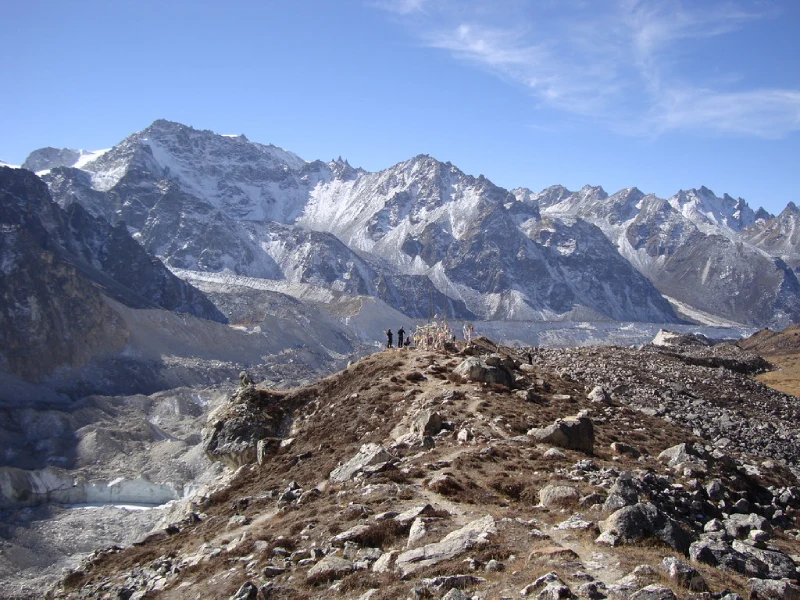
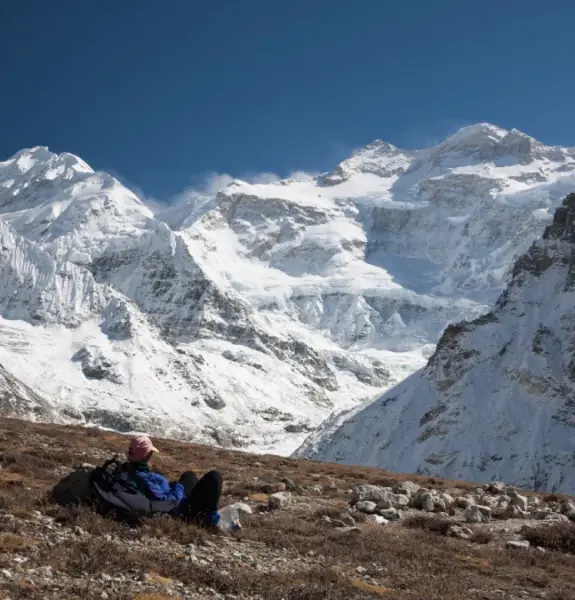
Autumn is the season with the most stable climate of the year. The rains of the monsoon season have washed all the dust and made the mountain scenery clearer than ever. Kanchenjunga, Kabru and Rathong against the backdrop of the deep blue sky will appear clearly visible. The daytime is also pleasant for trekking while at Cheram nights are cool. The autumn is the most popular season for undertaking the Kanchenjunga trek.
Winter and Monsoon
Winter (December to February) offers snowfall and extreme cold above 3,500 m, the trail might even be closed near Oktang, and the teahouses near higher altitude doesn’t operate fully.
Monsoon (June to August) causes rainfall, slippery trails and landslides in areas such as Helok and Taplejung and there will be leeches too on the lower trails.
The weather in the mountains can change rapidly at any time of year. Our guides monitor forecasts regularly to ensure safety.
Kanchenjunga South Base Camp Trek Difficulty
The Kanchenjunga South Base Camp Trek Route is considered a moderate to difficult trek despite being shorter than Kanchenjunga North Base Camp Trek because the trek is still quite demanding due to high altitude and challenging terrain.
On average, trekking days take from six to eight hours. They get even longer on the Day 3 and Day 4 since there are many ascents along the way. Long walking days include steepest parts, which involve going up 1,300m from Yarsang to Tortong and from Tortong to Cheram.
Descending is just as challenging. You descend about 2,170 m in one day on Day 7 from Cheram to Yarsang. Since you will need to use your legs quite hard, it is advisable to have trekking poles.
There is also an added challenge of altitude. Mostly, you spend days under 4,000m altitude; however, Oktang has 4,730m altitude. There is elevation of about 860m from Cheram, which you start before the sunrise. The route is also remote. Teahouses are very basic, the menu is basic, and phone signal vanishes for days on end. Help is distant, which is why you must depend on your guide.
All of this requires endurance. Any experience in trekking will go a long way. If you have trekked on multi-day hikes above 3,000m, you will be much better prepared for the Kanchenjunga Trek. Physical fitness and good preparation play the most significant role. Train for 2-3 months with cardio exercises, uphill walks and carrying your day backpack.
You should also learn the symptoms of altitude sickness, which include headaches, nausea, vomiting, and insomnia. That is why the Kanchenjunga South Base Camp Trek itinerary contains a day off at Cheram to avoid these symptoms.
Permit and Visa
There are couple of permits require for Kanchenjunga Trek. Firstly, a tourist has to get a Tourist visa, which can be obtained on arrival at the Tribhuvan International Airport in Kathmandu.
As for the Kanchenjunga South Base Camp Trek, a Restricted Area Permit is required as the Kanchenjunga is situated in the restricted areas of Nepal, which lie in the east par of Nepal. This permit is known as the Restricted Area Permit (RAP).
The permit known as Kanchenjunga Conservation Area Project (KCAP) entry permit is required as well. This permit helps in developing the process of conservation, development of infrastructure in villages and maintenance of trails.
Guiding requirement: Throughout the itinerary of the Kanchenjunga South Base Camp Trek, a licensed guide is essential. Epic Trek Nepal will take care of your guiding as well as of permits.
Documents needed:
- Passport with a minimum validity of six months.
- Valid visa to Nepal.
- Two photographs size of passport.
- Travel insurance with coverage for high altitude evacuation up to 5000 meters.
This information can change according to fees and policies. Make sure you have all your permits at all times since they will be checked by the checkpoints along the Kanchenjunga South Base Camp Trek.
Accommodation, Food and Drinking Water During the Trek
During the trek, you will find yourself in an isolated area, and the accommodation will be very basic. You don’t get luxury but comfort through tea, local’s hospitality and stunning views.
Accommodation includes staying at teahouse in the village and small lodges, run by local families. These rooms provide twin sharing, consisting of two single beds, a mattress, a pillow and a blanket. Most places have shared bathrooms, which are mostly outside the main building.
The higher you go, the fewer the services you will get. Accommodation around Cheram and Ramche is very basic. Rooms can be small and you may end up sharing the room with other trekkers at busy times. It is advised to carry a sleeping bag to endure the freezing nights.
Electricity is rare. Most of the lodges use solar energy, which is paid additionally. Make sure to have a power bank.
Food
For food, Dal Bhat is the standard food that you will be provided through the Kanchenjunga South Base Camp Trek Route. It consists of rice, lentils and seasonal veggies along with unlimited refill options. It will help you keep a stable source of energy during long days of the Kanchenjunga trek.
The other foods available are noodles, soup, potatoes, eggs, and local cuisines. Breakfast may consist of porridge, bread, eggs, or Tibetan bread. Hot beverages include tea, coffee, hot chocolate, and ginger lemon honey.
Drinking Water
Tap water or river water that you find in the trek should not be consumed without treatment. Our guides will assist you in filling up bottles with boiled water or treated water through purification tablets or filters.
Extended Trails and Side Trails
It is easy to extend Kanchenjunga South Base Camp Trek route if you want to spend some additional time there. Below are the best choices for this.
Pathibhara Devi Temple
It is the easiest choice to add to your itinerary. Pathibhara lies at an altitude of 3,794 meters above Taplejung and is popular among pilgrims all the year round. It can be reached by road and a small hike to get acclimated.
It is located close to the Terai area and can be used as a nice addition either in the beginning or in the end of the trekking expedition. You will have an opportunity to explore tea farming area, taste fresh local tea and have some rest after driving.
If you have two-three weeks available you can use both parts of Kanchenjunga Trek. The northern part brings you to Pangpema at the height of 5,140 meters above sea level.
Any kind of extension requires extra time and fitness along with permits. Let us know in advance, and we will make a customized program for you.
Don’t do on the Trip
There are certain aspects you need to have taken into account before engaging or failing to engage in any activity. Some of the things you need to remember while doing Kanchenjunga North Base Camp Trek are;
Don’t ever ignore acclimatization. Otherwise, it will be useless for you to take a risk and try reaching the summit very soon. This becomes particularly significant especially when you talk about altitude sickness.
Kanchenjunga area is one of the most untouched wilderness areas in Nepal. You should not litter in any way during your trekking. You should always make sure that all your wastes go inside a plastic bag and then you can throw it in the dustbin.
Always respect the culture of the locals. You need to walk clockwise around the mani walls, stupas and prayer wheels. Always ask permission before clicking your pictures.
Avoid venturing alone without having someone to guide you because it will ensure not only your insight into the trek but also your safety.
Avoid drinking unfiltered water. Even though the water in the mountain might look very clear, there could be some bacteria in the water that can make you sick. So drink only after filtering or boiling the water.
Be careful about changes in temperatures. Whether it is summer or any other season, the temperatures will suddenly change during the evenings.
Travel Insurance and Safety
A good insurance is a must for Kanchenjunga South Base Camp Trek as this is an isolated location with limited access to medical care and therefore trekkers needs to arrange a suitable insurance before the start of the trip.
Insurance Coverage
Get yourself insured for treks at high altitudes and make sure your policy includes the highest altitude covered. The height of Oktang is 4,730m and most policies usually cover up to 3,000m or 4,000m. Make sure that your policy covers this height.
Also, make sure your policy includes the cover for helicopter evacuation in case of emergencies since sometimes it is the only way out in such a remote location. Medical expenses cannot be ignored either since the insurance should cover hospital expenses, medication, and repatriation.
Safety on the trail
Altitude sickness is the primary threat over 4,000m, but you can avoid it by pacing yourself, drinking lots of water and taking that rest day in Cheram. Symptoms of altitude sickness includes headaches, nausea or dizziness and you should never ignore it.
In addition the guide that will leads the trek will monitors your health condition and evaluates the situation every day. Your guide will decide to stop or go back if the symptoms become severe. Please listen to him even if you are close to the summit.
If there is communication problems because the phone signal is unavailable for several days during the trek. The guide uses a satellite phone or contact someone locally. Please inform us of your insurance information and emergency contacts before the trek starts.
We take care of all the potential situations in advance. We know where to evacuate you from the Kanchenjunga Trek.





 Share