Everest Base Camp Trek Difficulty
Everest Base Camp Yoga Trek is not going to be easy one as it is considered to be moderate to challenging trek. This journey will require a lot of physical work, so you should get ready for that.
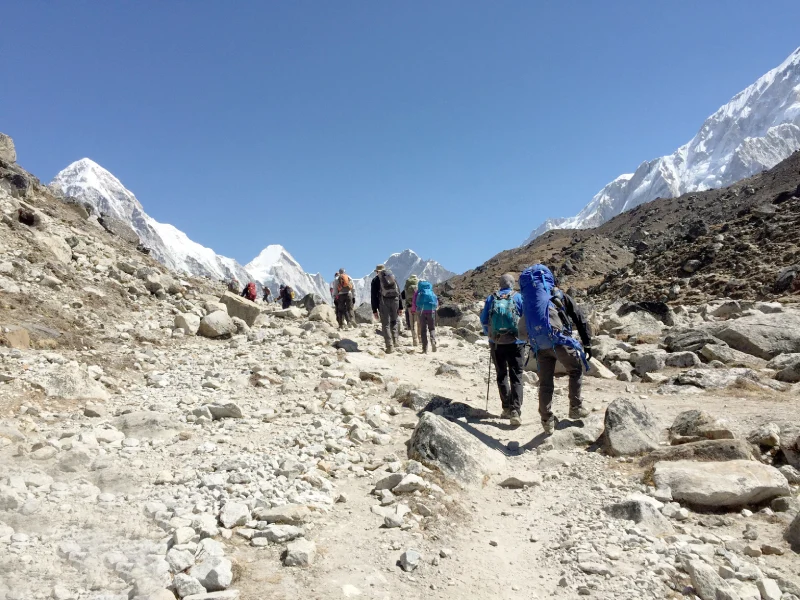
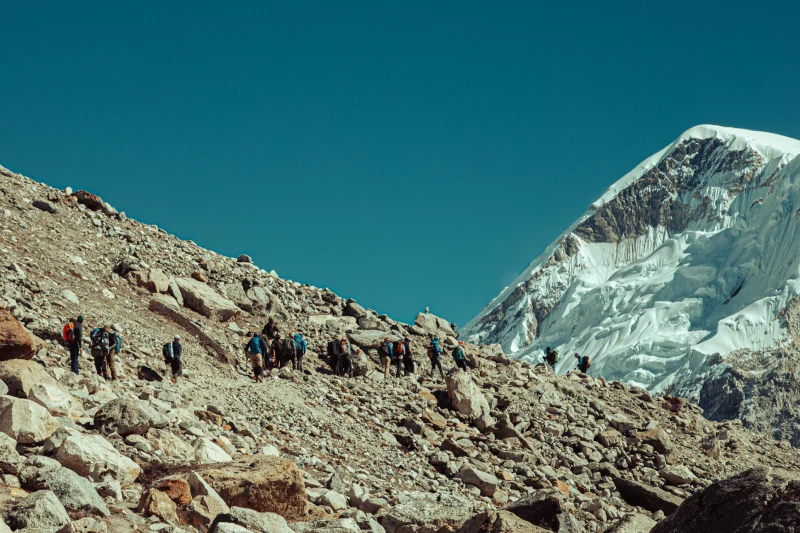
You will spend from 6 to 7 hours walking each day, and sometimes you will have to walk for more than 8 hours. You will find a lot of rugged, stony paths along ridges and rivers, and you will have to climb up and down, repeating the process the following day.
Altitude becomes crucial when it comes to the Everest Base Camp Trek. You will start your Everest Base Camp Yoga Trek journey from 5,300 m above sea level, and the air will become less dense with each step. This will slow you down and make even simple actions, such as walking up, more complicated.
Temperature changes quickly as you climb, and mornings and evenings become unbearably cold, despite being trekking seasons. Proper layering of clothes becomes crucial.
The journey includes acclimatization stops at Namche Bazaar and Dingboche. They are not days to relax; you will have to walk a little bit each day to get used to the decreasing levels of oxygen.
This is one thing you must understand well: flexibility or experience in yoga does not mean that you are fit for high-altitude trekking. Yoga enables breath control and body awareness, which will assist you when trekking for hours. However, it will not prepare you physically to endure the activity.
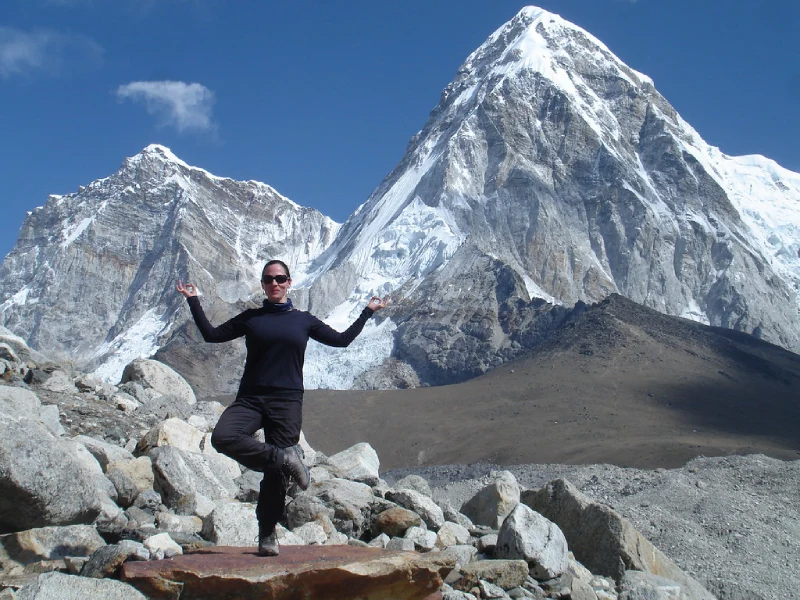
When thinking about undertaking the Everest Base Camp Yoga Trek, be ready to train your body for walking. Mix it with regular yoga practice and you will find that you are balanced while on the trek.
Altitude and Acclimatization
Altitude sickness is the main threat while climbing towards Everest Base Camp and that is the reason why acclimatization days are included in the route itinerary.
Your first acclimatization day would take place in Namche Bazaar at an elevation of 3,440 meters. You would climb to nearby viewpoints such as Everest View Hotel to gain some altitude before descending down for the night stay at the same elevation. Second acclimatization point is at Dingboche would be at 4,410 meters. A small walk around nearby hills would allow your lungs and blood to get used to thinner air before moving further to higher camps.
As for the entire Everest Base Camp Yoga Trek itinerary, gradual ascent method is used for climbing. The elevation gain will be well calculated and not done rapidly, in order to prevent the possibility of altitude sickness.
Look out for the signs of altitude sickness: headaches, nausea, lightheadedness, or abnormal tiredness. These symptoms occur frequently and often ease through resting and hydrating.
But if your symptoms become worse like loss of mental clarity, trouble walking normally, or breathing hard while at rest, you need to descend right away. Your guide will be watching you closely each day and will decide when this needs to happen.
Hydration is extremely important while climbing and many trekkers don’t realize how important it really is. You should drink at least three to four liters of water each day while climbing.
While Yoga and meditation can assist you in remaining relaxed and in touch with yourself while trekking. But they are not ways to cure altitude sickness. The correct acclimatization and hydration are still your best protection for Everest yoga trek.
Best Time for Everest Base Camp Yoga Trek
Spring (March to May)
In Spring (March – May), there will be warm weather and rhododendrons flowering on the lower trail. There will be clear skies in the mornings with good views of mountains until clouds form during the afternoons. Trails will be dry and safe with easy leg support.
Autumn (September to November)
Autumn (September – November) is the most preferred time for EBC Yoga trek due to the clear sky post-monsoon which gives you some of the best mountain views of the year. The weather is cool but not too cold and the trails have been maintained from rain.
The Winter months and the Monsoon season come with tough conditions, such as heavy snowfall, cold weather, low visibility, or slippery and muddy paths, making outdoor yoga sessions difficult to conduct.
Overall, Spring and fall seasons provide peaceful mornings and consistent weather conditions, thus enabling outdoor yoga and meditation classes to become more feasible. Moreover, with clear skies, there will be improved visibility during the meditative stops on the path.
When choosing your dates for the Everest Base Camp Yoga Trek, consider these two windows. You will get good weather, safe trails, and constant conditions for hiking and yoga practice.
Permits Required for Everest Base Camp Yoga Trek
For trekking around the Khumbu region on the Everest Base Camp Yoga Trek, you will need two different permits.
The permit is required for those travelers who wish to access the national park in the Everest region, which includes Namche Bazaar, Khumjung, Phortse, and Tengboche villages.
The permit is issued by the local government organization called Khumbu Pasang Lhamu Rural Municipality, and it is required by the trekkers visiting the villages and trails in its jurisdiction. This permit is an upgrade version of the earlier TIMS card issued in this region, and it will be checked at various entry points of the trek including Lukla.
Who arranges this permit
Both of these permits are arranged as part of the trekking itinerary by Epic Trek Nepal. Trekkers do not have to visit any permit issuing agency; all the documentation will be organized before the Everest Base Camp Yoga Trek.
What trekkers need to provide
For processing the permits, trekkers will normally have to submit:
- A valid passport
- A couple of passport size pictures
- Passport information
Please note that the requirements for permits and fees may change, which is why it may be useful to clarify the latest rules with Epic Trek Nepal prior to the Everest Base Camp Yoga Trek.
Accommodation
At Kathmandu, you will stay at a nice 3 star hotel with rooms that have attached bathrooms and hot showers. This is one of the best times to relax after a good time in the city.
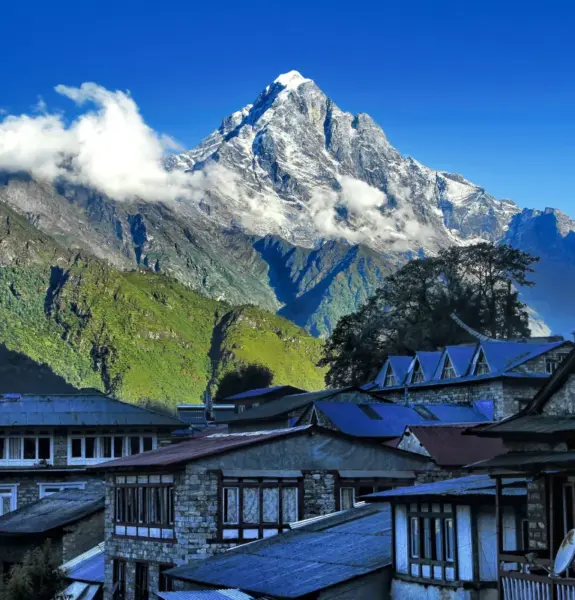
From the moment you start Everest Base Camp Yoga Trek itinerary, your accommodation will change to teahouses and lodges. You will be accommodated in rooms in simple family-owned teahouses or lodges with twin sharing arrangement having just enough beds and blankets without proper privacy.
Facilities become less luxurious as you ascend to higher heights. Lower villages like Phakding and Namche have either attached or common toilet facilities, while some have hot showers in lodges with additional cost involved. Toilets are normally common above those villages while hot showers become non-existent at higher places.
Wi-Fi services are provided by most teahouses, but the speed of connectivity depends upon altitude and availability. The charging of devices is possible everywhere but will cost you something per hour or per device.
Regarding yoga, the classes are conducted wherever there is room available. Lodges provide common dining areas which become yoga practice areas once the dining is over. Whenever possible, outdoor yoga classes are conducted in a courtyard or any open ground which has beautiful mountains right in front of you.
The guide will choose the best possible spot every day, indoor or outdoor, depending upon the weather conditions, altitude, and the room available at each point on the path of Everest yoga trek.
Food and Drinking Water
Food on the Everest yoga trek is simple, nutritious, and superior to what most hikers are used to. Teahouses provide breakfasts, lunches, and dinners, with menu options becoming limited but not less delicious as you get higher up the hills.
Dal bhat is the food of choice for trekking – rice, lentil soup, vegetables, and occasionally a side of pickle served in unlimited quantities. This food is nutritious, easily digestible, and popular among both guides and porters.
Apart from dal bhat, most teahouses will have a combination of Tibetan and Western cuisine including momos, noodle soup, pasta, pancakes, and even pizzas in some towns. Vegetarian options are plentiful, and most teahouses can cater according to your special dietary requirements.
The importance of drinking water becomes more crucial while trekking at altitudes that most people do not even imagine. While bottled water is easily available, it is more expensive as the altitude increases. Plastic waste is also an environmental problem that needs to be addressed.
Hot beverages like tea, coffee, and hot lemon tea are quite popular during each meal and a nice way to warm oneself after a cold trekking day. Our Everest Base Camp Yoga Trek does not include any special “yoga diet.” All meals will be the same as other EBC trekkers get, with the opportunity to have vegetarian food.
Don’t do on this trek
When you go on the Everest Base Camp Yoga Trek, there are something that you need to keep in mind and move forward very precisely. So here are some key points that you need to consider twice:
- Don’t skip acclimatization day: If you don’t to return back mid journey, never skip the acclimatization day. Some people feel like acclimatization is like wasting time, but it is crucial to avoid altitude sickness. It allows your body to adjust to low oxygen area and help you trek better.
- Don’t litter on the trail: The Khumbu region has been facing huge garbage problem because of all the trekking throwing garbage around. So please, pack all the rubbish that you bring in a bag and toss it where it is allowed.
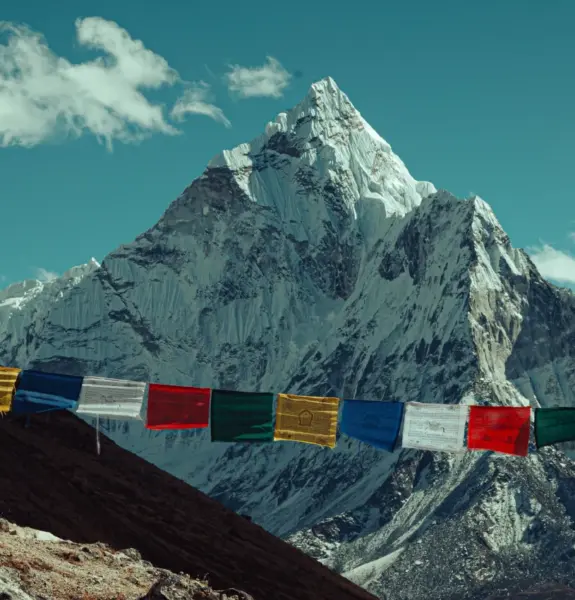
- Don’t touch or disturb religious monuments: Keep your hands off any religious monuments. For the sherpa community, things like Mani stones, prayer flags, stupa and monasteries are very sacred. Always walk in clockwise direction around stupas and mani walls and remember not to sit or touch anything in a disrespectful way.
- Don’t drink unfiltered water: The tap water or stream water along the trek can carry unwanted bacteria which can cause diarrhea or other problem. So always drink your purified, boiled or filtered water. Just in case bring water purification tablet.
- Don’t underestimate the weather: Mountain’s weather can switch moods in a flash, so equip yourself with rainwear, layers, and sunblock. Even if the sky is crystal clear when you start, be prepared.
Travel Insurance
Travel insurance is not only recommended for the Everest Base Camp Yoga Trek but mandatory. We encourage all the trekkers to acquire travel insurance before the start of the tour.
The insurance policy should include trekking at the height of at least 6,000 meters above sea level. Standard policies have a limit of 3,000 and 4,000 meters. Please check the small print and make sure that the policy includes trekking.
Helicopter evacuation is the most crucial coverage for Everest Base Camp Yoga Trek. In case of any major health condition or injuries caused by an altitude sickness during your short trek to Everest, helicopter evacuation is the only way to you can get back down to safety. These evacuations cost thousands of dollars when done without insurance.
Additionally, your policy should also cover medical expenses, hospital stay, and repatriation. Trip cancellation and flight delay are good bonuses because Lukla flights may be affected by weather conditions. Also provide your guide with the insurance detail and emergency phone numbers.
Make sure that yoga and meditation practice is covered by the insurance company. They usually do cover such practices during a regular trek; however, it will take only a couple of minutes to find out.
Print a copy of the insurance policy and have the number of emergency contact of the insurance company ready and give both to your guide after you arrive in Kathmandu.
Before booking your Everest Base Camp Yoga Trek, make sure to compare a couple of companies and choose one that will suit the conditions of your Everest yoga trek.





 Share
Share