



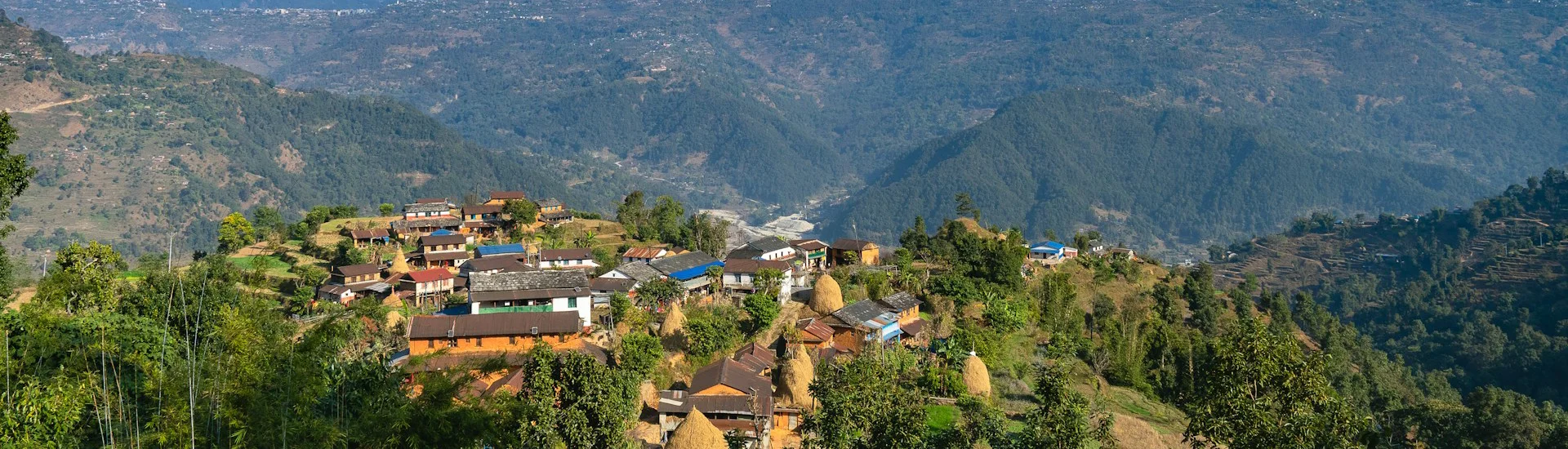
Buddha temples in Nepal
10 August 2026
By admin
The prayer flag fluttering in the wind over Boudhanath every morning and the monks circling the stupa before the rest of the city gets moving. This is not a performance; this is how daily life goes in Kathmandu.
There is something very unique about Nepal because of its history of Buddhism. After all, the country has Lumbini – the birthplace of the Buddha Gautama. Before Buddhism made its way across the entirety of Asia, it began right here.
This explains why Buddha temples in Nepal are unique compared to other temples. Not only are they holy monuments in their own right, but they stand on the exact spot where the religion itself originated.
This blog takes you through some of the temples worth visiting, the routes of pilgrimage undertaken by hikers, and provides you with some helpful advice on how to visit these temples of Nepal. Some locations have become famous while others remain unknown, hidden away in the valleys which very few people ever see.
Buddhism and Buddhist Heritage in Nepal
Buddhism was introduced to Nepal from its origin in the birthplace of Gautama Buddha in Limbuni, located in the southern lowlands of Nepal close to border of India, somewhere in the sixth century B.C.E. From there Buddhism has spread northward to Kathmandu valley and then to the Himalayan regions of Nepal.
Gautam Buddha was raised as a prince in the kingdom of Shakya, which today falls in southern Nepal. He left his royal life to find the solution to human pain, attained enlightenment in India, but the connection with his place always remained with him.
The Buddhism spread slowly after the Buddha’s death throughout the region with the help of traders, priests, and pilgrims who moved the teachings into the valley of Kathmandu and further beyond.
There are two main forms of Buddhism exit today in Nepal. In the Kathmandu Valley, there is the unique Newar Buddhism that combines Mahayana and Vajrayana Buddhism with secret courtyards, detailed metalwork and ritual that is performed by Newar priest. The other one is Tibetan Buddhism that arrived in 1959, in the home of mountains like Everest, Mustang and Langtang practiced by Sherpa and Tamang communities, which is why you see maroon-robed monks, mani walls and monasteries in the high mountains.
What both traditions share is the respect of stupas, the belief that monasteries should be places of education, and that pilgrimage is the way to unite everyday life with the divine. That is the common factor which holds together this incredibly diverse sacred sites in Nepal.
For Buddhists, stupas carry significant importance in the landscape. A stupa symbolizes the enlightened mind of Buddha and waking around the stupa in a clockwise direction. On the other hand, monasteries ensure that the philosophy of Buddhism is preserved through prayer and teachings.
The idea of pilgrimage brings all the elements together. Devotees have been visiting Buddhist pilgrimage sites in Nepal for hundreds of years to pay their respect, seek blessings or just sit in silence next to a sacred place. It is exactly what makes Nepal important for Buddhism.
Famous Buddha Temples and Buddhist Sites in Nepal
Nepal is a home to many Buddha temples, but only few stand out for their history, architecture and spiritual significance. These are the famous Buddhist temples in Nepal that many tourist and locals love to visit.
Each one is unique in its own way; some of them are located in crowded city centers, while others are situated in distant valleys in the mountains. They all represent the entire evolution of Buddha temples in Nepal.
Boudhanath Stupa
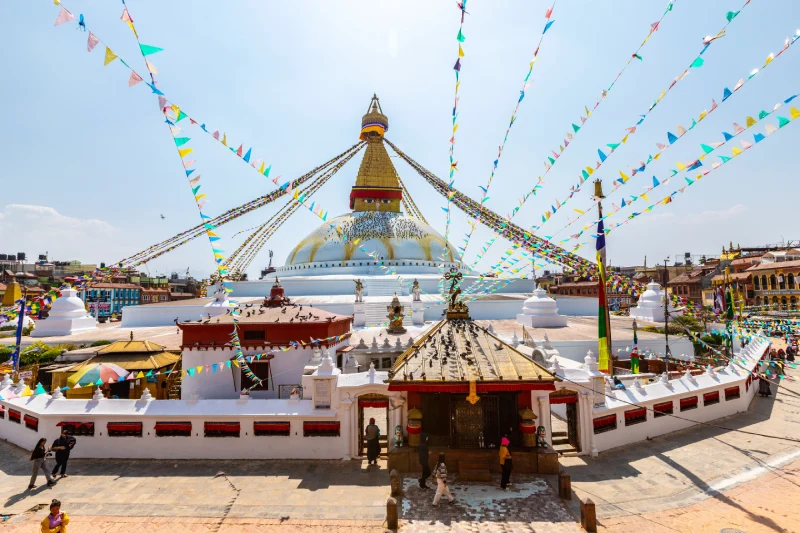
Boudhanath is one of the famous Buddhist temples of Nepal which lies at the eastern edge of Kathmandu with its massive white dome, painted eyes that watch over the entire city.
The stupa is believed to build in the 14th century, but some source says that is much older than that. Tibetan refugees began living around it several decades ago, making it a vibrant center of Tibetan Buddhism.
Since the 1960s, Boudhanath has served as the main point of the Tibetan refugee community, and there are well over a dozen monasteries in the vicinity of the main stupa, constructed in the period since by lamas who had fled from Tibet.
The scene changes depending on the time of the day: the early morning is silent except for the sound of footsteps and prayer wheels being turned slowly until mid-morning when the shops serving tea start to get busy and pilgrims light butter lamps in the shrines surrounding the base of the stupa. Later in the afternoon, the kora becomes busy once again, with the monks chanting within the gompas surrounding the stupa.
There are many monasteries located around the stupa which allow visitors during prayer hours. That is why Boudhanath is one of the most popular Buddhist pilgrimage sites in Nepal.
Swayambhunath Stupa – The Monkey Temple
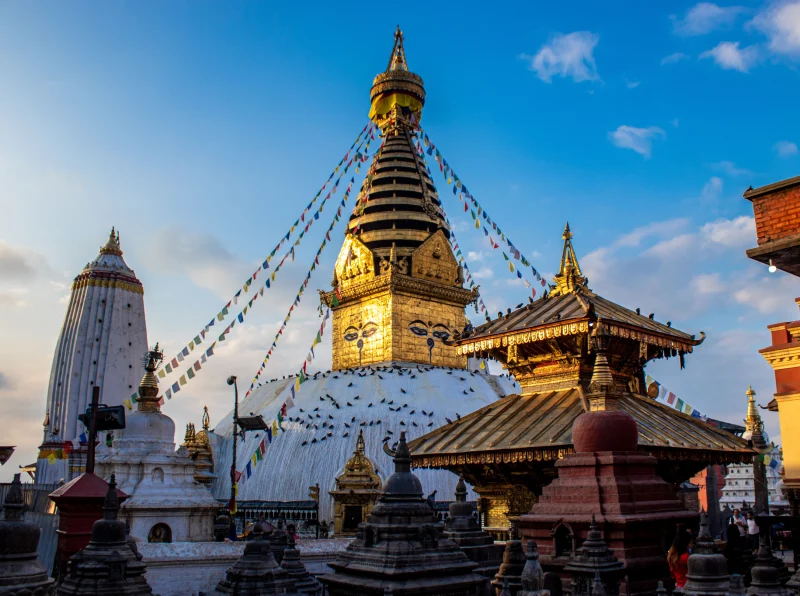
Swayambhunath known as Monkey Temple is located on the hilltop towards the west of the central city of Kathmandu. The journey to this place involves climbing over 300 stairs made of stones. Long tailed monkeys move all around the temple, which is how this name was started.
This place has a very long history, which goes back for more than 1,500 years. Both Buddhist and Hindu temples coexist peacefully on the same piece of land.
Golden tower and eyes of the stupa overlook the whole Kathmandu valley. On a sunny day, visitors may enjoy the view over rooftops and hills. Visitors can expect the steep steps, many monkeys, and pilgrims walking on the stairs with prayer wheels. This religious site is one of the most visited in Nepal and people come to see the sunset in silence.
Maya Devi Temple in Lumbini
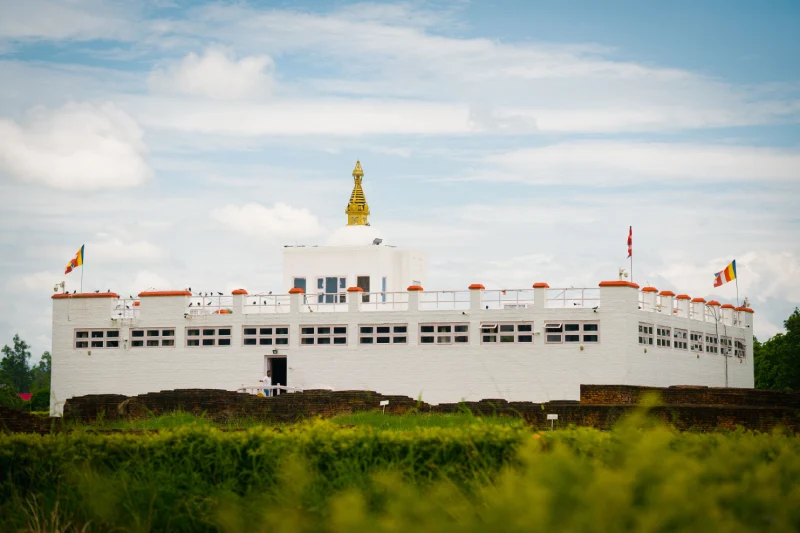
Lumbini is the birthplace of Buddha Siddhartha Gautama according to archaeological excavations and inscription made at this site. Maya devi in Lumbini is the exact place where Buddha was born, built over remain of old temples. In this temple, there is a marker stone which shows the exact place of birth, which is placed behind glass with low light.
There is Sacred Garden around this temple, consisting of old ruins, sacred pond, Bodhi tree and prayer flags. Monks and pilgrims often sit in meditation in this garden. There is also the Ashoka Pillar which was put up by King Ashoka in 3rd century BCE. The pillar holds an inscription which declares Lumbini to be the birthplace of Buddha and makes this the most important pilgrimage site in Nepal for Buddhists.
For Buddhists, Lumbini cannot be skipped. It is the beginning point of the whole Buddhist journey.
Namo Buddha
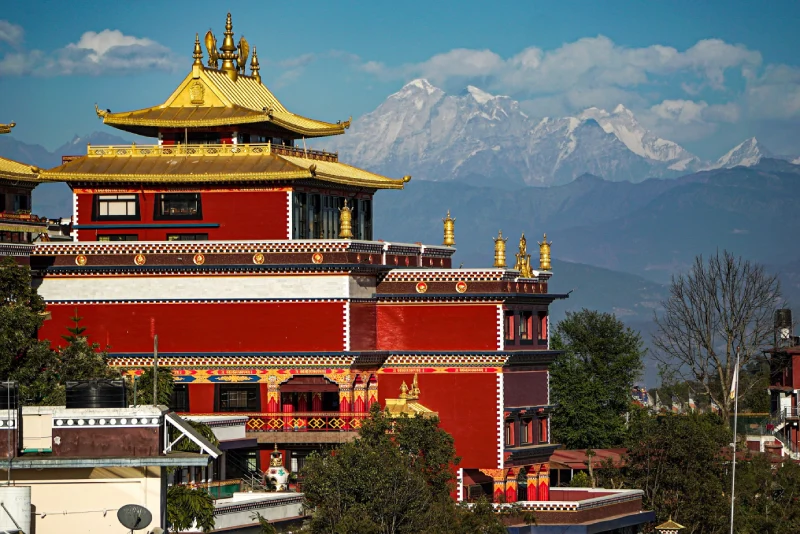
Namo Buddha is approximately 3 hours away from Kathmandu. It is located on a hillside offering beautiful views of the Himalayas. As per history, it is believed that the Buddha once sacrificed his body to feed a starving tiger in the region.
This makes Namo Buddha a very spiritual place. There exists a monastery at the location, which is the residents of some monks, who will be delighted to receive you with open arms. It remains quiet throughout the day. There is always a wind blowing in the pines and prayer flags fluttering in the wind, and the hills stretching towards the snow-capped mountains.
Many people often visit this location along with a short walk from Dhulikhel.
Golden Temple – Hiranya Varna Mahavihar
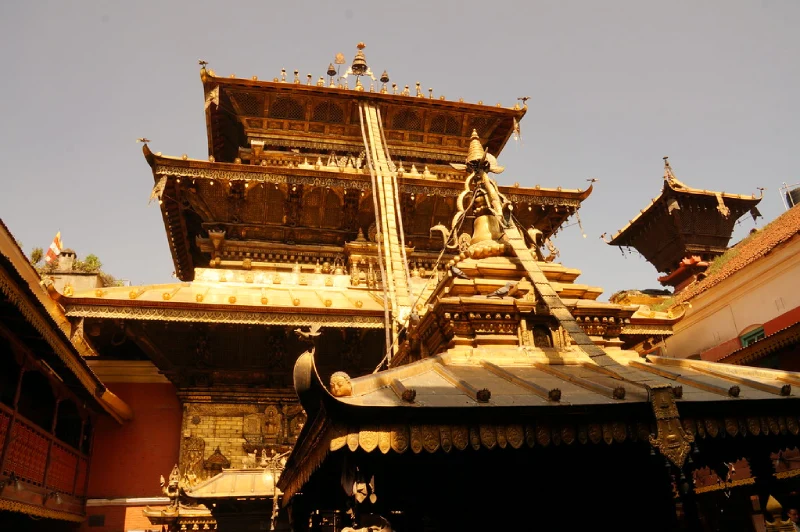
This wonderful temple is situated inside the old city of Patan and represents one of the best examples of the Newar Buddhist architecture among Buddha temples in Nepal. The golden exterior of the temple and copper roof is the main highlight which are visible from all angles.
The decorations on this temple are very detailed from the metal decorations to carved wooden and guardian figures by the door and all of them show the particular skills of the craft traditions of the Newar community of Kathmandu Valley rather than Tibetan styled monasteries elsewhere.
Unlike major Buddhist pilgrimage sites in Nepal, this temple operates as a local monastery where rituals are performed by the priests in the courtyard. This makes it a good destination to learn about the differences between Buddhism practiced in Patan and the Tibetan Buddhism present in the area around Boudhanath.
Kapan Monastery
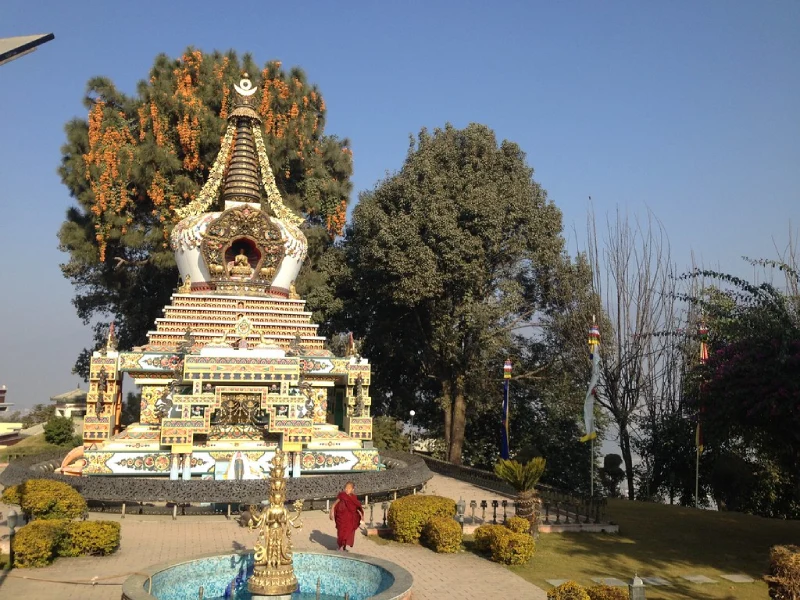
Kopan is located on the slope of a hill above Boudhanath and belongs to the Gelug tradition of Tibetans. It is famous worldwide as an educational center which gives courses in meditation and philosophy attracting students from all over the world, along with the monk community living there.
Kopan provides visitors an alternative to pilgrimage sites where one can participate in the class, practice some meditation for a short period of time, or just walk around and admire the view from the hilltops.
Tengboche Monastery
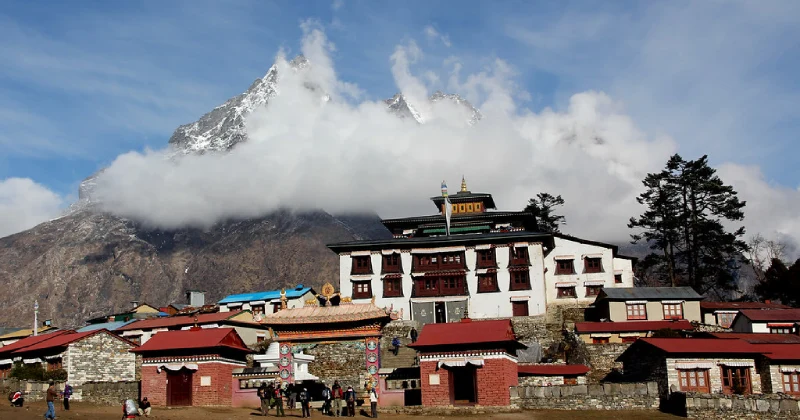
At high altitudes in the Khumbu, along the trail leading to Everest Base Camp, lies the Tengboche Monastery, which is the religious heart of Sherpa Buddhism in the area. Located at the top of a ridge with Ama Dablam towering behind it, the monastery holds the annual Mani Rumdi festival each year, which last for several days and features traditional masked dancing and singing within Sherpa communities.
From the perspective of trekkers, traveling to Tengboche Monastery is a cultural, physical experience and spiritual places in Nepal since it involves climbing from the Dudh Koshi River Valley to reach one of the most picturesque Buddhist monasteries in the entire Himalayas. This monastery is one of the clearest examples of how Buddhism and trekking in Nepal are connected with each other.
What Makes Nepal’s Buddhist Temples Special?
There are many countries that have amazing Buddhist temples – Thailand, China, Japan, Bhutan. But there is something special about Nepal’s shrines, mostly due to the fact that you are right at the origin point.
Lumbini is not just a replica or representation; it is the actual birthplace of Siddhartha Gautama himself. This puts everything into a new perspective when you visit every single temple in the country.
Then there is the unique mix of religions that people get to experience here. Newar Buddhism, Tibetan Buddhism and Hinduism all exist together, even sharing space with each other. Just visit Swayambhunath temple early in the morning, and you will see that Hindu and Buddhist altars are literally side by side on the same hill.
The building in Nepal is truly spectacular as well. The local Newar craftsmen have designed unique architectural styes that can’t be seen anywhere else. Repousse metalwork and carved wooden struts are a couple examples of this. Patan’s Golden Temple is a perfect example – an active and alive temples hundreds of years old.
Geographically, Nepal is also interesting as you have temples located on the lowlands, as well as Tengboche which is located 3,800 meter above sea level in the Himalayas. Not many countries can offer such diversity of geography.
But the biggest factor of all is the culture. These are not museums, these are alive temples and monasteries where there are people chanting prayers early morning at Boudhanath, regular praying at the Golden Temple, and preserving ancient customs.
Best Time to Visit Buddhist Temple in Nepal
The best time of your journey also largely depends on your destination. Kathmandu valley and Lumbini are located in low altitude region that allows visits all year round. Monasteries at higher altitude, such as Tengboche, operate according to completely different principles.
Spring (March to May) is the peak season which provides moderate temperature and magnificent views of the Himalayas. There will be blooming of rhododendron flowers in the hills and trekking paths leading to higher altitude monasteries are usually open.
Autumn (September to November) is the season of clear skies throughout the year. It is suitable for visiting both valley temples and high-altitude monasteries. This is why this time attracts more tourists.
Winter (December to February) is comfortable in Kathmandu and Lumbini with cool mornings and clear sunny afternoons. In the high altitudes, the weather is quite different. The trails are closed due to snowfall, and the number of tourists in monasteries such as Tengboche decreases considerably.
Monsoon season from June to August has a lot of rainfall, particularly in the regions of Kathmandu valley and Lumbini. The trails in the Everest area become slippery, and visibility becomes poor. Low elevation temples will still be accessible, but humidity increases rapidly.
Buddhist Temple Etiquette in Nepal
There are some basic rules while visiting Buddhist temples in Nepal. Following with them will help you be respectful as well as get spiritual satisfaction.
Dress decently. Your shoulder and knees should be covered in worshipping sites like Golden Temple or Boudhanath.
Take off your shoes when entering a temple. It is always expected form visitor to remove your shoes when it comes to the inside part of temple.
Walk clockwise around the stupa. This rule is very important for pilgrims, and walking counterclockwise may be perceived as a disrespectful for others.
Always ask before taking photos of the temples or the person who is worshipping. Usually, monks and pilgrims appreciate respectful requests, but not the opposite.
Do not touch statues, prayer wheels belonging to other people, and ritual objects unless you are invited to it. Sometimes these things have a lot of religious importance than just their look.
Respect the monks and people who come here for worship. Try not to talk too loudly not disturb the ongoing prayers or meditations.
Always keep a calm and respectful mood during your visit to spiritual places in Nepal. It is inappropriate to laugh loudly or move hastily in such location.
Pay attention to the instructions on site. Every sacred site in Nepal has different guidelines for its visitors.
Frequently Asked Question
What are the most famous Buddhist temples in Nepal?
The Boudhanath Stupa, the Swyambhunath, the Maya Devi Temple of Lumbini, and the Golden Temple of Patan are some of the famous Buddhist temples in Nepal. The Tengboche Monastery is also very popular, especially among pilgrims who trek in the region of Mount Everest.
Which is the most important Buddhist pilgrimage place in Nepal?
It is Lumbini. Since it is the birthplace of Buddha, it forms the center of the Buddhist pilgrimage.
Is Lumbini a Buddhist Temple?
No, it is not. Lumbini is an entire sacred site which includes the Maya Devi Temple, the Sacred Garden, and the Ashoka Pillar.
Which is the most famous Buddhist temples in Nepal?
The Boudhanath Stupa is the most popular one. The other name is the Dhamekh Stupa. Swayambhunath, located on a hilltop, follows closely behind.
Are foreigners allowed to visit Buddhist monasteries in Nepal?
Yes. Most monasteries allow tourism and some monasteries such as Kopan even provide meditation courses for foreigners.
Do I need a permit while visiting to Buddhist monasteries in the Everest Region?
Yes, trekkers going towards Tengboche needs to have Sagarmatha National Park permit and another local area permit.
Is there entrance fee to visit Buddha temples in Nepal?
Some temples do have entrance fees, mostly Boudhanath, Swayambhunath, and Lumbini. Fees are not that big, and they usually go for site maintenance and conservation activities.
Is it safe to travel alone to these temples?
Yes, most of the temples are popular among tourists and safe to travel individually. High altitude monasteries require more preparations, but trails are well-marked and often traveled.
Conclusion
Travelling through Buddhist pilgrimage sites in Nepal takes you from one world to another. One day, you’re walking around the incense in Boudhanath. Next week, you’re under the Ama Dablam mountain while the monks chant at Tengboche.
In Nepal, there’s more to seeing during Buddha Temple visit. These temples are also a part of treks and mountain villages, and centuries old traditions practiced to this day. You don’t get to experience this everywhere.
There’s always a unique element to each of the stops along the way whether you’re attracted by peacefulness of the Sacred Garden at Lumbini or serene altitude of Tengboche.
If you’re looking for a tour to the places of worship in Nepal, the team at Epic Trek Nepal would be glad to create a custom itinerary for you. From a cultural trek in the Kathmandu valley to pilgrimage to Lumbini or trekking in the Everest region, the local knowledge will enrich your experience.
