Kyajo Ri Peak Climbing Difficult
This Kyajo Ri peak is not a trekking peak that would be suitable for beginners. In terms of its technicality, this peak is higher than the Island and Mera peak. So, you need to be fit, a decent climber and know how to make decision in high altitude. If you dream about easy summit of any mountain, Kyajo Ri is not your choice.
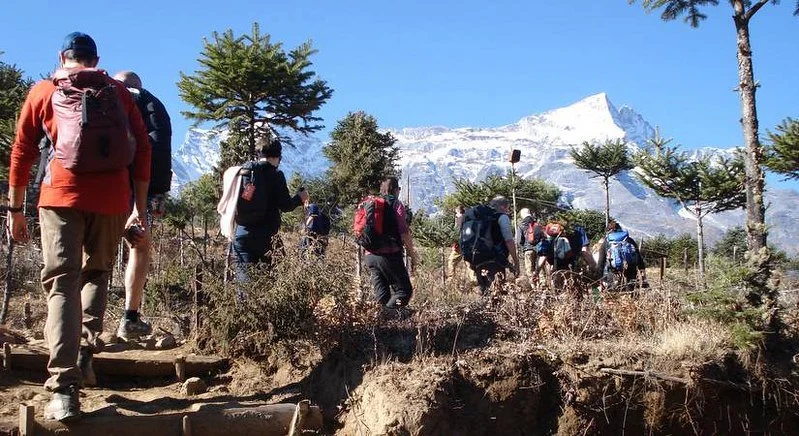
First of all, you need to be fit. You will walk about five to seven hours per day, while on Kyajo Ri Summit day, you will climb up to ten hours. You need to start training three months before your trip and concentrate on hikes, stairs and cardio exercises.
However, this is not enough. The previous experience is equally important. It is crucial for you to have some experience of trekking above 5,000 meters and technical climbs before. It would be great if you have passed through the short alpine course before.
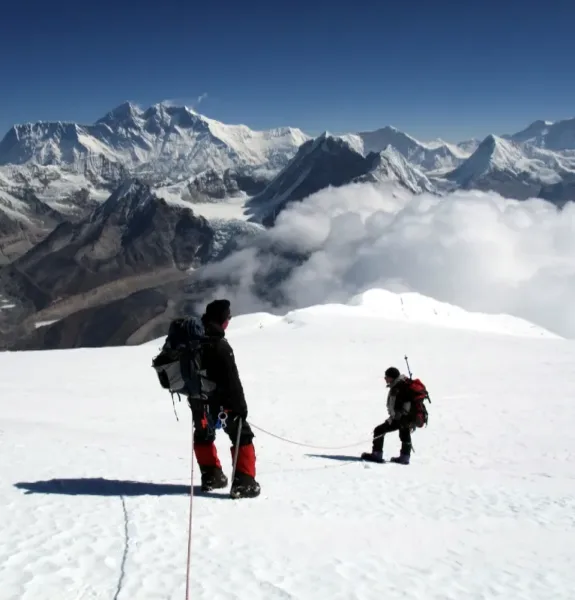
The technical passages require some specific skills. You will need to climb or scramble over steep rock while wearing a heavy pack and climb through the glaciated area (with possible crevasses under the snow).
It is also important to have suitable crampon and ice axe skills. This is because you will be walking on steep snow and ice, so good footwork is a necessity. You will climb the fixed lines using a jumar and abseil during the descent. You should practice this before coming, or else ask us about training days.
Altitude will make Kyajo Ri Peak Climbing itinerary even more challenging since Camp II is at an altitude of 5,700 meters where the oxygen content in the air is about half of that at sea level. Altitude headaches, disturbed sleeping patterns, and reduced appetite are very common. Our acclimatization days decrease the chances but cannot eliminate them entirely.
Finally, be mentally prepared. Challenging weather conditions and cold nights and long days will make you test your patience levels. Climbers who maintain a steady pace usually manage to summit. Previous high-altitude trekking and technical climbing experience make this achievable.
Physical Fitness and Climbing Preparation
Proper preparation ensures that Kyajo Ri Peak Climbing is safe and extremely fun. You should start preparing three to six months prior to your tour dates. The sooner you prepare, the better you will do on the mountains.
Build Your Fitness
Your cardio is your foundation. Jog, bike, swim, or hike at least three to four days per week, for 60-90 minutes each session. In addition, you should train using weighted hikes, one day a week. Pack your backpack with eight to ten kilograms and walk up hills or staircases. It simulates trekking days we have planned for you.
Do not forget to strengthen your legs and abs. Squats, lunges, step-ups, and planks will make sure that you can trek and climb with your backpack.
Practice Your Climbing Techniques
It’s not just about physical fitness, because it’s going to take skill to climb to the top. Before coming here, try to trek to the 5,000 m mark and see how well your body works at that altitude.
Then, master the technical skill. Train yourself in climbing on rocks, either in your local gym or on crags. Next, train on snow and ice, with the use of crampons and an ice axe.
The technique related to ropes is as important. Master tying in, ascending via rope using a jumar, and rappelling. These are taught in a brief alpine course.
Discuss Things in Advance
Everyone starts from a different point, when it comes to climbing skills. Before booking with us, please let us know about your physical condition and experience in climbing.
Best Time for Kyajo Ri Peak Climbing
Spring (March to May)
Generally, Spring provides favorable climatic conditions for climbing Kyajo Ri Peak. Daylight hours become longer in the later stages of spring, providing more hours in summit day. Additionally, Namche Forests bloom and rhododendron trees flower along the way.
Conditions of snow and ice change with every week during the season. At the beginning of the season there might be more snow on higher parts of the path. Our experienced guides will do pre-climbing survey of the route and make necessary adjustments to the route.
Autumn (September to November)
The autumn season provides stable climatic conditions after the rainy monsoon season, where the skies clear up and provide some of the best mountain views in Nepal. However, the autumn season is the busiest season in the Everest region, so book ahead.
Winter and Monsoon
Winter from December to February is very cold and harsh. The entire trail’s temperature drops rapidly and at Camp II it falls below freezing point with high-speed wind in the camp. This time of year, is not really recommended for the climb.
Monsoon (June-August) is characterized by heavy rains and poor visibility. Trails become slippery and flights to Lukla get delayed. There are also higher chances of snow and rockfall.
Weather Window
Regardless of the time of year, the weather window determines your ascent. Our guides pay attention to forecasts and communicate with other climbers on the mountain. If the conditions are not favorable, we choose to wait or retreat from the expedition. Getting to the summit of Kyajo Ri is important, but your safety is most important.
Permits Required for Kyajo Ri Peak Climbing
Several permits and papers will be required before Kyajo Ri Peak Climbing starts. The number of permits is considerable, but Epic Trek Nepal will sort out the paperwork for you.
NMA Climbing Permit
The NMA (Nepal Mountaineering Association) provides the climbing permit. It varies depending on the official peak class, season, and rules. Without the permit, you cannot climb Kyajo Ri Summit.
The published data on the height of the peak varies. Many providers give 6,186 m. The government’s mountaineering inventory claims Kyazo Ri to be 6,151 m. Our team makes sure to use the official information when applying, and your permit will reflect it.
Park and Local Entry Permits
Since the climb starts in Sagarmatha National Park, the park entry permit is required for you. You also require the Khumbu Pasang Lhamu Rural Municipality entry permit for the Everest region.
Documents You Provide
- An updated copy of your passport, valid for a minimum of 6 months
- Photographs
- Completed application form for climbing
- Travel insurance that includes coverage for high altitude climbing and helicopter rescue service
How Epic Trek Nepal Manage Your Application
Epic Trek Nepal will take care of the process of your document’s submission, payment of fees, and obtaining of your permit. We will confirm everything with you personally on the second day in Kathmandu. The Kyajo Ri Peak Climbing Program is free from any hassle of documentations for you.
Accommodation During the Climb
During your Kyajo Ri Peak Climbing Itinerary, your accommodation will change according to your elevation gain. Kyajo Ri Peak Climbing package offers a mix of luxury hotels, budget teahouses, and tents at the mountain.
Accommodation In Hotel and Tea houses
In Kathmandu, you stay in a comfortable 3 Star hotel with a private room and bathroom, and breakfast. You will stay here for two nights, before and after the trekking.
In the trekking days, you will stay in teahouses in Phakding, Namche Bazaar, and Mende. Twin-sharing rooms are available wherever possible. Your bed and the walls will be basic, and rooms become cold with the ascent, so a warm sleeping bag is required.
Facilities such as hot shower, Wi-Fi, and electricity charges can be found in places like Namche Bazaar. These facilities require extra charges. In places like Mende, they become less and even can become unavailable.
Camping Accommodation
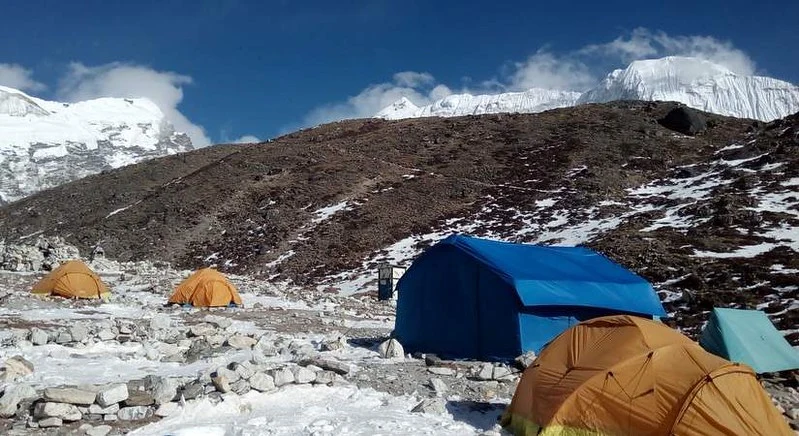
From Day 7, you will be sleeping in tents. Your camping facilities at Kyajo Ri Base Camp will be arranged by our team. You will have access to a sleeping mat and will share a tent with another climber.
For Camp I and Camp II, we will provide smaller high altitude tents. They are very simple camps that are cold. It is advisable to carry sleeping bags of -20°C. The base camp will have a tent for dinner and toilet facilities. Other facilities remain basic throughout the trip.
Food and Drinking Water
Proper nutrition and protein make you stronger in the high mountains. Our Kyajo Ri Peak Climbing package includes all meals throughout the trekking and climbing period to ensure your energy restore.
Meals
In Kathmandu, breakfast will be provided by hotel. Lunch and dinner are not included, so you may try local eating places.
During the trekking and climbing days, you will have three meals per day. In teahouses, you will be served dal bhat, noodles, soup, pasta, eggs, and fried rice. At base camps and higher, our cook will prepare fresh food for you.
Water and Hydration
Make sure you drink three to four liters a day. Dehydration occurs fast because of dry air and altitude.
Drink 3 to 4 liters daily. The weather and high altitudes will make you lose water. Bottled water is very costly in the high altitude, so we recommend you use purification tablets or a filter for entire Kyajo Ri Peak Climbing Itinerary. Our team will also provide boiled, Tea, coffee, and hot chocolate at the camp.
Altitude Sickness and Safety
Acute altitude sickness may hit any climber ascending a 6,000 meters mountain regardless of how fit he is. Headache, nausea, dizziness, inability to sleep, and lack of appetite are some signs that show early stage of this disease. If any of these occur, you should immediately let your guide know.
The process of gradual acclimatization is the best defense. Our plan for the Kyajo Ri Peak Climbing has rest days at Namche, base camp, and Camp I. Drink from three to four liters of water every day and eat regularly even if you lack appetite.
Your descent is the main treatment for the condition. We take you downhill immediately and provide oxygen and medication if required. First aid kits are carried by guides while the entire crew uses radio and satellite phones to seek help from authorities if required.
In case an evacuation is required, we make arrangements for a helicopter evacuation through your insurance company based on weather conditions. The same weather conditions are responsible for your Kyajo Ri summit as well. The decision of your guide about going ahead with or not continuing your summit is absolute and cannot be changed by anyone else.





 Share