




Upper Mustang Trek: Why Monsoon is the Best Season to Explore Nepal’s Hidden Himalayan Desert
21 May 2026
By admin
Hidden behind the Himalayas, the world’s highest mountain range and bordering the Tibetan plateau lies Upper Mustang, the last forbidden kingdom of Nepal. It is one of the world’s most fascinating places to go trekking.
Upper mustang has been inaccessible to the outside worlds for decades. Even when Nepal started trekking and welcomed tourism, Mustang remained unavailable until 1992. Even now, entry into the Mustang region require a restricted area permit. This is just for show case, it has preserved something unique, a piece of Tibetan culture that is still untouched by modern civilization.
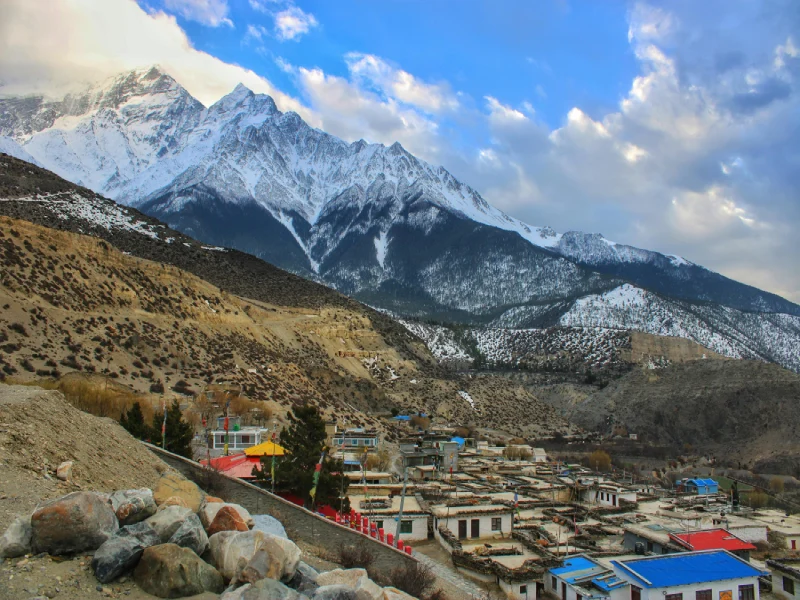
For those who are looking forward to having an adventure while visiting Nepal during the rainy season, this is believed to be the most favorable time for Mustang Trek. Despite other hiking region gets lots of rainfall from the monsoon season, Mustang remains dry because it is situated within the rain shadow region of the Himalayas.
There is special place that you cannot find in anywhere in Nepal. Forget the lush green forest, wildflowers, terraced fields that you may have expected. Upper mustang is an open landscape with that is formed of otherworldly terrain of wind-sculpted badlands, deep river gorges, cave cities carved into sandstone cliffs, and mud walled villages that appear to grow out from the ground.
And in the middle of this lies Lo Manthang– the ancient walled city and capital of Mustang Kingdom. It is 400 years old monasteries and a culture deeply influenced by Tibetan Buddhism.
If you have been waiting for just the right time to experience something new, then this is your time.
Best Season for Mustang Trek: Why the Monsoon Season is the best time to visit Mustang
Here is something that catches people off guard when traveling to Nepal. While most of part of Nepal drowns in monsoon rain from June to September, Upper mustang remains completely dry.
It doesn’t happen just by luck. It’s due to geographical location.
The trekking season in Upper Mustang is around late spring and early autumn from May to September, when other popular trekking tails like Annapurna Circuit, Everest Base Camp and Langtang are at their worst condition and least rewarding.
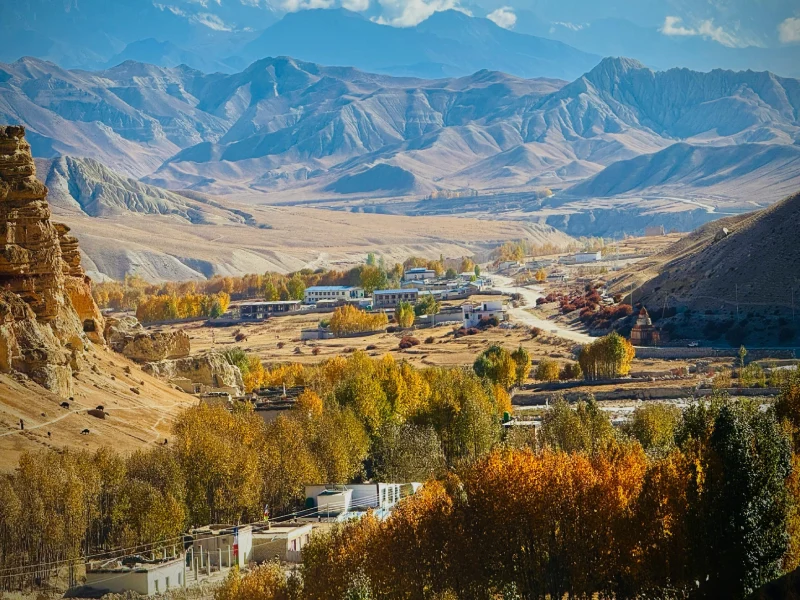
This gives Mustang the advantage of the most reliable and consistent trekking place during summer. The clear skies and stable weather condition enable trekkers to have long walks without dealing with slippery condition.
Another distinct advantage is the mix of different vibrant color in the environment. Due to the bright sunlight in the summer, the reds, orange, browns and yellow of the barren rocks become more vividly visible.
With fewer trekkers choosing Upper Mustang Trek during Monsson, the trails are less crowded than Everest or Annapurna routes even in peak season. This provides an opportunity to connect with nature and experience a quiet and authentic trekking adventure.
Upper Mustang Weather and Climate condition during peak season
Let’s talk about what you will experience on the trek and what you should expect. First thing you need to understand is Upper Mustang weather condition before preparing the trek. Average daytime temperature during peak trekking season in Upper mustang range from 15-degree Celsius to 25-degree Celsius at lower altitude of Jomsom and Kagbegni and 10-degree Celsius to 20-degree Celsius at high altitude of Lo Manthang. This temperature is quite comfortable for trekking without much problem.
As for nighttime temperature, it gets quite cold. In lower altitude, temperature can drop to 5-degree calcium which is manageable but in higher altitude like Lo Manthang (3,840 m), it can go below zero. So, a good sleeping bag and a warm fleece are essential, whatever the season.
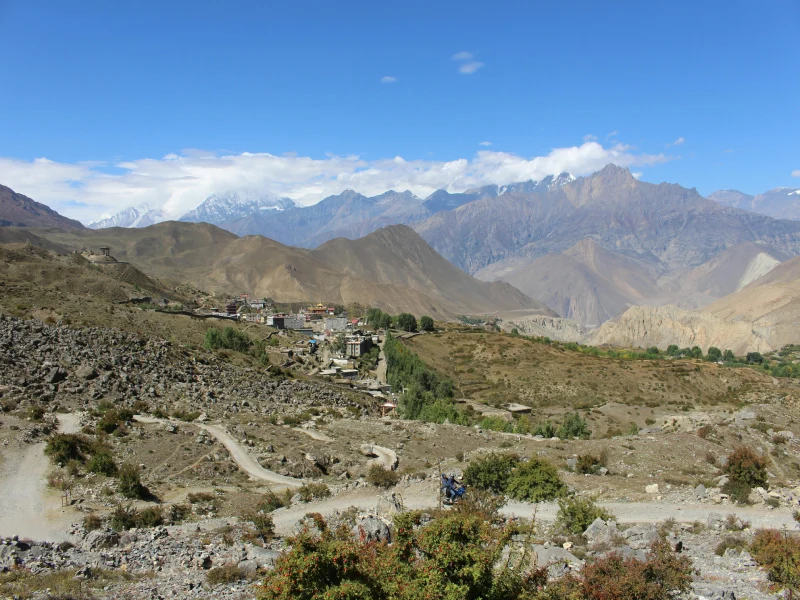
The skies are usually clear with great visibility of the surrounding Himalayas. This is because, there is no rainfall, which make trekking more comfortable without worrying about being wet and muddy trails.
Wind condition in Mustang is higher in the afternoon hours. The Kali Gandaki Valley is one of the largest natural winds tunnels in the world and strong winds are quite frequent, especially noon and early evening. This is also the reason many experienced trekkers start their hiking early in the morning when the surrounding is very peaceful to reach the destination before midafternoon.
And due to the clear Upper Mustang weather conditions, flight disruption from Jomsom is very rare which is more reliable compared to other mountain destination where bad weather constantly delays flight.
The Rain Shadow Advantage Explained
If you want to understand why Upper mustang remains dry even in Monsoon season while the rest of the Nepal floods, you need to understand the concept of Himalayan rain shadow effect.
The reason why Upper Mustang is dry even when there is Monsoon in Nepal is because of its geographical positioning that is located behind the Annapurna and Dhaulagiri ranges. This giant also helps in blocking most of the rain clouds from entering the Mustang region.
When the monsoon clouds move toward northward from the Indian Ocean, the moisture released by the high mountain falls on the southern slopes. By the time it reaches Mustang, all the cloud has already lost most of their rain on the southern slopes. And this is the very reason why there are magnificent deserts throughout the world, such as the Atacama, the Gobi Desert, and the Patagonian steppe.
This is what makes Upper Mustang become one of the top choices in Nepal for monsoon trekking. As compared to other trekking destinations that receive too much rain, which causes landslides and makes the trail very muddy and foggy, Mustang remains dry.
Trekking Experience During Peak Season
What makes monsoon trekking in mustang so unique and special is that while the whole country is experiencing cloudy and rainy weather, everything here remains clear and dry. The trails are solid and dry to walk on. The famous route along the Kali Gandaki River including those craved cliffside, high passes and the edge of deep ravines are in great condition.
The trek to Lo Manthang, which is the ancient capital city of Mustang, stands out more than other trails. This is because the journey involves visiting ancient villages such as Kagbeni, Chele, Syangboche, Ghami, and Tsarang, all of which have obvious traces of Tibetan culture in terms of architectural designs, monasteries, and cultural practices.
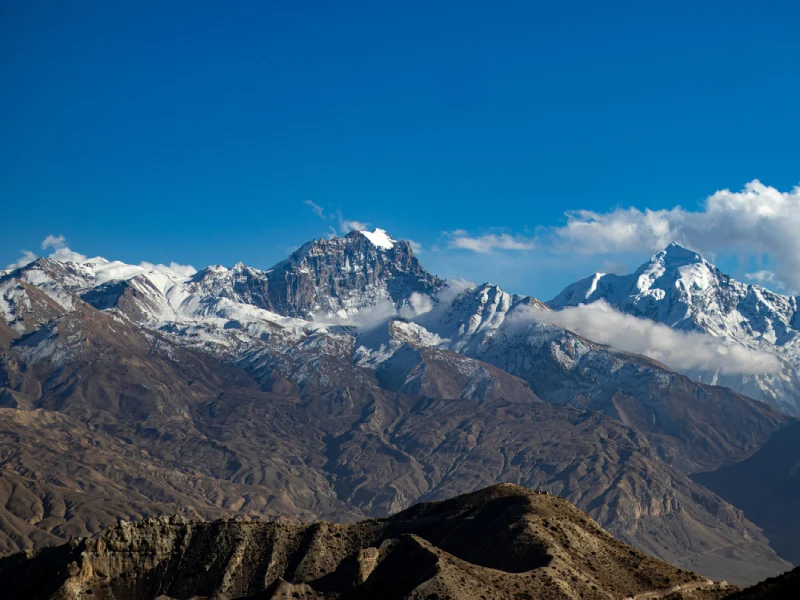
Another thing that stands out when going on an Upper Mustang Trek is the experience of trekking in an untouched Himalayan kingdom. There is something mystical about the isolation, quietness, and unspoiled beauty of the place that one doesn’t get anywhere else.
On average, the Upper Mustang Trek usually takes between 10 and 14 days, covering about 170-200 km, from Jomsom (2,720 meters) to Lo Manthang (3,840 meters) and back.
Scenic Highlights and Mountain Views
Allow me to give you an idea of what you are actually going to see.
The route from Mustang through the Kali Gandaki is very unique in its own way. This river I said to be the world’s deepest gorge, with the same height of Annapurna and Dhaulagiri reaching an altitude of almost 7,000 meters from the bottom of the gorge. During clear season, there is no way you can miss out seeing these incredible peaks that dominate the sky view.
As you make your way up north past the village of Kagbeni towards the restricted zone, the colors of the terrain begin to change. The lush greenery disappears while golden-brownish hues take over. The formations in the cliffs become even more dramatic than before.
At Ghami, you will walk through a 400-meter long mani wall, one of the longest prayer walls in Nepal, with thousands of stones written with Buddhist mantras. The contrast of colors in the desert is breathtaking: the red of the earth, the white of the stones, and the blue and orange paintings of the symbols.
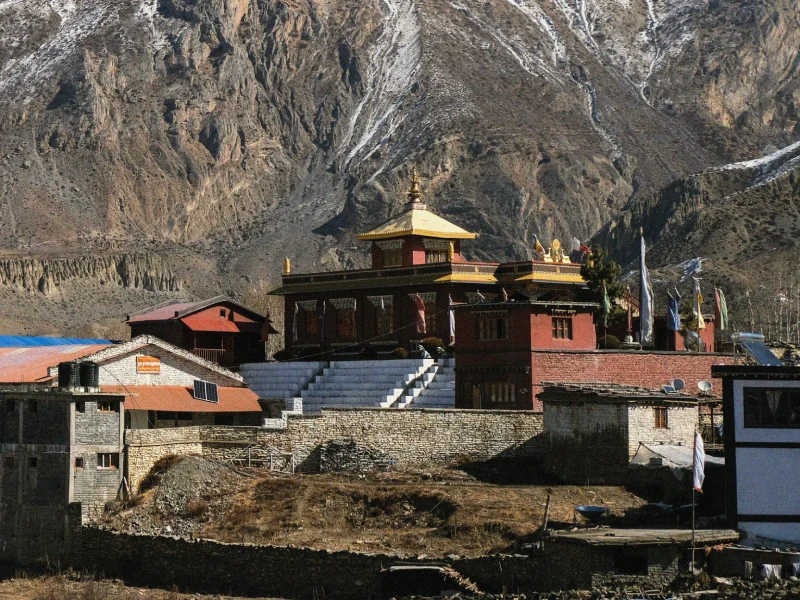
Views of Nyi La Pass (4,010m) and Muktinath during your descent back to Lo Manthang offer some of the best views in the whole of the Himalayas. And the walled city of Lo Manthang, viewed from the top during the descent towards the town is one of the most amazing scenes in any trekking tour.
For those who love the mountains: Nilgiri, Tilicho, Mustang Himal, and Annapurna are a few of the many mountains to watch out for while walking through this trek. And in clear season, you have exceptional photography to capture.
The combination of the desert landscape, snow-capped mountains, and unique traditional settlements makes Upper Mustang very unique.
Cultural Experience in Mustang
Aside from the natural beauty, Mustang is also the most culturally rich region in Nepal. It is a region with great historical and religious connection with Tibet and many of its culture and traditions are still well preserved.
The people living in Mustang are mostly Tibetan ethnic group. Their native language is Tibetan, and they practice only Tibetan Buddhism with deep respect and great sincerity that is very inspiring to see. Unlike Tibet, where culture has been significantly disrupted over the past centuries, Mustang has surprisingly managed to maintain it culture and traditions.
In Lo Manthang, people celebrate the Tiji Festival which is one of the most spiritual celebrations that take place in May. It is celebrated for three days with masked dances, trumpet music, thangka painting, and ceremonies for the victory of good over evil. The entire village participates in this festival. If you happened to come here during the time of Tiji, you must know how lucky you are.
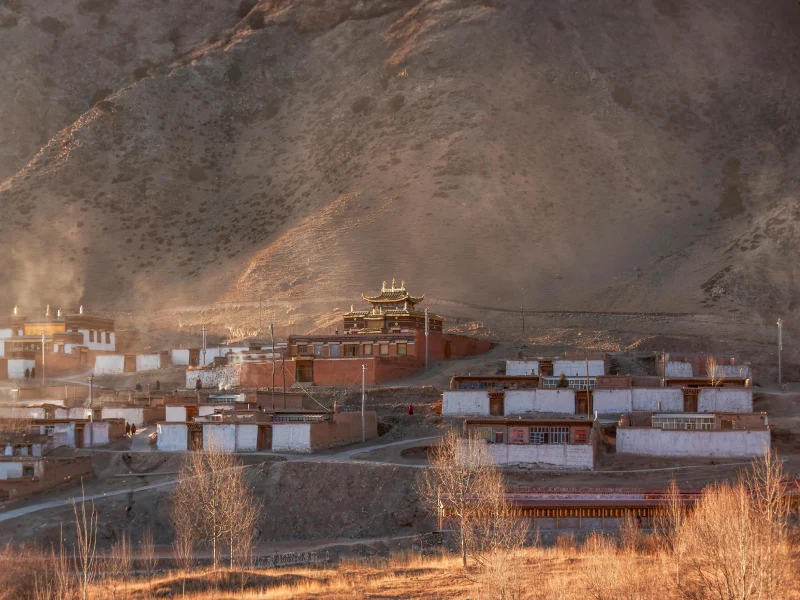
If you look beyond the festival in Mustang, there is much more to look. Go visit the Thubchen Gompa in Lo Manthang, which was built during the 15th century and also visit the cave monastery of Luri Gompa.
The hospitality of the locals is another warm experience of this trip. Although the region is left out from the rest of the country, the Mustang locals open their arms and embrace travelers at their tea houses and lodges.
In terms of combining adventure and culture, the Upper Mustang trek gives tourists the chance to have a truly unique experience in Nepal.
Permits for Upper Mustang Trek
Upper mustang is one of the restricted areas in Nepal. So, for travelers to trek in this region, you must have proper permits and registered guide.
Here’s what you need:
The current fee for Restricted Area Permit is around 50 per person per day. It is valid only for the number of days mention on the permit.
ACAP Permit (Annapurna Conservation Area Permit)
ACAP permit is required for the whole Annapurna Region which also include Mustang. This helps support the environmental conservation and maintain the route condition. It usually cost around USD 20.
Trek Difficulty and Preparation
Upper Mustang is a moderate walking trek. So technical mountaineering skill is not necessary. But the trek requires a good physical fitness enough to walk for 15 to 20 km in a day in rough terrain.
The highest point of the trek is around Lo Manthang at 3,840 while the altitude on the passes goes from 4,000 m to 4,200 m. In this route, you might have some problem because of altitude sickness, but it’s not a big deal if you remember the main rule: ascend slowly, drink water (3 to 4 ltr per day) and descend if the symptoms arise.
Another hardest aspect besides altitude is the wind. Walking long distances against the wind takes much energy. Remember the rule again: start early, end by the afternoon.
If you prepare months before, this won’t be much of a problem during the Upper Mustang Trek. You just to focus on building endurance by walking, climbing stair and hiking uphill with a loaded backpack. If you can manage to walk 2 to 3 hours over rugged terrain comfortably with a backpack, you are good to go.
Why Choose Mustang over another Trek During Monsoon
There is various factor that makes the Upper mustang trek a perfect choice for trekking.
First let see what most popular trekking route experience during Monsoon
- Heavy rainfall
- Cloudy weather
- Flight cancellations
- Landslides
- Muddy Trails
- Poor visibility
What Upper mustang provides during Monsoon
- Dry climate
- Safe trekking trails
- Clear view of Mountains
- Fewer insect and leeches
- Comfortable temperature
Due to its rain shadow position, it is one of the safest and best options when trekking in Nepal during Monsoon. Travelers who do not have sufficient time to travel during autumn and want to utilize the summers can choose the Upper Mustang Trek in monsoon.
Conclusion
In this particular season, Mustang emerges as one of the top destinations for treks in Nepal. Unlike other Himalayan areas that experience heavy rainfall at this time, Mustang remains dry due to its geographical location.
The Upper Mustang Trek is much more than a trekking trail. The journey takes one through a mysterious Himalayan land that has been influenced by Tibetan culture, the desert, tradition, and spectacular mountain ranges.
The bright blue sky, the high cliffs, the old monasteries, the vibrant villages, and the serene walking trails all combine to make a trip that is both thrilling and spiritual. Whether you’re a photographer, a traveler interested in the culture, or an adventure walker, Mustang has something unique to offer.
This is the best time to visit Nepal’s mysterious Himalayan Desert region of Upper Mustang.
Frequent Asked Questions
Where is Upper Mustang located?
Upper Mustang trek is located in the Northern Central Region of Nepal.
Why is Upper Mustang Called a “Hidden Kingdom” ?
The reason why this area is referred to as the Hidden Kingdom is that once upon a time, it was completely isolated from the outside world. Today, its culture is still heavily influenced by Tibetan culture.
What is the best season for Upper Mustang Trek?
The best season is from late spring until monsoon which is from (May to September).
What is the highest point of the trek?
The highest point of trek is around Lo Manthang which sits at 3,840 m.
What kind of accommodation is available?
You will find basic tea houses which offer simple room but comfortable with minimal facilities.
What food is available during the trek?
You will find usual Dal Bhat, noodles, soup, fried rice, eggs, momos and local Tibetan style bread.

Table of Contents
- Best Season for Mustang Trek: Why the Monsoon Season is the best time to visit Mustang
- Upper Mustang Weather and Climate condition during peak season
- The Rain Shadow Advantage Explained
- Trekking Experience During Peak Season
- Scenic Highlights and Mountain Views
- Cultural Experience in Mustang
- Permits for Upper Mustang Trek
- Trek Difficulty and Preparation
- Why Choose Mustang over another Trek During Monsoon
- Conclusion
- Frequent Asked Questions