



Everest Base Camp Trek Group Join 2027
24 September 2026
By admin
Being able to stand where the highest peak in the world ends is the dream for many trekkers around the world. The Everest Base Camp Trek Group Join 2027 season is here to help turn that dream into reality even if you are a solo trekker or a couple without the burden of organizing your trip all by yourself.
Joining a group-join tour is easy as all you have to do is join one of our fixed departures to Everest Base Camp where you will meet other trekkers heading to Everest Base Camp as well. You won’t have to worry about finding any travel team. All the details will be arranged by our team.
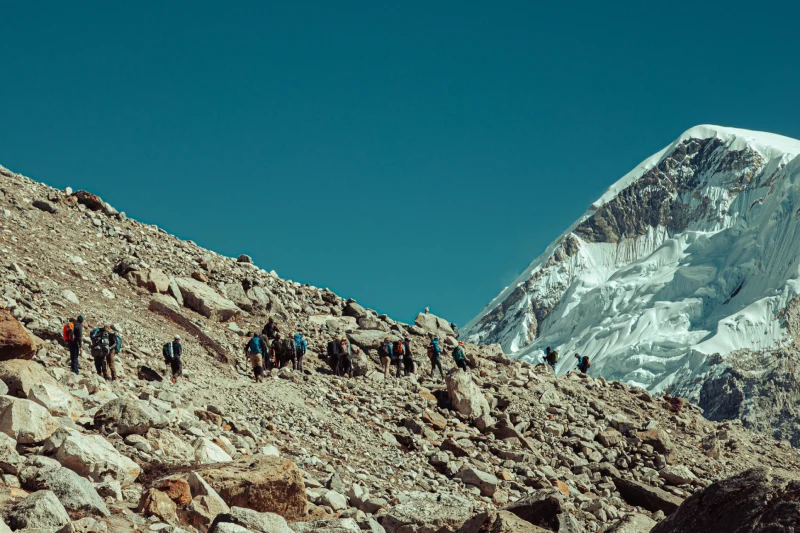
The fixed-departure option is ideal for solo trekkers, couples, and even small groups who prefer to have some form of itinerary and organization but still maintain a sense of freedom.
Trekking in groups has many benefits as well. You will be trekking with people who can relate with your emotions, both the excitement and tiredness that you will go through. Eating will also become a fun thing to do in groups rather than on your own.
The 2027 season will introduce new departure dates, new permit fees, and new trail structures in the entire Khumbu valley.
This guide contains all the information that you need before booking the Everest Base Camp Group Joining Trek: the set departure dates, new costs, itinerary, packing list, and the most frequently asked questions about the trek.
What Is an Everest Base Camp Group Joining Trek?
Understanding Group Joining Treks
Group trekking in an organized trek is a set date tour that allows individual bookings. This means you will be booking on a set schedule, which has been booked by others as well, not like booking for a private trek.
The key difference between a private trekking tour and a set departure tour is flexibility vs. price. The benefit of a private trekking tour is having flexible schedule, while its disadvantage is its price, since it is more expensive due to the costs being not shared.
The reason why they are interesting is that there is a diversity of people. European, North American, Australian and Asian trekkers meet on one trail and share meals and stories together.
How does a Group Trek work?
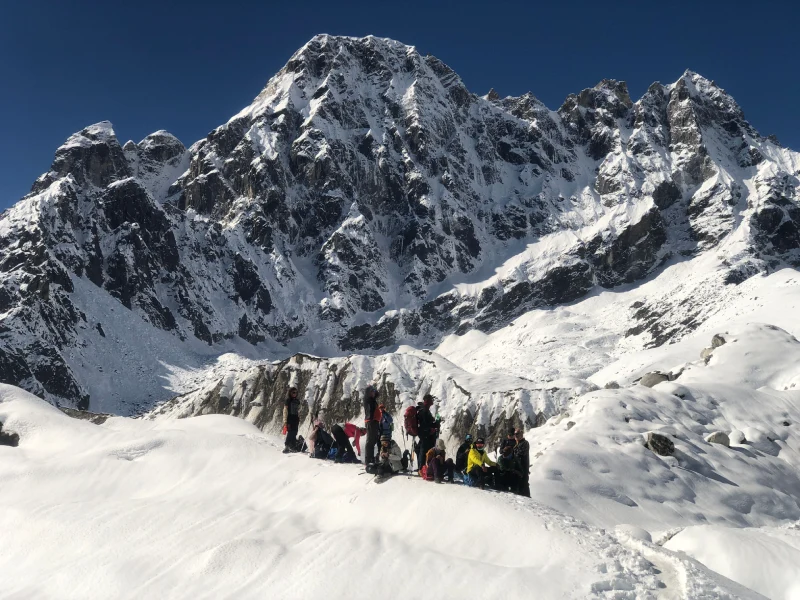
On the first day, you are introduced to your guide and the rest of your group in Kathmandu. Then you all follow the same daily schedule, stopping in the same tea houses along the way and having dinner with your fellow travelers.
You maintain your own pace on the days when you trek. If you are fast enough, then you trek ahead. If you are slow, then you trek slowly. The guide maintains contact among the group members while transport, permits, and porters have been arranged in advance.
Who Can Join an Everest Base Camp Trek?
These treks are suited to all kinds of adventurers:
- Solo travelers looking for company on the trail
- The couples who want guided treks but without the expense of private tours
- Friends traveling together who prefer shared logistics
- Small groups planning a joint adventure
- First-time Himalayan trekkers, as long as they prepare with proper training and acclimatization in mind
No matter what your background, joining a group trip helps give you structure and companionship.
Group Joining vs Private Everest Base Camp Trek
Not sure how either one suits your itinerary? Try looking at the following comparison table and make up your mind.
| Feature | Group Joining | Private Trek |
| Group size | Shared group | Your selected companions |
| Departure | Fixed dates | Flexible dates |
| Cost | Often more economical | Generally higher per person |
| Itinerary | Predetermined | More customizable |
| Social experience | Meet fellow trekkers | Private group experience |
If you have a certain budget and can go on a trek on the fixed date, then group joining would be a better choice. However, if you prefer having flexibility in terms of scheduling and choosing companions, then consider taking a private trek.
Best Season for Group Joining
Correct timing can make a big difference while you are out there. Here’s how each season affects the trek to the Mount Everest Base Camp.
Spring (March to May) is a very popular time for group treks. Days are fairly warm, weather is good, and rhododendron forests decorate the lower trails.
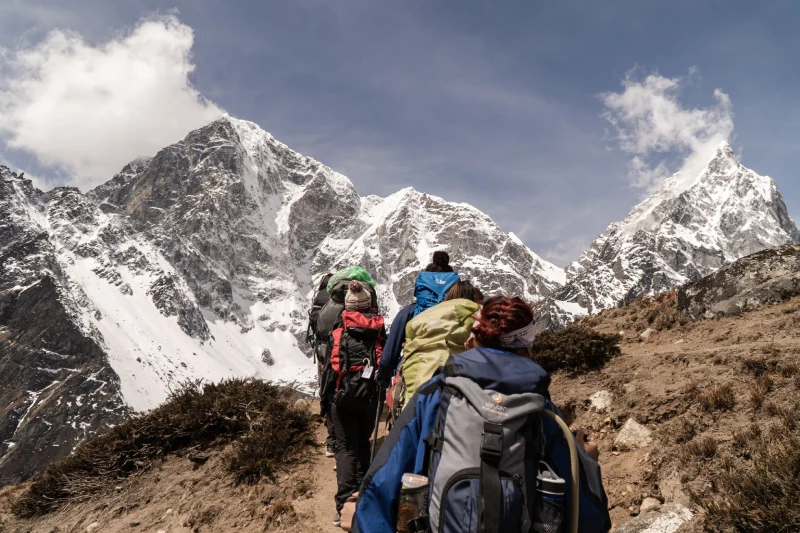
Autumn (September to November) is another peak season and is considered by many trekkers to be the best time. There are no monsoon rains anymore, so you will be enjoying fantastic mountain views almost every day. The weather is also quite pleasant for trekking.
Winter (December to February) will have fewer crowds and stunning view of snowcapped mountain, but the weather is severe. The temperature falls below freezing point at higher altitude, and some teahouses provide very basic services than what they usually provide. Group departures are also less frequent during winter.
Monsoon (June to August) is not favorable for an Everest Base Camp Trek. Frequent rains make the trail slippery, clouds obscure the view of mountains, and flights are delayed for Lukla.
Highlights of Joining an Everest Base Camp Group Trek
Everest Base Camp
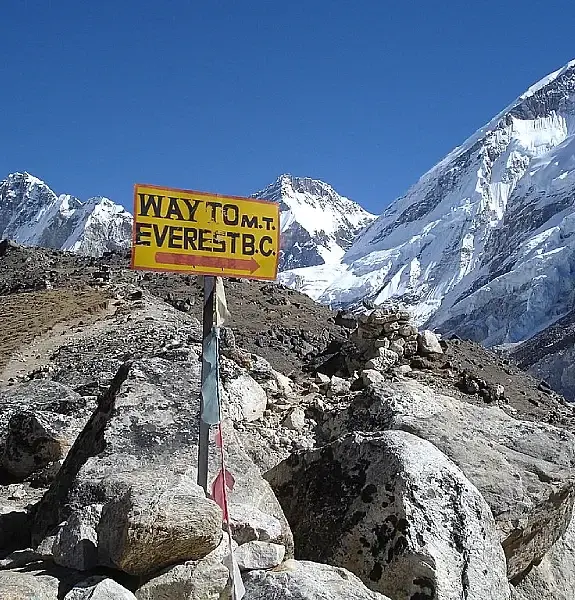
At around 5,364 meters with views of the Khumbu Icefall and the peaks surrounding it, standing here will be an experience you will never forget. Arriving at base camp makes you feel all the efforts made to overcome the difficult uphill route. Each and every one of the Everest Base Camp Treks 2027 plans takes you to this very same destination.
Sunrise on Kala Patthar
Trekking to Kala Patthar before sunrise is usually done by most trekkers. The sunrise first touches Everest, Nuptse, and Pumori in this region, which makes the peaks look golden. Cold, dark but entirely worth it.
Exploring the Sherpa culture
You can witness the culture of the Sherpa people while trekking through the route passing through some Sherpa villages such as Namche Bazaar and Tengboche among other villages. Buddhist monasteries can be seen above the route, while prayer wheels and mani walls decorate the route.
Sagarmatha National Park Exploration
The trekking route will take you to the Sagarmatha National Park which is one of the sites listed in the UNESCO World Heritage Sites due to its stunning landscapes. Each and every one of these steps taken in the process of the journey, from the low trails which are filled with forests up to the alpine zone, makes the Everest Base Camp Trek Group Join 2027 very rewarding for you.
Trek with Adventurers from Around the World
Trekking in a group is more special than hiking alone since you will share meals, encourage each other during the tough day of climbing and learn different other extra things from your fellow trekkers who may have come from a totally different background
Itinerary of Everest Base Camp Trek
Day 01: Arrival in Kathmandu
Day 02: Fly to Lukla (2,860m/ 9,318 ft.) from Kathmandu and trek to Phakding (2,610m)
Day 03: Trek to Namche Bazaar (3,440 m/11,286 ft.)
Day 04: Acclimatization day in Namche Bazaar (3,440 m/11,286 ft.)
Day 05: Trek to Tengboche (3,860 m/12,664 ft.)
Day 06: Trek to Dingboche (4,410 m/14,469 ft.)
Day 07: Acclimatization Walk and Short Hike to Nangkharstang Hill (5,083 m/16,676 ft.)
Day 08: Trek to Lobuche (4,910 m/16,109 ft)
Day 09: Trek to Everest Base Camp (5,364 m/17,598 ft.) and back to Gorak Shep (5,164m)
Day 10: Hike up to Kala Patthar (5,555 m/18,225 ft.) and trek down to Pheriche (4,240 m/13,911 ft.).
Day 11: Trek to Namche Bazaar (3,440 m/11,286 ft)
Day 12: Trek to Lukla (2,840 m/9,318 ft.)
Day 13: Fly from Lukla (2,840 m/9,318 ft.) to Kathmandu (1,400m/4,344 ft.) or Manthali (Ramechhap).
Day 14: Departure
Key Destination Along the Route
- Lukla – This is where your trek begins from after taking the mountain flight from Kathmandu.
- Namche Bazaar – The capital of the Sherpas and your first acclimatization spot.
- Tengboche – Here you will find the monastery that is famous for its views of Mount Everest.
- Dingboche – Second acclimatization spot before ascending further.
- Lobuche – Small village at an elevated altitude near Everest Base Camp.
- Gorak Shep – Last village before reaching Everest Base Camp and campsite too.
- Everest Base Camp – Main destination for the trek below the Khumbu Icefall.
- Kala Patthar – Best place to watch sunrise on Everest.
What is included?
- Pick up drop-off: Airport pick-up and drop-off by private vehicle.
- Permits and Fees: All necessary permits for the Everest Base Camp Trek, such as the Sagarmatha National Park Permit and the Khumbu Pasang Lhamu Rural Municipality permit.
- Accommodation: Accommodation during the trek, typically in teahouses or lodges. This usually includes accommodation in Kathmandu before and after the trek in 3-star hotel on BB plan. (twin sharing basis)
- Meals: Most packages will include three meals a day (breakfast, lunch, and dinner) during the trek. Also includes three times hot beverage.
- Domestic Flights: Round trip flights between Kathmandu and Lukla, the starting and ending point of the trek, are usually included.
- Guide: You are provided with a guide who speaks English and is experienced in trekking. This includes their salary, insurance, equipment, food, and accommodation. For a single trekker, a guide himself will carry up to 10 kg of their weight.
- First Aid Kit: A basic first aid kit is typically provided.
- Trekking Map: A detailed map of the trekking route is usually included.
- Equipment: Duffle Bag, Sleeping Bag (if necessary)
What is not included?
- International Flights: International airfare to and from Nepal is not included.
- Travel Insurance: Travel insurance that covers emergency rescue, evacuation, and medical treatment is not included, and you’ll be expected to have your own.
- Personal Expenses: Expenses for extra meals, drinks, snacks, charging devices, hot showers, Wi-Fi, laundry, and other personal costs are not included.
- Nepal Visa Fees: Entry visa fees for Nepal are not included.
- Additional Accommodation and Meals: If you choose to extend your stay in Nepal, or if you return from the trek earlier than scheduled, the cost of additional accommodation and meals will not be included.
- Rescue and Evacuation: Any costs related to emergency evacuation or rescues are not covered.
- Trekking Gear: Personal trekking equipment, such as hiking boots, down jackets, trekking poles, and other gear are not included.
- Tips: Tips for guides and porters are not included and are left to your discretion.
- Porter service: Porter is not available in package, but it can be arranged on request at an extra cost, where one porter carries up to 25 kg (shared between two trekkers) to reduce your load and make the trek more comfortable.
Why Does Group Joining Often Cost Less?
Group trekking trips cost less than private ones, and this is because of sharing.
When you participate in a group trek that departs at a specific time, you share a guide with other members of the group and not have your own personal guide. The same applies to the support staff and porters in most cases. The transportation cost is also shared by the group as the cost of jeeps, airport transfers, etc. is borne by everyone. By sharing the cost, the overall cost per person reduces considerably.
The cost of operations is better managed through the grouping arrangement. It is cheaper to arrange for permits, transportation and organize the logistical needs of one team of trekkers as compared to organizing them for individuals.
Private trekking is relatively expensive in the sense that you have to bear all expenses of hiring guides and arranging for logistics. The flexibility of private trekking is also very costly.
Group joining gives a perfect balance of being cost-effective and quality-oriented for budget trekkers who wish to undertake guided and organized tours.
What Happens if a Group Departure Is Full?
Since fixed departures have limited seats, most of the seats after 2027 departures may get booked fast. Even when you are unable to book on your most preferred date, you still have other alternatives.
We will always recommend the next closest departure date with available seats. There are many trekkers who feel that going just a few days later makes no difference.
For those who would prefer to stick to their dates, a private trek is an alternative that will allow you to maintain your original dates with added costs.
The groups sizes are purposely kept low in order to make sure that the trekking remains personal, and the small groups can navigate easily on the trails of the mountains.
Who Should Join an Everest Base Camp Group Trek in 2027?
Solo Travelers
Solo travel does not mean solo trekking. Being part of a fixed departure gives you a group right from the start. You get companionship throughout the journey without going through any trouble in setting up a group on your own.
Couples and Group of Friends
Couples and groups of friends who wish to go on a trip together can make use of a group as well. You have the pleasure of sharing the experience with your fellow travelers, but you also meet fellow travelers along the route. The only thing you need to see is if the fixed departure matches your dates of travel.
First Timers Everest Trekker
If this is the first time you are planning to undertake a trek in the Himalayas, the group departure provides a lot of structure. This includes following an organized itinerary that takes into account proper acclimatization and having a knowledgeable guide who manages the process.
Everest Base Camp Trek Difficult and Altitude Preparation
How Difficult is the Everest Base Camp Trek?
This is an extreme altitude trek and not just a regular hike in the mountains. You will have to walk from five to seven hours daily on the Everest Base Camp trek and sometimes even more than seven hours, particularly on the summit day at Kala Patthar. The trail changes constantly from rocky mountain to stony steps and even rope bridges.
Weather can make it even more challenging. You may experience clear mornings but windy afternoons, cloudy afternoons or cold afternoons, particularly near Dingboche. Nothing is impossible here but definitely deserves a lot of respect and preparation regardless of which time of year you plan to trek for your Everest Base Camp Trek 2027.
Altitude and Acclimatization
The Altitude gain takes place slowly on purpose, allowing your body time to get used to less oxygen. The rest days in Namche Bazaar and Dingboche are arranged for this purpose, not as buffer days.
Be aware of the signs of altitude sickness that include headaches, nausea, fatigue, and poor sleep. They are normal at high elevations, but increasing severity should be addressed immediately.
Speak to your guide as soon as you feel unwell. Communication is the most important thing for staying safe at altitude, and the guides are trained to react to it.
Is Previous Trekking Experience Required?
Experience is not generally required but can be an advantage. Fitness level and good preparation are more important than previous experience for healthy people who plan to take part in Everest Base Camp Trek Group Join 2027.
But everyone’s physical state is different, as is altitude. If you have any kind of heart, lungs or any other problems, you should consult a physician before booking your trip.
Fitness and Preparation Requirement
A good level of fitness is essential for this journey, although being a super fit athlete is not required. Normally, you will spend between five and seven hours walking each day through rocky trails.
Endurance is more important than speed when you are walking for long distances. Stamina can help you walk long days without rest.
The preparation for walking uphill and downhill is especially necessary. The uphill requires leg strength, while the downhill puts pressure on your knees. You should train by walking with your backpack up and down the stairs.
A combination of cardiovascular and strength exercises during your departure will truly make a huge difference. Cardio workouts like running, cycling, or even swimming will provide you with sufficient endurance, while strength exercises like squats and lunges will improve your leg muscles necessary for ascending.
Previous trekking experience is helpful, although not necessary. Many novice trekkers manage this route effectively through proper preparation and a realistic pace.
Note: Being in good physical condition does not guarantee that you will not suffer from altitude sickness. There have been cases when highly trained and physically fit trekkers
Group Size, Guides and Porter Services
Typical Group Size
In our Everest Base Camp Trek, we take up take treks with minimum 2 trekkers and maximum 12 trekkers for an easy trek on narrow mountain trails.The individual treks that come in on the same fixed date are put into a single team so that all enjoy economies of scale and company.
Professional Trekking Guides
A professional licensed trekking guide accompanies each group. He plans each and every day of the trek, coordinating with the timing of the walk to taking decision about stopping places. Safety while trekking is a primary responsibility of this guide. Not only do they keep an eye out for symptoms of altitude sickness, but they also coordinate with the teahouse and accommodation providers.
Porter Service
Porter will help you carry your primary luggage, generally 9 to 12 kilograms of lead per trekkers, making it easy for you to trek only with lightweight day backpacks. The company guarantees a balanced ratio of porters to clients which is one porter for every two trekkers.
We advise that you always carry a day pack containing water bottles, foodstuffs, clothing, among others, which you might require during the day. Porters’ welfare is our concern. We pay them fair wages, equip them with adequate gear, and give them reasonable weight to carry.;
Group Trekking Experience
Our trekkers follow a common schedule of daily walking and have briefs of the next day’s itinerary and altitude every evening. Nevertheless, we always respect the individual rhythm, so our trekkers walk at their pace as long as they stay within the vision of the guides or assistant guides.
Accommodation and Meals on the Everest Base Camp Trek
Kathmandu Accommodation
At the beginning and the end of the trip, you will be staying in a nice 3-star hotel in Kathmandu, twin-sharing rooms are included in the package along with breakfast for these days which you enjoy before you fly to Lukla. Nights before the trek and after the trek are included in the package. You will need to use these days for gear preparation, meeting your trek group and resting after the trek before heading back home.
Teahouse Accommodation
During the trip, you will stay in teahouses that are local family-owned lodges that serve as the core of trekking life in Khumbu. These rooms would be twin sharing, however, there are also single rooms available at some teahouses with an extra charge.
Bathing facilities are mostly shared and as you move higher, it becomes hard to find any hot shower. In addition, it comes with an extra fee. Basic but clean is what you can expect during your stay on most part of the route.
As you move higher towards Lobuche and Gorak Shep, you would face fewer choices of teahouses and the rooms become basic, cold but not freezing with your sleeping bags.
Meals During the Trek
All meals – breakfast, lunch, and dinner are provided during the entire trekking journey. Meals will be served in teahouses with menu items that feature some common, trekking-friendly food options.
Dal bhat, noodle dishes, soups, and momos make up some of these staple foods. Vegetarian foods are readily available in most teahouses. Inform your guide about your dietary restrictions before starting the trek.
Staying hydrated during trekking is crucial. Boiled or filtered water is available in teahouses, and it is recommended to avoid untreated stream water due to its negative effect on digestion.
Permits and Document Required for the Everest Base Camp Trek Group Join 2027
Required Trekking Permits
There are two main permits that apply to the usual Everest Base Camp Trail trekking itinerary. The first one is the Sagarmatha National Park Permit that allows entry into the national park, which the whole path passes through.
Second one is the Khumbu Pasang Lhamu Rural Municipality Permit that applies to any persons passing through the Khumbu region. Both permits have to be verified by the authorities at checkpoints located on the path.
There might be some change in the permit requirements, but the general list remains unchanged.
Travel Documents
Apart from the trekking permits, there are certain personal documents that are necessary. These include a valid passport with a validity of at least six months and also a Nepal visa, which most nationalities get upon arrival at the Kathmandu airport.
This trek requires one to be insured by a travel insurance that covers altitude trekking and evacuation. We require trekkers to provide us with emergency contact information prior to the trek.
You should carry hard and soft copies of the passport, visa, travel insurance policy, and permits. It will definitely make life easier if anything is lost along the way.
How Early Should You Book?
Booking the trek three to six months in advance provides you with the most hassle-free beginning of your Everest Base Camp Trek Group Join 2027 trip. The cost and availability of international flights to Kathmandu increase as you get closer to the peak seasons, particularly if your trek begins in March-May or September-November.
Earlier bookings provide you with the advantage of securing your departure day as per your preference because popular dates like those in autumn or spring usually sell out fast than others.
Booking in advance also provides you with enough time to prepare yourself for the trek because getting used to the trekking boots, gaining some fitness and preparing yourself with cold-weather clothing requires weeks or months in advance.
You will also have time to organize your TIMS card, Sagarmatha National Park Permit and good travel insurance covering the trek at high altitudes.
Does Epic Trek Nepal Arrange Permits?
Yes! The permit arrangement for your Everest Base Camp Trek Group Join 2027 package will be taken care of by us. There is no need for you to worry about additional costs since everything will be included in the price of the entire trekking trip.
You would have to provide copies of passports and passport size photographs beforehand. The rest of the work will be done by our team, and you can enjoy your trek!
Safety, Travel Insurance and Emergency Support
Why Travel Insurance Matters
Travel insurance is not a choice for this trek but a must-have that can save your money. Incidents can happen unexpectedly and the cost of treatment in remote regions will be expensive.
The most important thing is to ensure emergency evacuation coverage. A helicopter evacuation in Khumbu will take away a large chunk of money out of your pocket, and a solid insurance plan helps cover all of it.
Make sure the plan you choose also provides coverage for trip cancellation and delays due to weather-related conditions, because Lukla flights are always unpredictable. Make sure you also check the details of the plan as some insurance companies do not cover high-altitude trekking.
Emergency Procedures
It is important that you inform the guide of any health issue, whether minor or severe, immediately. The guide will observe the signs of altitude sickness on the trip and will know what action to take.
Descent is sometimes the best thing to do if there is no improvement in the symptoms. This should not be considered a failure, as it is the right thing to do medically.
In case of an emergency, communication during emergencies can be done via satellite phones or by contacting our office in Kathmandu.
Responsible Trekking
Show respect to local communities during your trekking. Ask permission to take photos of locals, wear appropriate clothing in the villages, and respect the traditions of monasteries and temples.
Follow the rules of Sagarmatha National Park at all times. Avoid littering, take out what you bring in, and try to reduce use of plastics during the trek. This helps preserve the mountainous ecosystem and ensure safety so that future trekkers can enjoy it.
Frequently Asked Question About Everest Base Camp Group Join 2027
What is an Everest Base Camp group joining trek?
Everest Base Camp Group Joining Trek means that the travelers book a pre-planned trekking itinerary with fixed date of departure with the aim to go trekking along with other independent travelers in a group.
Which are the fixed departures for the Everest Base Camp Trek 2027?
Fixed departures for the trek are operated in the spring and autumn seasons of 2027. [Click here to view 2027 departure schedule: https://epictreknepal.com/trip/everest-base-camp-trek/#departures]
Is it possible to be part of the Everest Base Camp trek group when traveling solo?
Yes, there are quite a number of solo trekkers in each group. You will join other trekkers in your group who have already been arranged by us for your fixed departures to ensure you are supported throughout the journey.
What is the size of the group for the Everest Base Camp trek?
The group sizes for this journey usually go between a minimum of 2 and a maximum of 12 trekkers in the group.
Is the group Everest Base Camp trek suitable for novice trekkers?
In certain cases, yes. It is possible for beginners to do well on this trek when adequately prepared. Beginners have often done well on this trek, provided they train properly before setting out.
How many days is the Everest Base Camp group trek?
The normal trek duration varies between 12 and 16 days, depending on the chosen itinerary and rest days.
What is covered in the cost of the Everest Base Camp group trek?
Standard costs include the following items: airport transfer, Kathmandu hotel stay, Lukla flight, teahouse accommodation while on the trail, breakfast, lunch, and dinner during the trekking days, permits, and licensed guide with porter support. Be sure to read what exactly is covered in the price of your departure.
Is it possible to join the Everest Base Camp group trek starting from Kathmandu?
Sure. All treks start in Kathmandu. You will arrive a day or two prior to the departure date, meet your guide and fellow trekkers, receive a brief, and fly to Lukla together.
What do I do if my Lukla flight is delayed?
As the flights to Lukla are weather dependent, there will be delays in most cases. The staff monitors the conditions and makes changes in the schedule whenever possible. In case of long delays, alternative transportation such as helicopter transfer can be made at an extra cost.
Is it possible to arrange a private trek instead of a group one?
Yes, you can have a private trek instead of the group trek if you have fixed dates or do not want to trek with other people. However, the price for the private trek will be higher than the price for the group Everest Base Camp Trek Departure 2027.

Table of Contents
- What Is an Everest Base Camp Group Joining Trek?
- Group Joining vs Private Everest Base Camp Trek
- Best Season for Group Joining
- Highlights of Joining an Everest Base Camp Group Trek
- Itinerary of Everest Base Camp Trek
- What is included?
- What is not included?
- Why Does Group Joining Often Cost Less?
- What Happens if a Group Departure Is Full?
- Who Should Join an Everest Base Camp Group Trek in 2027?
- Everest Base Camp Trek Difficult and Altitude Preparation
- Fitness and Preparation Requirement
- Group Size, Guides and Porter Services
- Accommodation and Meals on the Everest Base Camp Trek
- Permits and Document Required for the Everest Base Camp Trek Group Join 2027
- How Early Should You Book?
- Safety, Travel Insurance and Emergency Support
- Frequently Asked Question About Everest Base Camp Group Join 2027