




Khumbu Icefall: Location, Dangers and Everest Climbing Route
01 November 2026
By admin
Khumbu Icefall is a steep and broken zone of the Khumbu Glacier located in Nepal, just above Everest Base Camp at an altitude of about 5,400 to 6,000 meters. Even though it appears to be very small part of the trek on the map, it greatly influences the entire adventures as all climbers go via South Col route have to travel through the area.
Just imagine a giant frozen waterfall that suddenly stopped its fall and broke into thousands of pieces. This is basically what people can see from the base camp, blue and white ice walls rising around them everywhere and dark shadows covering the cracks between the blocks.
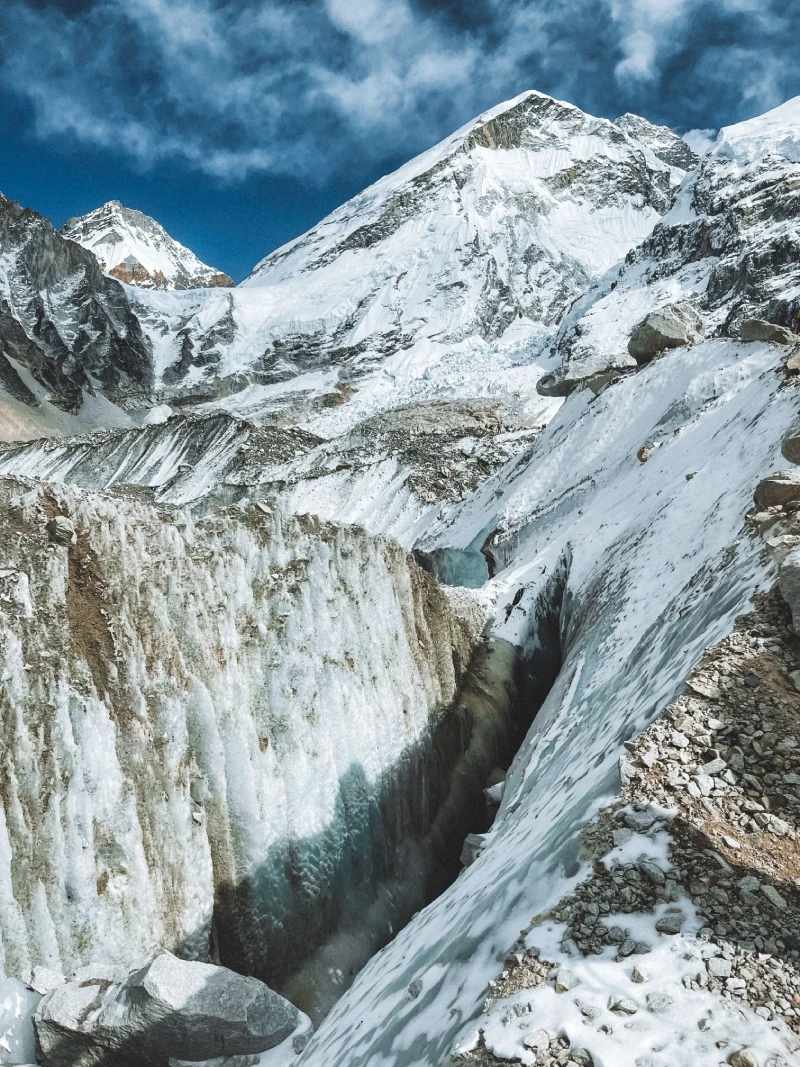
These landscapes are caused by the constant movement of the glaciers. Snow accumulates in large quantities in the Western Cwm and turns into ice under its own pressure, after which it flows downward and meets a steep fall where it stretches, splits and falls further down.
At such an altitude, glacier flows at a speed of about one meter per day and varies depending on the time of the year. As a result, it forms numerous ice towers called seracs, some of which can reach the height of several floors of an ordinary apartment building.
The deep cracks in the Khumbu Icefalls make the situations even worse. Some of them are shallow enough that one could jump over them while others are big enough to swallow a house.
As the ice is constantly changing, icefall never looks the same each time. The route that was found to be suitable on Monday can become unavailable by Friday. Climbers are not walking on solid ground up there. They are crossing an ever-moving river of ice.
This explains why so many mountaineers consider the Khumbu Icefall one of the most difficult sections of the Everest climbing path. Strength will not take one through. Crossing the Khumbu Icefall successfully requires getting an early start, proper timing, and respect for the ice.
Where Is the Khumbu Icefall Located?
The Khumbu Icefall is located in the Khumbu region in the northeast part of Nepal. The Khumbu area is a part of Solukhumbu District and is located within the Sagarmatha National Park. It is the center of the Everest region with Sherpa settlements, passes, and some of the world’s tallest peaks.
Khumbu Icefall is located in the southern part of Mount Everest. The route for climbing Mount Everest from the Nepal side starts from the South Col route and then opens Khumbu Icefall route for climbing Mount Everest. Those starting from the Tibet side will not experience the icefall.
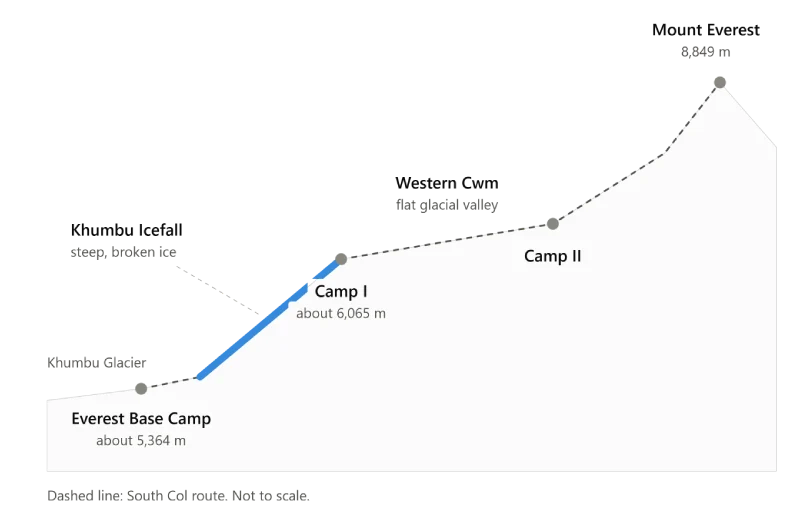
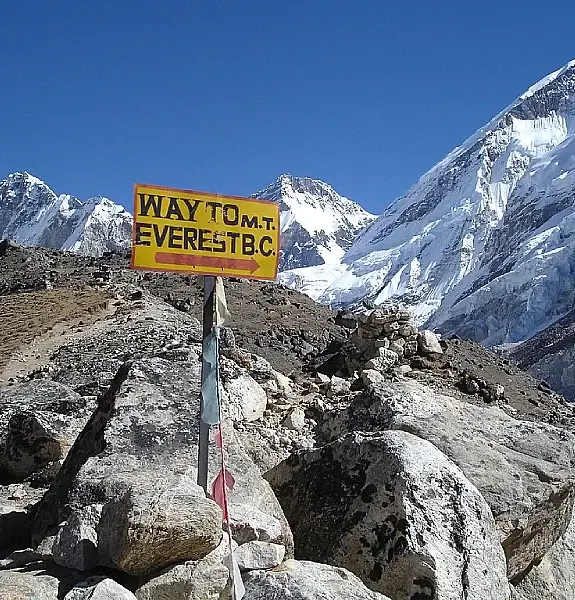
The Everest Base Camp lies directly beneath it. The Everest Base Camp is found at around 5,364 meters on the Khumbu Glacier. From here, everyone can observe with their own eyes the broken walls of the icefall. The trekkers during Everest Base Camp trek get an opportunity to view it but never enter it.
This part connects the bridge between the Everest Base Camp and the Camp I. The Camp I is located at around 6,000 meters, which means that the ascent here will be reached by extra 600 meters. The distance seems very small in the map, but for climbing, it takes much more time than anticipated.
There are various natural attractions surrounding the area. The Khumbu glacier descends from the icefall and ends up reaching Lobuche and Gorak Shep. Above the icefall lies the Western Cwm, which represents a valley surrounded by the walls of Nuptse and Lhotse mountains with Everest towering in its upper part.
How is the Khumbu Icefall Formed?
It may seem like the glaciers are stationary, but they actually move slowly. There is constant snow fall in the higher region of the mountain. Layers keep on adding up and the new snow layer compacts the older ones to form ice. This is pulled down by gravity.
For most of its course, the glacier moves along relatively flat ground. But after some time, there will be a sharp incline in the area below the Western Cwm. The ice cannot bend quickly enough to follow the slope, so it breaks.
Imagine stretching out a large piece of cold toffee. You can stretch it a little, and it will break. This same happens when you stretch out ice as well. Such cracks are called crevasses. They extend over long distances and can be very deep inside the ice. Where crevasses intersect, the glacier separates into parts. Jagged pieces are made of ice. Gravity pulls on them, thus they fall down.
The motion of a glacier is continuous. Ice moves faster during warm weather and stops during cold weather creating waves. Heavy snow makes the ice dense and when it warms up it makes the top layer of ice soft. As a result, the ice changes throughout the year. Each change creates a new route for the climbers, and they have to find new pattern on how to climb once again.
Why Is the Khumbu Icefall So Dangerous?
The Khumbu Icefall is the most dangerous part of South Col route because the climbers have no control over the ice. Below are the main hazards:
Unstable Seracs
The seracs are towers of ice, which are formed by the crevasses cutting the glacier into blocks. These structures may be extremely heavy up to thousands of tons. They become unbalanced by the slow flow of the glacier and may fall at any moment.
Deep Crevasses
The crevasses are deep cracks, which can extend for ten of meters downward. Some crevasses are quite easy to locate, while other crevasses remain hidden under the snow bridges, which may be able to support one climber and collapse with the next climber. Although guides check the snow, some crevasses only become visible only when climber come close to them.
Avalanches and Falling Ice
The icefall is surrounded by steep terrain from all sides. The snow and ice fall from the upper cliff, while some unstable structures in the icefall may throw ice chunks on the way of climbers. Some of the avalanche pathways are located quite near to the route.
Continuous Movement of Glaciers
The glacier constantly moves between the route, so the route through Khumbu Icefall also changes constantly. An easy route in the morning, can crack open overnight. Ladder get shift, ropes become loose and anchor lose their grip. Each climb of the Khumbu Icefall poses the danger of changing conditions.
Changing Conditions due to Weather and Temperature
The warm sun melts the ice and loosens it, making it unstable. The new snow obscures the crevasses while adding more weight on the slope. Fog and snow restrict visibility, and cold weather slows down you hand and thinking ability.
Preparing the route helps climbers to a certain extent. The ropes and ladders are put in place by the Sherpas, and the climbers take place early in the morning when the ice remains stable. These steps help reduce risk but cannot remove it completely. The Khumbu Icefall crossing stays a natural hazard that no plan can fully control.
Who Are the Icefall Doctors and What Do They Do?
The Icefall Doctors are a very skilled team of Sherpa climbers that helps make path through the Khumbu Icefall every year. Without them, commercial Everest expedition would not be able to leave the base camp.
They operate under the management of the local organization – the Sagarmatha Pollution Control Committee, or SPCC. The SPCC is responsible for environmental and safety operations in the Everest area. According to SPCC, it has been engaged in developing and supporting the Khumbu Icefall climbing route since 1997 and expedition participants have to pay fees each season to support this activity.
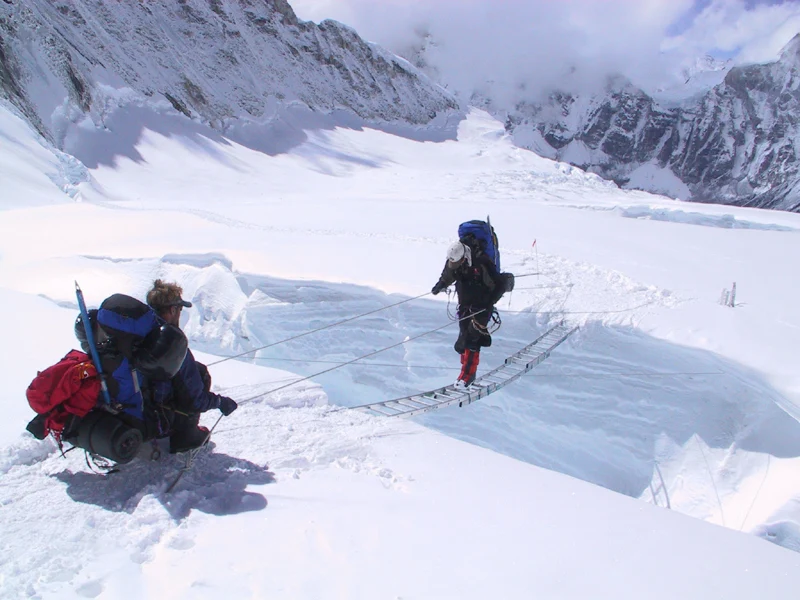
The first thing the Sherpa do is they look for a suitable route. The Icefall Doctor scout the icefall before they move forward. They look for the safest points of ice avoiding the most dangerous seracs and constructing a less complicated route. These routes change every season and give the different Khumbu Icefall climbing route.
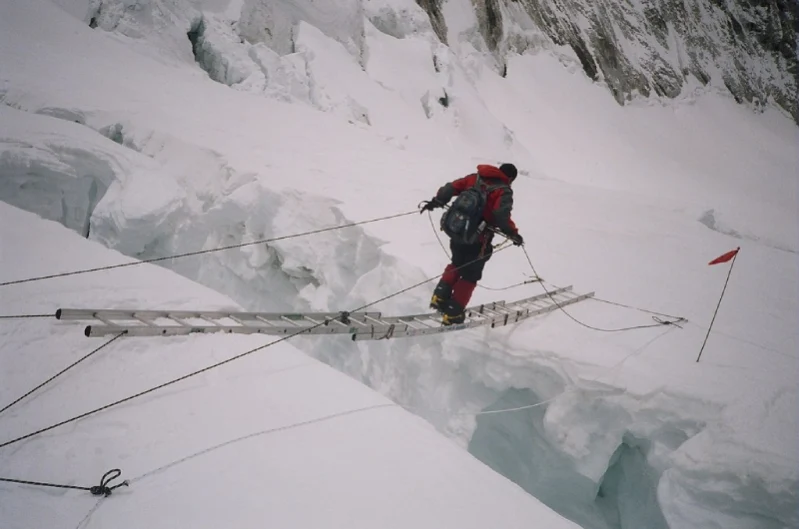
The second stage is to bridge crevasses. Only the icefall doctors know how to set ladders over crevasses and how to connect ladders if a crevasse is very wide. The doctors install a rope along the way attaching it with screws and anchors, and climber use that rope to climb up.
However, their effort does not end with the trail opening. The doctors continue to traverse the ice fields each week, going back and forth, as well as adjusting the ladder to avoid the movement of the glacier and checking the ropes.
Their knowledge is invaluable because they have worked in these glacial areas for years and can notice the changes that may be unnoticed by an outsider’s eye. It is thanks to their expertise that the Khumbu Icefall crossing is safe.
They are the most exposed to danger since they spend much more time within the Icefall than any client does and that during the most dangerous time of the day. The 2014 avalanche that killed 16 Nepali mountain workers was an example of what can happens in such conditions. Each and every mountaineer passing through the icefall respect them.
How Do Climbers Cross the Khumbu Icefall?
The process of crossing the Khumbu Icefall is initiated long before the ascent. Expedition members need weeks of training at Everest Base Camp to get themselves ready. They test equipment, train on nearby ice and discuss plans with the guide. Usually, there are training rotations for everyone.
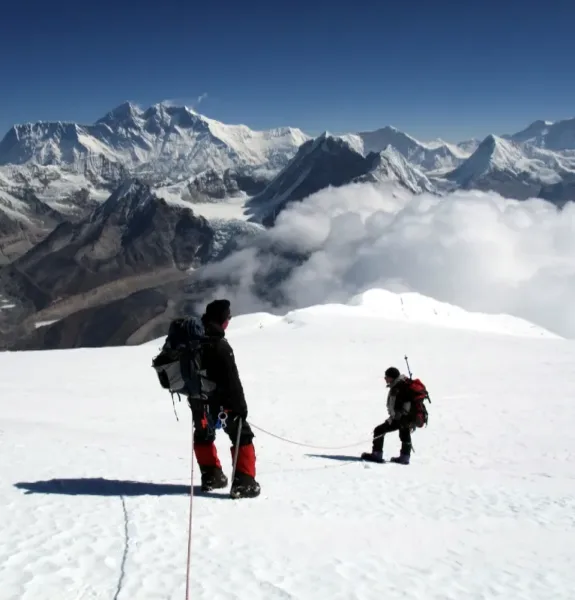
Climbers start their journey from the camp at night when it is very cold outside. Ice is solid and does not melt, while seracs are not moving much. During the daytime, when glacier becomes warm due to the sunshine, it becomes highly unstable.
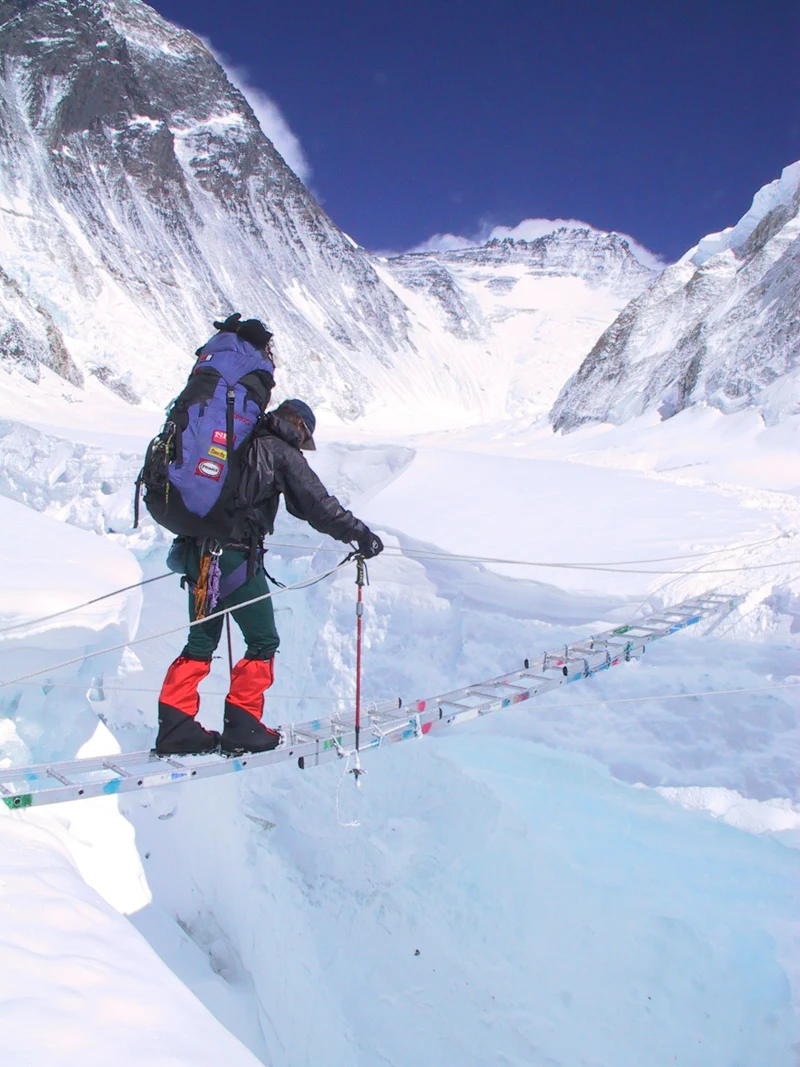
All climbers wear a special harness, helmet, and shoes equipped with crampons. Each person takes an ice axe and fixes himself on the rope. Climbers use headlamps to see better in the darkness.
The climbers will follow the path that the Icefall Doctors made. For the whole process, all of them should stay on the trail. Otherwise, they will face so many risks concerning hidden cracks and unstable ice.
What Equipment Is Needed to Cross the Khumbu Icefall?
When climbing through the icefall, climbers have to bring quite minimum equipment with them. Everything that climbers take along has its role, and most importantly, it helps to survive again ice, frost, or falling. The basic items, with which climbers can keep themselves safe are:
Mountaineering boots provide warmth and stiffness to the foot so that it can hold the crampon. They also protect your ankles from injury when stepping on broken ice. Proper fit is important since cold feet make you go slowly.
Crampons fasten to the boot and grip the ice. Crampons are essential for every step, including walking on the aluminum ladders. Properly adjusted points are crucial.
Reliable climbing harness is worn around a waist and thighs to be connected to the fixed rope with proper safety means.
Carabiners are strong clips helping to attach the harness to the rope and other climbing items. Lockable carabiners prevent gate from accidentally opening.
The ascender climbs up the fixed line, grabbing on as you pull down. This will help you in ascending steep areas while preventing backward slips. The ascender is a safety backup in case of loss of balance.
The Helmet safeguards your head from falling chunks of ice and any other debris. In the Khumbu Icefall, small pieces can suddenly fall from above. This equipment is used for the entire trekking process.
The ice axe provides balance on the slopes and slows down a slide. This equipment will enable you to test the surface on a steep area.
Insulated clothes protect from cold in the early morning. The layers hold heat while a windproof coat protects against the wind. Insulated mittens and insulated caps are also important, just as warmer clothes.
It is important to remember that equipment alone is not enough during a trek. Equipment starts working only if one knows how to use it. Khumbu Icefall trekking requires certain skills, physical fitness, and a team.
Can Everest Base Camp Trekkers Visit the Khumbu Icefall?
Although trekkers may see the Khumbu Icefall, they will never actually cross it. This is the main distinction between an Everest Base Camp Trek and an Everest Expedition. The first one is an adventure at high altitudes, while the second is mountaineering.
The Trek to the Everest Base Camp involves moving along well-known mountain routes passing through Sherpa villages such as Namche Bazaar, Tengboche and Dingboche. You move on well-marked tracks, cross suspension bridges and spend night in mountain lodges. Climbing experience is not necessary, only endurance and enough time to acclimatize to the altitude.
At the Base Camp, you will have a breathtaking view of the Khumbu Icefall located just above you. You will be able to see the ice towers and cliffs with your own eyes. In addition to great views of icefall, you can also hear the sound of the ice moving the icefall. In order to have a wider perspective, many people ascend to Kala Patthar from Gorak Shep.
Ordinary trekkers do not venture into the icefall. The regular trek concludes at base camp, while the Khumbu Icefall climbing starts right after that. Moreover, trekkers do not require any permits and equipment to move around that area as they never visit it.
And the explanation for it is quite simple. Climbing through the Khumbu Icefall requires crampons, a harness, ascenders, and knowledge of using ladders and fixed ropes. Moreover, climbing through the Khumbu Icefall requires Sherpa help and route fixing, done by Icefall Doctors, as well as an expedition permit for Mount Everest.
Best Time to See the Khumbu Icefall
The time when you visit the Khumbu Icefall is determined by your purpose of visit. Trekkers and climbers come to the Khumbu Icefall, but their timing is completely different. For trekkers, it depends on the weather and for climbers, it depends on the weather and the condition of the Icefall itself.
Spring (March to May)
Spring is the main Everest climbing season when people reach the base camp between the end of March and late April. During this time, Icefall Doctors prepare the climbing route, and most climbers pass it from the end of April to May. Spring is also a very nice time to visit the region for trekkers because of its pleasant weather, rhododendrons blossom and active base camp.
Autumn (September to November)
This is considered at the peak trekking season in the Everest area. Different from springtime, weather gets really nice at this time of the year after a good monsoon period. Many people visit the trails in autumn, so make sure to book places in teahouses in advance since many trekkers will try to visit the area as well.
Winter (December to February)
Winter brings harsh cold weather with strong winds and snowfalls in high regions. During winter nights, temperatures fall considerably and drop well below freezing point to leave fewer people around and keep the trails quiet. It is also possible that lodges at high elevations may shut down too during this period. Trekking is possible if one is well prepared.
Monsoon (June to August)
Monsoon season is characterized by a huge amount of rain and cloudy skies. The trails become really slippery and visibility is very poor. Rainy and warm weather leads to unstable conditions in the mountains. Climbers do not cross the icefall during this period.
Trekking season vs Climbing season
This is the key difference. The best time to trek to Everest Base Camp is either spring or autumn where the weather is predictable and clear. The route to the icefall that is required for climbing is only prepared and used during spring for a couple of weeks.
Hence if you would like to see the icefall then either spring or autumn is recommended. If you would like to see the climbers in action, then April and May is recommended.
Conclusion
The Khumbu Icefall is one of the most breathtaking and hazardous places in the world. It’s a glacier consisting of seracs and crevasses, the Icefall continuously changes, and anyone who wants to make it to Everest through the Nepalese side must pass it.
The Khumbu Icefall route is made possible by the Icefall doctors. They set up their ladder and ropes and check the icefall each day, but the risk cannot be avoided no matter how much planning takes place.
Most people don’t get to climb up the Khumbu Icefall, and it’s perfectly okay since it can be easily viewed from the base camp. If you want to be safe while in the Everest region, make sure to go on an Everest Base Camp trek with us.
Epic Trek Nepal will take care of your Everest Camp Trek and give you a chance to see the Icefall up close.
Frequently Asked Questions
What is Khumbu Icefall?
Khumbu Icefall is a very steep and rapidly moving part of the Khumbu Glacier, situated on the Nepalese side of Mount Everest. This icefall is made with numerous seracs and crevasses. The climbers who choose the South Col route have to pass this place.
In what place can Khumbu Icefall be found?
The icefall is situated in the Khumbu region of Solukhumbu District in Sagarmatha National Park, which is just above the Everest Base Camp on the southern side of Everest.
What is the height of the Khumbu Icefall?
This part of the glacier is between the base camp and the Camp I, which means that the height is approximately 5,400 to 6,000 meters, but there are differences in the data from different sources.
Why is the Khumbu Icefall considered to be so dangerous?
The danger consists in the continuous movement of the ice. The danger includes the collapse of seracs, the crevasses covered by snow, and also sudden avalanches.
What is the depth of the crevasses in the Khumbu Icefall?
The depth of the crevasses varies from a few meters up to tens of meters. There are no regular measurements made, since they vary in time due to the movement of the glacier. It is not possible to give you a number.
Who are the Icefall Doctors?
Icefall Doctors are a group of professional Sherpa mountaineers employed by the Sagarmatha Pollution Control Committee (SPCC). They find the route, install ladders and ropes and maintain the route throughout the climbing season.
How do climbers pass through the Khumbu Icefall?
They climb it at dawn time, when the ice is the most frozen. Climbers use crampons, a safety harness and helmet. They climb using the fixed rope and aluminum ladders over the crevasses, with help of the expedition team.
Do Everest Base Camp Trekkers pass through the Khumbu Icefall?
No. The icefall can be viewed from the base camp, but it is not included in the usual trek. It is a part of the Everest climbing route.
How long does it take to traverse the Khumbu Icefall?
It depends on a number of factors, such as the team, climber’s state and experience on that particular day. While many people say it takes several hours, it is impossible to provide a definite time.
When is the Khumbu Icefall climbing trail open?
Yes, it is. This is the first challenging section of the South Col Route, which is between the Base Camp and Camp I. The Khumbu Icefall is not climbed by the Tibet-side teams.

Table of Contents
- Where Is the Khumbu Icefall Located?
- How is the Khumbu Icefall Formed?
- Why Is the Khumbu Icefall So Dangerous?
- Who Are the Icefall Doctors and What Do They Do?
- How Do Climbers Cross the Khumbu Icefall?
- What Equipment Is Needed to Cross the Khumbu Icefall?
- Can Everest Base Camp Trekkers Visit the Khumbu Icefall?
- Best Time to See the Khumbu Icefall
- Conclusion
- Frequently Asked Questions