



Mountaineering in Nepal: Best Peaks, Costs, Permits, and Preparation
23 October 2026
By admin
Mountaineering in Nepal attracts people from all parts of the globe because there are eight out of the fourteen 8,000 meters peak present here in Nepal including Mount Everest. There is no other country where such number of 8,000 meters peak lies in the entire globe.
However, Himalayas are not meant for only professional mountaineers. Nepal offers a wide range of peaks for first timers, more challenging trekking routes for experienced mountaineers, and difficult technical routes for the most experienced mountain climbers as well. With proper guidance and good preparation, it is possible for even amateurs to reach an altitude of 6,000 meters.
The range of options is incredible. Some peaks require just solid boots, crampons, and a rope to overcome the small snowy route. At the same time, some other peaks require technical ice climbing and several weeks of acclimatization. Thus, selection of the right peaks to climb in Nepal will depend upon your physical fitness, experience, and objectives.
Before making any plans, you must know about the different styles of Himalayan mountaineering:
- Trekking: You hike along known routes below 5,500 meters without technical equipment.
- Peak climbing: You climb to the summit of a trekking peak from 5,500 to 6,500 meters high using climbing techniques. Climbing peaks in Nepal is a good choice for active trekkers seeking to conquer the summit.
- Expedition mountaineering: You climb huge peaks above 7,000 meters with fixed camps, long periods, and large budgets.
Mountaineering in Nepal for beginners usually begins with trekking peaks and guides.
In this guide, you will learn about the best peaks, permission requirements, expenses, seasons of climbs, and useful tips. We, the experts from Epic Trek Nepal, provide all this information based on our practical experience.
Why Is Nepal a Popular Mountaineering Destination?
Nepal does not just offer renowned summits but also gives a complete mountain experience from lush green foothills to ice-covered ridges above 8,000 meters. The difference is what makes Mountaineering in Nepal so highly regarded in almost everyone’s bucket list.
In a matter of weeks, you can trek through rhododendron forests, glacier moraine, and even snow. From rock, ice, and even mixed terrains, various routes await that will satisfy different climber capabilities.
Another thing that sets Nepal apart is the progression of difficulty. Easy trekking peaks such as Island Peak and Mera Peak provides a real summit to those who are not well trained for an entire expedition or mountain peaks of Everest and Manaslu.
The cultures have an equal importance as altitude. You will see stone houses, prayer flags, monasteries, and terraces. Sherpas, Tamangs, Gurungs, Rai and other ethnic groups from the Himalayas will be welcoming you, and their knowledge of the mountain will influence the climbs.
Infrastructure also plays an important role. Existing trails, teahouses, basecamps, and local organizations help with logistics more than in other regions. But good infrastructure does not guarantee the safety of climbs. Mountains can be dangerous by themselves because of height, weather, and avalanches.
That is why guides’ experience and gradual acclimatization are extremely important for Mountaineering in Nepal. Guides understand the situation, set the appropriate pace, and decide whether it is time to go back. Not all the peaks can be conquered by inexperienced climbers, and what are the best mountains to climb in Nepal for you depends on your abilities.
Mountaineering vs Trekking vs Peak Climbing
Most beginner trekkers confuse these types of routes, considering them the same. This is incorrect; understanding the difference will help you to choose a adventure suitable for your physical abilities and ensure your safety.
| Activity | What it involves |
| Trekking | Walking established mountain trails, usually without technical climbing equipment. |
| Peak climbing | Ascending a designated peak that may require crampons, an ice axe, ropes, a harness, and technical instruction. |
| Expedition mountaineering | Climbing more demanding mountains that may involve advanced skills, longer expeditions, high camps, and complex logistics. |
However, some similarities exist among these categories. For instance, the difficult treks may be more challenging than the easy peaks. Some peaks require crampons only for one snow-covered slope, while other peaks require ascending the slope through ice for hours.
There are four factors determining difficulty: the route itself, weather and snow conditions, the height of the mountain and your climbing experience. A very simple peak in perfect October weather may become a serious challenge for you after the fresh snowfall or wind.
Instead of thinking in three categories, think about it more in terms of a scale. For Beginner mountaineering in Nepal, this usually begins with trekking first, a trekking peak next, and then something bigger.
How do you decide? Ask yourself three simple questions. Have you ever climbed using crampons and an ice axe? Have you ever slept at 5,000 meters? Can you handle summits that last all day and are extremely cold?
If your answers are “no” to any of those questions, then you should begin with a trekking peak. Peak climbing in Nepal requires a lot of patience, too.
Best Mountain to Climb in Nepal
These are some of the most popular peaks for climbing in Nepal, ranging from easy trekking peaks to the highest peak in the world. Duration mentioned below is not exact and includes acclimatization period.
Mera Peak (6,476 m)
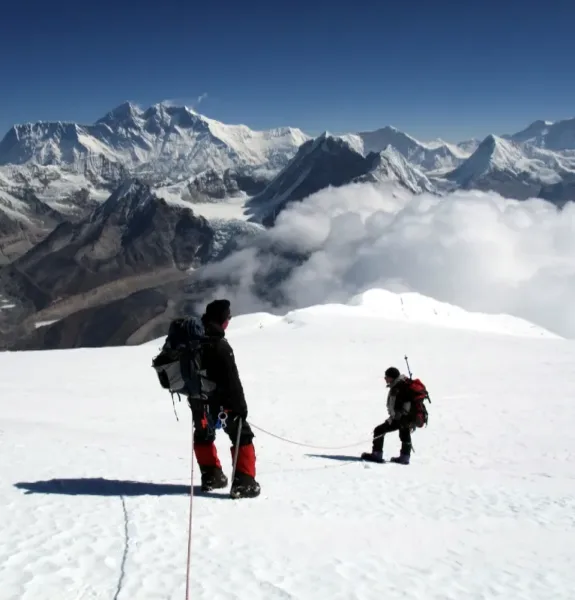
The Mera Peak climbs in the isolated Hinku Valley which is located south of Everest trails. This is an easy snow climb that becomes difficult due to the high elevation. The climb treats you to magnificent views of Everest, Makalu, and Kangchenjunga on the summit.
Most of the trips last around 16 to 20 days. The approach route allows your body to adapt gradually. Your journey to the summit begins very early and lasts 8 to 10 hours. It is ideal for fit and experienced climbers.
Island Peak (6,189 m)
Island Peak, alternatively known as Imja Tse, is located in the Everest region near Chhukung. Allow 15 to 18 days. This mountain involves climbing rocky terrain and glacial passes, as well as ascending a very steep headwall where ropes will be fixed.
While frequently used as a beginner mountaineering experience in Nepal, this peak requires some level of preparation. Learn to work with crampons, ascenders, and ice axes before attempting to summit. Technical instruction will make summit day much safer for you.
Lobuche East (6,119m)
This peak lies on the approach to the base camp of Mt. Everest, near the village of Lobuche. Expeditions can last 16 to 20 days, and may be combined with base camp. The ridge of the summit is steep and exposed.
It is always covered with snow and ice, and ropes are sometimes fixed on the mountain. Previous experience is very helpful, as well as spending a few nights at altitudes above 5,000 m.
Pisang Peak (6,091 m)
Pisang Peak overlooks the Pisang village of the Annapurna Range. As you can combine it with the Annapurna Circuit, your trek will usually take 14-18 days. The trek ascends through the forest to reach the high camp.
From there, the trek continues to ascend on steep snow/ice to reach the narrow summit of the mountain. Well-acclimatize yourself and acquire some technical skills.
Mount Everest (8,848 m)
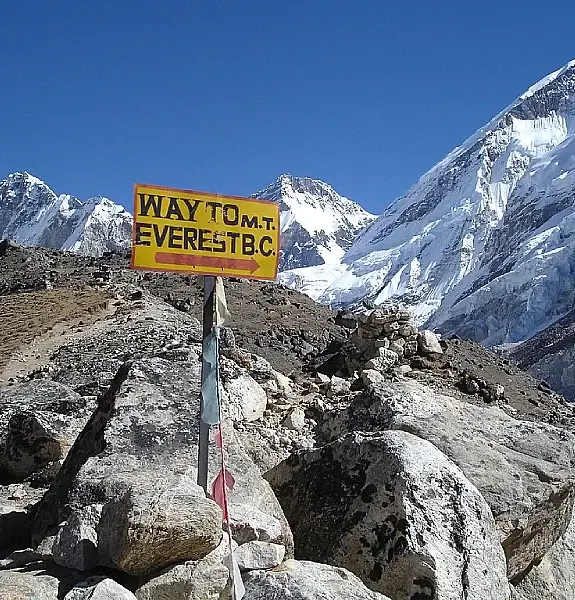
Everest is located in the Khumbu region on the border of Nepal and Tibet. It is an expedition peak, not a beginner one. It usually takes two months to climb Everest.
For that purpose, you require lots of high-altitude experience, good technical skills, specialized logistics, acclimatization, and big finances. High altitude, avalanches, and extreme weather conditions pose high risks every year. Climbers generally make Everest their test after conquering the peaks of 6,000 and 7,000-meters range.
Is Mountaineering in Nepal Suitable for Beginners?
Yes, but with certain restriction. It is possible to start mountaineering in Nepal, although not all peaks or all individuals will fit. Be realistic about where you are starting from.
Physical fitness is important yet does not guarantee success. Endurance is what makes you climb a long route. Technical ability makes sure that you stay alive on snow and ice. Even an experienced marathon runner without crampons experience will have a lot to learn.
Start your preparation before you go there. Train in wearing crampons, using an ice axe, and being tied in a rope. When necessary, learn to arrest yourself as well. All these things can be taught by your assigned guide, but better if you practice them at home.
It is equally important to acclimatize. Climb gradually, sleep low, and have rest days. Even physically fit people suffer from altitude sickness. Caution is an important factor as well. When there is bad weather or you are feeling unwell, you head back down.
Select your goal according to your experience level and not according to the altitude or the popularity of the mountain. A lower mountain with some technical parts could be more difficult than the higher, but easier, snowy one. The best beginner mountaineering trip in Nepal would be to a suitable trekking peak.
Best Season for Mountaineering in Nepal
The ideal time for mountaineering in Nepal largely depends on the mountain itself. The conditions differ greatly both from one region to another and from one year to another. Below is the comparative analysis of the seasons.
Spring (March – May). Spring is a major climbing season in most of the Himalayan mountains. It is warmer and the days get longer. Nonetheless, the weather and snow conditions can be unpredictable.
Autumn (September – November). Autumn is a preferred season for trekking approaches and chosen objectives, depending on the mountain. It is cool in the mornings, and the views are spectacular. Most climbers choose autumn season their peak climbing in Nepal at the popular trekking mountains.
Winter (December – February). In winter it gets colder with more snow and weather challenges for some climbing routes. It will tests your equipment and endurance.
Monsoon season (June-August). It rains very heavily in a lot of places during monsoon season. You should expect clouds, landslides, and difficult approach trails. However, the areas vary, and some areas that experience less rainfall will be different.
There is no one ideal season for all peaks. The best time for you will vary depending on your exact mountain and your route, as well as the weather conditions. Check the forecast and find out about recent snowfall from local guides before you set out.
Equipment Needed for Mountaineering in Nepal
The proper gear will keep you warm, safe, and mobile. While your personal gear list may vary based on the specific peak, most peaks require the same basic gear. Rent any special equipment that you don’t want to buy in Kathmandu or Namche if you are only planning a single trek.
Technical Gear: You will require mountaineering boots, crampons, an ice axe, a harness, a helmet, and carabiners. Include an ascender and a belay device for the sections involving fixed rope. Ensure that your crampons will fit your boots prior to your departure.
Gear for cold: Layers work best. Include a base layer, a fleece layer, an insulated down jacket, and a waterproof outer layer. Wear warm gloves, a hat, and good quality sunglasses or goggles. Your hands and feet freeze first, so don’t be cheap on them.
Sleeping and equipment for daily use: A four-season sleeping bags help to have bearable nights at high camp. Make sure you have trekking poles, head lamp with extra batteries, sunscreen lotion, and insulated water bottle with you.
Packing right. Try everything out before the big journey. Wearing new boots on the day of the summit will give you blisters and sour mood. Good equipment is not an alternative for experience but makes mountaineering in Nepal much more comfortable.
Fitness, Training and Acclimatization
Prepare yourself at least four to six months before the departure. Nepal mountain climbing gives success to those who develop a good foundation first and not the ones who prepare themselves in the last few weeks.
Aerobic training. Walk uphill, cycle or run three to four times a week. Also include one day of training during weekends. Take time so as not to injure yourself.
Strength and balance. The leg muscles and core strength are vital for carrying you during peak days. Squats, lunges, step-ups, and planks are the exercises to try out.
Loaded hikes. Load yourself with a backpack equal to the one you will be using in your adventure. Spend some hours walking uphill and use the boots you will wear during climbing.
Technical Skills. If you need crampons, ice axe and rope technique to reach your summit, make sure that you take an appropriate class prior to your trip and practice on snow/ice under instructor’s supervision.
Acclimatization. Being fit does not prevent the effect of the altitude sickness. Fit mountaineers get ill as well. Your schedule should be based on both route itself and your acclimatization, and include rest days if necessary.
Recognize the symptoms such as headache, nausea, dizziness, bad sleep and unusual fatigue. In case of severe symptoms like confusion, imbalance and difficulty breathing at rest, you should descent immediately, without waiting till morning.
Frequently Asked Questions About Mountaineering in Nepal
Which is the Best mountains to climb in Nepal for beginners?
This is relative, depending on the level of physical fitness, technical skills, acclimatization, and even the guide accompanying you. For First-time Mera or Island Peak will be suitable. Beginner mountaineering in Nepal should focus on the matching peak with the climber’s abilities rather than on its popularity.
Is prior mountaineering experience necessary to climb Mera Peak?
No, because Mera is non-technical; however, the height of 6,400 meters is the main difficulty. Previous experience with snow and high altitude will be helpful. Training and learning basic crampon and rope work skills are necessary.
How expensive is mountaineering in Nepal?
It depends on a number of factors including the particular peak, the size of the group, the duration of the expedition, permits, guides, porters, gear rental, flights, insurance, etc. To learn about current prices, check our packages.
Which is the ideal time for mountaineering in Nepal?
The seasons for most of the peaks are springtime (March to May) and fall (September to November). Climatic conditions may change according to different peaks, so please consult for more information.
Is there any specific insurance necessary for mountaineering?
Yes. It is very essential because most of the travel insurances do not cover mountaineering above certain altitude. Please find out the altitude and technical climbing coverage and helicopter evacuation policy.
How much time will mountaineering in Nepal take?
The duration of trekking peaks will be around two to three weeks depending on the mountain you choose and other factors. The duration of Everest level expeditions will be around two months.

Table of Contents
- Why Is Nepal a Popular Mountaineering Destination?
- Mountaineering vs Trekking vs Peak Climbing
- Best Mountain to Climb in Nepal
- Is Mountaineering in Nepal Suitable for Beginners?
- Best Season for Mountaineering in Nepal
- Equipment Needed for Mountaineering in Nepal
- Fitness, Training and Acclimatization
- Frequently Asked Questions About Mountaineering in Nepal