Route Overview
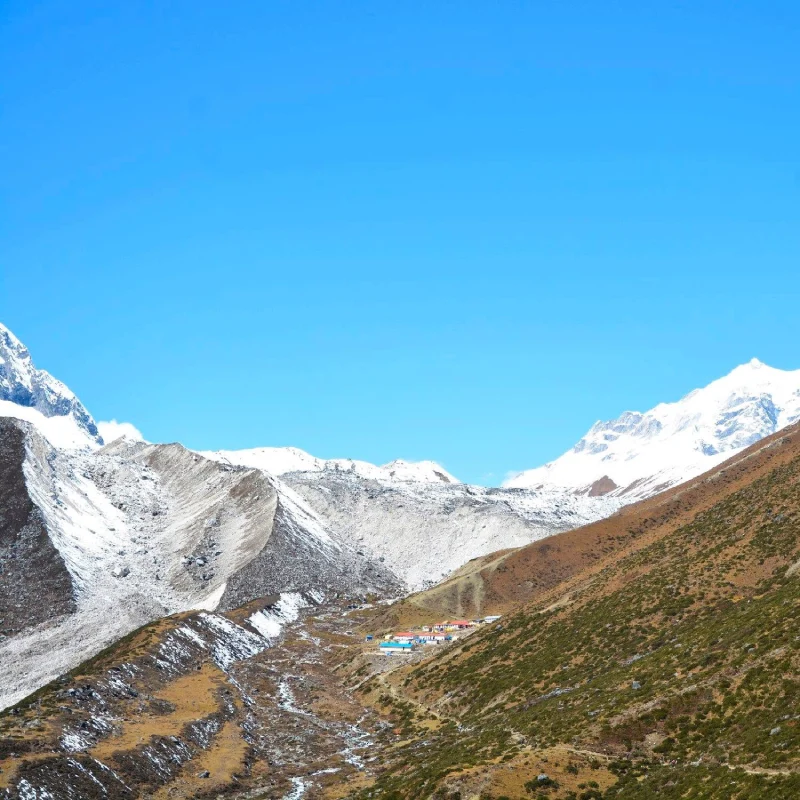
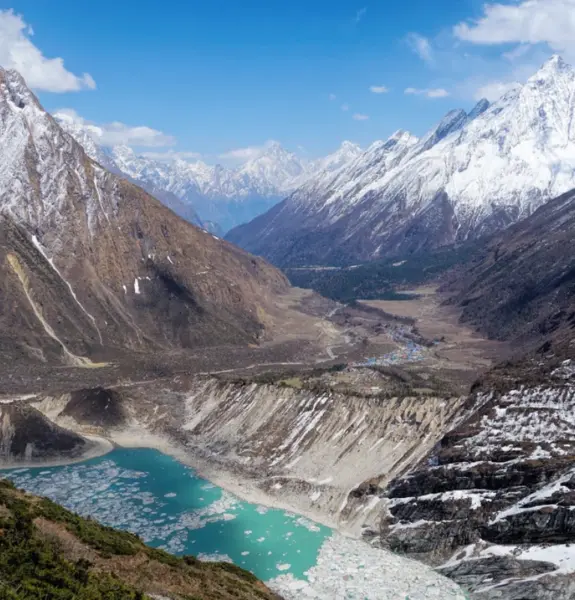
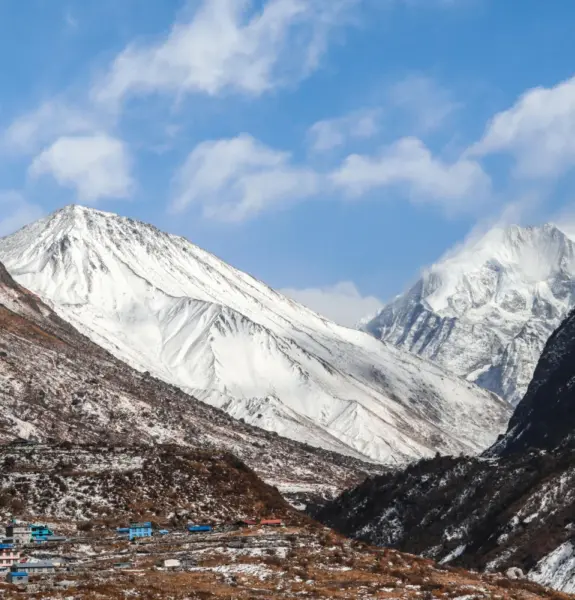
The Rupina La Pass trek is an 18-day trail that combines two distinctly different trails into one trekking experience. It takes place in the serene hills of Gorkha, goes over a unexplored pass, and finishes in the famous Manaslu Circuit.
Your first day begins with a public bus ride from Kathmandu to Barpak, which is a Gurung village at an elevation of 1,900 meters. The Barpak village is located very close to the epicenter of the 2015 earthquake, but this community has come together once again and rebuilt with dignity and grace. From here, you ascend Mamche, Lambra Kharka, and Mircha Khola. You leave behind dense forest cover and open pastures.
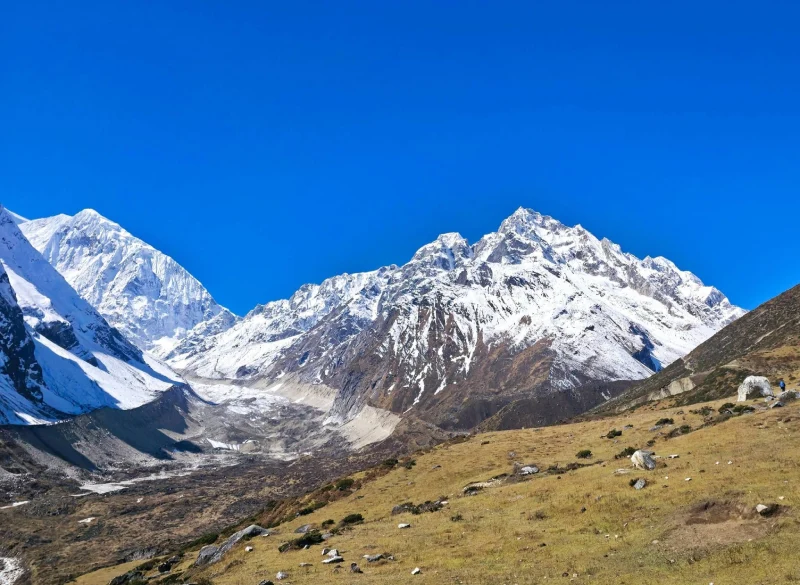
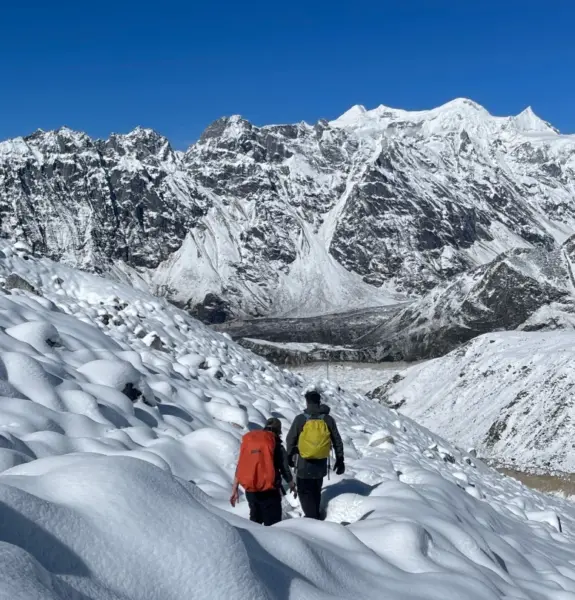
Your fifth day takes you to the base camp of Rupina La Pass at 3,400 meters. Your sixth day will take you across the Rupina La Pass at 4,720 meters down to Myachet.
The pass is followed by the trekking trail descending through Chongchet and Sherang Kharka to Ngyak. After that, you trek to Namrung and join the main Manaslu trekking trail. The atmosphere now becomes different. You meet more trekkers, you have more options for lodging, and you walk through the more crowded villages which are Tibetan in influence.
Then follow Samagaon, which is your acclimatization day, then Samdo and Larkya Phedi. That day is planned specifically for you, and we do it because in a very short time you climb too high and need that day off before the next pass.
On Day 15, you will cross the Larkya La Pass at 5,135 m, the highest point on the way. You will descend all the way to Bimthang, and then through Tilije to Dharapani, after that driving through Besisahar to Kathmandu.
This is the route that offers you two passes, two valleys, and different crowd on either side.
Rupina La Pass Trek Difficulty
The Rupina La Pass Trek is very challenging and is definitely not the best one for your first Himalayan experience. If you are a beginner, then choose a less challenging trek but if you are a experienced trekkers here what you have to face during the trek.
Rupina La Pass Trek itinerary involves six to eight hours are spent on most days. Trekkers have to cross the passes which can last up to nine or ten hours. For that day you begin early and usually end up at your camp site exhausted.
Stiff ascents and descents. The trail has a steep ascent starting from Barpak to Mamche. Following the pass, the steep descent to Myachet will take its toll on your knees. Trekking poles would help greatly.
High altitudes. From day three onwards, you spend your nights sleeping above 3,000 meters and crossing two passes, reaching 4,720 meters and 5,135 meters respectively. Headaches, poor sleep and lack of appetite are common experiences.
Challenging conditions. There are only few facilities are available between Barpak and Myachet. You will sleep in teahouses and camp, with cold nights, no warm showers, and poor mobile network signal.
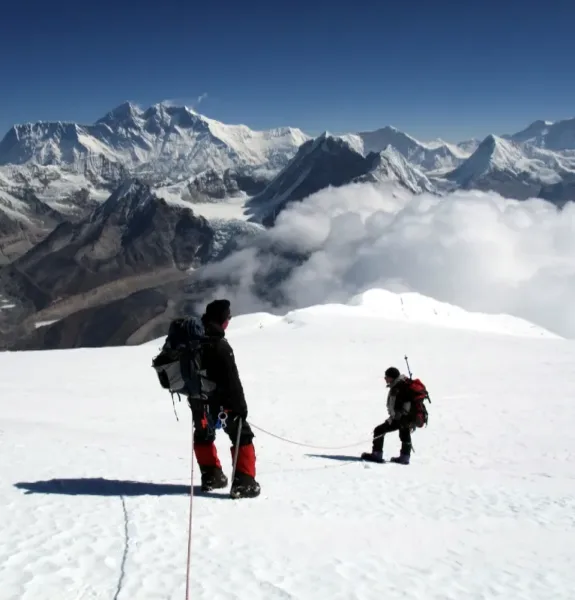
Landscape. The route passes through unstable rock, boulder fields, and steep and narrow mountain ledges. Snow or ice may be present in the trail near the summit.
Unpredictable climate. Clear sunny days could give way to strong winds, cold rains, or even snowfall by late afternoons. Always prepare for unexpected weather!
The mountain pass itself. Crossing Rupina La Pass is an adventure that requires strong legs, a solid lung capacity, and a cool-headed mentality. Our guides monitor every day, and they decide to turn back when necessary.
Preparation is key. Exercise for two to three months by walking up the hills, climbing stairs, and hiking for long distances with a heavy pack. Then leave all the logistics to a well-prepared Rupina La Pass Trek Package.
Who Is This Trek Suitable For?
The Rupina La Pass Trek rewards people who come prepared. It’s not an easy journey, not a beginner’s trail. A lot of route guides say that it’s difficult to do it, and they are not wrong. The route is tough, the territory is far from the civilized world, and crossing the pass is the hardest day.
This trek will be perfect for you if you:
- Completed at least one trek of several days at the height of more than 4,000 meters, such as Annapurna Circuit, Manaslu Circuit, or Everest Base Camp.
- Are physically strong enough to hike from six to eight hours a day for more than two weeks and you like ascending.
- Can cope with high altitude. You know your body’s reaction at heights above 4,000 meters.
- Don’t mind the basic facilities, cold nights, and lack of hot water.
- Are ready to spend time alone on the trail rather than walking on the crowded tea-house trekking trails.
At the end this trek is not really recommended for beginners’ trekkers, people suffering from heart or lungs diseases, and tourists who require comfort throughout their nights.
Best Time to Do the Rupina La Pass Trek
Timing is very crucial for this trek compared to other treks in Nepal. The pass stands at such an altitude where the climate condition might entirely impact your experience.
Spring (March to May)
Spring marks the time when the trails start to bloom. You will find blooming treks and rhododendron at suitable elevations on both lower and middle tract of this route. At the higher elevations, there might be some snow patches around the pass because of the changing weather conditions. Your guide might have to make some adjustments in terms of timing and pace according to the conditions.
Autumn (September to November)
Autumn season is considered the most popular trekking season in Nepal and same applies to the Rupina La Pass Trek too. After the monsoons, the air becomes clearer, and the mountain views become more visible.
The trekking experience is pleasant during favorable weather windows. Mornings will be chilly, and the nights become colder in the high camps. You need a warm sleeping bag for those conditions. Even in autumn, the weather may take an unexpected turn.
Winter and Monsoon
We generally don’t recommend these seasons. During winter (December-February), it could be hazardous to cross the passes due to snowfall and freezing.
During monsoon season (June-August), heavy rainfall can cause trails to become slippery and also increases the chance of landslides. Clouds will also obscure the scenery which can make the Rupina La Pass trek annoying.
Altitude and Acclimatization
Walking through Rupina La Pass is not enough. It requires proper adjustment of the body and a reasonable schedule just as much as physical fitness does. Many physically fit people cannot cope with high altitudes while slow walkers manage to do quite well.
Building the Altitude
Rupina La Pass is located at an elevation of 4,720 meters. The trekking path begins from the elevation of 1,900 m at Barpak and climbs to 2,800 m at Mamche on Day 2. Then on Day 5 you will stay overnight in Rupina La Base Camp (3,400 m). After the Pass you will spend night in Myachet (3,800 m) and go down in altitude to Chongchet (3,220 m).
The second part of the trek has several ascents as well. You will ascend up to Samagaon (3,360 m), then Samdo (3,690 m), Larkya Phedi (4,460 m), Larkya La (5,135 m).
Acclimatization Plan
As per our Rupina La Pass Trek program, you have one full rest day in Samagaon on the 12th day. You also climb in moderate route each day. Climbing gradually helps your body get sufficient time to make more red blood cells.
No planning can fully prevent altitude sickness. It can only lower the risk.
Permit for Rupina La Pass Trek
This trek requires more documentation than usual for any trek in Nepal. Once you cross the Rupina La Pass, you enter a restricted zone adjacent to the Tibetan border and complete your trip in another conservation area. The rules are different too, which is why we check every aspect before your journey begins.
The Permits You Requrie
Required Documents from you
We need you to send a copy of your passport at least one month before the Rupina La Pass Trek. Please mention the details of your visa along with your emergency contact information with two passport-sized photographs.
Importance of using registered agency
This permit for registered areas is obtained via a registered trekking agency, and only a licensed guide can accompany you. This ensures that we take care of all applications for permit from Kathmandu and save you from standing in queues.
Accommodation on Rupina La Pass Trek
This is not the usual teahouse trek. As soon as you start from Barpak, you set your camp until you reach the Manaslu Circuit path. Here are some of the things that you can expect.
Camping Part
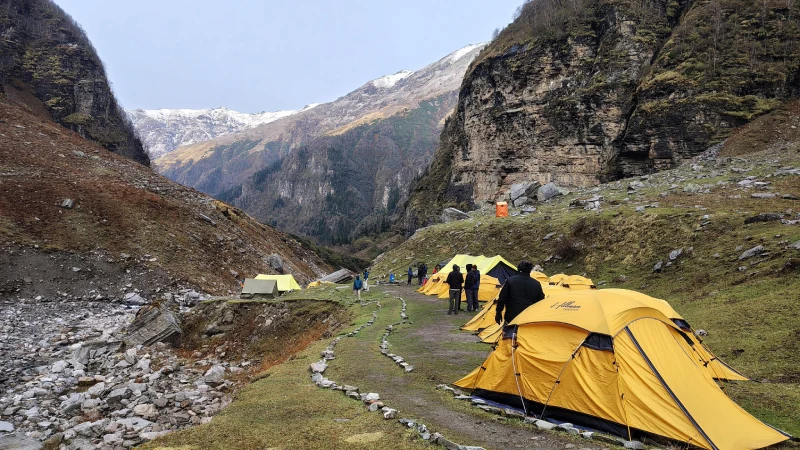
Everything will be carried and set up by our team for you. You will be provided with a twin-sharing sleeping tent, foam mattress, and a dining tent with tables and chairs. Your meals will be prepared every day by our team of cooks. We will also have a toilet tent depending on the location.
Camping places are basic and simple with rough and rocky ground with no showers and common drinking sources. There are also extremely cold nights at higher camping places, where night temperature falls below freezing in Rupina La Base camp and Myachet camp. You need a good sleeping bag of minimum -15°C rating.
Lodge Section
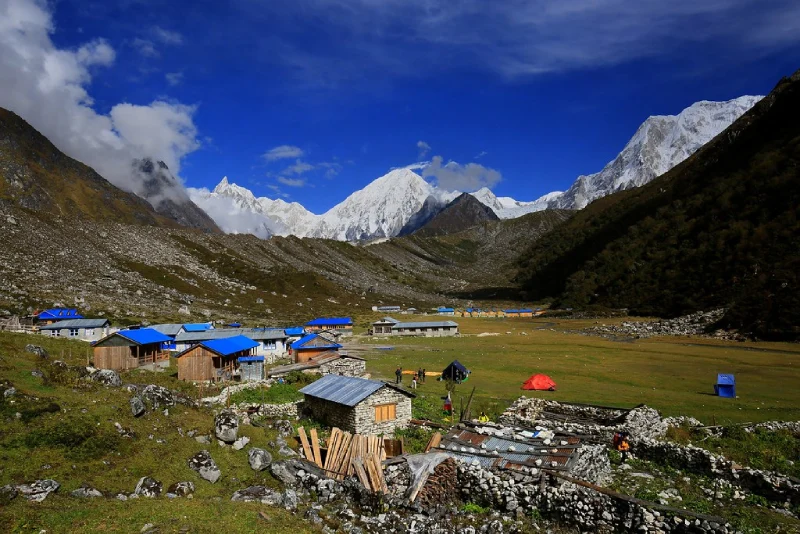
The Rupina La Pass Trek route starts using lodge facilities from Day 10 onward when the journey moves towards Namrung. The lodges are very basic, having teahouses with twin sharing rooms, thin mattresses, and bathrooms that are shared.
Hot water is not easily available, and hot showers need extra money. Most of the teahouses operate using solar energy. Therefore, charging services will be available in larger villages for a fee. Don’t expect the same in higher locations like Samdo and Larkya Phedi.
In our Rupina La Pass Trek service pack, we cover all camping equipment. You will have to carry only your backpack.
Foods and Drinking Water
Proper nutritious food helps you stay healthy throughout your long, freezing days in the mountains. In this Rupina La Pass Trek, you will be provided three meals each day.
Food During Trekking
As part of our Rupina La Pass Trek packages, you will have three meals daily during all trekking days. Tea and coffee are served without limits along with each meal. Your guides will give you snacks while trekking, including biscuits, chocolates, or other options.
The breakfasts consist of porridge, eggs, bread, or pancakes. Lunches and dinners are more abundant and hot.
Food During Camping
From Barpak to Ngyak, all your meals are cooked by our cook and kitchen team at the campsite. Fresh produce, gas stoves, and proper cooking equipment are used to serve you your meal in the dining tent.
Your meal can include dal bhat, rice, noodles, soups, potatoes, pasta, bread, eggs, and seasonal vegetables. Hot tea and soup will be served right away after you reach the campsite. Please mention any allergies and dietary restrictions before your Rupina La Pass Trek.
Lodges Meal and Drinking Water
In Namrung, you eat in teahouses. The menus remain basic yet nutritious. The best menu item is dal bhat since it energizes you and there is no additional charge for a refill.
For dinking water it will be boiled or purified. Bring along two liters of water plus a purification pill or filter as backup.
Safety, Guide and Trekking Support
In such an isolated trail as this, quality support becomes even more crucial than speed. Here is what has your back along the way from Barpak to Dharapani.
Your Guide and Team
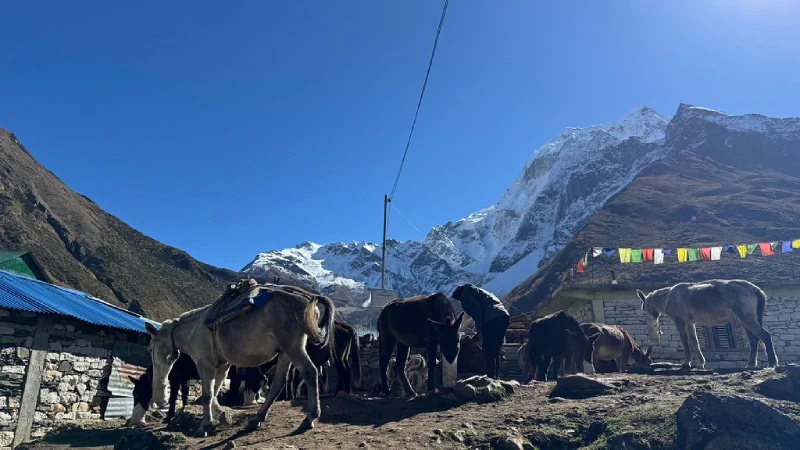
You have a qualified, experienced guide for the entire trip. This person will take care of the not-so-well-defined paths between Barpak and Myachet, where there are no signs.Cook and kitchen staff will prepare your food and set up camp. Porters will carry camping equipment and your luggage so that you will travel with just a backpack.
Weather and Decision about Crossing Passes
Every day, your guide will check the weather forecast, snow level, visibility and trail conditions. We will never cross the Rupina La Pass just because it’s written in the Rupina La Pass Trek. If the pass is closed due to snow, wind or bad visibility, we will wait, change our plans or return. It is true for Larkya La as well.
Health Checks
Your guide checks on how you feel every morning and night. If you fee headache, nausea or bad sleep report to your guide immediately.
Emergency and Evacuation
Mobile coverage is poor in the camping area; therefore, your guide has either a satellite phone or an alternative device. In case of serious sickness, we descend first. We will arrange for helicopter evacuation through your insurance company when conditions permit.
Insurance
Insurance is mandatory. You must have an insurance plan that covers your trek up to 5,500 meters, your medical expenses, and helicopter evacuation.
Our Rupina La Pass Trek packages ensure these health and safety guidelines.





 Share