Why Choose Mad Honey Hunting in Nepal?
The majority of Nepal trekking package give you scenery and mountains. In Nepal’s Mad Honey Hunting, you get to experience the story. It allows you to witness an ancient custom, not one that has been created for tourists.
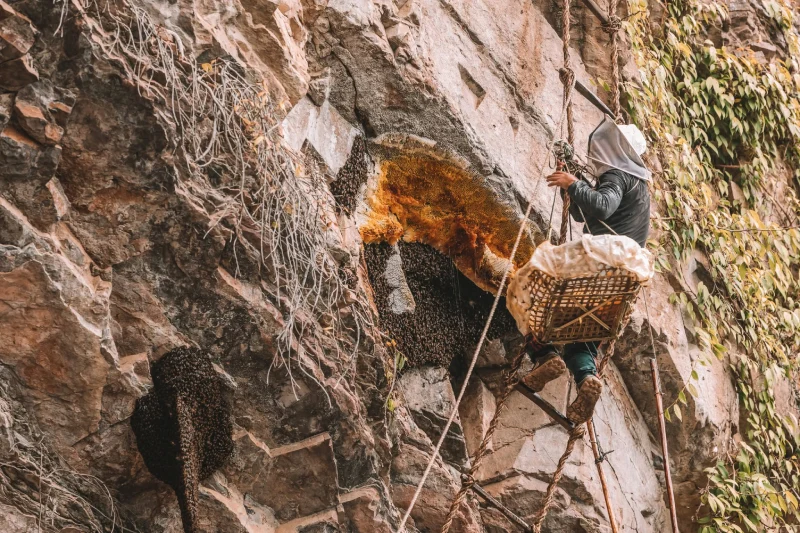
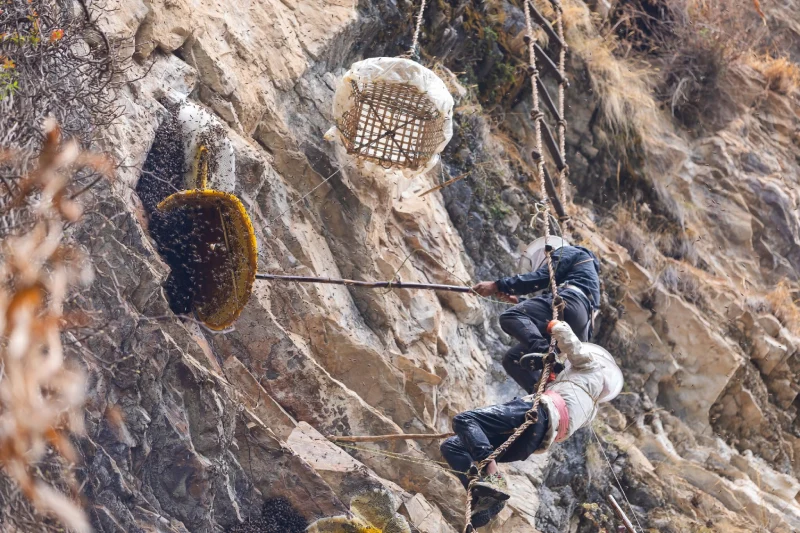
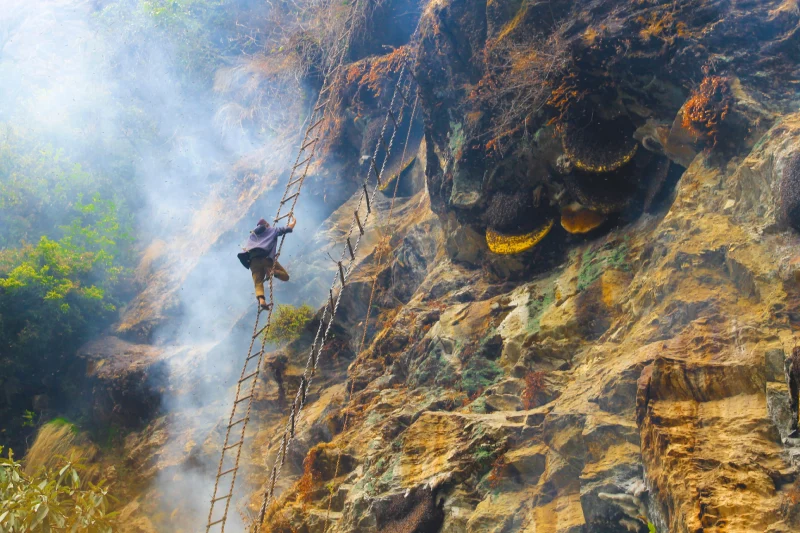
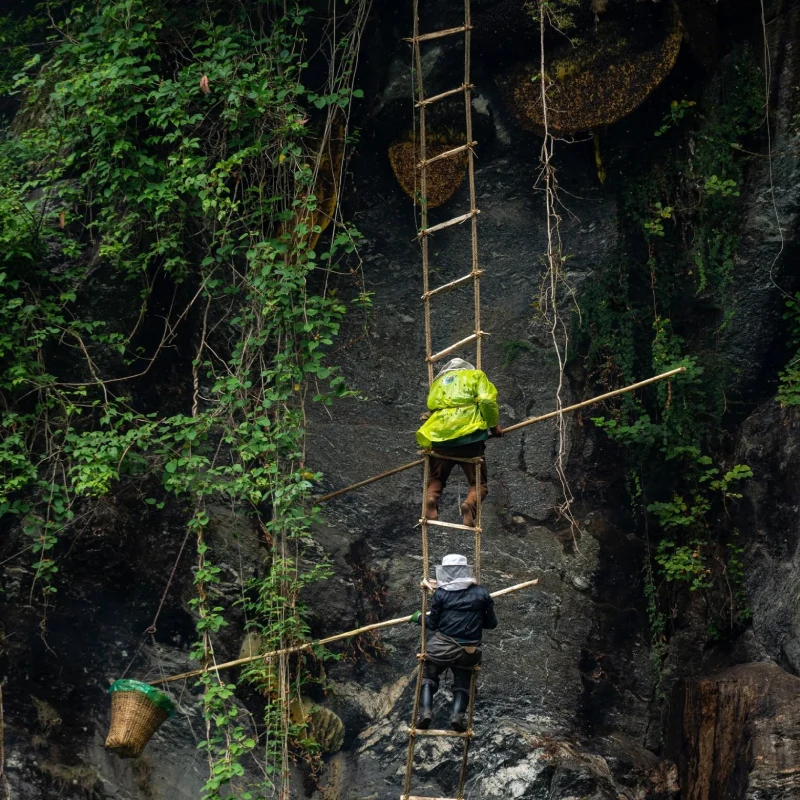
You get to experience extremely rare and dangerous tradition. Few communities in the world still continue to collect honey through this age-old tradition. In Lamjung, the local Gurung hunters use hand-built wooden ladders to collect honey in cliff combs, much like their fathers used to. On Day 5, you will observe the hunt from a distance and witness each step of the process.
You don’t need to worry about crowds. All of the trails in the Annapurna Circuit become popular in high season, but the village near Ghalegaun and Bhujung remains uncrowded. You will meet locals, goats, and the occasional student along the trail but no other tourists.
You move at a leisurely pace. The highest overnight accommodation location in your Mad Honey Hunting in Nepal is Ghalegaun, approximately 2,100m. There are no passes in our itinerary, so high altitude shouldn’t be an issue. If you are comfortable with hiking four to six hours per day, this Mad Honey Hunting Trek should suit you well.
Best Time for Mad Honey Hunting in Nepal
The best time for Mad Honey hunting in Nepal takes place in spring because rhododendron bloom in the hills of Lamjung. In some village, locals also hunt in autumn, but that depend on year to year. The hunters from Bhujung decide themselves the time of their hunt, and we check with them to make sure we set our departure day accordingly.
The flowers and weather are the decisive factor here and your travel date needs to be very flexible. Bees need intensive blooming to make their honeycombs full, so the late or poor blooming shifts the date of harvesting. Heavy rainfall, strong wind or cloudiness makes a cliff dangerous to climb, and the hunters won’t start harvesting in such conditions.
That is why the timing of the harvests varies from area to area and year to year. Two cliffs in the same valley may ripen a week apart. Poor spring weather may cause a week delay of the date of harvesting. On the day the leader hunter makes a decision which must be followed by others.
We cannot guarantee a harvest during each of our departures. The bees, the weather, and the hunters are the ones who decide. We can only guarantee our flexibility.
If the hunting shifts by a day or two, the schedule of your Mad Honey Hunting Trek Nepal 8 Days will remain unaffected, and you may even join in another honey hunting expedition.
In case the hunters push back the harvest date or cancel it, the Mad Honey Hunting in Nepal continues as per schedule. This means that you still visit the hunters in Bhujung, watch their ladders and equipment, and learn about the honey hunting process. In addition, you can:
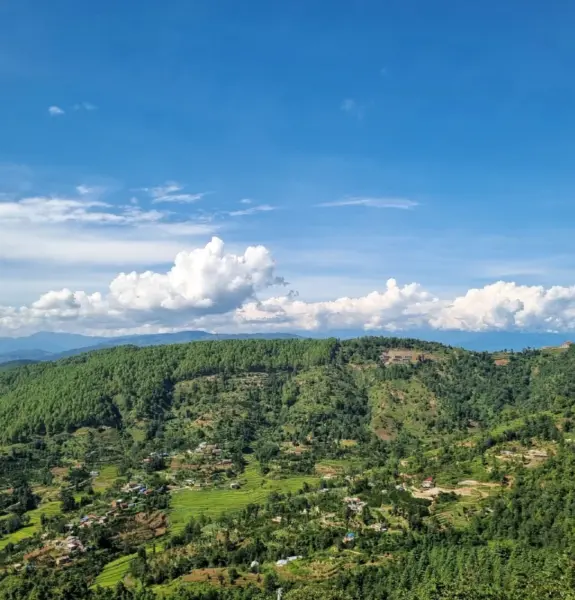
- Explore the rice terrace fields and village paths around Ghalegaun and Bhujung.
- Cook dal bhat with your homestay family.
- Meet with the local beekeepers
- Take the Day 6 trek to Ghanpokhara.
Check with us before booking the tour. A successful Mad Honey Hunting Trek always aligns with the season.
How difficult is the Mad Honey Hunting in Nepal?
This Mad Honey Hunting trek is considered one of the most difficult and dangerous ones for hunters in the Himalayas, but not for you. You mostly watch it from the ground doing nothing., just watching a history in front of you.
For the first part of the trek, there are some trekking days which is easy to moderate difficult. You just need basic fitness and not any mountain experience. If you can hike up to 5 to 6 hours daily, then it’s enough for you to do this trek.
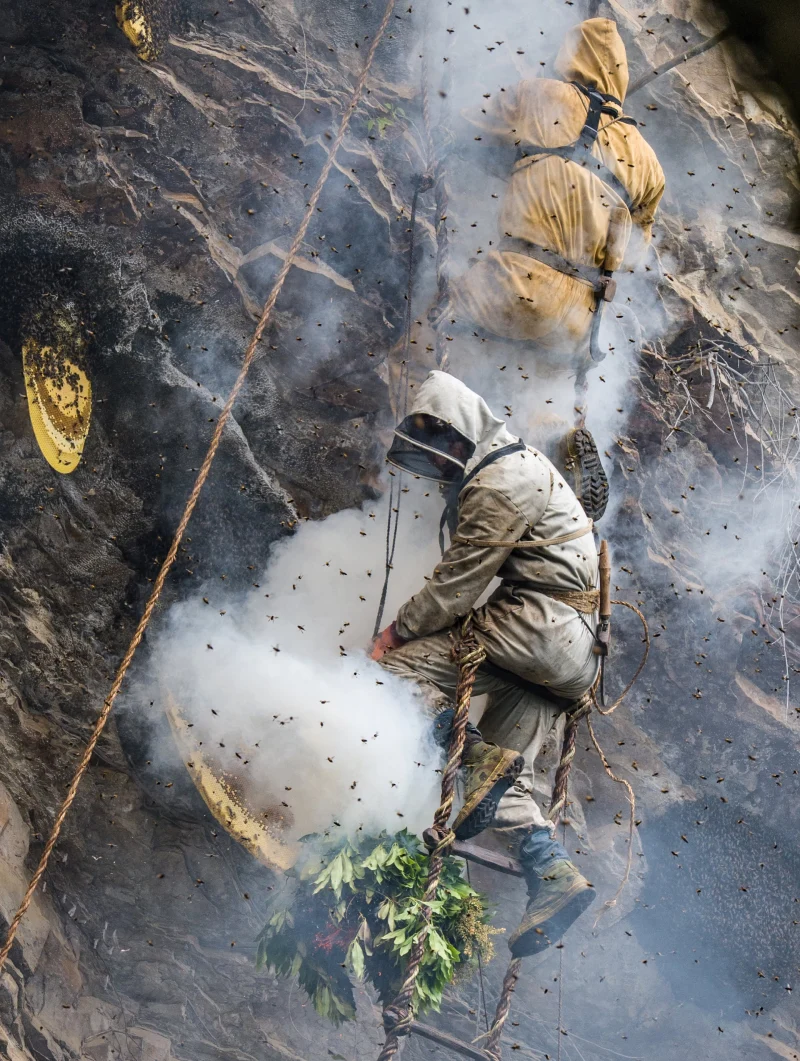
During the hunting day, first comes the climb to the cliff. But before that local villager perform a sacrificial ritual for the success of the hunt. Then after they begin their climb and hunt. This activity is very difficult and technical as the bees make their combs on the vertical wall of rock far above the ground. Hunters go up the bamboo and rope ladder that constantly shakes under their feet which they have to balance it while collecting the honeycomb.
Next – the bees. They protect their nests from intruders fiercely. Although the smoke helps them to become quiet, there are moments when stings happen. Here hunters have to be very calm and experienced.
There is additional other factor that holds the process, such as weather conditions – wet rocks, strong wind, and poor visibility. This is why the leader hunter can stop the process anytime.
Permits and Rules
Mad Honey Hunting in Nepal requires fewer permits than the average trek. The trek does not enter any restricted areas, so no special trekking permit is required. Since the majority of the trek passes through the Annapurna Conservation Area like Ghalegaun and Bhujung, ACAP entry permit will be required.
According to the rules that are changing every year, the requirement of TIMS card or local fees might also be applicable. We research the current rules before every trip departure.
There is no need to arrange the documents by yourself. All permits in Kathmandu will be arranged by Epic Trek Nepal. All you have to do is to send us a copy of your passport well before departure.
Here are some basic rules of behavior in the village that you need to follow for your safety:
- Always trek with the licensed guide.
- Follow instructions of the lead hunter on Day 5.
- Stay at the ground viewing point and never come close to the cliff or the combs.
- Do not use the drone near the bees and hunters.
- Ask permission before you take photos of people, houses or ritual offerings.
- Take away your trash, including plastic bottles.
Be careful when purchasing mad honey as a souvenir since it is prohibited by many countries and can be confiscated during the custom check. We do not sell it, but still, make sure that you know about the restrictions of your country.
Cultural Experience and Traditional Honey Hunting
No one ever becomes a honey hunter by studying it in a book. In Gurung villages, young men years observing their father, uncles and elders before they ever attempt to climb up the ladder. They learn to interpret the environment, the weather and even the bees themselves.
The skill set is very practical in nature. Elders teach their juniors how to make and check the ladders, how to use the smoke and to cut the comb without killing the bees. They also teach all the prayers and sacrifices that must be performed prior to every hunt.
Every person in the group knows how do their respective task. It is the leader of the hunters who decides when to go hunting, what climbers to choose and whether to cancel the hunt because of unfavorable winds or bees’ behavior.
During the hunting, on your day 4 to Bhujung, you will meet the hunters before the harvest. They will allow you to see their tools and their stories as well as answering your questions through your guide. It is here that Mad Honey Hunting in Nepal will change from an idea to something real.
On the day 5, actual hunting day, do not forget that you are witnessing a tradition and not a technical act. Simple things are very useful for this:
- Stand behind your guide and at the viewing point.
- Be silent.
- Ask for permission before taking photos of local people.
- Avoid strong perfumes and bright clothes which may annoy the bees.
- Do not ask hunters to repeat anything or hurry a step.
It is important for hunters to have visitors who are willing to hear and learn. Such respect will make the Mad Honey Hunting Trek successful for all participants.
Accommodation and Meals on the Mad Honey Hunting Trek
During Mad Honey Hunting in Nepal, you will sleep in comfortable and simple rooms giving you authentic village experience with warmth and hospital of people rather than luxury.
On arrival in Kathmandu and in Pokhara, you will stay at a tourist hotel in a twin share accommodation. The rooms are equipped with private bathrooms, hot showers, and Wi-Fi access. You can have some good night sleep on days 1, 7, and the last day.
During your stay in Khudi, you will stay in a small and neat guesthouse next to Marsyangdi River. In Ghalegaun and in Bhujung, you will stay in Gurung homestays. The families here provide you with comfortable accommodations. You should expect two single beds, cozy blankets, and communal bathrooms. There won’t be private bathroom or shower facilities, so do not have high expectations.
Food is the best thing about our treks. The village people prepare tasty food using the kitchen stove and you eat it together. You will get egg, toast, porridge or Tibetan bread for breakfast with tea. The lunch and dinners include dal bhat, which is the combination of rice, lentils, and seasonal vegetables. Dal bhat is served in refills, so don’t hesitate to ask for it.
Your guide arranges other options too like noodles, momos, and soup for you. Vegans and vegetarians will have good food at the trek site. Please share your allergy and dietary details at the time of booking.
As per our Mad Honey Hunting Trek in Nepal 8 Days itinerary, we take care of all your accommodations and trekking meals.
Packing List for Mad Honey Hunting in Nepal
Pack light. This trek will remain under 2,200m, so no bulky equipment required. The mornings may be cold in spring, and village nights can become quite cold. Layering helps you to remain comfortable.
Clothing
- 2-3 quick-dry t-shirts
- 1 fleece or light down jacket
- Waterproof rain jacket
- Trekking trousers and a pair of shorts
- A hat that would keep you warm and one sunhat
- Thermal wear to be worn during evening hours
Footwear
- Trekking boots with good traction
- Camp shoes or sandals
- 4 pairs of woolen or synthetic socks
Equipment and Gear
- Backpack (25–30 litres)
- Trekking poles
- Headlight with extra batteries
- Refillable water bottle and purification tablets
- Sun glasses, sun block and lip balm
- Insect repellent
Personal Items
- Passport, copies, and insurance documents
- Simple first aid kit and medicines
- Phone or camera with a charger
- Gift or notebook for the local family
Do not carry perfume, fragrant lotions, and colorful clothes. These might lure or irritate the bees. Pack your camera in a dry pouch. The sleeping bag is available from our team on request. This will help keep your Mad Honey Hunting Trek packing light.





 Share
Share